A pensioner struggles to keep warm at home. Photograph: Studio Romantic/Shutterstock
Call comes after government forced to reveal that 71% of pensioners with disabilities will lose entitlement despite dependence on warmer homes
Groups representing disabled people are demanding urgent meetings with ministers after it was revealed that 1.6 million pensioners with disabilities will lose their winter fuel payments because of government cuts.
The figures were released by the Department for Work and Pensions on Friday evening, in answer to a freedom of information request, despite the government having said it had done no official impact assessment on the policy. The internal DWP analysis also suggested that nine in 10 pensioners aged between 66 and 79, and eight out of 10 over-80s would lose their allowance.
Since those over 80 receive a higher payment – £300 as opposed to £200 – they would take the greatest financial hit, the document said.
The analysis revealed that although people with disabilities were more likely to retain the payment, 71% – 1.6 million – would still lose their entitlement, despite their greater dependence on heating their homes.
The analysis also estimated that of the 880,000 pensioners entitled to pension credit but who do not claim the benefit, only 100,000 are expected to sign up to it as a result of a government campaign now under way, meaning about 780,000 pensioners on low incomes would continue to miss out.
[dizzy: This article was published April 4, 2024 and refers to the United Kingdom’s previous Conservative government. Since then UK has a new Labour government under UK Prime Minister Keir Starmer. UK violating International law will not have changed since April 2024 and Keir Starmer should be well-aware of legal requirements since he is often referred to as a human rights legal expert.]
The UK government has received internal legal advice that Israel has broken international humanitarian law in its current war on Gaza. The advice was revealed by Alicia Kearns, the Conservative chair of the House of Commons foreign affairs select committee, in a speech to a fundraising event on March 13 and leaked to the UK’s Observer newspaper.
The paper quoted British barrister and war crimes prosecutor Sir Geoffrey Nice as saying: “Countries supplying arms to Israel may now be complicit in criminal warfare. The public should be told what the advice says.”
The Guardian has now revealed that the prime minister, Rishi Sunak, has since received a letter signed by 600 lawyers and academics, including three former supreme court justices – among them Baroness Hale, the court’s former president – as well as former court of appeal judges and more than 60 KCs, warning that UK arms sales to Israel are also illegal under international law.
But what does international law actually say on this issue, and what are the UK’s (and other nations’) legal obligations in relation to the ongoing assault on Gaza?
In recent months, a number of countries have announced they are suspending arms exports to Israel. These include Canada, Belgium, Italy, Spain and the Netherlands, as well as the Japanese company Itochu Corporation. Germany and the US – by far the biggest suppliers of arms to Israel – have not as yet signalled intentions to follow suit.
Neither has the UK. But with arms exports amounting to £42 million in 2022, it is not one of Israel’s major suppliers.
Suspending arms exports to Israel indicates not only political concerns, but also fear over the legality of continuing to support Israel militarily in its assault on Gaza. The Netherlands court of appeal ruled in February that the Dutch government must discontinue its sales of F35 fighter jet parts on the basis of its obligations under the UN arms trade treaty. A similar lawsuit is currently pending in Denmark which exports F35 parts to the US, which then sells the finished jets to Israel.
In the UK, the high court dismissed an attempt to challenge the government’s continued licensing of arms exports to Israel. But this was because the particular procedural hurdle that applicants in such cases have to get over is notoriously high. The judgment said nothing definitive as to Israel’s (or the UK’s) compliance with international law.
Following this, 130 MPs and peers from across party lines recently signed a letter to the foreign secretary calling on the government to suspend arms exports to Israel.
Arms trade treaty
So what is the position under international law of countries, such as the UK, that support Israel militarily? There are many specific and general rules of international law that are relevant here.
The most obvious, and the one emphasised in the British MPs’ letter, is found in the UN arms trade treaty, to which the UK is a party. Article 7 requires a risk assessment for all weapons transfers, and prohibits exports where there is an overriding risk that the weapons could be used to commit serious violations of international humanitarian law (the law of armed conflict).
The only objective test we have for determining risk of future violations is to examine whether there is evidence of a pattern of past violations by Israel. UN reporting of past serious violations is one of the key considerations that the UK’s own policy points to in determining future risk. In 2019, the UK court of appeal suspended arms exports to Saudi Arabia based on the government’s failure to assess whether past violations of international law had likely been committed in Yemen.
The available evidence suggests there have been countless examples of Israeli actions in Gaza that appear, on their face, to be inconsistent with international humanitarian law. Among the most recent examples are the Israeli attack on an aid convoy on April 1, the destruction of Gaza’s hospitals, and the well-documented famine that now engulfs the territory.
The Hague court of appeal that ordered the Dutch government to suspend arms exports to Israel relied on reports from Amnesty International and the UN when it listed multiple examples of apparent violations of the law of armed conflict in Gaza.
And in the long-awaited UN security council resolution adopted on March 25, with the US abstaining, the security council condemned “all attacks against civilians and civilian objects, as well as all violence and hostilities against civilians”, and demanded the flow of humanitarian assistance into Gaza, in line with international humanitarian law.
This suggests a pattern of past serious violations and thus a clear risk of continuing violations. So, signatories to the arms trade treaty continuing to supply weapons to Israel likely do so in breach of article 7.
Geneva conventions
Yet all nations have other obligations that take on particular importance in relation to Gaza. One of these is the obligation to prevent genocide under article 1 of the Genocide convention (which was the focus of the letter to the prime minister referred to above).
This is especially relevant since the International Court of Justice (ICJ) determined in January that there is an imminent risk of irreparable harm to the rights of Palestinians in Gaza under the Genocide Convention.
But it also includes article 1 of the 1949 Geneva conventions, which requires states to “ensure respect” for international humanitarian law. There is overwhelming support for the view that this requires all states not only to avoid aiding or assisting violations (for example, through arms exports) but to take proactive steps to ensure warring parties comply with their obligations under international law. They can do so via diplomatic channels or by imposing sanctions.
On March 1, Nicaragua instituted proceedings before the ICJ against Germany (the second-biggest arms exporter to Israel), in part alleging that it is violating article 1 of the Geneva conventions due to its support for Israel.
In this way, all countries are legally obliged to ensure that others comply with international humanitarian law. If the catastrophic destruction, massive civilian death toll and immense suffering of those still alive in Gaza is not enough to pull Israel’s allies into line over their continuing arms sales, it is difficult to conceive of any situation that ever could.
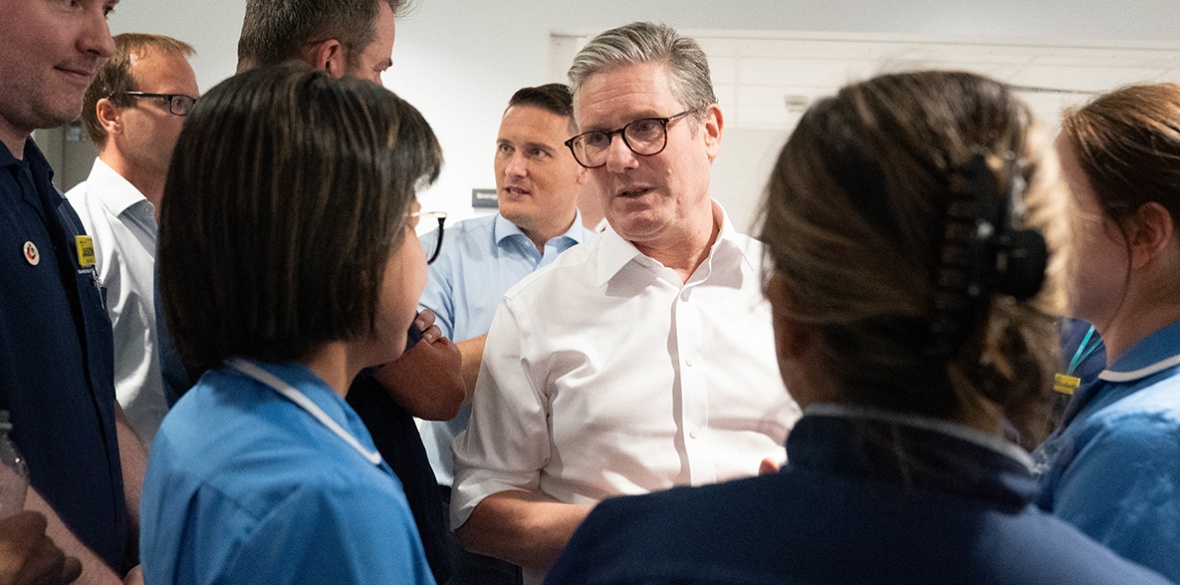
Prime Minister Sir Keir Starmer (left) and Health Secretary, Wes Streeting during a visit to the University College London Hospital (UCLH), September 11, 2024
“CHANGE or die” was Keir Starmer’s message to the National Health Service.
But it could as well apply to his own government, which already appears locked in a downward spiral.
…
Labour secured the election with the smallest share of the vote for a new government in history and on a low turnout to boot. Barely one eligible voter in five chose Labour on July 4.
Starmer himself, moreover, saw half of his 2019 vote — and that was not a good year for Labour — disappear in his north London constituency.
But the only conclusion he has apparently drawn is that more misery must be piled on the public.
First, he maintained the cruel two-child benefit cap, and suspended from the Parliamentary Labour Party those MPs who had the temerity to vote to lift children out of poverty.
Then he appeared in the Downing Street garden to announce that things were only going to get worse for the foreseeable future, preparing the way for that new round of austerity he had pledged to avoid during the election campaign.
His pretence is that “tough choices” are needed because of an unexpected “black hole” left behind in the public finances by the Tories.
But the choices made by Chancellor Rachel Reeves and Starmer are always “tough” at the expense of the poorest.
…
In 2017 Labour estimated that means-testing the winter fuel allowance would lead to nearly 4,000 extra fatalities. Today, following exactly that policy, the government conceals the possible consequences, having either not commissioned an assessment of the policy’s impact, or determined to hide it.
It is said that you only get one chance to make a first impression. The first impression of this government is now set in stone — it is of callous cost-consciousness compounded by concealment.
This is not “fixing the foundations” as Starmer claims. It is fracturing them, and many Labour MPs know it.
After 14 years of billionaires doubling their wealth, the political elite’s choice of starving pensioners and children shows austerity as a complete con job.
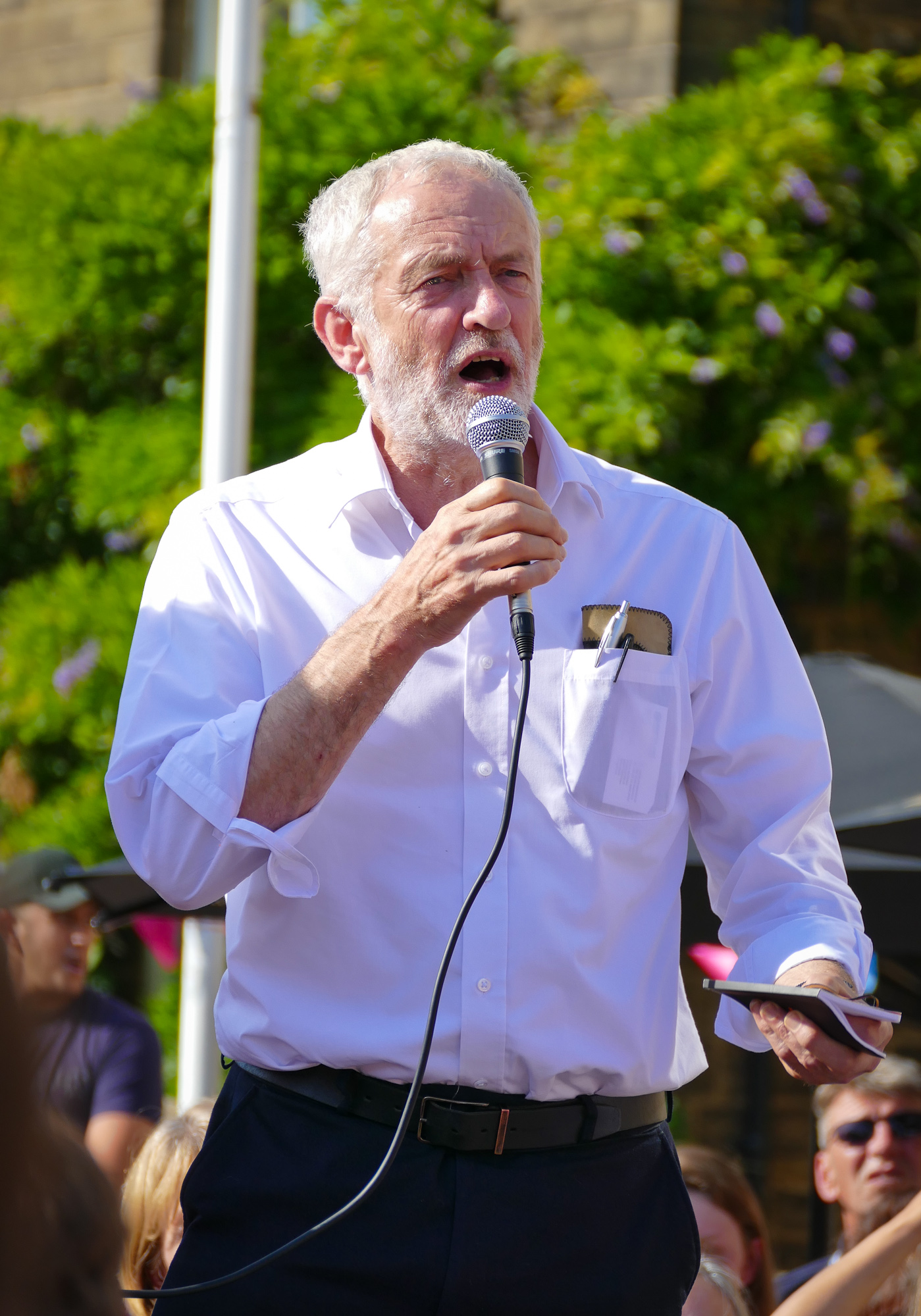
Jeremy Corbyn MP, former leader of the Labour Party
Every day, my constituents make tough choices. Tough choices like deciding whether to heat their homes or put food on the table. Tough choices like taking out a loan to pay for this month’s rent. Tough choices like selling their home to pay for their family’s social care.
People are making tough choices because governments have made the wrong choices. We warned that Tory austerity would weaken our economy and decimate our public services. We were ignored, and the poorest in society paid the price. Austerity is not just a buzzword. It is the ongoing, brutal reality for millions of people who have been pushed into destitution. It is the face of desperation and anxiety of those forced into a spiral of debt. It is a freezing cold night for the record numbers of people sleeping rough on the streets. It is the graveyard for those left without vital support: more than 300,000 excess deaths have been attributed to austerity policies.
We often talk about austerity in terms of cuts to public spending, but that is just one side of the coin. By starving public services of resources, the government manufactured a convenient excuse for their privatisation. We saw this most acutely with the NHS: an underfunded public service does not just cause satisfaction to plummet, but the belief in the principle of public healthcare itself. Austerity was never about saving money (the UK’s debt pile increased every single year under the Tories). It was about transferring money from the poorest to the richest. Between 2010 and 2018, aggregate wealth in the UK grew by £5.68 trillion. 94% went to the richest 50% of households. 6% went to the poorest 50%. As child poverty was heading towards its highest levels since 2007, Britain’s billionaires more than doubled their wealth.
It was a political decision to defund, dismantle and auction off our public services. And it will be a political decision to repeat this failed economic experiment. ‘It’s going to be painful’, the Prime Minister told the nation last week, prepping the public for ‘difficult choices’ ahead. Did he get permission from the Tories to reuse their trademark slogans? Other ministers have gone one step further, indicating that they do not have any choice at all but to impoverish children and pensioners. Keeping children in poverty is unavoidable, apparently, if we want to restore the public finances. Scrapping the winter fuel allowance is a necessity, we were risibly told, if we want to stop a run on the pound.
It is astonishing to hear government ministers try to pull the wool over the public’s eyes. The government knows that there is a range of choices available to them. They could introduce wealth taxes to raise upwards of £10 billion. They could stop wasting public money on private contracts. They could launch a fundamental redistribution of power by bringing water and energy into full public ownership. Instead, they have opted to take resources away from people who were promised things would change. There is plenty of money, it’s just in the wrong hands — and we will not be fooled by ministers’ attempts to feign regret over cruel decisions they know they don’t have to take.
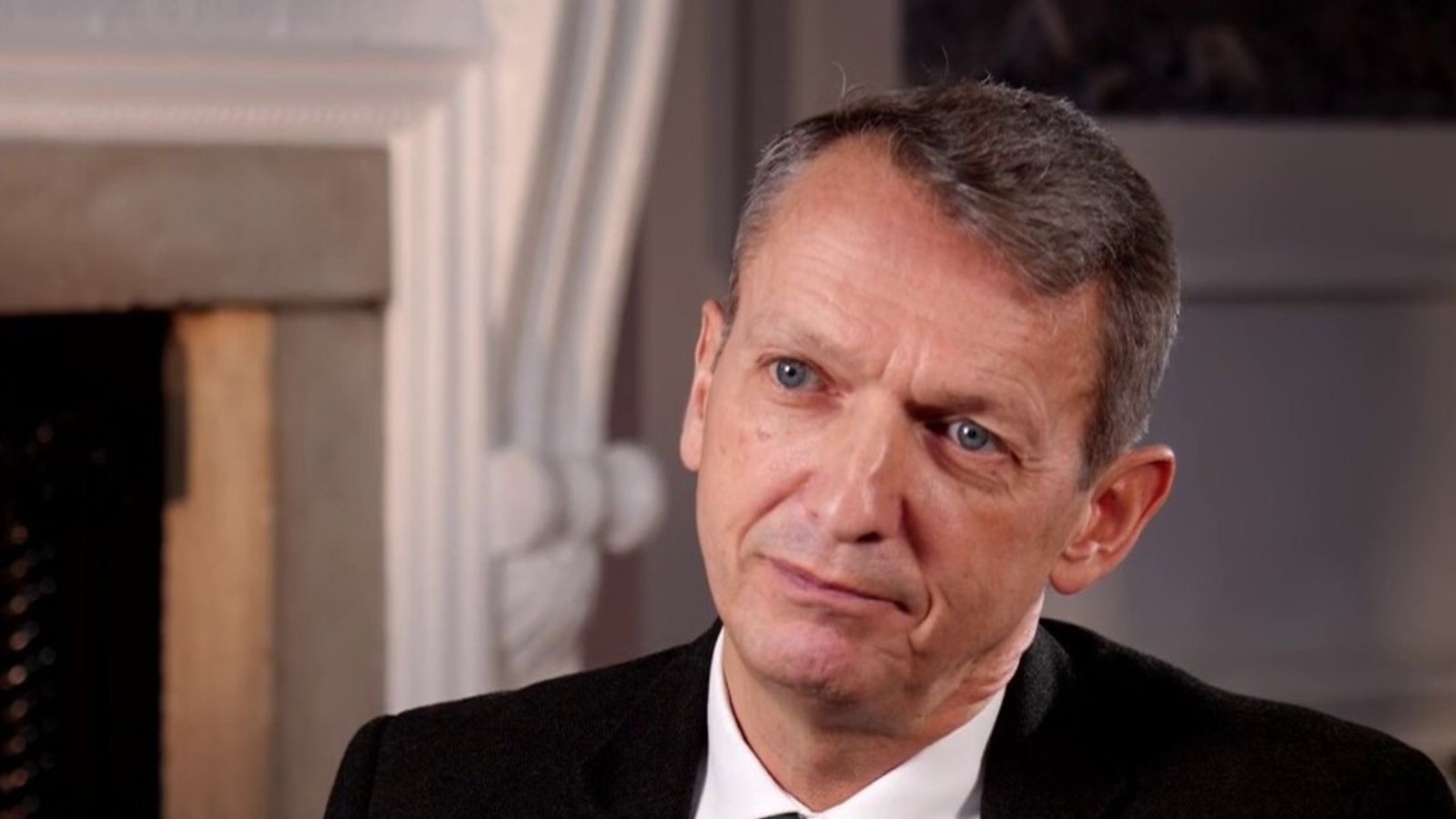
Former senior economist Andy Haldane told Sky News that Rachel Reeves’s comments earlier this summer had spooked consumers, businesses and investors.
The chancellor’s claim of a £22bn “black hole” in government finances was “unnecessary and probably unhelpful economically”, a former Bank of England chief economist has said.
Andy Haldane told Sky News’ Politics Hub with Sophy Ridge that Rachel Reeves’s statement in July was a “bad idea” because it generated a sense of “fear and foreboding” just when there was a new-found confidence in the UK.