Labour is headed for electoral triumph – then woe in government

Spread the love

 Original article by Paul Rogers republished from OpenDemocracy under a Creative Commons Attribution-NonCommercial 4.0 International licence

Keir Starmer last week controversially welcomed Tory defector Natalie Elphicke into the Labour fold
 | Carl Court/Getty Images

The party may have a 30-point lead in the polls, but its lack of real offering to voters will soon cause problems

It’s widely agreed that England and Wales’ local election results were terrible for the Conservative Party, which lost 474 councillors, and not particularly good for the Labour Party, which gained only 186.

But many commentators still miss the current mood among Labour supporters. The party’s 30-point lead in a new YouGov poll has been extensively covered, but not the fact that its should-be supporters are hardly rejoicing at the news.

Because while many voters have distaste verging on outright anger at Rishi Sunak’s Conservatives, and would certainly take pleasure in seeing them ousted from government, they have little enthusiasm for the Labour alternative.

Analysis of the local elections’ voting figures suggests Labour is headed for a much smaller lead at the general election than polls suggest; likely one sufficient to ensure it ends up in government but not anything like a landslide. In these circumstances, the tensions within the party, and how they are reflected in the attitudes of its voters, become significant – and may cause Keir Starmer serious problems in office.

Much of the discontent stems from suspicions that under Starmer, Labour is now on the centre-right and will not deliver the major reforms needed to help the millions of ordinary people struggling to make ends meet. Even in one of the few areas where Starmer previously seemed to offer hope, workers’ rights, there are suggestions that his policy will soon be watered down.

This sense that the party will continue the current government’s status quo has only been strengthened by Labour welcoming two Tory defectors into its fold in recent weeks. One of them, Natalie Elphicke, is a determinedly right-wing politician, whom many would have said was on the far right of her previous party. Some very angry Labour MPs have contrasted her official reception with the ongoing exclusion of Diane Abbott and Jeremy Corbyn from the parliamentary party.

And while Labour may claim to be the party of fiscal fairness, there is little faith in it getting truly serious about controlling tax avoidance and evasion, and even less about wholesale tax reform. Shadow chancellor Rachel Reeves has also already ruled out a wealth tax, despite the richest 1% of Britons holding more wealth than 70% of people in the UK.

Starmer is also keen to play tough on defence matters, presenting Labour as strong on military spending, and determined to maintain a vastly expensive nuclear programme and Britain’s vain attempt to be a world power.

This will likely be met with opposition from many of the party’s supporters, who have objected to the UK’s involvement in numerous failed wars in the past 25 years – including Afghanistan, Syria, Iraq, Libya and now Gaza.

Whatever happens in Gaza, Labour will also be left with a legacy of deep mistrust over its failure to speak up for Palestinians. The ‘Gaza rebellions’ at the local elections earlier this month, which contributed significantly to the party failing to pick up the Tories’ lost votes, were hurried affairs organised late in the day. If organisers plan earlier for the general election, they may well have a much greater impact.

Then there is the issue of the climate crisis, which looms increasingly large, especially among younger voters. Labour’s U-turn on its £28bn pledge to invest in a rapid period of decarbonisation has struck a discordant note, and many find it difficult to accept claims by shadow climate change and net zero secretary Ed Miliband that the party is still on track to make Britain a “clean energy superpower”.

Labour may also soon have a problem among its own ranks. Many of the party’s 30 or so socialist-leaning MPs are keeping their heads down in the run-up to the general election for fear of suspension and deselection. This will change once the election is called. Some incoming new radicals may also be elected – who knows, even the odd socialist or two might slip through. It is certainly reasonable to think that Starmer, whether heading for a majority or minority Labour government, will have up to 40 MPs with a radical bent.

Where they will become significant will be when Labour runs into serious trouble a year or so into the new Parliament, when the multitude of toxic legacies left by 14 years of Conservative government emerge. At that point, if all Labour can offer on most policy areas is little more than modest change, British politics will become far more intens

Much of the discontent stems from suspicions that under Starmer, Labour is now on the centre-right and will not deliver the major reforms needed to help the millions of ordinary people struggling to make ends meet. Even in one of the few areas where Starmer previously seemed to offer hope, workers’ rights, there are suggestions that his policy will soon be watered down.

This sense that the party will continue the current government’s status quo has only been strengthened by Labour welcoming two Tory defectors into its fold in recent weeks. One of them, Natalie Elphicke, is a determinedly right-wing politician, whom many would have said was on the far right of her previous party. Some very angry Labour MPs have contrasted her official reception with the ongoing exclusion of Diane Abbott and Jeremy Corbyn from the parliamentary party.

And while Labour may claim to be the party of fiscal fairness, there is little faith in it getting truly serious about controlling tax avoidance and evasion, and even less about wholesale tax reform. Shadow chancellor Rachel Reeves has also already ruled out a wealth tax, despite the richest 1% of Britons holding more wealth than 70% of people in the UK.

Starmer is also keen to play tough on defence matters, presenting Labour as strong on military spending, and determined to maintain a vastly expensive nuclear programme and Britain’s vain attempt to be a world power.

This will likely be met with opposition from many of the party’s supporters, who have objected to the UK’s involvement in numerous failed wars in the past 25 years – including Afghanistan, Syria, Iraq, Libya and now Gaza.

Whatever happens in Gaza, Labour will also be left with a legacy of deep mistrust over its failure to speak up for Palestinians. The ‘Gaza rebellions’ at the local elections earlier this month, which contributed significantly to the party failing to pick up the Tories’ lost votes, were hurried affairs organised late in the day. If organisers plan earlier for the general election, they may well have a much greater impact.

Then there is the issue of the climate crisis, which looms increasingly large, especially among younger voters. Labour’s U-turn on its £28bn pledge to invest in a rapid period of decarbonisation has struck a discordant note, and many find it difficult to accept claims by shadow climate change and net zero secretary Ed Miliband that the party is still on track to make Britain a “clean energy superpower”.

Labour may also soon have a problem among its own ranks. Many of the party’s 30 or so socialist-leaning MPs are keeping their heads down in the run-up to the general election for fear of suspension and deselection. This will change once the election is called. Some incoming new radicals may also be elected – who knows, even the odd socialist or two might slip through. It is certainly reasonable to think that Starmer, whether heading for a majority or minority Labour government, will have up to 40 MPs with a radical bent.

Where they will become significant will be when Labour runs into serious trouble a year or so into the new Parliament, when the multitude of toxic legacies left by 14 years of Conservative government emerge. At that point, if all Labour can offer on most policy areas is little more than modest change, British politics will become far more intense – with a chance of some truly progressive thinking at last coming to the fore.

 Original article by Paul Rogers republished from OpenDemocracy under a Creative Commons Attribution-NonCommercial 4.0 International licence

Continue ReadingLabour is headed for electoral triumph – then woe in government

ANDREW FEINSTEIN: WHY I AM STANDING AGAINST KEIR STARMER

Spread the love

https://www.declassifieduk.org/andrew-feinstein-why-i-am-standing-against-keir-starmer/

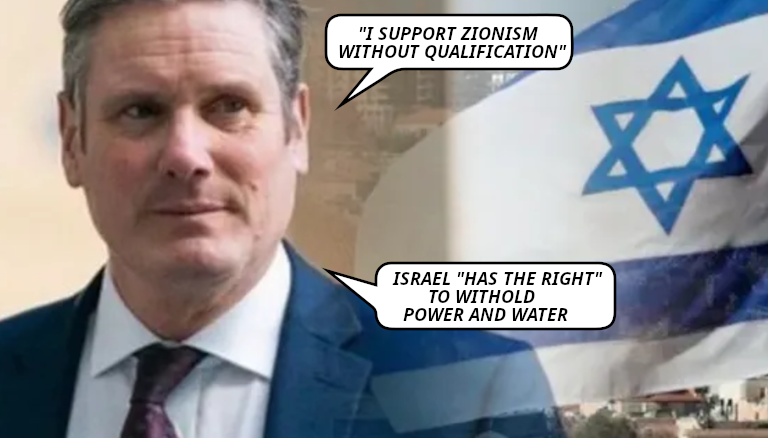
Zionist Keir Starmer supports Israel's Gaza genocide.
Zionist Keir Starmer supports Israel’s Gaza genocide. He needs to hold his seat to become prime minister.

Labour’s leader thinks he can get away with supporting genocide in Gaza. It’s time to teach him a lesson in his own backyard.

Our democracy is in crisis. The two main parties are virtually indistinguishable in their offers of permanent austerity, forever wars and environmental degradation. 

Keir Starmer, the MP for Holborn and St. Pancras where my family and I have lived for around 22 years, is emblematic of this crisis. His politics are mendacious, unprincipled and in the interests of his billionaire donors rather than the constituents he was elected to serve.

I have seen real leadership in action: I was privileged to serve under Nelson Mandela as an MP in South Africa. His leadership was selfless, principled, accountable, transparent and honest. Everything that Keir Starmer is not.

His almost immediate abandonment of many of the ten progressive pledges on which he was elected to lead the Labour Party is a clear sign he cannot be trusted. 

Starmer has now gone a step too far by refusing to support an unqualified ceasefire and a halt to arms sales to Israel amid the greatest human tragedy since World War Two: the genocide being committed in Gaza. 

How is it possible that a former human rights lawyer, who must see the horrific images that we all view on our screens every day, has not even commented on the highest court in the world’s interim ruling that Israel is likely committing genocide and ethnic cleansing? 

Article continues at https://www.declassifieduk.org/andrew-feinstein-why-i-am-standing-against-keir-starmer/

Continue ReadingANDREW FEINSTEIN: WHY I AM STANDING AGAINST KEIR STARMER

Morning Star: Freeing Assange is a struggle for justice, journalism and peace

Spread the love

https://morningstaronline.co.uk/article/editorial-freeing-assange-struggle-justice-journalism-and-peace

JUDGES must decide tomorrow if Julian Assange would enjoy the same rights as a US citizen if tried in the US.

It’s an ironic question. The persecution of the WikiLeaks founder has rested from the beginning on US exceptionalism — that rules do not apply to the United States as they apply to other countries — and extraterritoriality, that US law somehow applies to non-US citizens’ conduct thousands of miles away from the US.

Both apply too to the crimes Assange is being tormented for exposing.

The US can murder citizens of other countries by the hundred in drone strikes, without due process or even much in the way of diplomatic upset.

It can launch illegal war after illegal war, its soldiers can laugh as they gun down unarmed civilians from helicopters, it can loftily decline to recognise the authority of bodies like the International Criminal Court (while publicly welcoming indictments of other countries’ officials before that court): but still it claims to police a “rules-based international order” under supposed threat from its rivals.

This is about journalism: as New York Times executive editor Dean Baquet has stated, it sets a frightening precedent when a journalist can be accused of espionage for publishing classified material that was handed to him. Assange did not leak the information: he was never in the US government’s employ. The Assange case warns reporters everywhere that publicising the crimes of the powerful could result in years behind bars.

https://morningstaronline.co.uk/article/editorial-freeing-assange-struggle-justice-journalism-and-peace

Continue ReadingMorning Star: Freeing Assange is a struggle for justice, journalism and peace

Election note

Spread the love

I need to do a piece about expecting a UK General Election to be called soon.

There is no discernible difference between the main parties – the currently ruling Conservative Party under Prime Minister Rishi Sunak and the likely victors at the election UK Labour Party under “I support Zionism without qualification” leader Keir Starmer.

Both parties and party leaders actively support Fascist Israel’s genocide in Gaza and intend to continue destroying the planet for the benefit of the oil and gas industry. Both parties and party leaders are happy for Julian Assange to rot in a US prison for telling the truth and despite not committing any obvious crime and certainly not any crime under UK law. There are strong suggestions that Labour leader Keir Starmer was involved in the early persecution of Julian Assange.

Any half-decent responsible government would object instead of assist Israel’s Fascist Gaza genocide and take action on climate instead of promoting and accelerating climate destruction as they are actually doing. By assisting Israel in it’s Fascist endeavours, they are exposing themselves as being just as bad themselves.

If you agree with this analysis or even most of it I ask you to participate, take part in the election campaign by opposing the main parties that support Israel or climate destruction. It’s unclear where the Scottish Nationalist Party is on the climate yet. It is not enough to let Fascism go, it needs to be actively opposed. Creatives please get involved – you can always publish anonymously.

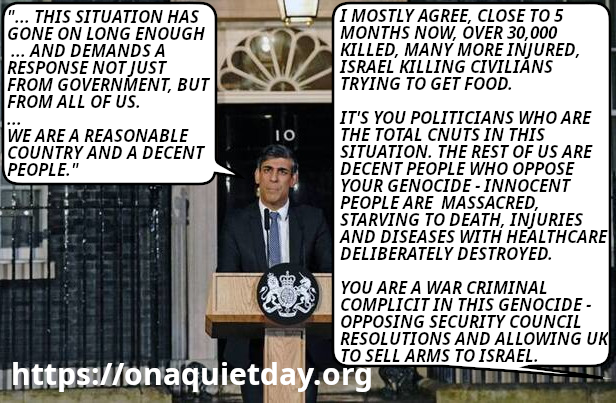
Response to Rishi Sunak's extremism speech at Downing Street 1 March 2024. Second version of this image with text slightly altered.
Response to Rishi Sunak’s extremism speech at Downing Street 1 March 2024. Second version of this image with text slightly altered.
Zionist Keir Starmer supports Israel's Gaza genocide.
Zionist Keir Starmer supports Israel’s Gaza genocide.

20/5/2024 I’m uncertain if we’ll have another chance like this to alter climate policy and it’s so urgently needed. The Tories and the Red Tories (Labour) have no intention to address the climate crisis with anything near the urgency that is needed. later: Ed: Correction: I would say no intention to address the climate crisis.

20/5/2024 later. It’s difficult to take the Lib Dems at all seriously when they don’t even proofread their website. https://www.libdems.org.uk/green “We urgently need to limit temperature rises to 1.5°C or we will face irreversible climate change which will cause catastrophic land loss and make parts of our planet inhabitable.”

Continue ReadingElection note

Starmer offers baby steps to fix crisis

Spread the love

https://morningstaronline.co.uk/article/starmer-offers-baby-steps-fix-crisis

Labour Party leader Keir Starmer speaks during his visit to the Backstage Centre, Purfleet, for the launch of Labour’s doorstep offer to voters ahead of the general election, May 16, 2024

On the economy, Labour offers only a commitment to “stability” based on austerity-style control of public spending and a hope that growth will nevertheless appear.

Establishing a publicly owned clean energy company, GB Energy, is all that remains of the radicalism of Sir Keir’s 10 pledges when seeking the Labour leadership.

Other ”first steps” include setting up a grandiose border security command to halt Channel boat crossings to outflank the Tories and a crackdown on “anti-social behaviour.”

Sir Keir told his audience that even these “first steps” could take two full terms in office — 10 years — to fully implement.

That makes their modesty still more striking. One pledge is to recruit 6,500 new teachers when 40,000 leave schools each year, equating to one-fifth of a new teacher each for Britain’s schools.

On the NHS, a first step commitment to provide 40,000 more appointments each week is equivalent to just a 2 per cent rise.

All this was welcomed by Lord Cameron’s friend, Boots chief executive Seb James, who particularly praised Labour’s “sensible fiscal measures.”

It was less welcome to Labour left organisation Momentum, which decried the party’s lack of radicalism.

A spokesman said: “These fixes fall desperately short of the bold policies needed to fix the Tories’ broken Britain.

https://morningstaronline.co.uk/article/starmer-offers-baby-steps-fix-crisis

Zionist Keir Starmer supports Israel's Gaza genocide.
Zionist Keir Starmer supports Israel’s Gaza genocide.

Continue ReadingStarmer offers baby steps to fix crisis