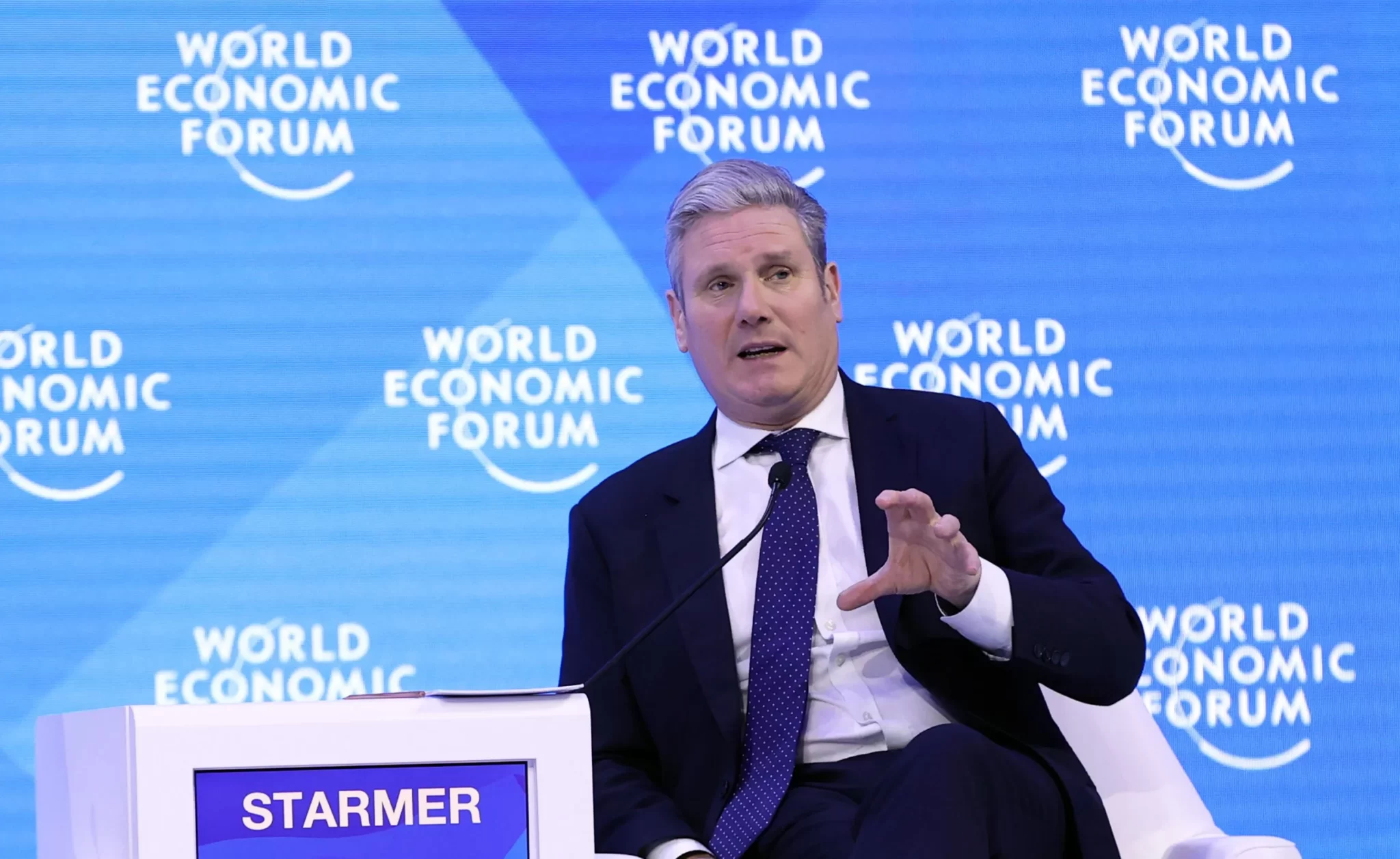
There is huge aversion to the Conservative (Tory) Party in UK meaning that Keith Starmer’s Labour Party is likely to be elected at the next general election. This aversion to the Tories is partly due to successive worse than useless Tory Prime Ministers, Boris’s criminality, lying and cronyism, Brexit which has been catastrophic, trashing of the UK economy (partly due to Liz Truss’s catastrophic bonkers short term as Prime Minister and ill-judged budget), huge inflation and crippling fuel poverty caused by hugely increased energy prices. It is a growing recognition and acknowledgement that the Tories are shits destroying public services including the Health Service.
Looking at Keir Starmer’s performance as Director of Public Prosecutions and as Leader of the Opposition can inform us how he’s likely to perform as Prime Minister. It looks as though it should be avoided.
later edit: To Labour Party members: There is an historic opportunity now to move away from Neo-Liberal politics. Why would you want to elect the Tory Keir Starmer as Prime Minister and does that achieve anything?
I need to get up to speed on Keith Starmer and doing some research. It will probably be about Starmer being controlling, deceitful, authoritarian, anti-democratic, Zionist and racist.
This is a good interview but a little long. I suggest that you watch from 12 minutes to 17 minutes if you’re pushed for time.
LABOUR “does not belong to one man but to its members,” campaigners declared today after Sir Keir Starmer vowed Jeremy Corbyn would never again be a Labour MP and told critics of his leadership to quit the party.
The increasingly right-wing Labour leader, who expelled his predecessor from the parliamentary party in 2020, claimed the party he took over nearly three years ago is “unrecognisable and we are not going back.”
In a speech in east London, Sir Keir hailed a decision by watchdog the Equality and Human Rights Commission (EHRC) to lift Labour out of two years of special measures over its “past failings” on anti-semitism.
But Jewish Voice for Labour (JVL) slammed the “alarming news,” stressing: “Jews like us do not feel safe in Keir Starmer’s Labour Party.”
The socialist group said its research shows that Jews have been “at least 37 times more likely to be investigated for anti-semitism than an average Labour Party member” since the former shadow Brexit secretary took the reins in April 2020.
KEIR STARMER’S Times interview exposes a Labour leader as arrogant as he is dishonest.
Few would disagree with his claim that Labour is “unrecognisable” compared with 2019 — but an honest media would ask this would-be prime minister some searching questions about that.
How does he defend standing to lead the party on a platform of continuing the socialist policies of Jeremy Corbyn, and why, if he was lying then, should we trust him in government?
When he tells anyone unhappy with the way he has changed the party that they are welcome to leave, what gives him the right?
Why should an MP only elected in 2015 tell activists and campaigners of decades’ standing to take a hike? More importantly, why should affiliated unions — which have already seen one of their number, the BFAWU, disaffiliate in disgust — allow a leader to abuse a position he obtained under false pretences to fundamentally change the character of the party they founded?
OPINION: To avoid another government committed to continuing Thatcherism, we need new tech that makes votes count
After nearly 13 years in power, the Conservatives have a problem. They are surrounded by the consequences of their own policies, and the place looks like a bomb site. Living costs have soared, the NHS is in crisis, and staff across the public and private sectors are on strike. The party’s friends in the media are doing their best, but even the most incurious and forgiving voter can see that all is not well.
Not surprisingly, support for radical change to Britain’s economic and political model is overwhelming. Most Tory voters support wealth taxes and the re-nationalisation of the energy infrastructure. A majority of Labour voters want to introduce PR and a majority of all voters are in favour of some kind of electoral reform.
Given all this, it would be a massive missed opportunity if Labour emerged as the main beneficiary of the Conservatives’ collapse. Keir Starmer, the party’s leader, has refused to give a whole-hearted voice to the desire for change. Instead he has dropped the reform pledges that secured his victory in the 2020 leadership contest and is now sounding off about fiscal responsibility and tough choices.
Comparisons with the 1990s are easy. But there is more of a hint of 2008 Barack Obama in Labour’s current posture. The elite are nervous; the scams have become too obvious and the cruelty isn’t being confined to the usual victims. As in the US immediately after the collapse of the banks, British capitalism needs its Team B to give the appearance of change without conceding its substance. And Starmer is all too willing to play his part.
Anthony Barnett, the founder of this site, points to another historical analogy, far less flattering to the Blairites who now control the Labour Party: 1974. Back then the Labour Party won an election at a time of escalating crisis. But rather than make the radical reforms necessary to revive the postwar social order, first Harold Wilson and then James Callaghan presided over years of desperate brinkmanship until Thatcher took power in 1979 and imposed her own radical vision on the country.
Presented with a series of provocations from the Tories, the Labour leader has repeatedly sided with the right in an attempt to demonstrate his reliability to the UK’s media. At a time when living standards are rapidly declining and organised labour is fighting to protect what little of the postwar social compact remains, the Labour Party is laser-focused on the fact that government departments buy stationery.
The response of the democratic left to the restoration of the Labour right since 2019 has been hampered by the massive damage done to the Liberal Democrats by Nick Clegg and the Bennites’ recent and fraught stint at the pinnacle of the Labour Party. Many with a public platform who support radical change seem to think that, while extra-parliamentary activism is all very well, there is no realistic alternative to voting Labour at the next election.
But a 2024 Labour government committed to the Blair-Thatcher status quo, which refuses to meet the UK’s accumulating crises with a programme equal to it, will only aid a nativist and authoritarian right that offers its own, hallucinatory solutions. Our likely trajectory, absent fundamental reform, is one that discredits the centre-left in government and empowers the extreme right in opposition.
As living standards decline, the Labour Party is laser-focused on the fact that the government buys stationery
In these circumstances, our best option at the next general election must be a mobilisation that puts as many ecosocialists and sincere left Keynesians into Parliament as possible. Our priority should be to maximise the number of MPs willing to argue for replacing Thatcherism with a new green and democratic settlement. Once we grasp that, the question then becomes technical: how?
Part of the answer is down to the politicians. The Greens could help by formally adopting strengthened versions of the ten pledges that Starmer has now dropped. And the Lib Dems urgently need to apologise for their role in the austerity disaster, and loudly denounce Clegg.
But we also need digital resources to translate the public’s desire for radical change into electoral victories. We have no independent means to secure the full value of our votes. We don’t know what other voters in our constituencies think, how they would vote given various conditions, or what opportunities the political geography offers. Not only that, the entirety of the established media is always determined to treat each election as a national contest, as a presidential choice between Rishi Sunak and Starmer, in which we all have an isolated vote among millions.
Digital technology makes it possible to communicate voter-to-voter and voter-to-candidate more easily than ever before. We could, given the right tools, understand where we live in fine detail and use this to make informed political choices about how we vote. We only have to imagine what a BBC that wanted to make votes count would create and make freely available: vote-swapping tools, apps that allow voters to share what they would do in various scenarios, Reddit-style forums that allow groups to organise around local demands in their constituencies and to plan real-world candidate debates and meet-ups, mapping software that gives ordinary voters some of the insights currently hoarded by political professionals. Taken together, these digital resources would help to transform tactical voting from a Lib Dem ruse into a strategy for democratic self-assertion.
Labour branches and constituency parties could use such a technology to help re-elect incumbent MPs who are serious about promoting the policies we need, or to break with the party and run independent candidates – and not just in Jeremy Corbyn’s seat. Other parties, currently squeezed by the Con-Lab duopoly, will also benefit if they can persuade voters that they will represent the desire for change in Parliament, and not fall for the seductions of Westminster’s lobbying industry.
I recently spoke with a Labour Party member living in an English university town. They told me that every Labour member they knew would vote Green if they thought the Greens could win the constituency. These are not just Labour voters, but fully paid-up members. With the right digital resources, they could discover the extent of support for the Greens in their constituency, and act together accordingly.
To create this technology, we need a generous budget and lots of clever people. Exactly how much doesn’t really matter. The costs are going to seem trivial or exorbitant, depending on whether the project works or not. But we are probably looking at hundreds of thousands of pounds, rather than millions. Not much compared to the amounts wasted on futile or deceptive efforts to stop Brexit.
Starmer won’t reform a voting system that has just given him a landslide victory. His challengers on the left should
Who’s going to pay? The large unions are paralysed by their constitutional link to Labour and their long neglect of communications as an aspect of collective power. To give you some idea of how rigorous that neglect has been, Unite, Unison and the GMB have a combined membership of 3.2 million but fewer than 10,000 subscribers on YouTube. It would be nice to think that they could change in time, but it seems unlikely. As things stand they seem content to put their trust in Starmer and hope he doesn’t treat his assurances to them as casually as his promises to Labour members, or those who thought he was going to stop Brexit.
There’s another source of support that has enough money and is motivated to want the next general election to be at least a little bit democratic. If the wealthy liberals who support proportional representation and House of Lords reform are serious, they need to support a programme to make votes count in the next election, in spite of first-past-the-post. Starmer will not reform a voting system, never mind a broader constitutional order, that has just given him and his faction in the Labour Party a landslide victory. His challengers on the left will, if they have any sense at all.
The offshore right gave Dominic Cummings a few million pounds in 2016 to win the Brexit referendum for them. He built a superb propaganda machine, which comprehensively defeated the left in 2019. His success tells us something important about agency in a political system as centralised and befuddled by propaganda as ours. Relatively modest investments in technology can make a massive difference to political outcomes. If we can create the means for voters to communicate among ourselves in pursuit of our shared interests, if we then act with some fraction of the right’s energy and daring, with some fraction of their budget, we can begin to create a new economic and political settlement before the old impoverishes and demoralises even more of us. If we wait meekly for a Starmer landslide, we will get nothing, and deserve less.