The then UK Ambassador to the US, Peter Mandelson arriving at the Cabinet Office in central London, June 18, 2025
ANGRY MPs demanded the clique controlling the Labour Party be cleared out today as further details of disgraced Peter Mandelson’s appointment as ambassador to Washington were made public.
…
Former Labour leader Jeremy Corbyn said that he found “the faux outrage over Mandelson really astonishing” since he had been closely involved in the Labour leadership since the days of Tony Blair.
Sir Keir “must have known of his character, must have known what he was like,” Mr Corbyn added.
Norwich Labour MP Clive Lewis said the appointment reflected “a wider rotten political culture, a 30-year project where proximity to wealth and power isn’t a means to an end, it is the end goal. That’s what Peter Mandelson represented.
“This isn’t just about one bad set of decisions, it’s about a political culture that he represents [which] is destroying mainstream party politics in this country,” he added.
Steve Witherden, Labour MP for Montgomery, pointed out that “Mandelson’s avarice and malign influence in the Labour Party was why he was made ambassador and why he was useful to Epstein.”
Green Party leader Zack Polanski said that the “files confirm that Mandelson’s malign influence runs through this Labour government. Starmer knew exactly the choice he was making when he appointed him. He has to go.”
…
The documents released reveal that No 10 national security adviser Jonathan Powell raised concerns about Mr Mandelson’s reputation directly with Mr McSweeney, who blandly said “the issues had been addressed.”
Those issues included Mandelson staying at Mr Epstein’s New York House after the latter’s conviction. Another reputational risk was Mr Mandelson’s promotion of Reform leader Nigel Farage as a possible go-between with the Trump administration.
Mr Powell found the appointment to be “unusual” and “weirdly rushed,” while the top official at the Foreign Office at the time also had reservations. … Keir [Starmer] ignored them all.
Keir Starmer discusses the UK Labour Party’s tradion of excusing and protecting child rapists.Keir Starmer says that the Labour Party under his leadership is intensely relaxed about assaulting those least able to defend themselves – the very poorest and most vulnerable.Keir Starmer explains that he feels no shame or guilt benefitting personally from gifts from the rich and powerful while insisting on policies of severe austerity causing suffering and death.
Smoke rises over Dahieh, a suburb of Beirut, Lebanon, following Israeli airstrikes on March 11, 2026. (Photo by Adri Salido/Getty Images)
“In less than two weeks, Israel has killed 570 people and displaced 750,000—over 10% of the entire country,” the senator said of Lebanon. “Residential buildings are being bombed with no warning.”
“It’s Lebanon,” Sanders (I-Vt.) said on social media Wednesday. Since Trump and Netanyahu began bombing Iran a dozen days ago, Israel has also ramped up attacks against its northern neighbor—claiming to target the Lebanese political and paramilitary group Hezbollah—despite a November 2024 ceasefire deal.
That agreement to protect the Lebanese people was struck just over a year into Israel’s retaliation for the October 2023 Hamas-led attack, which has also left the Gaza Strip in ruins. Despite the Lebanon truce, and another for Gaza reached this past October, Israeli forces have continued to slaughter civilians in both places.
In Lebanon, Sanders noted Wednesday, “in less than two weeks, Israel has killed 570 people and displaced 750,000—over 10% of the entire country. Residential buildings are being bombed with no warning.”
“The US cannot continue to be complicit in Netanyahu’s wars,” declared the senator. His comments came after the White Housetried to walk back Secretary of State Marco Rubio’s suggestion last week that Trump followed the Israeli prime minister’s lead on Iran.
Sanders has also criticized and even attempted to curb US complicity in Netanyahu’s genocidal assault on Palestinians in Gaza—under the Biden and Trump administrations—by forcing unsuccessful votes to cut off some weapons to Israel.
The Israeli government has used the operation against Iran—which experts argue violates the US Constitution and UN Charter—to again cut off necessary humanitarian aid to Gaza, claiming last week that “the existing stock is expected to suffice for an extended period.”
Philippe Lazzarini, commissioner-general of the United Nations Relief and Works Agency for PalestineRefugees in the Near East, called the move “a new chokehold on Gaza,” adding that “after more than two years of unspeakable suffering and a spreading man-made famine, people still lack the most basic supplies, despite increases in aid since the ceasefire.
⭕️ Massive new strikes reported in Beirut after Israel issued fresh displacement orders for Beirut’s southern suburbs
Israel’s Arabic-language military spokesperson Avichay Adraee ordered residents on Wednesday morning to immediately leave several neighborhoods in Beirut’s… https://t.co/UF7AMY3G2Y
As for Lebanon, Axios reported Monday that “the Lebanese government proposed direct negotiations with Israel—through the Trump administration—aimed at ending the war and reaching a peace agreement.”
However, the Financial Times reported Tuesday that “Israel has rejected diplomatic overtures by Lebanon,” with one unnamed source saying that the Lebanese “are ready to talk to Israel, but under the condition of a cessation of fire. Not a ceasefire, but a cessation… so talks can get going in Cyprus.”
“Israel has so far refused and says it will only negotiate ‘under fire,’” according to that unnamed source.
Trump’s ambassador to the United Nations, Mike Waltz, made US support for Israel’s bombing of Lebanon clear in his Wednesday remarks to the UN Security Council.
“The United States condemns the attacks that Hezbollah, a long-time proxy of the Iranian regime, has launched against Israel. Hezbollah has yet again made it clear that it does not represent nor does it defend the people of Lebanon. It defends the interests of the Iranian regime,” Waltz said, stressing Israel’s “right to defend itself.”
Waltz also welcomed the Lebanese Council of Ministers’ recent decision “to immediately prohibit Hezbollah’s military and security activities,” and declared that “now is the time for the government of Lebanon to take back control of the entirety of its country.”
Meanwhile, Tom Fletcher, United Nations under-secretary-general for humanitarian affairs and emergency relief coordinator, noted to the Security Council that UN Secretary-General António Guterres “has insisted… we need the protection of civilians, de-escalation, an immediate cessation of hostilities, and genuine dialogue and negotiations towards a peaceful settlement, in line with the charter.”
Fletcher concluded his comments at the briefing on Lebanon with calls for the protection of “all civilians throughout the region,” “generous funding for a principled, scaled-up humanitarian response,” and “a revival of strategic, calm, rational, hopeful diplomacy.”
“Lebanon is exhausted by other people’s wars,” he said. “It is not asking for help, but for oxygen. Its people can defy the history, the geography, even the politics. They can be stronger than the forces pulling them apart. But they can only do that if Iran and Israel stop fighting their war in Lebanon.”
Keir Starmer explains that UK is participating defensively in Trump and Israel’s criminal war for Israel’s genocidal expansion in Iran and states that he supports Zionism “without qualification”. Starmer said it here: https://www.jewishnews.co.uk/keir-starmer-interview-i-will-work-to-eradicate-antisemitism-from-day-one/Keir Starmer objects to criticism of the IDF. He asks how could anyone object to them starving people to death, forced marches like the Nazis did, bombing Gaza’s hospitals and universities, mass-murdering journalists, healthworkers and starving people queuing for food, killing and raping prisoners and murdering children. He calls for people to stop obstructing his genocide for Israel.Orcas discuss Genocide-supporting and complicit Zionists. Donald Trump, Keith Starmer, David Lammy, Rachel Reeves, Angela Rayner and Wes Streeting are acknowledged as evil genocide-complicit and supporting cnuts.
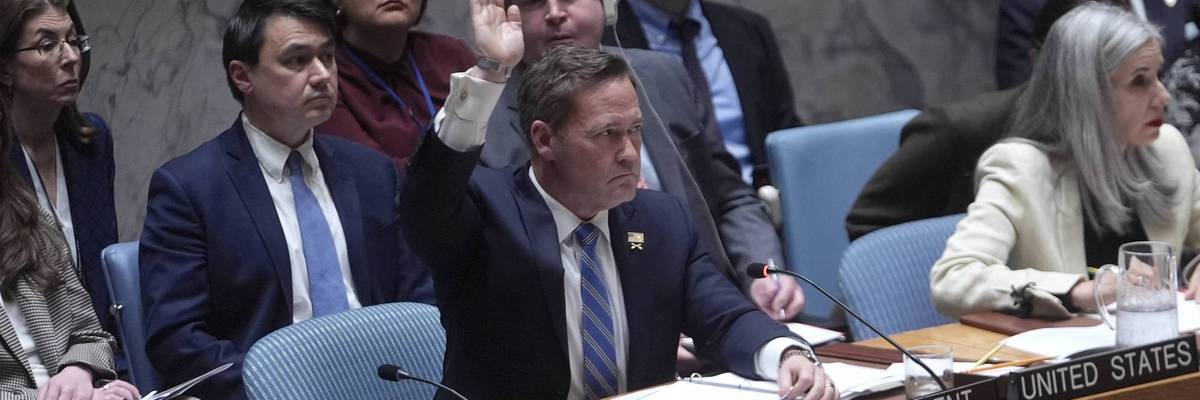
Mike Waltz, US ambassador to the United Nations, raises his hand during a UN Security Council meeting in New York on March 11, 2026. (Photo by Selcuk Acar /Anadolu via Getty Images)
“The very purpose of this biased and politically motivated text, which was pushed by the Israeli regime and the United States, is clear: to reverse the roles of victim and aggressor,” said Iran’s ambassador to the UN.
The United Nations Security Council on Wednesday adopted a resolution condemning Iran’s retaliatory attacks on Gulf nations without denouncing—or even mentioning—the illegal US and Israeli bombing campaign that started the war, which has hurled the region into conflict and destabilized the global economy.
The resolution, sponsored by council member and US ally Bahrain, “condemns in the strongest terms the egregious attacks by the Islamic Republic of Iran against the territories of Bahrain, Kuwait, Oman, Qatar, Saudi Arabia, the United Arab Emirates, and Jordan,” nations that host US military bases. The text calls Iranian strikes “a breach of international law and a serious threat to international peace and security,” but contains no mention of the US or Israel, nations that have been accused of grave war crimes.
The council adopted Bahrain’s measure by a vote of 13-0, with two abstentions—China and Russia. Both nations have veto power but declined to use it. Neither Iran nor Israel is currently a member of the Security Council.
The UN body also voted on a competing resolution, sponsored by Russia, that would have implored “all parties”—without naming any of them—to stop their military operations and avoid escalating the conflict. The resolution did not receive the nine votes necessary for adoption, with the US and Latvia voting against it and Bahrain, Colombia, the Democratic Republic of the Congo, Denmark, France, Greece, Liberia, Panama, and the United Kingdom abstaining.
Amir Saeid Iravani, Iran’s ambassador to the UN, said the body’s adoption of Bahrain’s resolution marks “a serious setback to the council’s credibility and leaves a lasting stain on its record.”
“Today’s action represents a blatant misuse of the Security Council’s mandate in pursuit of the political agendas of certain members,” said Iravani. “The very state responsible for this brutal war of aggression against my country—the regime of the United States—sits on the other side of this chamber as president of the council, abusing its position while obstructing every effort to bring an end to this barbaric war against the Iranian people and preventing the Council from fulfilling its Charter-based responsibilities.”
“This resolution is a manifest injustice against my country, the main victim of a clear act of aggression. It distorts the realities on the ground and deliberately ignores the root causes of the current crisis,” he continued. “The very purpose of this biased and politically motivated text, which was pushed by the Israeli regime and the United States, is clear: to reverse the roles of victim and aggressor. It rewards the regimes of the United States and Israel, which have violated the UN Charter and committed acts of aggression. In doing so, it establishes impunity and sends a wrong message to the international community—emboldening the aggressors to commit further crimes.”
“The UN and International Criminal Court were created for moments like this, when the most powerful decide the rules do not apply to them.”
Ahead of the vote on Bahrain’s resolution, which accuses Iran of “deliberate targeting of civilians and civilian objects,” Iravani said US-Israeli bombing has killed more than 1,300 civilians in Iran and destroyed nearly 10,000 civilian structures across the country, including around 8,000 homes and dozens of schools and healthcare facilities.
Earlier on Wednesday, the New York Times reported that the Pentagon has reached the preliminary conclusion that US forces were responsible for the February 28 bombing of an Iranian elementary school, an attack that killed around 175 people—mostly young children.
DAWN, a nonprofit that supports human rights and democracy in the Middle East, said Wednesday that “mounting evidence” shows US and Israeli forces “have committed multiple war crimes” in Iran and Lebanon—which is facing a rapidly worsening humanitarian disaster due to Israeli attacks.
“In mere days, US and Israel forces have launched a war of choice, killed hundreds of civilians, displaced hundreds of thousands, bombed scores of schools, health facilities, and fuel depots, and dropped white phosphorus on civilian communities,” Omar Shakir, DAWN’s executive director, said in a statement. “The international community’s failure to act when the most fundamental norms of international law are being challenged risks plunging the world further into a lawless era in which civilians across the globe are at risk.”
“The UN and International Criminal Court were created for moments like this, when the most powerful decide the rules do not apply to them,” said Shakir. “Governments unwilling to invoke international law when their allies commit crimes have no credibility when they invoke it against rivals.”
Keir Starmer explains that UK is participating defensively in Trump and Israel’s criminal war for Israel’s genocidal expansion in Iran and states that he supports Zionism “without qualification”. Starmer said it here: https://www.jewishnews.co.uk/keir-starmer-interview-i-will-work-to-eradicate-antisemitism-from-day-one/Keir Starmer objects to criticism of the IDF. He asks how could anyone object to them starving people to death, forced marches like the Nazis did, bombing Gaza’s hospitals and universities, mass-murdering journalists, healthworkers and starving people queuing for food, killing and raping prisoners and murdering children. He calls for people to stop obstructing his genocide for Israel.Orcas discuss Genocide-supporting and complicit Zionists. Donald Trump, Keith Starmer, David Lammy, Rachel Reeves, Angela Rayner and Wes Streeting are acknowledged as evil genocide-complicit and supporting cnuts.
This work by Middle East Monitor is licensed under a Creative Commons Attribution-NonCommercial-ShareAlike 4.0 International License.
Attacks by Israeli settlers on Palestinians in the occupied West Bank have increased
Attacks by Israeli settlers on Palestinians in the occupied West Bank have increased, as settlers exploit movement restrictions imposed by the Israeli army since the start of its offensive against Iran, according to reports. At least five Palestinians have been killed in recent days.
Rights groups and medical teams said settlers had intensified assaults on Palestinian villages and towns, taking advantage of military checkpoints that restrict Palestinian movement and delay ambulances from reaching the wounded.
The Israeli army has closed many roads across the West Bank with iron gates and earth mounds since the first day of the offensive. It has also shut most crossings with Israel, describing the measures as pre-emptive security steps.
In a related context, the United Nations said about 700 Palestinians had been displaced by settler attacks since the start of 2025 until early February 2026.
Meanwhile, the Israeli government has continued to expand settlement activity in the West Bank. Finance Minister Bezalel Smotrich said the settlement building campaign aims to undermine the idea of establishing a Palestinian state.
This work by Middle East Monitor is licensed under a Creative Commons Attribution-NonCommercial-ShareAlike 4.0 International License.
Orcas discuss how Trump was re-elected and him being an obviously insane, xenophobic Fascist.Keir Starmer objects to criticism of the IDF. He asks how could anyone object to them starving people to death, forced marches like the Nazis did, bombing Gaza’s hospitals and universities, mass-murdering journalists, healthworkers and starving people queuing for food, killing and raping prisoners and murdering children. He calls for people to stop obstructing his genocide for Israel.Orcas discuss Genocide-supporting and complicit Zionists. Donald Trump, Keith Starmer, David Lammy, Rachel Reeves, Angela Rayner and Wes Streeting are acknowledged as evil genocide-complicit and supporting cnuts.
This work by Middle East Monitor is licensed under a Creative Commons Attribution-NonCommercial-ShareAlike 4.0 International License.
Spanish Prime Minister Pedro Sanchez gives a speech in the Spanish capital Madrid on March 04, 2026. [Burak Akbulut – Anadolu Agency]
The Islamic Resistance Movement (Hamas) on Wednesday welcomed the Spanish government’s decision to withdraw its ambassador from Israel and reduce its diplomatic representation.
In a statement received by Quds Press, the movement said the step continues what it described as the honourable positions of the Spanish government and people in rejecting what is happening in the Gaza Strip.
Hamas said the decision reflects opposition to what it called the genocide faced by the Palestinian people in Gaza, as well as rejection of Israeli violations of international law. It described the move as a noble position that shows a genuine commitment to humanitarian values.
The movement praised what it called Spain’s “courageous” stance and urged other countries to take similar measures, including cutting various forms of relations with Israel.
It also called for international pressure on Tel Aviv to stop what it described as ongoing crimes and attacks against Palestinians, as well as assaults that it said affect other peoples in the region.
This work by Middle East Monitor is licensed under a Creative Commons Attribution-NonCommercial-ShareAlike 4.0 International License.
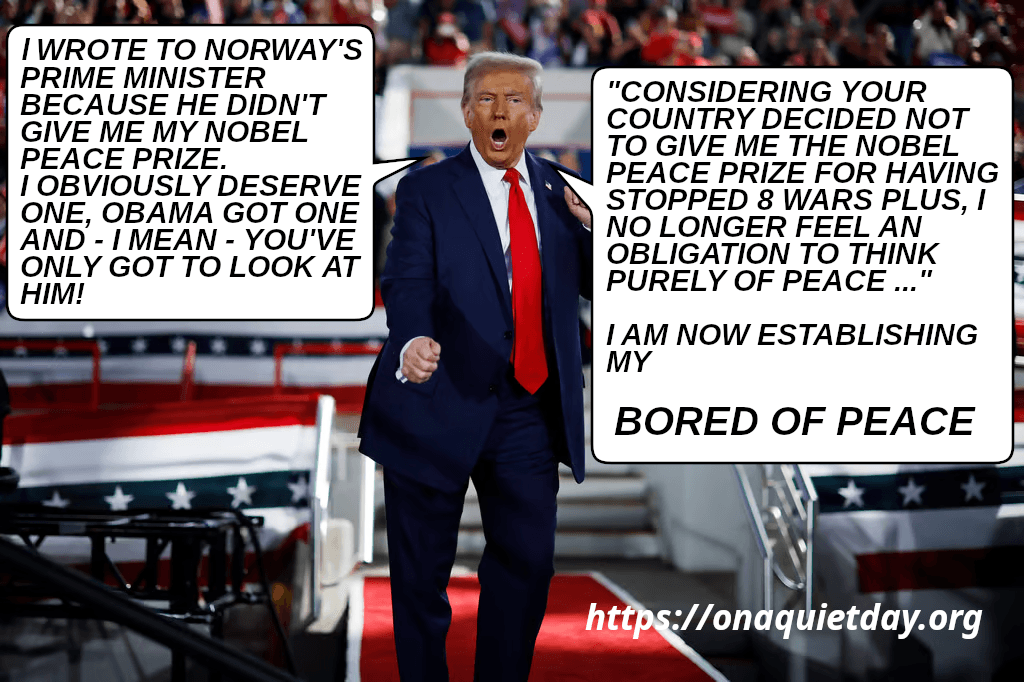
Keir Starmer objects to criticism of the IDF. He asks how could anyone object to them starving people to death, forced marches like the Nazis did, bombing Gaza’s hospitals and universities, mass-murdering journalists, healthworkers and starving people queuing for food, killing and raping prisoners and murdering children. He calls for people to stop obstructing his genocide for Israel.Donald Trump explains why he established his Bored of PeaceOrcas discuss Genocide-supporting and complicit Zionists. Donald Trump, Keith Starmer, David Lammy, Rachel Reeves, Angela Rayner and Wes Streeting are acknowledged as evil genocide-complicit and supporting cnuts.

 The then UK Ambassador to the US, Peter Mandelson arriving at the Cabinet Office in central London, June 18, 2025