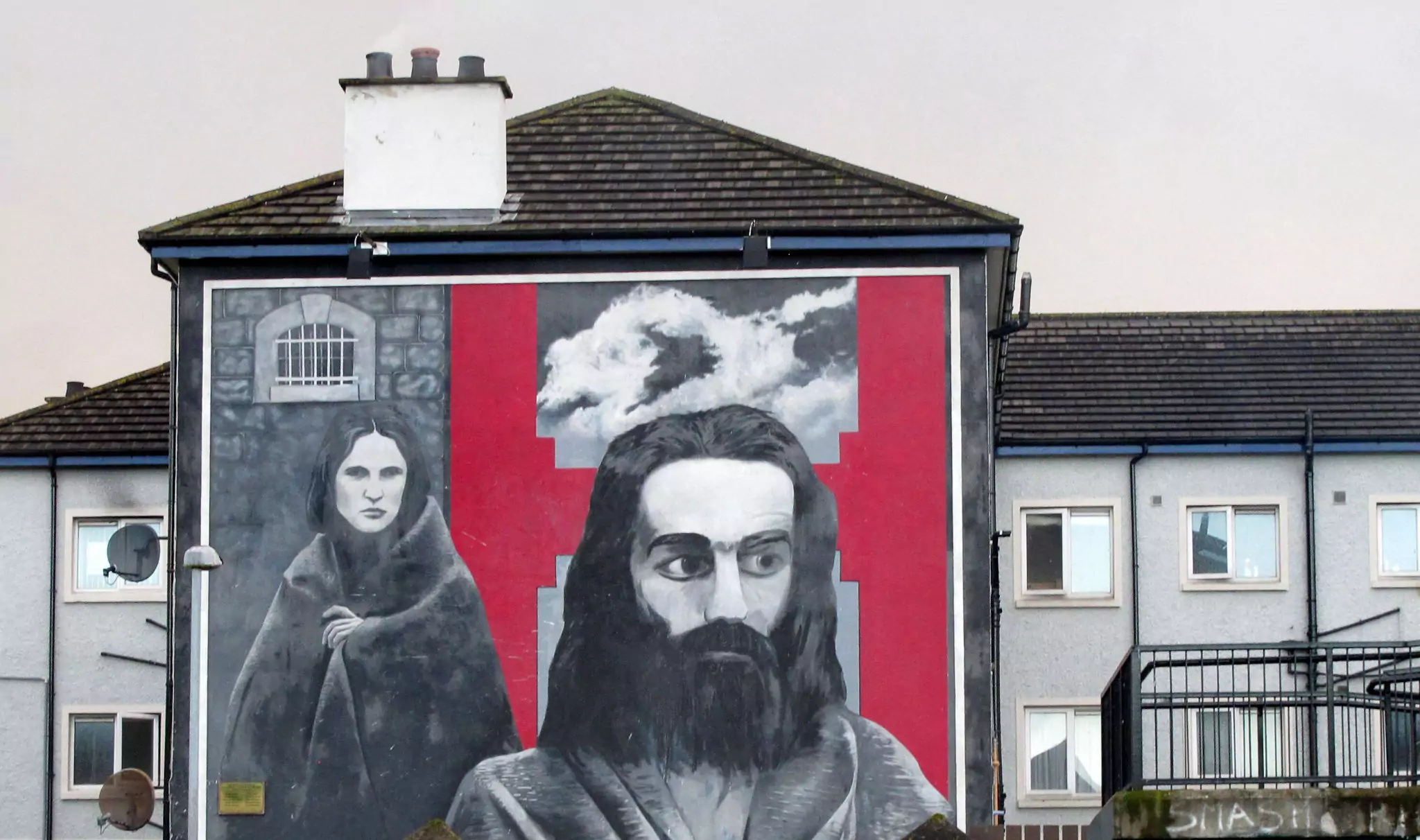
A mural in Derry depicts Raymond McCartney, who took part in the 1980 hunger strike. (Photo: Deirdre Hamill / Alamy)
The UK government planned “covert” measures to monitor “everything” which was said and written by Irish republican hunger strikers in prison in 1980, declassified files reveal.
The strike had been called in response to the removal of political status for convicted paramilitary prisoners, with seven men in HMP Maze refusing their first meal on 27 October.
It ended 53 days later, with some of the hunger strikers claiming the UK government had gestured towards meeting their demands before reneging.
The incident set the scene for the 1981 hunger strike, which saw ten Irish republicans including Bobby Sands starve themselves to death amid a showdown with Margaret Thatcher.
Files released to the National Archives in London now detail how the UK government was acutely concerned about the domestic and international implications of the 1980 hunger strike.
It produced weekly bulletins on the situation, monitored media coverage, liaised with the Catholic church, and even considered meeting some of the strikers’ demands, the files show.
Plans were also made to employ “covert techniques” in order to “find out as much as possible about the day-to-day state of mind of each striker”.
This would apparently include eavesdropping on the prisoners’ private conversations and intercepting mail so that the British state could know “everything” that was said and written.
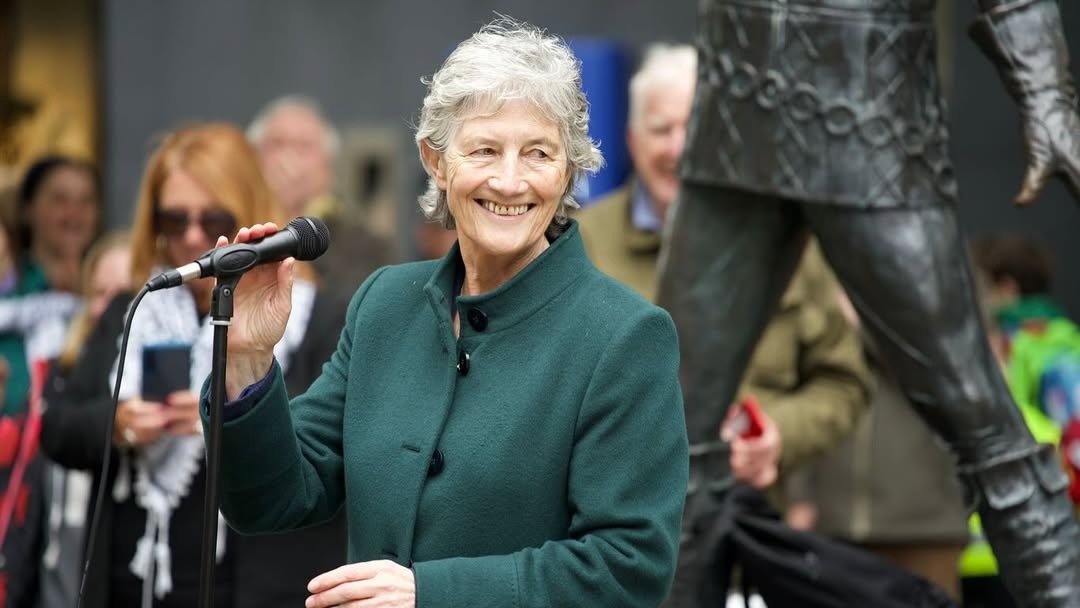
Recently elected Irish President Catherine Connolly. Photo: X
Both Catherine Connolly and Michael D are unabashedly left-wing, absorbed by the struggle for people to live with dignity in Ireland itself and gripped by severe global challenges, particularly those posed by US imperialism.
Catherine Connolly (born 1957) only became involved in active politics in 1999. Michael D. Higgins, the outgoing president of Ireland (2011-2025), encouraged Connolly to join the Labour Party and stand for election. Both Connolly and Higgins (known in Ireland as Michael D) come from Galway, a city on the west coast of Ireland. Connolly was born there, the ninth of fourteen children — seven girls and seven boys — in a working-class family. Her mother died when Catherine was only nine, and her father, a home builder, relied on his older children to care for the younger ones. In this household, Catherine Connolly developed a keen sense of service and discipline, which included involvement in local Catholic charities such as the Legion of Mary and the Order of Malta. This was, as she describes it, Connolly’s road to “her socialism”.
As a lawyer in Galway with a young family (two boys), Connolly ran for and won a seat on the Galway City Council in 1999, later becoming mayor of Galway from 2004 to 2005. Michael D had been mayor from 1990 to 1991. Just as she followed him to City Hall, Connolly has now followed Michael D to the presidency of Ireland.
Ireland is a country divided by British colonialism: most of the population lives in the Republic of Ireland (population 5.2 million), while a part of the island’s population lives in the northern counties still controlled by the United Kingdom (population 1.5 million). There are between 50 million and 80 million people around the world, mostly in the Americas, who claim Irish descent (the most famous person, now featured on an Irish stamp, was Che Guevara). Half the population in the six northern counties have Irish citizenship (while there are nearly three million diaspora Irish with citizenship), making them eligible to vote for the president.
While the president strictly speaking represents the Republic — and even then, in a largely ceremonial role — the post has been shaped by its previous nine holders as a pulpit from which to speak for all of Ireland. Micheal D, a poet as well as a politician, has transformed the post, shaping it into a moral lectern from which to advocate for Ireland’s role in the world based on larger values. This is a post that Catherine Connolly will undoubtedly enjoy.
Both Catherine Connolly and Michael D are unabashedly left-wing, absorbed by the struggle for people to live with dignity in Ireland itself and gripped by severe global challenges, particularly those posed by US imperialism. Connolly said she first entered politics twenty-six years ago because of the housing crisis, the “defining social crisis of our time”. This remains the most important problem for young people in Ireland, many of whom find it impossible to rent decent accommodation near their places of work.
In the 1990s, Ireland’s economy boomed through the liberalization of finance, earning the country the nickname “Celtic Tiger” (a phrase first used by a Morgan Stanley analyst). A low corporate tax rate and membership in the European Union allowed the country to attract tech money and real estate investment. This drove up housing prices, which have not collapsed despite the bust of the Celtic Tiger after the 2008 credit crisis (Ireland suffered a similar fate as Iceland, but with less prison time for its own banking elite). It is estimated that the country suffers a housing shortage of a quarter of a million units, that a new teacher in Dublin would have to use their entire salary to pay rent for a modest apartment, and that while wages rose at 27% between 2012 and 2022, property prices increased by 75%. Connolly spent most of her campaign focused on the direct problems faced by the Irish people, although the presidency can only lift issues into the public debate and advise the elected government.
When I visited Michael D in the presidential residence in 2014, he was gripped by the waste of human resources on war and war-making to the exclusion of solving problems of human life. He was interested in why so much of social wealth was being spent on warfare, when it was clear that war-making (such as with the US War on Terror) merely created more problems than it solved. We discussed the issue of Irish neutrality and how Ireland had slipped from that core principle by allowing the US permission to land warplanes and CIA planes at Shannon airport, the closest airport to Galway. Connolly will follow Michael D into the presidential office with this same concern. She has made vital statements not only against US war-making, but against the Israeli genocide of the Palestinians. In June, Connolly called Israel a “terrorist state”. It is likely that these sorts of statements will continue to be made from Dublin.
Since Éamon de Valera won the prime ministership in 1932 as the leader of Fianna Fáil (the Republican Party), the country has been led back and forth by Fianna Fáil and Fine Gael (the Irish Party). Both are now parties of the right (with close links to the political elite in the United States) and have, since 2020, been in a grand alliance for the prime ministership. Connolly ran against Fine Gael’s Heather Humphreys, who put up a very poor show.
Though running as “independent”, Connolly was backed by the broad left: 100% Redress, the Communist Party of Ireland, the Green Party, the Labour Party, People Before Profit, Sinn Féin, the Social Democratic Party, and the Workers Party, as well as a raft of organizations and movements. The backing of Sinn Féin, the second largest party in parliament, was crucial; the party brings to bear the weight of the republican tradition, which is focused on the unification of Ireland, and the weight of the party’s working-class roots in the cities where the housing question is paramount.
While Connolly has said that she will represent the entire country, she will be largely the voice of the working-class and the oppressed — not the Irish landlords and bankers. Nor will she be kind to US imperialism and its allies.
Though running as “independent”, Connolly was backed by the broad left: 100% Redress, the Communist Party of Ireland, the Green Party, the Labour Party, People Before Profit, Sinn Féin, the Social Democratic Party, and the Workers Party, as well as a raft of organizations and movements.
The broadcaster lost a major defamation case earlier this year after Mr Adams took them to court over a 2016 episode of its Spotlight programme
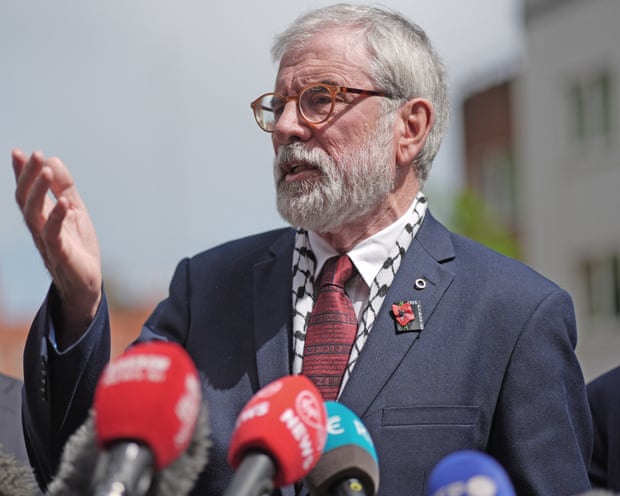
Former Sinn Fein president Gerry Adams (Brian Lawless/PA)
Gerry Adams has said he has made donations to “good causes” after the BBC paid the former Sinn Fein president 100,000 euro (£84,000) in defamation damages.
The broadcaster lost a defamation case earlier this year after Mr Adams took them to court over a 2016 episode of its Spotlight programme and an accompanying online story.
They contained an allegation that Mr Adams sanctioned the killing of former Sinn Fein official Denis Donaldson.
…
[D]onations have been made to “Unicef for the children of Gaza”, local GAA organisations, a support group for republican prisoners and their families called An Cumman Cabhrach, to the Irish language sector, to the “homeless and Belfast based-youth, mental health and suicide prevention projects” and others. …
Former Sinn Féin leader sued broadcaster over allegation in documentary that he sanctioned murder of MI5 informant
Gerry Adams has won a defamation action against the BBC over a documentary that carried a claim he sanctioned the murder of an MI5 informant in 2006.
A jury at Dublin’s high court on Friday found that the BBC had not acted in good faith or in a fair and reasonable way and awarded the former Sinn Féin leader €100,000 (£84,000) in damages
The verdict came after a high-profile four-week trial that scrutinised Adams’s alleged membership of the IRA and his role during Northern Ireland’s Troubles and peace process.
Lawyers for Adams accused the BBC of a “grievous smear” and “hatchet job”. Lawyers for the broadcaster defended the documentary and said the libel action was a cynical attempt to launder Adams’s reputation.
The former West Belfast MP said a BBC Spotlight documentary and accompanying online article defamed him in 2016 by claiming he had sanctioned the murder of Denis Donaldson, a former Sinn Féin official who was shot dead in County Donegal months after admitting he had for decades been a police and MI5 informant. The claim about Adams was made by an anonymous source known only as “Martin”.
Irish lawmakers during the vote on May 28, 2025. Source: Ireland Palestine Solidarity Campaign/X
On May 28, center-right lawmakers voted down a Sinn Féin proposal to limit the sale of Israeli bonds used to finance the genocide in Gaza
On May 28, representatives of conservative parties Fianna Fáil and Fine Gael, part of the current Irish government, voted down a proposal brought forward by Sinn Féin that would have granted the Minister for Finance the authority to restrict the sale of Israeli bonds. The bill was defeated by a margin of 87 to 75, despite support from opposition parties and independent parliamentarians who vote with the government on other issues.
The debate took place in the context of a broader campaign challenging the role of the Central Bank of Ireland (CBI) in facilitating the sale of Israeli bonds within European financial markets. Under EU law, such bonds cannot be circulated without approval from a central bank in the Union. Activists argue that the CBI’s approval of these bonds – which took place even after the beginning of Israel’s genocide in Gaza – makes Ireland complicit in violations of international law, despite statements by government officials expressing support for the Palestinian cause.
According to earlier reports, by the beginning of this year, Israel had raised nearly USD 19.5 billion through the sale of such bonds. Of this amount, close to USD 4.5 billion was raised with the help of major European players such as BNP Paribas and Deutsche Bank, which helped coordinate and recommend bond sales to investors. Israeli officials have made no effort to conceal the planned usage of the funds that were collected. “Israel doesn’t hide the purpose of these bonds,” Sinn Féin leader Mary Lou McDonald said ahead of the vote. “They emphasize, quote, ‘the crucial role of Israel bonds during this time of conflict and war.’ Israel openly invites people to invest in genocide.”
The actions of the government and the CBI greatly contrast with the will of the Irish public, which has demonstrated strong support for Palestine. “Allowing the Irish Central Bank to continue to deal in Israeli war bonds is an endorsement of genocide. It makes Ireland, in my view, complicit,” McDonald said in another statement. “It flies in the face of the ordinary people of Ireland who have marched, protested, campaigned and, with everything they have, stood up for the right of the Palestinians to live and live free.”
Widespread grassroots pressure and mass mobilizations has contributed to the country’s formal recognition of the State of Palestine in May 2024. Opposition parties argue that this public sentiment makes the gravity of the government’s inaction even worse.“There is something very perverse about saying to a people faced with genocide that you recognize them, that you stand with them, while at the same time playing a big part in funding the very weapons that are being used to slaughter their children,” McDonald noted.
Both the government and CBI leadership have argued that blocking the sale of Israeli bonds would be legally impossible. CBI head Gabriel Makhlouf defended the approval process, claiming that the bond prospectus in question met relevant criteria of “completeness, comprehensibility and consistency.” However, activists, including those from the Ireland Palestine Solidarity Campaign, have provided detailed evidence that Israel’s claims within the approval process obscure the bonds’ direct links to the genocide. The campaign also warned that CBI’s role in this matter represents a breach of both domestic and international law, including the Genocide Convention.
“Those who finance genocide under the mantra ‘it’s only business’ are complicit in genocide,” said David Landy of Jews for Palestine – Ireland. “By selling Israeli war bonds, the CBI is implicating all of us, all Irish people, in Israel’s war crimes.”