‘Nightmarish Situation’ as Israel Resumes Assault on Gaza

Spread the love

Original article by JAKE JOHNSON republished from Common Dreams under Creative Commons (CC BY-NC-ND 3.0). 
Search and rescue teams and civilians gather among the rubble of buildings in Deir Al Balah, Gaza on December 1, 2023. (Photo: Ashraf Amra/Anadolu via Getty Images)

“Anything other than sustained peace and at-scale emergency aid will mean catastrophe for the children of Gaza,” said a UNICEF spokesperson.

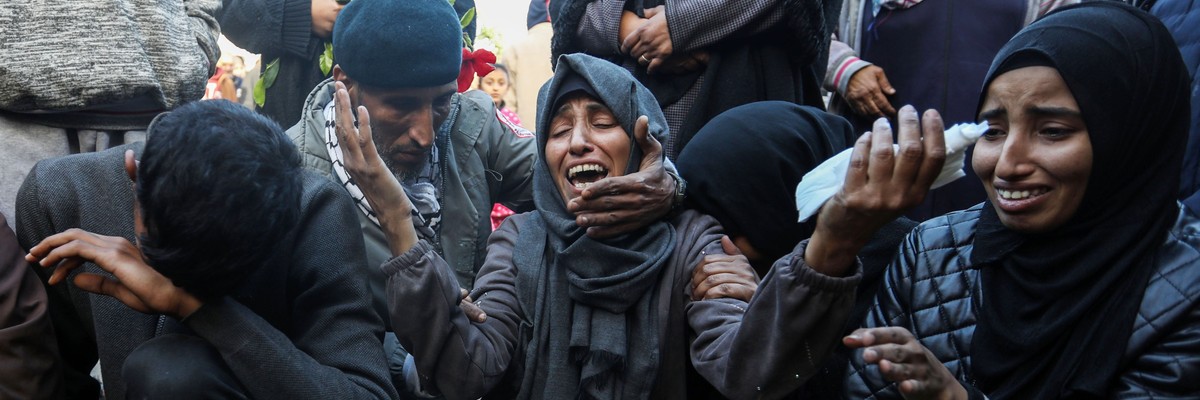
Israel resumed its assault on the Gaza Strip Friday morning just minutes after the pause with Hamas officially expired, ending a fragile seven-day truce that created conditions for the release of hundreds of Israeli and Palestinian captives and allowed additional—but still inadequate—humanitarian aid to enter the besieged territory.

Gaza’s health ministry said that Israel’s post-pause airstrikes killed more than 30 people and wounded dozens more, hitting a multi-story residential building and other civilian infrastructure in the southern part of the strip, where many Gazans sought refuge as Israeli forces targeted the north in earlier stages of its attack.

The Associated Press reported that Israeli forces “dropped leaflets over parts of southern Gaza urging people to leave their homes, suggesting it was preparing to widen its offensive.”

“The Israeli military also released a map carving up the Gaza Strip into hundreds of numbered parcels, and asked residents to learn the number associated with their location in case of an eventual evacuation,” AP added. “It said the map would eventually be interactive, but it was not immediately clear how Palestinians would be updated on their designated parcel numbers and calls for evacuation.”

Robert Mardini, director general of the International Committee of the Red Cross, toldAgence France-Presse that the resumption of bombing drags Gazans “back to the nightmarish situation they were in before the truce took place,” with millions of people in desperate need of food, medicine, clean water, and sanitary living conditions.

“People are at a breaking point, hospitals are at a breaking point, the whole Gaza Strip is in a very precarious state,” said Mardini. “There is nowhere safe to go for civilians. We have seen in the hospitals where our teams have been working, that over the past days, hundreds of severely injured people have arrived. The influx of severely wounded outpaced the real capacity of hospitals to absorb and treat the wounded, so there is a massive challenge.”

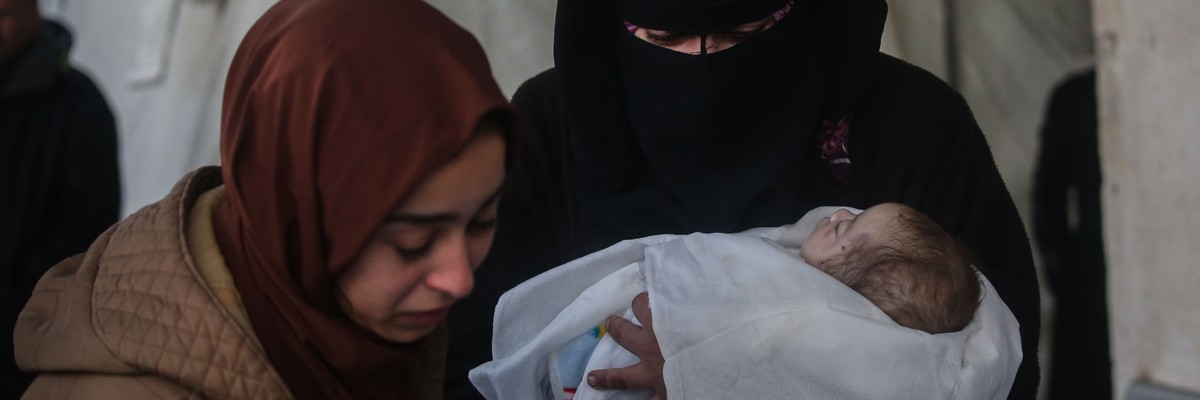
James Elder, spokesperson for the United Nations International Children’s Emergency Fund (UNICEF), warned Friday that “the humanitarian situation in Gaza is so perilous that anything other than sustained peace and at-scale emergency aid will mean catastrophe for the children of Gaza.”

“To accept the sacrifice of the children in Gaza is humanity giving up,” said Elder. “This is our last chance, before we delve into seeking to explain yet another utterly avoidable tragedy.”

Israeli Prime Minister Benjamin Netanyahu, who is clinging to his job amid plummeting approval ratings, had pledged to continue assailing Gaza following the end of the truce, which marked the first pause in fighting since the war began in the wake of a Hamas-led attack on southern Israel in early October.

The Financial Times reported Friday that Israel’s government is preparing for a war that “will stretch for a year or more, with the most intensive phase of the ground offensive continuing into early 2024.”

“The multi-phase strategy envisages Israeli forces, who are garrisoned inside north Gaza, making an imminent push deep into the south of the besieged Palestinian enclave,” FT reported, citing unnamed sources familiar with the planning. “The goals include killing the three top Hamas leaders—Yahya Sinwar, Mohammed Deif, and Marwan Issa—while securing ‘a decisive’ military victory against the group’s 24 battalions and underground tunnel network and destroying its ‘governing capability in Gaza.'”

An investigation published Thursday by +972 Magazine and Local Call found that Israeli forces have used “expanded authorization for bombing non-military targets” and “the loosening of constraints regarding expected civilian casualties,” as well as “an artificial intelligence system to generate more potential targets than ever,” to wage its devastating war on Gaza, killing more than 14,500 people in less than two months and displacing 70% of the territory’s population.

In one case that anonymous Israeli sources described to the two outlets, Israel’s military command “knowingly approved the killing of hundreds of Palestinian civilians in an attempt to assassinate a single top Hamas military commander.”

“Another reason for the large number of targets, and the extensive harm to civilian life in Gaza, is the widespread use of a system called ‘Habsora’ (‘The Gospel’), which is largely built on artificial intelligence and can ‘generate’ targets almost automatically at a rate that far exceeds what was previously possible,” +972 and Local Call found. “This AI system, as described by a former intelligence officer, essentially facilitates a ‘mass assassination factory.'”

U.S. Secretary of State Antony Blinken reportedly urged Israel to do more to protect civilians in Gaza during a meeting with the nation’s leaders on Thursday, but the Israeli government has repeatedly brushed aside public and private concerns expressed by the Biden administration, which continues to provide unconditional support for the assault.

“Blinken suggested that his call for protecting Palestinian civilians had reached receptive ears, at least in general terms,” The New York Times reported. “He did not cite any specific commitments by Israel, however.”

Original article by JAKE JOHNSON republished from Common Dreams under Creative Commons (CC BY-NC-ND 3.0). 

Continue Reading‘Nightmarish Situation’ as Israel Resumes Assault on Gaza

Around a million children in the UK are living in destitution – with harmful consequences for their development

Spread the love

spixel/Shutterstock

Emma Louise Gorman, University of Westminster

Millions of people in the UK are unable to meet their most basic physical needs: to stay warm, dry, clean and fed. This is known as destitution.

Recent analysis from charity the Joseph Rowntree Foundation (JRF) estimates that around 3.8 million people in the UK experienced destitution at some point during 2022. This is a 61% increase since 2019 – and a 148% increase since 2017.

Living in destitution means severe material hardship. The JRF’s 2022 survey of crisis service users in the UK found that 61% reported going without food in the month before the survey. They often put other needs, such as accommodation or feeding their children, over feeding themselves.

About half of the people surveyed were not able to afford adequate clothing and basic necessities, such as toiletries. Many talked of living in insecure and low quality housing.

One particularly alarming aspect of these most recent statistics is the steep increase in the number of children living in destitution. In 2022, around 1 million children lived in households who experienced destitution. This is an increase of 88% since the charity’s corresponding 2019 study, and a 186% increase since the 2017 study.

Impact on children

Destitution causes immediate suffering. But for these children, this experience of hardship at a young age will have consequences that last throughout their lives. There is little doubt that both money and environment (housing quality, parental mental health and nutrition, for example) contribute to inequalities in child development. Both of these factors are affected by living in destitution.

When children reach the age of three, stark differences are already evident between those who live in poverty and those who do not. Children from more well-off families have better developed skills in both cognitive tasks, such as understanding basic concepts like colours, letters, numbers and shapes, as well as socio-emotional skills, such as self-control and resilience.

Other factors that are important in shaping children’s skills include housing quality and parental mental health.

Inequalities so early in life can compound and widen over time. These differences between the disadvantaged and the better off can be seen in educational achievement, health and criminal activity.

These types of inequalities were also exacerbated by the pandemic. While pupils everywhere missed out on education, these learning losses were not equally distributed: young people from lower socio-economic background fell further behind.

Despite large increases in funding for the early-year sectors, socio-economic inequalities in child development have not generally narrowed, particularly in recent years.

And now, the sharp increase in the share of children living in destitution does not paint a optimistic picture for the future.

Making a difference

However, many of these issues can be changed by government policy. For example, we know that being hungry at school makes it difficult to concentrate and learn. Measures that address hunger, then, can make a difference. Analysis of a trial of breakfast clubs in English schools, which offered free breakfast to disadvantaged children aged six and seven, found that the free breakfast lead to the equivalent of two months’ extra progress in reading, writing and maths across the course of one year.

Research has shown that many early interventions – such as high quality childcare and education programmes for at-risk children – can have long-lasting positive effects. From an economic perspective, acting early to lift children out of poverty and improve their home and learning environments can be a cost-effective way of helping in the long run, both for individuals as well as wider society.

Another option would be reform of the benefits system to make sure families have enough money to live. In the 2022 Joseph Rowntree Foundation survey of people who used crisis centres, 72% did receive social security benefits – but were still destitute.

This rise in children living in household experiencing destitution must be given serious attention. Successive governments claim to hold upward social mobility as a important goal – that is, the ability of people to move up the economic and social ladder, regardless of their own upbringing and social background. Reducing destitution would not only benefit children right now, but would help them throughout life.The Conversation

Emma Louise Gorman, Principal Research Fellow, Centre for Employment Research, University of Westminster

This article is republished from The Conversation under a Creative Commons license. Read the original article.

Continue ReadingAround a million children in the UK are living in destitution – with harmful consequences for their development

UK government is ‘violating international law’ over poverty levels, says UN official

Spread the love
Image of a prepayment meter and banknotes

https://leftfootforward.org/2023/11/uk-government-is-violating-international-law-over-poverty-levels-says-un-official/

The UK government is in breach of international law over failing to tackle extreme levels of poverty and destitution in the country, according to a scathing assessment made by the UN’s special rapporteur on extreme poverty and human rights.

It comes after the Joseph Rowntree Foundation recently released a report showing that almost 4 million people experienced destitution in 2022, including more than a million children.

Government data recently revealed that 14.4 million people lived in relative poverty in 2021-22 – a million more than the previous year.

With a cost of living crisis and soaring food and fuel prices as well as increasing housing costs, Olivier De Schutter, the UN’s special rapporteur on extreme poverty and human rights, slammed the UK’s woefully inadequate welfare system, citing research showing universal credit payments of £85 a week for single adults over 25 were “grossly insufficient” and described the UK’s main welfare system as “a leaking bucket”.

https://leftfootforward.org/2023/11/uk-government-is-violating-international-law-over-poverty-levels-says-un-official/

Continue ReadingUK government is ‘violating international law’ over poverty levels, says UN official

Israel Bombs Pediatric Hospital as Death Toll of Children in Gaza Surpasses 4,000

Spread the love

Original article by JULIA CONLEY republished from Common Dreams under Creative Commons (CC BY-NC-ND 3.0). 

Relatives carry the body of 8-month-old Ahmed Barhom during a funeral for members of the same family killed in Israel’s bombardment in Rafah in the southern Gaza Strip on November 6, 2023. (Photo: Said Khatib/AFP via Getty Images)

“These children are not worthless casualties,” said one advocate. “These children are as precious as any innocent children. They don’t just deserve to not die. They deserve to live free.”

As journalists in Gaza reported that the Israel Defense Forces bombed the cancer ward of a pediatric hospital in Gaza City on Sunday, advocates for a cease-fire in the blockaded enclave pleaded with powerful Western countries allied with Israel—including the United States—to take action to stop the bombardment that has now killed more than 4,000 children in one month.

Local news outlets Palestinian HadathMayadeenHaya Jadeeda, and Quds Networkreported that the third floor of al-Rantisi Pediatric Hospital had been hit by an Israeli airstrike, while Reutersreported that eight people had been killed in the attack.

The Daily Beast reported late last month that medical providers in the ward, which is called the Dr.Musa and Suhaila Nasir Pediatric Cancer Department and is the first and only children’s oncology department in Gaza, feared a possible bombing of the hospital, where at least 10 children were receiving in-patient treatment and could not be evacuated when Israeli officials threatened northern Gaza with imminent airstrikes.

“It’s an impossible situation,” said Dr. Zeena Salman, an American pediatric oncologist who has volunteered at the hospital, told The Daily Beast. “There’s a number of patients who are not stable enough to transfer to another hospital. And there may not be enough resources in the hospital.”

Al-Rantisi Hospital has also been providing shelter to around 1,000 civilians since Israel’s total siege in Gaza began last month.

On Sunday, United Nations agencies representing children, women, refugees, and health services issued a joint call warning that “women, children and newborns in Gaza are disproportionately bearing the burden” of Israel’s attack on the enclave, which it commenced on October 7 after Hamas launched a surprise attack on southern Israel, killing 1,400 people and taking more than 200 hostage.

While claiming to be targeting Hamas, the IDF has killed more than 10,000 Palestinians since October 7 as it has bombed hospitalsschools, and refugee camps—all while blaming Hamas for civilian casualties by saying the group is using Palestinian people as “human shields.”

“The idea that ‘they were being shielded by children so we murdered the children too’ is so absent of morality, it’s outrageous,” said author Gabrielle Alexa Noel last week in response to an MSNBC segment in which anchor Joy Ann Reid also condemned the claim.

The death toll in Gaza, said Khaled Engindy of the Middle East Institute, is now the equivalent of “killing 1.5 million Americans, including 600,000 children, in the U.S. in under a month.”

Toby Fricker, spokesperson for the United Nations Children’s Fund (UNICEF), toldThe Guardian that while it can take time to verify the number of dead children and adults in Gaza as hundreds go missing under rubble after bombings, “the numbers are obviously catastrophic.”

“Verification doesn’t occur in real time, which is why we say ‘reportedly killed,’ but, generally speaking, in all conflicts we substantiate initial estimates and in Gaza they have tended to be pretty consistent,” said Fricker, rebuking claims perpetuated by U.S. President Joe Biden recently that Gaza’s health authorities, which are controlled by Hamas, release inaccurate casualty counts.

The U.N. agencies warned that with roughly 50,000 pregnant people in Gaza, children born during the war will be among the most at risk if the U.S. and other countries supporting Israel’s siege don’t join the growing call for a cease-fire. One hundred and thirty premature babies living in incubators are also at risk.

UNICEF Executive Director Catherine Russell also warned last week that for the children who survive the fighting in both Gaza and Israel, the consequences of the trauma they are living through, including the loss of their parents and, in some cases, their entire family will have consequences that “could last a lifetime.”

One UNICEF aid worker stationed in Gaza said last week that her children, aged seven and four, have been “begging for drinkable water and showing signs of severe psychological distress and fear.”

“Since the seventh of this month, my mission in life has become to keep them alive,” the worker, Nesma, told the agency. “I don’t have the luxury to think about my children’s mental health. As a humanitarian worker, I feel absolutely helpless as I cannot provide for my kids with the basic needs of life, let alone the children of Gaza. I keep telling myself, ‘Nesma, keep them alive.’ And when all of this ends, I will provide them with mental support and medical care.”

Sharing the sounds of constant airstrikes on social media, UNICEF said people in areas not experiencing conflict “can choose to turn off this sound. Children in conflicts can’t.”

On Sunday, Dr. Omar Suleiman of the Yaqeen Institute for Islamic Research posted a video of two young children desperately searching for their family members after a bombing at Bureij Refugee Camp when they were reunited with their younger brother, who tearfully told a bystander, “I need my mother.”

“These children are not worthless casualties,” said Suleiman. “These children are as precious as any innocent children. They don’t just deserve to not die. They deserve to live free.”

Original article by JULIA CONLEY republished from Common Dreams under Creative Commons (CC BY-NC-ND 3.0). 

Continue ReadingIsrael Bombs Pediatric Hospital as Death Toll of Children in Gaza Surpasses 4,000

In What Is Called A War

Spread the love

Original article by ABBY ZIMET republished from Common Dreams under Creative Commons (CC BY-NC-ND 3.0).

Gazan father Muhammed Gouda and his baby daughter Misk lay dead at Aqsa Hospital after an Israeli airstrike hit Deir al-Balah  Photo by Mustafa Hassona/Anadolu via Getty Images

We apologize. The unprecedented human tragedy in Gaza hurtles on; we can record only pitiless catastrophe afflicting the innocent, its numbers and names. Over 3,400 Palestinian children have been killed and 6,300 wounded; Israel is hitting ravaged hospitals without fuel or light with de-facto bombings; their mad “leader” is quoting Biblical bloodbaths, declaring a “holy mission” of annihilation, and refusing to stop in the name of vengeance: “This is a time for war.” Once again: Murdering children is not “war.”

Writer Ahmed Nehad bitterly documents a grim former “normal” Gaza: Scarce food, water, electricity, hospital beds, jobs, hope. That “normal” was long met with “deafening global silence” until the Oct. 7 killings of Israeli civilians: Then, “the world sat upright and saw the horror of blood spilled in historic Palestine, when the blood took on a different hue.” In just over three weeks, Israel has dropped over 12,000 tons of bombs on Gaza; they have killed over 8,300, but their “true cost, says UNICEF’s Catherine Russell, “will be measured in children’s lives.” Over 420 children a day are killed or injured, roughly one every 10 minutes; over 2,000 children are missing under the rubble, and likely dead; 70% of the dead are children and women; frantic rescue crews must decide between retrieving dead bodies or trying to dig out wounded ones; entire families have been wiped out, leaving young survivors as orphans asking where their parents are; over 16,000 people have been wounded, with little medical help available; over 1.4 million people, more than half the population, have been displaced; and there is “no safe place in Gaza.”

Including, grotesquely, hospitals, where many have sought shelter. Over 50,000 people have taken refuge at al-Shifa, Gaza’s largest hospital; perhaps 12,000 have fled to al-Quds hospital, the next biggest. But under a siege that has blocked all fuel and medicine, and with over a third of the city’s hospitals shut down, the rest are struggling. Doctors dependent on one generator are operating by flashlight, rationing anesthetics, sterilizing with vinegar or laundry detergent, cutting back on dialysis and chemo treatments, having to choose, “like God,” which of two intensive care babies to save. Meanwhile, “If the electricity goes, it just becomes a mass grave.” Israel has ordered hospitals to “evacuate,” knowing well that’s impossible; says Nebal Farsakh of the Palestinian Red Crescent, “Evacuating them means killing them.” Israel has also issued cruelly pointless “warnings” to “evacuate” before bombardments, face-saving mockeries of humanity that “do not make targeting hospitals less of a war crime,” says Dr. Ghassan Abu-Sittah: “A crime is a crime, even if you make it by appointment.”

On Democracy Now, Dr. Mads Gilbert, a Norwegian physician who’s helped provide emergency care in Gaza for 16 years during “very hectic periods” – Israeli assaults in 2006, 2009, 2012, 2014 – cites an “urgent fear” among colleagues Israel will move to bomb hospitals directly, as opposed to its “de facto” bombardments of nearby sites. He particularly condemns Israel’s threat to bomb the (clearly civilian) al-Shifa based on their claim Hamas’ command center is under it – a claim he’s heard since 2009, with no proof forthcoming despite having walked freely there, slept there, filmed there for years. As he anxiously waits in Cairo for entry to Gaza, he praises health workers who remain, “moral compasses” and “cornerstones of a social fabric” that’s been largely ripped away. “It’s completely absurd that (we) have a state army threatening to bomb hospitals and killing children” – 5,300 to date – “in what is called a war,” he says, blasting Biden’s refusal to demand a ceasefire. “This has to stop. I don’t need to use the word ‘genocide.’ It’s enough to say ‘mass murder of civilians.’ We need to stand up and say we don’t accept this.”

As to Netanyahu, his blood lust is far from sated. On Monday, in a chilling speech experts deemed “an explicit call to genocide,” he termed Israel’s slaughter of innocents “a holy mission” and invoked their ancient foe from the Old Testament: “You must remember what Amalek has done to you, says our Holy Bible: ‘Now go and smite Amalek, and utterly destroy all that they have, and spare them not; but slay both man and woman, infant and suckling, ox and sheep, camel and ass.'” Calls for a ceasefire, he declared with stunning cognitive dissonance, are “a call for Israel (to) surrender to barbarism…The Bible says there is a time for peace and a time for war. This is a time for war.” Still, mournfully, Ahmed Nehad nonetheless pleads for the trifling mercy of a ceasefire, that “a mere handful might endure.” “Grant us the luxury of one last hug,” he writes. “Our end is nigh, rest assured.” Those already dead and documented – name, age, ID number – total 6,747; the number excludes thousands still under rubble or not yet identified. To read the list, you must keep scrolling, scrolling, scrolling. May their memories be for a blessing.

Injured child at Gaza City’s al-Shifa hospital after Israeli airstrikes. Photo by Saeed Jaras/APA Images

Original article by ABBY ZIMET republished from Common Dreams under Creative Commons (CC BY-NC-ND 3.0).

Continue ReadingIn What Is Called A War