A CROWN Court jury has refused to convict four Palestine Action activists accused of causing more than £500,000 of damage at a factory supplying weaponry to Israel.
The four faced charges of criminal damage to a Teledyne Defence and Space factory at Shipley in West Yorkshire.
The activists were reported to have used sledgehammers to smash the roof, windows and the interior of the factory.
In closing speeches, the activists reminded jurors of their rights to acquit according to their conscience.
[dizzy: This article was published April 4, 2024 and refers to the United Kingdom’s previous Conservative government. Since then UK has a new Labour government under UK Prime Minister Keir Starmer. UK violating International law will not have changed since April 2024 and Keir Starmer should be well-aware of legal requirements since he is often referred to as a human rights legal expert.]
The UK government has received internal legal advice that Israel has broken international humanitarian law in its current war on Gaza. The advice was revealed by Alicia Kearns, the Conservative chair of the House of Commons foreign affairs select committee, in a speech to a fundraising event on March 13 and leaked to the UK’s Observer newspaper.
The paper quoted British barrister and war crimes prosecutor Sir Geoffrey Nice as saying: “Countries supplying arms to Israel may now be complicit in criminal warfare. The public should be told what the advice says.”
The Guardian has now revealed that the prime minister, Rishi Sunak, has since received a letter signed by 600 lawyers and academics, including three former supreme court justices – among them Baroness Hale, the court’s former president – as well as former court of appeal judges and more than 60 KCs, warning that UK arms sales to Israel are also illegal under international law.
But what does international law actually say on this issue, and what are the UK’s (and other nations’) legal obligations in relation to the ongoing assault on Gaza?
In recent months, a number of countries have announced they are suspending arms exports to Israel. These include Canada, Belgium, Italy, Spain and the Netherlands, as well as the Japanese company Itochu Corporation. Germany and the US – by far the biggest suppliers of arms to Israel – have not as yet signalled intentions to follow suit.
Neither has the UK. But with arms exports amounting to £42 million in 2022, it is not one of Israel’s major suppliers.
Suspending arms exports to Israel indicates not only political concerns, but also fear over the legality of continuing to support Israel militarily in its assault on Gaza. The Netherlands court of appeal ruled in February that the Dutch government must discontinue its sales of F35 fighter jet parts on the basis of its obligations under the UN arms trade treaty. A similar lawsuit is currently pending in Denmark which exports F35 parts to the US, which then sells the finished jets to Israel.
In the UK, the high court dismissed an attempt to challenge the government’s continued licensing of arms exports to Israel. But this was because the particular procedural hurdle that applicants in such cases have to get over is notoriously high. The judgment said nothing definitive as to Israel’s (or the UK’s) compliance with international law.
Following this, 130 MPs and peers from across party lines recently signed a letter to the foreign secretary calling on the government to suspend arms exports to Israel.
Arms trade treaty
So what is the position under international law of countries, such as the UK, that support Israel militarily? There are many specific and general rules of international law that are relevant here.
The most obvious, and the one emphasised in the British MPs’ letter, is found in the UN arms trade treaty, to which the UK is a party. Article 7 requires a risk assessment for all weapons transfers, and prohibits exports where there is an overriding risk that the weapons could be used to commit serious violations of international humanitarian law (the law of armed conflict).
The only objective test we have for determining risk of future violations is to examine whether there is evidence of a pattern of past violations by Israel. UN reporting of past serious violations is one of the key considerations that the UK’s own policy points to in determining future risk. In 2019, the UK court of appeal suspended arms exports to Saudi Arabia based on the government’s failure to assess whether past violations of international law had likely been committed in Yemen.
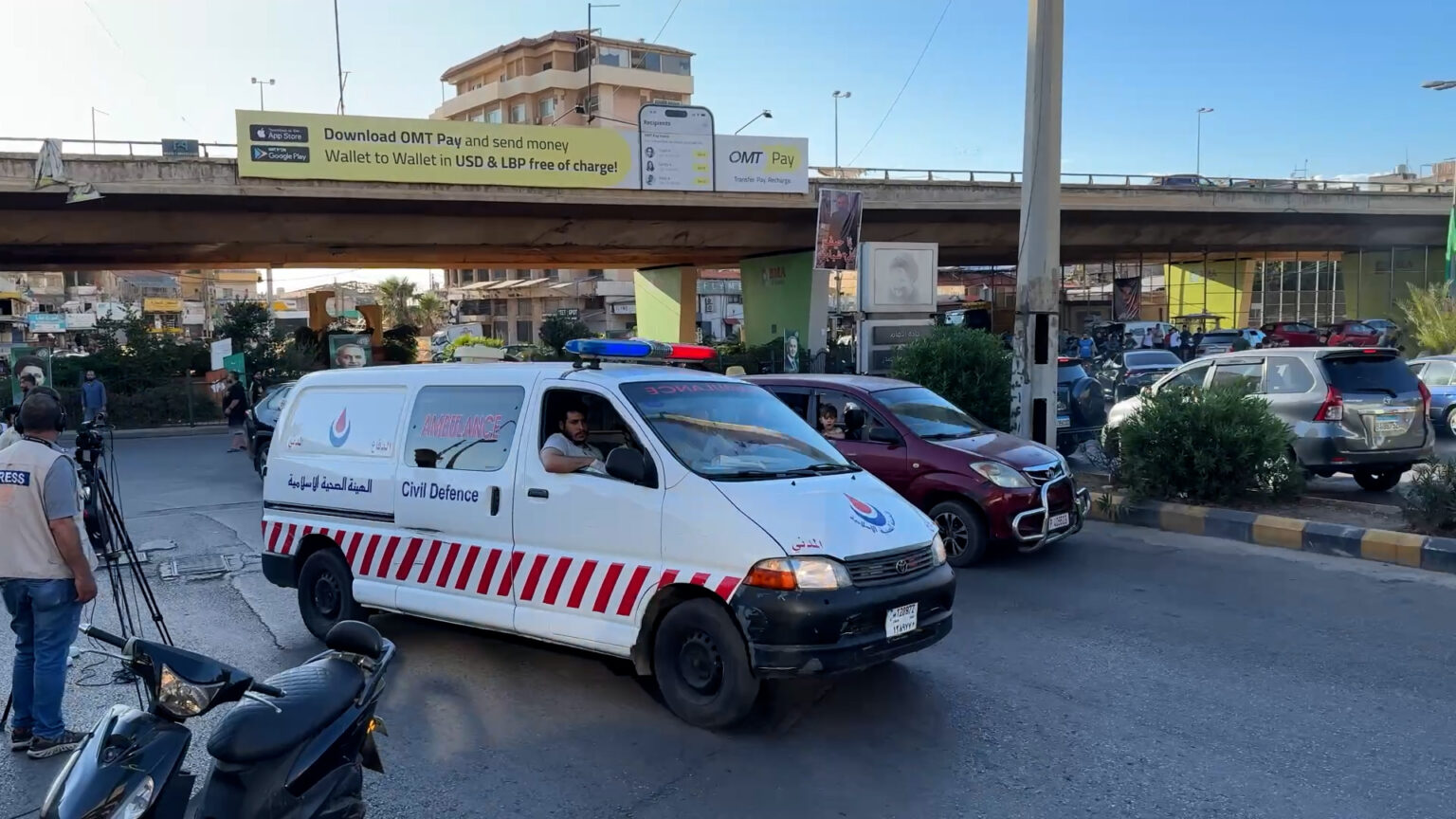
The available evidence suggests there have been countless examples of Israeli actions in Gaza that appear, on their face, to be inconsistent with international humanitarian law. Among the most recent examples are the Israeli attack on an aid convoy on April 1, the destruction of Gaza’s hospitals, and the well-documented famine that now engulfs the territory.
The Hague court of appeal that ordered the Dutch government to suspend arms exports to Israel relied on reports from Amnesty International and the UN when it listed multiple examples of apparent violations of the law of armed conflict in Gaza.
And in the long-awaited UN security council resolution adopted on March 25, with the US abstaining, the security council condemned “all attacks against civilians and civilian objects, as well as all violence and hostilities against civilians”, and demanded the flow of humanitarian assistance into Gaza, in line with international humanitarian law.
This suggests a pattern of past serious violations and thus a clear risk of continuing violations. So, signatories to the arms trade treaty continuing to supply weapons to Israel likely do so in breach of article 7.
Geneva conventions
Yet all nations have other obligations that take on particular importance in relation to Gaza. One of these is the obligation to prevent genocide under article 1 of the Genocide convention (which was the focus of the letter to the prime minister referred to above).
This is especially relevant since the International Court of Justice (ICJ) determined in January that there is an imminent risk of irreparable harm to the rights of Palestinians in Gaza under the Genocide Convention.
But it also includes article 1 of the 1949 Geneva conventions, which requires states to “ensure respect” for international humanitarian law. There is overwhelming support for the view that this requires all states not only to avoid aiding or assisting violations (for example, through arms exports) but to take proactive steps to ensure warring parties comply with their obligations under international law. They can do so via diplomatic channels or by imposing sanctions.
On March 1, Nicaragua instituted proceedings before the ICJ against Germany (the second-biggest arms exporter to Israel), in part alleging that it is violating article 1 of the Geneva conventions due to its support for Israel.
In this way, all countries are legally obliged to ensure that others comply with international humanitarian law. If the catastrophic destruction, massive civilian death toll and immense suffering of those still alive in Gaza is not enough to pull Israel’s allies into line over their continuing arms sales, it is difficult to conceive of any situation that ever could.
Ellie Chowns, Green Party MP for North Herefordshire. CC image Wikipedia.
The Green Party has voted at its Manchester conference to recognise the Israeli government as an “apartheid” state, as defined by international treaties such as the International Convention on Apartheid (1973) and Rome Statute (1998).
The conference also voted to recognise Israeli military operations in Gaza as a “genocide” as defined under the UN Genocide Convention (1948).
Ellie Chowns, Green Party MP for North Herefordshire, said: “We don’t use terms like genocide or apartheid lightly, but they are a sad reflection of the atrocities being carried out by the Israeli State.
“This motion reflects International Humanitarian Law, including the advisory opinion of the International Court of Justice, and it is essential that British political parties unequivocally uphold these basic minimum standards of international law.”
The conference also reaffirmed support for the Boycott, Divestment and Sanctions (BDS) campaign.
Ellie Chowns said: “We will only see an end to the escalating violence in the Middle East when there are clear incentives for all involved in the war in Gaza to agree to a ceasefire, the release of all hostages and an end to the occupation.
“We will press the UK government to step up its actions, including suspending all arms export licenses to Israel, and full co-operation with the actions of the international courts.
“Without an agreement, the intolerable death toll in Gaza will continue to rise, the hostages will be at greater risk and there will be an increased chance of sleepwalking into a larger regional war.”
Josep Borrell speaks during a press conference at the end of an Informal Foreign Affairs Council (Development Ministers) in Brussels, on February 12, 2023. (Photo: Kenzo Tribouillard/AFP via Getty Images
“Against this backdrop, it is clear that the prospect of a two-state solution—which we have been ritually repeating—is receding ever further while the international community deplores, feels, and condemns, but finds it hard to act.”
European Union foreign affairs chief Josep Borrell on Tuesday urged the international community to stop “radical members of the Israeli government” from thwarting Palestinian statehood and prevent Israel from turning the illegally occupied West Bank into “a new Gaza.”
Speaking to attendees of an Arab League conference in Cairo, Borrell lamented that a Gaza cease-fire agreement “has still not been signed and does not seem likely to be signed in the near future.”
“Why? Quite simply, because those who are waging the war have no interest in putting an end to it,” he continued. “So, they are just pretending… Because, as it turns out, their intransigence is accompanied by total impunity.”
“If acts have no consequences, if blatant violation of international law remains disregarded, if institutions such as the International Criminal Court are threatened, if the International Court of Justice rulings are totally ignored by those who promote a rules-based order, who can be trusted?” Borrell asked.
“Not only is there no pause in the war in Gaza,” he noted. “But what looms on the horizon is the extension of the conflict to the West Bank, where radical members of the Israeli government—Netanyahu’s government—try to make it impossible to create a future Palestinian state.”
Israeli Prime Minister Benjamin Netanyahu and members of his far-right government have openly boasted about their efforts to derail the so-called “two-state solution,” and Israeli lawmakers voted overwhelmingly in July to oppose the creation of a Palestinian state.
Borrell asserted that “a new front is being opened with a clear objective: to turn the West Bank into a new Gaza—in rising violence, delegitimizing the Palestinian Authority, stimulating provocations to react forcefully, and not shying away from saying to the face of the world that the only way to reach a peaceful settlement is to annex the West Bank and Gaza.”
Since last October, Israeli soldiers and settler-colonists have killed more than 600 Palestinians in the occupied West Bank and East Jerusalem, including more than 140 children. Settlers have carried out more than 1,000 attacks including multiple deadly pogroms, during which Israel Defense Forces soldiers stood by, protected, and even joined the attackers.
“Without action, the West Bank will become a new Gaza,” Borrell stressed. “And Gaza will become a new West Bank, as settlers’ movements are preparing new settlements.”
“Against this backdrop, it is clear that the prospect of a two-state solution—which we have been ritually repeating—is receding ever further while the international community deplores, feels, and condemns, but finds it hard to act,” Borrell added.
“What can we do?” he asked, continuing:
We need to raise our voice at the next [United Nations General Assembly] and prevent a sort of “Gaza fatigue,” which will embolden the extremists and postpone once again the idea of a political settlement. We have to launch a process where all parties who want to work on an agenda—a concrete and practical agenda to implement the two-state solution—can work together.
Second, we need to revitalize the Palestinian Authority to support their reform process, but also to support [them] financially.
Third, [we have] to facilitate all attempts at dialogue between Palestinians and Israelis.
Fourth, [we must] not give up on engaging with Israeli civil society, even in this context—and especially in this context. Everyone, not just the Europeans—Palestinians, and Arab civil society, must do it. I know how difficult it is to reconcile both narratives, but it is the only way to move forward…
Fifth, the Palestinians have to reach a common vision, to overcome their divisions, because the more these divisions exist, the more they undermine the legitimacy and representativeness of the Palestinians.
Sixth, the Europeans need to adopt a common approach. That is what I am working tirelessly on, even if the success is limited, because I have never seen such a dividing issue among the Europeans as the Israel-Palestine conflict.
Seventh, the Arab States need also to adopt a truly common approach [to] coordinating and showing solidarity.
“All in all, it means building a balance of power on realistic foundations for the two-state solution—before it becomes, definitely, too late,” Borrell concluded. “I know, it is extremely difficult. However, we must never give up.”
Last month, Borrell called for sanctioning Israeli leaders for hate speech and inciting war crimes in Gaza and the illegally occupied West Bank. He has also called for an arms embargo on Israel.
Israel is currently on trial for genocide at the International Court of Justice. Meanwhile, International Criminal Court Prosecutor Karim Khan is seeking to arrest Netanyahu, Israeli Defense Minister Yoav Gallant, and three Hamas leaders—at least one of whom has been assassinated—for alleged war crimes and crimes against humanity.
Since October 7, when the Hamas-led attack on Israel left more than 1,100 people dead—some of them killed by so-called ” friendly fire“—and over 240 others kidnapped, Israeli forces have killed at least 40,988 Palestinians in Gaza, mostly women and children. At least 94,825 other Palestinians have been wounded. Almost all of Gaza’s 2.3 million people have been forcibly displaced, while Israel’s “complete siege” has starved and sickened people across the enclave, with dozens dying of malnutrition.
AN ISRAELI arms factory in Kent was under siege today [yesterday] after Palestine supporters blockaded its entrance roads.
The Instro Precision factory is part of Israeli-owned Elbit Systems, which is believed to manufacture military drones, pilotless aircraft and other weapons for Israel.
Palestine Action mounted the blockade and vehicles were used to block the entrances.
Activists also covered the premises in red paint, symbolising “Palestinian bloodshed.”
Palestine Action said the factory’s products were not affected by last week’s government announcement that 50 [dizzy:30] out of 320 arms export licences were being suspended.