NHS news review

Spread the love

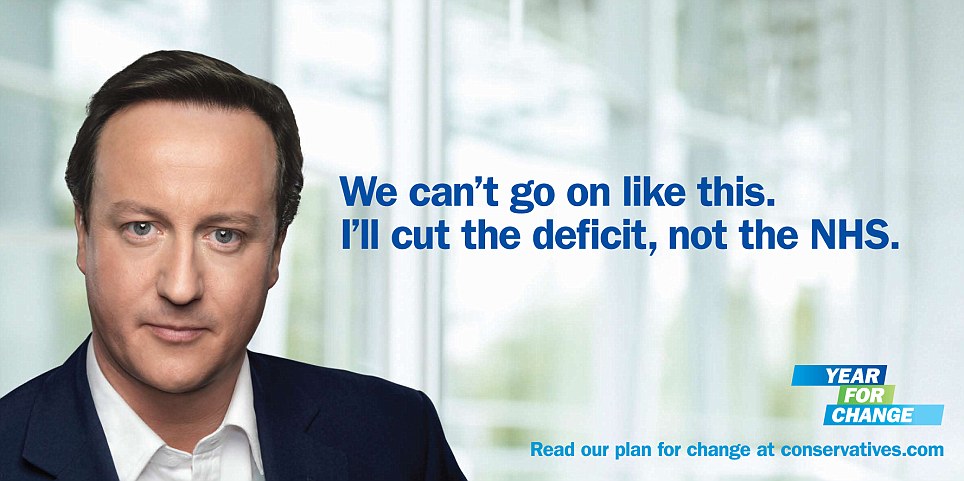
Conservative election poster 2010

A few recent news articles about the UK’s Conservative and Liberal-Democrat (Conservative) coalition government – the ConDem’s – brutal attack on the National Health Service.

David Cameron orders merging of health and social care | Politics | The Guardian

David Cameron has ordered health and social care services to be brought together in order to benefit patients in a move which government advisers are calling the NHS’s most urgent overhaul.

At the moment, health and social care – the help given mainly to old or disabled patients to help them continue to live at home rather than in hospital or nursing homes – are different systems in England. NHS medical treatment and domiciliary support, which is provided mainly by local councils, are usually not joined-up.

But Cameron has told the health secretary, Andrew Lansley, to drive through changes that health policy experts claim will make life more convenient for patients, improve care and save the NHS money.

The changes will lead to some hospitals closing, warned the pro-integration NHS Confederation, which represents hospitals and other major NHS employers.

Andrew Lansley plays down breast implant rupture fears | Politics | guardian.co.uk

Health secretary cites figures pointing to ‘acceptable’ risk and holds out hope for greater assurance by the end of the week

Andrew Lansley, the health secretary, has said he hopes the government’s expert working group will be able to give “definitive advice” on substandard breast implants by the end of the week as he criticised private cosmetic surgery providers for giving “inconsistent and poor quality” data to the review into the risk of rupture.

Speaking on BBC Radio 4’s Today programme, Lansley sought to play down the health risks posed by the French implants, citing figures from the Independent Healthcare Advisory Service, which the service says indicate an acceptably low rupture rate. But he acknowleded that the official advice could change once the review had the complete picture.

“From my point of view I want to give women a degree of reassurance,” he said. He hoped the expert group, chaired by the NHS medical director, Sir Bruce Keogh, give greater assurance about the official advice by the end of the week.

Doctor in Aneurin Bevan protest run over NHS changes – Health News – News – WalesOnline

Dr Clive Peedell is planning to run from Bevan’s statue in Cardiff to the Department of Health, in London, in just six days in a symbolic act opposing the UK Government’s Health and Social Care Bill to reform the NHS in England.

The clinical oncologist, who is based in Middlesbrough, will be joined by anaesthetist Stefan Coghlan, who is the chair of the British Medical Association’s Welsh Council, on the opening miles of the first Cardiff to Chepstow leg of the Bevan’s Run.

Dr Peedell told the Western Mail: “The Health and Social Care Bill does mainly affect England but the knock-on effect for Wales and Scotland could be significant for years to come.

“Bevan was the founder of the NHS and I think he would be appalled at this Bill as it undermines the founding principles of a comprehensive service, free at the point of use whatever people’s medical condition so the most vulnerable have just as good care as anyone else.

“This Bill will undermine that because of the high privatisation element it contains – it will legislate for the external market to bring in more private sector and bankrupt the system.

“The number of core NHS services will shrink. We’re already seeing cutbacks on people who smoke and are obese. As the pot of money shrinks further we will see less and less NHS delivered free at the point of care and a drive towards more insurance.”

Labour should beware of criticising GPs for being double paid | From the Editors | GPonline.com Blogs

Continue ReadingNHS news review

NHS news review

Spread the love

Conservative election poster 2010

A few recent news articles about the UK’s Conservative and Liberal-Democrat (Conservative) coalition government – the ConDem’s – brutal attack on the National Health Service.

NHS waiting list penalties delayed « Shropshire Star

NHS waiting list penalties delayed

Penalties due to be enforced against NHS bodies who fail to treat patients within 18 weeks of being referred by their GP have been delayed

A Government plan to tackle hidden NHS waiting lists has been delayed – just two months after being announced by Health Secretary Andrew Lansley.

Mr Lansley said in November that hospitals would face a clampdown from this year on the number of people languishing on waiting lists for treatment. But according to the Department of Health, although hospitals are expected to make progress towards that goal, penalties will not now be introduced until 2013/14.

Under NHS rules, patients should be treated within 18 weeks of being referred by their GP, but when that deadline is breached there is often no incentive for hospitals to see them.

To tackle this, NHS managers were told in November they had to reduce the number of long waiters from this year – and by about 50,000 by April.

However, according to the Department of Health, penalties will now only be introduced “once progress has been made on validating the backlog data and the NHS has had time to adjust to working to the new standard.”

Strike option on table in doctors’ NHS pensions dispute

Planned changes to NHS pensions could lead to an exodus of doctors retiring early and potential strike action, the British Medical Association warns.

[It is already established that many GPs are retiring early because of NHS ‘reforms’.]

The professional body warned the government against underestimating the animosity caused by planned changes to the NHS scheme – saying it was preparing to poll members on the issue.

BMA Scotland chairman Dr Brian Keighley said there was likely to be an exodus of doctors retiring early and added the BMA had not ruled out a ballot for strike action over pension reforms.

In a New Years message, he said doctors had been under attack on several fronts over the last year.

He said: “Their contracts are being devalued and undermined by NHS employers and now politicians are attacking the NHS pension scheme. It would appear that our political leaders perceive these to be the solution to the country’s national deficit.”

The coalition’s Dickensian take on disability allowance | Society | The Guardian

… keen as I am to celebrate the bicentenary, it is possible to take a tribute too far. The coalition government appears to have embarked upon a wholesale reconstruction of Dickensian society. Housing, education, health, social welfare; everything we have put together since, in order to protect the most vulnerable, is in the process of being dismantled to be replaced by a system that seeks to protect the rich at the expense of … well, everyone else. One cannot fault the scale of the government’s ambition, but as a tribute it is somewhat misguided. It is hard to read the details of the welfare reform bill, for example, being debated in parliament, without picturing Dickens rolling his eyes in dismay.

I recently read an impact assessment compiled by the Department for Work and Pensions on the proposed “reform” of disability living allowance – in other words, getting rid of it. DLA is a benefit designed to help people with the additional costs of living with a severe disability. Applicants must fill in a 50-page form, spelling out the most intimate details of their care and mobility needs. Doctors’ details must be provided together with a statement from someone who knows you well, an occupational therapist or social worker, for example. There are different levels of benefit according to the degree of assistance required, and a large proportion of claims are rejected altogether.

DLA is far from perfect. In particular, it struggles to respond to fluctuating conditions and the assessment form is strongly geared towards physical rather than mental health problems. But because DLA is payable regardless of employment status, it is a highly enabling benefit. A great many people are able to work precisely because their DLA pays for the additional help they need in order to do so.

For a government committed to getting people working, abolishing DLA presents a PR challenge with which the impact assessment grapples heroically. Replacing DLA with a personal independence payment, and slicing 20% off the bill, will “provide an opportunity to … communicate that support is available both in and out of work” it states. A “more objective assessment” (designed to reduce the bill by 20%) will create “a more active and enabling benefit” and – get this – the fact that “those on low incomes have higher rates of ill health” does not mean that “a change in income has an effect on health”. What the dickens?

BBC News – Newsnight – Republican Rick Santorum: ‘NHS devastated Britain’

Rick Santorum has lost the first battle in the fight to be the Republican candidate for the White House, the Iowa caucuses, to Mitt Romney by just eight votes.

Mr Santorum has been an outspoken critic of President Barack Obama’s healthcare programme and has said that similar policies brought about the collapse of the British Empire.

Here Newsnight’s Peter Marshall challenges Mr Santorum on what he meant by that statement.

Related (including Pop twat Bono is Sanatorium’s mate): New Statesman – 10 things you didn’t know about Rick Santorum…

Continue ReadingNHS news review

NHS news review

Spread the love

Conservative election poster 2010

A few recent news articles about the UK’s Conservative and Liberal-Democrat (Conservative) coalition government – the ConDem’s – brutal attack on the National Health Service.

NHS news continues to be dominated by substandard breast implants by the former French company PIP. There are suggestions that private companies involved in originally installing implants are trying to avoid their responsibilities now that the goods are shown to be faulty.

An investigation by mental health charity Mencap claims that institutional discrimination against people with learning disabilities led to at least 74 deaths.

NHS accused over deaths of disabled patients | Society | The Guardian

The NHS is accused of causing or contributing to the deaths of at least 74 patients with a learning disability because of poor care that reveals enduring “institutional discrimination” among doctors and nurses.

The 74 vulnerable patients’ deaths over the past decade were either caused or complicated by mistakes in hospitals and decisions by staff who failed to treat them properly and displayed ignorance or indifference to their plight, according to the charity Mencap and families of some of those who died.

Inquiries by Mencap into the deaths raise searching questions for the NHS, which has been criticised in a series of recent reports for providing poor care, especially to older patients. The parliamentary and health service ombudsman, Ann Abraham, has already ruled that four of the cases highlighted were avoidable deaths and found serious failings in eight others. Inquest verdicts also confirm failings occurred in several cases.

“These cases are a damning indictment of NHS care for people with a learning disability,” said David Congdon, Mencap’s head of campaigns and policy. “They confirm that too many parts of the health service still do not understand how to treat people with a learning disability and they are an appalling catalogue of neglect and indignity. As a result of institutional discrimination in the NHS, people with a learning disability are dying when their lives could be saved.”

In other news, many commuters returning to work today are facing increased fares. Rail transport was a public industry until privatised by a Conservative government transforming it into an expensive, chaotic, poor-quality service run for the benefit of rich Capitalist scum. Privatisation of the UK’s rail service serves as a warning for the  Con-Dem coalition government’s intention to privatise the UK’s national health service (NHS).

Commuters Urged To Complain To Government Over Rail Fare Hikes From 6 To Above 10% | Politics | Sky News


Since yesterday some rail travellers have seen the price of their tickets go up by more than 10% in comparison with fare prices last January.

The Campaign for Better Transport (CBT) has urged rail travellers to contact the Treasury by tweets, text messages or phone calls to show Chancellor George Osborne their anger at the increases.

The CBT is joining the Transport Salaried Staffs’ Association in a demonstration against the fare rises which is being held outside St Pancras station in London.

Last week the CBT released figures which showed that some British commuters are paying between three-and-a-half and nearly 10 times more for some season tickets than some of their European counterparts.

Continue ReadingNHS news review

NHS news review

Spread the love

Conservative election poster 2010

A few recent news articles about the UK’s Conservative and Liberal-Democrat (Conservative) coalition government – the ConDem’s – brutal attack on the National Health Service.

NHS news is dominated by the substandard breast implants made by the French company PIP.

A story by the Guardian from about a week ago David Cameron’s pledge to protect NHS clouded by emerging reality of cuts | Society | The Guardian.

Day by day, the hope that frontline NHS services would somehow remain magically untouched by the coalition’s austerity drive is revealed as a fantasy. The problem for David Cameron and his health secretary, Andrew Lansley, though, is their repeated promises – in opposition and in government – that the NHS was different, its budget would be ringfenced and that care would be maintained. That was encapsulated in the prime minister’s clear pledge that “We’ll cut the deficit, not the NHS”. But what was politically useful then is becoming politically perilous now.

A survey of its members carried out by Doctors.net.uk reveals that four out of five GPs and hospital doctors have seen cuts to staff or services in their own part of the NHS in the last year. It was a small sample, just 664 respondents; and it was self-selecting, which tends to skew any poll towards the malcontented, and thus exaggerate the negative. But key organisations working at or near the frontline agree that the findings give a broadly accurate picture of the emerging reality in the NHS.

In Surrey and Hampshire dozens of children with ME or chronic fatigue syndrome are preparing to lose the support of a consultant and a nurse specialising in that condition, as both the Frimley-based health professionals are not being replaced. In Lewisham, south London, almost £500,000 has been chopped in this financial year from the budget for children’s mental health services. In Camden, north London, doubt surrounds the future of the InterAct Reading Services charity, which gets actors to read stories to hospital patients to help their rehabilitation, because local primary care trusts (PCTs) – which are being abolished in April 2013 as part of the coalition’s NHS shake-up – have reduced or withdrawn funding ahead of their disappearance.

NHS-funded public health observatories in London, the north-west and the north-east – which are not scheduled to close – are nevertheless also at risk, says the Commons health select committee.

Some PCTs have reduced the amount of Viagra they will supply to men with erectile dysfunction. In Lambeth, south London, the PCT has cut the number of patients eligible to receive free incontinence pads, reports Dr Clare Gerada, a local GP and chair of the Royal College of GPs. Access to IVF, cataract removal or a new hip or knee has been tightened by dozens of PCTs. In addition, hospitals appear to be reducing the number of follow-up appointments they give patients suffering with rheumatic, skin or urology problems, as they too, like PCTs, seek to save money and contribute to the ‘Nicholson challenge”, which wants the NHS in England to make £20bn of efficiency savings by 2015.

In Ashford, Middlesex, Dr Peter Kandela, a local GP, tells his patients in his regular surgery bulletin of three different money-saving measures. Some patients have been switched from their usual medication to other branded drugs because the latter “are far cheaper and save the NHS money”. GPs have also been told by the local PCT to stop issuing long-term repeat prescriptions and to hand out scripts for just two months supply of drugs instead, except for the pill. And lastly, “we have received notifications from the skin department at Ashford & St Peter’s hospital that they would no longer accept referrals for benign moles, cysts, skin tags and other non-cancerous conditions. Workload is blamed for these decisions. Sadly, we shall no longer be able to make referrals for these conditions,” Kandela explains.

These are not life-saving services, and indeed removal of unsightly but benign skin tags is arguably not what the NHS is there for anyway. But these services do aid patients’ quality of life, boost their chance of recovering or enhance their mental health. Yet they are increasingly being deemed no longer affordable by NHS bosses.

Dr Mark Porter, chairman of the British Medical Association’s hospital consultants committee, says: “Things like orthopaedic surgery, eye surgery and IVF are not even debatable in the way that tattoo removal might be. There’s an ethical debate to be had about [cutting] some things, but not about things like knee pain and back pain, which can be offered to patients but we are choosing not to.”

No wonder private health providers are starting to see an increase in the number of people prepared to pay for rapid treatment of conditions that their local NHS deemed unnecessary or not an urgent priority.

In other news, housing benefit is getting cut imminently causing a housing shortage and driving the working poor as well as the unemployed and disabled into ghettoes.

Housing benefit cuts will put 800,000 homes out of reach, according to study | Society | The Guardian

A further 800,000 homes will be put out of reach of people on housing benefit because of government welfare cuts – leaving low income families the choice of cutting spending on food to pay the rent or moving out, according to a study by housing experts.

The Chartered Institute of Housing has found there will be thousands more claimants than properties that are affordable on benefits alone, raising the possibility that the poor will migrate to “benefit ghettoes” in seaside towns or the north of England.

From this month, the government has capped housing benefit payments to, for example, a maximum £250 a week on a two-bedroom home. The cut is compounded by the allowances being scaled back by pegging them to the bottom third of rents in any borough.

The result is that in many towns and cities there will not be enough affordable homes to rent for those claiming local housing allowance, the benefit paid to tenants of private landlords. The problem is most acute in central London, where in two of the country’s richest boroughs – Westminster, and Kensington and Chelsea – more than 35,000 homes will at a stroke be put out of reach of people on housing benefit.

It is unlikely that the poor will be able migrate to cheaper parts of the capital: in Newham, east London, there will be twice as many claimants as there are low-cost homes. In Croydon, 17,000 people will be chasing 10,000 properties.

The effect will be felt not just in south-east England. Before today, Birmingham had more than 37,000 homes with rents affordable on welfare. Now 34,500 housing benefit claimants will be chasing 23,000 low-cost houses, according to the analysis, carried out for the Guardian. On the Mersey, 21,000 people collecting local housing allowance will only be able to afford 12,000 homes in Liverpool.

The changes will also see people forced to move from where jobs are to where there are far fewer, the institute warns. “The analysis shows that big cities where we expect to find most of the jobs and the most varied employment are the worst hit by the government changes. If this (is supposed) to help people in terms of getting them into work then it looks as if it will not succeed.”

Charities said the analysis vindicated their warnings that the government’s plan will cause homelessness. Leslie Morphy of the charity Crisis said: “The figures make clear that there will just not be enough properties anywhere that are affordable on these reduced benefit levels. With unemployment rising and more people relying on housing benefit, yet soaring demand for properties, the government’s plans just don’t add up – we urge them to stop and reconsider.”

Continue ReadingNHS news review

NHS news review: Cameron confirms that the intention is to privatise the NHS

Spread the love

Best wishes for the new year.

Seven former presidents of the Faculty of Public Health accuse the Prime Minister of ploughing ahead with an “unprecedented marketisation” of services, which poses a “major threat” to the integrity of the NHS.

David Cameron confirms that the intention is to “… drive the NHS to be a fantastic business“. How is that anything other that the privatisation of the NHS?

Watch the video here VIDEO BLOG: Cameron wants the NHS “to be a fantastic business” « sturdyblog

Drop perilous NHS reforms, say leading health professionals – Health News – Health & Families – The Independent

David Cameron faces fresh calls to abandon his NHS reforms, as a group of leading public-health experts predicts that the changes will “exacerbate inequalities” in the health of the nation.

Seven former presidents of the Faculty of Public Health accuse the Prime Minister of ploughing ahead with an “unprecedented marketisation” of services, which poses a “major threat” to the integrity of the NHS.

In a letter to Mr Cameron, the group warns: “The Bill is likely to produce a ‘patchwork quilt’ health system that will vary hugely across the country, failing to meet the diverse needs of the population and undermining the health of vulnerable, minority groups.”

27/11/13 Having received a takedown notice from the Independent newspaper for a different posting, I have reviewed this article which links to an article at the Independent’s website in order to attempt to ensure conformance with copyright laws.

I consider this posting to comply with copyright laws since
a. Only a small portion of the original article has been quoted satisfying the fair use criteria, and / or
b. This posting satisfies the requirements of a derivative work.

Please be assured that this blog is a non-commercial blog (weblog) which does not feature advertising and has not ever produced any income.

dizzy

Continue ReadingNHS news review: Cameron confirms that the intention is to privatise the NHS