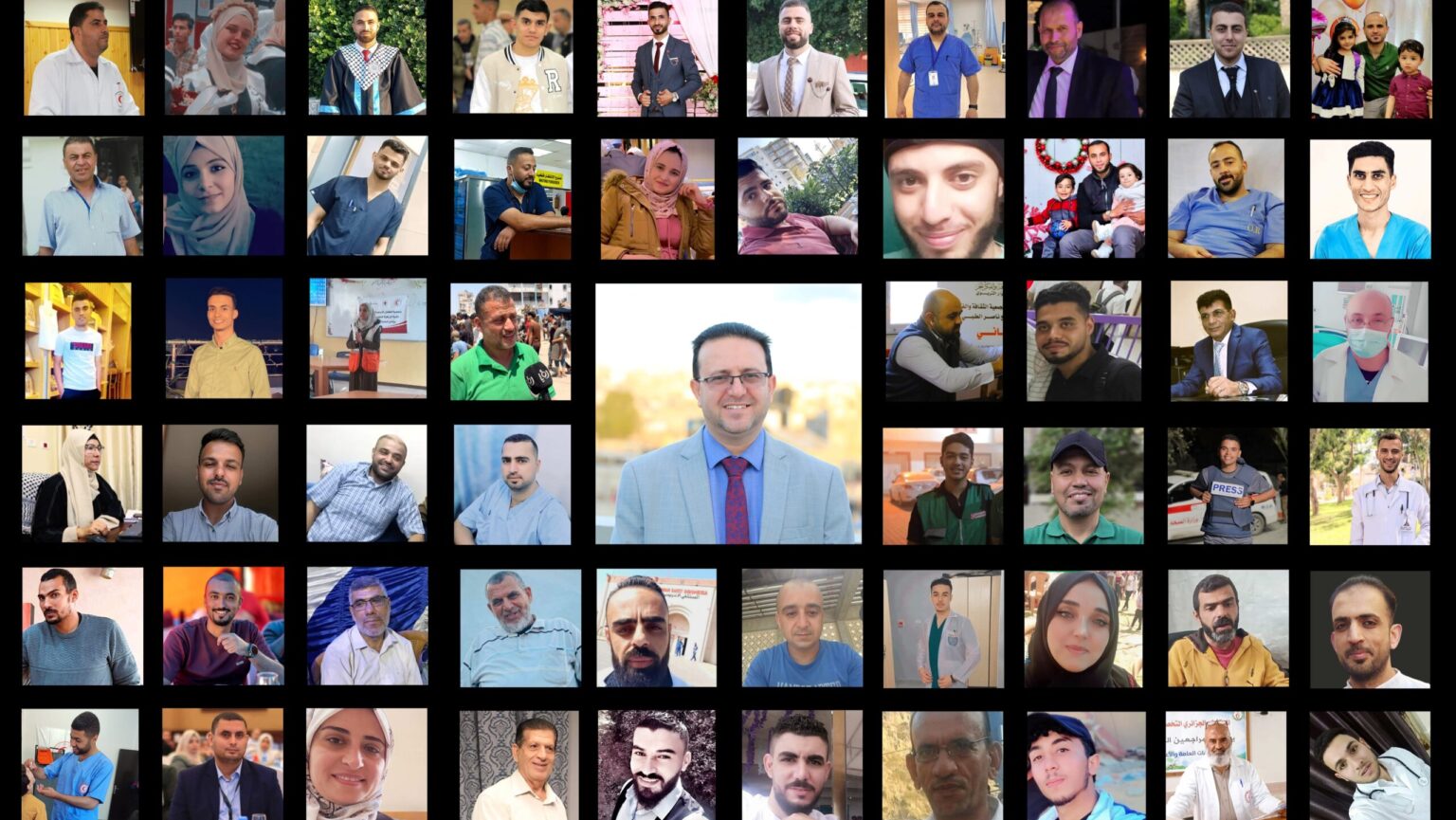
Journalist Burned To Death By Israeli Air Strike


https://morningstaronline.co.uk/article/badenoch-green-lights-local-reform-pacts

KEMI BADENOCH took the first tentative steps towards agreement with the hard-right Reform party today.
The Tory leader green-lighted local deals by Tory councillors to take control of councils in partnership with Nigel Farage’s supporters.
Ms Badenoch claimed that she still ruled out a national deal with Reform to unite the right-wing, but local pacts will be a clear stepping stone towards some type of agreement.
Most opinion polls now show Reform leading the Tories, and sometimes Labour too.
It is estimated that the split between the two right-wing parties might have handed Labour as many as 100 seats at last year’s general election.
Tory strategists fear that, despite Labour’s polling slump, that outcome could be repeated at the next election in the absence of any deal with Reform.
…
https://morningstaronline.co.uk/article/badenoch-green-lights-local-reform-pacts


https://morningstaronline.co.uk/article/cops-to-probe-gaza-atrocities-by-ten-britons

POLICE are assessing evidence that 10 British nationals committed war crimes in Gaza including sniping down children and aid workers.
Lawyers handed evidence accusing the group of the murder and torture of civilians while on active service with the Israeli military to the Metropolitan Police’s war crimes unit yesterday.
Speaking outside New Scotland Yard, they said their 240-page dossier is “just the tip of the iceberg,” with reports of more than 100 Britons having served with Israeli Defence Forces (IDF) since October 2023.
Nearly 100 legal and human rights experts have signed a letter urging the War Crimes Team to investigate the dossier by the Palestinian Centre for Human Rights (PCHR) and the Public Interest Law Centre (PILC).
PILC legal director and founder Paul Heron said that the report is based on six months of extensive evidence-gathering using open-source evidence and witness testimony.
It shows 10 Britons “committed war crimes and crimes against humanity while serving for the Israeli military on active service in Gaza,” he said.
…
Original article at https://morningstaronline.co.uk/article/cops-to-probe-gaza-atrocities-by-ten-britons
British complicity in genocide: the case for justice
SINCE the Netanyahu government engineered the collapse of the ceasefire, Israel’s crimes in Gaza have escalated horrifically, killing 400 people in one night and more than 100 children a day on average since last month.
Israel has been exposed executing paramedics and rescue workers and hiding their bodies and vehicles and has killed more journalists during the genocide than died during the US civil war, both world wars, Korea, Vietnam, Cambodia, Laos, Yugoslavia, Afghanistan and Russia combined.
…
Original article by Mary-Ann Stephenson republished from Open Democracy under a Creative Commons Attribution-NonCommercial 4.0 International licence.

While the staggering £5bn of planned cuts to disability benefits announced by chancellor Rachel Reeves at last week’s Spring Statement have rightly been the subject of much scrutiny, the disproportionate suffering they will inflict on women has been under-discussed both by politicians and the media.
The government’s own risk assessment found the cuts will push 250,000 adults and 50,000 children in the UK below the poverty line. Women, who are both more likely to be Disabled and more likely to be a carer for a loved one, will be worst affected.
Indeed, single Disabled women make up 44% of those due to lose out from the cuts, and face an average loss of £1,610 per year, the government’s Equality Impact Assessment found.
This demographic has already been significantly affected by austerity cuts to social security and public services since 2010. Such measures, taken together with tax changes, will cost Disabled women an average of £4,000 a year by 2028, according to an analysis that we at The Women’s Budget Group (WGB) published in September last year.
That means, for many Disabled women in the UK, Reeves’ latest cuts follow what has already been an 11% drop in their living standards over the past 15 years. Cutting their living standards further is unthinkable.
Women also make up the majority of the UK’s unpaid carers, who provide care and support to family members, friends, or neighbours. They, too, will be hit hard by the changes.
When a person receives the Personal Independence Payment (PIP) – a benefit to help with the extra costs incurred by long-term ill health or disability – their unpaid carer may be entitled to the Carer’s Allowance benefit. The government plans to reduce the number of people eligible for PIP, which in turn will reduce the number of people eligible for Carer’s Allowance.
A couple where one person loses PIP and the other therefore loses Carer’s Allowance could be over £12,000 worse off annually, according to calculations by anti-poverty charity The Joseph Rowntree Foundation.
Reeves failed to acknowledge this knock-on impact in her speech. Worse still, the Equality Impact Assessment of these changes that was published as the chancellor was still speaking, also made no reference to it (although these impacts were included in the distributional assessment published at the same time).
What’s more, restricting the eligibility for PIP may increase the number of unpaid carers if a Disabled or chronically ill person is no longer able to rely on the benefit to pay somebody to provide their care. This may force women who are currently just about managing to stay in work to reduce their hours or quit their jobs altogether to take on additional care duties for loved ones.
Forcing women out of the workforce in this manner is not only detrimental to their health and wellbeing, it directly undermines the government’s claim that the measures are necessary to reduce economic inactivity.
At the same time, cutting PIP may push some disabled people out of the labour market if they can no longer afford the adaptations and services that enable them to work.
Years of austerity have already weakened our economy and eroded our living standards, leaving us ill-prepared for economic shocks. Cutting vital social security and public services is not the path to improving living standards.
Ahead of the Spring Statement, the WBG, along with more than 40 women’s organisations across the UK, wrote an open letter to the chancellor highlighting the gendered nature of these cuts – and urging her to consider more equitable ways to raise revenue.
Rather than targeting some of the most vulnerable members of our society, the government should be looking into taxing those with the broadest shoulders in our society.
A 2% wealth tax on assets over £10m could raise up to £24bn a year – far exceeding the savings from the proposed disability benefit cuts. This measure has already been called for by Tax Justice UK, which campaigns for a fairer tax system, and Patriotic Millionaires UK, which describes itself as a nonpartisan network of British millionaires.
A wealth tax of this kind could be used for much-needed investment in the foundations of our economy, including our social infrastructure – from childcare and education to social care and local government services.
Moreover, it’s what the public wants. Some 77% would rather the government increase taxes on the very richest than cut public spending, according to recent polling by YouGov for Oxfam.
Investing in social security and public services is not just a cost, but an investment in our society and economy. By choosing to cut benefits instead of implementing a wealth tax, the Government is not just balancing numbers on a spreadsheet. It is making a political choice – one that will deepen inequality and harm those who are already struggling.
Original article by Mary-Ann Stephenson republished from Open Democracy under a Creative Commons Attribution-NonCommercial 4.0 International licence.