We saved lives at sea. So why did Italy detain our boat?

Spread the love

Original article by Nathan Akehurst republished from Open Democracy under a Creative Commons Attribution-NonCommercial 4.0 International licence

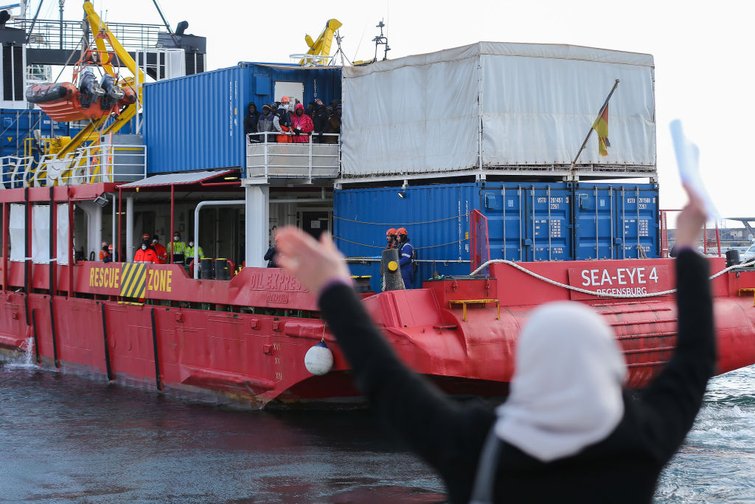
A woman greets the people on board the Sea-Eye 4 rescue ship as it arrives in Naples, Italy in June 2023  | Marco Cantile/LightRocket/Getty Images. All rights reserved

We were fined and our boat blocked after we rescued 114 people. It’s a political campaign to make movement illegal

Hope arrived on the radio, late in the afternoon with August sunshine blasting the deck.

After tortuous negotiations with authorities from four countries, Italy had finally granted us a port of safety. We were allowed to disembark the people we had rescued, in accordance with international law.

We had 114 passengers on board our ship, the Sea Eye 4, where I was volunteering as part of the crew. Overall, we had rescued three boats in distress. Some of the rescued had drifted without food, fuel, or water for days. One man had been unconscious for over 24 hours and would have been unlikely to survive much longer without aid.

But the rescue operation was not where the troubles ended. On reaching port in Salerno, we found our ship detained for 20 days and its operator, the NGO Sea Eye, fined €3,000.

We were one of three ships detained during that week in August 2023. This represented a total loss of 60 operating days during high summer, in a year where at least 2,000 people had already died while trying to cross the Mediterranean.

We were detained under the 2023 Piantedosi Decree, an Italian law which mandates immediate return to port after just one rescue. The law forces crews to make impossible choices. Should you ignore incoming distress calls and risk lives in the present, or risk detention and the ability to save lives in the future?

The decree is not an isolated piece of legislation – in Italy or the EU. It is just one of dozens of policies and laws that have been created to limit the movement of people across borders, and to limit other people’s capacity to help them. For over a decade, European states have withdrawn, denied, or evaded their responsibility to carry out rescues or provide safe ports.

Criminalisation: a refined tactic

It didn’t start off this way. In 2013, horrific twin shipwrecks near Lampedusa led to a serious response from the Italian government – a year-long rescue operation called Mare Nostrum, which saved thousands of lives.

But as the claims grew that Europe was experiencing a ‘migration crisis’, and with wider European support significantly lacking, the mood in Italy changed. Mare Nostrum was cancelled, and in 2017 a ‘code of conduct’ was introduced that restricted the actions of civil rescue ships.

This “Minniti Code” was brought in by centrists seeking to blunt a right-wing surge by proving they were sufficiently tough on irregular migration. It had little effect. Instead, the code handed tools to the far-right (such as the mainstreaming of an anti-migrant narrative and demonisation of rescue operations) that they would build on in later years to make additional gains.

At the end of last decade, rescue crews were being surveilled, wiretapped, and threatened with jail in a vicious offensive led by the Italian right. The sweeping crackdowns were an undeniable effort to criminalise humanitarian action and the movement of people across borders.

This campaign was eventually seen by policymakers as counterproductive. It had caused a huge public backlash, and taking NGOs and individuals to court with little evidence proved costly and time consuming. Undeterred, however, the Italian state switched to bureaucratic harassment.

Using a combination of fines, blockades, the assignment of distant ports of safety and weaponised inspections, they continued to significantly limit the ability of rescue crews to save lives at sea. They just kept a lower profile this time, lessening the potential for public outcry.

Block the rescuers, enable the militias

While Italy harassed rescue workers, it was also busy – together with the EU – handing over responsibility for rescue to violent criminals. The so-called Libyan Coast Guard (LCG) has received boats, equipment, funding, and support to establish a wider search and rescue area. It is routinely given the coordinates of boats in distress by Frontex, the EU border agency.

The LCG attacks, abuses, and violates the rights of people in distress at sea. It also returns them to detention camps in Libya where extortion, torture and exploitation are rife.

When the Libyan coast guard first spotted the rescue boat, they threatened to shoot at the rescuers

On their first mission back at sea after Sea Eye 4’s detainment, the crew arrived at a scene where the LCG was dangerously manoeuvring around a boat in distress, causing people to fall into the water. And when the LCG first spotted the rescue boat, they threatened to shoot at the rescuers.

Sea Eye 4 ultimately did respond to the people in distress, but was unable to prevent four people drowning. When they returned, Italy once again detained the ship and fined its crew for failing to “cooperate” with Libyan forces.

Over a year later, I returned to the central Mediterranean aboard the Humanity 1, a rescue ship run by the organisation SOS Humanity. The day before we sailed, Tunisia’s president Kais Saied was re-elected. He has joined Libya as a staunch ally in Europe’s fight against people migrating. Tunisia, Libya and Morocco have carried out countless “desert dumps”, in which thousands of mostly Black migrants are transported to and abandoned en masse in the Sahara.

Tunisia’s coast guard, which also has a grim record of rights abuses, is becoming more active too. Our most recent mission took place near the recently expanded Tunisian zone of rescue responsibility in the Mediterranean. The expansion of the zone has left rescue crews in that area at even further risk of detainment if they don’t return rescued people to Tunisia.

Whilst we were at sea, Giorgia Meloni launched a new attempt to forcibly transfer people disembarked in Italy to camps in Albania to await deportation. This proved a costly failure when the first twelve detainees immediately returned to Italy after a court judgment. But it provides just one more indication of a very worrying direction of travel for Italy and the EU.

All these efforts to hinder civilian rescue are, of course, partially about limiting the number of people arriving by sea to Europe. But that’s not the whole picture.

All together, the civil fleet only carries out a small proportion of overall rescues in the Med. Its ships brought in just 8% of those arriving in Italy in 2023. The Italian coast guard is still rescuing the rest of those delivered to the country’s shores – even though their area of operations has now shrunk to an area relatively close to the shoreline.

So why go to such great effort to stymie and discredit civil sea rescue? Something else is going on here.

Making movement illegal

Europe speaks loudly about its commitment to human rights and humanitarian values. For years, rescue organisations have pointed to the shallowness of these commitments in the face of thousands dying off European shores.

Europe and its member states have responded by delegitimising rescue workers’ motives and their voices, impugning them as not genuine humanitarians. They accuse the civil fleet of unprofessionalism, of being too political, and of cooperating with ‘smugglers’. When they’re feeling generous, they say rescuers are well-intentioned but their presence at sea encourages people to risk dangerous crossings.

None of this has ever been proven. Every single smuggling case brought against rescue crews has collapsed. And comprehensive studies have debunked the link between the presence of rescue assets and people’s decisions to cross the Mediterranean.

As the EU rewrites its anti-smuggling policy, there is a real risk that the criminalisation of people migrating, and people who assist them, will deepen

But it does not matter anymore. Humanitarian actors in the Mediterranean have already become associated with criminality, and that idea is now embedded in European political discourse. Justified by the claim of ‘countering smuggling’, the EU is seeking to undermine every aspect of irregular movement by criminalising more and more parts of it outright and framing the rest as criminal in essence.

It’s not just rescue workers. From 2015 to 2018 alone, Italy arrested 1,300 people they accused of driving small boats. An Iranian women’s rights activist fleeing persecution and four Libyan refugee footballers who survived a shipwreck were among those caught up in this campaign. Greece has engaged in similar tactics, with thousands of trials taking place and ‘boat drivers’ handed sentences of over 100 years in prison.

Many of the trials are deeply legally unsound, and some have lasted as little as 30 minutes. But their effect on the framing of humanitarian action has a much longer shelf life. Europe and Italy are seeking to tar everyone associated with irregular migration as criminals in the court of public opinion – those on the move and those extending a hand.

‘Counter-smuggling’ doesn’t work

The EU is currently rewriting its anti-smuggling policy, and there is a real risk that the criminalisation of people migrating, and people who act in solidarity with them, will deepen. As with the war on drugs and prohibition-type policies in general, the strategy won’t stop people from doing either of these things. But it will likely get more people killed.

Neither smuggling groups nor rescue actors create the demand for their services. Poverty, violence, and the absence of safe routes do. As borders are enforced more harshly, people attempting to move are forced to rely on more dangerous routes, and sometimes more dangerous actors. More people end up in distress, and more people need to be rescued.

It’s a loop, but not one created by smuggling profits. It exists because governments refuse to see reason.

Another way to understand this is to see ‘countering smuggling’ not so much as a policy approach, but as a political convergence. It’s where the demands of the right for evermore violent border control and the demands of liberals for lip-service to humanitarian principles meet.

This convergence reframes border enforcement as ‘protecting’ migrants from the brutality of gangs. It conjures up a simple enemy, obscuring the agency of people migrating and the reality of their journeys. And it treats movement as a crime, one which necessitates a multinational police and military response.

In turn, this helps the lucrative border and surveillance industry to hijack policy, selling ever more expensive ‘solutions’ to monitoring and controlling movement. Those resources should be going into helping people, not harming them. The first imperative should not be to “smash gangs” but to save lives.

We need the restoration of coordinated search and rescue by the competent authorities. We need safe routes. And we need funding and support both for people arriving and the wider communities they settle in.

At the moment, such vision and compassion seem a long way from the reality of European politics. But the emergency at Europe’s shores is not going anywhere. Not until we reach an approach founded on hope and courage rather than fear and division.

Original article by Nathan Akehurst republished from Open Democracy under a Creative Commons Attribution-NonCommercial 4.0 International licence

Continue ReadingWe saved lives at sea. So why did Italy detain our boat?

Anti-racists outnumber far-right protesters in Glasgow

Spread the love

https://morningstaronline.co.uk/article/anti-racists-outnumber-far-right-protesters-in-glasgow

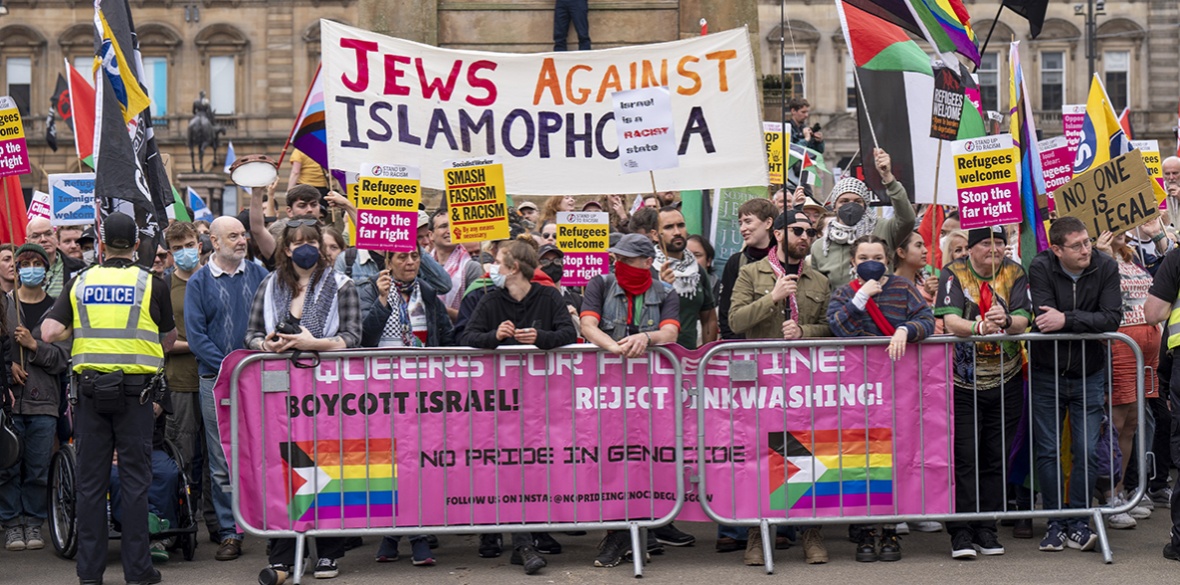
Activists from Stand Up To Racism Scotland gather in Glasgow’s George Square, in a counterprotest to a far-right rally, September 7, 2024

MORE than 5,000 people rallied in Glasgow’s George Square on Saturday in solidarity with the migrants and refugees increasingly targeted by the far right.

The demonstration came together to counter a call by racist grifter Stephen Yaxley-Lennon — known as Tommy Robinson — for an anti-immigration rabble to assemble in the city; Yaxley-Lennon was nowhere to be seen as his fans faced the humiliation of being outnumbered 15 to one.

To the west of the square, the rally organised by Stand Up to Racism (SUTR), backed by the STUC, and attended by thousands of trade unionists and community activists, heard from a host of speakers from trade unions as well as those with first-hand experience facing racism and building solidarity in their communities.

To the east, at the cenotaph, members of the fascist Patriotic Alternative did their best to rouse their mob, with renditions of Rule Britannia and barely audible hate-filled speeches alternating with the launching of abuse and bottles at anti-fascists.

Eventually escorted from the square by Police Scotland, some of their number went on to attack the nearby McChuills, a bar associated with refugee solidarity, resulting in two arrests.

But Police Scotland were criticised for “kettling” anti-fascist Celtic ultras the Green Brigade for several hours, preventing them from joining the SUTR rally.

One witness told the Star: “I don’t even support their club but this is a pointless provocation: the Green Brigade have done nothing to justify this, but they’re used to getting singled out.”

https://morningstaronline.co.uk/article/anti-racists-outnumber-far-right-protesters-in-glasgow

Continue ReadingAnti-racists outnumber far-right protesters in Glasgow

At least 12 people dead after boat sinks in the English Channel

Spread the love

https://morningstaronline.co.uk/article/at-least-12-people-dead-after-boat-sinks-in-the-english-channel

A group of people thought to be migrants are brought in to Dover, Kent, onboard the RNLI Dungeness Lifeboat following a small boat incident in the Channel, September 3, 2024

AT LEAST 12 people trying to cross into Britain from France have died after their boat sank in the English Channel.

The deaths were confirmed today by the French coastguard after a rescue operation near the coast of Cap Gris-Nez, off Wimereux, took place.

Up to 65 people were rescued and two were still missing as the Morning Star went to print.

According to the mayor of Le Portel – where the surviving refugees were being treated – the bottom of the boat “ripped open.”

The people on board the dinghy ended up in the water and several of them needed emergency medical care, the French coastguard said.

The International Organisation for Migration, which records Channel crossing deaths as part of its Missing Migrant Project, estimates 226 people including 35 children are missing or have died after attempting the crossing as of January this year.

According to the French coastguard, there have been at least 19 deaths in 2024 prior to Tuesday’s incident, including nine since the start of July.

Last week, France and Britain agreed to deepen co-operation on so-called illegal migration in the Channel.

At least 2,109 people have tried to cross since – the highest number of the year.

https://morningstaronline.co.uk/article/at-least-12-people-dead-after-boat-sinks-in-the-english-channel

Continue ReadingAt least 12 people dead after boat sinks in the English Channel

Challenge racism, stand with the victims of far-right terror

Spread the love

https://morningstaronline.co.uk/article/challenge-racism-stand-victims-far-right-terror

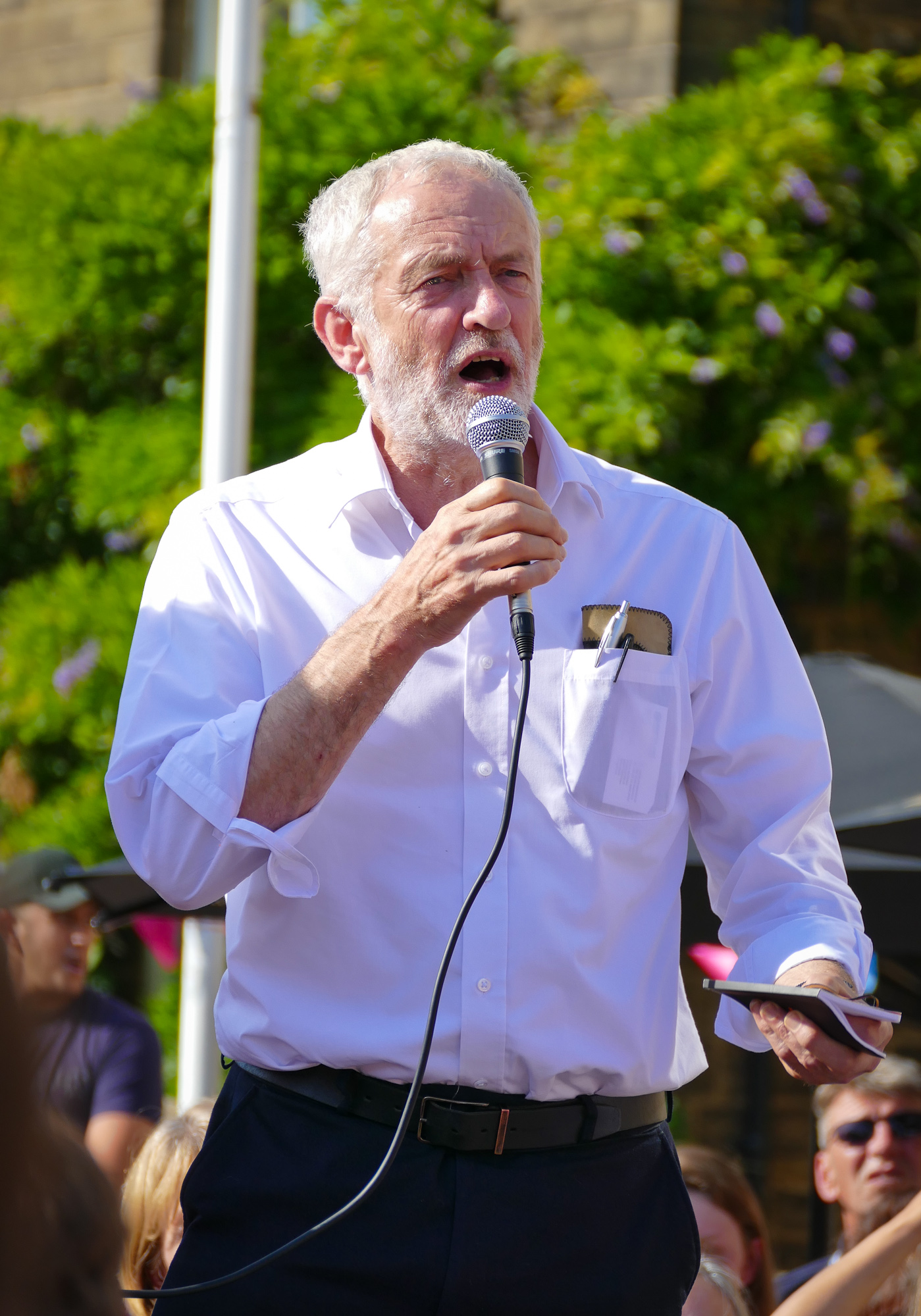
Image of Jeremy Corbyn MP, former leader of the Labour Party
Jeremy Corbyn MP, former leader of the Labour Party

Migrants and refugees are not responsible for Britain’s ills – a message we must make absolutely clear, says JEREMY CORBYN MP

LAST week, a horrendous murder took place in Southport as three children were brutally hacked to death in a violent knife attack. What followed showed both the best and worst of society.

The best was the outpouring of support for the grieving families of the children. The worst was the far-right forces who attacked the mosque in Southport, a hotel housing refugees in Rotherham, and Muslim-run businesses across the country.

These far-right attacks on the Muslim community echo the tactics of the Nazis against Jewish people, shops and businesses in Germany in the 1930s. In both scenarios, the far right use violence against minorities and blame them for poverty, housing shortages and pressures on health and education services.

The emboldening of the racist right has come from the growing use of anti-migrant language by supposedly mainstream politicians, claiming that desperate people crossing the Channel in flimsy boats are an “invading force.”

The same voices seem unable or unwilling to acknowledge that wars cause refugee flows, and that the migrants who have made their homes in Britain work tirelessly to try and make underfunded services work at all.

At the same time, we are witnessing an economic strategy inherited from the Tories which increases the huge wealth gap in our society, perpetuates austerity and ignores the desperate poverty of so many children.

The response of the left must be to stand with the victims of far-right terror, challenge the far-right racism and call for the government to address the common issues facing all communities: the housing crisis, crumbling education and the collapse of our NHS.

Article continues at https://morningstaronline.co.uk/article/challenge-racism-stand-victims-far-right-terror

Continue ReadingChallenge racism, stand with the victims of far-right terror

Rights Groups Slam ‘Malicious Crackdown’ on Migrants and Civil Society in Tunisia

Spread the love

Original article by BRETT WILKINS republished from Common Dreams under Creative Commons (CC BY-NC-ND 3.0).

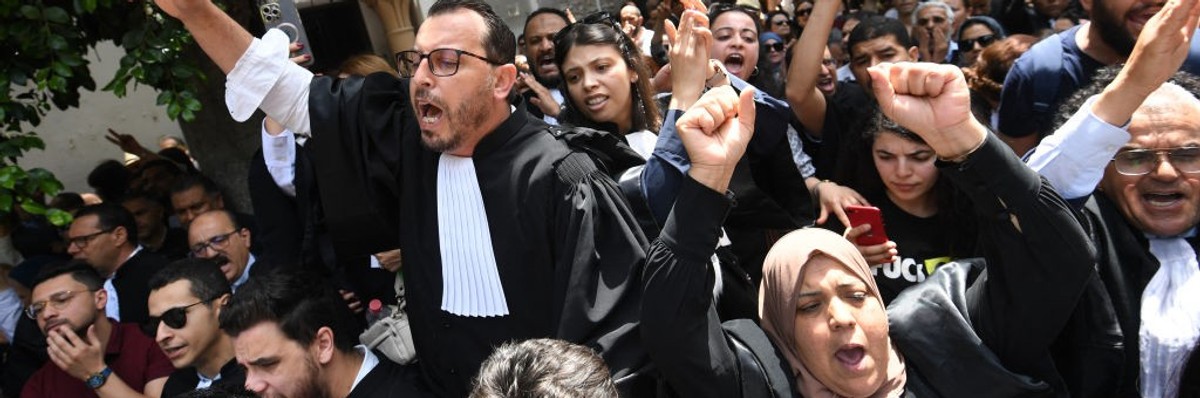
Lawyers shout slogans against Tunisian President Kais Saied during a May 16, 2024 protest in Tunis.
 (Photo: Fethi Belaid/AFP via Getty Images)

“The clampdown on migration-related work at the same time as the increasing arrest of government critics and journalists sends a chilling message,” said one campaigner.

Human rights defenders on Friday decried what Amnesty International called “an unprecedented repressive clampdown” by Tunisia’s increasingly authoritarian government on migrants, their civil society advocates, and journalists over the past two weeks.

Hundreds of Tunisian attorneys led a strike in the capital Tunis on Thursday to protest rising arrests of lawyers, one of whom, Mahdi Zagrouba, said he was tortured during interrogation—an allegation denied by Tunisian officials. Demonstrators chanted “No fear, no terror! Power belongs to the people!” as they marched on the Palace of Justice.

Sub-Saharan African migrants—recently described by Tunisian President Kais Saied as “hordes of illegal immigrants” who bring “violence, crime, and unacceptable practices” to Tunisia and threaten its “Arab and Islamic” character—have been particularly targeted, as have those who help them.

“On May 11, security officers stormed the Tunisian Bar Association’s headquarters during a live television broadcast, arresting a media commentator and lawyer, Sonia Dahmani, for sarcastic comments made on May 7 questioning the claim that Black African migrants were seeking to settle in Tunisia,” Human Rights Watch said Friday.

“Based on media reports, Dahmani’s arrest and subsequent detention was based on Decree-Law 54 on cybercrime, which imposes heavy prison sentences for spreading ‘fake news’ and ‘rumors’ online and in the media, after she refused to respond to a summons for questioning,” the group added.

Other recent arrestees include Saadia Mosbah, a Black Tunisian woman who heads the anti-racism group Mnemty (My Dream); and journalists Mourad Zeghidi and Borhen Bsaies

“The clampdown on migration-related work at the same time as the increasing arrest of government critics and journalists sends a chilling message that anyone who doesn’t fall in line may end up in the authorities’ crosshairs,” Lama Fakih, Middle East and North Africa director at Human Rights Watch, said in a statement. “By targeting these civil society groups, Tunisian authorities jeopardize the vital support they provide migrants, refugees, and asylum-seekers living in extremely vulnerable situations.”

According to Amnesty International:

Tunisian authorities have since May 3 arrested, summoned, and investigated the heads, former staff, or members of at least 12 organizations over unclear accusations including “financial crimes” for providing aid to migrants, including a Tunisian organization that works in partnership with the [United Nations] Refugee Agency, UNHCR, on supporting asylum-seekers through the refugee status determination process in the country. They have also arrested at least two journalists and referred them to trial for their independent reporting and comments in the media.

In parallel, security forces have escalated their collective unlawful deportations of refugees and migrants, as well as multiple forced evictions and have arrested and convicted landlords for renting apartments to migrants without permits.

“Tunisia’s authorities have stepped up their malicious crackdown against civil society organizations working on migrants and refugee rights using misleading claims about their work and harassing and prosecuting NGO workers, lawyers, and journalists,” said Heba Morayef, Amnesty’s regional director for Middle East and North Africa.

“A smear campaign online and in the media, supported by the Tunisian president himself, has put refugees and migrants in the country at risk,” she continued. “It also undermines the work of civil society groups and sends a chilling message to all critical voices.”

“Tunisia’s authorities must immediately end this vicious campaign and halt all reprisals against NGO workers providing essential support, including shelter, to migrants and refugees,” Morayef added. “The European Union should be urgently reviewing its cooperation agreements with Tunisia to ensure that it is not complicit in human rights violations against migrants and refugees nor in the clampdown on media, lawyers, migrants, and activists.”

Last July, the E.U. and Tunisia signed a memorandum of understanding that included up to €1 billion ($1.09 billion) in funding for the North African nation. Around 10% of that aid is meant to be spent on stopping migrants from reaching Europe.

“The European Union should be urgently reviewing its cooperation agreements with Tunisia to ensure that it is not complicit in human rights violations.”

Romdhane Ben Amor of the Tunisian League for the Defense of Human Rights toldAl Jazeera Friday that “the regime’s machinery is operating very efficiently, meaning it devours anyone who has a critical perspective on the situation… lawyers, journalists, bloggers, citizens, or associations.”

“So, of course, Kais Saied from now until the elections has a long list of individuals, associations, parties, and journalists whom he will gradually criminalize to always maintain the sympathy of his electoral base,” Ben Amor added, referring to this fall’s expected presidential contest.

Over the past three years, Saied—who was initially supported by both leftists and Islamists when elected on an anti-corruption platform in 2019—has dissolved Parliament and suspended most of Tunisia’s 2014 Constitution, allowing him to rule by decree. He has consolidated power by pushing through a new constitution, eroding the judiciary’s independence, repressing civil liberties, undermining workers’ rights, weakening democratic institutions, and other methods.

“Tunisian authorities must urgently reverse this significant backsliding on human rights,” Morayef asserted. “They must cease this judicial harassment and release all those detained solely for the exercise of their freedom of expression and freedom of association. People should have the freedom to express themselves without fear of reprisal.”

Original article by BRETT WILKINS republished from Common Dreams under Creative Commons (CC BY-NC-ND 3.0).

Continue ReadingRights Groups Slam ‘Malicious Crackdown’ on Migrants and Civil Society in Tunisia