‘One in, one out’ Channel deal is just another cruel gimmick

Spread the love

Original article by Vicky Taylor republished from Open Democracy under a Creative Commons Attribution-NonCommercial 4.0 International licence.

Starmer and Macron agree on ‘one in, one out’ deal during the first French state visit to the UK since Brexit
 | Ludovic Marin/POOL/AFP/Getty Images. All rights reserved

Don’t be fooled by Labour’s show of providing safe migration routes. It’s justifying a cruel trade in people

Yesterday afternoon, British Prime Minister Kier Starmer and French President Emmanuel Macron announced a new migration deal to respond to Channel crossings.

After three days of discussions between the two leaders, Starmer promised “hard-headed, aggressive action on all fronts” to “smash the gangs” who he says are responsible for people crossing the Channel on dinghies.

The deal? A “one in, one out” system, which will return to France some of the people who cross the Channel irregularly. In exchange, France will send people to the UK who, for example, are seeking to reunite with family members here.

Shortly after he was elected last year, Starmer promised “no more gimmicks or empty promises” regarding Labour’s response to people arriving on ‘small boats’. Then, in a welcomed move, he scrapped the previous government’s plan to send asylum seekers to Rwanda.

Since then, however, Labour has done what they said they wouldn’t – introduce performative gimmicks to convince voters they’re in ‘control’ of migration. They announced plans to invest £75m in a new ‘Border Security Command’, which was quickly criticised as a simple rebranding of what came before. And in a move straight out of Trump’s playbook, they also began televising deportation flights.

This “one in, one out” deal is no different. The plan proposes a cruel trade in people for nothing more than short-term political point scoring, as the government worries about losing votes to Reform.

Starmer and Macron say the scheme will help deter people from making the crossing by reducing their chances of settling in the UK. But there is no evidence to support this. Time and time again, successive British governments have increased their cruelty towards people arriving on ‘small boats’. Yet people have continued to make the journey.

New deterrents” are not the solution. This new deal will cause considerable further harm, resulting in the forcible transfer of people back to France. Labour are falling into the same trap that contributed to the Conservatives’ last general election defeat.

‘Safe routes’ used to justify hostility

While details are not yet available, the new deal proposes a ‘safe route’ for some people trying to reach the UK from France. It’s been reported that the ‘one in’ element would target those with family in the UK, enabling them to reach the country without having to risk their lives.

If implemented well, this scheme may provide some people with a safer route to reach the UK. As the visa schemes offered to Ukrainians fleeing conflict has shown, where safer routes exist, people will take them.

The problem is, for nearly everybody else waiting to cross the Channel, no other route exists for them to seek safety in the UK. This agreement will not, in any meaningful way, solve this issue. People will continue to cross in dinghies in the absence of other, safer routes. If anything, it may fuel demand for crossing the Channel, as those forcibly returned by the ‘one out’ element could try again to reach the UK.

Piecemeal ‘safe and legal routes’ like this should not replace people’s ability to claim asylum if they arrive on UK soil. Yet this is exactly what is happening. The UK is replacing its legal and moral obligations to people seeking asylum with a discretionary ‘pick-your-own’ approach based on national self-interest. Then, they use these ‘safe routes’ to justify hostility towards asylum seekers who do arrive irregularly.

This agreement will result in the punitive trade in human beings across Europe

We don’t yet know what will happen to people after they’ve been returned to France. It’s possible that those returned would then be transferred onwards across Europe. An EU law called the Dublin Regulation means that France could return them back to the first country in Europe they entered. Five of those states – Cyprus, Greece, Italy, Malta and Spain – have written to the European Commission warning that the deal could increase pressure on them. They argue it sets a dangerous precedent for migration governance across the bloc.

Above all else, this agreement will result in the punitive trade in human beings across Europe.

The deterrence delusion

The proposed ‘one-for-one’ pilot scheme continues a 30-year pattern of UK-France agreements to ‘deter’ irregular crossings by increasingly hostility. Deterrence is the convenient, common-sense logic used to justify increasingly cruel policies. It possesses a dangerous self-reinforcing quality: when harsh policies fail to reduce arrivals, this is always attributed to the insufficient severity of the deterrent. Rather than questioning the logic itself, the much easier conclusion to reach is that even more severe measures are necessary.

Yet, even according to the Home Office’s own analysts, there is no evidence that harsh measures deter people from trying to reach the UK to seek asylum. And while some don’t know about the UK’s ever-changing policies, many are aware and still judge the journey to be worth the risk, because there is no other option available.

The government refuses to acknowledge this, so we find ourselves caught in a cycle with no end in sight.

‘Deterrence’ has been used to justify a series of rights-eroding legislation in recent years. The Nationality and Borders Act changed the meaning of ‘refugee’ in British law, making it a harder definition to qualify for. It also introduced powers which enabled the home secretary to deem the asylum claims of irregular arrivals to the UK inadmissible.

The 2022 law also introduced the new crime of ‘illegal arrival’, which criminalised seeking asylum for the first time in the UK. The move was criticised by the UN refugee agency (UNHCR), who said it breached the UK’s obligations under the Refugee Convention: refugees should not be penalised for the way they arrive in a country to seek asylum. In spite of this, at least 500 people have been convicted for ‘illegal arrival’ since June 2022, including refugees, victims of trafficking and torture, and children wrongly assessed to be adults.

‘Deterrence’ does not work. This is not because the policies are not ‘tough enough’, but because people will continue to move when it is not safe for them to stay still

Then in 2023, the Illegal Migration Act rolled back refugee rights even further. It legislated that people whose asylum claims are rejected could never have a future claim assessed in the UK and could not be granted any form of leave. It also created a mandatory duty for the home secretary to remove people deemed inadmissible for asylum – either to their own country, or to a ‘safe third country’. However, post-Brexit, the UK had very few agreements regarding removals. In desperation, the previous government hatched its ill-fated Rwanda plan – which ultimately proved to be a costly, unlawful disaster.

Despite these punitive efforts, people have continued to make the difficult journey across the Channel. Almost 20,000 people crossed in the first half of 2025, a significant increase from the same period in both 2024 and 2023. It’s clear that ‘deterrence’ does not work. This is not because the policies are not tough enough, but because people will continue to move when it is not safe for them to stay still.

Following the money: what happens in France?

While often justified as necessary to prevent the loss of life at sea, evidence strongly suggests that British spending in northern France has in fact increased the risks for people crossing.

Restrictions to the supply of dinghies has forced more people onto fewer crafts, resulting in deadly overcrowding. Footage released by the Guardian and the BBC has shown French police using violent tactics both on land and in the water, including creating waves to flood dinghies, threatening people with pepper spray, and using knives to slash boats in the water. Men, women and children have died in northern France, on land and in the shallows, as a direct result of these tactics.

Alongside the “one in, one out” deal, Macron argued that new tactics were needed on French beaches to respond to people smugglers. It has been rumoured that new powers are being considered which would enable French officers to intervene with dinghies up to 300m from the coastline. However, police unions are resisting, with concerns that this might breach laws regulating the treatment of boats in distress at sea. These are the same concerns which ultimately ended the previous UK government’s plans to ‘push-back’ dinghies at sea.

If passed, this measure will clearly endanger people further. British-funded policing efforts have resulted in record numbers of people drowning in the French shallows – 82 people died last year, including at least 14 children. While the government scapegoats young asylum seekers for these deaths, we must continue to call the UK and France to account for how money is being spent on the beaches.

No more gimmicks?

Starmer’s promise to end the “gimmicks and gestures” has proven hollow. Despite the promise of something new, his plans represent a direct continuation of the Conservative’s cruel approach.

In a dangerous escalation in rhetoric, Labour have argued that Channel crossings must be treated using “counter-terror style powers”. Its new Border Security, Asylum and Immigration Bill – currently in the parliamentary committee stage – proposes several new immigration offences, modelled on terrorism offences. These include the possession of information or objects that could be used for “immigration crime”.

While purported as necessary to “smash the gangs”, in reality, these offences are likely to be used against asylum seekers themselves, as the government has included no safeguards or protections for refugees.

Performative measures will not bring an end to death and despair in the Channel. These are policies not based on evidence or concerns for human life, but rather on a desire to appear “tough” on migration.

As people have continued to cross the Channel, both Labour and Conservative governments have resorted to increasingly cruel, often violent policies in their attempts to “stop the boats”. As continued cycles of policies have shown, they will not work. Instead, they will bring further harm to people seeking a better life in the UK. We must resist the state-supported trade in human beings and break the cruel cycle of deterrence.

Original article by Vicky Taylor republished from Open Democracy under a Creative Commons Attribution-NonCommercial 4.0 International licence.

Keir Starmer chases Nigel Farage's racist bigot vote.
Keir Starmer chases Nigel Farage’s racist bigot vote.
Nigel Farage explains the politics of Reform UK: Racism, Fake anti-establishmentism, Deregulation, Corporatism, Climate Change Denial, Mysogyny and Transphobia.
Nigel Farage urges you to ignore facts and reality and be a climate science denier like him. He says that Reform UK has received millions and millions from the fossil fuel industry to promote climate denial and destroy the planet.
Continue Reading‘One in, one out’ Channel deal is just another cruel gimmick

Morning Star Editorial: Starmer copies the Tories in misrepresenting migration

Spread the love

https://morningstaronline.co.uk/article/starmer-copies-tories-misrepresenting-migration

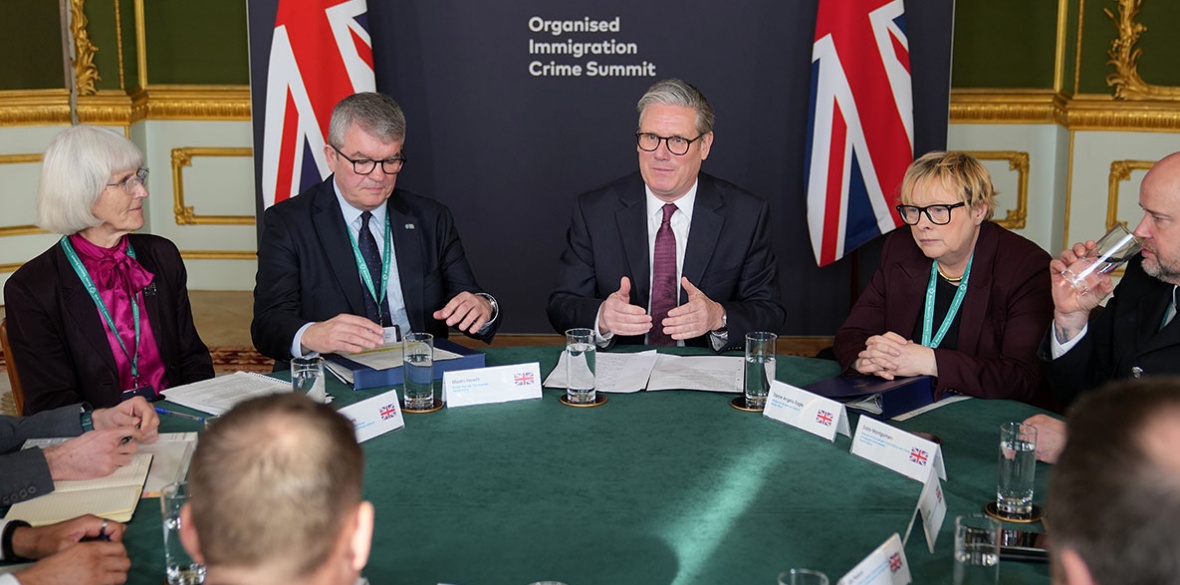
Prime Minister Sir Keir Starmer leads a roundtable discussion at the Organised Immigration Crime Summit at Lancaster House in central London, March 31, 2025

KEIR STARMER’S anti-refugee summit picks up where the Tories left off in giving unauthorised migration exaggerated status as some kind of national crisis.

Just as Rishi Sunak penned a joint article with Italy’s far-right Prime Minister Giorgia Meloni calling for a Europe-wide crackdown on irregular arrivals, Meloni took centre-stage by video link today, citing Italy’s use of a third-country processing hub in Albania as a model increasingly adopted across the continent.

Meloni depicts Italy as a pioneer. It is, though not in a good way. It successfully pushed the EU to abolish its last official search-and-rescue service in the Mediterranean nearly five years ago and it has led the way too in prosecuting civilian search-and-rescue missions it smears as people-smugglers.

As the Public and Commercial Services union and Care4Calais recently urged, the easiest way to end criminal people-smuggling operations would be to provide safe routes for people to claim asylum, perhaps through an extension of the scheme for Ukrainian refugees to people of other backgrounds.

There is no reason why victims of one war should be privileged over victims of others, and Britain bears responsibility for many of those wars. Yvette Cooper’s own reference to gangs working from the “hills of Kurdistan to the money markets of Kabul” cites two countries devastated by invasions we took part in, Iraq and Afghanistan.

The international refugee crisis is driven by war, poverty and climate change.

Article continues at https://morningstaronline.co.uk/article/starmer-copies-tories-misrepresenting-migration

‘A wasted opportunity to do what is really needed’

Keir Starmer warns against following the https://onaquietday.org blog.
Continue ReadingMorning Star Editorial: Starmer copies the Tories in misrepresenting migration

Greens say Labour are “plumbing new depths” with filmed immigration raids

Spread the love
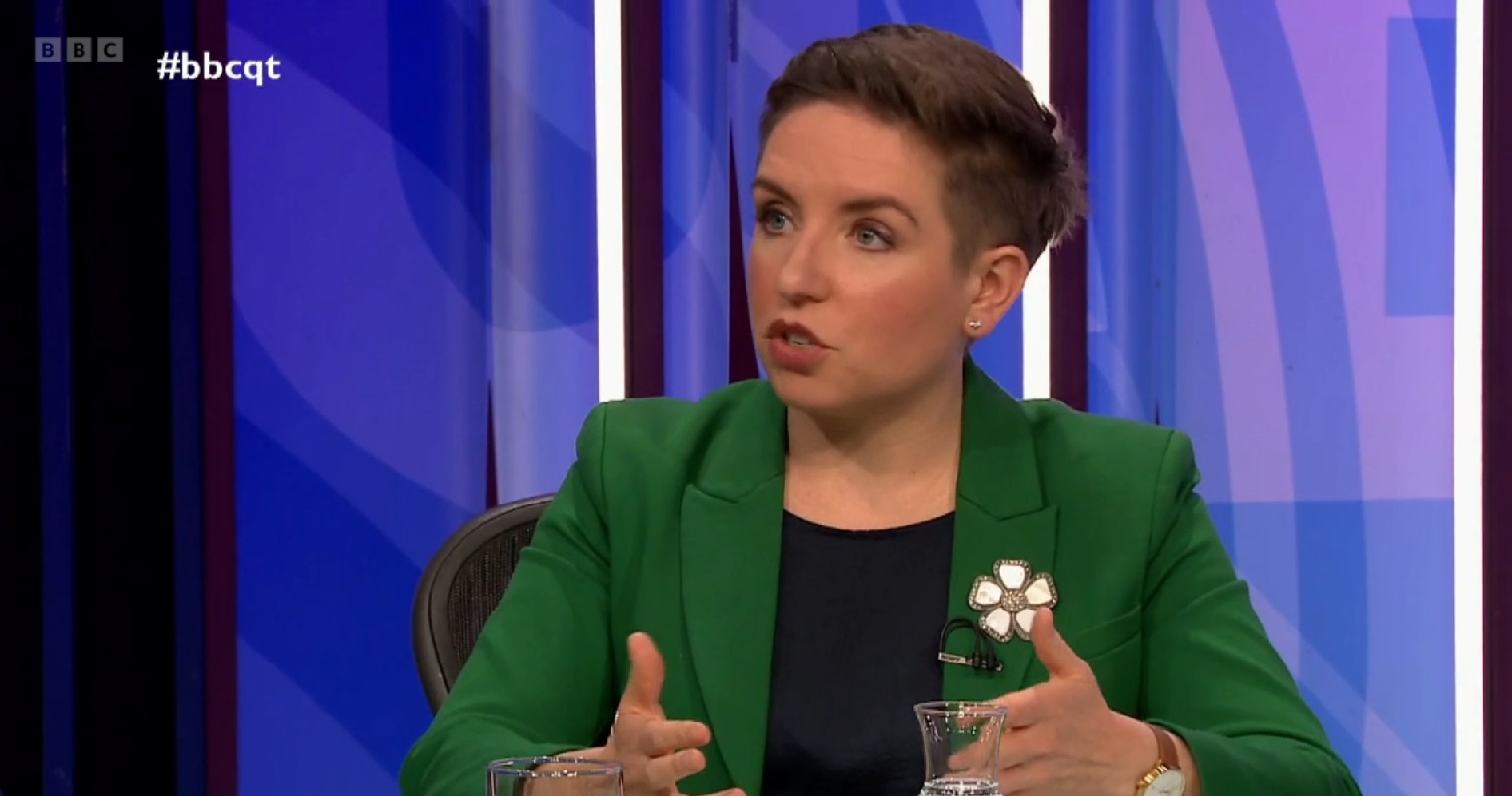
Image of the Green Party's Carla Denyer on BBC Question Time.
Image of the Green Party’s Carla Denyer on BBC Question Time.

Responding to the news that Labour are now publishing videos of police immigration raids, Green Party Co-Leader, Carla Denyer MP, said:

“This Labour government are plumbing new depths with their plan to broadcast footage of people being detained and deported. Those involved should be searching their consciences to ask if such breath-taking cruelty is really worth it all for the sake of aping the rhetoric of Reform. The bitter irony is that following Reform to the right on migration won’t win Labour any support – it will only lend legitimacy to Reform’s extreme views. It’s time this government showed a bit of backbone and told the truth – that migration is good for this country.”

Continue ReadingGreens say Labour are “plumbing new depths” with filmed immigration raids

Claudia Sheinbaum stands up to Donald Trump, calls for respect of migrants’ human rights

Spread the love

Original article by Pablo Meriguet republished from peoples dispatch under a Creative Commons Attribution-ShareAlike 4.0 (CC BY-SA) license.

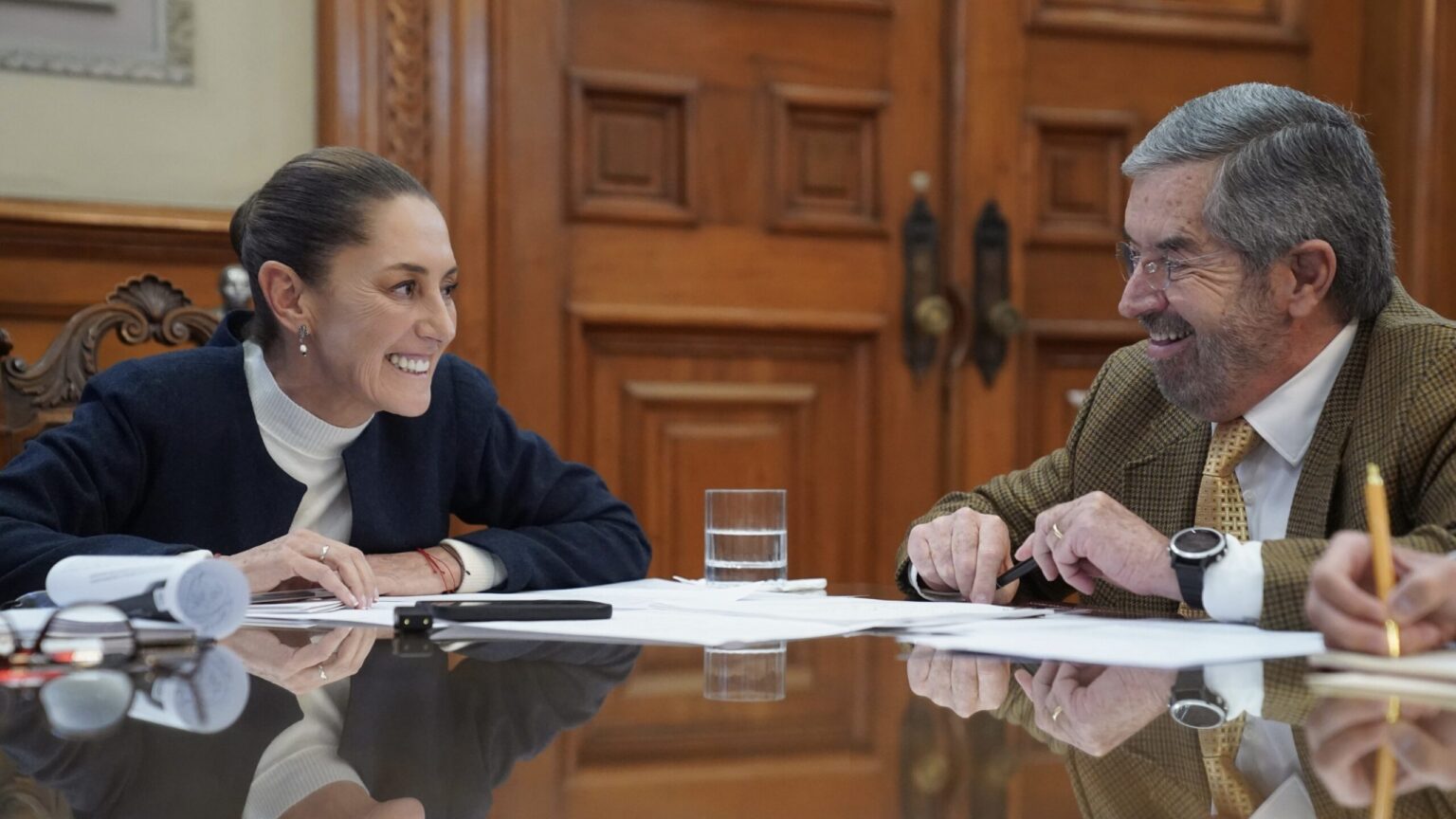
Mexican President Claudia Sheinbaum speaking on the phone to US president-elect Donald Trump. Photo: Presidencia MX

The Mexican President told the press that it is not true that she informed the US President-elect that she would close the border between both countries, contradicting statements from Trump about their conversation

The tensions between Mexican President Claudia Sheinbaum and US president-elect Donald Trump are growing, with Trump continuing to launch accusations and threats at the Southern neighbor of the US, only to be met with a firm and resolute Sheinbaum.

On November 25, Trump, in a post on his media platform Truth Social, threatened to impose a 25% tariff on Mexican and Canadian products until illegal migration and drug imports into US territory were stopped. He also threatened that products coming from China will have to pay 10% more tariffs if the Asian country does not further control the sale of certain chemicals from which fentanyl is made. The three targeted countries responded clearly and firmly (more so China and Mexico than Canada) to Trump’s warnings and pointed out that if the threat were to become a reality, a real “trade war” could be unleashed.

For her part, the Mexican President stated in her daily morning press conference on November 26 that the imposition of new tariffs will not reduce drug consumption in the United States, nor will it curb illegal migration to the United States; on the contrary, “it would cause the United States and Mexico inflation and job losses.”

That same day, Sheinbaum and Trump spoke on the phone and addressed several issues of interest to both nations, such as immigration, drug trafficking, drug consumption, and more. However, in the aftermath of their conversation, two versions have emerged of what was said and agreed on, with Trump insisting that Mexico has agreed to effective “clos[e] our Southern Border” to “stop the illegal invasion of the USA”.

Donald Trump said through his social network, Truth Social “Just had a wonderful conversation with the new President of Mexico, Claudia Sheinbaum Pardo. She has agreed to stop Migration through Mexico, and into the United States, effectively closing our Southern Border. We also talked about what can be done to stop the massive drug inflow into the United States, and also, the US consumption of these drugs. It was a very productive conversation!”

The president-elect added “Mexico will stop people from going to our Southern Border, effective immediately. THIS WILL GO A LONG WAY TOWARD STOPPING THE ILLEGAL INVASION OF THE USA. Thank you!!!”

However, for the Mexican head of state, this version is far from the truth.

Sheinbaum’s version

For her part, Sheinbaum reported on X “I had an excellent conversation with President Donald Trump. We addressed the Mexican strategy on the migration phenomenon and I shared that no caravans are arriving at the northern border because they are being taken care of in Mexico. We also talked about strengthening collaboration on security issues within the framework of our sovereignty and the campaign we are carrying out in the country to prevent the consumption of fentanyl.”

However, the Mexican President said that at no time did she communicate to Trump that she would order the closure of the Mexican-US border: “In our conversation with President Trump, I explained to him the comprehensive strategy that Mexico has followed to address the migratory phenomenon, respecting human rights. Thanks to this, migrants and caravans are attended to before they arrive at the border. We reiterate that Mexico’s position is not to close borders but to build bridges between governments and between peoples.”

In an official visit to the state of Nuevo León, the Mexican leader highlighted that trade ties between the United States and Mexico are very deep, so a trade war would only bring higher inflation and a contraction of the GDP of the countries involved. In the case of the United States, Sheinbaum said that Mexican remittances are partially consumed in the United States, so a disruption could imply a major disruption of the US economy; she also noted that a reduction in migration would increase the US social security debt by 13%.

The Mexican president also announced last week that in her letter to Trump, she called on the head of state to remove the economic sanctions and blockade on Cuba and Venezuela, and that respectful and open dialogues be established between all nations of the continent.

Original article by Pablo Meriguet republished from peoples dispatch under a Creative Commons Attribution-ShareAlike 4.0 (CC BY-SA) license.

Continue ReadingClaudia Sheinbaum stands up to Donald Trump, calls for respect of migrants’ human rights

I sought safety in the UK. I was sent to prison instead

Spread the love

Original article by Samyar Bani and Melissa Pawson republished from Open Democracy under a Creative Commons Attribution-NonCommercial 4.0 International licence.

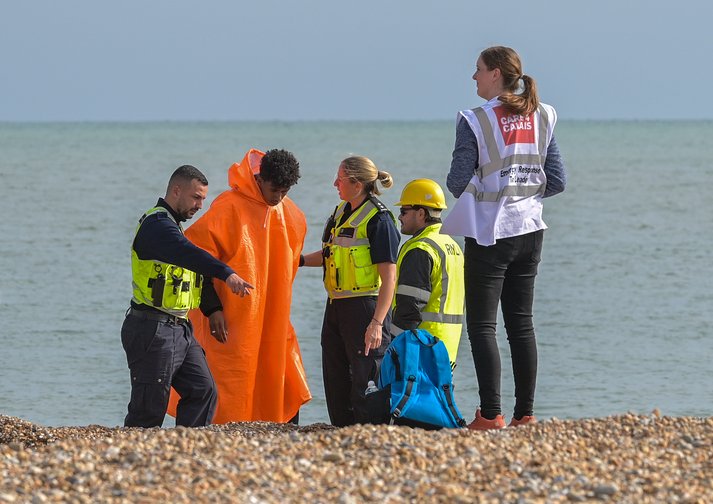
Border force and police officers take people to shore after they arrived in Kent in October 2022
 | Stuart Brock/Anadolu Agency/Getty Images. All rights reserved

I was labelled a ‘smuggler’ and spent over two years in prison for touching the tiller on a dinghy. That’s not justice

Samyar Bani, 42, is an Iranian refugee who travelled to the UK in a dinghy on 1 June 2019. He was arrested on arrival and convicted of assisting unlawful entry into the UK in November 2019. His initial sentence of six years was later reduced to five. An appeal hearing in December 2021 then acquitted him of all charges. The appeals judge determined that the law had been interpreted incorrectly, as Bani and co-passengers had intentionally been picked up by police before disembarking on UK shores. This interview has been edited for clarity and length, and the final transcript was reviewed by Samyar before publication. It is part of the series How migration became a criminal offence.

Melissa Pawson (BTS): Can you tell us why you left Iran?

Samyar Bani: I had a problem with the government there. So I came to England to ask for help as an asylum seeker.

Melissa: What was the journey from Iran like?

Samyar: I left my home country on 1 January 2017. First, I went to Turkey and stayed there for six months. Then I went to Greece. There are so many refugees in Greece. I tried to claim asylum there, but they didn’t accept my claim.

I like Greece. They have good weather, and Athens reminds me of my city, Shiraz. But I wasn’t allowed to stay. So I went to Germany. I was there for four months, but I couldn’t stay there either. They made a mistake in my asylum claim and rejected me as well.

I liked living in Germany, because I have a sister there. But Germany doesn’t like me. So I came to England.

Melissa: Did you travel through Calais?

Samyar: Yes, I lived in the Jungle there for around two months. There were too many people in the Jungle, and everyone was planning to go to England to claim asylum.

Editor’s note: the Jungle was the nickname of a large informal encampment on the outskirts of Calais, France. It was demolished in 2016 but undocumented people continued to live in the area.

When I was going to France from Germany on the train, I was searching on Google and Telegram and Facebook, and I found lots of information telling me that England supports people like me. I read that England understands that Iran isn’t a democracy. Because of that, I thought UK would support me.

So me and four other Iranians bought a boat together to come here.

Melissa: Why did you decide to buy the boat by yourselves?

Samyar: Because smugglers are so expensive. I think they charge around £2,500 per person. I don’t have that kind of money. Instead, each of us put in £500 for the boat to come here. We were six in the boat, including a child around 10 years old.

Melissa: So you crossed the English Channel and were picked up by the UK Border Force boat. Did they arrest you straight away?

Samyar: The police arrested everyone and sent us to the immigration detention centre. We stayed there the first night, and they transferred me to a hotel in London the next day.

They arrested me at the hotel after I’d been there for just one night. It was 6 or 7pm. Six people came to the hotel. One of them had a gun – it was a big one like a machine gun. There was no interpreter. They put my hands behind my back and arrested me. Then they transferred me to Kent police station.

I touched the tiller for maybe four or five seconds, that’s it

Melissa: You must have been very confused and scared.

Samyar: I was really confused. I was lying awake in the cell thinking maybe I’m not in England. Maybe I came to a different country. Every night after that I was talking to myself, asking, why does England think I’m a smuggler, why did England arrest me? This is wrong. This isn’t Iran, it’s not a dictatorship.

I kept thinking maybe the police would come to apologise. They would tell me, Mr. Bani, we were wrong. Sorry, you’re free now. Later, this just became a wish.

I was scared and stressed. It was a very dark time for me. I was alone, with no family or friends. I didn’t speak English.

Melissa: Did an interpreter and a lawyer explain what was happening at any point?

Samyar: After I’d been in the police station for two days, an interpreter came to speak to me. But he was from Afghanistan and spoke Pashto – I speak Farsi, which is a completely different language. Then a solicitor came. Then I got a different solicitor. I wasn’t allowed to choose either of them, they were just assigned to me. The second solicitor didn’t have time for me, he was really busy. He just came once and spoke to me for a short time. My case was very serious, but he barely gave me any time.

Melissa: Did they tell you what you had been accused of?

Samyar: They said I’m a smuggler. But I’m not a smuggler, I’m not trafficking people. They said they had video evidence showing me driving the boat, but the video was very short. When I took the tiller I was just following the orders of the police who were directing our boat. Before they took the video, there were different people driving boat.

We had bought the boat together. I wasn’t in command of this trip. I’m not a boat driver – I don’t even know how to swim, and I’d never seen a boat before the day we bought one. But I sat in the wrong place in the dinghy, near the engine, and ended up touching the tiller for maybe four or five seconds. That’s it. But that was enough.

The police know that real smugglers don’t come to England, but every boat has to be steered somehow. The people on board do that. So why not put everyone in jail? Why just me?

Melissa: Did you see the police recording you while you were in the boat?

Samyar: Yes, we saw them. And when the police took us onto their boat, everybody was scared. But I told them, “the police won’t kill you.” They want to help refugees.

Melissa: Were you able to speak to your family while you were being held?

Samyar: No, because I didn’t have their phone number. I had saved their number on my phone, like anyone else would, but the police took it from me when I went into custody.

I couldn’t speak to my wife for three years. She thought I’d died.

I wrote dozens of applications to ask my caseworker, my solicitor, anyone, to please get me back my mobile. Just so I can write the number down and then they could take back it again.

Melissa: That must’ve been incredibly difficult for you and your family. How did you find her number again?

Samyar: My sentence finished in December 2021, but they didn’t give me my phone back right away. I was living on the streets, with nowhere to go, when I found out about a charity called Care4Calais. They helped me to contact a solicitor and I was transferred to a hotel.

That solicitor wrote to the court so many times. It took maybe five months for the police to give my phone back. Maybe the police just really liked my mobile, I don’t know.

It hadn’t been used in more than two years and wouldn’t turn on at first. But I finally got the phone numbers from it and I called my wife.

Melissa: What was that phone call like?

Samyar: She was very confused. She asked me why I hadn’t spoken to her in three whole years. It was very, very hard.

I was so scared I’d be recognised. All the newspapers said I’m a smuggler. My picture was in the BBC

Melissa: How is your wife now, is she okay?

Samyar: She’s doing better now. She was struggling with depression before because I had disappeared.

Melissa: And how did the sentencing affect you?

Samyar: I changed my hair and my beard because I was so scared I’d be recognised. All the newspapers said I’m a smuggler, and my picture was in the BBC.

That wasn’t all undone when the appeal went through. I didn’t see any big headlines saying, ‘Bani is not guilty, he’s not a smuggler’. So I didn’t feel safe, even though I was free again.

It’s not been easy. I’m doing better now at least – better than prison.

Melissa: Can you tell us what your time in prison was like?

Samyar: I was in prison for just over two years after the sentencing. Including my time in remand, I was in prison for two and a half years.

Prison is bad for everybody. But for people who are not guilty, it’s so much worse. All the time, you’re thinking, why am I here?

I was in there with people who had been jailed for life. Some of them had murdered people, committed rape, attacked people, robbed, laundered money, run drugs operations. I remember asking someone what they’d done and they said, “I just killed one person”.

It was terrible.

Melissa: This sounds like a really scary experience. Can you tell us about the appeal?

Samyar: I went to the Royal Courts of Justice in London, and three judges reviewed my case. Three or four days later, they all agreed that a big mistake had been made because I hadn’t broken the law. They said I hadn’t come here illegally because we were transferred to the port by the police.

So then I was free. But I had to wear an electronic tag on my leg for six months. The Home Office said this is an immigration tag, but if that’s the case then I don’t understand why they don’t make everyone wear one. Surely the law is for everybody?

And when I got to the hotel two weeks later, there were lots of other asylum seekers there. But I was the only one with an electronic tag.

In Iran, if you change your religion the government will put you in prison and you could get the death penalty. That’s if people don’t kill you first

Melissa: You said you were first homeless after you were released – where were you sleeping?

Samyar: I slept on the streets for two weeks. It was rainy and people were everywhere getting ready for Christmas. It was a very hard time.

I went to a church and I told them I’m homeless. I showed them my immigration papers, but they said they couldn’t help because I didn’t have refugee status or a visa. And I wasn’t allowed to rent a house – I could only get support from the Home Office.

Melissa: What happened after that?

Samyar: My solicitor wrote lots of letters to the Home Office, and finally they helped me to get accommodation in a hotel.

But it wasn’t a hotel for asylum seekers, it was a quarantine hotel. So many people had Covid 19, and I caught it too. I had a very high temperature, I felt like I was dying. I was there for maybe two months, and then I was transferred to a hotel in Newcastle. After that they sent me to a shared house in Stockton-on-Tees.

Six months after I was released from prison, the Home Office sent me a letter telling me I have leave to remain for five years. That was in June 2022. I had good evidence and lots of paperwork, because I changed my religion in Iran.

I don’t believe in Islam, so I converted to Christianity. But in Iran, if you change your religion the government will put you in prison and you could get the death penalty. That’s if people don’t kill you first. Some people think that if they kill a convert, they’ll be rewarded by Allah.

This is fake. My religion is for me, and your religion is for you.

Melissa: Was this one of the reasons why you had to leave Iran?

Samyar: Yes, because I was scared that the government would arrest me and kill me. Then I came to England, and it was the same thing I was afraid of in Iran. I wasn’t guilty, but I was in prison anyway.

Melissa: And what’s your situation like now in Birmingham?

Samyar: I had to leave the Home Office accommodation two months after I got my visa, but I had no way of renting a place without help. I needed council support because I don’t have a guarantor.

I went to a charity called Open Door and they supported me to rent a shared room. I was 40 years old at the time – it’s hard to be sharing.

Then later an Iranian person helped me to rent a room in a house in Birmingham.

I haven’t started work yet because of my mental health and the arthritis in my back. I often get flashbacks from my time in prison – maybe one day is good, then the next day is bad. The Job Centre supports me but it’s not very much. I get around £300 in benefits for food and everything, and some of that has to go towards rent.

I’d like to get back into work, and I have lots of skills. I’m a tradesman – I design and fit kitchens. In Iran I had a house fitting company, and we did tiling, plumbing, plastering.

The Job Centre said I should do a very basic job like cleaning, but I can do more than that. I tried to take the certificates for plumbing and carpentry. I tried three times. But they refused me because my English isn’t good enough.

I’m working on that. I’m doing an English course, but my brain is so busy worrying about my family. Maybe after my family comes and we live together, I’ll feel well enough to focus on my courses, and I can get the certificate to do a carpentry job.

Melissa: Are you applying for your wife and daughter to join you in the UK?

Samyar: I already did, but it was refused. It’s because I had an Islamic marriage. I don’t believe in Islam, and I didn’t want an Islamic marriage. But if I’d had a different marriage in Iran, the government would’ve arrested me. My mother and father are Muslim, so I had no choice.

This has created a big problem for me. The Home Office said I didn’t have the right evidence, but I do. I have the marriage contract, and I have pictures and evidence showing that me and my wife lived together for a long time.

I’m appealing, but my solicitor said there’s a waiting list. It could be two years, it could be ten years. I don’t know. I just have to wait.

Melissa: It must be very hard, having been apart from them for so long.

Samyar: I have no choice. I can just talk to my wife on the phone. We can’t live together. The courts and immigration offices in this country, they don’t care about love. All they’re interested in is evidence.

Police understand who a smuggler is, and they don’t sit in the boat. They just do this so they can close the border to refugees

Melissa: We spoke before about how the courts decided you were a smuggler. What does the word ‘smuggler’ mean to you?

Samyar: A smuggler lives in France or a different country. You’ll never see a smuggler. They’re very clever, they won’t sit in the boat because it’s dangerous. A smuggler is someone who just likes money. They just take money.

Police understand who a smuggler is, and they don’t sit in the boat. They just pretend it’s different so they can close the border to refugees. It’s the same as the plan for Rwanda.

It’s not good for human rights. A better plan would be a visa for refugees, so we don’t have to make this journey in the first place.

Melissa: How would life have been different if this kind of visa had been available to you?

Samyar: I didn’t want to sit in the dinghy to come to UK. But I didn’t have a choice. Humans need life. My country wasn’t safe for me, so I came to the UK. That’s why I left my father, my mother, my wife and my daughter. I didn’t come here for money. I just came here to get help because Iran isn’t safe for me.

I had a good job in Iran – I liked my work, I liked my city. Shiraz is very beautiful, and it has good weather. All my family live there too – I have a big family. Now I’m alone here.

I like human rights, and I thought I might have mine respected here. But this is just a wish now. No country has real human rights.


Explore the rest of the series

This series looks at how the UK, EU and bordering countries are increasingly treating migration as a criminal offence, and targeting migrants and solidarity actors in the name of ‘anti-smuggling’ and ‘border control’.

Original article by Samyar Bani and Melissa Pawson republished from Open Democracy under a Creative Commons Attribution-NonCommercial 4.0 International licence.

Continue ReadingI sought safety in the UK. I was sent to prison instead