Coral Bleaching ‘Off the Charts’ in Atlantic as NOAA Warns Ocean Going ‘Crazy Haywire’

Spread the love

Original article by JULIA CONLEY republished from Common Dreams under Creative Commons (CC BY-NC-ND 3.0).

A bleached mound of coral at the Cheeca Rocks monitoring site in the Florida Keys National Marine Sanctuary that had been previously tagged shows the coral skeleton. (Photo: NOAA AOML)

“We had to add additional bleaching alert levels to appropriately categorize just how hot it was,” said a coral reefs expert at the agency.

The phrase “off the charts” is no exaggeration in the National Oceanic and Atmospheric Administration’s latest warning about a global coral bleaching event that scientists have linked to rising ocean temperatures and heat stress.

Derek Manzello, coordinator of NOAA’s Coral Reef Watch Program, told reporters Thursday that about 60.5% of the world’s coral reefs are now experiencing heat stress severe enough to cause bleaching, which can make the reefs more vulnerable to disease and harm the biodiversity they support.

Manzello said at the press briefing that after observing the first months of the coral bleaching event, which began in early 2023, NOAA changed its existing bleaching alert system because conditions were so abnormally warm in the Atlantic Ocean, Gulf of Mexico, and Caribbean Sea.

The agency’s new bleaching alert system categorizes heat stress for coral reefs on a scale of 1-5, with Alert Level 5 representing ocean heat that could kill “approximately 80% or more of corals on a particular reef,” Manzello said.

“We had to add additional bleaching alert levels to appropriately categorize just how hot it was,” he said, with Level 5 “analogous to a Category 5 hurricane or cyclone.”

“I hate that I have to keep using that word ‘unprecedented.’… But, again, we are seeing unprecedented patterns again this year.”

The world’s oceans, Manzello, said, are going “crazy haywire.”

In the Caribbean this year, heat stress off the coasts of Panama, Costa Rica, Nicaragua, and Colombia are now at levels that in previous years weren’t seen until the summer months.

“I hate that I have to keep using that word ‘unprecedented,'” Manzello told The New York Times. “But, again, we are seeing unprecedented patterns again this year.”

The bleaching that took place last year resulted in coral mortality of at least 50% and as high as 93% in reefs off the coast of Huatulco, Mexico, according to a team of Mexican scientists.

In the Atlantic, fossil fuel-driven planetary heating has been exacerbated by El Niño—the natural phenomenon that causes warmer-than-normal ocean surface temperatures—and has caused the “most unprecedented and extreme” bleaching-level heat stress observed in the past year.

Manzello said 99.7% of reef areas in the Atlantic have experienced heat stress that could cause bleaching.

“The Atlantic Ocean has been off the charts,” he said.

Scientists have recorded four global bleaching events since 1998 and have linked all of them to warmer ocean temperatures. Since 1950, the world has lost half of its coral reefs, according to a 2021 study.

Along with serving marine life, a quarter of which rely on coral reefs at some point in their life cycles, reefs also protect coasts from storms, whose growing severity in recent years scientists have also linked to planetary heating.

The current bleaching event has affected reefs off the coasts of at least 62 countries and territories.

Scientists earlier this year confirmed that 2023 was the hottest year in human history and the warmest year on record for the world’s oceans, which absorb more than 90% of excess heat from greenhouse gas emissions.

“I am very worried about the state of the world’s coral reefs,” Manzello said. “We are seeing [ocean temperatures] play out right now that are very extreme in nature.”

Original article by JULIA CONLEY republished from Common Dreams under Creative Commons (CC BY-NC-ND 3.0).

Continue ReadingCoral Bleaching ‘Off the Charts’ in Atlantic as NOAA Warns Ocean Going ‘Crazy Haywire’

Scientists confirm record highs for three most important heat-trapping gases

Spread the love

https://www.theguardian.com/environment/2024/apr/06/record-highs-heat-trapping-gases-climate-crisis

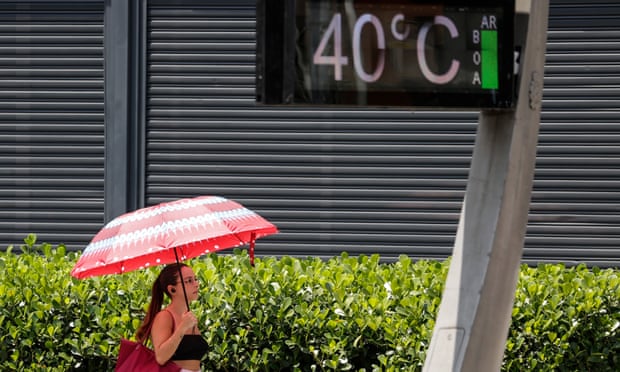
A young woman protects herself from the sun in São Paulo, Brazil, on 14 November 2023. Photograph: Sebastião Moreira/EPA

Global concentrations of carbon dioxide, methane and nitrous oxide climbed to unseen levels in 2023, underlining climate crisis

The levels of the three most important heat-trapping gases in the atmosphere reached new record highs again last year, US scientists have confirmed, underlining the escalating challenge posed by the climate crisis.

The global concentration of carbon dioxide, the most important and prevalent of the greenhouse gases emitted by human activity, rose to an average of 419 parts per million in the atmosphere in 2023 while methane, a powerful if shorter-lasting greenhouse gas, rose to an average of 1922 parts per billion. Levels of nitrous oxide, the third most significant human-caused warming emission, climbed slightly to 336 parts per billion.

The increases do not quite match the record jumps seen in recent years, according to the National Oceanic and Atmospheric Administration (Noaa), but still represent a major change in the composition of the atmosphere even from just a decade ago.

Through the burning of fossil fuels, animal agriculture and deforestation, the world’s CO2 levels are now more than 50% higher than they were before the era of mass industrialization. Methane, which comes from sources including oil and gas drilling and livestock, has surged even more dramatically in recent years, Noaa said, and now has atmospheric concentrations 160% larger than in pre-industrial times.

Noaa said the onward march of greenhouse gas levels was due to the continued use of fossil fuels, as well as the impact of wildfires, which spew carbon-laden smoke into the air. Nitrous oxide, meanwhile, has risen due to the widespread use of nitrogen fertilizer and the intensification of agriculture.

Because of a lag between CO2 levels and their impact, as well as the hundreds of years that the emissions remain in the atmosphere, the timescale of the climate crisis is enormous. Scientists have warned that governments need to rapidly slash emissions to net zero, and then start removing carbon from the atmosphere to bring down future temperature increases.

https://www.theguardian.com/environment/2024/apr/06/record-highs-heat-trapping-gases-climate-crisis

Continue ReadingScientists confirm record highs for three most important heat-trapping gases

NOAA Warns World’s Coral on Verge of ‘Worst Bleaching Event in History of the Planet’

Spread the love

Original article by BRETT WILKINS republished from Common Dreams under Creative Commons (CC BY-NC-ND 3.0).
A view of major bleaching on the coral reefs of the Society Islands on May 9, 2019 in Moorea, French Polynesia. (Photo: Alexis Rosenfeld/Getty Images).

“It’s looking like the entirety of the Southern Hemisphere is probably going to bleach this year,” one scientist said.

Driven by sustained climate-fueled oceanic heating, the planet is on the brink of another mass coral bleaching event that marine biologists warn could kill large swaths of tropical reefs including significant areas of Australia’s Great Barrier Reef.

Scientists are sounding the alarm following months of record ocean temperatures exacerbated by the planetary emergency and the El Niño climate pattern in the Pacific Ocean.

“It’s looking like the entirety of the Southern Hemisphere is probably going to bleach this year,” Derek Manzello of the National Oceanic and Atmospheric Administration’s (NOAA) Coral Reef Watch told Reuters. “We are literally sitting on the cusp of the worst bleaching event in the history of the planet.”

As NOAA explains:

When water is too warm, corals will expel the algae (zooxanthellae) living in their tissues causing the coral to turn completely white. This is called coral bleaching. When a coral bleaches, it is not dead. Corals can survive a bleaching event, but they are under more stress and are subject to mortality.

In 2005, the U.S. lost half of its coral reefs in the Caribbean in one year due to a massive bleaching event. The warm waters centered around the northern Antilles near the Virgin Islands and Puerto Rico expanded southward. Comparison of satellite data from the previous 20 years confirmed that thermal stress from the 2005 event was greater than the previous 20 years combined.

Following the planet’s hottest summer on record last year, the Caribbean suffered its worst recorded bleaching event. The last worldwide bleaching occurred in 2014-17, when scientists say approximately 15% of all reefs experienced major coral deaths. Nearly a third of the Great Barrier Reef’s coral perished during the bleaching.

In the Southern Hemisphere, where summer is ending and ocean temperatures are at or near their annual peaks, there is “basically bleaching all over the place,” according to Manzello.

Matthew England, a professor at the University of New South Wales in Australia who studies ocean currents, recently told TheNew York Times that “the sea ice around the Antarctic is just not growing” and “the temperature’s just going off the charts.”

“It’s like an omen of the future,” he added.

It’s a similar story in the North Atlantic, which “has been record-breakingly warm for almost a year now,” University of Miami hurricane expert Brian McNoldy told the Times. “It’s just astonishing. Like, it doesn’t seem real.”

A 2018 report from the United Nations Intergovernmental Panel on Climate Change estimates that global heating of 1.5°C is likely to result in the loss of 70-90% the planet’s coral reefs over the coming decades.

Current emissions-based forecasts have Earth on track for at least 1.5°C of warming, which researchers say is likely to trigger five climate tipping points: melting of the Greenland and Antarctic ice sheets, mass die-off of warm-water coral reefs, thawing of Arctic permafrost, and collapse of the North Atlantic Subpolar Gyre circulation.

The European Environment Agency’s long-term forecasts for 2071-2100 predict worldwide oceanic heating of 0.5°C-3.8°C, depending on future greenhouse gas emission scenarios.

Scientists say the best way to avert worst-case outcomes for both coral reefs and the climate is to swiftly transition from fossil fuels to renewable energy. Reducing land-based pollution and overfishing are also critical to reef preservation.

Original article by BRETT WILKINS republished from Common Dreams under Creative Commons (CC BY-NC-ND 3.0).

Continue ReadingNOAA Warns World’s Coral on Verge of ‘Worst Bleaching Event in History of the Planet’

Warming Arctic, rogue iceberg are further signs of global warming’s impact

Spread the love

Original article by Blake Skylar republished from People’s World under http://creativecommons.org/licenses/by-nc-nd/3.0/us/.

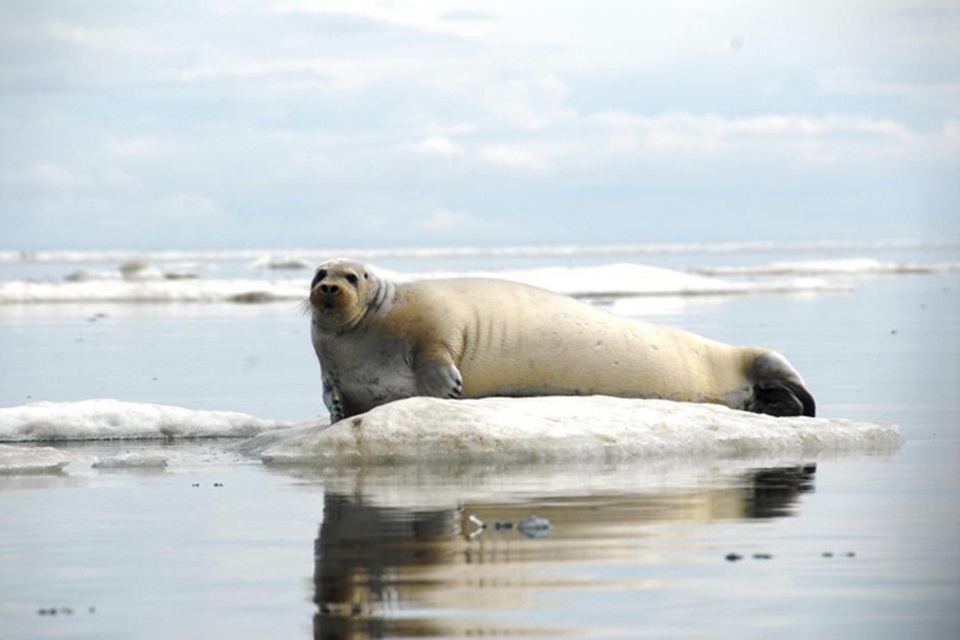
A bearded seal on ice off the coast of Alaska. | John Jansen / National Oceanic and Atmospheric Administration’s Alaska Fisheries Science Center

The Arctic is rapidly heating up, and that’s already spelled trouble for other parts of the world. 2023 has become the warmest year since 1900, and now, at the Earth’s southernmost point, an iceberg three times the size of Manhattan has broken away—and it’s on the move. When it comes to the ravaging effects of global warming, the world’s poles have proven themselves to be Exhibit A.

On Dec. 12, the annual Arctic Report Card was released by the National Oceanic and Atmospheric Administration. It found that the Arctic is warming four times more quickly than the world’s average, chiefly as a result of climate change caused by the burning of fossil fuels. The effect of that has already been felt south of the region, with Juneau, Alaska, stricken by a glacial outburst flood and Canada enduring a record year of devastating wildfires. Experts say the changes in the Arctic are early signs of what to expect globally as the planet’s temperature continues to increase.

And then there’s A23a. That’s what scientists have called the icy behemoth that was dislodged from an Antarctic ice shelf and—since 2020—has been wending its way through the sea; as of November, it was observed moving past the Antarctic Peninsula’s northern tip and approaching the Southern Ocean. The iceberg is about 1,500 square miles in size. It and other ice shelves are breaking off at rapidly increasing rates due to the climate crisis, and experts are concerned about the implications of its movement.

“It’s just astonishingly big, and it’s a reminder of how much risk we’re at from sea level rise,” said sea scientist Robbie Mallett, an honorary research fellow at the University of College London. “Antarctica has historically been quite a small contributor to sea level rise, but it is growing, and it is taking up a bigger and bigger share of the sea level rise that we see every year. So, it’s a symbol of the growing dominance of Antarctica in the sea rise equation.”

This is such a critical matter because it’s a symptom of a much larger and more worrying issue. The World Meteorological Organization (WMO) described it as a “deafening cacophony” of record-breaking that is fueled by global warming, and said that it was putting mankind in jeopardy of losing the fight to control sea level rise.

WMO Secretary-General Professor Petteri Taalas remarked, “We risk losing the race to save our glaciers and to rein in sea level rise. We cannot return to the climate of the 20th century, but we must act now to limit the risks of an increasingly inhospitable climate in this and the coming centuries. Extreme weather is destroying lives and livelihoods on a daily basis, underlining the imperative need to ensure that everyone is protected by early warning services.”

Gail Whiteman, professor of sustainability at the University of Exeter, described it this way: “The Antarctic used to be seen as this sleeping giant, nothing was happening. It was just big and really cold – that’s my non-scientific way of saying it. And now it’s clear based on the sea ice that it is actually destabilizing. The discussion here should be about the polar regions because they are flipping first, and once they do, the issue of adaptation becomes that much more critical.”

Back up north, ice sheets are causing just as much concern; in Greenland, they’re melting. That nation lost an amount of ice in 2022 that could have covered West Virginia in a foot of water, according to reports. The vanishing ice is also creating an unfortunate self-perpetuating cycle: sea ice reflects solar energy back into space, but as it melts, the dark water of the ocean absorbs that heat – meaning that the more it melts, the more quickly the entire process accelerates.

These simultaneous events are, at the end of the day, proof of one thing: “Climate change is not something that’s coming down the pipe somewhere in the future,” said Daniel Schindler, an ecologist at the University of Washington. “Whether you’re talking about fish, or people, or birds, there are going to be real impacts that we need to deal with right now.”

Original article by Blake Skylar republished from People’s World under http://creativecommons.org/licenses/by-nc-nd/3.0/us/. Thanks to Morning Star.

Delegates reach hollow deal as COP28 sham comes to an end

The hidden death toll of flooding in Bangladesh sends a dark signal about climate and health

Bernie Sanders to propose $10 billion cut in Biden’s Israel military funding package

D.C. ceasefire activists crash mayor’s holiday party

Pennsylvania peace protesters tell Biden: Ceasefire now

Continue ReadingWarming Arctic, rogue iceberg are further signs of global warming’s impact

Earth’s Atmospheric CO2 Hasn’t Been This High In Millions of Years

Spread the love

Republished from Common Dreams under Creative Commons Licence (CC BY-NC-ND 3.0).

“Either we drive the fossil fuel industry into extinction—or the human race.”

KENNY STANCILMay 17, 2022

Climate scientists and concerned citizens are sounding the alarm as daily, weekly, and monthly records for atmospheric carbon dioxide levels continue to be shattered while the fossil fuel-powered capitalist economic system responsible for skyrocketing greenhouse gas pollution plows ahead.

New data from the National Oceanic and Atmospheric Administration (NOAA) shows that the weekly average CO² concentration at the Mauna Loa Observatory in Hawaii reached 421.13 parts per million (ppm) from May 8 to May 14—the highest in recorded history and up from 418.34 ppm one year ago and 397.38 ppm one decade ago.

“We simply do not know a planet like this,” meteorologist Eric Holthaus said Monday. “We are in a climate emergency.”

According to NOAA, the daily average CO² concentration at Mauna Loa hit 422.04 ppm on May 14, just slightly below the agency’s all-time record of 422.06 ppm observed on April 26. Researchers from the Scripps Institution of Oceanography at UC San Diego, meanwhile, measured 421.68 ppm of CO² at Mauna Loa on May 13, which they consider the daily record as of Monday.

Those record-breaking daily and weekly measurements came after the monthly average CO² concentration at Mauna Loa surpassed 420 ppm for the first time in human history, with NOAA observing 420.23 ppm in April compared with Scripps at 420.02 ppm.

Pieter Tans, a senior scientist at NOAA, recently told Axios that “it is likely May will be higher still.”

“The window to act on climate change is closing,” American Clean Power warned recently on social media. “Accelerating the transition to clean energy will help reduce emissions and secure a healthier future for all.

Twenty years ago, the highest monthly average CO² concentration was 375.93 ppm, according to NOAA. In 1958, the first year scientists began collecting data at Mauna Loa, it was 317.51 ppm.

Climate scientist James Hansen, who alerted congressional lawmakers to the life-threatening dangers of the climate crisis in 1988, has long called for reducing atmospheric CO² to below 350 ppm, and there is now a scientific consensus that the livability of the planet decreases beyond such a concentration.

Nevertheless, the annual rate of increase in CO² levels over the past six decades is now roughly 100 times faster than earlier increases that occurred naturally thousands of years ago.

CO2 concentration over 10,000 years - Keeling Curve

“The world effectively has made no serious progress compared to what is required,” Tans said earlier this month. “We really need to focus on decreasing emissions and we haven’t had much success globally because the rate of increase of CO² remains as high as it has been in the last decade.”

“CO² has a longevity of hundreds to thousands of years,” he noted, “so we are really making a very long-term climate commitment.”

Speaking with the Financial Times recently, Tans added that “we are going in the wrong direction, at maximum speed.”

California-based activist Joe Sanberg put it even more bluntly last week.

“It’s shocking that we’re staring down the barrel of the greatest existential crisis humanity has ever faced and we still haven’t passed a Green New Deal,” Sanberg tweeted. “Time is running out. Either we drive the fossil fuel industry into extinction—or the human race.”

Republished from Common Dreams under Creative Commons Licence (CC BY-NC-ND 3.0).

Continue ReadingEarth’s Atmospheric CO2 Hasn’t Been This High In Millions of Years