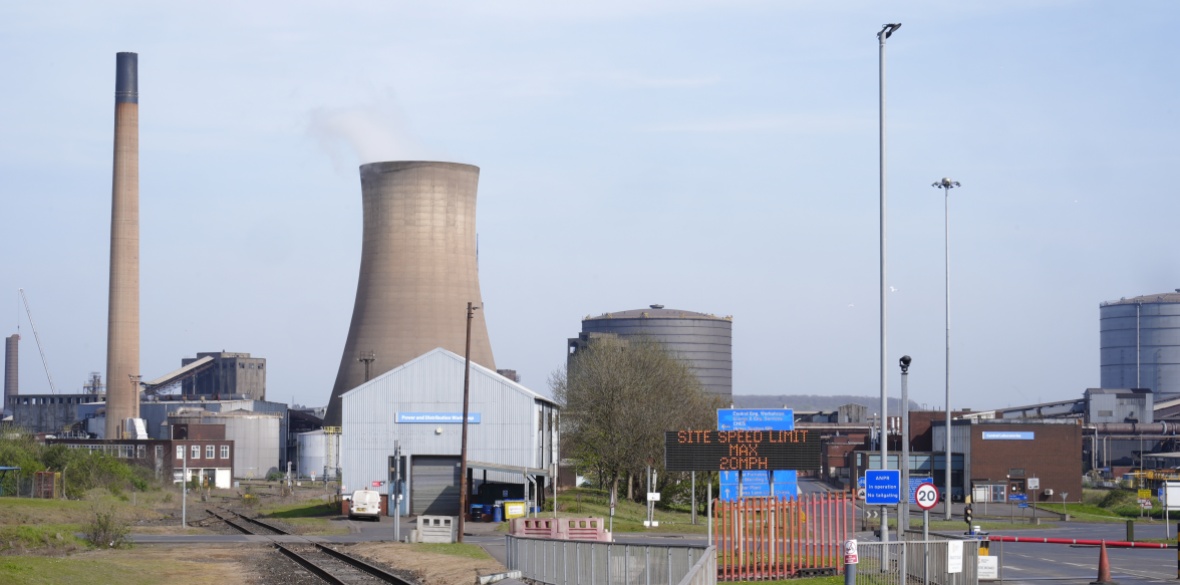
A general view of British Steel in Scunthorpe, Lincolnshire, April 12, 2025
LABOUR has been urged to catch up with public support for nationalising services “just as strategically important” as British Steel.
Campaigners and unions have continued to call for the full nationalisation of the company after the government passed an emergency law on Saturday to seize control of its Scunthorpe plant.
The legislation was passed in a single day, empowering ministers to save the last plant making “virgin steel” direct from raw materials from imminent closure, as well as thousands of jobs.
But Labour’s action was likened to an expensive public bailout today amid growing calls for the government to stop the private sector from running other services into the ground.
We Own It founder and director Cat Hobbs said: “The government has sprung into action to protect British Steel as a strategically important industry, with nationalisation on the table.
“In 2020, Keir Starmer promised public ownership of rail, mail, energy and water — as well as ending outsourcing in our NHS and local government.
“These public services are just as strategically important as steel, as drivers of economic and social development.
“Since Thatcher’s sell off, many of our key public services have been handed over to foreign states, offshore funds and billionaires.
“If Starmer is looking to take back control of our economy, this would be a good place to start.
“The UK public overwhelmingly supports public ownership and it’s high time our government caught up.”
Demands for renationalization of water services in England grows as private London water supplier requests bailout
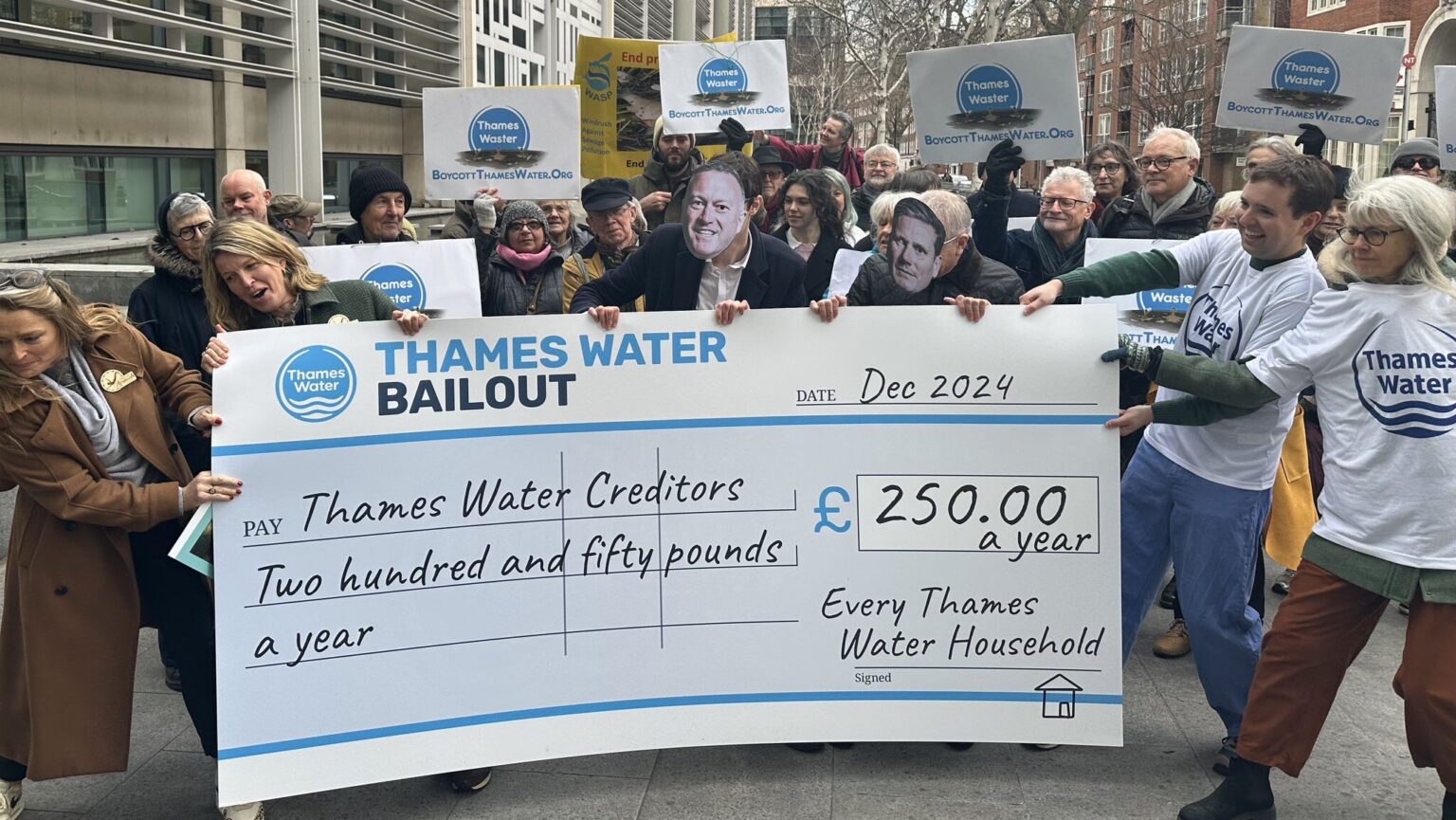
Social justice organizations in Britain are urging judges to reject a bailout request from Thames Water, one of the country’s largest water providers, serving some 16 million people in the greater London area. Campaigners argue that approving the bailout of the private utility provider would allow Thames Water to continue its mismanagement while forcing consumers to shoulder the burden—raising annual water bills by £250 (USD 317) per user.
“This is daylight robbery. There are two people who can stop it, the judge in court today and Steve Reed, the environment secretary. He can protect billpayers from this by withdrawing Thames Water’s license, on the basis of financial insolvency, illegal sewage dumping, or both,” Cat Hobbs, Director of We Own It, told Peoples Dispatch. “Tony Blair’s government defended the public interest when Railtrack went bust, why won’t this government do the same for Thames Water?”
The company warned that without the bailout, it would run out of funds by March next year. However, Thames Water customers predict that they will be unfairly burdened with the costs of the bailout, including the high interest rates that will follow, while company management will face little accountability. The We Own It campaign noted that “it is obvious that the consumer as the sole source of revenue will indirectly fund this amount by way of increases in their water bills.”
While claiming financial difficulties, Thames Water has managed to secure substantial profit margins for its investors—many of whom are based outside Britain and remain unaffected by the declining quality of local water services—while awarding generous bonuses to its management. This pattern is not unique to Thames Water: all water and sewage companies across England have followed a similar path since privatization under Margaret Thatcher’s administration. During this time, these companies have paid out £72 billion (91 billion USD) to shareholders while accumulating £60 billion (76 billion USD) in debt. The result has been a chronic lack of investment in infrastructure, leading to leaks of both water and money.
“The argument for privatization was that there would be more investment, the water would be cheaper, and the service would be more efficient,” independent MP Jeremy Corbyn remarked during a discussion on water services earlier this year. “It’s really worked out well on that, hasn’t it?”
A risk to ecosystem and human health
In addition to financial losses, privatization has led to a significant decline in water safety and quality. Private operators have regularly discharged untreated sewage into rivers and the sea, causing harm to ecosystems and posing a direct threat to human health. Regulators, meanwhile, are unable to enforce compliance with safety standards due to conflicts of interest, low fine thresholds and the fact that the infrastructure itself remains under the companies’ ownership.
Unlike other European countries that experimented with water privatization by outsourcing service provision but mostly retaining ownership of infrastructure, England sold everything. As a result, rather than waiting for contracts to expire and reclaiming control, the government would need to buy back the entire water system from companies like Thames Water. According to We Own It, the initial cost for this process could start around £15 billion (19 billion USD)—an amount the campaign estimates could be repaid within just six years.
Re-nationalizing water services has led to significant successes in other countries, according to Matthew Topham, Lead Campaigner at We Own It. “Paris took back control of its drinking water in 2010 from an outsourced private contract. Bills were immediately lowered, customer satisfaction levels are high, and last year, they were able to reinvest 89 million euros in improving the network,” he explains. He adds that public ownership has also sparked community participation, with cities like Lima, Terrassa, and Paris establishing observatories to give communities, workers, and activists a voice in managing water services.
Campaigners against the Thames Water bailout are calling precisely for a return to public ownership. They argue that this approach would not only lower costs for users but also create space for more investment in infrastructure, improving water quality. This demand resonates with over 80% of the British public, who support the idea of water services being brought back into public hands.
The Labour government, however, does not share this vision. Under Jeremy Corbyn’s leadership, the party’s program included an ambitious plan to renationalize water services. By 2024, Labour’s election program had moved away from this idea, keeping only the possibility of granting “new powers” to regulators to block bonuses for companies proven to pollute watercourses. As many on the left predicted ahead of the July 2024 election, Keir Starmer’s administration has shown a clear inclination toward privatization, not only in water services but also in healthcare and other sectors.
The final decision on Thames Water’s bailout request is expected in early 2025, with campaigners urging the court to consider users’ concerns and reject the proposal, paving the way for better water services.
‘It is time our energy infrastructure was brought back into public ownership,’ Unite general secretary says
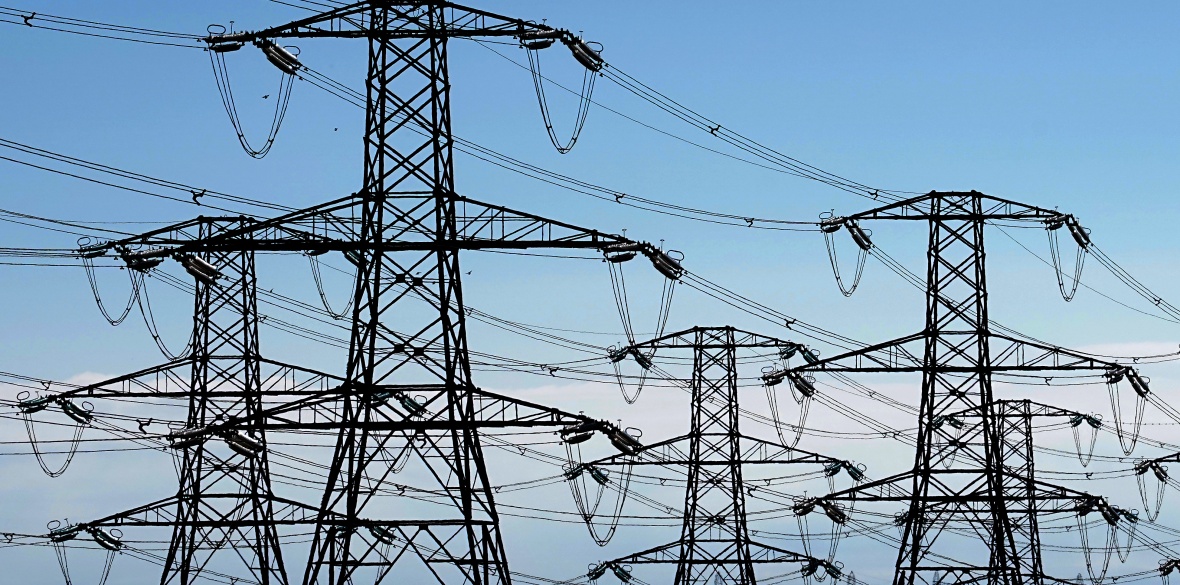
CAMPAIGNERS intensified their demands for energy infrastructure to be brought back into full public ownership today after the National Grid posted a 14 per cent increase in underlying profits.
The firm, which builds and runs power grids and cables across Britain, reported an underlying operating profit of £2.05 billion for the six months until September 30, surpassing £1.8bn in the same period last year.
The grid charges energy suppliers for network use. Costs are then passed on to consumers through their bills, which rose by another 10 per cent last month.
In 2023, National Grid shareholders received £1.6bn in dividends, while six million households remained trapped in fuel poverty amid skyrocketing costs.
Unite general secretary Sharon Graham said National Grid’s profits “lay bare” Britain’s broken energy system.
She said: “Energy profiteers like National Grid are extracting cash for overseas shareholders through ever more expensive bills.
“It is time our energy infrastructure was brought back into public ownership so that the British people and economy benefit rather than foreign wealth funds.”
Green Party Co-leader Adrian Ramsay. Wikipedia CC.
The Green Party has repeated calls for water companies to be brought into public ownership in response to the latest State of Our Rivers report. This has found not a single waterway in England is in good overall health. The Rivers Trust study reveals that the impact of pollution from treated and untreated sewage and agricultural and industrial runoff means rivers are in a worse condition than ever.
Green Party co-leader Adrian Ramsay said:
“The state of our rivers is a national scandal. Despite public outcry over our polluted waterways and coastline the latest State of Our Rivers report shows things haven’t improved since the last report in 2021.
“For too long water companies and consecutive governments have failed to act. Taking our water companies into public ownership, so they work for people, not profit, will be a clear Green Party manifesto commitment.
“For decades, money that should have been invested in improved infrastructure has been siphoned off to water company executives and shareholders. It’s time to flush this failed experiment with privatisation down the drain and for a service as vital as water and sewage to be run for the public good.
“It should also be acknowledged that agricultural pollution contributes to 62% of waterways in England failing to meet good standards. We need to learn from the many innovative farmers who are using regenerative and organic farming methods that prevent chemical runoff into rivers.
“Our rivers should be havens for wildlife and biodiversity and healthy places for people to enjoy. In too many cases they more closely resemble open sewers. Green MPs will make cleaning up our act on water pollution a key priority.”
Inequitable distribution of income has severe consequences.
The Post Office scandal has once again exposed the shortcomings of performance related pay for company directors. The company had remuneration committees staffed by hand-picked obedient non-executive directors. None opposed the rewards accruing from wrongful prosecution of more than 900 subpostmasters and dutifully rewarded directors. Paula Vennells, chief executive from 2012-2019 picked up bonuses of £2.2m for wrecking lives.
Performance related pay has boosted the remuneration of directors even when performance is negative, as exemplified by the 2007-08 financial crash, collapse of Carillion, BHS, London Capital and Finance, Patisserie Valerie, Debenhams and others.
The bottom line is a key feature of most performance related remuneration schemes. The median tenure of a FTSE100 CEO is about 3.75 years and temptation is to grab higher pay in the shortest possible time. Profits can be boosted by depressing wages, dodging taxes, postponing repair and maintenance; cutting investment and spending on innovation; and by using novel accounting practices. Directors are rewarded for such tactics as shareholders chase short-term returns. Little attention is paid to the long-term damage and social cohesion.
Workers invest their brain, brawn and life in companies but have become just another disposable commodity. In the words of former US President Abraham Lincoln: “Capital is only the fruit of labor, and could never have existed if labor had not first existed. Labor is the superior of capital, and deserves much the higher consideration.”
…
Inequitable distribution of income has severe consequences. Millions struggle to have access to good food, housing, education, pension and other essentials. Inequalities are a threat to democracy as the rich are able to control media, buy lobbyists and fund political parties to advance their interests, to the exclusion of the vast majority of the people.
“I have never been more upset and disappointed in our current government”
…
“I think a ceasefire is crucial,” one audience member said, adding: “What I also think is crucial is that the UK government is held to account for their role in licensing arms to Israel at the moment.” Her contribution was met with applause from the rest of the audience.
Another member of the audience echoed her comments, saying: “I have never been more upset and disappointed in our current government, with how they have dealt with the situation.”
He then went on to say: “Whether it’s the Conservative Party, and even the Labour Party – it’s an absolute disgrace. How many lives need to be lost? We have been 25-30,000 Gazan lives, people who have done nothing wrong. I completely echo what you say. Israel do have a right to defend themselves – absolute. But at the risk – not at the risk – the death, murder of 25-30,000 people who have done nothing wrong, I can’t understand this.”
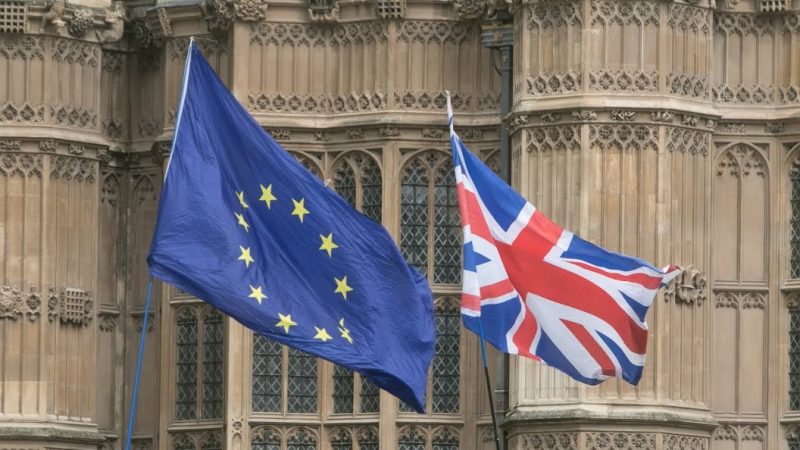
Four years on after Britain left the European Union, a damning new poll shows just how disillusioned the public are with Brexit, with the majority believing it to be a failure.
The poll, carried out by Ipsos for the Evening Standard, found that 57% believe Brexit has been more of a failure than success, while only 13% say that it has been a success.
Younger adults, Londoners, and graduates are more likely to say that Brexit has been a failure.
A breakdown of the survey results showed that 70% of 18 to 34-year-olds think Brexit has been more of a failure, as do 64% of 35-54s, compared to 38% of those aged 65+.
…
Many of the promises made by Brexiteers have failed to materialise, including grater control of borders, free trade deals with America and of course who could forget the promise to invest £350 million more a week into the NHS after Brexit.