An Israeli soldier points his weapon during a military raid in the West Bank city of Nablus, June 10, 2025
THE MINISTRY of Defence has admitted that Israeli troops are currently being trained in Britain as the government is accused of “active participation” in the genocide of Palestinians in Gaza.
Armed forces minister Luke Pollard responded to a parliamentary question from Rachael Maskell MP by saying that Britain is “currently training” Israeli Defence Forces (IDF) personnel on “UK-based training courses.”
Mr Pollard said the training was one part of a “routine defence engagement” with Israel.
His response followed investigations into the British army’s training of Israeli personnel by media outlet Declassified.
Labour MP Richard Burgon, who chairs the Socialist Campaign Group of MPs, told the Morning Star the admission was “truly sickening, especially given the genocide being carried out in Gaza.
“It’s also a flagrant violation of international law. The International Court of Justice has been totally clear that all states must stop any co-operation that aids Israel’s illegal occupation of Palestine.
“Britain has a moral and legal duty to immediately end all arms sales and military co-operation with Israel.”
The Scottish Greens also hit back at the government’s admission, saying Britain’s role in the Gaza war “goes beyond complicity.”
Party co-leader Patrick Harvie MSP said: “This is nothing short of disgraceful. This goes beyond complicity — it is direct, active participation in the genocide of the Palestinian people.
“The UK is actively training members of the Israeli military while they carry out a brutal assault on Gaza.
“Every bomb dropped, every home destroyed, every child killed is a crime that the UK government is now tied to.
“Training soldiers who are part of these atrocities is a betrayal of every principle of human rights and international law. It must stop now.”
Palestine Solidarity Campaign deputy director Peter Leary said the “disgraceful” revelation highlights the total inadequacy of the government’s actions.
“On Tuesday, Britain announced long-overdue sanctions against two Israeli ministers but continues to supply weapons to a regime that is perpetrating well-documented war crimes and crimes against humanity.
“We need much more than just a change of rhetoric and blocks on two ministers’ bank accounts.
“We need a full arms embargo, wide-ranging sanctions on the Israeli state, and a complete end to all military co-operation now.”
In a statement to the Morning Star, a spokeswoman from the Stop The War Coalition said: “That Britain is actively involved in training a foreign military currently engaged in genocide comes as little surprise given Labour ministers have been actively enabling the brutality of the IDF throughout.
“The political rhetoric may be starting to shift as Keir Starmer, David Lammy and the rest try to realign their government’s support for Israel’s war on Gaza in an attempt to placate public opposition.
“But it’s clearer than ever just how deep their collaboration with and enabling of war crimes goes.”
UK Foreign Minister David Lammy confirms that UK government and military are active participants in Israel’s genocides and that the F-35 parts that they suspended from supplying to Israel are instead simply diverted via the United States. He says see https://youtu.be/QILgUHrdWREGenocide denier and Current UK Prime Minister Keir Starmer is quoted that he supports Zionism without qualification. He also confirms that UK air force support has been essential in Israel’s mass-murdering genocide. Includes URLs https://www.declassifieduk.org/keir-starmers-100-spy-flights-over-gaza-in-support-of-israel/ and https://youtu.be/O74hZCKKdpAUK Labour Party government ministers Keir Starmer, Angela Rayner and Rachel Reeves explain that they are partners complicit in Israel’s Gaza genocide. The UK has provided Israel with arms, military and air force support. They explain that they don’t do gas chambers but do do forced marches, starvation, destroy hospitals, mass-murders of journalists and healthcare workers.
Pro-Palestinian activists wave Palestinian flags and keffiyehs from open bus windows as they, along with around 1,000 other participants in the Sumud or “Resilience” Convoy, depart from Tunis, Tunisia, on June 9, 2025. (Photo: Chedly Ben Ibrahim/NurPhoto via Getty Images)
“A tsunami of humanity is rising for Gaza.”
As Israeli forces unlawfully boarded the Madleen, a boat carrying humanitarian aid to Gaza, and detained the volunteers on the vessel on Monday, approximately 1,000 pro-Palestinian advocates from across Northwest Africa were boarding a convoy of buses and cars in Tunisia—planning to travel for days to the Rafah crossing, where they aim to break Israel’s blockade that’s starving people across the war-torn enclave.
The Sumud Convoy, whose name means “steadfastness” or “resilience” in Arabic, is carrying aid and being led by the Coordination of Joint Action for Palestine in Tunisia, and has ties to the Global March for Gaza, which includes rights advocates from about 50 countries across the world who were en route to Cairo on Wednesday.
“This is a civil and popular initiative in response to the ongoing genocide in Gaza,” Wael Naouar, a member of the organizing team, told The New Arab. “We refuse to remain silent.”
The convoy crossed into Libya on Tuesday and has been resting after a full day of travel as organizers wait for permission to cross the eastern part of the divided country.
In Tripoli in the western region, the volunteers have been welcomed by hundreds of locals, and fuel station owners have reportedly said they will provide free gas to all cars, buses, and trucks that join the convoy.
Thousands of North African volunteers launched a mass land convoy toward Gaza, aiming to break the Israeli blockade through Egypt. pic.twitter.com/OLuX7iZzh4
Along with the current delay in receiving approval from eastern Libyan authorities to cross the region, the convoy and the Global March for Gaza could face resistance from the Egyptian government as organizers plan to march for three days from El Arish in the Sinai Peninsula to the Rafah crossing.
Egypt classifies the area between El Arish and Rafah as a military zone and has not released a statement on whether it will allow the march.
If the volunteers make it to the Rafah crossing, they will have to contend with the Israel Defense Forces. In addition to abducting international activists including Swedish climate leader Greta Thunberg and Palestinian-French member of European Parliament Rima Hassan this week, Israeli forces killed 10 activists carrying humanitarian aid to Gaza on a Turkish flotilla in 2010.
Ghaya Ben Mbarek, an independent journalist from Tunis, told Al Jazeera that people in the convoy “are feeling courage and anger” as they head toward the Gaza border.
“The message people here want to send to the world is that even if you stop us by sea, or air, then we will come, by the thousands, by land,” Ben Mbarek told Al Jazeera. “We will literally cross deserts… to stop people from dying from hunger.”
Fadi Quran of the U.S.-based advocacy group Avaaz said the journey of the convoy—which has been growing as more people have joined since leaving Tunisia—is “one of the most beautiful things humanity has to offer in 2025.”
“A tsunami of humanity is rising for Gaza,” said Quran. “Amplify it.”
If you’re not watching people across North Africa come out in droves to celebrate the convoy to break the siege, you’re missing out on one of the most beautiful things humanity has to offer in 2025.
The Sumud Convoy is supported by the Tunisian General Labor Union, the National Bar Association, the Tunisian League for Human Rights, and the Tunisian Forum for Economic and Social Rights, while groups including the Palestinian Youth Movement and CodePink are affiliated with the Global March for Gaza.
Advocates from countries including the Netherlands, Canada, and Ireland plan to arrive in Cairo on Thursday, when they hope to begin the three-day march to Rafah.
Canadian Sen. Yuen Pau Woo wrote to the Egyptian government on Tuesday, asking for support for the march.
“I believe that Egypt’s support for this humanitarian action would send a powerful message to the international community,” said Woo.
Kellie McConnell, a member of Irish Healthcare Workers for Palestine, also expressed hope that the international action will force governments around the world, including those that have backed Israel’s bombardment and blockade of Gaza, to “pay attention and do everything in their power” to end the attacks that have killed more than 55,000 Palestinians.
“We can turn the tables in this genocide,” said McConnell. “We can stop the absolutely appalling brutalization and desperate treatment of people in Palestine.”
If the advocates are blocked at the border like the Madleen was intercepted on Monday, one activist in the Sumud Convoy told The New Arab, “even that will send a message.”
“People over power,” they said. “If they stop dozens, thousands will rise.”
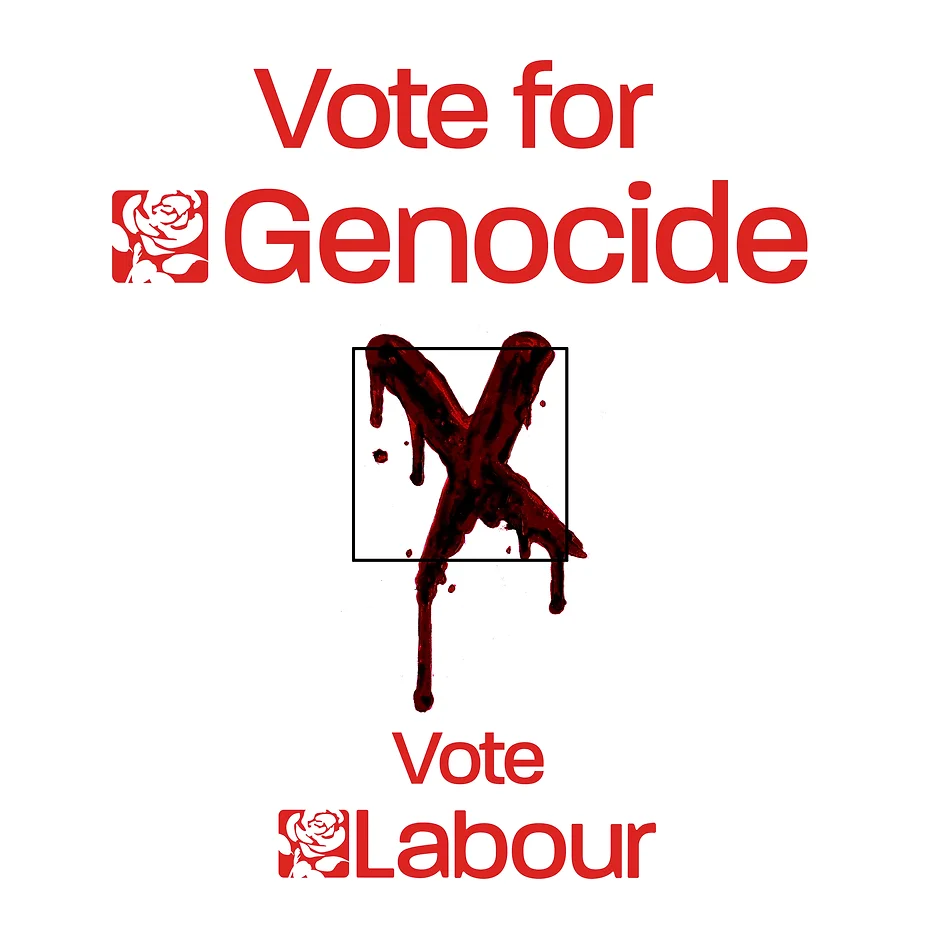
Genocide denier and Current UK Prime Minister Keir Starmer is quoted that he supports Zionism without qualification. He also confirms that UK air force support has been essential in Israel’s mass-murdering genocide. Includes URLs https://www.declassifieduk.org/keir-starmers-100-spy-flights-over-gaza-in-support-of-israel/ and https://youtu.be/O74hZCKKdpAUK Labour Party government ministers Keir Starmer, Angela Rayner and Rachel Reeves explain that they are partners complicit in Israel’s Gaza genocide. The UK has provided Israel with arms, military and air force support. They explain that they don’t do gas chambers but do do forced marches, starvation, destroy hospitals, mass-murders of journalists and healthcare workers.Vote Labour for Genocide.
Green Party Co-leader Adrian Ramsay. Wikipedia CC.
Responding to the Spending Review, Green Party Co-Leader, Adrian Ramsay MP, said,
“Today’s Spending Review shows we have a chancellor who seems to know the price of everything and the value of nothing. While today Reeves may have balanced her spreadsheet, it is done on the backs of some of the worst off in our society. The proof is in how many will still be feeling worse off as the cost-of-living crisis bites hard.
People want to feel pride in Britain again, and for this, they need real hope. Hope only comes from seeing how things will improve through real investment in the everyday services we all rely on.
Despite the rhetoric in the chamber, it is clear that this Spending Review represents a squeeze in many frontline budgets. With education, for example, where many schools are already being forced to make difficult budget cuts, core school budgets are set to rise by just 0.6%. It is hard to see this money ever reaching our teachers and children in the classroom. Equally, I am horrified to see real-term cuts to Defra funding, just as the impact of climate change is starting to affect our communities. Now is the time to invest in climate resilience and preparedness.”
He continued, “These ‘tough decisions’ are actually ‘Labour’s political choices’. They are choosing to leave the economy tilted towards those with considerable wealth. Our front-line services continue to deteriorate through a political choice of decline by design. By introducing a wealth tax on the super-rich, we could instead properly invest in our children’s future. We could give them the education they deserve and start now to invest in the climate resilience and preparedness they will need throughout their lives as the climate crisis unfolds.”
Article by Chris Hedges republished from MPN under a Creative Commons Attribution-NonCommercial-ShareAlike 3.0 International License.
This is the end. The final blood-soaked chapter of the genocide. It will be over soon. Weeks. At most. Two million people are camped out amongst the rubble or in the open air. Dozens are killed and wounded daily from Israeli shells, missiles, drones, bombs and bullets. They lack clean water, medicine and food. They have reached a point of collapse. Sick. Injured. Terrified. Humiliated. Abandoned. Destitute. Starving. Hopeless.
In the last pages of this horror story, Israel is sadistically baiting starving Palestinians with promises of food, luring them to the narrow and congested nine-mile ribbon of land that borders Egypt. Israel and its cynically named Gaza Humanitarian Foundation (GHF), allegedly funded by Israel’s Ministry of Defense and the Mossad, is weaponizing starvation. It is enticing Palestinians to southern Gaza the way the Nazis enticed starving Jews in the Warsaw Ghetto to board trains to the death camps. The goal is not to feed the Palestinians. No one seriously argues there is enough food or aid hubs. The goal is to cram Palestinians into heavily guarded compounds and deport them.
What comes next? I long ago stopped trying to predict the future. Fate has a way of surprising us. But there will be a final humanitarian explosion in Gaza’s human slaughterhouse. We see it with the surging crowds of Palestinians fighting to get a food parcel, which has resulted in Israeli and U.S. private contractors shooting dead at least 130 and wounding over seven hundred others in the first eight days of aid distribution. We see it with Benjamin Netanyahu’s armingISIS-linked gangs in Gaza that loot food supplies. Israel, which has eliminated hundreds of employees with the United Nations Relief and Works Agency for Palestine Refugees in the Near East (UNRWA), doctors, journalists, civil servants and police in targeted assassinations, has orchestrated the implosion of civil society.
I suspect Israel will facilitate a breach in the fence along the Egyptian border. Desperate Palestinians will stampede into the Egyptian Sinai. Maybe it will end some other way. But it will end soon. There is not much more Palestinians can take.
We — full participants in this genocide — will have achieved our demented goal of emptying Gaza and expanding Greater Israel. We will bring down the curtain on the live-streamed genocide. We will have mocked the ubiquitous university programs of Holocaust studies, designed, it turns out, not to equip us to end genocides, but deify Israel as an eternal victim licensed to carry out mass slaughter. The mantra of never again is a joke. The understanding that when we have the capacity to halt genocide and we do not, we are culpable, does not apply to us. Genocide is public policy. Endorsed and sustained by our two ruling parties.
There is nothing left to say. Maybe that is the point. To render us speechless. Who does not feel paralyzed? And maybe, that too, is the point. To paralyze us. Who is not traumatized? And maybe that too was planned. Nothing we do, it seems, can halt the killing. We feel defenseless. We feel helpless. Genocide as spectacle.
I have stopped looking at the images. The rows of little shrouded bodies. The decapitated men and women. Families burned alive in their tents. The children who have lost limbs or are paralyzed. The chalky death masks of those pulled from under the rubble. The wails of grief. The emaciated faces. I can’t.
This genocide will haunt us. It will echo down history with the force of a tsunami. It will divide us forever. There is no going back.
And how will we remember? By not remembering.
Once it is over, all those who supported it, all those who ignored it, all those who did nothing, will rewrite history, including their personal history. It was hard to find anyone who admitted to being a Nazi in post-war Germany, or a member of the Klu Klux Klan once segregation in the southern United States ended. A nation of innocents. Victims even. It will be the same. We like to think we would have saved Anne Frank. The truth is different. The truth is, crippled by fear, nearly all of us will only save ourselves, even at the expense of others. But that is a truth that is hard to face. That is the real lesson of the Holocaust. Better it be erased.
Should a drone vaporize some nameless soul on the other side of the planet, who among us wants to make a fuss? What if it turns out they were a terrorist? What if the default accusation proves true, and we by implication be labeled terrorist sympathizers, ostracized, yelled at? It is generally the case that people are most zealously motivated by the worst plausible thing that could happen to them. For some, the worst plausible thing might be the ending of their bloodline in a missile strike. Their entire lives turned to rubble and all of it preemptively justified in the name of fighting terrorists who are terrorists by default on account of having been killed. For others, the worst plausible thing is being yelled at.
You cannot decimate a people, carry out saturation bombing over 20 months to obliterate their homes, villages and cities, massacre tens of thousands of innocent people, set up a siege to ensure mass starvation, drive them from land where they have lived for centuries and not expect blowback. The genocide will end. The response to the reign of state terror will begin. If you think it won’t you know nothing about human nature or history. The killing of two Israeli diplomats in Washington and the attack against supporters of Israel at a protest in Boulder, Colorado, are only the start.
Chaim Engel, who took part in the uprising at the Nazis’ Sobibor death camp in Poland, described how, armed with a knife, he attacked a guard in the camp.
“It’s not a decision,” Engel explained years later. “You just react, instinctively you react to that, and I figured, ‘Let us to do, and go and do it.’ And I went. I went with the man in the office and we killed this German. With every jab, I said, ‘That is for my father, for my mother, for all these people, all the Jews you killed.’”
Does anyone expect Palestinians to act differently? How are they to react when Europe and the United States, who hold themselves up as the vanguards of civilization, backed a genocide that butchered their parents, their children, their communities, occupied their land and blasted their cities and homes into rubble? How can they not hate those who did this to them?
What message has this genocide imparted not only to Palestinians, but to all in the Global South?
It is unequivocal. You do not matter. Humanitarian law does not apply to you. We do not care about your suffering, the murder of your children. You are vermin. You are worthless. You deserve to be killed, starved and dispossessed. You should be erased from the face of the earth.
“To preserve the values of the civilized world, it is necessary to set fire to a library,” El Akkad writes:
To blow up a mosque. To incinerate olive trees. To dress up in the lingerie of women who fled and then take pictures. To level universities. To loot jewelry, art, food. Banks. To arrest children for picking vegetables. To shoot children for throwing stones. To parade the captured in their underwear. To break a man’s teeth and shove a toilet brush in his mouth. To let combat dogs loose on a man with Down syndrome and then leave him to die. Otherwise, the uncivilized world might win.
There are people I have known for years who I will never speak to again. They know what is happening. Who does not know? They will not risk alienating their colleagues, being smeared as an antisemite, jeopardizing their status, being reprimanded or losing their jobs. They do not risk death, the way Palestinians do. They risk tarnishing the pathetic monuments of status and wealth they spent their lives constructing. Idols. They bow down before these idols. They worship these idols. They are enslaved by them.
At the feet of these idols lie tens of thousands of murdered Palestinians.
Feature photo | The Last Piece | Artwork by Mr. Fish
Chris Hedges is a Pulitzer Prize–winning journalist who was a foreign correspondent for fifteen years for The New York Times, where he served as the Middle East Bureau Chief and Balkan Bureau Chief for the paper. He previously worked overseas for The Dallas Morning News, The Christian Science Monitor, and NPR. He is the host of show The Chris Hedges Report.
Stories published in our Daily Digests section are chosen based on the interest of our readers. They are republished from a number of sources, and are not produced by MintPress News. The views expressed in these articles are the author’s own and do not necessarily reflect MintPress News editorial policy.
The views expressed in this article are the author’s own and do not necessarily reflect MintPress News editorial policy.
Article by Chris Hedges republished from MPN under a Creative Commons Attribution-NonCommercial-ShareAlike 3.0 International License.
Genocide denier and Current UK Prime Minister Keir Starmer is quoted that he supports Zionism without qualification. He also confirms that UK air force support has been essential in Israel’s mass-murdering genocide. Includes URLs https://www.declassifieduk.org/keir-starmers-100-spy-flights-over-gaza-in-support-of-israel/ and https://youtu.be/O74hZCKKdpAUK Labour Party government ministers Keir Starmer, Angela Rayner and Rachel Reeves explain that they are partners complicit in Israel’s Gaza genocide. The UK has provided Israel with arms, military and air force support. They explain that they don’t do gas chambers but do do forced marches, starvation, destroy hospitals, mass-murders of journalists and healthcare workers.
UK chancellor Rachel Reeves faces her biggest test with the government’s departmental spending plans for the three years from next April until the general election. With nearly £600 billion a year to spend, her decisions will impact on every aspect of public life and shape the political weather for years to come.
She believes the key to reviving Labour’s fortunes as its poll ratings tumble lies in boosting economic growth.
So the government has promised that its policies will increase the UK’s anaemic growth rate and enhance productivity. Reeves is looking to capital spending on big projects that will boost the economy, such as the £14.2 billion government investment in a new nuclear power plant at Sizewell in Suffolk.
Last year she revised the government’s fiscal rules to give herself the space to borrow an extra £113 billion over three years to transform Britain’s ageing infrastructure. She has already made it clear that she wants to boost transport investment outside of London, as well as invest in research and development, including green energy.
But there are challenges ahead. In the first place, the effect of infrastructure investment takes a long time to feed through. This is partly because of the lag between planning the projects and when they come on-stream.
It will take time before the full effect will be felt on productivity, which has been growing more slowly than expected. The Office for Budget Responsibility (OBR) suggested in March that the latest government plans for planning reform might increase productivity by just 0.2% in the longer term.
There are also some real trade-offs as to where the increased capital investment will go – and which sectors will benefit most. The chancellor has emphasised her commitment to putting more money into projects outside London and south-east England that have had less public investment in the past.
But London and the south-east is where productivity is highest and where further investment might have a bigger effect on economic growth.
It appears that there may be less funding for social housing, which may threaten the government’s ambitious target of building 1.5 million homes over the parliament. There may also be less available to repair schools and hospitals.
And the plans to boost defence spending on expensive military equipment – such as frigates and fighter planes – will also count as capital spending. As such, it could further reduce the amount available for infrastructure investment.
The departmental trade-offs
Despite the relative abundance of cash for infrastructure, the tighter fiscal rules on day-to-day spending mean that many departments are facing a squeeze on their budgets. The government plans to allow total day-to-day departmental spending on average to rise by just 1.2% per year in real terms during the next three years. This probably spells a real-terms cut for some “unprotected” departments.
This is because the money will not be distributed equally. The Department of Health and Social Care gets 40% of all departmental spending and is likely to be the big winner.
It has already received a big increase in the last spending round, with an 11% increase in capital spending is likely to get even more to realise an ambitious ten-year plan for improving services in the NHS in England.
If health spending were to go up by 2.5% (well under its historic average), this could mean very little increase for many other government departments. And if it is increased by 3.5% this will imply real-terms cuts for other areas.
The situation is made more difficult by the government’s decision to prioritise two other areas: defence and schools. For defence, it is committed to raising spending to 2.5% by 2027 and to 3% in the next parliament.
And for education, Reeves has pledged an extra £4.5 billion per year for more teachers, childcare places and free school meals. The decisions have a strong political dimension, as health and education tend to be the most popular spending priorities among the public.
The spending review, however, only covers half of total government spending. The more unpredictable part is annually managed expenditure, mainly on benefits and interest payments on government debt.
The Treasury sets an overall target (known as the spending envelope) on how much will be spent in these areas. But it now faces a crunch point over the unpopular decisions to cut disability benefits and keep the two-child benefit cap.
Reeves’ partial U-turn on the winter fuel payment, which will now be paid to 9 million pensioners, will cost an additional £1.25 billion a year but may have been a political necessity.
But a full U-turn on the two other issues will be much more expensive. Taken together, such a change might breach the fiscal rules, which give only £10 billion of “headroom” in a total government budget of more than £1.2 trillion. So while there will be some rowing back, the finances suggest any more major U-turns are unlikely.
To make matters worse, these spending plans are based on an economic forecast made by the OBR in March. This did not include the effect of US president Donald Trump’s tariff plans. Since then, both the IMF and the OECD downgraded their UK growth forecasts for both 2025 and 2026, and despite a recent small upgrade by the IMF, growth is still significantly lower than previously expected.
Even though Britain seems to have secured a deal with the US, the effect of tariffs on global growth will still damage the UK’s prospects as a trading nation.
This will make it harder for the government to meet its fiscal targets in the autumn budget while sticking to the departmental spending plans. The chancellor will then have three options. She can look for more cuts in benefits spending.
She could try to find other sources of tax revenue, for example by tweaking the rules on taxing pensions or extending the freeze on upgrading tax bands. Or, more radically, she could modify the fiscal rules to give herself more flexibility – for example by having only one economic forecast a year, as the IMF has suggested.
Ultimately Labour’s electoral prospects will depend on whether it has succeeded in boosting living standards. While the productivity drive could work, the UK economy remains at the mercy of wider global economic forces.