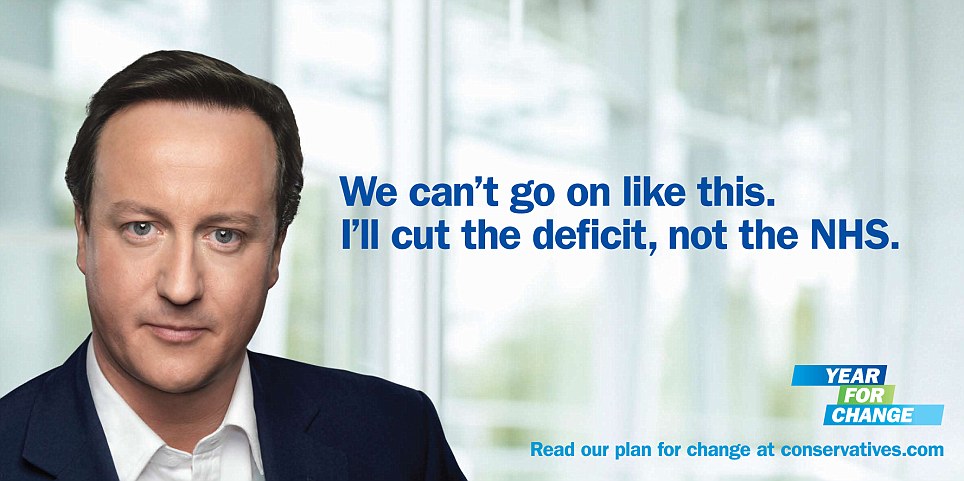
A few recent news articles concerning the UK’s Conservative and Liberal-Democrat coalition government – the ConDem’s – brutal attack on the National Health Service.
Over half of doctors oppose the government’s NHS reforms, according to a survey from the British Medical Association (BMA).
Research compiled by Ipsos Mori found that 89% of doctors thought the measures would lead to a fragmentation of services, while 65% said the quality of patient care would be reduced as a result.
A further two-thirds of doctors said they believed the reforms would increase health inequalities.
The vast majority of doctors fear the risks of controversial NHS reform plans outweigh the potential benefits, a poll reveals today.
The survey of 1,600 doctors found 89 per cent believed increased competition would fragment services and two-thirds said it would reduce the quality of patient care.
Two-thirds also said giving control of £80bn in NHS spending to GPs would increase health inequalities and 60 per cent feared they would spend less time with patients.
The cutbacks have prompted warnings that services will suffer and patients put at risk.
At least 20 trusts have reduced their budgets for doctors to visit patients in the evenings and at weekends by a total of £4million.
The cuts in after-hours budgets led to warnings of a repeat of the case of Daniel Ubani, the incompetent German locum who killed a Cambridgeshire man with a morphine overdose in 2008.
Nearly nine out of ten doctors think increasing competition in the NHS will lead to services being fragmented, according to a poll.
Some 65 per cent believe competition between providers, including NHS and private companies, will reduce the quality of patient care, while 61 per cent think the Government’s reforms mean they will spend less time with patients.
Most doctors believe NHS reforms will lead to increased competition but only one in five think they will improve care.
I have hazy memories of my parents getting their first telephone. It was the late 1960s, and telecommunications was a public service. There was a waiting list but, in time, we got to the head of the queue. An engineer from the General Post Office installed the necessary equipment and we were connected – or at least, connected any time our neighbours weren’t using their phone: ours was a “party line”. I don’t recall any grumbles about the tortuousness of the process, nor about having to share with the people next door. The sense of wonder at what was now possible must have mitigated any frustration. It was marvellous to be able to speak to relatives and friends from the comfort of home, without having to trudge to the phone box.
The National Health Service was viewed in much the same way. My father developed cancer when I was two years old. He was swiftly cured but irrevocably damaged, and he struggled thereafter with chronic ill-health. His illnesses had knock-on effects on various members of our family, myself included. Between us we saw a lot of the NHS. At the centre of it (to my eyes) was our GP, a good-hearted man with half-moon glasses and a somewhat distant manner. When he needed expert assistance, a referral would be made. Waiting times were sometimes long but were accepted with stoicism: the professionals we eventually saw did their best. Looking back, I recognise the profound comfort in those experiences for my parents, who had grown up knowing what medical care could be like – and its financial implications – before the advent of the NHS. No matter how threatening or scary things got, no matter what time of day or night, this health service was there to help and asked nothing in return.
In the mid-1980s, I entered medical school in Nottingham. Like most aspiring doctors, I knew what I was going to be: a public servant, working extremely long and often antisocial hours, the whole arduous endeavour sustained by a powerful sense of doing something important and worthwhile. I would be joining an unquestionable force for good, grouped under the fluttering blue-and-white standard of the NHS.
A few recent news articles concerning the UK’s Conservative and Liberal-Democrat coalition government – the ConDem’s – brutal attack on the National Health Service.
The vast majority of doctors are not convinced that potential benefits of the government’s plans for the NHS in England outweigh the risks, an online survey for the BMA suggests today (Thursday 3 March 2011). An Ipsos MORI survey of BMA members, carried out in January this year, reveals a range of views, but widespread concern about plans to increase competition, even among the minority of doctors who are generally supportive of the changes.
The statements garnering the highest levels of agreement among the 1,645 respondents are:
* Increased competition in the NHS will lead to a fragmentation of services (89% agree)
* Increased competition in the NHS will reduce the quality of patient care (65% agree)
* The move for all NHS providers to become, or be part of, foundation trusts will damage NHS values (66% agree)
* The proposed system of clinician-led commissioning will increase health inequalities (66% agree)
Research involving 1,645 BMA members polled about the government’s health and social care bill has found that 89% think increased competition will lead to fragmentation of services, while 66% believe that the move for all NHS acute providers to reside within foundation trusts will damage NHS values.
The poll, conducted online in January by Ipsos Mori, also shows that nearly 60% of those surveyed think health secretary Andrew Lansley’s plans will have a negative impact on their personal role within the NHS, with 31% saying it will be a major one and 27% saying it will be minor. A specific concern, feared by a majority of those polled, is that the reforms will mean they spend less time with patients – something opposed by almost all those questioned.
Dr Hamish Meldrum, chairman of council at the BMA, said that the results show that the government “can no longer claim widespread support among doctors”.
A White Paper with a simple title that disguises a development of huge significance is due any day now. It will be called “Open Public Services”. In reality it is a plan to privatise many government functions. And the question that arises is this: were the political parties that comprise the Coalition Government given a mandate to make such dramatic changes at the general election held only 10 months ago?
The key part of the legislation that the White Paper foreshadows would be the establishment of a presumption that public services should be open to a range of providers competing to offer a better service. In other words, any supplier that could show the Government that it could do a better job than the state would get the business. Only national security and the judiciary would be exempt from the possibility of privatisation.
Would it work like this? “Dear Health Minister. We are a group of brain surgeons that have secured funding for constructing a state-of-the art neurological hospital in outer London. We would like to take over all neurological procedures from the NHS in South-east England. Yours etc.”
GPs have branded the Tory-led Government’s health reforms as “flawed” and damaging to patients.
Almost 90% believe the changes will fragment the NHS and 65% think it will harm service quality.
Almost nine out of 10 told a British Medical Association poll the reforms will lead to greater competition. Just 21% thought this would benefit patients. A further 61% believe they will have less time for the sick because of increased bureaucracy.
Commenting on Monitor’s warning to Tameside NHS Trust over its spending, after the regulator found the Trust to be in “significant breach” of its terms, Paul Foley, regional officer for the North West, said:
“Tameside Trust’s debt proves how hard the NHS is being hit by the Government’s financial squeeze. Bankruptcy is a real risk because of the Government’s savage health reforms.
“Tameside is one of the most deprived areas in the UK and has huge health problems. Monitor is only interested in Trusts making financial savings and fails to recognise the difficulties such communities suffer.
The real danger of NHS privatisation was laid bare today after plans emerged to set up a private company that would take control of GPs’ commissioning budget.
Private health firm IHP has outlined proposals for a consortium’s NHS commissioning budget to be handed over to a private company in which GPs would own a 20 per cent stake – leading to practices being partially floated on the stock market.
Under the Health and Social Care Bill, currently at committee stage in Parliament, GP consortiums will control £80 billion of NHS funds to commission to patients from 2013.
A Channel 4 News investigation reveals that under the reforms of the NHS, GPs could end up making decisions based on profit rather than the clinical needs of the patient.
The NHS reforms plan to put up to 80% of the budget into the hands of family doctors. GP practices will form consortia and they will buy – or commission – the care.
It is widely acknowledged that not all GPs will want to run or manage the consortia. This means there is a business opportunity for private companies and already many are lining up to offer their services.
But a document leaked anonymously to Channel 4 News shows how one such company plans to work with GP consortia. What is startling about it is how it quite clearly sets out the way in which both the company, in this case called Integrated Health Partners, and the GPs, might make a profit.
Speaking exclusively to GP, Monitor chairman David Bennett agreed that the Health Bill paves the way for providers to compete on price.
In a recent letter to NHS staff, the NHS chief executive said there was ‘no question’ of price competition in the NHS.
Mr Bennett, former head of policy for Tony Blair, became chairman of Monitor this week, having served as interim chief executive since March 2010. ‘I understand why people are nervous about price competition,’ he said. ‘But over time there will be areas where it is useful.’
Ministers are facing a growing rebellion from doctors over their plans to reform the NHS.
A major online survey for the British Medical Association found most doctors were not convinced the potential benefits of the plan outweighed the risks. Of the 1,500 doctors questioned by Ipsos MORI, 65 per cent believed increased competition in the NHS would reduce the quality of patient care.
A similar percentage believed the proposed system of clinician-led commissioning would increase health inequalities.
Britain’s most senior family doctor has warned of a potential scandal similar to the row over MPs’ expenses after an investigation revealed GP practices could boost their income by diverting cash meant for patients to pay instead for their surgeries and equipment.
The finding highlights a key concern about the government’s health bill – which nine out of 10 doctors now openly fear will damage the NHS – because £80bn of NHS spending is to be handed to doctors in general practice to buy treatments for patients.
Health Service Journal has examined trials of GP-led commissioning in the last two years. The magazine used a series of freedom of information requests to discover that, rather than using the funds to set up new services for patients, hundreds of practices used the cash to buy basic equipment for their surgeries, including stethoscopes, thermometers and weighing scales.
The wide-ranging poll highlights a number of serious concerns among GPs about the reforms, particularly around the impact of GP commissioning on patient care and the drive to increase competition in the NHS.
The BMA said it shows that the government can no longer claim widespread support among doctors for the reforms. It urged the government to act on the concerns raised by doctors.
The survey, which was carried out by Ipsos MORI, showed 72% think GP commissioning will damage the GP-patient relationship.
Ministers are facing a growing rebellion from doctors over their plans to reform the NHS.
A major online survey for the British Medical Association found most doctors were not convinced the potential benefits of the plan outweighed the risks. Of the 1,500 doctors questioned by Ipsos MORI, 65 per cent believed increased competition in the NHS would reduce the quality of patient care.
A similar percentage believed the proposed system of clinician-led commissioning would increase health inequalities.
I consider this posting to comply with copyright laws since
a. Only a small portion of the original article has been quoted satisfying the fair use criteria, and / or
b. This posting satisfies the requirements of a derivative work.
Please be assured that this blog is a non-commercial blog (weblog) which does not feature advertising and has not ever produced any income.