Conservatives Received £3.5 Million from Polluters, Fossil Fuel Interests and Climate Deniers in 2022

Spread the love

Original article by Sam Bright republished from DeSmog according to their republishing guidelines.

The governing party has accepted millions in “dirty donations” while watering down its net zero commitments.


BySam Bright on Mar 30, 2023 @ 07:02 PDT
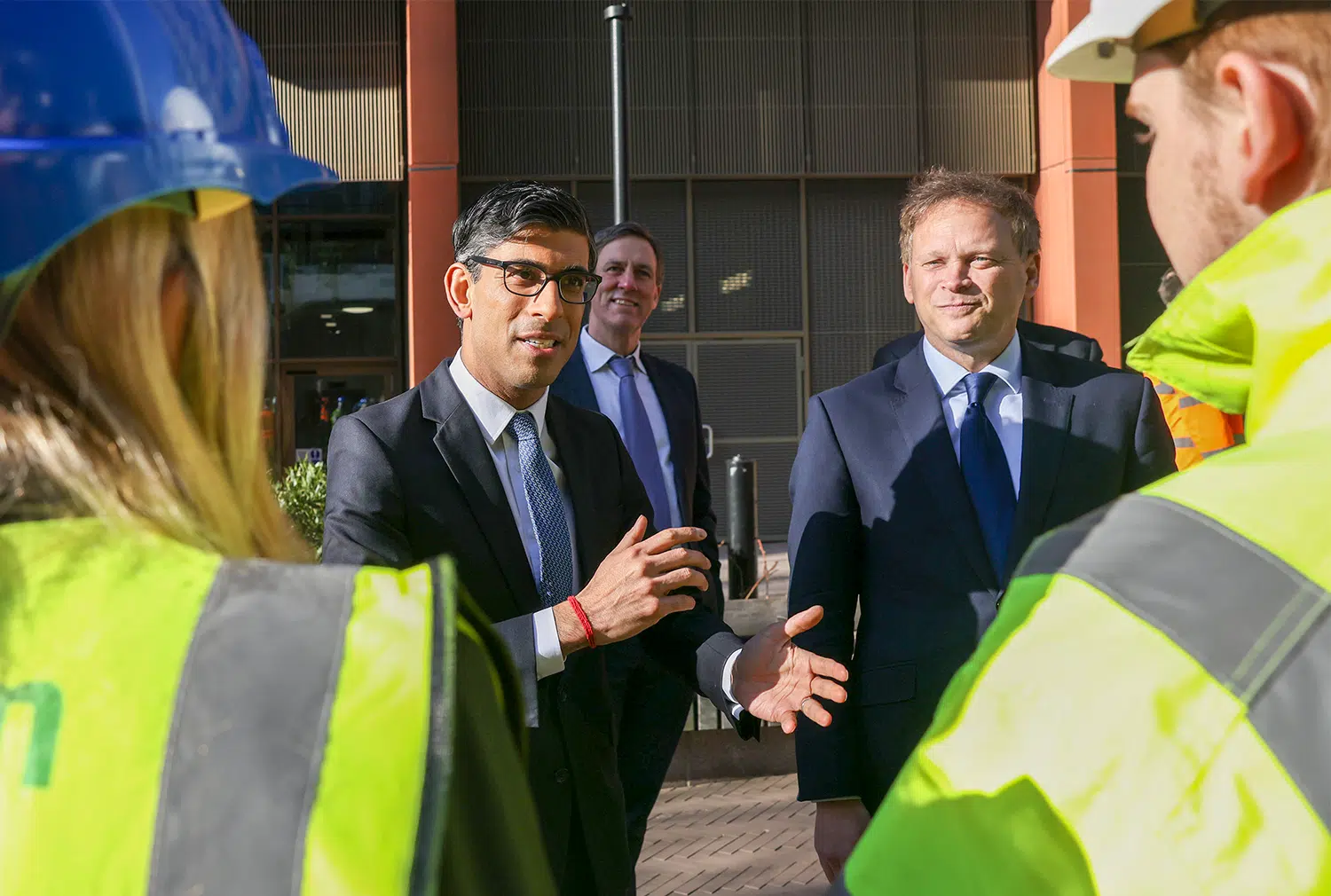
UK Prime Minister Rishi Sunak and Energy Security and Net Zero Secretary Grant Shapps.
Prime Minister Rishi Sunak and Energy Security and Net Zero Secretary Grant Shapps. Credit: Simon Dawson / 10 Downing Street, CC BY-NC-ND 2.0

Individuals and entities linked to climate denial, fossil fuels and high pollution industries donated more than £3.5 million to the Conservative Party last year, DeSmog can reveal.

Electoral Commission records show that the party and its MPs received considerable sums from the highly polluting aviation and construction industries, mining and oil interests, and individuals linked to the Global Warming Policy Foundation, a think tank that denies climate science.

This revelation comes on the government’s supposed ‘green day’, when it has announced a long list of policies on energy and the transition to net zero. 

However, rather than strengthen the commitment to the government’s legally binding climate targets, the policies are expected to entrench the role of fossil fuels in the UK’s energy system.

The government’s updated measures include a plan to loosen restrictions on oil and gas extraction in the North Sea, in which it says “we remain absolutely committed to maximising the vital production of UK oil and gas as the North Sea basin declines”.

The government’s failure to act on a number of key recommendations in the net zero review conducted by Conservative MP Chris Skidmore, along with a legal challenge to the UK’s climate plans, has prompted outrage from green campaigners. 

“It’s clear this is not a strategy, just an assembly of lobby interests,” Tom Burke, a co-founder of the E3G think tank told The Guardian earlier this week.

Caroline Lucas told DeSmog that the government’s net zero announcements were becoming “muddier and murkier by the moment”. 

The government’s green day “couldn’t be any more of a misnomer, when the Conservative Party is raking in millions of pounds’ worth of dirty donations from fossil fuel interests and climate deniers”, she added.

High-Pollution Industries

Aviation entrepreneur Christopher Harborne donated the largest total sum to the Conservatives in 2022, gifting £1.5 million to the party, which had an income of £31.7 million for the year ending 2021.

Harborne is the owner of AML Global, an aviation fuel supplier operating in 1,200 locations across the globe with a distribution network that includes “main and regional oil companies”, according to its website. Harborne is also the CEO of Sheriff Global Group, which trades in private jets. 

Aviation emissions accounted for eight percent of the UK’s annual greenhouse gas emissions before the pandemic, according to the government’s Climate Change Committee (CCC).

Harborne has previously provided gifts to Conservative MP Steve Baker, who co-founded an anti-green group of back benchers, the Net Zero Scrutiny Group. Harborne has also donated some £6.5 million to the Brexit Party – now Reform UK – whose co-founder Nigel Farage has called for a referendum on the government’s net zero targets. Harborne has rarely spoken about the climate crisis, so the details of his personal views are unknown. 

Harborne and all those cited in this article have been approached for comment. 

One of the largest donations to the party in 2022 came from Mark Bamford, a member of the JCB construction dynasty, who gave £973,000. The JCB group, a multinational firm that manufactures equipment for construction, also donated more than £36,000 to the party during the year. 

According to the government’s Environmental Audit Committee, the UK’s built environment is responsible for 25 percent of the UK’s greenhouse gas emissions, and “there has been a lack of government impetus or policy levers to assess and reduce these emissions”. The construction industry is also responsible for 18 percent of large particle pollution in the UK, a figure that rises to 30 percent in London, according to a recent report by Impact on Urban Health (IoUH) and the Centre for Low Emission Construction (CLEC).

Fossil Fuel Interests

The Conservative Party also received considerable sums from those directly tied to the fossil fuel industry. 

This included more than £62,000 from Nova Venture Holdings, a firm wholly owned by Jacques Tohme, who describes himself as an “energy investor” on LinkedIn and lists his current role as co-founder and director of Tailwind Energy, an oil and gas company. 

According to its website, Tailwind focuses on “maximis[ing] value in UK continental shelf (UKCS) opportunities”, an area which includes the North Sea. Serica Energy reportedly has an agreement in place to buy Tailwind, which will make Serica one of the 10 largest North Sea oil and gas producers. 

The party also received £10,000 from Alan Lusty, the CEO of Adi Group, a “leading supplier of engineering services to the petrochemical industry”. These services “add significant value to petrochemical engineering companies”, Adi says, though the firm claims “to work towards delivering a low-carbon economy” through its products. Adi also provides engineering services to the aerospace and automotive industries. 

Centrax, a firm that manufactures gas turbines, also gifted £35,000 to the Conservatives. 

A further £23,900 was raised from Amjad Bseisu, the CEO of EnQuest, an oil and gas company. Bseisu has lobbied for support to maximise the exploration for fossil fuels in the North Sea, where EnQuest operates.

During the course of his Conservative leadership bid last summer, Rishi Sunak personally received £25,000 from Mick Davis – a mining tycoon and former CEO of the Conservative Party. Davis was the CEO of Xstrata, an Anglo-Swiss firm that specialised in coal production, among other things, before it was acquired by the commodities giant Glencore in 2013. 

Sunak received a further £38,000 from Lord Michael Farmer, who founded the Red Kite metals trading and investment firm. According to his register of interests, Lord Farmer currently holds shares in Shell, BP, and Chesapeake Energy Corporation – an oil and gas company. Lord Farmer donated a further £50,000 directly to the Conservative Party in 2022. 

Sunak’s leadership opponent Liz Truss was also the beneficiary of donations linked to the fossil fuel industry. Truss received £100,000, her largest single donation, from Fitriani Hay, a former director of Fosroc, which provides “construction solutions” to the oil and gas industry. Her husband, James Hay, is a former executive at the oil supermajor BP. 

Truss also received substantial donations from individuals linked to groups lobbying for fracking regulations to be relaxed. 

Lord Michael Spencer donated £286,000 to the Conservatives during the year, both personally and via his family firm IPGL, including a £25,000 donation to the Truss campaign. Lord Spencer, a reported billionaire, holds shares in several oil and gas companies.

Lord John Nash likewise donated £55,000 to the party, with the peer’s register of interests listing him as a shareholder in Shell and BHP.

Links to Climate Denial

Individuals and firms with close ties to the GWPF, an organisation that denies climate science, also helped to finance the Conservative Party last year. 

This included Sir Michael Hintze, who donated £17,500 to the party and one of its MPs, Brandon Lewis. While Hintze avoids public statements on climate change, he was one of the early funders of the GWPF – an anti-green organisation that opposes what it describes as “extremely damaging and harmful policies” to mitigate climate change.

As revealed by DeSmog, Conservative MP Steve Baker received £5,000 from Neil Record in January 2022. Record is the chair of the Global Warming Policy Forum, the campaign arm of the GWPF, and has donated to the organisation. 

Leader of the House of Commons Penny Mordaunt and Home Secretary Suella Braverman each received £10,000 in 2022 from First Corporate Consultants, owned by Terence Mordaunt, who sits on the board of the GWPF. Penny Mordaunt has previously distanced herself from the views of her namesake and donor in relation to climate change. 

Net Zero Review

At least 60 new measures were unveiled today, focused on energy supply and the transition to net zero. The policies were previously set for a public launch in Aberdeen, the de facto capital of the UK’s oil and gas industry, before an outcry from green campaigners forced a re-think.

The government’s updated net zero policies are partly a response to a successful legal challenge, which proved that the government had failed to disclose sufficient details of how its climate goals will be achieved.

The revamped strategy is also a response to the net zero review commissioned from Chris Skidmore by former Prime Minister Liz Truss, released in January. 

The government has defied several of Skidmore’s recommendations, such as refusing to ban flaring by 2025. Flaring is the process whereby fossil fuel extractors burn off the gas that comes out of the ground while drilling for oil.

Announcements have included the continued expansion of North Sea oil and gas exploration. The North Sea Transition Authority has this week announced that it is advocating new measures to “speed up North Sea oil and gas production” by “streamlin[ing] the buying and selling of assets”.

Green campaigners have suggested that the government’s updated plans continue to fall short of its climate targets – risking further legal action. 

On Wednesday, the CCC released a new report on the UK’s climate change adaptation – saying that the country is “strikingly unprepared” for the impacts of global heating. 

Baroness Brown, chair of the CCC’s Adaptation Committee, said: “The Government’s lack of urgency on climate resilience is in sharp contrast to the recent experience of people in this country. People, nature and infrastructure face damaging impacts as climate change takes hold. These impacts will only intensify in the coming decades”.

Original article by Sam Bright republished from DeSmog according to their republishing guidelines.

Continue ReadingConservatives Received £3.5 Million from Polluters, Fossil Fuel Interests and Climate Deniers in 2022

Climate Crisis ‘Out of Control’ as Global Temperature Breaks Record for 3rd Time in 4 Days

Spread the love

Thursday’s record came after the revelation that the seven-day stretch ending Wednesday was also the hottest week in at least 44 years.

For the third time in just four days, the Earth sweated through its unofficial hottest day on record Thursday.

The average global temperature reached 17.23°C, or 63°F, on July 6, up from the record set Monday, surpassed Tuesday, and matched Wednesday, according to data from the University of Maine’s Climate Reanalyzer. Thursday’s record came after the revelation that the seven-day stretch ending Wednesday was also the hottest week in at least 44 years.”Climate change is out of control,” United Nations Secretary-General António Guterres said in response to Monday’s and Tuesday’s records, as The Associated Press reported. “If we persist in delaying key measures that are needed, I think we are moving into a catastrophic situation.”

Scientists attribute the high temperatures to a combination of global heating caused primarily by the burning of fossil fuels and an El Niño event officially declared by the U.N.’s World Meteorological Organization Tuesday.

“Such records are the predictable consequence of a short-term El Niño temperature boost coming on top of the long-term global warming trend due to mankind’s greenhouse gas emissions.”

Earth’s temperature reached 17.01°C, or 62.62°F, Monday and then 17.18°C, or 62.9°F, Tuesday, according to data from the U.S. National Centers for Environmental Prediction (NCEP). While these temperatures are the hottest since record-keeping began in 1979, The Washington Post explained, data from ice cores and tree rings indicate that they haven’t been experienced on Earth since the last interglacial period 125,000 years ago, when sea levels were around 18 feet higher. The week ending Wednesday was also 0.08°F, or 0.04°C, warmer than any in the record books, according to AP.

“Such records are the predictable consequence of a short-term El Niño temperature boost coming on top of the long-term global warming trend due to mankind’s greenhouse gas emissions,” lead Berkeley Earth scientist Robert Rohde tweeted in response to Thursday’s new record.

The University of Maine’s Climate Reanalyzer uses both temperature readings from the surface, air balloons, and satellites, along with NCEP forecast data, to provide daily average two-meter air temperatures, according to The Guardian.

The records it reports are considered “unofficial” by the National Oceanic and Atmospheric Administration (NOAA) because they rely partly on computer models, AP explained, but the agency did not deny the impact of the climate emergency and El Niño on recent extremes.

“Although NOAA cannot validate the methodology or conclusion of the University of Maine analysis, we recognize that we are in a warm period due to climate change,” NOAA said in a statement reported by AP.

There are also other indicators speaking to spiking temperatures: The European Union’s Copernicus ECMWF ERA5 dataset put Monday’s mean temperature at a record 16.88°C and Tuesday’s at a new record temperature of 17.03°C.

June was also the warmest June on record, according to a report from the E.U.’s Copernicus Climate Change Service released Thursday, with temperatures more than 0.5°C above the 1991-2020 average. Sea surface temperatures also broke monthly records for both May and June, and Antarctic sea ice dwindled to 17% below average for a record low for June.

“We are in uncharted territory and we can expect more records to fall as El Niño develops further and these impacts will extend into 2024,” Chris Hewitt, WMO Director of Climate Services, said in a statement responding to the report. “This is worrying news for the planet.”

Scientists predict that the record breaking will continue into July, which is usually the warmest month of the year.

“Chances are that the month of July will be the warmest ever, and with it the hottest month ever,” Karsten Haustein, a research fellow in atmospheric radiation at Leipzig University, told The Guardian, clarifying that “ever” meant in the last 120,000 years.

“I’ve never seen anything like it. I’ve been having heart palpitations because of the heat. I’m starting to think seriously that I’m going to leave Timbuktu.”

The records aren’t just numbers. They have been felt in extreme heatwaves around the globe from Texas to China. Cities in China are opening air raid shelters to help people hide from heat that has already turned deadly, APreported Friday, and temperatures in Beijing surpassed 35°C for more than nine days in a row for the first time since 1961.

Temperatures were also high in Timbuktu, Mali.

“Usually, at night it’s a bit cool even during the hot season. But this year, even at night, it’s been hot—I’ve never seen anything like it,” 50-year-old Fatoumata Arby toldAP. “I’ve been having heart palpitations because of the heat. I’m starting to think seriously that I’m going to leave Timbuktu.”

Beyond high temperatures, the impacts of the climate emergency continue to be felt in other ways. In an update Thursday, Canadian officials said the country’s record-breaking wildfire season—which has sent toxic smoke pouring across the border in recent weeks—continues, with nearly 5,000 people forced from their homes and more than 8.8 million hectares of forest burned, CBC News reported. That’s nearly 11 times the average hectares burned in the last decade.

“This number is literally off the charts,” Michael Norton, director of the Northern Forestry Centre with the Canadian Forest Service at NRCan, said during a press conference reported by Politico, “with at least three more months left in the active wildfire season.”

Officials say the climate emergency is playing a major role in the unprecedented season.

“This summer, we are witnessing the effects of climate change first-hand as Canada continues to experience more intense and frequent severe weather events,” Chief Public Health Officer Dr. Theresa Tam said in a briefing reported by CBC News.

In Pakistan, meanwhile, heavy monsoon rains have killed at least 50 people in two weeks, Al Jazeera reported Friday. The deluge comes a year after devastating flooding in Pakistan swallowed a third of the country and claimed more than 1,700 lives. Pakistan contributes less than 1% to global greenhouse gas emissions, but it is one of the most vulnerable countries to climate change, and scientists said that rising temperatures made last year’s disaster more likely.

“Only when we bring carbon emissions to zero does the warming stop.”

In response to news of broken records and weather extremes, University of Pennsylvania climate scientist Michael Mann said people should not be paralyzed with fear.

“Rather than being ‘terrified’ by this expected consequence of human-caused warming, we should be motivated to act—in particular, holding politicians accountable at the ballot box,” he tweeted. “Only when we bring carbon emissions to zero does the warming stop.”

There’s a chance that living through this summer of extremes could help with that motivation.

“The issue of climate change doesn’t often get its 15 minutes of fame. When it does, it’s usually tied to something abstract like a scientific report or a meeting of politicians that most people can’t relate to,” George Mason University climate communications professor Ed Maibach told AP.

“Feeling the heat—and breathing the wildfire smoke, as so many of us in the Eastern U.S. and Canada have been doing for the past month—is a tangible shared public experience that can be used to focus the public conversation,” he said.

Continue ReadingClimate Crisis ‘Out of Control’ as Global Temperature Breaks Record for 3rd Time in 4 Days

Sanders Warns of ‘Dystopian Future’ If Governments Don’t Immediately Act on Climate

Spread the love

Original article by JAKE JOHNSON republished from Common Dreams under Creative Commons (CC BY-NC-ND 3.0).

“We must act and act boldly. Our earth is warming rapidly. We see this every day, in every part of the world.”

U.S. Sen. Bernie Sanders issued a stark call to action Thursday as heatwaves shatter global temperature records and extreme weather wreaks havoc across the planet, climate impacts that the senator called a mere glimpse of what Earth’s “dystopian future could look like” if governments remain subservient to the fossil fuel industry.

“Climate change is ravaging the planet,” Sanders (I-Vt.) said in an 11-minute address posted to his social media accounts. “If there is not bold, immediate, and united action by governments throughout the world, the quality of life that we are leaving our kids and future generations is very much in question.”

The senator ran through a litany of alarming statistics and recent real-world examples of the consequences of world leaders’ failure to rein in planet-warming fossil fuels, including two consecutive days of record-breaking heat just this week, unprecedented wildfires in Canada, rapidly rising sea levels on China’s densely populated coast, catastrophic flooding in Pakistan, drought and increasingly severe hunger in Somalia, and more.

“It is no great secret that human beings are not particularly anxious to address painful realities,” Sanders said. “This is especially true when it requires taking on powerful special interests like the fossil fuel industry and their endless amounts of money. But this time, this time, we must act and act boldly. Our Earth is warming rapidly. We see this every day, in every part of the world.”

Acknowledging that some progress was made toward speeding the development of renewable energy sources under the 2022 Inflation Reduction Act, Sanders said that “obviously much much more needs to be done” and called on Congress to take legislative action “instead of doing the bidding of oil, gas, and coal companies” and “fomenting a new Cold War with China.”

“Mostly, to my mind, that means raising the level of urgency and bringing the world together now, not next year, not five years from now, but now to address this existential threat. Failure to act will doom future generations to an increasingly unhealthy and uncertain future,” the senator warned. “For the sake of our kids and our grandchildren, for the sake of our common humanity, we cannot allow that to happen.”

The senator’s remarks came hours after the European Union’s Copernicus Climate Change Service said last month was the hottest June on record globally “by a substantial margin.”

The agency’s conclusion followed data showing that July 3 and July 4 were Earth’s two hottest days on record, fueled by the human-caused climate crisis and El Niño conditions.

“This is alarming,” Jennifer Marlon, a climate scientist at the Yale School of Environment, toldCNN on Thursday. “It’s hard to imagine what summers will be like for our children and grandchildren in the next 20 years. This is exactly what global warming looks like.”

Original article by JAKE JOHNSON republished from Common Dreams under Creative Commons (CC BY-NC-ND 3.0).

Continue ReadingSanders Warns of ‘Dystopian Future’ If Governments Don’t Immediately Act on Climate