‘This Is Not What Fighting Hamas Looks Like’: Israel Orders All of Northern Gaza to Evacuate

Spread the love

“That’s obviously impossible. Israel is preparing for mass atrocities.”

Original article by JAKE JOHNSON republished from Common Dreams under Creative Commons (CC BY-NC-ND 3.0).
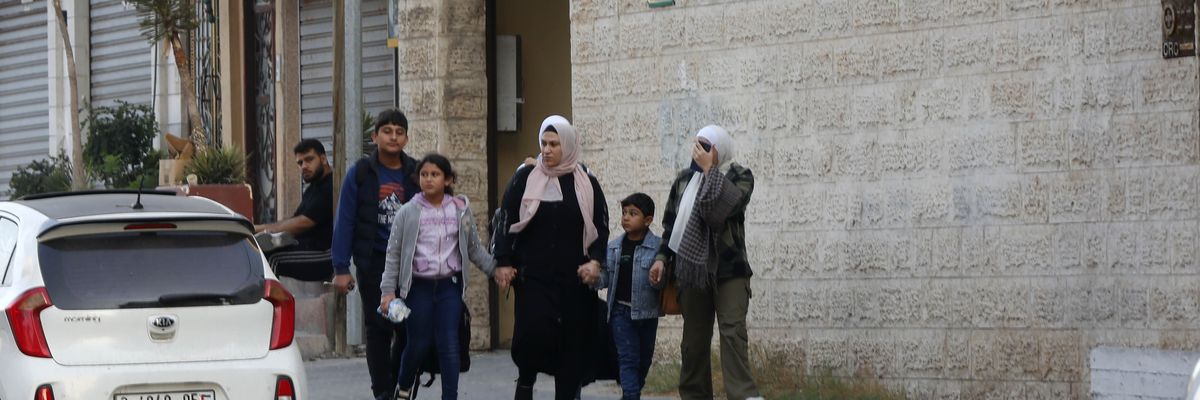
People in Gaza City begin moving to the south following an Israeli military evacuation order on October 13, 2023. 
(Photo: Ashraf Amra/Anadolu via Getty Images)

The Israeli military on Friday ordered the entire population of northern Gaza—roughly 1.1 million people—to evacuate to the southern half of the occupied territory within 24 hours, prompting fears of an even worse humanitarian catastrophe as Israel readies a ground invasion and continues its disastrous bombing campaign.

The order, initially issued to the United Nations, impacts nearly half of Gaza’s population and comes after hundreds of thousands of the enclave’s residents were already displaced by Israeli airstrikes, which have killed more than 1,500 people.

U.N. spokesperson Stéphane Dujarric said in a statement that the organization “considers it impossible for such a movement to take place without devastating humanitarian consequences.”

Dujarric added that the order must be “rescinded” to avert “a calamitous situation.”

News of Israel’s directive sparked alarm and confusion on the ground in northern Gaza, which includes densely populated Gaza City—home to the territory’s primary hospital.

Al Jazeera reported that one of its journalists in Gaza City “saw residents packing up whatever belongings they could as they began evacuating towards the south in cars, vans, and any other vehicle that was available.”

“In northern Gaza, residents early in the morning of Friday said the streets were empty as people stayed inside their homes trying to decide what to do next following Israel’s evacuation orders,” the outlet noted. “There were no cars on the road except for ambulances. Because of the internet outages and collapse of phone networks, Palestinians said information was scant and most still had not heard direct orders from the army to evacuate.”

“We fear that Israel may claim that Palestinians who could not flee northern Gaza can be erroneously held as directly participating in hostilities, and targeted.”

Aid groups and human rights organizations expressed horror in response to the Israeli military’s evacuation order, which observers warned is a prelude to “mass atrocities.”

Jan Egeland, secretary-general of the Norwegian Refugee Council, said that without “any guarantees of safety or return,” the order “would amount to the war crime of forcible transfer.”

“The collective punishment of countless civilians, among them children, women, and the elderly, in retaliation for acts of horrible terror undertaken by armed men is illegal under international law,” said Egeland. “My colleagues inside Gaza confirm that there are countless people in the northern parts who have no means to safely relocate under the constant barrage of fire.”

“We fear that Israel may claim that Palestinians who could not flee northern Gaza can be erroneously held as directly participating in hostilities, and targeted,” Egeland continued. “The United States, the U.K., the European Union, and other Western and Arab nations who have influence over the Israeli political and military leadership must demand that the illegal and impossible order to relocate is immediately rescinded.”

B’Tselem, an Israeli human rights group, said in response to the order that “a million people in northern Gaza are not guilty.”

“They have nowhere else to go,” the group added. “This is not what fighting Hamas looks like. This is revenge. And innocent people are being hurt.”

The order was delivered amid warnings that Gaza’s healthcare system is on the verge of total collapse, overwhelmed by the influx of thousands of airstrike victims and hampered by Israel’s total blockade, which has cut off the enclave’s supply of electricity, food, fuel, and other necessary supplies.

Gaza’s lone power plant has stopped operating due to a lack of fuel, forcing already-strained hospitals to operate on generators. The International Planned Parenthood Federation said Friday that “over 37,000 pregnant women will be forced to give birth with no electricity or medical supplies in Gaza in the coming months, risking life-threatening complications without access to delivery and emergency obstetric care services.”

The World Health Organization (WHO) said Thursday that “time is running out to prevent a humanitarian catastrophe if fuel and lifesaving health and humanitarian supplies cannot be urgently delivered to the Gaza Strip amidst the complete blockade.”

“Hospitals have only a few hours of electricity each day as they are forced to ration depleting fuel reserves and rely on generators to sustain the most critical functions,” the WHO said. “Even these functions will have to cease in a few days, when fuel stocks are due to run out. The impact would be devastating for the most vulnerable patients, including the injured who need lifesaving surgery, patients in intensive care units, and newborns depending on care in incubators.”

Despite such dire warnings, the U.S.—Israel’s largest supplier of weaponry and military aid—has thus far not called for a cease-fire or an end to the siege.

As The Associated Press reported Friday, “A visit by Secretary of State Antony Blinken, along with shipments of U.S. weapons, offered a powerful green light to Israel to drive ahead with its retaliation in Gaza after Hamas’ deadly attack on civilians and soldiers, even as international aid groups warned of a worsening humanitarian crisis.”

Original article by JAKE JOHNSON republished from Common Dreams under Creative Commons (CC BY-NC-ND 3.0).

Continue Reading‘This Is Not What Fighting Hamas Looks Like’: Israel Orders All of Northern Gaza to Evacuate

What You Are Seeing in Gaza Is Genocide and Ethnic Cleansing

Spread the love

Original article by YUMNA PATEL republished from Common Dreams under Creative Commons (CC BY-NC-ND 3.0).
A man carries a wounded child into Al Shifa hospital following Israeli strikes in Gaza City on October 10, 2023.
 (Photo: Mohammed Abed/AFP via Getty Images)

Seventy-five years of global inaction and Israeli impunity have led to this moment in which one of the most vulnerable populations on earth is pummeled by one of the world’s strongest military powers on a genocidal warpath.

Israel is planning on carrying out a genocide in Gaza.

The motions have been underway for days, as Israel has relentlessly bombed the Gaza Strip, one of the most densely populated places on earth.

In six days, Israel has dropped 6,000 bombs on the besieged coastal enclave, which is home to 2.3 million Palestinians. Half of them are children. This falls just short of the highest number of bombs dropped by the US in a year in the war on Afghanistan.

Over the past week, Israel has dropped internationally-prohibited white phosphorus on civilians in Gaza. It’s leveled entire residential neighborhoods. Wiped out families off the population registry, and killed more than 1,500 Palestinians. A third of the death toll are children.

Palestinians have been screaming at the top of their lungs for days that Israel is carrying out a genocide on them. Israeli leaders have only supported those fears, calling Gazans “human animals” and pledging to “wipe Hamas off the face of the earth.”

Today, everyone’s worst fears were confirmed.

On Friday, October 13, Palestinians in Gaza woke up to the news that the Israeli army was demanding that the more than 1.1 million Palestinians who live in the northern Gaza Strip “evacuate” to the southern part of the strip in the span of 24 hours.

Palestinians have been screaming at the top of their lungs for days that Israel is carrying out a genocide on them. Israeli leaders have only supported those fears, calling Gazans “human animals” and pledging to “wipe Hamas off the face of the earth.” Today, everyone’s worst fears were confirmed.

Let that sink in. This is half of Gaza’s population. The northern part of Gaza includes Gaza City – the most densely populated area within the Gaza Strip. It also includes two of Gaza’s eight refugee camps, the Jabalia and al-Shati refugee camps. Both have been bombed over the past few days. Both are home to hundreds of thousands of refugees. They were made refugees by Israel, 75 years ago.

The Israeli military reportedly sent a direct warning to residents of Gaza City, who number around 750,000, ordering them to leave the city, as it plans to destroy what it claims is an “extensive infrastructure” of underground tunnels used by Hamas beneath the city.

But the United Nations said it received a different, much broader order, saying Israel was given 1.1 million civilians in northern Gaza 24 hours to flee south. A UN spokesman called the order “impossible” to achieve “without devastating humanitarian consequences.”

The Israeli army reportedly ordered Gazans not to return to the north until the army says they are allowed to go back.

But will they ever be allowed to go back? And will there even be a Gaza left to go back to?

No one knows what Israel’s plans are when the 24-hour deadline expires. Will they launch a ground invasion? Or will they simply pummel Gaza from the skies, as they have been doing for the past 16 years?

Israel, with the support of the United States, is committing genocide right before our eyes. It has been ongoing, a slow genocide and ethnic cleansing, for 75 years.

Whichever way Israel decides to go about it does not matter.

What matters is that Israel, with the support of the United States, is committing genocide right before our eyes. It has been ongoing, a slow genocide and ethnic cleansing, for 75 years.

75 years of global inaction and Israeli impunity have led to this moment. The moment where we see one of the most vulnerable populations on earth, 77% of whom are already refugees, being displaced as one of the world’s strongest military powers goes on a genocidal warpath.

Many Gazans are vowing to remain, saying they refuse to be displaced yet again. Many Palestinians are saying it’s psychological warfare, akin to the Zionist radio broadcasts of 75 years ago, that spread fear amongst the population and caused many to flee their homes out of fear of the Zionist atrocities that would await them if they stayed.

But the images are already flooding in as people in Gaza begin to flee their homes in fear of what comes.

Men, women, and children, walking through the rubble of their destroyed land, holding onto whatever bags and belongings they can carry. A march to the south, not knowing if tomorrow, the south will be next.

A death march.

Palestinians have said for 75 years, that the Nakba of 1948 never ended. It has continued for 75 years, every single day. In the crowded refugee camps of Gaza, the alleyways of Jerusalem, the hills of Haifa, and the corners of Jenin.

But today feels different. As millions of Palestinians in the West Bank, Jerusalem, ‘48, and across the diaspora watch their people in Gaza be expelled en masse while Israel destroys their homes and slaughters those who remain, the only words that people can muster, is “it’s happening again.”

A second Nakba.

Original article by YUMNA PATEL republished from Common Dreams under Creative Commons (CC BY-NC-ND 3.0).
Continue ReadingWhat You Are Seeing in Gaza Is Genocide and Ethnic Cleansing

‘Deeply Troubling’ Lack of UK North Sea Oil and Gas Monitoring

Spread the love

Original article by Andrew Kersley republished from DeSmog.

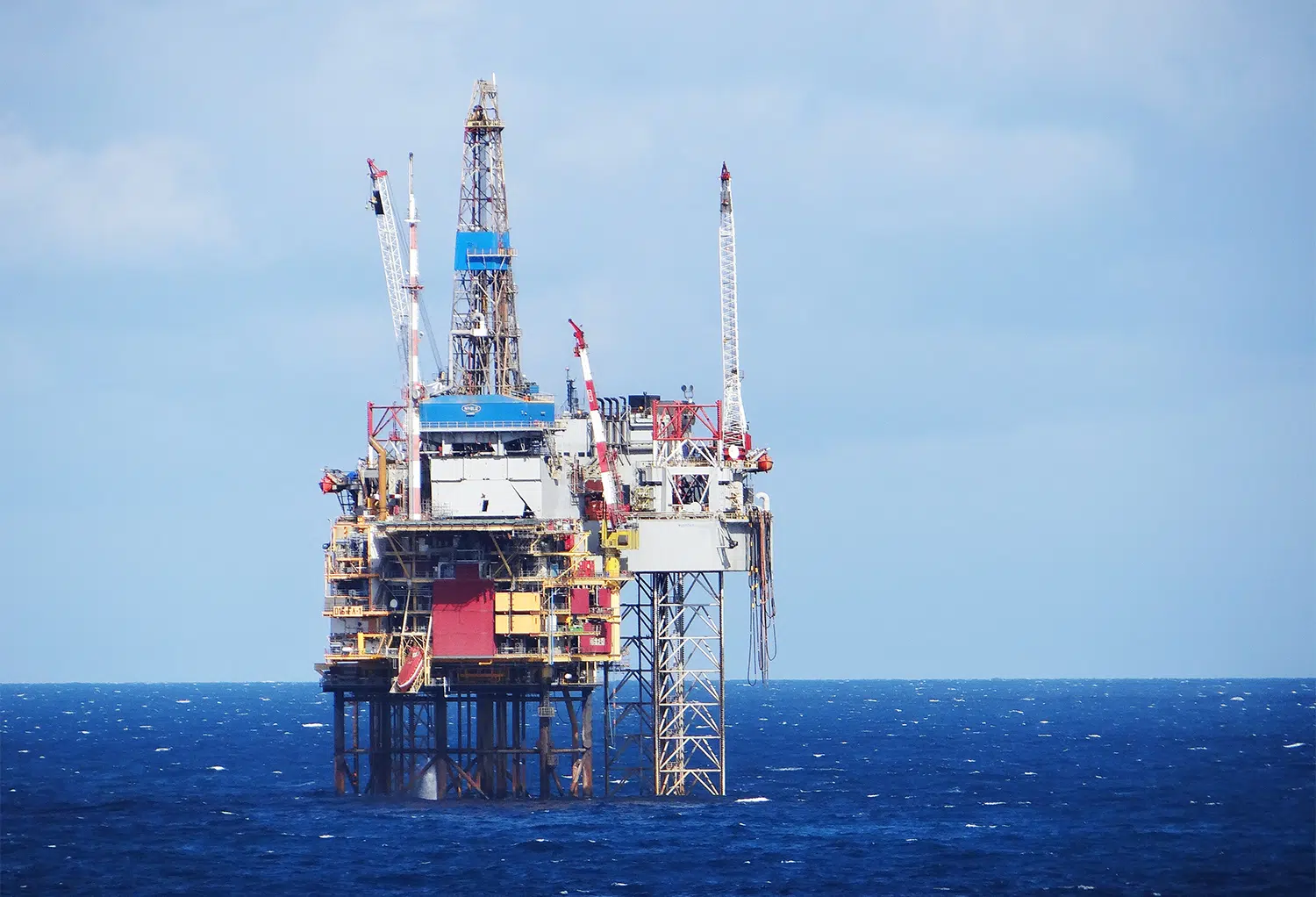
A North Sea oil rig. Credit: Gary Bembridge / FlickrCC BY 2.0

Fossil fuel giants are largely left to submit their own extraction and emissions data, a freedom of information request shows.

The main regulator of North Sea oil and gas doesn’t conduct physical inspections to ensure companies operating in the region are following the rules, DeSmog can reveal.

The revelations, labelled “deeply troubling” by campaigners, come as the government and the regulator, the North Sea Transition Authority (NSTA), have announced plans to approve drilling at a new oil field, Rosebank, that could produce 69,000 barrels of oil and 44 million cubic feet of gas a day.

DeSmog filed a freedom of information request (FOI) to the NSTA asking the regulator how it ensured companies stayed within the oil and gas extraction maximums outlined in their licences. These rules govern, among other things, how much oil and gas companies are allowed to extract, and the amount of emissions they can produce in the process.

In its response, the NSTA told DeSmog that a company “must notify” the NSTA if a production limit is breached in the North Sea, but that the NSTA itself “does not undertake offshore inspections to ensure compliance with production consents”.

When asked how, given the lack of inspections, the regulator would ensure that companies are being accurate when they self-report the emissions being produced, the regulator said it hosted “an annual consents exercise” (seemingly a single meeting) during which they remind operators of “their obligations and how to ensure they remain in regulatory compliance”.

The findings suggest that operators in the North Sea are left to largely self-regulate – declaring themselves when they break the legal rules governing their operations.

According to Violation Tracker UK, the NSTA has issued just two fines worth £100,000 since 2021 related to companies exceeding the oil and gas extraction limits in their licence.

“This FOI reveals deeply troubling findings about the lack of proper regulation of North Sea oil and gas extraction,” said Matthew Lawrence, the director of the Common Wealth think tank.

Daniel Jones, a researcher at the campaign and research group Uplift, added that The NSTA has never acted like a regulator in the normal sense, preferring to steer and encourage the industry into behaving responsibly, rather than mandating that companies reduce their environmental impact.

“It’s only very recently, in 2021, that the NSTA introduced any mechanisms at all to tackle the huge emissions from producing oil and gas, which account for 4 percent of all UK emissions, and even these require companies to do very little”.

‘Light Touch Regulation’

The NSTA, formerly the Oil and Gas Authority, is a private company wholly owned by the government, which primarily seeks to “maximise” the economic output of North Sea oil and gas, and aid the transition to net zero.

This month, the company awarded the UK’s first ever licences for carbon capture and storage (CCS), which it said “could store up to 30 million tonnes of CO2 per year”. However, the role of CCS in the energy transition is hotly contested. 

Climate scientists point to the failure of CCS to remove significant amounts of CO2 emissions, while campaigners warn of the high costs compared to renewable energy. The vast majority of companies also use the captured CO2 to extract more oil through a process called “enhanced oil recovery”.

Stuart Haszeldine, professor of carbon capture and storage at the University of Edinburgh, has compared commissioning CCS sites as well as new oil fields to ordering a truckload of cigarettes for someone giving up smoking.

DeSmog’s new findings also raise concerns about the monitoring of illegal flaring – the burning of excess natural gas produced during the oil and gas drilling process, which produces hundreds of millions of tonnes of CO2 emissions a year.

According to Violation Tracker UK, the NSTA has issued two fines for flaring since 2021, worth a total of £215,000.

In 2022, £65,000 fine was imposed on Equinor, the firm that owns much of the new Rosebank oilfield. Two years prior, Equinor had flared at least 348 tonnes of CO2 over and above the amount it was permitted to burn. Even that failure was considered an “administrative breach” by the NSTA. In the first six months of 2023, the Norwegian-owned energy company posted profits of £17.1 billion.

The UK’s operations in the North Sea produce almost three times the direct greenhouse gases per barrel of oil than our neighbour Norway, largely due to a significantly higher use of flaring on UK-regulated oil rigs. In 2022, UK North Sea operations burned 22 billion cubic feet of gas in offshore flaring.

DeSmog’s findings come just days after the NSTA announced it was approving plans for the Rosebank oilfield, with a government minister claiming the move would lead to “lower emissions” in the UK.

The field has the potential to produce 500 million barrels of oil in its lifetime, which when burned would emit as much carbon dioxide as running 56 coal-fired power stations for a year.

Campaigners including Greta Thunberg have expressed their anger at the proposals, with Green Party MP Caroline Lucas describing the project as “the greatest act of environmental vandalism in my lifetime”.

The government has also said it will imminently issue hundreds of new licences for oil and gas exploration in the North Sea, while Prime Minister Rishi Sunak has announced the watering down of several key net zero targets.

The International Energy Agency warned in May 2021 new fossil fuel developments were incompatible with the effort to limit global temperature increases to 1.5C above pre-industrial levels.

There are currently 283 active oil and gas fields in the North Sea, and the production process alone generated 13.1 million tonnes of direct CO2 emissions in 2019.

Matthew Lawrence of Common Wealth added that, “Decades of light touch regulation and privatisation have led to an energy system – from North Sea extraction to the super profits being made in energy generation and distribution – geared toward profit maximisation at the expense of people and planet.

“In this context, the government’s decision to approve the Rosebank oilfield and issue 100 new licences for fossil fuel extraction pose an even more grave risk to the climate.

“The alternative is a clean energy system based around meeting public and environmental needs”.

A spokesperson for NSTA did not address any of the findings in the freedom of information request, but stressed that the majority of flares “are fitted with metres” and the group is working to “increase the use of direct measurements”.

They added that government departments receive “actual emission data” on North Sea oil operations and that the NSTA was “working with [the Offshore Petroleum Regulator for Environment and Decommissioning] to improve the visibility of this data and help industry increase the accuracy of emissions measurement”.

Original article by Andrew Kersley republished from DeSmog.

Continue Reading‘Deeply Troubling’ Lack of UK North Sea Oil and Gas Monitoring

Israel Accused of ‘Blatant War Crime’ as HRW Confirms White Phosphorus Used in Gaza

Spread the love
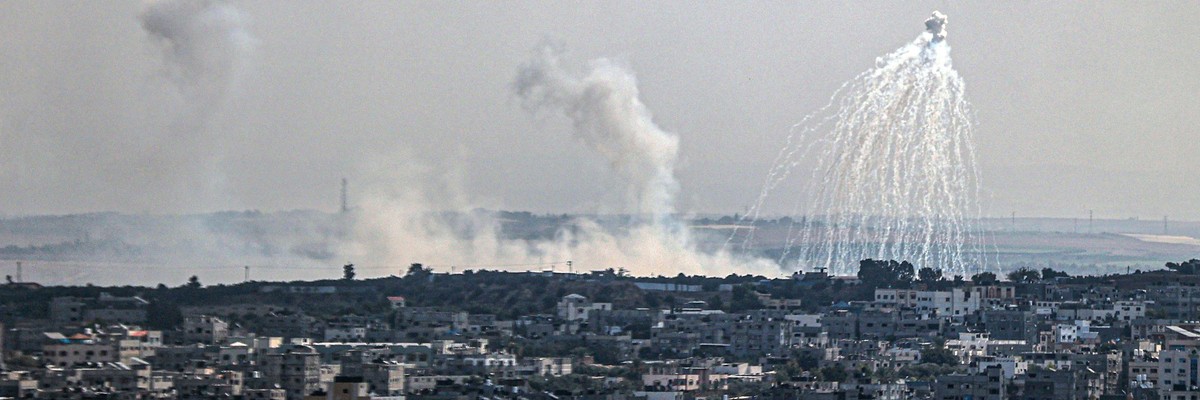
An Israeli white phosphorus round (right) airbursts over densely populated Gaza City, Palestine on October 11, 2023. 
(Photo: Ali Jadallah/Anadolu via Getty Images)

Original article by BRETT WILKINS republished from Common Dreams under Creative Commons (CC BY-NC-ND 3.0). 
“Any time that white phosphorus is used in crowded civilian areas, it poses a high risk of excruciating burns and lifelong suffering,” said one Human Rights Watch official.

Human Rights Watch on Thursday said it has confirmed reports that Israeli military forces unleashed white phosphorus munitions during artillery attacks on targets in Lebanon and Gaza this week, including over a heavily populated civilian area of the besieged Palestinian strip—an apparent war crime.

HRW said it has interviewed witnesses and verified video footage shot in Lebanon and Gaza on Tuesday and Wednesday “showing multiple airbursts of artillery-fired white phosphorus over the Gaza City port and two rural locations along the Israel-Lebanon border.”

The HRW announcement came as Israeli forces continue to bombard Gaza from air, land, and sea in an assault that has killed more than 1,500 Palestinians, including at least 500 children, in retaliation for Hamas’ surprise infiltration of Israel and killing of over 1,300 Israeli soldiers and civilians.

As HRW explained Thursday:

Upon contact, white phosphorus can burn people, thermally and chemically, down to the bone as it is highly soluble in fat and therefore in human flesh. White phosphorus fragments can exacerbate wounds even after treatment and can enter the bloodstream and cause multiple organ failure. Already dressed wounds can reignite when dressings are removed and the wounds are reexposed to oxygen. Even relatively minor burns are often fatal. For survivors, extensive scarring tightens muscle tissue and creates physical disabilities.

WP burns as hot as 1,500°F. Water does not extinguish it.

“Any time that white phosphorus is used in crowded civilian areas, it poses a high risk of excruciating burns and lifelong suffering,” HRW Middle East and North Africa director Lama Fakih said in a statement. “White phosphorous is unlawfully indiscriminate when airburst in populated urban areas, where it can burn down houses and cause egregious harm to civilians.”

“To avoid civilian harm, Israel should stop using white phosphorus in populated areas,” Fakih added. “Parties to the conflict should be doing everything they can to spare civilians from further suffering.”

HRW previously accused Israel of war crimes for using WP munitions in densely populated areas—including over a United Nations school—during the 2008-09 Operation Cast Lead invasion of Gaza. In response to a 2013 petition to Israel’s High Court of Justice filed by human rights groups including HRW, the Israel Defense Forces said it would no longer use WP in populated areas, with “very narrow exceptions” that it would not disclose.

Other countries’ militaries also use WP, most notably the United States, which fired the incendiary rounds during the 2004 battle for Fallujah and elsewhere in the so-called War on Terror.

In 2016, Saudi Arabia was condemned for allegedly firing U.S.-supplied WP munitions against Houthi rebels in Yemen. WP and other incendiary weapons have also been used by Syrian government and Russian forces fighting Islamic State and other militants during the Syrian civil war. Turkey has also been accused of firing WP rounds at Kurdish civilians in Syria.

Original article by BRETT WILKINS republished from Common Dreams under Creative Commons (CC BY-NC-ND 3.0). 
Continue ReadingIsrael Accused of ‘Blatant War Crime’ as HRW Confirms White Phosphorus Used in Gaza

Climate change could lead to food-related civil unrest in UK within 50 years, say experts

Spread the love
Baby-Spider/Shutterstock

Sarah Bridle, University of York and Aled Jones, Anglia Ruskin University

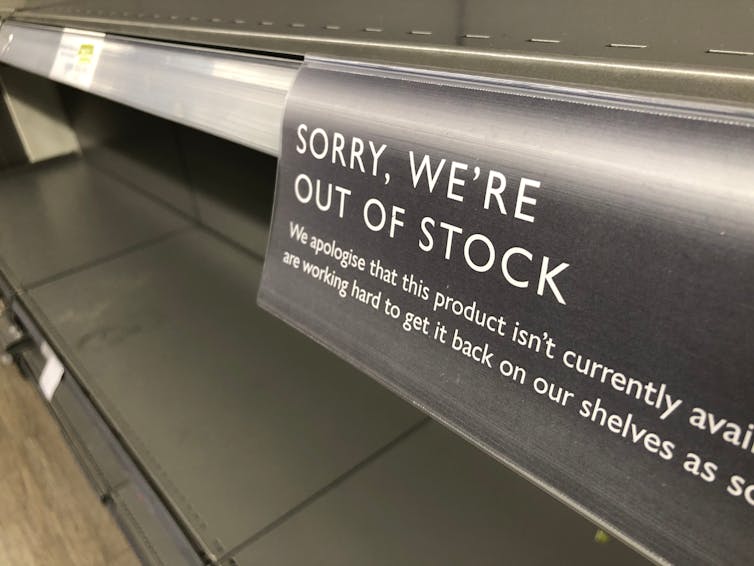
The emptying of supermarket shelves during the COVID pandemic demonstrated the chaos that disruption to the UK’s food supply can provoke. Could this type of disruption have a different cause in the future? And what might the impact on society be?

These are the questions we sought to answer in our new study, which involved surveying 58 leading UK food experts spanning academia, policy, charitable organisations and business.

Our findings indicate that food shortages stemming from extreme weather events could potentially lead to civil unrest in the UK within 50 years. Shortages of staple carbohydrates like wheat, bread, pasta and cereal appear to be the most likely triggers of such unrest.

The UK’s food system appears to be particularly vulnerable to significant disruption. This vulnerability can be attributed, in part, to its emphasis on efficiency at the expense of resilience (the ability to withstand and recover from shocks). This approach includes a heavy reliance on seasonal labour and practices like “just-in-time” supply chains, where products are delivered precisely when needed.

Our study emphasises the importance of developing plans to help the UK prepare for, and respond to, the risks associated with food shortages in the future.

Out of Stock sign on a supermarket shelf.
Customers emptied supermarket shelves in a panic during the COVID pandemic.
Kauka Jarvi/Shutterstock

Expert survey

We asked food experts to rate the likelihood of a scenario occurring in the UK in which more than 30,000 people suffered violent injury over the course of one year through events such as demonstrations or violent looting.

Just over 40% of these experts said they thought such a scenario was either “possible” or “more likely than not” in the next ten years. Over 50 years, nearly 80% of experts believed civil unrest was either possible, more likely than not, or “very likely”.

The experts were then asked about the potential causes of food system disruption that would lead to unrest. They were asked whether they thought this disruption would stem from an overall scarcity of food, or from issues related to food distribution, which could prevent food from reaching the right places and thus create isolated pockets of hunger.

Our results show that most experts (80%) hold the belief that, within the next ten years, logistical distribution issues leading to shortages are the most probable cause of food-related civil unrest.

However, when contemplating a 50-year timeframe, the majority (57%) said an insufficient food supply to sustain the UK population would be the most likely cause, potentially due to events such as a catastrophic harvest failure.

Extreme weather – including storm surges, flooding, snow and drought – was chosen as the leading cause of future food supply shortages and distribution issues over both the ten- and 50-year time frames.

UK already at risk

Just under half of the UK’s entire food supply is imported, including 80% of fruit, 50% of vegetables, and 20% of beef and poultry. Any disruption to imports and supply chains can thus have a significant impact on food availability in the UK. A fall in the availability of food can lead to rising prices and, potentially, social unrest.

COVID, Brexit and the cost of living crisis have highlighted the UK’s vulnerability to such a risk. Between April and August 2022, as inflation squeezed household incomes, over half of independent food banks in the UK reported that 25% or more of the people they supported hadn’t used their services before.

Extreme weather events are also occurring more frequently. Many of these events are driven by climate change. It’s entirely possible that extreme weather will cause major crop yield failures across “multiple breadbaskets” in the coming decades.

This scenario is not far-fetched. We have witnessed numerous instances of major shocks to food production in recent decades.

One notable example, in 2007, saw an 8% decline in global cereal production due to droughts, floods and heatwaves in Australia, India and the US. These events, combined with low global cereal stocks, financial speculation and high fertiliser prices, resulted in cereal prices more than doubling. The crisis sparked food riots in more than 30 countries.

To reduce the risk of civil unrest occurring in the UK as a result of food shortages, it’s crucial to address food poverty. By ensuring people can access and afford the food that is available, trust can be built between communities, government and food supply chains over time.

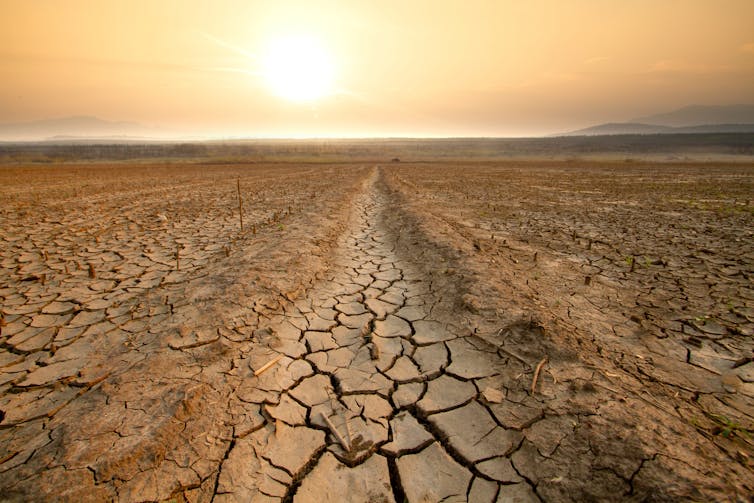
A field baked by drought.
A scenario where crops fail catastrophically is not far-fetched, say food experts.
Piyaset/Shutterstock

Redesigning the food system

The UK needs a food system designed not just for optimal efficiency, but also for resilience. Government agencies and businesses must explore and fund options to make the food system more robust to shocks.

This should include restoring degraded soils and the habitats used by pollinators, improving working conditions within the food supply chain, and prioritising sustainable farming practices.

Growing more robust crop varieties and species, using resources more efficiently, and establishing backup storage and distribution systems to move away from just-in-time delivery are all key aspects of a more resilient food system too.

Efforts to curb the harmful effects of climate change – the most probable cause of future food shortages and distribution issues – should also be ramped up.

The COVID pandemic saw major challenges with food distribution, from which lessons can be learned. Creating a food system that is both resilient and efficient will safeguard against future disruptions, ensuring that food is accessible and affordable while preventing the emergence of civil unrest.


Imagine weekly climate newsletter

Don’t have time to read about climate change as much as you’d like?

Get a weekly roundup in your inbox instead. Every Wednesday, The Conversation’s environment editor writes Imagine, a short email that goes a little deeper into just one climate issue. Join the 20,000+ readers who’ve subscribed so far.The Conversation


Sarah Bridle, Professor of Food, Climate and Society, University of York and Aled Jones, Professor & Director, Global Sustainability Institute, Anglia Ruskin University

This article is republished from The Conversation under a Creative Commons license. Read the original article.

Continue ReadingClimate change could lead to food-related civil unrest in UK within 50 years, say experts