‘Nowhere Safe in Gaza’ as Evidence of Israeli War Crimes Mounts

Spread the love

Original article by JULIA CONLEY republished from Common Dreams under Creative Commons (CC BY-NC-ND 3.0). 

Injured Palestinians, including children, are taken to Al-Aqsa Martyrs Hospital for treatment after Israeli airstrikes hit the school at Al Bureij Refugee Camp in Deir Al Balah, Gaza on November 20, 2023. (Photo: Ashraf Amra/Anadolu via Getty Images)

Amnesty International accused Israel of committing war crimes with two recent bombings of a church and a home in a refugee camp.

Palestinians in Gaza and human rights advocates on Monday pleaded with the international community to see the ongoing killing of thousands of people in the blockaded enclave for what it is—a massacre in which Israel has shown “a chilling indifference to the catastrophic toll on civilians,” according to Amnesty International, and has committed numerous war crimes as it bombards civilian targets.

The Israel Defense Forces (IDF) on October 19 and October 20, calling on the International Criminal Court (ICC) to investigate the bombings as possible war crimes.

Amnesty investigators visited the sites of the bombings, Saint Porphyrius Greek Orthodox Church in Gaza City and a home in al-Nuseirat refugee camp near Deir al-Balah, and interviewed 14 people, including nine survivors of the attacks and two other witnesses. The group’s Crisis Evidence Lab also analayzed satellite imagery and and audiovisual material.

The two bombings, which killed a total of 46 civilians, including 20 children, “were indiscriminate attacks or direct attacks on civilians or civilian objects, which must be investigated as war crimes,” said Amnesty.

“These deadly, unlawful attacks are part of a documented pattern of disregard for Palestinian civilians and demonstrate the devastating impact of the Israeli military’s unprecedented onslaught has left nowhere safe in Gaza, regardless of where civilians live or seek shelter,” said Erika Guevara Rosas, director of global research, advocacy, and policy for the U.K.-based group. “We urge the International Criminal Court’s prosecutor to take immediate concrete action to expedite the investigation into war crimes and other crimes under international law opened in 2021.”

The group noted that on October 19, when the historic church was struck, the Israeli government released a statement saying that “IDF fighter jets struck the command and control center belonging to a Hamas terrorist involved in the launching of rockets and mortars toward Israel.”

But the IDF later deleted a video it had posted of the strike on Saint Porphyrius, and has provided no information to substantiate the claim that the church was a “command and control center.”

Before the strike, in the first days of Israel’s relentless bombardment of Gaza, church officials had publicly said hundreds of civilians were taking shelter at Saint Porphyrius.

“Their presence would therefore have been known to the Israeli military,” said Amnesty. “The Israeli military’s decision to go ahead with a strike on a known church compound and site for displaced civilians was reckless and therefore amounts to a war crime, even if there was a belief that there was a military objective nearby.”

One of the families sheltering in the church was that of Ramez al-Sury, whose three children—aged 14, 12, and 11—were killed in the attack.

“We left our homes and came to stay at the church because we thought we would be protected here. We have nowhere else to go. The church was full of peaceful people, only peaceful people,” al-Sury told Amnesty. “There is nowhere safe in Gaza during this war. Bombardments everywhere, day and night. Every day, more and more civilians are killed. We pray for peace, but our hearts are broken.”

The day after al-Sury’s children were killed, Hani al-Aydi was sitting at home with family members at al-Nuseirat refugee camp, which is within the area the Israeli military had ordered Palestinians to evacuate to from the north.

Despite telling people the area was safe, the IDF launched a strike that destroyed the al-Aydi family home, which the military had no reason to suspect was a Hamas target, according to Amnesty.

“All of those present in the al-Aydi house that was hit directly and in the two nearby homes were civilians,” said Amnesty. “Two members of the al-Aydi family had permits to work in Israel, which requires rigorous security checks by Israeli authorities, for those obtaining the permit and their extended family.

Al-Aydi told the group that “everything collapsed on our head” suddenly when Israel bombed the house, killing 28 people including 12 children.

“All my brothers died, my nephews, my nieces,” said al-Aydi. “My mother died, my sisters died, our home is gone… There is nothing here, and now we are left with nothing and are displaced. I don’t know how much worse things will get. Could it get any worse?”

Amnesty noted that even if it had found in its investigation that there were plausible military targets in the vicinity of the two sites—which it did not—”these strikes failed to distinguish between military objectives and civilian objects. The evidence collected by Amnesty International also indicates that the Israeli military failed to take feasible precautions to minimize damage to civilians and civilian property, including by not providing any warning—at minimum to anyone living in the locations that were hit—before launching the attacks.”

The Geneva Conventions require parties in a conflict to take measures to protect the lives of civilians and prohibit collective punishment of a population for acts committed by a particular group.

“The harrowing accounts from survivors and relatives of victims describing the devastating human toll of these bombardments offer a snapshot of the mass civilian suffering being inflicted daily across Gaza by the Israeli military’s relentless attacks, underscoring the urgent need for an immediate cease-fire,” said Guevara-Rosas.

Amnesty made the request of the ICC as the death toll in Gaza surpasses 13,300 people in just over six weeks. At least 5,500 children have been killed.

Al-Mezan, a Gaza-based human rights group, also addressed the ICC on Monday, calling on the body to issue warrants for Israeli officials responsible for crimes against Palestinian children.

Original article by JULIA CONLEY republished from Common Dreams under Creative Commons (CC BY-NC-ND 3.0). 

Continue Reading‘Nowhere Safe in Gaza’ as Evidence of Israeli War Crimes Mounts

‘Emissions Canyon’: World on Track for 2.9°C of Warming

Spread the love
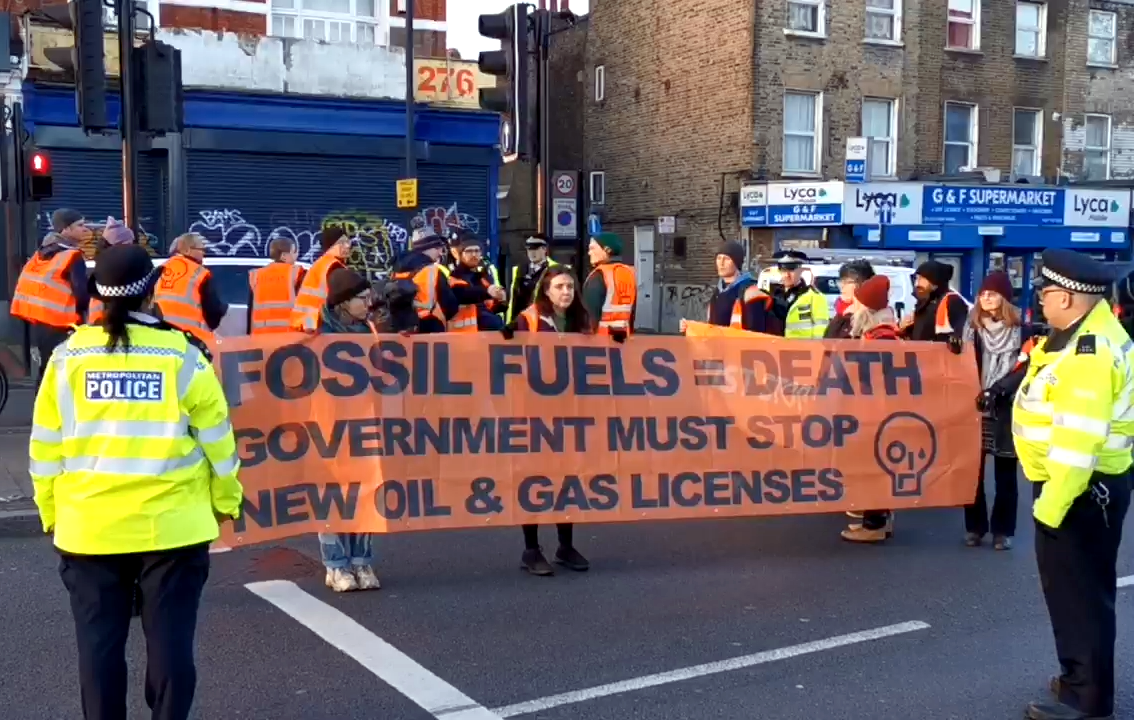
Just Stop Oil protesting in London 6 December 2022.

Original article by OLIVIA ROSANE republished from Common Dreams under Creative Commons (CC BY-NC-ND 3.0). 

Keeping the 1.5°C temperature goal alive “requires tearing out the poisoned root of the climate crisis: fossil fuels,” U.N. Secretary-General António Guterres said.

Nations’ current unconditional climate action plans under the Paris agreement would put the world on track for 2.9°C of warming by 2100, the United Nations Environment Program warned Monday.

The UNEP’s 2023 Emissions Gap Report, released ahead of next week’s U.N. Climate Change Conference (COP28) in the United Arab Emirates, finds that policymakers must slash greenhouse gas emissions by 28% by 2030 to limit warming to 2°C above preindustrial levels and 42% to halt warming at 1.5°C.

“The report shows that the emissions gap is more like an emissions canyon,” U.N. Secretary-General António Guterres said in a statement. “A canyon littered with broken promises, broken lives, and broken records. All of this is a failure of leadership, a betrayal of the vulnerable, and a massive missed opportunity.”

The annual Emissions Gap Report calculates the difference between climate-warming emissions under current policies and what needs to be achieved to limit global heating to “well below” 2°C and ideally 1.5°C. This year’s report highlighted 2023’s string of broken temperature records and extreme weather events: Scientists predict it’s on track to be the hottest year in 125,000 years.

At the same time, global greenhouse gas emissions rose by 1.2% between 2021 and 2022, hitting a record 57.4 gigatonnes of carbon dioxide equivalent (GtCO2e) last year.

“Humanity is breaking all the wrong records when it comes to climate change,” UNEP Executive Director Inger Andersen said in the report foreword.

“The 2023 edition of the Emissions Gap Report tells us that the world must change track, or we will be saying the same thing next year—and the year after, and the year after, like a broken record,” Andersen added.

Even the report’s full title expressed a sense of exasperation: Emissions Gap Report 2023: Broken Record—Temperatures hit new highs, yet world fails to cut emissions (again).

The report looked at both existing and promised policies, including countries’ Paris action pledges, known as nationally determined contributions (NDCs). It did find that national actions since the Paris agreement was negotiated in 2015 have made a difference. At the time, greenhouse gas emissions were projected to rise by 16% by 2030 and now they are on track to rise by 3% by the end of the decade.

But that progress is not nearly enough to avoid ever more extreme climate impacts. Currently implemented policies put the world on track for 3°C of warming by 2100, unconditional NDCs for 2.9°C, conditional NDCs for 2.5°C, and conditional NDCs combined with net-zero pledges give temperatures a 66% chance of topping out at 2°C. Under the last, most optimistic scenario, the world is left with a 14% chance of limiting warming to 1.5°C. However, net-zero pledges are not currently seen as reliable, since no Group of 20 country is on pace to reduce its emissions in line with this goal.

The report found that nations must cut their emissions by 14 GtCO2e by 2030 to reach 2°C and 22 GtCO2e to reach 1.5°C. The way this can be done is by phasing out fossil fuels as soon as possible.

“The only way to curtail this spiraling crisis is through wholesale changes to the global energy system that will sharply drive down all heat-trapping emissions.”

“We know it is still possible to make the 1.5°C limit a reality. And we know how to get there—we have roadmaps from the International Energy Agency and the IPCC [Intergovernmental Panel on Climate Change],” Guterres said. “It requires tearing out the poisoned root of the climate crisis: fossil fuels. And it demands a just, equitable renewables transition.”

The report comes as nations prepare to gather on November 30 for COP28, which will include the first global stocktake of their progress toward meeting the goals of the Paris agreement. This will lead to a new round of NDCs through 2035.

“Ambition in these NDCs must bring greenhouse gas emissions in 2035 to levels consistent with the 2°C and 1.5°C pathways. Stronger implementation in this decade will help to make this possible,” Andersen said in the foreword.

“The world needs to lift the needle out of the groove of insufficient ambition and action, and start setting new records on cutting emissions, green and just transitions, and climate finance—starting now,” Andersen added.

In response to the report, Rachel Cleetus, the policy director and a lead economist in the Climate and Energy Program at the Union of Concerned Scientists, also called for ambition at the upcoming climate talks.

“The only way to curtail this spiraling crisis is through wholesale changes to the global energy system that will sharply drive down all heat-trapping emissions,” Cleetus said. “At COP28, nations must heed these scientific truths by agreeing to a fast and fair phaseout of fossil fuels, ramping up renewable energy and energy efficiency, and significantly expanding climate finance commitments from wealthier countries for an equitable clean energy transition.”

Original article by OLIVIA ROSANE republished from Common Dreams under Creative Commons (CC BY-NC-ND 3.0). 

Continue Reading‘Emissions Canyon’: World on Track for 2.9°C of Warming

Biden’s Key Climate Law Gives Big Oil a ‘Massive Escape Hatch’: Analysis

Spread the love

Original article by JULIA CONLEY republished from Common Dreams under Creative Commons (CC BY-NC-ND 3.0).

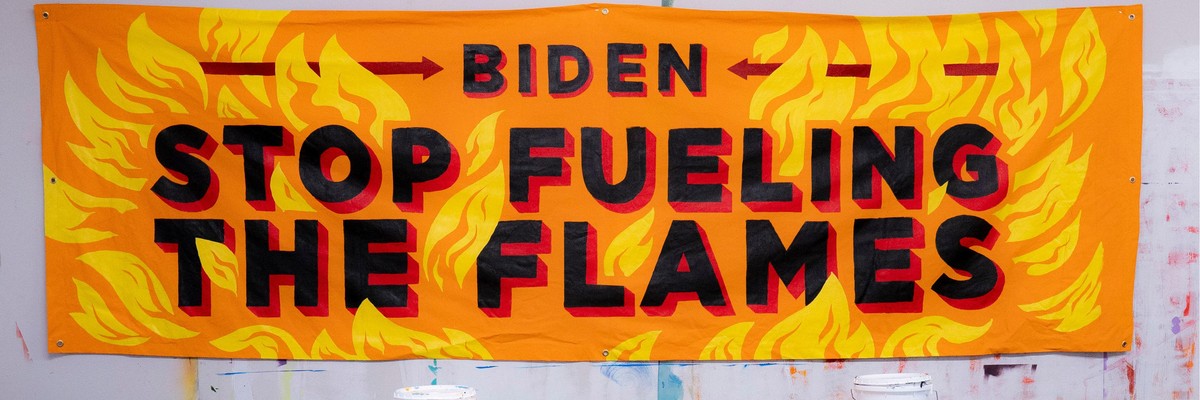
Freshly painted banners for the ‘People vs. Fossil Fuels’ protests on October 11-15, 2023 are seen outside the White House in Washington, D.C.  (Photo: Josh Yoder/Look Loud )

“While the IRA was touted as the ‘largest investment in climate and energy in American history,’ it could turn out to be a failure if Biden doesn’t also take bold action on fossil fuels,” said Oil Change International.

The 2022 law heralded as U.S. President Biden’s key climate achievement may support an expansion of clean energy, but a new analysis out Monday demonstrates how the Inflation Reduction Act leaves the fossil fuel industry with vast opportunities to extract more oil and gas and continue boosting its record-breaking profits at the expense of frontline communities.

The report, said Oil Change International (OCI) as it released the new findings, proves that the Biden administration can’t rely on the IRA to demonstrate its commitment to the emissions reduction that scientists agree is needed to mitigate the climate crisis.

Titled Biden’s Fossil Fuel Fail: How U.S. Oil and Gas Supply Rises Under the Inflation Reduction Act, Exacerbating Environmental Injustice and released 10 days before the 28th annual United Nations Climate Change Conference (COP28), the analysis uses previously unpublished data from climate modeling by the Rhodium Group, an environmental think tank.

“The model projects that despite the IRA’s investment in renewable energy, electric vehicles, and batteries, the United States could still miss its Paris Agreement goal of reducing U.S. emissions by 50 to 52% below 2005 levels by 2030,” reads the report, noting that as the world’s largest historical emitter of fossil fuel emissions, the U.S. has a responsibility to “cut its emissions faster than the global average.”

The group’s model projects that domestic fossil gas demand in the U.S. will decline by 16% by 2035, yet production is expected to rise by 7%. Petroleum demand is expected to decline by 20%, yet production will rise by 13%.

The gap between production and demand is filled by surging exports,” explained OCI. “Gas exports are projected to double by 2035, while oil and petroleum product exports rise 23%.”

Wind and solar power are expected to replace gas domestically, added the organization, but the positive effects of the decline in gas demand in the U.S. are “tempered by an increase in gas consumption within the oil and gas industry itself.”

The “energy-hungry” liquefied natural gas (LNG) export sector will essentially cancel out progress made by surging wind and solar power in the U.S., said OCI, with gas consumption by LNG export plants growing 140% by 2035.

“The Biden administration touts the Inflation Reduction Act as a centerpiece of its achievements on climate,” said Collin Rees, U.S. campaign manager for OCI. “In reality, the bill leaves a massive escape hatch for the fossil fuel industry to continue business as usual.”

Rhodium’s modeling projects that the U.S. will miss its targeted emissions reduction for 2030 by 16-18 percentage points if the Biden administration relies on the IRA and its investments in technological fixes like carbon capture and storage and fossil hydrogen production while allowing continued investments in oil and gas exports.

“While the IRA was touted as the ‘largest investment in climate and energy in American history,’ it could turn out to be a failure if Biden doesn’t also take bold action on fossil fuels,” said OCI in a statement. “As the world gathers for COP28, Biden still has a chance to be the climate leader he claims he is by making a commitment to phasing out fossil fuels.”

The phase-out of all oil and gas production in the U.S. is widely recognized as necessary by energy and climate experts, and has long been demanded by advocates for frontline communities, which bear a disproportionate public health burden due to the strong links between fossil fuel extraction, storage, and transport and harms including respiratory illnesses, cardiovascular disease, and poor outcomes for pregnant people and infants.

Boosting fossil fuel production and exports “while exacerbating pollution in environmental justice communities,” said OCI, is a “deadly combination.”

Roishetta Sibley Ozane, founder of the Vessel Project of Louisiana, said Biden’s approval of projects like the Willow oil drilling initiative in Alaska, nearly $2 billion for publicly financed fossil fuel projects abroad, and his support for the Mountain Valley Pipeline, among other pollution-causing infrastructure, has shown frontline communities that the president’s campaign promises regarding environmental justice were “nothing but a smokescreen.”

“We supported [President Joe] Biden for change, not to deal with deadly decisions made without us at the table,” said Ozane. “The fight against climate disaster is collective, and the United States cannot preach about caring for communities while exporting pollution globally.”

The pollution impacts of continued fossil fuel production and exports will be “disproportionately borne by Black, Brown, Indigenous, and poor communities—specifically in Appalachia, the Gulf of Mexico, and the Permian Basin of Texas and New Mexico,” said OCI.

To align with Biden’s stated climate goals, the group said, the president’s efforts must go far beyond the IRA and include a phase-out of oil and gas exports, an end to fossil fuel leasing on federal lands, and a halt to all approvals for new fossil fuel infrastructure.

“At COP28 the spotlight will be on our collective effort to end the fossil fuel era,” said Rees. “Will the United States deliver, or will Biden’s climate legacy be one of disastrous oil and gas expansion and failure to adequately tackle the climate crisis?”

Original article by JULIA CONLEY republished from Common Dreams under Creative Commons (CC BY-NC-ND 3.0).

Continue ReadingBiden’s Key Climate Law Gives Big Oil a ‘Massive Escape Hatch’: Analysis

‘Five-Alarm Fire’ as Global Temps Breach 2°C Threshold

Spread the love
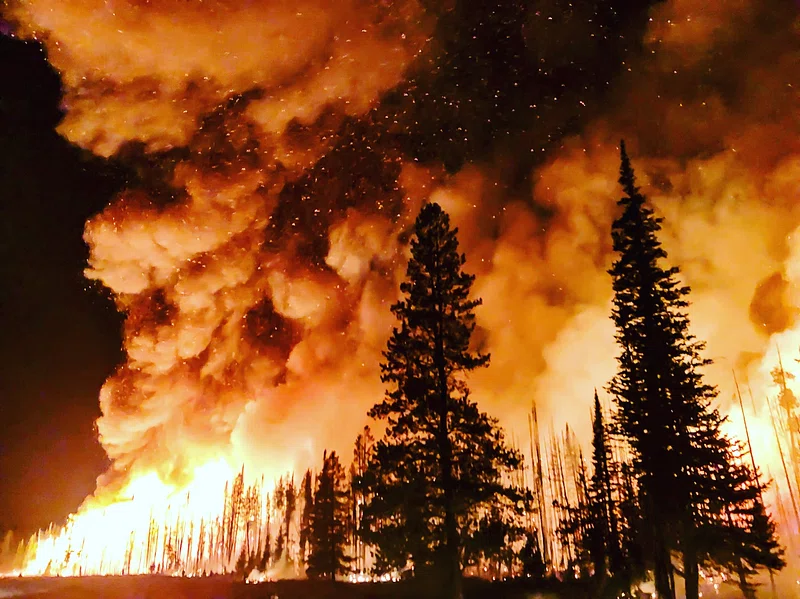
Canadian wildfire 2023

Original article by OLIVIA ROSANE republished from Common Dreams under Creative Commons (CC BY-NC-ND 3.0). 

While scientists were quick to point out that this was just a daily anomaly, not a permanent shift, it is a “canary in the coalmine” that “underscores the urgency of tackling greenhouse gas emissions.”

Global temperatures surpassed 2°C above preindustrial levels for the first time Friday, according to preliminary data from the European Union’s Copernicus Climate Change Service.

The European Centre for Medium-Range Weather Forecasts’ ERA5 data set showed global service air temperatures rising 2.07°C above the 1850-1900 average on Friday and 2.06°C above that average on Saturday, the service said.

“This is a five-alarm fire for humanity,” the group Climate Defiance tweeted in response to the figures.

In the 2015 Paris agreement, world leaders set out to keep warming to “well-below” 2°C above preindustrial levels. Allowing warming to breach that point increases several climate risks, according to the Intergovernmental Panel on Climate Change (IPCC): 2°C of warming compared with 1.5°C would raise sea levels by an additional 0.1 meters by 2100, destroy 99% of coral reefs instead of 70% to 90%, and expose several hundred million more people to poverty and climate-related hazards by 2050.

Friday’s 2°C breach was first noted by Copernicus Climate Change Service deputy director Samantha Burgess on social media Sunday. She said the day was also 1.17°C above the 1991-2020 average, making it the warmest November 17 on record.

Scientists were quick to point out that this doesn’t mean global heating has breached the 2°C threshold long-term.

“The 1.5°C and 2°C warming thresholds have been defined in terms of the trend line,” University of Pennsylvania climate scientist Michael Mann tweeted. “Not individual years, let alone months, weeks, or days (the shorter the time period, the larger the random fluctuations). Those who imply otherwise are misleading you.”

Richard Allan, professor of climate science at the University of Reading in the U.K., told CNN that it was “entirely expected that single days will surpass 2°C above preindustrial well before the actual 2°C target is breached over many years.”

“We are blowing past warning signs with wild abandon. We are approaching the precipice and flooring the gas.”

That said, the reading was a “canary in the coalmine” that “underscores the urgency of tackling greenhouse gas emissions,” Allan said.

It also comes in a year of dropping canaries: The 12 months from November 2022 to October 2023 were the 12 hottest on record, according to a Climate Central analysis. 2023 saw the hottest Northern Hemisphere summer on record, the hottest month in July, and is likely to be the hottest year not just since record-keeping began, but in the last 125,000 years. And it’s not just numbers. The record-breaking temperatures fueled deadly heatwaveswildfires, and floods around the world.

“The indicators are flashing red,” Climate Defiance wrote. “The planet’s vital signs are clear. Humanity is on life support. With the El Niño cycle just beginning, this 2°C breach sadly represents not a climax but a small taste of what is to come.”

“This is happening faster than expected,” the group continued. “We are blowing past warning signs with wild abandon. We are approaching the precipice and flooring the gas. This is madness. Utter madness.”

The 2°C breach comes a little less than two weeks from the start of the next United Nations Climate Change Conference in the United Arab Emirates. A recent report from U.N. Climate Change found that national plans were still incompatible with limiting warming to 1.5°C and that world leaders must take “bold strides forward” at the conference “to get on track.” More than 650 scientists have signed a letter to President Joe Biden urging him to back a fossil-fuel phaseout at the talks.

“It’s just one day (so far) above 2°C, but it highlights again that the world is approaching the limits set out by the Paris Agreement,” IPCC scientist Ed Hawkins tweeted. “We already have many of the solutions to rapidly reduce emissions and halt the rise in global temperatures. We just need to choose to use them.”

Original article by OLIVIA ROSANE republished from Common Dreams under Creative Commons (CC BY-NC-ND 3.0). 

Continue Reading‘Five-Alarm Fire’ as Global Temps Breach 2°C Threshold

World facing ‘hellish’ 3C of climate heating, UN warns before Cop28

Spread the love

https://www.theguardian.com/environment/2023/nov/20/world-facing-hellish-3c-of-climate-heating-un-warns-before-cop28

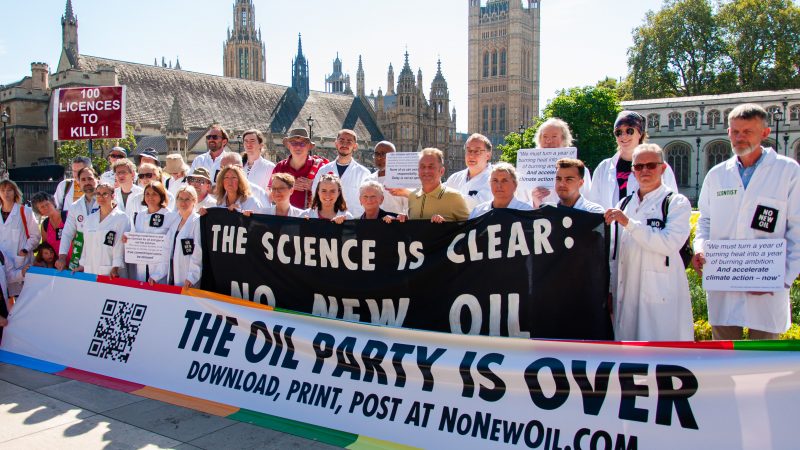
Scientists protest at UK Parliament 5 September 2023.

‘We must start setting records on cutting emissions,’ UN boss says after temperature records obliterated in 2023


World facing ‘hellish’ 3C of climate heating, UN warns before Cop28

‘We must start setting records on cutting emissions,’ UN boss says after temperature records obliterated in 2023

The world is on track for a “hellish” 3C of global heating, the UN has warned before the crucial Cop28 climate summit that begins next week in the United Arab Emirates.

The report found that today’s carbon-cutting policies are so inadequate that 3C of heating would be reached this century.

Temperature records have already been obliterated in 2023 and intensifying heatwaves, floods and droughts have taken lives and hit livelihoods across the globe, in response to a temperature rise of 1.4C to date. Scientists say far worse is to come if temperatures continue to rise. The secretary general of the UN, António Guterres, has said repeatedly the world is heading for a “hellish” future.

The UN Environment Programme (Unep) report said that implementing future policies already promised by countries would shave 0.1C off the 3C limit. Putting in place emissions cuts pledged by developing countries on condition of receiving financial and technical support would cut the temperature rise to 2.5C, still a catastrophic scenario.

To get on track for the internationally agreed target of 1.5C, 22bn tonnes of CO2 must be cut from the currently projected total in 2030, the report said. That is 42% of global emissions and equivalent to the output of the world’s five worst polluters: China, US, India, Russia and Japan.

https://www.theguardian.com/environment/2023/nov/20/world-facing-hellish-3c-of-climate-heating-un-warns-before-cop28

Continue ReadingWorld facing ‘hellish’ 3C of climate heating, UN warns before Cop28