“Another dismal day for growth in the UK economy. Appalling Tory decisions (and failures to make decisions) have left us stuck in a low growth, high tax trap.”
The UK economy shrank at its fastest pace in seven months in July, contracting by 0.5% amid industrial action and extremely wet weather, further increasing fears of a recession.
While economists had expected the economy to shrink by 0.2% in July, the economic performance was worse than expected, after the latest figures were released by the Office for National Statistics (ONS).
The ONS said that strikes by junior doctors reduced health service activity, while retailers who had benefited from a warm June suffered in July, which was the sixth wettest on record.
Strike action saw senior doctors and radiographers striking over pay on two days each, and junior doctors walking out on five days in the month. The repeated refusal of Tory ministers to reopen pay talks led to strikes.
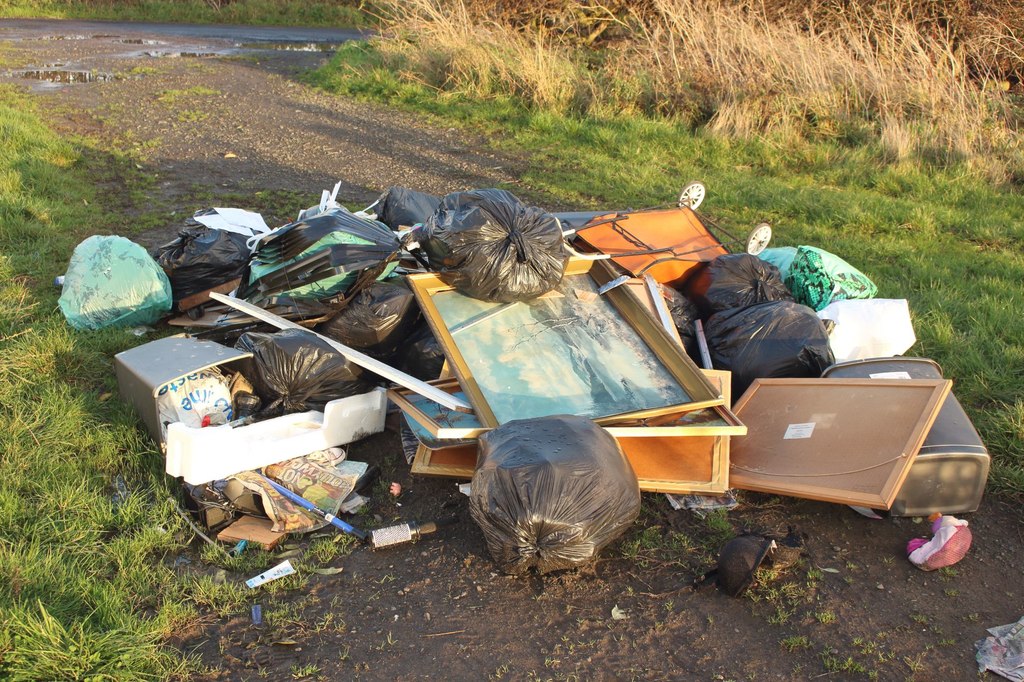
Flytipped rubbish. Image: Graham Robson, CC Attribution-ShareAlike 2.0 Generic (CC BY-SA 2.0) https://creativecommons.org/licenses/by-sa/2.0/
The Restore Trust has a new list of candidates for the upcoming council elections and, this time, they’ve been endorsed by Nigel Farage.
Arch Brexiteer Nigel Farage has a new target in his sights: The National Trust. The former UKIP leader has now thrown his weight behind a renewed attempt by anti-woke activists to capture the Trust, which owns more than 1,300 farms, 775 miles of coastline and 250,000 hectares of land, making it Britain’s largest private landowner.
In October 2021, the charity and membership organisation for heritage conservation warned of an ideological campaign being waged against it by self-styled ‘anti-woke insurgents’ belonging to Restore Trust (RT). Last year’s AGM saw the Trust subjected to a well-coordinated campaign by RT.
The Restore Trust campaign began in 2021, in the wake of the publication of a report by the National Trust that highlighted connections between 93 of its historic places and slavery. The dossier of sites linked to ‘colonialism and slavery’ and included Winston Churchill’s former family home, citing the former prime minister’s role in the Bengal famine and his opposition to Indian independence. RT took exception to the report claiming it “presents a strongly negative view of Britain, and which does not properly represent the scholarly consensus.”
Now the RT has a new list of candidates for the upcoming council elections and, this time, they’ve been endorsed by Nigel Farage, who is a family friend of one of the candidates. Earlier this month, seven-time failed parliamentary candidate Nigel Farage said: “I hope that Restore Trust knocks a bit of common sense into what was once the great National Trust.”
Recent images of the devastating flash floods caused by Storm Daniel in Greece hit close to home literally and figuratively. As a Greek who has completed a PhD and worked for the past eight years on flash floods, the scenes unfolding across my homeland are painfully real: a stark reminder of the broader environmental challenges we face both on a local and a global scale.
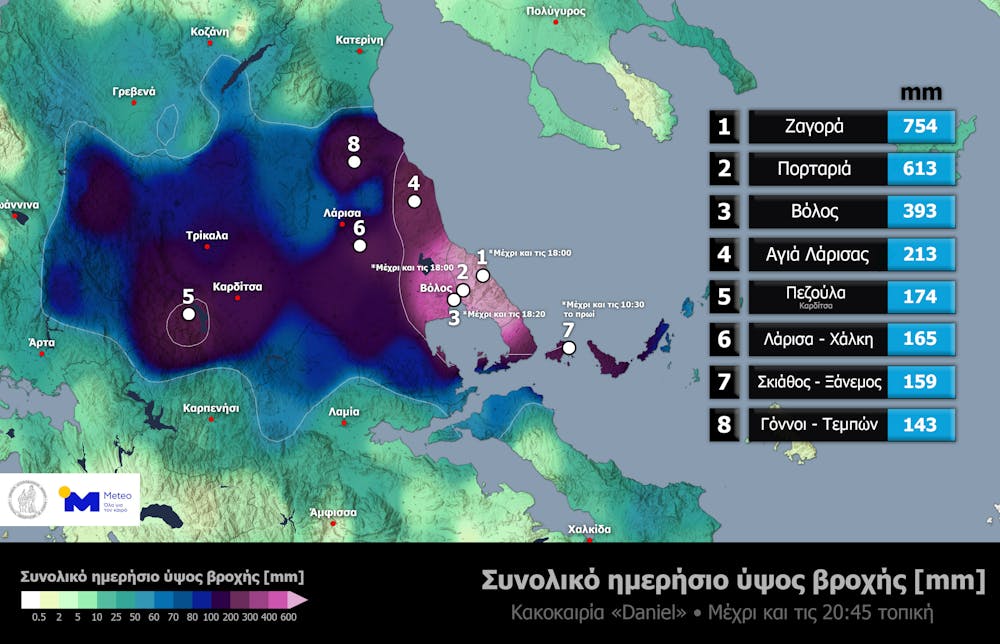
These unprecedented flash floods were triggered by rainfall from the arrival of Storm Daniel on Monday September 4 which also affected Turkey and Bulgaria. The following day, in the village of Zagora, a record-breaking 754mm of rain fell in just 18 hours, leaving parts of the region of Thessaly in crisis and unable to respond.
To put this in perspective, London gets about 585mm of rain over the course of a year while Thessaly gets 495mm, meaning that on Tuesday September 5, about 1.5 years’ worth of rain fell in 18 hours. Imagine the most torrential rain you have ever experienced, perhaps a cloudburst lasting 20 minutes or so. Now imagine it raining that hard but without pause for an entire day.
Flash flooding is short in duration but extremely intense, and typically happens within six hours of heavy rainfall. Unlike regular floods, which develop more slowly and can be predicted in advance, flash floods catch people off guard due to their rapid onset and are rarely recorded in the field.
Across the three affected countries the floods have killed at least 18 people, with many others seeking refuge on their rooftops. There are ongoing power and water outages, infrastructure has been damaged, houses and even entire villages have been completely submerged.
I asked Andrew Barnes, an academic at the University of Bath with expertise in using AI to analyse extreme events why this event was so exceptional. He told me that throughout Tuesday, a strong low-pressure centre formed across the south of Greece creating a large rotating weather system known as a cyclone.
This cyclone carried large rain clouds from both the Mediterranean and Aegean Sea between Greece and Turkey. But it did not dissipate, and instead its low-pressure centre moved southwest and settled just south of Italy, with its bands of rain clouds also moving south and covering most of mainland Greece.
Trending across the region
It is crucial to emphasise that flash floods are not confined to Greece alone. They are in fact part of a broader pattern of extreme weather that has become more intense and frequent across the Mediterranean region.
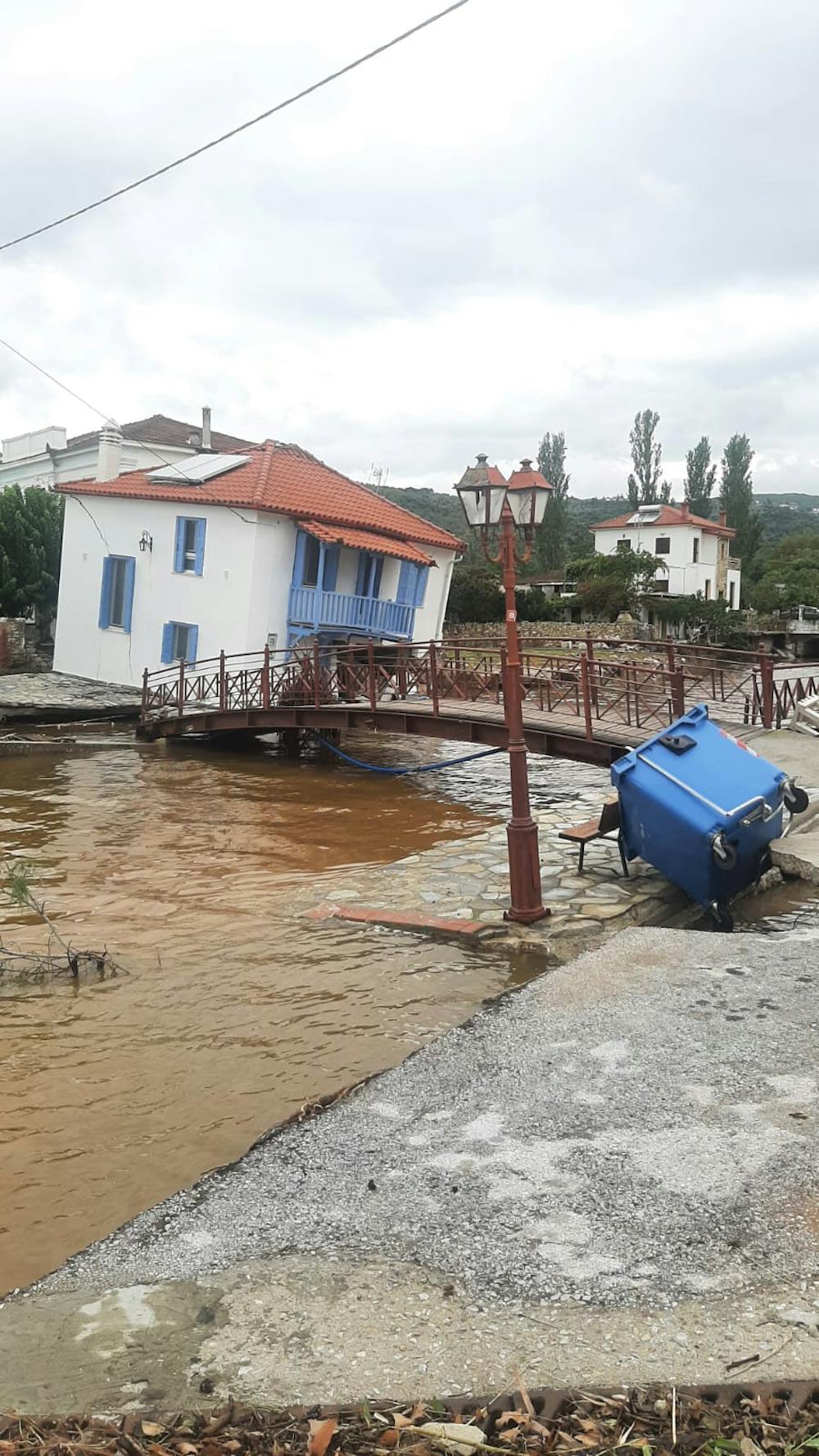
The author’s friend saw this flooding in the village of Chorto. Irini Arabatzi
Researchers who looked at 150 years of flood data in the Mediterranean found that most were flash floods, with their highest occurrence during the summer and autumn months. The region is particularlysusceptible to these floods due to the combined effects of climate change and urbanisation. The latter has increased urban development in flood-prone areas and increased impervious surfaces (like roads and pavements), preventing the natural absorption of water into the ground.
The Intergovernmental Panel on Climate Change’s chapter on the Mediterranean region issued a warning that extreme rainfall events are going to occur more often and be even more intense, elevating the risk of flash floods. This warning, in combination with records of flash floods in 2023 in Spain, Italy, Turkey, Bulgaria, France and Greece, underscores the urgent need for proactive measures to address these climate-related challenges.
Research is advancing
Flash floods might be rare, but they are severe enough to be a matter of significant concern. Fortunately, research has advanced considerably in recent years. We’re now better able to forecast when flash floods might happen, which areas might be susceptible, and to assess their impact in real-time.
My colleagues and I are working on a project that combines historical documentary sources and modern hydraulic modelling. This way we can shed light on past floods and better understand the risks they pose, helping us design effective mitigation strategies for the future. Practically, in the case of a flash flood some basic but very important actions can be found on the poster below.
Tips from a flash floods expert. Ioanna Stamataki
A complete eradication of flooding is neither technically feasible nor economically affordable. Instead on a larger scale it is key to start identifying flash-flood prone areas especially in catchments with historical flash floods. We should then focus on advocating for climate action and resilience measures, which can be anything from “hard” defences like new flood walls, through to policies and better public awareness of the risks. Only this will offer hope of a safer and more resilient future.
Don’t have time to read about climate change as much as you’d like?
Just ahead of U.N. climate summit in New York City, analysis calls on governments to halt planned gas and oil projects
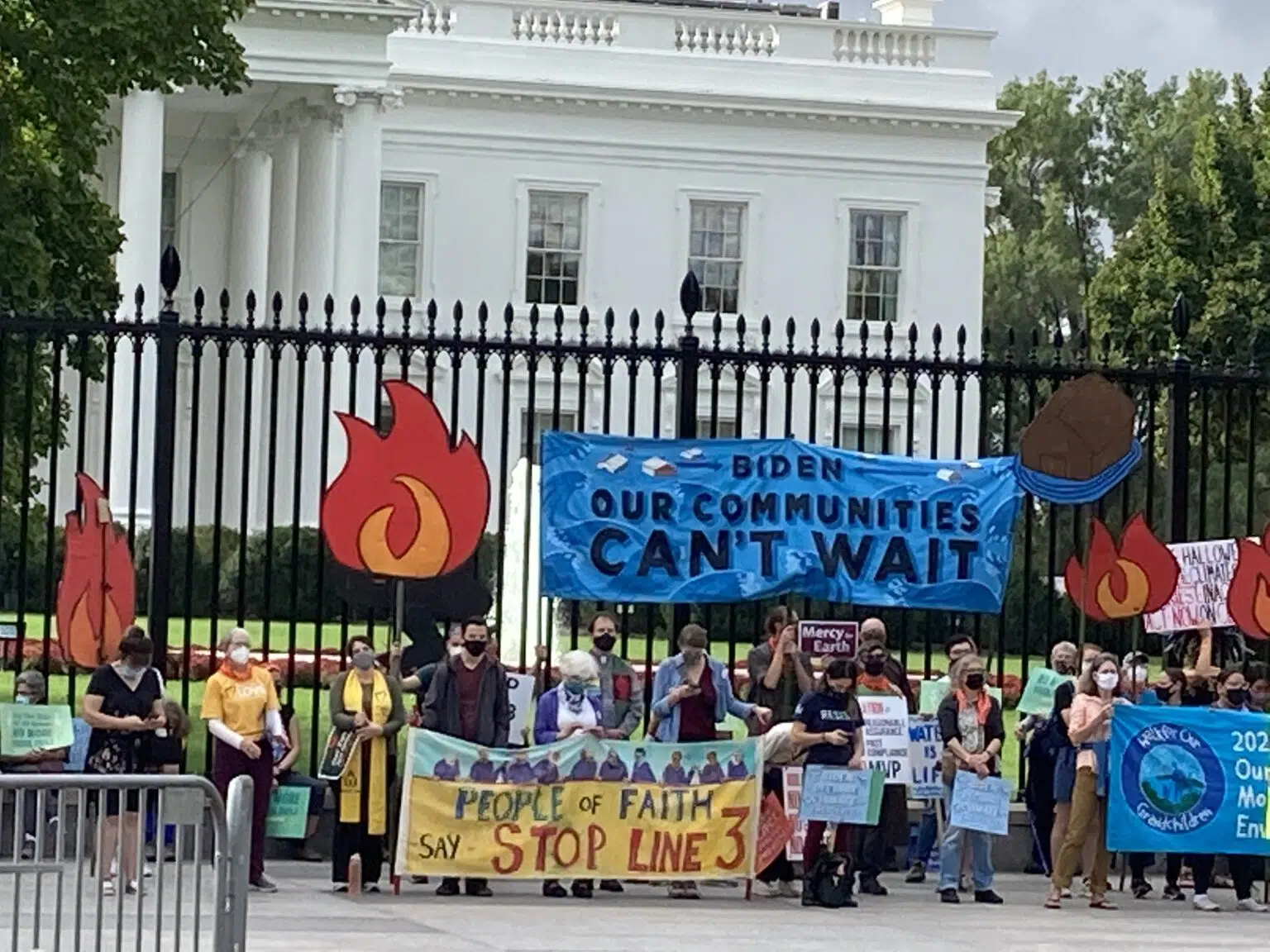
Climate activists assembled at the White House during the People vs Fossil Fuels week of direct action in Oct. 2021. Credit: Dana Drugmand
United Nations chief António Guterres has called on nations to arrive at September 20’s high-level climate summit in New York City with firm commitments for ending fossil fuel production.
So far, however, the world’s top 20 oil and gas extractors have enough production planned to generate 173 billion tons of carbon pollution by 2050 — more than enough to blow past their Paris Agreement commitments and heat the world well beyond 1.5 degrees Celsius above historical temperatures. The greatest polluter among them will be the United States.
Those are some of the findings in a new report from the group Oil Change International, which has found that these 20 countries — dubbed the “planet wreckers” — are going to be responsible for almost 90 percent of the expected carbon emissions from planned oil and gas projects between 2023 and 2050.
“A handful of the world’s richest nations are gambling our global future by failing to act and ignoring the scientific calls and evidence that we need to rapidly phase out fossil fuels,” said Kelly Trout, co-director of research at Oil Change International, who co-authored the report with colleague Romain Ioualalen.
“Most countries are unfortunately still moving in the wrong direction,” she said.
Oil and gas projects already planned by these nations will generate climate-heating CO2 emissions equivalent to 1,082 new coal plants, according to the report.
Based on their current plans, just five countries — the U.S. Canada, Norway, Australia, and the UK — will account for 51 percent of all new oil and gas projects through 2050, Trout found in her research.
“Among all of the countries that we call out in the report, these are the five that have the greatest economic means and capacity to actually be phasing out their oil and gas production the fastest,” Trout said.
The U.S. is both the largest historical carbon emitter and the world’s top oil and gas producer. Dubbed “planet wrecker in chief” in the report, it is on course to drive the most carbon pollution from planned oil and gas expansion by far. New oil and gas extraction in the U.S. will account for more than one-third of all planned projects over the next 25 years, creating 72.5 billion tons of CO2 emissions through 2050.
Canada, which is on track for 18.6 billion tons of cumulative carbon pollution through 2050, came in second.
Russia, the world’s second largest gas extractor and third largest oil producer, ranked third with 17.3 billion tons of CO2 expected from new production through 2050. Iran ranked fourth with 9.7 billion tons, and China rounded out the top five at 8.9 billion tons of expected carbon pollution.
Trout was not surprised by the outsized role of the U.S. “It’s a reflection of the reality that the oil and gas industry’s expansion has been unchecked for many years now in the United States,” she said. “President Biden has put very few limits on the oil and gas industry, and has even enabled the sort of expansion that we’re warning about in this report.”
Since the beginning of 2023, the Biden administration has approved construction of multiple liquid natural gas export facilities.
Among the moves that have further outraged environmentalists, in March, the administration approved the Willow Project, a major ConocoPhilips oil drilling venture in the National Petroleum Reserve-Alaska, a federal wilderness on Alaska’s North Shore. Estimates put up to 600 million barrels of oil in the area where the project will be located.
Just two weeks later, at the end of March, the Department of Interior held a large oil and gas lease sale in the Gulf of Mexico, leasing 313 tracts across 1.6 million acres.
In June, as part of the debt ceiling deal negotiated between congressional Republicans and the White House, federal agencies fast-tracked Mountain Valley Pipeline, which will carry fracked gas about 300 miles from northwestern West Virginia to southern Virginia.
President Biden has also resisted calls from climate advocates to formally declare a climate emergency, even as the annual number of billion-dollar climate disasters continues to mount. Among them: Phoenix, Arizona set a new record for enduring 31 consecutive days over 110 degrees Fahrenheit, Vermont suffered its worst flooding in nearly a century, and the Hawaiian city of Lahaina was destroyed by one of the deadliest wildfires in U.S. history.
In an August interview on the Weather Channel, Biden said he had “practically” declared a climate emergency, a statement that angered climate activists seeking more concrete action.
Against this backdrop, tens of thousands are expected to take to the streets of New York on September 17 for a “March to End Fossil Fuels,” some with the explicit demand that President Biden stop U.S. expansion of oil and gas development. Mid-September actions and protests are also being planned in cities and towns worldwide.
“Thousands of folks will be marching, not just in New York City but across the world to just say our future is on the line,” Trout said, “and a livable future for us all is completely incompatible with the expansion and continuation of the fossil fuel industry.”
Protests were a preview of planned marches in the city ahead of United Nations’ climate ambition summit on 20 September
Progressive lawmakers and climate activists rallied at the Capitol on Thursday to demand an end to fossil fuel usage, previewing a planned march in New York on Sunday ahead of the United Nations’ climate ambition summit on 20 September.
“Clearly, saving the planet is the most important issue facing humanity,” the Democratic senator Jeff Merkley of Oregon, said. “But here’s the ugly and brutal truth: right now, humanity is failing. The planet is crying out for help.”
The rally was one of more than 650 global climate actionstaking place this week in countries including Bolivia, Pakistan, Ethiopia and Austria.
In New York, dozens of activists protested outside of the headquarters for asset manager BlackRock and Citibank on Wednesday and Thursday respectively, to call attention to both firms’ investments in fossil fuels.
The mobilizations are set to culminate with the March to End Fossil Fuels in New York City on Sunday, 17 September, which has been endorsed by 400 scientists and 500 organizations, including the NAACP, the Sierra Club and the Sunrise Movement. Organizers have predicted the event, which aims to convene tens of thousands of activists from across the country and around the world, will be the largest climate march in the US in five years.