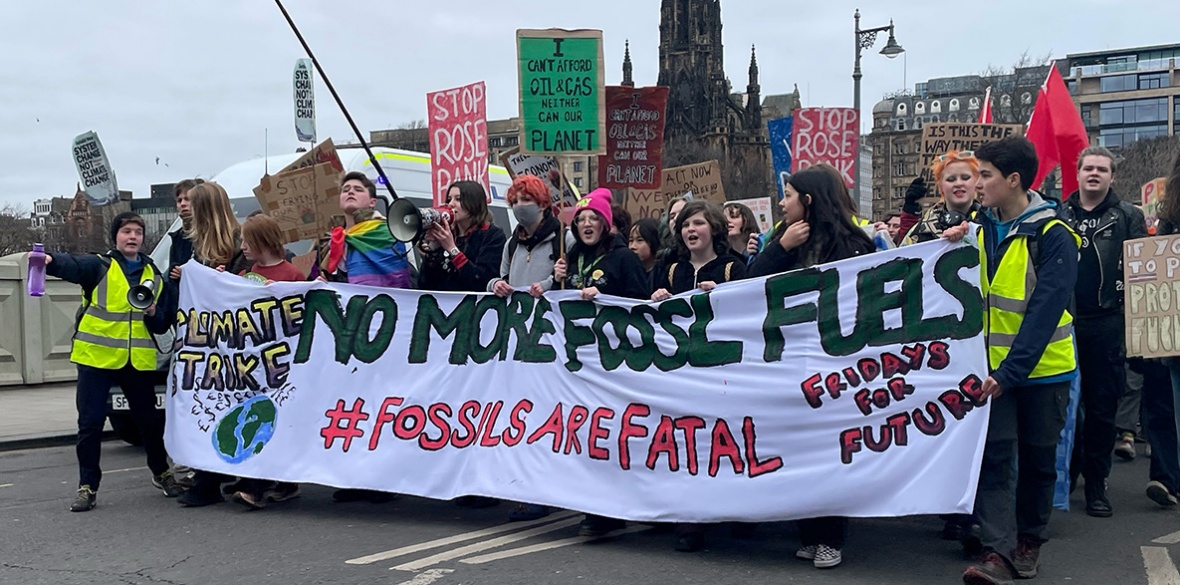
Climate protesters march through Edinburgh calling for an end to fossil fuel extraction, March 3, 2023
SCOTTISH leaders of all political parties have been challenged by a coalition of nature charities over their lack of urgency in tackling climate change.
Twenty-six groups have joined to write an open letter aimed at the leaders of the five parties represented at Holyrood — the SNP, Conservatives, Labour, Greens and Liberal Democrats.
…
In their letter they insisted that “without significant action” on the environment Scots could face “increasing disruption to our lives and face escalating impacts on food production and human health.”
The intervention comes as the organisations told how “extreme heat, dangerously warm seas, and out of control wildfires are causing havoc around the world.”
Amid these “unprecedented extreme global weather events,” the groups — who have more than 500,000 supporters between them — said they were “deeply concerned that our political leaders are not responding to the intertwined nature and climate crises with the urgency required.”
They added: “The status quo is not sustainable. Yet we have seen key environmental commitments shelved or delayed, and increasing signals that differing views on environmental policy will be exploited for electoral purposes or treated as disposable.”
More than a third of businesses say their prospects for growth in 2023 have been hampered by a decline in demand for British goods because of Brexit.
A government-led survey, which collected information from over 3,000 businesses throughout the year, has confirmed that Brexit is a key reason for a decline in trade among British exporters.
The data shows that 43 percent of exporters of services and goods say they saw a decline in trade in 2022. This compared to just 26 percent of businesses who said their exports had increased. The reason most frequently cited behind the drop in trade in recent months is Britain’s departure from the EU.
In January 2021, the EU introduced strict border controls on all food exports from the UK, as part of the Brexit trade agreements with Europe. Consequently, many businesses halted trade with the EU due to the increased costs that came with the new border rules.
Red tape, including additional documentation, admin burdens and new customs procedures, as well as reduced demand for UK services and products, were among the most prominent concerns in relation to the impact Brexit has had on exports among some companies.
The data shows that more than a third of businesses say their prospects for growth in 2023 have been hampered by a decline in demand for British goods because of Brexit.
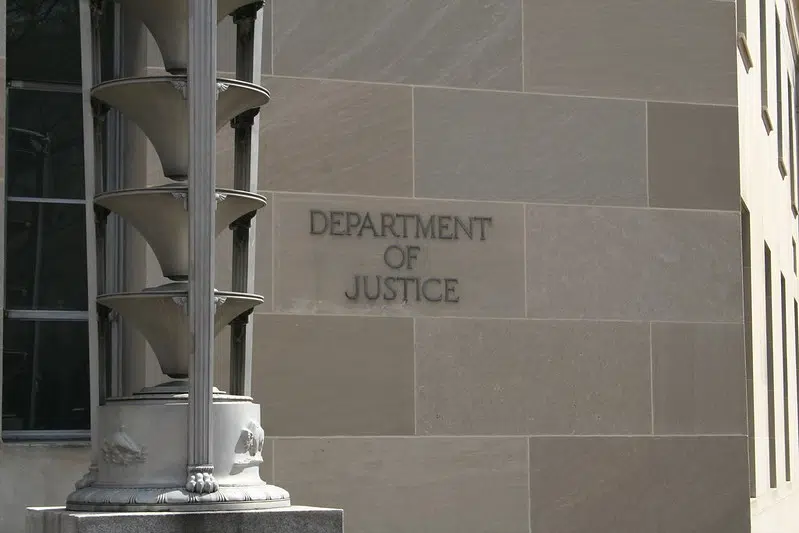
Citing “new evidence” of Big Oil firms’ advanced knowledge of climate risks and their actions to publicly conceal these risks, Democratic members of Congress are renewing calls for the U.S. Department of Justice to investigate carbon majors for potential violations of federal law.
In a letter sent to Attorney General Merrick Garland on Tuesday, the 20 congressional signatories, led by Sen. Richard Blumenthal (D-Conn.) and Rep. Ted Lieu (D-Calif.), compare Big Oil’s deceptive conduct to that of Big Tobacco. In 2006, major tobacco firms were convicted of violating the Racketeer Influenced and Corrupt Organizations (RICO) Act in litigation brought by the DOJ. The letter requests that the DOJ now open an investigation into ExxonMobil, Shell, and other oil majors to “determine whether they violated RICO, consumer protection, truth in advertising, public health, or other laws.”
The call for a federal investigation into the fossil fuel industry’s alleged climate deception follows new revelations further showing that Big Oil knew about the climate consequences of its products, yet actively worked to disseminate climate denial and block policy responses to protect profits.
As DeSmog reported in an investigation published March 31, oil major Shell sponsored climate research in the 1970s — years earlier than previously thought. Despite the stark warnings for society issued in internal reports, the company backed a series of industry publications that downplayed climate risks, emphasized uncertainties in climate science, and called for more fossil fuel use, particularly coal. The investigation was based on more than 200 documents uncovered and compiled by Dutch scholar and activist Vatan Hüzeir.
One of those documents, an internal 1989 Shell scenarios report, discussed the potential for an unprecedented climate refugee crisis with global temperatures rising considerably beyond 1.5 degrees C (2.7 degrees F). The report warned: “Civilisation [sic] could prove a fragile thing.”
The congressional letter to DOJ cites this and several other Shell documents from the investigation, stating: “Despite these warnings, Shell continued to publicly promote the use of fossil fuels and participate in trade associations and other groups that pushed climate denial and opposed solutions.” As DeSmog’s reporting noted, Shell engaged in lobbying and trade associations in the 1990s and 2000s that did just that, such as the Global Climate Coalition and the American Petroleum Institute.
The letter also points to two peer-reviewed studies indicating that Big Oil deceived and continues to deceive the public. One, published in January in the journal Science by researchers Geoffrey Supran, Stefan Rahmstorf, and Naomi Oreskes, demonstrated that Exxon’s climate modeling and global warming projections were exceptionally accurate, and explained that despite this skillful scientific understanding, the company’s public statements contradicted its internal knowledge of the climate risk. The other study, by Mei Li, Gregory Trencher, and Jusen Asuka and published in 2022 in the journal PLOS ONE, showed the disconnect between oil majors’ rhetoric and pledges around the low carbon transition and their actual actions and investments that prioritize their fossil fuel business.
“The available evidence that these companies lied — and continue to lie — to the public about their central role in exacerbating the climate crisis demands further investigation,” the letter contends. It alleges that this conduct may “constitute the most consequential deception campaign in history, with potentially existential consequences for our planet.”
Shell and ExxonMobil knew their products fueled the #ClimateCrisis, but lied to the public to protect their profits.
The Democratic members of Congress who signed onto the letter along with Sen. Blumenthal and Rep. Lieu include Reps. Katie Porter, Jared Huffman, Mark DeSaulnier, Kevin Mullin, and Nanette Díaz Barragán, all of California; Reps. Kim Schrier and Pramila Jayapal of Washington; Rep. Kathy Castor of Florida; Rep. Rashida Tlaib of Michigan; Rep. Cori Bush of Missouri; and Rep. Alexandria Ocasio-Cortez of New York. Sens. Ed Markey of Massachusetts, Sheldon Whitehouse of Rhode Island, Peter Welch of Vermont, Mazie Hirono of Hawaii, John Fetterman of Pennsylvania, and Alex Padilla of California also signed on.
Just two weeks ago, during an online climate discussion, several members of Congress including Ocasio-Cortez, Whitehouse, and Sen. Bernie Sanders of Vermont, called on the Department of Justice to take legal action against Big Oil, with Sanders suggesting they pay the Attorney General a visit to make their request in person. He and other senators have previously written to the DOJ and President Joe Biden requesting an investigation into the fossil fuel industry’s climate deception.
Richard Wiles, president of the Center for Climate Integrity, which advocates for holding climate polluters accountable, said in an emailed statement that this deception amounts to the most “consequential fraud committed against the American people” ever.
“Just as they did with the tobacco industry, the Department of Justice must exercise its unique power to hold the fossil fuel industry accountable and stop the lying,” Wiles said. “As long as Big Oil’s climate lies, both past and present, remain unchallenged by the DOJ, protecting the American public from the ravages of climate change will remain that much more difficult.”
France, German states use wiretaps, GPS to track activists
Bavaria tries to stop protests with preventative detention
Berlin police spend more than 400,000 hours on climate cases
France outlaws one group, German states consider ban
BERLIN, Aug 10 (Reuters) – Simon Lachner had plans to glue himself to a German city thoroughfare in June to call public attention to climate change. Instead, he ended up in police custody before he’d even left his home.
Lachner, 28, is one of thousands of activists caught up in a European crackdown on a wave of direct action protests that gathered pace last year demanding urgent government action against climate change.
Roadblocks on major motorways in Britain have caused traffic chaos, protests at oil installations in Germany have disrupted supplies, and in France, thousands of activists and police clashed over water usage, leaving dozens injured.
Determined to prevent such protests from strengthening further, states in Germany and national authorities in France are invoking legal powers often used against organised crime and extremist groups to wiretap and track activists, Reuters found, based on conversations with four prosecutors, police in both countries and more than a dozen protesters.
In Berlin alone, police have spent hundreds of thousands of hours working on more than 4,500 incidents registered against the “The Last Generation” and “Extinction Rebellion” groups, according to previously unreported data from police.
State authorities in Germany are widely using preventative detention to stop people from protesting, including holding at least one person for as long as 30 days without charge, which is permissible under Bavarian law, the prosecutors consulted by Reuters said.
Lawmakers passed new surveillance and detention laws in France in July and in Britain in May, with Britain making it illegal to lock, or glue, yourself to property.