Just Stop Oil marchers kettled by counter-protestors as scientists warn ‘we are damned fools’ for not acting on crisis

Spread the love

Just Stop Oil supporters are disrupting roads in central London during their thirteenth week of continuous resistance against new oil, gas and coal.

Throughout the morning, starting from 9am, 132 supporters began marching in nine groups around West, East London and South London. This morning’s marches have been eventful. On Cromwell Road, a coach was seen driving into the march, whilst in Elephant and Castle, a march was kettled by a group of counter-protestors wearing t-shirts emblazoned with ‘Just Stop Pissing Everyone Off’. Polite discourse about the necessity for culturally disruptive action ensued, as the Just Stop Oil supporters sat and gave personal testimonies whilst encircled. 

One Just Stop Oil supporter addressed the counter-protestors, who applauded her as she spoke:

“I’d like to see how long you are willing to stand there, because this is great for us, we’re having conversations and I think it’s been so beneficial this morning being able to meet with some of you lovely people and have these conversations with you, and for us to find out why we’re here and why you’re here, because believe me we are the ordinary people and we have the power. The only thing that needs to happen now is we need to connect the dots and join together.”

After some discussion the anti-Just Stop Oil protestors left cordially, and the march proceeded on the road. 

Continue ReadingJust Stop Oil marchers kettled by counter-protestors as scientists warn ‘we are damned fools’ for not acting on crisis

Just Stop Oil targets think tank over role in protest crackdown

Spread the love

Original article by Adam Bychawski republished from OpenDemocracy under  a Creative Commons Attribution-NonCommercial 4.0 International licence.

Activists targeted Policy Exchange after openDemocracy revealed it received Big Oil funding and helped draft law

Just Stop Oil target Policy Exchange
Protesters said they targeted the think tank because of its Big Oil funding. | Just Stop Oil

Just Stop Oil activists have targeted a think tank that helped draft “draconian” new laws cracking down on climate protesters.

Two members of the direct action group threw orange paint on the headquarters of Policy Exchange, a right-wing think tank that the prime minister last month credited with helping draft a controversial bill that handed new anti-protest powers to police.

The protesters said they took action against Policy Exchange after openDemocracy revealed the think tank secretly received funding from oil giant ExxonMobil prior to recommending restrictions on climate protests. 

One of the protesters, Ella Ward, 20, an environmental science student from Birmingham, said: “We have painted the Policy Exchange because they have been instrumental in implementing laws to restrict climate protesters. 

“The prime minister praised Policy Exchange for their draconian and anti-democratic lobbying. They criminalise peaceful protesters for exercising their right to march for a liveable future. Meanwhile, the criminals in Parliament and in board rooms are getting away with murder.

“Policy Exchange received thousands of pounds from fossil fuel companies, that is unacceptable.”

Although Policy Exchange does not declare its donors, openDemocracy found ExxonMobil Corporation donated $30,000 to its American fundraising arm in 2017.

Two years later, a report by the influential think tank titled ‘Extremism Rebellion’ said the government should implement new laws to target environmental protest group Extinction Rebellion (XR).

In June, Sunak confirmed at the think tank’s summer party that its report “helped us draft” what became the Police, Crime, Sentencing and Courts Act 2022. The prime minister worked at Policy Exchange before becoming an MP, and some of its supporters also donated to his leadership campaign.

The Police, Crime, Sentencing and Courts Act, which has been condemned by civil rights groups, gave police new powers to restrict the duration and noise level of static protests, or shut them down if they cause a “serious disruption”. 

Policy Exchange, which was co-founded by housing secretary Michael Gove and others in 2007, has also received $1.4m from the National Philanthropic Trust, a funder of climate denial groups in the US, through its US fundraising arm.

Several leading UK oil and energy companies, including the industry lobby group Energy UK, have also given donations to Policy Exchange to sponsor events at the Conservative Party’s annual conferences.

The think tank has been approached for comment.

We’ve got a newsletter for everyone

Whatever you’re interested in, there’s a free openDemocracy newsletter for you. HAVE A LOOK

Original article by Adam Bychawski republished from OpenDemocracy under  a Creative Commons Attribution-NonCommercial 4.0 International licence.

Continue ReadingJust Stop Oil targets think tank over role in protest crackdown

Time is short for Tories and Labour to show leadership on the climate crisis

Spread the love

Fiona Harvey Environment editor

https://www.theguardian.com/environment/2023/jun/28/time-is-short-for-tories-and-labour-to-show-leadership-on-the-climate-crisis

The Conservatives are lagging far behind on the climate crisis, that much we know. But the Labour party is not showing the leadership that the country needs on reaching net zero greenhouse gas emissions, the chairman of the Committee on Climate Change (CCC) has warned.

Lord Deben, a former Conservative environment secretary, has long been a critic of the government, and recently praised Labour’s stance on opposing new oil and gas licences in the North Sea.

But as he presented his final annual progress report as chairman, he warned that Labour was failing to take on vested interests.

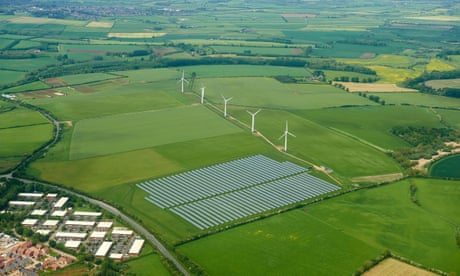
Solar farm adjacent to a wind farm

Read more

“If you lead, then there are bound to be people who would prefer you not to have made those decisions,” Deben said. “And what we are seeing at the moment is not only in government but in opposition, people being unwilling to lead lest some people don’t like the decisions that are being made. But these decisions have to be made, and there will be some people who disagree with them, and it is no good hoping that it will all go away.”

https://www.theguardian.com/environment/2023/jun/28/time-is-short-for-tories-and-labour-to-show-leadership-on-the-climate-crisis

Continue ReadingTime is short for Tories and Labour to show leadership on the climate crisis

Spread the love

Reduced service while I’m ill, think that it’s COVID.

23/7 Feeling better now after 3 days of nasty Covid symptoms. I have a good immune system from cycling, drinking and sex;)

Continue Reading

Illegal migration bill to become law: what you need to know

Spread the love

Avery Anapol, The Conversation
The UK government has succeeded in passing its illegal migration bill. After a series of late-night votes and months of controversy, the bill is now set to receive royal assent and become the Illegal Migration Act 2023. The following round-up will give you the key details of the bill and the analysis of the academic experts who have written about it for The Conversation.

The illegal migration bill is the central pillar of Rishi Sunak’s plan to stop small boat crossings, one of his five promises as prime minister. On its journey to becoming law, the bill faced opposition from the House of Lords, Conservative backbenchers in the House of Commons, activists and organisations who support refugees in the UK, and the United Nations.

A key facet of the bill – the Rwanda migration partnership – remains in legal limbo. The Court of Appeal ruled that Rwanda would not be able to fairly and accurately assess refugees’ asylum claims if they were sent there from the UK, and that therefore the plan was unlawful. The government will appeal this decision at the Supreme Court.

But regardless of whether the appeal is successful, the act sets the stage for future migration partnerships, where asylum seekers who enter the UK irregularly (such as by small boat) may be sent to another country the government deems “safe”.

This act is the second major immigration law passed in the last 15 months. The Nationality and Borders Act, enacted in April 2022, was the Boris Johnson government’s plan to fix a “broken” asylum system. But after it failed to have any discernible impact on the number of people making the dangerous journey across the Channel in small boats, the government introduced the illegal migration bill.

Erica Consterdine, an immigration policy expert at Lancaster University, has explained the difference between the two pieces of legislation for us. She describes the new law as “the most extreme piece of immigration legislation to date”. It will effectively ban asylum seeking in the UK, by requiring the home secretary to detain and deport anyone who enters the UK illegally (most asylum seekers), before their cases can be considered.

This would include potential victims of modern slavery. One of the most controversial aspects of the legislation is that it would deny modern slavery protections to anyone who enters the UK illegally. This is, as expert Alex Balch from the University of Liverpool explains, because the government has accused asylum seekers of falsely claiming to be modern slavery victims in order to avoid deportation.

The House of Lords tried to soften these parts of the bill through a series of amendments, but was ultimately defeated by the government.

Legal concerns

From the moment it was announced, critics have said the illegal migration bill would clash with the UK’s human rights obligations. The home secretary, Suella Braverman, said herself that the bill would “push the boundaries” of international law.

Helen O’Nions, an expert in human rights law at Nottingham Trent University writes that the provisions in the bill hinge on a “shaky interpretation” of the UN Refugee Convention of 1951, an international treaty that sets out the rights of refugees. While international refugee law is difficult to enforce, there are a number of issues in the bill that are likely to face prolonged legal battles.

It’s notable that these two migration policies have been passed under two ethnic minority home secretaries, and endorsed by other ministers who are the descendants of immigrants themselves. Politics researchers Neema Begum (University of Nottingham), Michael Bankole (King’s College) and Rima Saini (Middlesex University) have dug into this phenomenon and argue that the appearance of ethnic diversity in government is used to prop up hard right views on immigration and race.

Will it even work?

At the heart of the act is the government’s claim that people won’t come to the UK to seek asylum if they know they will be detained and deported to Rwanda or elsewhere. But there is very little evidence) to show that this approach of “deterrence” would be effective, writes Peter William Walsh, a researcher at Oxford University’s Migration Observatory.

Explaining the logistical problems with the proposals, he says that with the future of the Rwanda partnership uncertain, it’s not clear how the “detain and remove” approach will actually be put into practice.

The trauma of the asylum system

This new legislation comes against the backdrop of an asylum “backlog” – tens of thousands of applications that have not yet been decided, leaving people uncertain about their future in the country.

This longform article by Steve Taylor, senior lecturer in psychology at Leeds Beckett University, details the physical and psychological impacts of being stuck in the UK’s asylum system. Taylor’s interviewees described experiences of trauma, suicidal thoughts, hostility and threats, from years spent in asylum limbo.

And, as he points out, the act “is predicted to lead to more long-term detention”. This will come at high cost to taxpayers, and to the human lives caught up in the policy. The Conversation

Avery Anapol, Commissioning Editor, Politics + Society, The Conversation

This article is republished from The Conversation under a Creative Commons license. Read the original article.


Continue ReadingIllegal migration bill to become law: what you need to know