Newborns in Gaza Dying From Preventable Causes Due to Israeli Siege: Oxfam

Spread the love

Original article by JULIA CONLEY republished from Common Dreams under Creative Commons (CC BY-NC-ND 3.0). 

“Oxfam is urgently calling for a full cease-fire and unimpeded humanitarian access,” said the group, explaining that a four-day pause in fighting is not sufficient.

Humanitarian workers in Gaza on Thursday said their daily experiences struggling to take care of pregnant people and babies demonstrate why a four-day pause in fighting is far from sufficient to save the lives of the blockaded enclave’s most vulnerable residents, including newborns who have begun to die from preventable causes.

As Israel’s blockade continues to keep Gaza authorities from providing clean water, food, sanitation, and heat to homes and hospitals, babies aged three months and younger “are dying of diarrhea, hypothermia, dehydration, and infection,” said Oxfam International.

Juzoor, an organization partnering with Oxfam in northern Gaza, said premature births have increased by 25-30% since October 7 when Israel began its bombardment of Gaza in retaliation for an attack by Hamas.

The group has been supporting about 500 pregnant women in 13 shelters—where a total of 35,000 people are living—and many have gone into labor prematurely as they have the ongoing trauma of “walking long distances in search of safety, running away from bombs, and being crowded into shelters with squalid conditions.”

Humanitarian workers are struggling to adequately care for thousands of people who have taken refuge in shelters, with waste piling up due to a lack of sanitation services and up to 600 people sharing one toilet.

Sally Abi Khalil, Middle East regional director for Oxfam, said the fact that the crisis has reached a stage where babies are dying of preventable illnesses is “abhorrent.”

“Last month we lost at least one baby in every shelter, it’s heartbreaking,” said Umaiyeh Khammash, director of Juzoor. “Access to hospitals is extremely dangerous and virtually impossible, so many women are having to give birth with little or no maternity support in shelters.”

As Common Dreams has reported, more than 50,000 Gaza residents are facing Israel’s onslaught while pregnant, and more than 5,500 are expected to give birth within a month. Juzoor estimates that 30% of women will face pregnancy complications that require extra medical attention, putting their babies at greater risk—particularly in the first 28 days of life, when newborns are most vulnerable.

Khammash expressed fear that the group will soon be entirely out of food for residents.

“The absence of fuel has affected hospitals in the north and the shelters where we operate,” he said. “There is no light, there is no heat. Now winter is coming and it’s cold. It is really a disaster for everyone, but especially for expectant mothers.”

Some women have given birth in recent weeks in repurposed classrooms surrounded by dozens of refugees, without qualified medical personnel present or any capacity for providing “basic hygiene,” Khalil said.

“I don’t think there is anyone anywhere in the world that would disagree that is simply inhumane,” she added.

Oxfam is working to provide the Juzoor shelters with hygiene kits and food, while 60 health professionals have been mobilized to work with thousands of displaced people.

“But the ongoing violence, siege, and acute shortages of fuel and clean water severely hinder these efforts,” said Oxfam as it called on officials to go further than negotiating only a four-day “humanitarian pause.”

“Oxfam is urgently calling for a full cease-fire and unimpeded humanitarian access in order to restore vital services and provide desperately needed medical support particularly to pregnant women and newborn babies,” said the group.

Original article by JULIA CONLEY republished from Common Dreams under Creative Commons (CC BY-NC-ND 3.0). 

Continue ReadingNewborns in Gaza Dying From Preventable Causes Due to Israeli Siege: Oxfam

openDemocracy shortlisted for news provider of the year award

Spread the love

Original article by Indra Warnes republished from Open Democracy under a Creative Commons Attribution-NonCommercial 4.0 International licence

We’re up against industry giants at the British Journalism Awards for our work on the NHS, politics and civil rights

openDemocracy has been shortlisted for news provider of the year at the British Journalism Awards  | openDemocracy

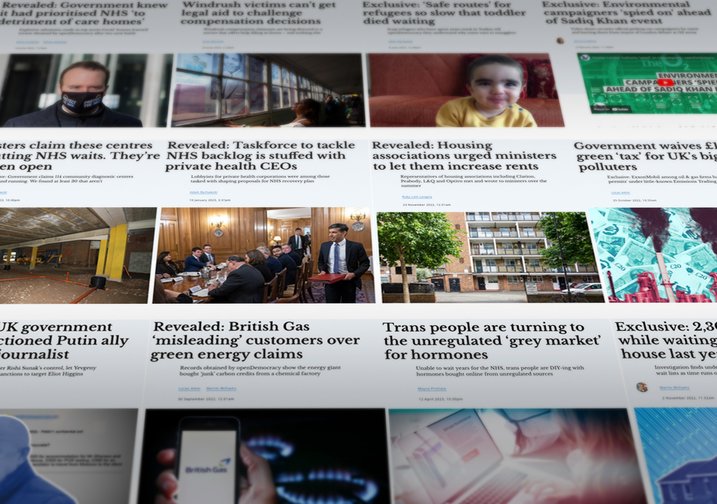
OpenDemocracy has been shortlisted for the most prestigious prize of its 22-year history: news provider of the year at the British Journalism Awards.

We are one of six news organisations to be shortlisted for the award, putting us up against industry giants Sky News, The Guardian, The Times, the Daily Mail, and the Financial Times.

The news follows a year in which openDemocracy broke scandal after scandal in the UK, revealing the hands of lobbyists, corporations and vested interests behind crucial decisions about the NHShousing, the Covid inquiry and restrictions on protest.

Satbir Singh, the CEO of openDemocracy, said: “Being shortlisted for an award of this size is such a well-deserved boost for this brilliant team. And being up against five much larger newsrooms shows we really do punch above our weight.

“I’m extremely proud of how far we’ve come and look forward to our next chapter.”

Ramzy Alwakeel, the head of news, said: “I’m beyond proud of everyone. To come out of this year with our biggest-ever award nomination is a giant credit to this team’s brilliance and commitment.”

openDemocracy reporter Adam Bychawski has also been individually shortlisted in the health and life sciences category.

Adam was announced as a finalist for work that has caught ministers lying about new NHS centres, exposed a businessman getting rich off supplying unusable PPE, and highlighted how eating disorder patients have been failed by the government.

The winners will be announced on 14 December.

Original article by Indra Warnes republished from Open Democracy under a Creative Commons Attribution-NonCommercial 4.0 International licence

Well done OpenDemocracy, well deserved.

Continue ReadingopenDemocracy shortlisted for news provider of the year award

This chart perfectly sums up how badly the Tories have ruined the economy

Spread the love

https://leftfootforward.org/2023/11/this-chart-perfectly-sums-up-how-badly-the-tories-have-ruined-the-economy/

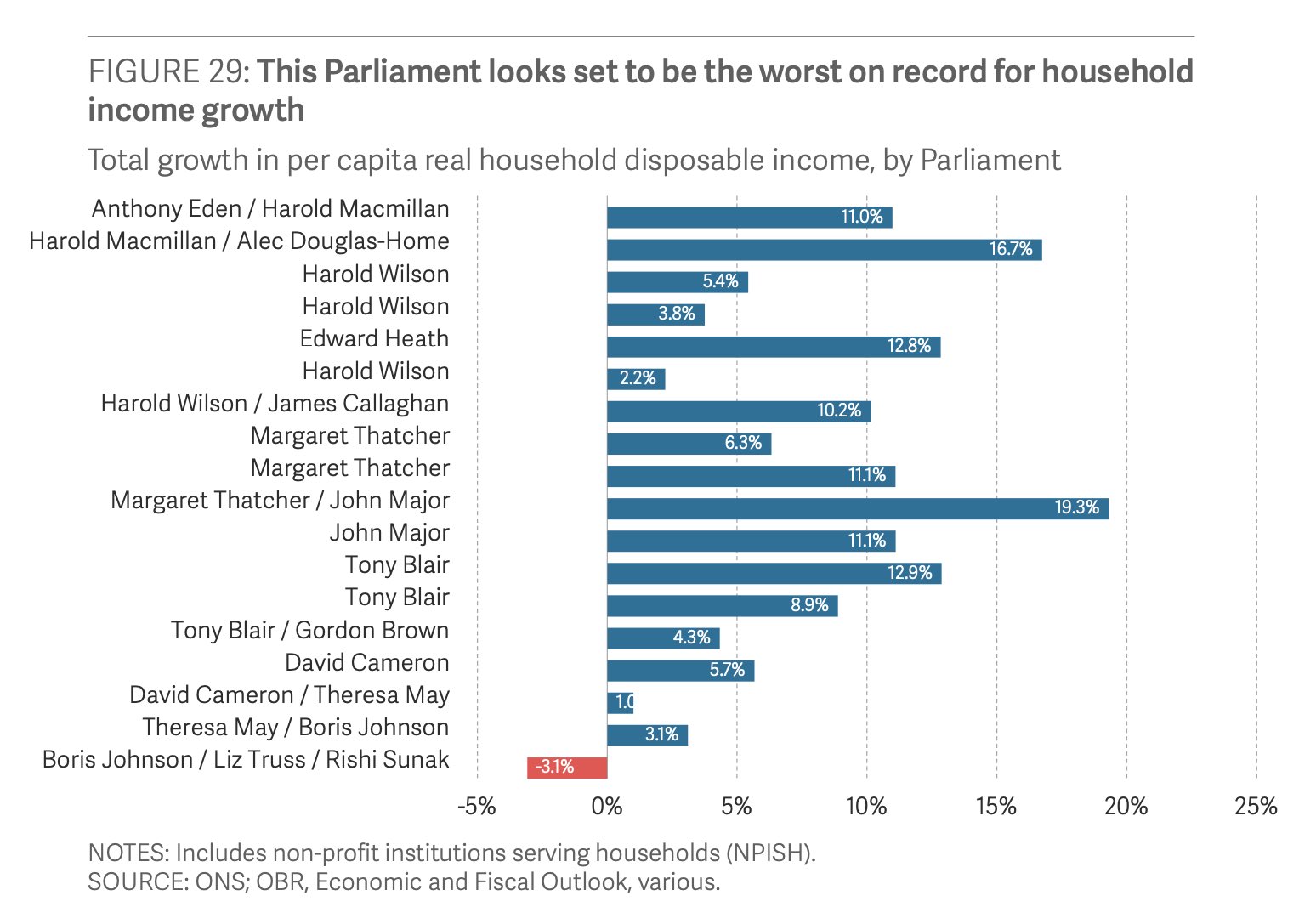
While Jeremy Hunt was keen to portray an optimistic picture of his autumn statement, bragging about tax cuts and how he was ‘growing the economy’, even though the facts show otherwise

The below chart illustrates just how bad this Parliament is for household income growth. So much for the Tories being the party of sound finances.

This parliament worst on record for household income growth (Picture credit: Resolution Foundation)

https://leftfootforward.org/2023/11/this-chart-perfectly-sums-up-how-badly-the-tories-have-ruined-the-economy/

Continue ReadingThis chart perfectly sums up how badly the Tories have ruined the economy

James Cleverly allegedly calls Stockton North ‘a s***hole’ following child poverty question

Spread the love

https://leftfootforward.org/2023/11/james-cleverly-allegedly-calls-stockton-north-a-shole-following-child-poverty-question/

“There is no doubt that these comments shame the home secretary, this rotten government and the Tory Party. He is clearly unfit for his high office.”

Current Home Secretary James Cleverly suffers from gobshiteism.

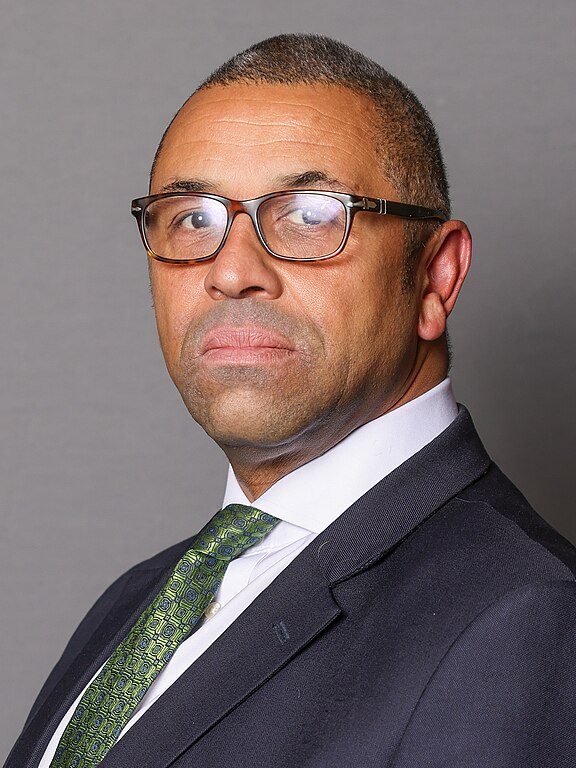
Tory MP James Cleverly has been condemned for allegedly calling Stockton North a ‘s***hole’, after a Labour MP asked why a third of children in the constituency live in poverty.

Cunningham later told the Commons during a point of order: “During Prime Minister’s Questions today I asked the Prime Minister why 34 per cent of children in my constituency lived in poverty.

“Before the Prime Minister answered, the Home Secretary chose to add in his penny’s worth. I have contacted his office, advising him I planned to name him but sadly he’s chosen not to be in the chamber. He was seen and heard to say, ‘Because it’s a s—hole.’

“I know he is denying being the culprit, but the audio is clear. It has been checked and checked and checked again.

“There is no doubt that these comments shame the home secretary, this rotten government and the Tory Party. He is clearly unfit for his high office.”

https://leftfootforward.org/2023/11/james-cleverly-allegedly-calls-stockton-north-a-shole-following-child-poverty-question/

Continue ReadingJames Cleverly allegedly calls Stockton North ‘a s***hole’ following child poverty question

Black Friday: parody adverts target unbridled consumerism with an environmental message

Spread the love
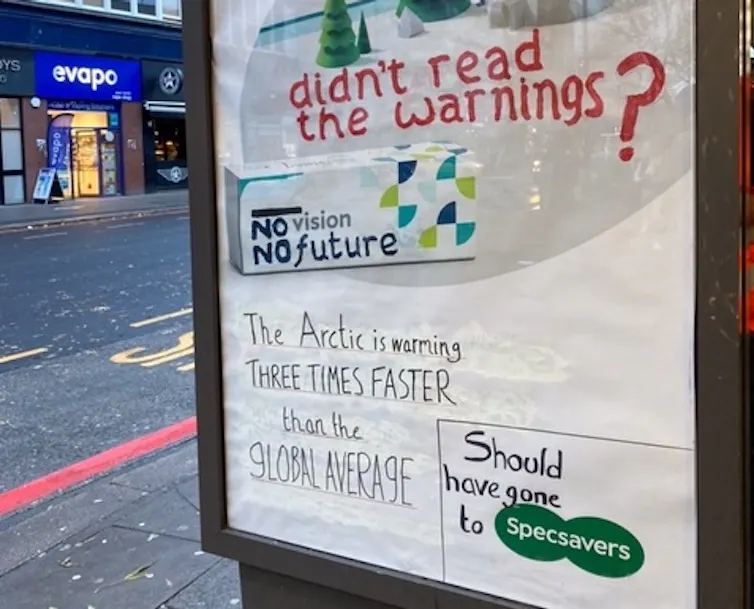
A subverted advert in Reading in the UK during the 2023 ZAP Games.
Brandalism

Eleftheria Lekakis, University of Sussex

This article is based on an interview for The Conversation Weekly podcast on the subvertising movement.

In the lead up to Black Friday, we have been bombarded with adverts from brands offering big discounts off various things we probably don’t need, and may not even be able to afford amid an ongoing cost of living crisis.

But a group of activists have used this moment of shopping frenzy to make a wider point about the unsustainability of consumer capitalism through subvertising – or subverted advertising. A subvert often uses the language and style of a brand itself as parody. It’s also known as culture jamming, or brandalism – a mashup of the words brand and vandalism.

The Zap Games was an anti-advertising festival which ran for two weeks from 11 to 24 November, in which people were invited to alter a public advertising space in a creative way to protest against the unbridled consumerism swirling around on Black Friday.

Zap stands for Zone Anti-Publicitaire, French for anti-advertising zone. Launched in Belgium in 2021, the Zap Games have become a global competition run by Subvertisers International. There are awards under categories including sculpture, digital screens and most family friendly intervention.

In one simple example which appeared in the UK city of Birmingham, somebody had created a big poster, tailored to the size of an advertising slot in a bus stop panel, which read: “Don’t buy stuff. Enjoy your friends.” Another, in the style of a John Lewis advert, read “100% saving if you don’t buy anything.”

Subvertisers International is a movement of like-minded activists around the world, which includes Brandalism, a collection of people, artists and activists. The group has been called a number of different things from eco-activists to guerrilla groups, to hackers and street artists.

The movement and its members have attracted media and public attention – and for me that’s particularly important when thinking about the climate crisis. If the point of advertising is to sell, the point of subvertising is to open up that message and attach a whole range of meanings to it, especially related to social and environmental justice topics which are increasingly attracting advertising interest.

It’s a very complicated thing to resist mass consumerism. And it’s as complicated to think and act on the environment – but these groups have been doing so for a number of years.

Environmental narratives

Brandalism began in 2012 during the London Olympics where members started replacing outdoors advertising panels with original artworks. From there they scaled up to a large actions during the COP21 climate talks in Paris in 2015, which is when I first came across the movement. One prominent poster was a parody of an Air France advert, part of which read: “Tackling Climate Change? Of course not. We’re an airline.”

Their main aim during the COP21 action was to critique the corporate sponsorship of the climate talks. In my early research on subvertising, I looked at all of their artwork and selected a purposeful sample which I felt demonstrated the variety of different environmental messages the actions were putting across. One was a critique of corporate greed, another about inadequacy of politicians to challenge the status quo, and another aimed at the role of consumers.

I also came across other kinds of environmental narratives which were more poetic, such as the Earth in mourning. One subvert, for example, showed an image of the Earth withering away, while others were short poems marking the grief brought on by the climate crisis. Finally, another theme concerned people wanting to declare their commitment to the environment and environmentalism. These were poetic nudges: “Let’s stop buying things. Let’s start like spending more time together. Let’s be more connected, rather than disparate.”

Listen to the full interview with Eleftheria Lekakis on The Conversation Weekly podcast.

In further research on advertising activism and advocacy I interviewed 24 subvertisers in seven countries about their motivations. One was a Paris-based citizen who documented the lives of people who put up public advertising and are paid very little money for it. He was also advocating for less advertising in public spaces. This is more common in France where groups such as Résistance à l’Agression Publicitaire, or resistance against advertising, have lobbied to restrict the presence of advertising in public spaces since the early 1990s. This group also provides schools with pedagogical kits to get students to think about advertising critically.

Another member of Subvertisers International, Democratic Media Please, which is based in Australia, is more interested in damaging outdoor advertising. When I spoke to him he also stressed the significant fact that advertising is the main source of funding for the majority of media organisations and it’s very hard in Australia to come across independent journalism that is not swayed by the commercial interests of its sponsors.

The environment is definitely a key concern of many subvertisers. But while a number of different artists I interviewed talked about the significance of the environment as a key driver in their activism, they told me they never really divorced it from issues of gender and race. Subvertising tries to weave together these concerns. Sometimes we’ve seen campaigns concerned with the whiteness of popular culture, for instance, and increasingly, especially in actions such as the Zap games, you see a lot more interconnectedness when it comes to environmentalism and race and gender politics.

The subvertising movement invites us to think and act critically towards advertising industries, practices and messages. Doing so is central to imagining and creating a future that is inclusive, sustainable and just.The Conversation

Eleftheria Lekakis, Senior Lecturer In Media and Communication, University of Sussex

This article is republished from The Conversation under a Creative Commons license. Read the original article.

https://www.youtube.com/results?search_query=subvertising+

Continue ReadingBlack Friday: parody adverts target unbridled consumerism with an environmental message