Historic ICC War Crimes Complaint Names 1,000 Israeli Soldiers

Spread the love

Original article by Brett Wilkins republished from Common Dreams under Creative Commons (CC BY-NC-ND 3.0).
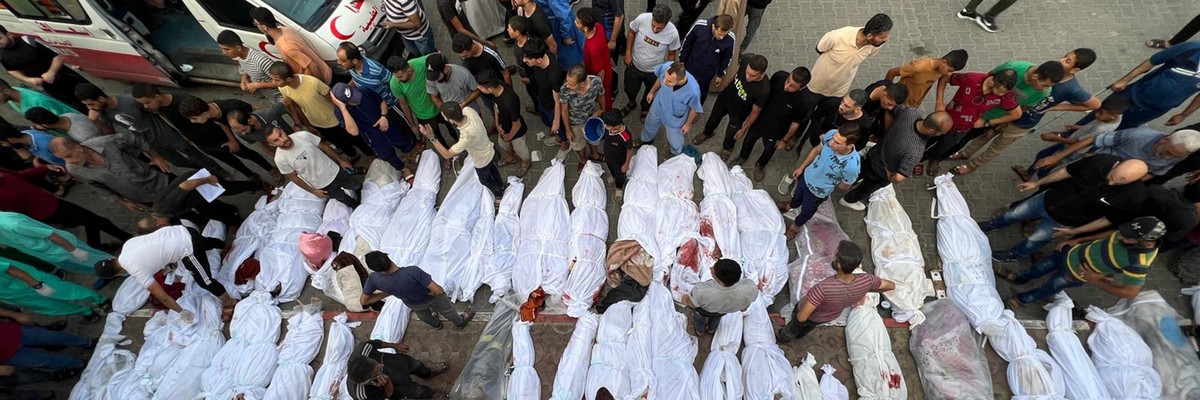
The bodies of victims of the October 31, 2023 Israeli bombing of the Jabalia refugee camp in the Gaza Strip are lined up outside the Indonesian Hospital in Gaza City. (Photo: Fadi Alwhidi/Anadolu via Getty Images)

“This complaint is not only the largest ever submitted to the ICC, but it is also a milestone in documenting Israeli war crimes for future generations.”

A Belgium-based advocacy group on Tuesday announced it “filed an unprecedented and historic complaint with the International Criminal Court against 1,000 Israeli occupation forces soldiers for war crimes, crimes against humanity, and genocide in Gaza,” where more than 150,000 Palestinians have been killed or wounded and millions more displaced, starved, and sickened by Israel’s yearlong onslaught.

The Hind Rajab Foundation—named after the 6-year-old Palestinian girl who was killed in January along with half a dozen relatives and rescue workers by Israeli troops invading Gaza in retaliation for the October 2023 Hamas-led attack—said that the Israel Defense Forces (IDF) personnel identified by name in the International Criminal Court (ICC) complaint “are accused of participating in systematic attacks against civilians during the ongoing genocide in Gaza.”

“This complaint, supported by over 8,000 pieces of verifiable evidence—including videos, audio recordings, forensic reports, and social media documentation—demonstrates the soldiers’ direct involvement in these atrocities,” the group explained. “All of the named soldiers were located in Gaza during the genocidal assault, and the evidence reveals their participation in violations of international law.”

The foundation accuses Israeli forces of:

  • Destruction of civilian infrastructure: Targeted attacks on homes, hospitals, schools, markets, mosques, and other civilian infrastructure.
  • Illegal occupation and looting: Soldiers were documented occupying civilian homes, looting personal belongings, and exploiting occupied properties.
  • Participation in the Gaza blockade: The soldiers played an active role in enforcing a blockade that deprived civilians of essential goods such as food, water, and medical supplies.
  • Targeting civilians: Audio and video evidence show soldiers deliberately attacking noncombatant individuals, including medical personnel and journalists.
  • Use of inhumane warfare tactics: Indiscriminate bombing campaigns, starvation, and the systematic destruction of civilian infrastructure were all part of their actions.

The IDF soldiers identified in the complaint include at least 12 American, 12 French, four Canadian, three British, and two Dutch nationals.

“This complaint is not only the largest ever submitted to the ICC, but it is also a milestone in documenting Israeli war crimes for future generations,” the Hind Rajab Foundation said. “By meticulously identifying the perpetrators and detailing their crimes, we are establishing a historical record that will ensure the individuals responsible are remembered and held accountable.”

“The submission of this complaint represents a significant moment in the fight for justice,” the group continued. “We honor the memory of Hind Rajab and the countless victims who have perished in the ongoing genocide. Their stories will not be forgotten, and their voices will be heard through our persistent legal action.”

The foundation added that the complaint “supports the efforts” of International Criminal Court Prosecutor Karim Khan—who is seeking to arrest Israeli Prime Minister Benjamin Netanyahu, Israeli Defense Minister Yoav Gallant, and Hamas leaders—and “pushes for immediate action, including the issuance of arrest warrants for those responsible.”

“We believe this complaint marks a turning point in the global fight to bring justice to Palestine,” the group asserted.

The complaint’s filing came amid Israel’s ongoing assault on Gaza, for which the U.S.-backed ally is on trial for genocide at the International Court of Justice. In recent weeks, Israel has escalated attacks on Lebanon, Syria, and elsewhere, killing and injuring thousands of people and threatening to plunge the Middle East into a wider war.

The filing also came on the same day that Sky News published an investigation confirming that IDF officials lied when repeatedly claiming there were no Israeli troops near the site of Rajab’s killing at the time of the attack. The British network published satellite images showing numerous IDF vehicles nearby and interviewed military experts who identified damage done by bullets and tank rounds to the vehicle in which the family was traveling.

The car was hit multiple times. Hind Rajab and her 15-year-old cousin Layan were the last survivors. In one recorded phone conversation with Rajab’s mother before the two children were killed Layan said, “The tanks are next to us.”

Hamas has no tanks.

The Sky News investigation was at least the second journalistic probe that concluded Israeli officials are not telling the truth about the attack.

In June, the U.K. research agency Forensic Architecture collaborated with Al Jazeera journalists and the advocacy group Earshot to publish an analysis that found Israeli tank fire likely fired the bullets that killed Rajab, her relatives, and two paramedics trying to rescue them in an ambulance that was blown to pieces despite receiving IDF permission to proceed with the rescue shortly before being attacked.

Original article by Brett Wilkins republished from Common Dreams under Creative Commons (CC BY-NC-ND 3.0).

Continue ReadingHistoric ICC War Crimes Complaint Names 1,000 Israeli Soldiers

‘Reckless Conduct’ of Big Oil Caused Milton—And Now They Should Pay

Spread the love
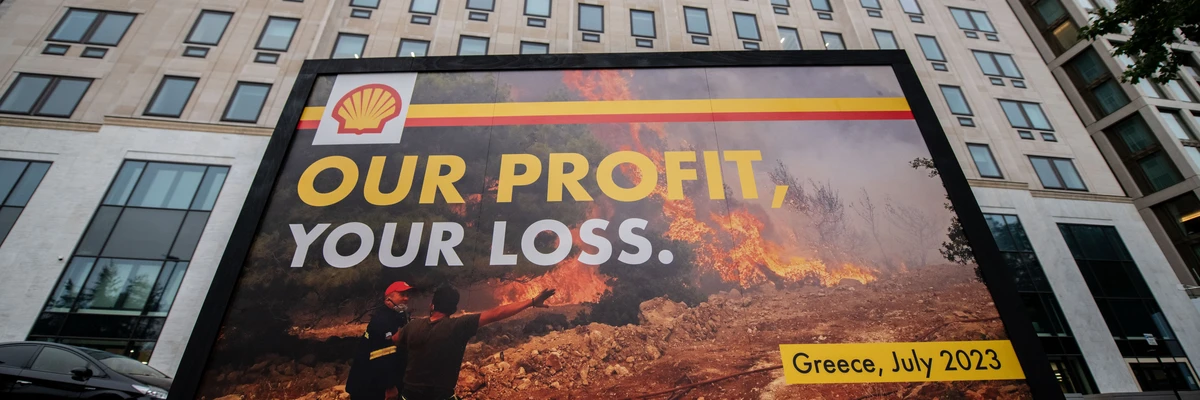
Greenpeace activists display a billboard during a protest outside Shell headquarters on July 27, 2023 in London.
Greenpeace activists display a billboard during a protest outside Shell headquarters on July 27, 2023 in London. (Photo: Handout/Chris J. Ratcliffe for Greenpeace via Getty Images)

Original article by Julia Conley republished from Common Dreams under Creative Commons (CC BY-NC-ND 3.0).

“The failure by our political class to deal with this completely solvable issue is staggering and shameful,” wrote one journalist.

As Hurricane Milton’s 145 mile-per-hour winds began closing in on Southwest Florida on Wednesday and people crowded into makeshift shelters across the state, climate advocates and other observers said the life-threatening storm and massive disruption to millions of people’s lives should make Americans “furious” at those who have helped make extreme weather more frequent and dangerous.

As Nathan J. Robinson wrote in Current Affairs, climate scientists and meteorologists have unequivocally told oil companies and policymakers that fossil fuel extraction is causing planetary heating, which has led to higher temperatures in oceans and bodies of water including the Gulf of Mexico, where the rapidly strengthening hurricane formed.

But despite the knowledge that fossil fuel giants like ExxonMobil and Shell had decades ago that drilling for oil and gas would cause “violent weather” and “potentially catastrophic events,” the industry’s profits have only grown as the U.S. has continued to subsidize their pollution-causing activities.

“The failure by our political class to deal with this completely solvable issue is staggering and shameful,” wrote Robinson. “Many of them have children and grandchildren. Presumably they would like their descendants to inherit a world worth living in. And they could make that happen. Unfortunately, it would require challenging the power and profits of some of America’s most influential corporations.”

In the Substack newsletter Heated, Arielle Samuelson explained on Wednesday how fossil fuel extraction and planetary heating “mutated” Hurricane Milton, which stunned weather experts this week as its wind speeds grew at a record-breaking pace, from 60 miles per hour to 180 miles per hour in just 36 hours.

It was the second time in recent weeks that a hurricane in the region has intensified quickly; areas that are expected to take a direct hit from Milton are still overwhelmed by the destruction left by Hurricane Helene.

Hot temperatures in the planets’ oceans and gulfs fuels hurricanes, and as Samuelson noted, scientists say the “extremely hot” Gulf of Mexico “was made far more likely by heat-trapping pollutants from the fossil fuel, agriculture, chemical, and cement industries.”

She continued:

In the past two weeks, ocean temperatures in the Gulf of Mexico were about 30-31° Celsius (86-88°F)—about 1 to 2° Celsius above average. The climate crisis made these extraordinarily high ocean temperatures at least 400 to 800 times more likely over the past two weeks, according to a rapid attribution study from Climate Central.

[…]

The science is also extremely clear that heat-trapping pollution causes sea-level rise and heavier rainfall, both of which make hurricanes more dangerous. Rainfall rates for tropical cyclones are expected to rise with the planet’s temperature, causing deadly flash floods like those found in Asheville, North Carolina. Sea level rise also means that coastal communities, and communities further inland, are more likely to be flooded during a storm.

That’s an objectively scary reality. But we know the primary source of greenhouse gas pollution, scientists note, so we also know how to slow the problem.

The lingering destruction of Helene and the impending landfall of Milton come, noted Fossil Fuel Media director Jamie Henn, weeks after three Democrats in Congress introduced legislation to require fossil fuel companies and oil refiners that do business in the U.S. to pay into a $1 trillion Polluters Pay Climate Fund, with their contributions based on a percentage of their global emissions.

The fund would be used to finance climate adaptation and other efforts to confront the impacts of the climate crisis.

In a press briefing on Wednesday, President Joe Biden noted how the damage done by Helene and the rapidly evolving news about Milton has left overwhelmed Americans vulnerable to misinformation, with some urging them to direct their anger at the White House or the Federal Emergency Management Agency (FEMA).

Republican presidential nominee Donald Trump has made baseless claims that FEMA funds were spent on funding for immigrant shelters, while U.S. Rep. Marjorie Taylor Greene (R-Ga.) wrote on social media that an unnamed “they” can control the weather and suggested the federal government is deliberately keeping emergency aid from people in states controlled by Republicans.

As fossil fuel firms and political leaders march “us toward the tipping points,” wrote Robinson, “many people won’t understand what is happening to them.”

“In a chaotic information environment filled with endless falsehoods, they’ll conclude that the president is manipulating the weather, or FEMA is trying to kill people,” he wrote. “The real story, however, is straightforward: We have a political class that is vastly more committed to sending weapons to war criminals than funding emergency management, and which will not acknowledge the basic facts of the problem (and the known solutions) because some large economic actors benefit in the short run from the destruction of the planet.”

“Truly, it’s revolting,” he added. “What an absolute disgrace our failure to deal with climate change is.”

Candice Fortin, U.S. campaigns manager for 350.orgsaid that fossil fuel executives and the politicians that support them have “blood on their hands” and called on Biden to unequivocally stand on the side of hurricane victims by declaring a climate emergency.

“This is a climate emergency,” said Fortin. “Every time we repeat that, countless more lives have been lost or upended by the fossil fuel industry. How many more times will it take? We call on President Biden to use his executive power to declare a climate emergency so we can finally protect frontline communities.”

At Newsweek, organizer and attorney Aaron Regunberg wrote that oil companies’ contributions to the climate emergency have been compounded by their vast efforts to spread misinformation and hide their knowledge that fossil fuel extraction was heating the planet.

Exxon CEO Darren Woods, he wrote, pushed for a surge in the company’s extractive activities while “overseeing a substantial portion of the company’s climate deception efforts,” and received $198.9 million for his “climate crimes” from 2015-23, as well as owning Exxon shares worth $371.1 million.

“Regular people are paying the ultimate price for this sociopathic greed,” wrote Regunberg. “The families made homeless, the wives and husbands and parents and children who lost loved ones to Helene—these victims deserve justice no less than victims of street-level crimes, and the companies and corporate executives responsible for their pain and suffering deserve criminal punishment at least as much as, if not far more than, the average street-level offender.”

“Climate victims have paid so much for Big Oil’s reckless conduct,” he added. “It’s time to make the polluters pay.”

Original article by Julia Conley republished from Common Dreams under Creative Commons (CC BY-NC-ND 3.0).

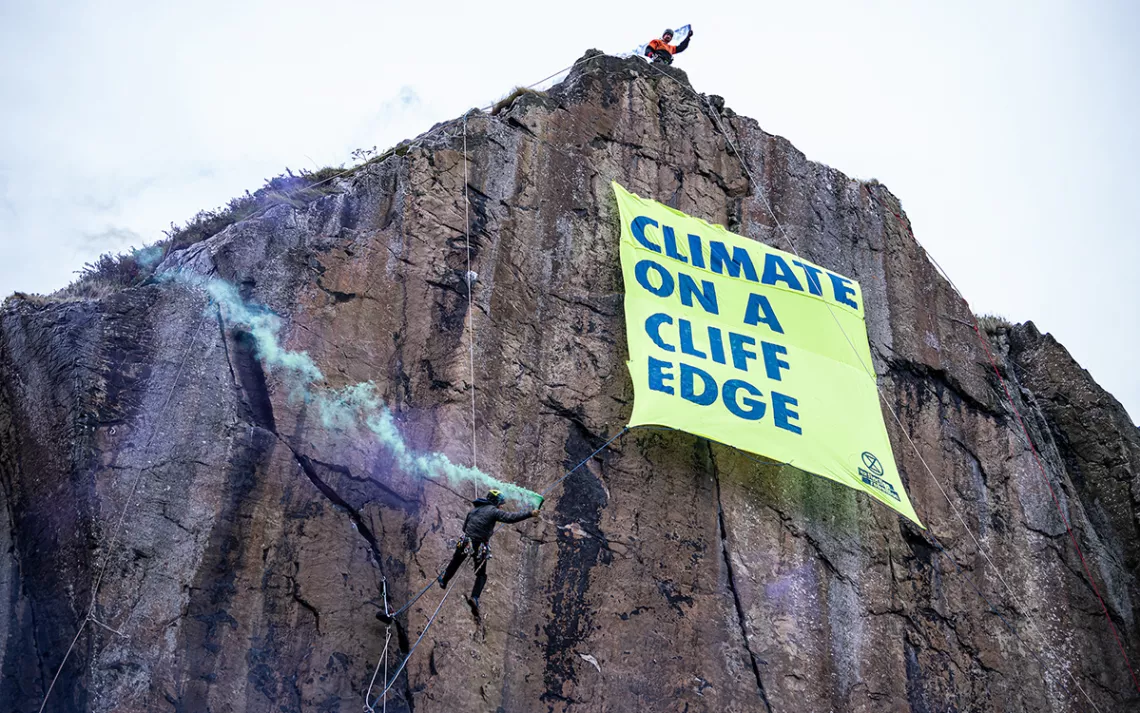
Experienced climbers scale a rock face near the historic Dumbarton castle in Glasgow, releasing a banner that reads “Climate on a Cliff Edge.” One activist, dressed as a globe, symbolically looms near the edge, while another plays the bagpipes on the shores below. | Photo courtesy of Extinction Rebellion and Mark Richards
Continue Reading‘Reckless Conduct’ of Big Oil Caused Milton—And Now They Should Pay

Study Warns of ‘Irreversible Impacts’ From Overshooting 1.5°C, Even Temporarily

Spread the love

Original article by Jessica Corbett republished from Common Dreams under Creative Commons (CC BY-NC-ND 3.0). 

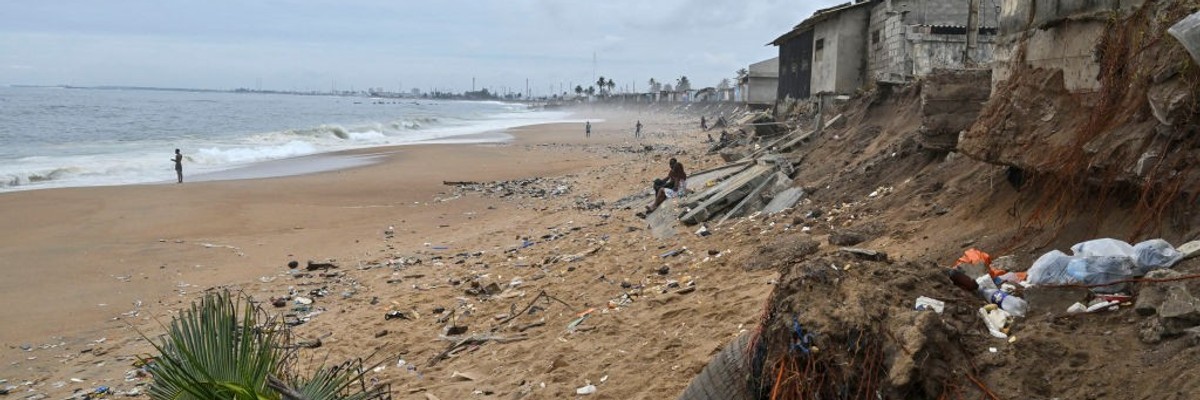
Houses destroyed by the rising sea level are shown at the Port-Bouet beach in Abidjan, Côte d’Ivoire on September 2, 2024. (Photo by Issouf Sanogo/AFP via Getty Images)

“Only by doing much more in this critical decade to bring emissions down and peak temperatures as low as possible, can we effectively limit damages.”

Just over a month away from the next United Nations climate summit, a study out Wednesday warns that heating the planet beyond a key temperature threshold of the Paris agreement—even temporarily—could cause “irreversible impacts.”

The 2015 agreement aims to limit global temperature rise this century to 1.5ºC, relative to preindustrial levels.

“For years, scientists and world leaders have pinned their hopes for the future on a hazy promise—that, even if temperatures soar far above global targets, the planet can eventually be cooled back down,” The Washington Postdetailed Wednesday. “This phenomenon, known as a temperature ‘overshoot,’ has been baked into most climate models and plans for the future.”

“The earlier we can get to net-zero, the lower peak warming will be, and the smaller the risks of irreversible impacts.”

As lead author Carl-Friedrich Schleussner said in a statement, “This paper does away with any notion that overshoot would deliver a similar climate outcome to a future in which we had done more, earlier, to ensure to limit peak warming to 1.5°C.”

“Only by doing much more in this critical decade to bring emissions down and peak temperatures as low as possible, can we effectively limit damages,” stressed Schleussner, an expert from Climate Analytics and the International Institute of Applied Systems Analysis who partnered with 29 other scientists for the study.

The paper, published in the peer-reviewed journal Nature, states that “for a range of climate impacts, there is no expectation of immediate reversibility after an overshoot. This includes changes in the deep ocean, marine biogeochemistry and species abundance, land-based biomes, carbon stocks, and crop yields, but also biodiversity on land. An overshoot will also increase the probability of triggering potential Earth system tipping elements.”

“Sea levels will continue to rise for centuries to millennia even if long-term temperatures decline,” the study adds, projecting that every 100 years of overshoot could lead seas to rise nearly 16 inches by 2300, on top of more than 31 inches without overshoot.

The scientists found that “a similar pattern emerges” for the thawing of permafrost—ground that is frozen for two or more years—and northern peatland warming, which would lead to the release of planet-heating carbon dioxide and methane. They wrote that “the effect of permafrost and peatland emissions on 2300 temperatures increases by 0.02ºC per 100 years of overshoot.”

“To hedge and protect against high-risk outcomes, we identify the geophysical need for a preventive carbon dioxide removal capacity of several hundred gigatonnes,” the authors noted. “Yet, technical, economic, and sustainability considerations may limit the realization of carbon dioxide removal deployment at such scales. Therefore, we cannot be confident that temperature decline after overshoot is achievable within the timescales expected today. Only rapid near-term emission reductions are effective in reducing climate risks.”

In other words, as co-author and Climate Analytics research analyst Gaurav Ganti, put it, “there’s no way to rule out the need for large amounts of net negative emissions capabilities, so we really need to minimize our residual emissions.”

“We cannot squander carbon dioxide removal on offsetting emissions we have the ability to avoid,” Ganti added. “Our work reinforces the urgency of governments acting to reduce our emissions now, and not later down the line. The race to net-zero needs to be seen for what it is—a sprint.”

While the paper comes ahead of COP29, the U.N. conference in Azerbaijan next month, co-author Joeri Rogelj looked toward COP30, for which governments that have signed the Paris agreement will present their updated nationally determined contributions (NDCs) to meet the climate deal’s goals.

“Until we get to net-zero, warming will continue. The earlier we can get to net-zero, the lower peak warming will be, and the smaller the risks of irreversible impacts,” said Rogelj, a professor and director of research for the Grantham Institute at Imperial College London. “This underscores the importance of countries submitting ambitious new reduction pledges, or so-called ‘NDCs,’ well ahead of next year’s climate summit in Brazil.”

The U.N. said last November that countries’ current emissions plans would put the world on track for 2.9°C of warming by 2100, nearly double the Paris target. Since then, scientists have confirmed that 2023 was the hottest year in human history and warned that 2024 is expected to set a new record.

The study in Nature was published as Hurricane Milton—fueled by hot waters in the Gulf of Mexico—barreled toward Florida and just a day after another group of scientists wrote in BioScience that “we are on the brink of an irreversible climate disaster. This is a global emergency beyond any doubt. Much of the very fabric of life on Earth is imperiled.”

Those experts emphasized that “human-caused carbon dioxide emissions and other greenhouse gases are the primary drivers of climate change. As of 2022, global fossil fuel combustion and industrial processes account for approximately 90% of these emissions, whereas land-use change, primarily deforestation, accounts for approximately 10%.”

Original article by Jessica Corbett republished from Common Dreams under Creative Commons (CC BY-NC-ND 3.0). 

Experienced climbers scale a rock face near the historic Dumbarton castle in Glasgow, releasing a banner that reads “Climate on a Cliff Edge.” One activist, dressed as a globe, symbolically looms near the edge, while another plays the bagpipes on the shores below. | Photo courtesy of Extinction Rebellion and Mark Richards
Continue ReadingStudy Warns of ‘Irreversible Impacts’ From Overshooting 1.5°C, Even Temporarily

Fix the climate or appease the fossil fuel industry – we can’t do both

Spread the love

Jack Marley, The Conversation

Britain ended more than 140 years of coal power when it closed its last generator in September.

Coal emits more heat-trapping gas to the atmosphere than any other fossil fuel, so its demise as a source of electricity is an unalloyed good for the climate. Yet, with another announcement a week later, the UK government has helped extend the reign of fossil fuels well into the 21st century.Read more: How mainstream climate science endorsed the fantasy of a global warming time machine


Imagine weekly climate newsletter

This roundup of The Conversation’s climate coverage comes from our award-winning weekly climate action newsletter. Every Wednesday, The Conversation’s environment editor writes Imagine, a short email that goes a little deeper into just one climate issue. Join the 35,000+ readers who’ve subscribed.


Less than six months from polling day, the UK Labour party (then the official opposition) scrapped a campaign commitment to provide an annual stimulus of £28 billion (US$36.6 billion) for green industries.

Read more: Labour’s £28 billion green investment promise could be watered down – here’s why

Six billion pounds shy of this figure will now be raised over 25 years, Keir Starmer’s Labour government has revealed, but for a specific purpose: carbon capture and storage.

“The technology works by capturing CO₂ as it is being emitted by a power plant or another polluter, then storing it underground,” says Mark Maslin, a professor of natural sciences at UCL.

The Guardian reports that oil companies BP and Equinor will invest in a cluster of carbon capture and storage installations in Teesside, north-east England. Eni, an Italian oil company, is expected to develop sites in north-west England and north Wales. In each case, emissions will probably be pumped via gas pipes beneath the seabed.

Starmer anointed “a new era” for green jobs when announcing this funding, but experts claim he is actually offering symbolic and strategic support to climate-wrecking energy sources that have dominated for centuries.

A new error

“This announcement represents a massive bet on a still unproven technology, and will lock the UK into fossil fuel dependence for decades to come,” Maslin says.

Read more: The UK’s £22 billion bet on carbon capture will lock in fossil fuels for decades

“The Climate Change Act mandates the UK should achieve net zero emissions by 2050, yet this will be impossible if carbon capture leads to the UK building new gas power stations instead of wind and solar farms.”

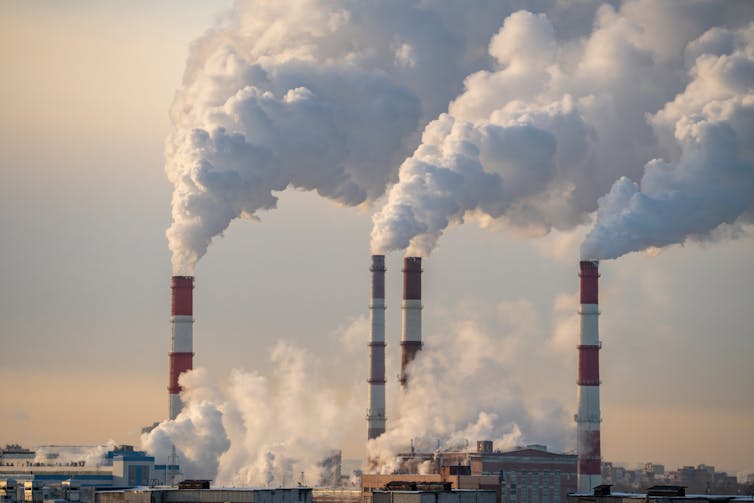
Four smokestacks at a power plant.
Our ability to capture all this carbon is not guaranteed. DimaBerlin/Shutterstock

Maslin was one of several scientists who wrote to energy secretary Ed Miliband criticising the plans. As he sees it, the government would not fund these projects if it did not see a future for fossil fuels beyond the middle of this century, by which time scientists have said our interference in the climate must end.

The message is clear: expensive imports of natural gas (essentially methane, a potent greenhouse gas) are here to stay. Even successful deployment of carbon scrubbers at the point of burning this gas would not erase its climate impact, Maslin says, as it leaks at all stages of its production and use.

But Maslin also doubts carbon capture and storage can siphon off the emissions of gas-fired power plants without adding to climate change. This is why climate scientists often describe carbon capture and storage as an unproven technology for decarbonising electricity and heavy industry: most of its applications have been in natural gas processing facilities where CO₂ is extracted for commercial uses.

“The track record of adding carbon capture to power plants is much worse, with the vast majority of projects abandoned,” Maslin explains.

More damning still, almost 80% of all the CO₂ captured by existing installations has been reinjected into oil fields – to pump more oil.

Could carbon capture and storage tech turn natural gas into zero-carbon hydrogen, as some hope? Again, Maslin is dubious. Water is a cleaner source for hydrogen and using this fuel to heat homes or decarbonise factories is a second-rate solution compared with renewable electricity, he says.

The fruits of appeasement

Maslin and his co-signatories say that carbon capture and storage should be limited to reducing emissions from existing fossil power plants or steel furnaces while these emission sources are rapidly phased out.

Marc Hudson at the University of Sussex is a historian of climate politics and policy in Australia, the US, UK and internationally. He has encountered policy proposals for carbon capture dating back to the 1970s and in his view, their overwhelming effect has been to prolong the use of fossil fuels by justifying investment in their expansion.

Read more: Relying on carbon capture and storage may be a dangerous trap for UK industry

“It’s the equivalent of smoking more and more cigarettes each day and gambling that a cure for cancer will exist by the time you need it,” he says.

Read more: Cumbria coal mine: empty promises of carbon capture tech have excused digging up more fossil fuel for decades

When trying to explain why rational climate policies like the mass insulation of draughty homes tends to lose out to investment in carbon capture and storage, Nils Markusson, a lecturer in environmental politics at Lancaster University, found something similar:

“Home insulation does nothing to shield the profits of fossil fuel companies or landlords in the large and growing private rental sector,” he says.

Read more: Does carbon capture and storage hype delay emissions cuts? Here’s what research shows

In other words, appeasing the fossil fuel industry is a proviso of policies drafted to address climate change. This limitation has also infiltrated scientific assessments of the climate.

A new report shows that “overshoot” scenarios – that is, projections of future climate change which accept the global target of 1.5°C will be at least temporarily breached – are rife in mainstream climate science.

This is despite evidence of the permanent damage such a breach would cause – and our doubtful ability to reverse warming once it has exceeded these dangerous levels using speculative carbon removal technology.

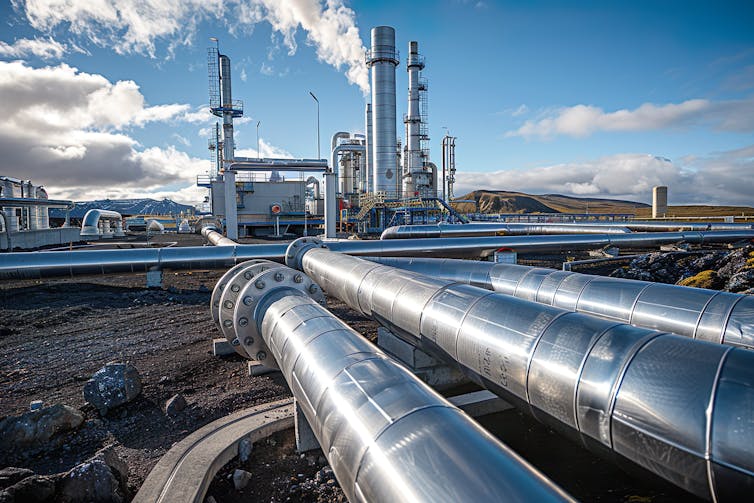
Metal pipes over Icelandic earth with a steam chimney in the distance.
There is not enough land or energy to rapidly restore the carbon we have emitted. Oksana Bali/Shutterstock

What has led us here? Comprehending the climate crisis and its solutions on terms favourable to the fossil fuel industry say Wim Carton and Andreas Malm, political ecologists at Lund University.

“Avoiding climate breakdown demands that we bury the fantasy of overshoot-and-return and with it another illusion as well: that the Paris targets can be met without uprooting the status-quo.

Read more: How mainstream climate science endorsed the fantasy of a global warming time machine

“One limit after the other will be broken unless we manage to strand the necessary fossil assets and curtail opportunities for continuing to profit from oil and gas and coal.”

Jack Marley, Environment + Energy Editor, The Conversation

This article is republished from The Conversation under a Creative Commons license. Read the original article.

Continue ReadingFix the climate or appease the fossil fuel industry – we can’t do both

Israel subjects northern Gaza to one of its most violent genocide campaigns, says Euro-Med

Spread the love

Original article republished from MEMO under a Creative Commons Attribution-NonCommercial-ShareAlike 4.0 International License

Relatives of Palestinians, who lost their life following the Israeli attack on Nuseirat Refugee Camp, mourn after the bodies are brought to al-Aqsa Martyrs Hospital for burial process in Deir al-Balah, Gaza on October 1, 2024 [Ashraf Amra – Anadolu Agency]

An unprecedented humanitarian catastrophe is imminent as the Israeli occupation regime tightens its siege on the Jabalia refugee camp and Beit Lahia project in the northern Gaza Strip for the fourth consecutive day, Euro-Med Human Rights Monitor warned in a statement issued late on Tuesday. “Israel is accelerating the pace of its genocide against the Palestinians there by carrying out mass and planned killings, as well as widespread forced displacements,” said the rights group.

“The international community, led by the United Nations, must act swiftly and decisively to save tens of thousands of residents who are being subjected to one of the most violent campaigns of genocide that the Gaza Strip has ever witnessed,” Euro-Med insisted.

Israeli occupation forces have intensified their siege of the Jabalia camp and the surrounding neighbourhoods, including Tal Al-Zaatar, Al-Sikka, Beit Hanoun and Beit Lahia. The Israeli forces have also taken up positions in the west of the Gaza Strip, advancing as far as the Jaffa Cemetery and the Tawam Junction.

With air strikes, fire belts and artillery shelling — bombing homes over the heads of their residents — the Israeli occupation forces have been in large parts of northern Gaza since Saturday evening.

Dozens of people have been killed and injured as a result of this ongoing invasion.

“Initial reports confirmed that five Palestinian citizens — including a woman, a man and his son — were killed by the occupation forces for trying to escape the Jabalia camp while waving white flags,” said Euro-Med. “They were executed.”

In an extremely dangerous development, Israeli troops ordered the complete evacuation of Kamal Adwan Hospital, located in the Beit Lahia project, north of Gaza. The director of the hospital, Dr Hussam Abu Safiya, reported that he received a call from the occupation forces telling him that if he did not get the patients and medical staff out of the hospital within a day, they would be in danger.

Along with two other hospitals in northern Gaza, Al-Awda Hospital and the Indonesian Hospital in Jabalia, Kamal Adwan Hospital is only partially operational after being raided and destroyed in the Israeli military’s first invasion of northern Gaza last December. On that occasion, the hospital’s medical staff, patients and displaced persons sheltering inside were mistreated severely by the occupation forces.

“Kamal Adwan Hospital is currently being besieged by Israeli quadcopter aircraft for the second day in a row, with smoke bombs being detonated at its gate and dozens of raids on nearby buildings,” the rights group pointed out.

The sole road that ambulances used to move dozens of seriously injured patients from Kamal Adwan Hospital to the Baptist Hospital has been cut off, following the Israeli bombing of a building in the vicinity. This was followed by the occupation forces’ tightening of the siege on the hospital, and the blocking of ambulances and any other methods of victim transport. Earlier on Tuesday, the occupation forces arrested a paramedic who was transporting patients from the Kamal Adwan Hospital to the Baptist Hospital, despite prior coordination with the Israeli authorities.

The Euro-Med Monitor field team received testimonies from citizens who were able to reach Gaza City about witnessing dead bodies lying in the streets. “They told us that they saw victims trapped beneath the debris of bombed-out houses, and that ambulance and civil defence crews were unable to reach the area as at least 20 houses were targeted by Israeli forces in a four-day period,” reported the NGO’s field staff.

Thousands of people trapped in the Jabalia and Beit Lahia camps are suffering from a near-total absence of food supplies, which were already scarce due to Israel’s closure of the border crossings. The limited amount of goods and other aid that had previously been allowed to enter the area was blocked by Israel for more than a week prior to the new invasion.

“Numerous families remain stuck in their homes, enduring harsh living conditions under the intensified and brutal Israeli bombing. Citizens are not even able to leave their homes in order to obtain water, and municipal crews and local committees are unable to assist them. As a result, thousands of residents face the threat of starvation, dehydration or death, knowing full well that they are all victims of the catastrophic effects of malnutrition brought on by Israel’s year-long starvation policy.”

Euro-Med Human Rights Monitor called on the UN and international community to shoulder their legal and moral obligations to put an end to the horrific crime of genocide being committed by the Israeli occupation, which has just entered its second year.

READ: Israel bombs the only flour store in northern Gaza

Original article republished from MEMO under a Creative Commons Attribution-NonCommercial-ShareAlike 4.0 International License

Continue ReadingIsrael subjects northern Gaza to one of its most violent genocide campaigns, says Euro-Med