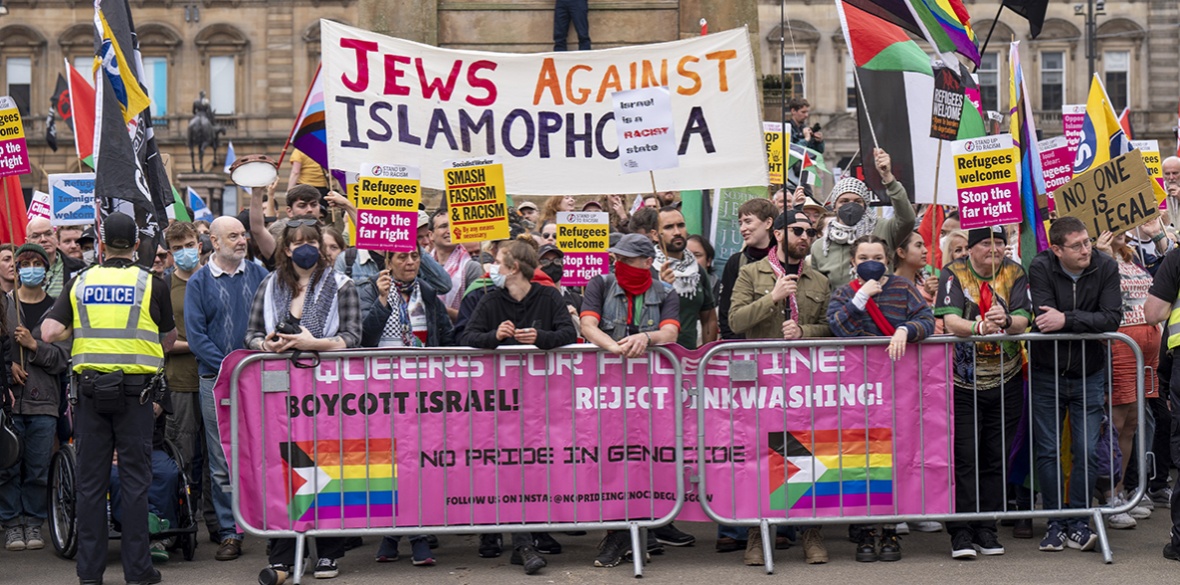
Activists from Stand Up To Racism Scotland gather in Glasgow’s George Square, in a counterprotest to a far-right rally, September 7, 2024
MORE than 5,000 people rallied in Glasgow’s George Square on Saturday in solidarity with the migrants and refugees increasingly targeted by the far right.
The demonstration came together to counter a call by racist grifter Stephen Yaxley-Lennon — known as Tommy Robinson — for an anti-immigration rabble to assemble in the city; Yaxley-Lennon was nowhere to be seen as his fans faced the humiliation of being outnumbered 15 to one.
To the west of the square, the rally organised by Stand Up to Racism (SUTR), backed by the STUC, and attended by thousands of trade unionists and community activists, heard from a host of speakers from trade unions as well as those with first-hand experience facing racism and building solidarity in their communities.
To the east, at the cenotaph, members of the fascist Patriotic Alternative did their best to rouse their mob, with renditions of Rule Britannia and barely audible hate-filled speeches alternating with the launching of abuse and bottles at anti-fascists.
Eventually escorted from the square by Police Scotland, some of their number went on to attack the nearby McChuills, a bar associated with refugee solidarity, resulting in two arrests.
But Police Scotland were criticised for “kettling” anti-fascist Celtic ultras the Green Brigade for several hours, preventing them from joining the SUTR rally.
One witness told the Star: “I don’t even support their club but this is a pointless provocation: the Green Brigade have done nothing to justify this, but they’re used to getting singled out.”
The government can’t cure the lethal consequences of deprivation by increasing deprivation. Eligibility for the payment will be linked to pension credit, but experts say that this will see 1.6 million pensioners who are below the poverty line lose vital financial support during the coldest months. With a majority of 167, the government will comfortably win Tuesday’s vote on the issue. However, it has lost the argument, largely because ministers seem incapable of making a coherent case for their policy.
The risible claim that there would be a “run on the pound” if there were not spending cuts was dismissed in the City. Ministers then said that they want to increase pension credit uptake – currently 880,000 eligible people do not claim it – but many are put off by the 243 questions that need to be answered in the application form. Sir Keir argues that the losses would be offset by rises in the state pension. But that won’t wash with many pensioners who know such increases were coming anyway and have been less than impressed by Labour discarding its social care commitments.
Until recently, Elon Musk was just a wildly successful electric car tycoon and space pioneer. Sure, he was erratic and outspoken, but his global influence was contained and seemingly under control.
But add the ownership of just one media platform, in the form of Twitter – now X – and the maverick has become a mogul, and the baton of the world’s biggest media bully has passed to a new player.
What we can gauge from watching Musk’s stewardship of X is that he’s unlike former media moguls, making him potentially even more dangerous. He operates under his own rules, often beyond the reach of regulators. He has demonstrated he has no regard for those who try to rein him in.
Under the old regime, press barons, from William Randolph Hearst to Rupert Murdoch, at least pretended they were committed to truth-telling journalism. Never mind that they were simultaneously deploying intimidation and bullying to achieve their commercial and political ends.
Musk has no need, or desire, for such pretence because he’s not required to cloak anything he says in even a wafer-thin veil of journalism. Instead, his driving rationale is free speech, which is often code for don’t dare get in my way.
This means we are in new territory, but it doesn’t mean what went before it is irrelevant.
A big bucket of the proverbial
If you want a comprehensive, up-to-date primer on the behaviour of media moguls over the past century-plus, Eric Beecher has just provided it in his book The Men Who Killed the News.
Alongside accounts of people like Hearst in the United States and Lord Northcliffe in the United Kingdom, Beecher quotes the notorious example of what happened to John Major, the UK prime minister between 1990 and 1997, who baulked at following Murdoch’s resistance to strengthening ties with the European Union.
In a conversation between Major and Kelvin MacKenzie, editor of Murdoch’s best-selling English tabloid newspaper, The Sun, the prime minister was bluntly told: “Well John, let me put it this way. I’ve got a large bucket of shit lying on my desk and tomorrow morning I’m going to pour it all over your head.”
MacKenzie might have thought he was speaking truth to power, but in reality he was doing Murdoch’s bidding, and actually using his master’s voice, as Beecher confirms by recounting an anecdote from early in Murdoch’s career in Australia.
In the 1960s, when Murdoch owned The Sunday Times in Perth, he met Lang Hancock (father of Gina Rinehart) to discuss potentially buying some mineral prospects together in Western Australia. The state government was opposed to the planned deal.
Beecher cites Hancock’s biographer, Robert Duffield, who claimed Murdoch asked the mining magnate, “If I can get a certain politician to negotiate, will you sell me a piece of the cake?” Hancock said yes. Later that night, Murdoch called again to say the deal had been done. How, asked an incredulous Hancock. Murdoch replied: “Simple […] I told him: look you can have a headline a day or a bucket of shit every day. What’s it to be?”
Between Murdoch in the 1960s and MacKenzie in the 1990s came Mario Puzo’s The Godfather with Don Corleone, aided by Luca Brasi holding a gun to a rival’s head, saying “either his brains or his signature would be on the contract”.
Former British Prime Minister John Major fell foul of Rupert Murdoch – and paid the price. Lynne Sladky/AP/AAP
Changing the rules of the game
Media moguls use metaphorical bullets. Those relatively few people who do resist them, like Major, get the proverbial poured over their government. Headlines in The Sun following the Conservatives’ win in the 1992 election included: “Pigmy PM”, “Not up to the job” and “1,001 reasons why you are such a plonker John”.
If media moguls since Hearst and Northcliffe have tap-danced between producing journalism and pursuing their commercial and political aims, they have at least done the former, and some of it has been very good.
The leaders of the social media behemoths, by contrast, don’t claim any fourth estate role. If anything, they seem to hold journalism with tongs as far from their face as possible.
They do possess enormous wealth though. Apple, Microsoft, Google and Meta, formerly known as Facebook, are in the top ten companies globally by market capitalisation. By comparison, News Corporation’s market capitalisation now ranks at 1,173 in the world.
Regulating the online environment may be difficult, as Australia discovered this year when it tried, and failed, to stop X hosting footage of the Wakeley Church stabbing attacks. But limiting transnational media platforms can be done, according to Robert Reich, a former Secretary of Labor in Bill Clinton’s government.
Despite some early wins through Australia’s News Media Bargaining Code, big tech companies habitually resist regulation. They have used their substantial influence to stymie it wherever and whenever nation-states have sought to introduce it.
Meta’s founder and chief executive, Mark Zuckerberg, has been known to go rogue, as he demonstrated in February 2021 when he protested against the bargaining code by unilaterally closing Facebook sites that carried news. Generally, though, his strategy has been to deploy standard public relations and lobbying methods.
But his rival Musk uses his social media platform, X, like a wrecking ball.
Musk is just about the first thing the average X user sees in their feed, whether they want to or not. He gives everyone the benefit of his thoughts, not to mention his thought bubbles. He proclaims himself a free-speech absolutist, but most of his pronouncements lean hard to the right, providing little space for alternative views.
Kamala wants to destroy your right to free speech under The Constitution https://t.co/oJN5T8nPLn
Some of his tweets have been inflammatory, such as him linking to an article promoting a conspiracy theory about the savage attack on Paul Pelosi, husband of the former US Speaker, Nancy Pelosi, or his tweet that “Civil war is inevitable” following riots that erupted recently in the UK.
As the BBC reported, the riots occurred after the fatal stabbing of three girls in Southport. “The subsequent unrest in towns and cities across England and in parts of Northern Ireland has been fuelled by misinformation online, the far-right and anti-immigration sentiment.”
Nor does Musk bother with niceties when people disagree with him. Late last year, advertisers considered boycotting X because they believed some of Musk’s posts were anti-Semitic. He told them during a live interview to “Go fuck yourself”.
He has welcomed Donald Trump, the Republican Party’s presidential nominee, back onto X after Trump’s account was frozen over his comments surrounding the January 6 2021 attack on the capitol. Since then both men have floated the idea of governing together if Trump wins a second term.
Is the world better off with tech bros like Musk who demand unlimited freedom and assert their influence brazenly, or old-style media moguls who spin fine-sounding rhetoric about freedom of the press and exert influence under the cover of journalism?
That’s a question for our times that we should probably begin grappling with.
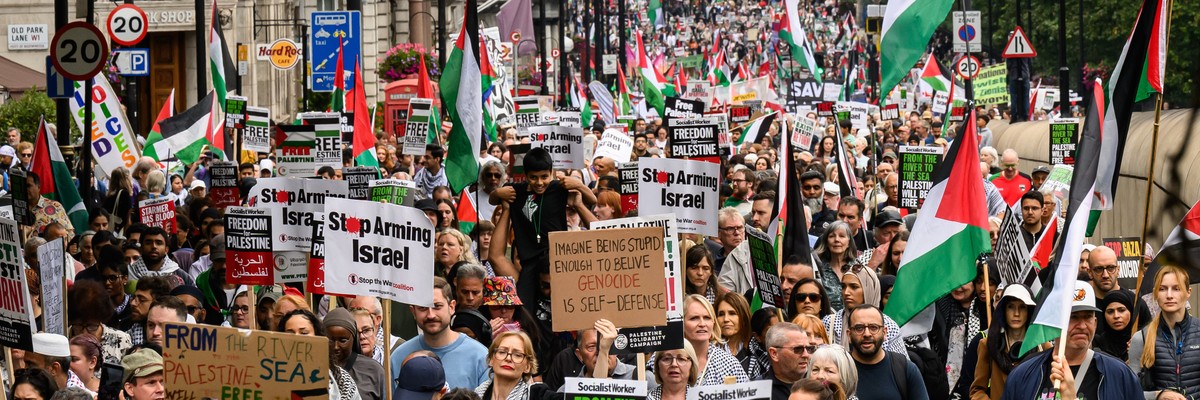
Protestors take part in a National March for Gaza on September 7, 2024 in London, England. (Photo: Leon Neal/Getty Images).
“We demand our government completely stop arming Israel and push for a cease-fire now,” said the Palestine Solidarity Campaign.
Thousands of people gathered at London’s Picadilly Circus Saturday for the city’s latest march against Israel’s bombardment of Gaza and the United Kingdom’s continued support for the Israel Defense Forces, following what organizers called “a major victory in defense of the democratic right to protest.”
The Metropolitan Police on Friday dropped its restrictions on the march, which was the first pro-Palestinian protest since last October to proceed to the Israeli embassy in London.
The police had attempted to stop campaigners from gathering before 2:30 pm, conflicting with plans to begin the rally preceding the march at noon.
“They never provided any convincing explanation or evidence for this delay, and it has caused enormous, unnecessary difficulty to the organization of a large-scale demonstration,” Ben Jamal, who leads the Palestine Solidarity Campaign, one of the groups organizing the march, told Middle East Eye on Friday.
“It has unfortunately been part of a pattern of obstruction, delay, and lack of communication on the part of the Met which we will press them to review and reflect on for future demonstrations,” he added. “For tomorrow, we call on our supporters to turn out in their hundreds of thousands to show we will not be deterred from seeking an end to Israel’s genocide and justice for Palestine!”
Jamal said the police “saw sense and abandoned their unjustified and impractical attempt to delay the start of the march by two hours on Saturday,” allowing the march to begin at 1:30 pm.
During previous marches in which hundreds of thousands of people have demonstrated in solidarity with Palestinians since last October, police have blocked off the area surrounding the Israeli embassy in Kensington, threatening anyone who protested in the vicinity with arrest.
Marching to the embassy, demonstrators made a “renewed call to end the ongoing genocide in Gaza” and demanded an “immediate and full cessation of arms supplies to Israel.”
Earlier this week, the U.K. government announced it was suspending approximately 30 of its 350 arms export licenses for Israel, saying that “there does exist a clear risk that they might be used to commit or facilitate a serious violation of international humanitarian law.”
Human rights advocates, medical professionals working in Gaza, and legal experts have for months demanded that Israel’s top international funders, including the U.S. and U.K., stop providing military aid as Israel has blocked humanitarian aid from reaching Gaza and waged attacks on civilian infrastructure, killing more than 40,000 people.
The country has also been accused of carrying out genocide in a case led by South Africa at the International Court of Justice; the court has ordered Israel to end its blockade on humanitarian aid and to prevent genocide in Gaza.
“We demand our government completely stop arming Israel and push for a cease-fire now,” said the Palestine Solidarity Campaign.
As Londoners marched on Saturday, the Gaza Health Ministry announced that at least 61 Palestinians had been killed by Israeli forces in the last two days. Four people were killed in a strike on Halimah al-Saadiyah school in Jabaliya, where displaced Palestinians have been sheltering, and three were killed in a bombing at Amr Ibn al-As school in Gaza City.
Media outlets in Palestine reported that a baby named Yaqeen al-Astal had become the 37th child in Gaza to die of malnutrition since Israel began its near-total aid blockade.
International outrage also grew on Saturday regarding the killing of a Turkish American activist, Aysenur Ezgi Eygi, in the West Bank on Friday. Local media and eyewitnesses said Eygi had been deliberately shot in the head by Israeli forces at a protest over the expansion of illegal Israeli settlements.
The U.S. called on Israel to investigate the killing on Friday, but Eygi’s family said in a statement that such a probe would not be “adequate.”
“We call on President [Joe] Biden, Vice President [Kamala] Harris, and Secretary of State [Antony] Blinken to order an independent investigation into the unlawful killing of a U.S. citizen and to ensure full accountability for the guilty parties,” said the family.
Stéphane Dujarric, spokesperson for the United Nations, called for “a full investigation of the circumstances” and said that “people should be held accountable. And again, civilians must be protected at all times.”
Prosecuting fossil fuel executives for reckless endangerment could help millions of victims of climate change–related disasters get justice.
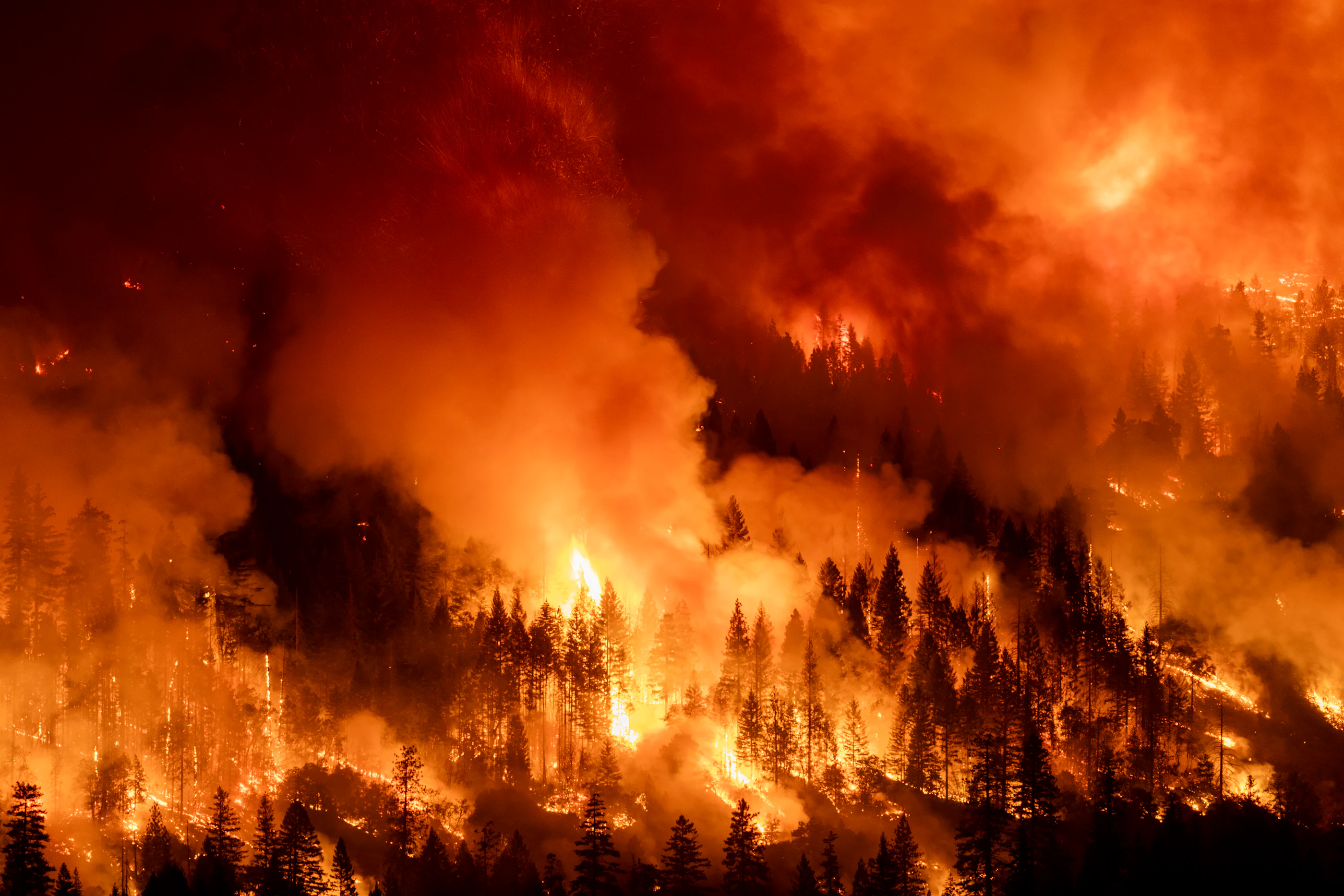
Our world is becoming an increasingly dangerous place. One study recently found that extreme heat killed nearly 50,000 people in Europe last year. A single county in the United States—Maricopa County, in Arizona—reported 645 such deaths. Eye-popping sea surface temperatures are fueling a historically destructive hurricane season this summer, and lethal, record-breaking storms are lashing states from Texas to Vermont. In California, the climate-driven Park fire continues to burn a path of devastation that has left hundreds homeless, including numerous survivors of previous wildfires—people who have now lost their homes multiple times.
These aren’t “natural” disasters. 2023’s summer heat waves, for example, would have been “virtually impossible,” in one research team’s words, without human-caused climate change. That means these disasters are being driven by particular corporate actors—and particularly Big Oil companies. These companies, by generating a substantial portion of the greenhouse gas emissions that have warmed the planet, while simultaneously deceiving the public about the dangers of those emissions, have created a crisis that is putting millions of Americans at risk.
…
Two weeks ago, over 1,000 survivors of climate disasters sent a letter to the U.S. Department of Justice calling on Attorney General Merrick Garland to “investigate the fossil fuel industry for climate-related crimes.” One of the signers, Allen Myers, said that the wildfire that burned down his family’s home “bore the fingerprints of the climate crisis” and stressed that the “fossil fuel industry knows that what they’re doing is dangerous.”
…
Big Oil remains the greatest obstacle to climate action. Earlier this month the United Nations warned that fossil fuel companies are still running “a massive mis- and disinformation campaign” to delay our transition to safer energy sources. In other words, these offenses are ongoing, and the prosecutors and public safety officials charged with protecting us from criminal harm have an obligation to prosecute Big Oil executives for their reckless endangerment of the public.

;)