Rights Groups Slam ‘Malicious Crackdown’ on Migrants and Civil Society in Tunisia

Spread the love

Original article by BRETT WILKINS republished from Common Dreams under Creative Commons (CC BY-NC-ND 3.0).

Lawyers shout slogans against Tunisian President Kais Saied during a May 16, 2024 protest in Tunis.
 (Photo: Fethi Belaid/AFP via Getty Images)

“The clampdown on migration-related work at the same time as the increasing arrest of government critics and journalists sends a chilling message,” said one campaigner.

Human rights defenders on Friday decried what Amnesty International called “an unprecedented repressive clampdown” by Tunisia’s increasingly authoritarian government on migrants, their civil society advocates, and journalists over the past two weeks.

Hundreds of Tunisian attorneys led a strike in the capital Tunis on Thursday to protest rising arrests of lawyers, one of whom, Mahdi Zagrouba, said he was tortured during interrogation—an allegation denied by Tunisian officials. Demonstrators chanted “No fear, no terror! Power belongs to the people!” as they marched on the Palace of Justice.

Sub-Saharan African migrants—recently described by Tunisian President Kais Saied as “hordes of illegal immigrants” who bring “violence, crime, and unacceptable practices” to Tunisia and threaten its “Arab and Islamic” character—have been particularly targeted, as have those who help them.

“On May 11, security officers stormed the Tunisian Bar Association’s headquarters during a live television broadcast, arresting a media commentator and lawyer, Sonia Dahmani, for sarcastic comments made on May 7 questioning the claim that Black African migrants were seeking to settle in Tunisia,” Human Rights Watch said Friday.

“Based on media reports, Dahmani’s arrest and subsequent detention was based on Decree-Law 54 on cybercrime, which imposes heavy prison sentences for spreading ‘fake news’ and ‘rumors’ online and in the media, after she refused to respond to a summons for questioning,” the group added.

Other recent arrestees include Saadia Mosbah, a Black Tunisian woman who heads the anti-racism group Mnemty (My Dream); and journalists Mourad Zeghidi and Borhen Bsaies

“The clampdown on migration-related work at the same time as the increasing arrest of government critics and journalists sends a chilling message that anyone who doesn’t fall in line may end up in the authorities’ crosshairs,” Lama Fakih, Middle East and North Africa director at Human Rights Watch, said in a statement. “By targeting these civil society groups, Tunisian authorities jeopardize the vital support they provide migrants, refugees, and asylum-seekers living in extremely vulnerable situations.”

According to Amnesty International:

Tunisian authorities have since May 3 arrested, summoned, and investigated the heads, former staff, or members of at least 12 organizations over unclear accusations including “financial crimes” for providing aid to migrants, including a Tunisian organization that works in partnership with the [United Nations] Refugee Agency, UNHCR, on supporting asylum-seekers through the refugee status determination process in the country. They have also arrested at least two journalists and referred them to trial for their independent reporting and comments in the media.

In parallel, security forces have escalated their collective unlawful deportations of refugees and migrants, as well as multiple forced evictions and have arrested and convicted landlords for renting apartments to migrants without permits.

“Tunisia’s authorities have stepped up their malicious crackdown against civil society organizations working on migrants and refugee rights using misleading claims about their work and harassing and prosecuting NGO workers, lawyers, and journalists,” said Heba Morayef, Amnesty’s regional director for Middle East and North Africa.

“A smear campaign online and in the media, supported by the Tunisian president himself, has put refugees and migrants in the country at risk,” she continued. “It also undermines the work of civil society groups and sends a chilling message to all critical voices.”

“Tunisia’s authorities must immediately end this vicious campaign and halt all reprisals against NGO workers providing essential support, including shelter, to migrants and refugees,” Morayef added. “The European Union should be urgently reviewing its cooperation agreements with Tunisia to ensure that it is not complicit in human rights violations against migrants and refugees nor in the clampdown on media, lawyers, migrants, and activists.”

Last July, the E.U. and Tunisia signed a memorandum of understanding that included up to €1 billion ($1.09 billion) in funding for the North African nation. Around 10% of that aid is meant to be spent on stopping migrants from reaching Europe.

“The European Union should be urgently reviewing its cooperation agreements with Tunisia to ensure that it is not complicit in human rights violations.”

Romdhane Ben Amor of the Tunisian League for the Defense of Human Rights toldAl Jazeera Friday that “the regime’s machinery is operating very efficiently, meaning it devours anyone who has a critical perspective on the situation… lawyers, journalists, bloggers, citizens, or associations.”

“So, of course, Kais Saied from now until the elections has a long list of individuals, associations, parties, and journalists whom he will gradually criminalize to always maintain the sympathy of his electoral base,” Ben Amor added, referring to this fall’s expected presidential contest.

Over the past three years, Saied—who was initially supported by both leftists and Islamists when elected on an anti-corruption platform in 2019—has dissolved Parliament and suspended most of Tunisia’s 2014 Constitution, allowing him to rule by decree. He has consolidated power by pushing through a new constitution, eroding the judiciary’s independence, repressing civil liberties, undermining workers’ rights, weakening democratic institutions, and other methods.

“Tunisian authorities must urgently reverse this significant backsliding on human rights,” Morayef asserted. “They must cease this judicial harassment and release all those detained solely for the exercise of their freedom of expression and freedom of association. People should have the freedom to express themselves without fear of reprisal.”

Original article by BRETT WILKINS republished from Common Dreams under Creative Commons (CC BY-NC-ND 3.0).

Continue ReadingRights Groups Slam ‘Malicious Crackdown’ on Migrants and Civil Society in Tunisia

DWP to hire ‘external agents’ in crackdown on benefit fraud that government’s own data shows doesn’t exist

Spread the love

https://leftfootforward.org/2024/05/dwp-to-hire-external-agents-in-crackdown-on-benefit-fraud-that-governments-own-data-shows-doesnt-exist/

‘If the government is concerned about fraud, it would be serious about the £15.2bn that multinational companies hide from the UK via tax havens.’

As the government continues to crack down on so-called benefit fraud and reform the welfare system with stricter measures, newly released statistics by the Department for Work and Pensions (DWP) show that there were almost no recorded cases of disability fraud in the financial year ending 2024.

Disability Living Allowance fraud was just 0.1 percent, rounded off to £0m. Personal independence payment (PIP) cheating was found to be 0 percent in the same period, the data showed.

PIP overpayments represented 0.4 percent, equating to around £90m lost in a year, marking a significant decrease from the previous year, when such overpayments stood 1.1 percent (£200m). The overpayments were said to be mainly due to errors made by the department when allocating award levels at the assessment stage.

In response to the DWP’s figures, Mikey Erhardt, campaigner at Disability Rights UK described PIP fraud as a ‘non-issue.’

“New data shows what we, as disabled people, have known for years – PIP fraud is a non-issue. PIP fraud is now the lowest on record – despite the government placing fraud front and centre of their latest public announcements,” said Erhardt.

https://leftfootforward.org/2024/05/dwp-to-hire-external-agents-in-crackdown-on-benefit-fraud-that-governments-own-data-shows-doesnt-exist/

Continue ReadingDWP to hire ‘external agents’ in crackdown on benefit fraud that government’s own data shows doesn’t exist

Suella Braverman blanked by students at Gaza protest camp in excruciating video

Spread the love

https://leftfootforward.org/2024/05/suella-braverman-blanked-by-students-at-gaza-protest-camp-in-excruciating-video/

Suella Braverman has been ridiculed after an excruciating attempt to engage with students at a protest camp in support of Palestine outside the University of Cambridge. 

Visiting the camp on Thursday with GB News presenter Patrick Christys, the Tory MP was met with a wall of silence as she and the presenter attempted to talk with activists. 

The former Home Secretary tried a number of times to ask questions, but was met on all occasions with no response during the humiliating two and half minute encounter.

She introduced herself with, “Hi, I’m Suella I’m keen to find out your views and what you’re protesting about.” But protesters didn’t give them the response they were after, instead they just stood and stared back. 

Braverman persisted asking questions such as, “I’m interested in why you’re covering your faces. Is it a Covid or a health measure?” and “I’m really keen to hear what your message is to Israel.”

https://leftfootforward.org/2024/05/suella-braverman-blanked-by-students-at-gaza-protest-camp-in-excruciating-video/

Continue ReadingSuella Braverman blanked by students at Gaza protest camp in excruciating video

Rishi Sunak and his wife climb up the list of UK’s wealthiest people while millions struggle

Spread the love

https://leftfootforward.org/2024/05/rishi-sunak-and-his-wife-climb-up-the-list-of-uks-wealthiest-people-while-millions-struggle/

The Prime Minister and his wife are already the richest people to ever live in No.10 Downing Street.

Prime Minister Rishi Sunak and his wife have seen their wealth increase even further as they rose up the latest rankings of the Sunday Times Rich List.

The Prime Minister and his wife who are already the richest people to ever live in No.10 Downing Street, saw their net worth increase from £529m in 2023 to £651m. As a result, they moved from 275th place in the Sunday Times Rich List to 245th.

Sunak and Akshatha Murty have seen their fortunes rise at a time when millions across the country continue to struggle with the cost of living crisis, with record rises in homelessness and with former Prime Minister Gordon Brown also warning that the country is set to record its worst child poverty figures in living memory.

At present, a total of 4.3 million children are living in poverty, up from 3.6 million in 2010/2011. That is one in three children in the UK living in poverty.

https://leftfootforward.org/2024/05/rishi-sunak-and-his-wife-climb-up-the-list-of-uks-wealthiest-people-while-millions-struggle/

Continue ReadingRishi Sunak and his wife climb up the list of UK’s wealthiest people while millions struggle

BP and Shell ‘Shaped’ UK Carbon Tax Proposals, Private Emails Show

Spread the love

Original article by Adam Bychawski republished from DeSmog

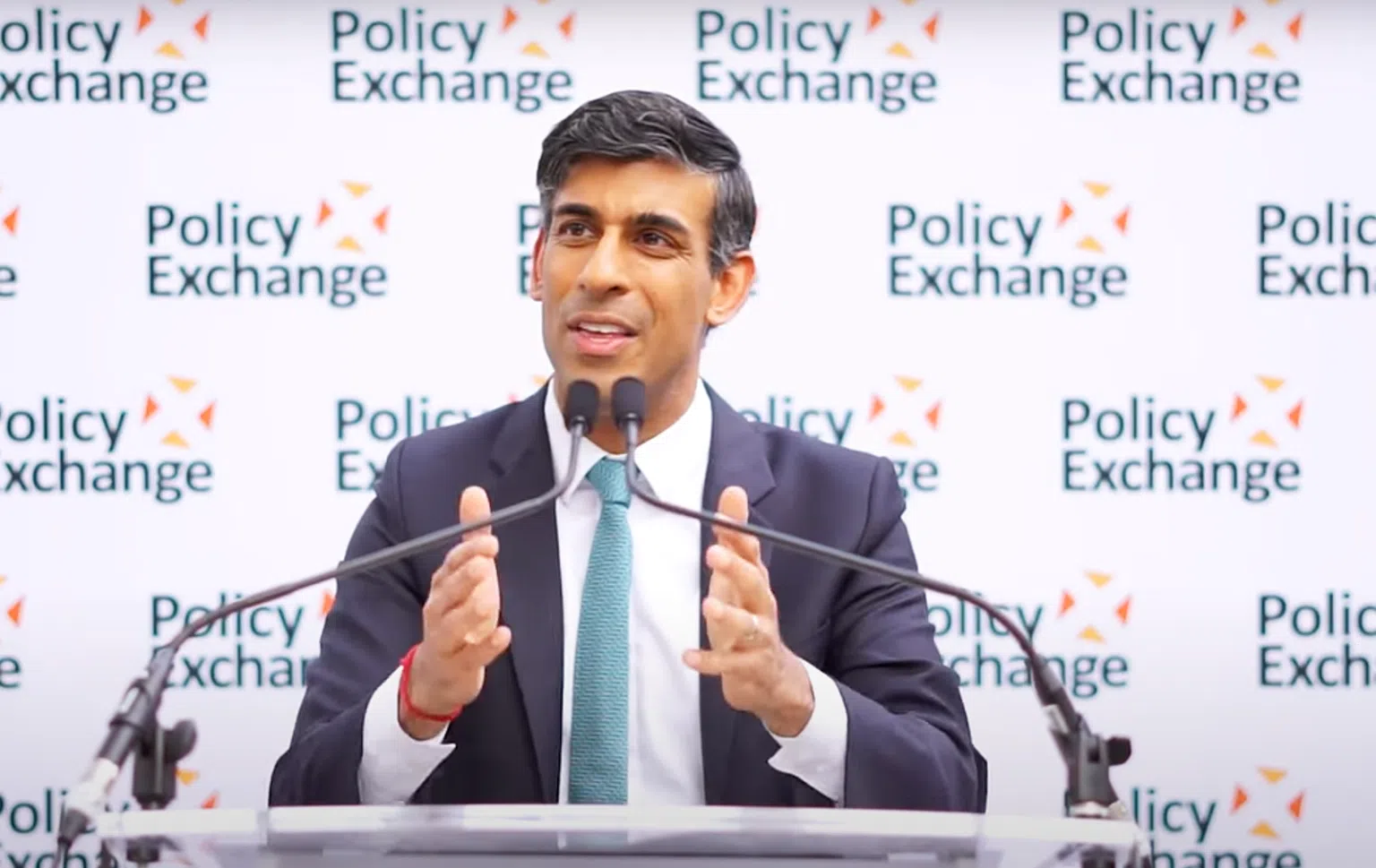
Prime Minister Rishi Sunak at the 2023 Policy Exchange summer reception. Credit: Policy Exchange / YouTube

Internal documents expose how oil and gas majors were given the chance to influence a report by the Policy Exchange think tank.

Fossil fuel giants BP and Shell were given “ample opportunity” to privately influence proposals for taxing oil and gas companies that were later backed by the government, new documents reveal.

Internal BP emails show that its UK executives were reassured by a controversial oil industry group that they could “shape [the] internal thinking” of a 2018 report on carbon taxes produced by the right-wing think tank Policy Exchange.

The emails were among hundreds of documents released by a powerful committee of U.S. politicians last week as part of its three year-long investigation into how the oil industry has worked to undermine efforts to tackle climate change.

Policy Exchange has been credited by Prime Minister Rishi Sunak for helping to draft laws that have cracked down on climate protests, and has in the past received money from the oil and gas major ExxonMobil. 

The think tank was commissioned to produce a report on carbon pricing by the Climate Leadership Council (CLC), a controversial U.S. non-profit whose “founding members” include BP, Shell and TotalEnergies, car manufacturers Ford and General Motors as well as multinationals like Unilever and Microsoft. 

The think tank’s recommendations largely mirrored the CLC’s proposal for a rising tax on carbon emissions, a controversial idea that has been accused of being a favoured policy of the fossil fuel industry. The report also proposed that several UK environmental regulations be phased out to reduce the “burden on business.”

The UK has taxed carbon emissions since 2005, first under an emissions trading scheme created by the European Union. 

The scheme works by setting a maximum overall cap on the amount of carbon emissions that the energy and manufacturing industry can emit. Polluters are given allowances that allow them to emit only a set quota of carbon; if they exceed their allowances they can be fined. To avoid being fined, companies can buy additional allowances from other companies who have excess allowances because their emissions are lower than their quota. 

Every year, the EU reduces the overall cap on emissions, meaning that the price of allowances – also known as a carbon price – rises, which the bloc says acts as an incentive to reduce emissions.

However, according to Bill McGuire, professor emeritus of geophysical and climate hazards at UCL, the policy is popular among oil and gas companies.

“Paying a carbon tax is preferable to stopping all exploration, keeping fossil fuels in the ground and changing business models to embrace renewables – which is what is required – and they have obviously come to the conclusion that, given their colossal profits, this is something they can easily handle,” he said.

After the UK left the EU in 2016, the UK government began devising its own replacement trading emissions scheme, which the Policy Exchange report sought to influence. 

The report was cited last December in a policy paper for the government’s new, long-term emissions trading scheme, used to justify the claim that “Carbon pricing is an effective, market-based way of allowing businesses to make economically rational decarbonisation investment decisions.”

Policy Exchange acknowledged at the time that the report was financially supported by the CLC, which claimed to be a “strategic partner”. However, the think tank said it was “not intended to represent the views of the council or of its founding members on UK or EU matters.”

Internal BP emails reveal that the British oil company’s bosses were initially alarmed that the CLC had commissioned the report and sought a meeting with the council’s founder.

According to the emails, BP was able to use this meeting to lay out “various potential policy, political and commercial concerns” with the content of the report, given the firm’s “unique position in the UK and the timing.”

After the meeting, Paul Jefferiss, then BP’s head of group policy, reassured Andrew Mennear, BP’s director for UK government affairs, that “I don’t think there is immediate cause for concern.”

Jefferiss noted that, “There will be ample opportunity for UK-focused CLC members (BP, Shell, Unilever) to input perspectives and shape the internal thinking” of the report before it is published. 

BP also appears to have been offered the chance to collaborate with the council on a communications strategy around its release.

Jolyon Maugham, director of the Good Law Project, said: “While the BBC launders Policy Exchange as ‘centre right’, and the charities so-called regulator sits on its hands, the revealed reality is that Policy Exchange is acting like a front for the oil and gas industry.”

Policy Exchange, the CLC, and BP have been approached for comment. 

‘Another Form of Greenwashing’

Climate experts are divided over whether the policy of taxing carbon is effective, and past scandals have led to accusations that it is being used as a smokescreen by the fossil fuel industry.

McGuire believes that a carbon tax is “ultimately just another form of greenwashing and a sop to the [oil] sector’s critics”.

However, other experts, like Adam Bell, director of policy at consultancy firm Stonehaven and a former head of strategy at the Department for Business, Energy and Industrial Strategy, believe that carbon taxing can be effective.

“Carbon pricing can only be part of a policy approach to tackling climate change, it can’t be the solution by itself. Fossil fuel companies will survive while there is demand for what they produce. You’ve got to eliminate that demand if you want to eliminate them”.

To do that, you should “focus on getting renewables built and heat systems and transportation electrified,” he said.

The CLC has led calls for a federal carbon price in the U.S. and has attracted criticism in the past for attaching conditions to its proposals that would be favourable to the fossil fuel industry. It has previously proposed the repealing of federal emissions regulations, the Environmental Protection Agency (EPA) losing its authority to regulate carbon emissions, and legal immunity for companies from any prosecution over their role in climate change.

The CLC dropped the latter provision from its proposal in 2019 because it was “distracting focus away from the many economic and environmental upsides of the plan”, but critics have questioned whether it remains privately committed to the idea.

In 2021, the CLC “suspended” Exxon from its list of founding members after one of its lobbyists was caught on camera saying that the oil company had only pledged to support a carbon tax because it was unlikely to ever become law.

Policy Exchange’s report likewise proposed that some environmental regulations “be phased out thus reducing the regulatory burden on business” after the introduction of a carbon tax, though it claimed that “this will in no way reduce environmental protection”.

In an afterword to the report, CLC’s founder Ted Halstead, and Martin Feldstein and George P. Shultz, two economists who served under Ronald Reagan’s administration, wrote that the plan “will help free businesses from unnecessary regulation”.

Steve Tooze, a spokesperson for Extinction Rebellion said, “These emails are the smoking gun that blows fatal holes in Policy Exchange’s already-tattered and frankly laughable claims to be an independent research ‘think tank’”.

Policy Exchange

At the 2022 Conservative Party conference, Jacob Rees-Mogg, at the time serving as business, energy and industrial strategy secretary, said: “I believe that where Policy Exchange leads, governments have often followed.”

The think tank, which has charity status, chooses not to disclose its donors and was given the lowest possible rank by openDemocracy’s Who Funds You? project, which rates the funding transparency of think tanks.

OpenDemocracy previously uncovered that Exxon donated $30,000 to Policy Exchange’s American fundraising arm in 2017, the same year its UK carbon pricing report was being drafted.

The think tank would go on to author a report in 2019 that proposed tough new policing laws to crackdown on climate protestors. Rishi Sunak later credited Policy Exchange for helping the government draft what would become the Police, Crime, Sentencing and Courts Act, which explicitly targeted groups like Extinction Rebellion.

Sunak is an alumni of Policy Exchange, having worked there before his 2015 election to Parliament, as is Claire Coutinho, his energy security and net zero secretary. The think tank has significant access to ministers, having held more than a hundred meetings with the government since 2012.

DeSmog revealed in August 2023 that Policy Exchange engaged in a high-level influencing campaign over the UK’s North Sea oil and gas policies, and echoed the fossil fuel lobby by emphasising the importance of hydrogen power and carbon capture utilisation and storage (CCUS) to the green transition.

The evidence unearthed by U.S. politicians has further demonstrated how fossil fuel giants have been downplaying the climate crisis and lobbying against green laws, despite being provided with academic research showing the scale of the problem.

BP was warned by Princeton University researchers in 2016 that climate change accelerated in part by new global supplies of shale gas could lead to catastrophic events such as “mass extinctions and unprecedented famine.” 

Yet, despite acknowledging internally the concern that “gas doesn’t support climate goals,” the firm embarked on a marketing campaign to “advance and protect the role of gas – and BP – in the energy transition.”

Original article by Adam Bychawski republished from DeSmog

Rishi Sunak on stopping Rosebank says that any chancellor can stop his huge 91% subsidy to build Rosebank, that Keir Starmer is as bad as him for sucking up to Murdoch and other plutocrats and that we (the plebs) need to get organised to elect MPs that will stop Rosebank.
Image of InBedWithBigOil by Not Here To Be Liked + Hex Prints from Just Stop Oil's You May Find Yourself... art auction. Featuring Rishi Sunak, Fossil Fuels and Rupert Murdoch.
Image of InBedWithBigOil by Not Here To Be Liked + Hex Prints from Just Stop Oil’s You May Find Yourself… art auction. Featuring Rishi Sunak, Fossil Fuels and Rupert Murdoch.
Continue ReadingBP and Shell ‘Shaped’ UK Carbon Tax Proposals, Private Emails Show