77% of Top Climate Scientists Think 2.5°C of Warming Is Coming—And They’re Horrified

Spread the love

Original article by OLIVIA ROSANE republished from Common Dreams under Creative Commons (CC BY-NC-ND 3.0).

Scientists engage in civil disobedience on the steps of the Congress of Deputies in Madrid, Spain on April 6, 2022. 
(Photo: Scientist Rebellion)

“I expect a semi-dystopian future with substantial pain and suffering for the people of the Global South,” one expert said.

Nearly 80% of top-level climate scientists expect that global temperatures will rise by at least 2.5°C by 2100, while only 6% thought the world would succeed in limiting global heating to 1.5°C above preindustrial levels, a survey published Wednesday by The Guardian revealed.

Nearly three-quarters blamed world leaders’ insufficient action on a lack of political will, while 60% said that corporate interests such as fossil fuel companies were interfering with progress.

“I expect a semi-dystopian future with substantial pain and suffering for the people of the Global South,” one South African scientist told The Guardian. “The world’s response to date is reprehensible—we live in an age of fools.”

“What blew me away was the level of personal anguish among the experts who have dedicated their lives to climate research.”

The survey was conducted by The Guardian‘s Damian Carrington, who reached out to every expert who had served as a senior author on an Intergovernmental Panel on Climate Change (IPCC) report since 2018. Out of 843 scientists whose contact information was available, 383 responded.

He then asked them how high they thought temperatures would rise by 2100: 77% predicted at least 2.5°C and nearly half predicted 3°C or more.

“What blew me away was the level of personal anguish among the experts who have dedicated their lives to climate research,” Carrington wrote on social media. “Many used words like hopeless, broken, infuriated, scared, overwhelmed.”

The 1.5°C target was agreed to as the most ambitious goal of the Paris agreement of 2015, in which world leaders pledged to keep warming to “well below” 2°C. However, policies currently in place would put the world on track for 3°C, and unconditional commitments under the Paris agreement for 2.9°C.

The survey comes on the heels of the hottest year on record, which already saw a record-breaking Canadian wildfire season as well as extreme, widespread heatwaves and deadly floods. The first four months of 2024 have also been the hottest of their respective months on record, and the year has already seen the fourth global bleaching event for coral reefs.

“They can say they don’t care, but they can’t say they didn’t know.”

“I think we are headed for major societal disruption within the next five years,” Gretta Pecl of the University of Tasmania told The Guardian. “[Authorities] will be overwhelmed by extreme event after extreme event, food production will be disrupted. I could not feel greater despair over the future.”

Scientists said that governments and companies that profit from the burning of fossil fuels had prevented action. Many also blamed global inequality and the refusal of the wealthy world to step up, both in terms of reducing their own emissions and helping climate vulnerable nations adapt.

“The tacit calculus of decision-makers, particularly in the Anglosphere—U.S., Canada, U.K., Australia—but also Russia and the major fossil fuel producers in the Middle East, is driving us into a world in which the vulnerable will suffer, while the well-heeled will hope to stay safe above the waterline,” Stephen Humphreys at the London School of Economics said.

Despite their grim predictions, many of the scientists remained committed to researching and speaking out.

“We keep doing it because we have to do it, so [the powerful] cannot say that they didn’t know,” Ruth Cerezo-Mota, who works on climate modeling at the National Autonomous University of Mexico, told The Guardian. “We know what we’re talking about. They can say they don’t care, but they can’t say they didn’t know.”

Others found hope in the climate activism and awareness of younger generations, and in the finding that each extra tenth of a degree of warming avoided protects 140 million people from extreme temperatures.

“I regularly face moments of despair and guilt of not managing to make things change more rapidly, and these feelings have become even stronger since I became a father,” said Henri Waisman of France’s Institute for Sustainable Development and International Relations. “But, in these moments, two things help me: remembering how much progress has happened since I started to work on the topic in 2005 and that every tenth of a degree matters a lot—this means it is still useful to continue the fight.”

Peter Cox of the University of Exeter added: “Climate change will not suddenly become dangerous at 1.5°C—it already is. And it will not be ‘game over’ if we pass 2°C, which we might well do.”

“I’m not despairing, I’m not giving up. I’m pissed off and more determined to fight for a better world.”

Many of the scientists who still saw a hope of keeping 1.5°C alive pinned it on the speeding rollout and falling prices of climate-friendly technologies like renewable energy and electric vehicles. Also on Wednesday, energy think thank Ember reported that 30% of global electricity came from renewables in 2023 and predicted that the year would be the “pivot” after which power sector emissions would start to fall. Experts also said that abandoning fossil fuels has many side benefits such as cleaner air and better public health. Though even the more optimistic scientists were wary about the unpredictable nature of the climate crisis.

“I am convinced that we have all the solutions needed for a 1.5°C path and that we will implement them in the coming 20 years,” Henry Neufeldt of the United Nations’ Copenhagen Climate Center told The Guardian. “But I fear that our actions might come too late and we cross one or several tipping points.”

Several scientists gave recommendations for things that people could do to move the needle on climate. Humphreys suggested “civil disobedience” while one French scientist said people should “fight for a fairer world.”

“All of humanity needs to come together and cooperate—this is a monumental opportunity to put differences aside and work together,” Louis Verchot, based at the International Center for Tropical Agriculture in Colombia, told The Guardian. “Unfortunately climate change has become a political wedge issue… I wonder how deep the crisis needs to become before we all start rowing in the same direction.”

The publication of The Guardian‘s survey prompted other climate scientists to share their thoughts.

“As many of the scientists pointed out, the uncertainty in future temperature change is not a physical science question: It is a question of the decisions people choose to make,” Texas Tech University climate scientist Katharine Hayhoe wrote on social media. “We are not experts in that; And we have little reason to feel positive about those, since we have been warning of the risks for decades.”

Aaron Thierry, a graduate researcher at the Cardiff School of Social Sciences, pointed out that The Guardian‘s results were consistent with other surveys of scientific opinion, such as one published in Nature in the lead-up to COP26, in which 60% of IPCC scientists said they expected 3°C of warming or more by 2100.

James Dyke of the University of Exeter’s Global Systems Institute argued that there was room for scientists to share more negative thoughts without succumbing to or encouraging defeatism.

“I hear the argument that we must temper these messages because we don’t want people to despair and give up. But I’m not despairing, I’m not giving up. I’m pissed off and more determined to fight for a better world,” Dyke said on social media.

NASA climate scientist Peter Kalmus shared the article with a plea to “please start listening.”

“Elected and corporate ‘leaders’ continue to prioritize their personal power and wealth at the cost of irreversible loss of essentially everything, even as this irreversible loss comes more and more into focus. I see this as literally a form of insanity,” Kalmus wrote, adding that “capitalism tends to elevate the worst among us into the seats of power.”

However, he took issue with the idea that a future of unchecked climate change would be only “semi-dystopian.”

“We’re also at risk of losing any gradual bending toward progress, and equity, and compassion, and love,” Kalmus said. “All social and cultural struggles must recognize this deep intersection with the climate struggle.”

Original article by OLIVIA ROSANE republished from Common Dreams under Creative Commons (CC BY-NC-ND 3.0).

[dizzy: It is generally accepted by knowledgeable parties that 2.5C is “locked-in” in the sense that emissions already made will cause it. We need immediate reduction in climate heating gases by abandoning fossil fuels. Politicians worldwide are neglecting this necessary action and are indeed creating a worse situation by promoting fossil fuels through widespread and generous subsidies.]

14/5/24 I’m trying to verify the “locked-in” claim that I make above. It’s not particularly supported by this report.

14/5/24 8.30 pm BST

If greenhouse gas emissions stopped but greenhouse gases stayed at a fixed level then there’d be another ~0.5-0.6°C of slow warming in the pipeline, but in reality CO₂ would fall due to natural carbon sinks once emissions stop and largely cancel out this warming.

Aerosols mask ~0.6°C of warming, but even in the unlikely scenario of their sudden elimination models show only ~0.2-0.4°C of extra warming by 2100 as a result. A gradual partial phase-out of aerosol emissions could limit this unmasking effect to ~0.1-0.2°C spread over time, and cuts in non-CO₂ greenhouse gases like methanes could entirely counteract aerosol removal, minimising its impact.

Overall this likely reduces “locked-in” warming from the climate lag and aerosols to a negligible amount on top of the current (2021) warming of ~1.2°C – in contrast to the extra ~1.4°C sometimes claimed – and any short-term warming from aerosol reductions can be reduced and compensated for by reducing other short-lived greenhouse gases like methane.

All of this is quite academic of course – politicians do not intend to address global warming and instead intend to continue trashing the planet.

Continue Reading77% of Top Climate Scientists Think 2.5°C of Warming Is Coming—And They’re Horrified

BP Was Warned Gas-Driven Climate Change Could Cause ‘Unprecedented Famine’

Spread the love

Original article by Geoff Dembicki republished from DeSmog.

Yet the oil and gas major led a campaign to present gas as a climate solution, new ‘confidential’ documents released by a U.S. Congressional investigation reveal.

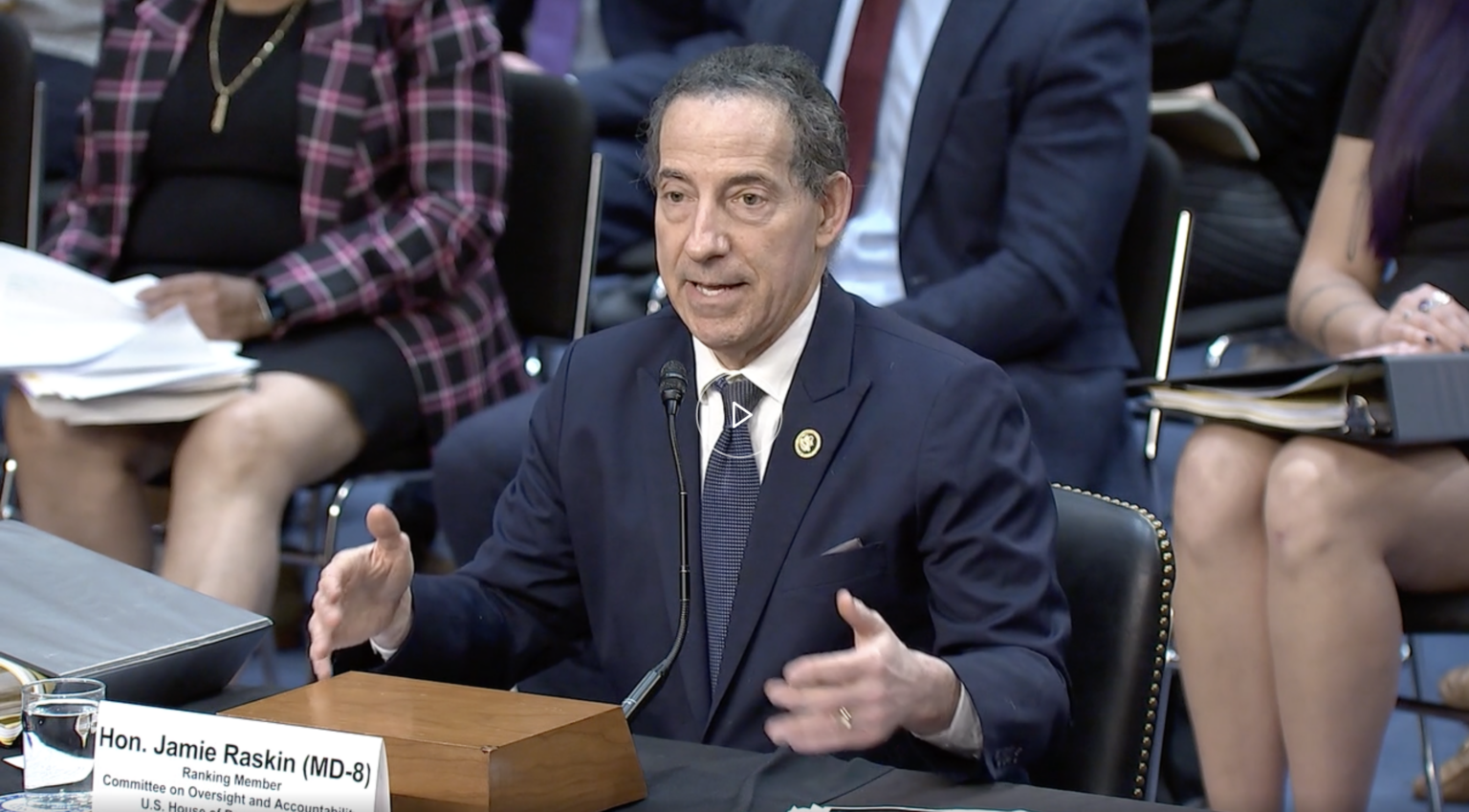
Democrat Jamie Raskin appeared before a Senate hearing examining Big Oil’s efforts to avoid climate accountability. Credit: US Senate

BP was warned by Princeton University researchers in 2016 that climate change accelerated in part by new global supplies of shale gas could lead to catastrophic events such as “mass extinctions and unprecedented famine.” 

Yet despite acknowledging internally the concern that “gas doesn’t support climate goals,” the UK-headquartered oil and gas major embarked on a marketing campaign to “advance and protect the role of gas—and BP—in the energy transition.” 

That’s been accompanied by large new investments in gas, including a recent agreement to take nearly two million tonnes per year of liquefied natural gas shipments from a $5.1 billion export facility called Woodfibre LNG proposed for the west coast of British Columbia. 

Revelations concerning BP’s private knowledge about the dangers of gas expansion were contained in a trove of documents—some labelled “confidential”—released by Democrats in early May as part of a joint House and Senate investigation into the oil and gas industry’s climate obstruction. 

“The fossil fuel industry evolved from denying climate science to spreading disinformation and perpetuating doublespeak about the safety of natural gas and its commitment to reducing greenhouse gas emissions,” the Joint Staff Report argues.  

BP didn’t respond to questions from DeSmog related to the report. 

Documents contained in the report, which were obtained via federal subpoenas, suggest that the highest levels of BP leadership have been privately made aware of potential climate disruption caused by natural gas. Comments on a draft outline for a 2017 speech by BP’s then-CEO Robert Dudley articulate that fear explicitly.

“You don’t say anything about concerns about so-called lock-in, the idea that, once built, gas locks in future emissions above a level consistent with 2 degrees, at least without CCUS,” the comments read, referring to expensive and frequently underperforming carbon capture utilization and storage technologies. 

A confidential 2018 presentation from BP notes that while gas may release less emissions when burned than coal, those climate gains can be erased by leakages of the “potent” greenhouse gas methane. “Methane (CH₄) accounts for 20% of GHGs [greenhouse gas emissions],” a slide from the presentation notes. “Oil and gas accounts for nearly a quarter of this 20%.”

The presentation acknowledges the concern, widely reported in the media by that point, that “gas doesn’t support climate goals when you take methane emissions into account.” BP appears to have seen such worries as an “opportunity” for the company, however. 

The company intended to launch a communications campaign that could “position BP as [a] strong gas player” in part by “demonstrating leadership on methane challenge,” the slide reads.

Yet the oil and gas producer had been warned that a failure to limit global temperature rise to below 2 degrees could be catastrophic for humankind and the planet. During a 2016 town hall event for BP in Houston, Princeton researchers noted “innovation in the energy sector has been dramatically affected by the arrival of shale gas and oil and low energy prices.” 

One result, they noted, is that “fossil fuels are so abundant that, for even a weak climate target, attractive fossil fuel will be left in the ground.” But if the world fails to limit warming below 2 degrees, “the climate monsters begin to come into the room,” they noted. 

As warming approaches 3 degrees, their presentation explained, “we expect a rogue’s gallery, from the loss of all of our coastal cities because of >10 m of sea level rise, to cessation of the ocean’s circulation.”

Yet the company continues to publicly portray the fossil fuel as a climate solution. “As the world seeks secure, affordable and lower carbon energy, global demand for LNG is expected to continue to grow,” a BP executive said last year upon the company signing its latest off-take agreement with Woodfibre LNG in Canada. 

This is part of a years-long global campaign to spread “disinformation” about the role of gas “as a bridge fuel to a fossil-free future,” the Congressional report argues. “It is long past time to hold Big Oil accountable for its deception campaign and to take action to undo the harms it has perpetrated.”

Original article by Geoff Dembicki republished from DeSmog.

Continue ReadingBP Was Warned Gas-Driven Climate Change Could Cause ‘Unprecedented Famine’

Canceled Canadian CCS Project Deemed ‘Not Economically Feasible’

Spread the love

Original article by Taylor Noakes republished from DeSmog.

https://www.desmog.com/2024/05/06/capital-power-generation-genesee-power-plant-canceled-canadian-ccs-project-not-economically-feasible/

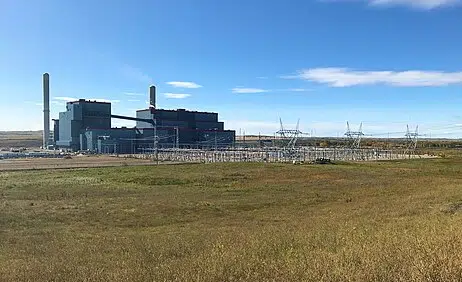
Capital Power Generation pulled the plug on a $2.4 billion carbon capture and storage project at the Genesee Generating Station. Credit: Wikimedia Commons (CC BY-NC-ND 2.0)

Repeal accompanies a new report that confirms existing carbon capture projects continue to underperform.

Capital Power Generation has canceled a $2.4 billion carbon capture and storage (CCS) project at their Genesee Generating Station, claiming it is “technically viable but not economically feasible.”

The project aimed to capture and sequester up to 3 million tons of carbon dioxide emissions from the Genesee Power Plant, located southwest of Edmonton, Alberta, a plant that’s in the process of being converted from coal to natural gas.

Julia Levin, associate director of National Climate with Environmental Defence, characterized the cancellation as yet another failure for carbon capture.

“This decision is just the latest failure in carbon capture’s terrible track record,” Levin said in a statement. “It should serve as a lesson for governments on how reckless it is to be using taxpayer dollars to subsidize these projects.”

She indicated that the project had already received $5 million from the Government of Alberta, and was further eligible for additional tax breaks from both the federal and provincial governments.

“Carbon capture has not been successfully used in the power sector,” said Levin. 

“Most projects never make it off the ground,” she added. “The few that do, like the Boundary Dam coal plant, capture a fraction of the promised rate.” Levin also noted that equipping power plants with carbon capture makes fossil fuel-generated power even more expensive, while the cost of renewable energy has plummeted.

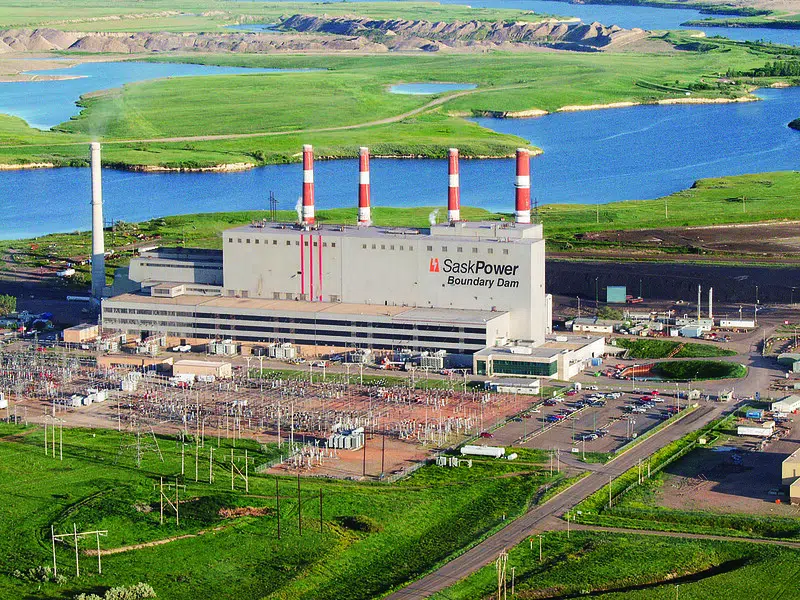
The Boundary Dam carbon capture and storage facility in Saskatchewan never met the 90 percent capture rate originally promised. Credit: SaskPower/Flickr

The Institute for Energy Economics and Financial Analysis (IEEFA) recently released new research that shows the failures of carbon capture in the Boundary Dam coal facility. After nine years and $1 billion spent retrofitting the plant with CCS equipment, the facility never met the 90 percent capture rate owner-operator SaskPower originally promised. 

Moreover, all the carbon that Boundary Dam captured was used for enhanced oil recovery (EOR), a process where carbon dioxide is pumped into old wells to extract otherwise unobtainable oil. The IEEFA study further reveals that the Boundary Dam facility’s carbon capture rate is below 60 percent in total over nine years of operation.

“Canadians should not be proud of the money and resources wasted on carbon capture, and they should be especially concerned about the billions of dollars now earmarked for additional carbon capture investments,” said the IEEFA report’s authors, David Schlissel, director of resource planning analysis at the organization, and Mark Kalegha, an IEEFA energy finance analyst, in a statement. 

“Carbon capture is not a solution to the world’s climate crisis, especially when coupled with enhanced oil recovery,” they said. 

Part of a Decarbonization Plan

Capital Power Generation is an independent power company based in Edmonton, Alberta’s capital city. The company has described the Genesee plant’s conversion from coal to natural gas as part of its decarbonization effort. The company set a goal to decarbonize by 2045. The conversion is also in line with the coal phase-out goals of the Canadian government.

Despite claims by politicians and industry that natural gas is a bridge fuel, or that it is cleaner than coal, the reality is that natural gas is not a carbon-neutral energy source, nor a viable method of decarbonizing the energy grid. Rather, natural gas is a destructive fossil fuel. Research from Robert W. Howarth, a professor of ecology and environmental biology at Cornell University, shows that methane emissions from natural gas is on par with coal’s.  

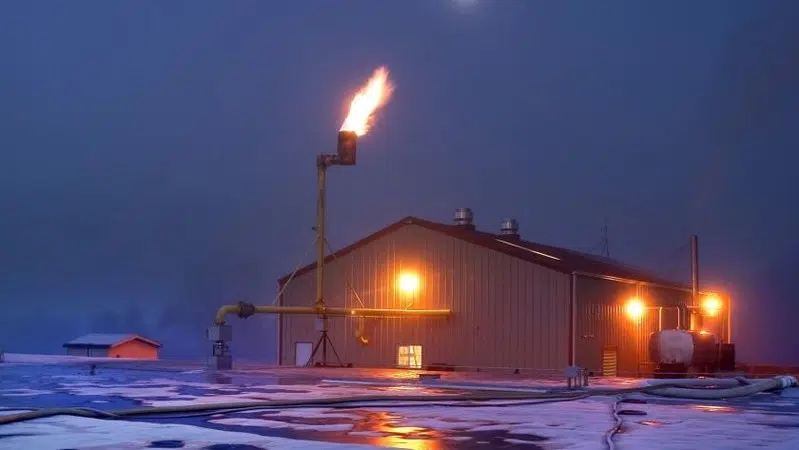
Natural gas is not considered a viable method of decarbonizing the energy grid. Credit: Felton Davis/Flickr

Emissions Reduction Alberta, a government funded group, previously claimed that the Genesee repowering and carbon capture projects could potentially remove about 6.4 million tons of carbon dioxide per year, with CCS projects handling about half that amount.

Though Capital Power Generation justified its decision to cancel the project by stating it wasn’t financially feasible, news reports show the company was holding out for additional financial support from various levels of government. As Global News reported, Altius Royalty Corp., owner of the coal mine that feeds the Genesee plant, had demanded $190 million in compensation from the federal and provincial governments to phase out coal. It argued that government efforts to terminate coal production for health and environmental reasons was equivalent to expropriation.

Altius filed the claim in 2018, and it was rejected by the Court of Appeal of Alberta in April.

In March, the Globe and Mail reported that Capital Power was considering shelving the Genesee CCS project because it couldn’t come to an agreement with the government to provide revenue certainty. The Canada Growth Fund (CGF), a $15 billion federal financing agency, is tasked with guaranteeing a minimum value for emissions-reduction credits earned under Canada’s industrial carbon-pricing system. The March news report claims that representatives from Capital Power argued that negotiations with the CGF had not produced a structure or price that would allow them to proceed with the project. A CGF representative countered that such frameworks and prices had already been negotiated with other companies.

Regardless of what specifics led Capital Power to cancel the Genesee CCS project, the fact remains that CCS is expensive, is often used for EOR, and has a long, well-documented history of under-delivering on the crucial issue of capturing carbon dioxide. Critics say the considerable amount of financial resources already dedicated to CCS have effectively been wasted, particularly when the means to cheaply decarbonize the grid – such as solar panels or wind turbines – are already available.

“The most effective way to deal with carbon dioxide emissions is to prevent them from ever being created,” said Levin with Environmental Defence, “rather than trying to pluck them from the air or smokestacks and inject them underground.”

Original article by Taylor Noakes republished from DeSmog.

Continue ReadingCanceled Canadian CCS Project Deemed ‘Not Economically Feasible’

DeSmog Launches Investigation Into Food and Farming Misinformation Ahead of EU Elections

Spread the love

Original article by Clare Carlile republished from DeSmog.

Credit: Alberto Perinot/X

The far right is set to piggyback on agricultural discontent to capture votes in June.

A large blue billboard stands outside a park in the town of Conegliano in northern Italy. On the left, a man pops a vast cricket into his mouth. On the right, are the words, “Let’s Change Europe before it changes us” – and the dates of the upcoming elections.  

The poster – an advert for the country’s radical right party Lega per Salvini Premier – refers to a conspiracy theory that has swept across Italy in the last 18 months. Elites in Brussels are planning to replace meat with bugs and are using environmental regulations to do so, or so the theory goes.

As millions of voters across the EU prepare to head to the polls from 6-9 June, conspiracy theories and misinformation on food and farming could pull voters towards the far right and parties opposing climate-friendly laws.

In the face of this onslaught of misinformation, DeSmog is launching a new series that investigates misleading claims and their impact on climate policy in the farming sector. 

Over the next two months DeSmog will monitor the spread of misinformation across the continent, working in seven different languages. We will look to identify false claims and uncover who is spreading these narratives online.

Agriculture accounts for 11 percent of carbon emissions in the EU, and has contributed to plummeting bird and bee numbers. But tackling the sector’s harms has become one of the most divisive issues on the continent, with tractors blocking highways across Europe during demonstrations this year. 

The protests – attended by thousands of farmers in several countries – reflected a wide range of concerns, from unfair food prices to calls for protection from increasingly extreme weather. Yet this complexity was barely represented in the media where demonstrations were cast as opposition to environmental measures. 

Far-right groups also weaponised the protests. In January, Jordan Bardella, lead EU candidate for France’s National Rally (formerly National Front), accused the country’s President Emmanuel Macron of pursuing “the death of agriculture” while Santiago Abascal, leader of Spain’s far-right party Vox, wrote to Macron demanding an end to “aggressions” against Spanish producers, who he described as “victims” of EU policy.

In the eyes of its critics, green reforms agreed in the last EU term would destroy farming. Plans to cut chemical use and make farmers protect natural habitats would lead to monumental job losses, they claim. The same arguments are used by agricultural corporations that stand to lose out if green reforms are enacted.

The most extreme opponents, including radical right think tanks and hardline farming groups, see green reforms as part of a plan by Brussels bureaucrats to control the industry and “grab land”. 

These claims, however, contradict the facts: last year, more than 6,000 scientists said that such nature-friendly measures were “the cornerstone of food security and human health”. 

The policies that are currently being attacked aim to tackle climate breakdown – the biggest threat to producers across the EU, who are already feeling the effects of global heating. A “staggering portion” of the continent has been exposed to high drought risk in recent years, according to the European Drought Observatory, leading to widespread crop losses.

Right-wing and far-right groups stand to make massive gains from stoking these tensions. A recent study by the EU’s Committee of the Regions showed that discontented rural areas could be a major source of votes.  

This series will shine a light on those candidates that are weaponising false claims for electoral gain.

Original article by Clare Carlile republished from DeSmog.

Continue ReadingDeSmog Launches Investigation Into Food and Farming Misinformation Ahead of EU Elections

South Asia sizzles: Record heatwave and extreme weather blamed on climate crisis

Spread the love

https://globalvoices.org/2024/05/06/south-asia-sizzles-record-heatwave-and-extreme-weather-blamed-on-climate-crisis/#

Screenshot from YouTube video by Abhi and Niyu via Zoom.Earth. April 7, 2024. Fair use.

A scorching heatwave is ravaging South and Southeast Asia, impacting hundreds of millions with its intense heat. With April temperatures shattering previous records, the region is witnessing extreme weather patterns, wildfires, and tragic heat-related deaths. Schools have been forced to close, agricultural production and storage of perishable foods have been disrupted, and the risk of heatstroke and other health problems has risen significantly.

Climate scientist Roxy Koll tweeted:

The scientists attribute the heatwave to the diminishing influence of the 2023–2024 El Niño event, which started in July 2023.

Forest fires and heatstroke deaths in Bangladesh

Bangladesh has experienced increasingly extreme weather conditions in recent years, and April 2024 stands out as the hottest month since 1948, with average temperatures ranging from 40–42 degrees Celsius (104–107.6 degrees Fahrenheit) in over 80 percent of the country.

Climate journalist Rafiqul Montu posted on X (formerly Twitter):

Wildfires erupt amid extreme heat and dry conditions

Typically in April, Bangladesh receives 130.2 millimetres of rain, however, this year, there was almost none. The government announced the closure of government schools affecting 33 million students nationwide, while private schools with better facilities transitioned to online education. In just one week of April, over 10 deaths across the country were attributed to heatstroke.

However, the most notable impact was the wildfires in different parts of the Sundarbans Reserve Forest, the world’s largest mangrove forest. Sundarbans is a remote area, lacking adequate firefighting resources nearby. The Forest Department, along with fire service personnel, local villagers, and other volunteers, could only start firefighting efforts 17 hours after the first fire. As of the time of writing this report, a significant portion of the huge fire in the Amurbunia area of the Chandpai range is still burning, posing a threat to its rich biodiversity.

Article continues at https://globalvoices.org/2024/05/06/south-asia-sizzles-record-heatwave-and-extreme-weather-blamed-on-climate-crisis/#

Continue ReadingSouth Asia sizzles: Record heatwave and extreme weather blamed on climate crisis