‘North Sea Fossil Free’: Activists in 6 Countries Protest ‘Unhinged’ Oil and Gas Development

Spread the love

Original article by OLIVIA ROSANE republished from Common Dreams under Creative Commons (CC BY-NC-ND 3.0). 
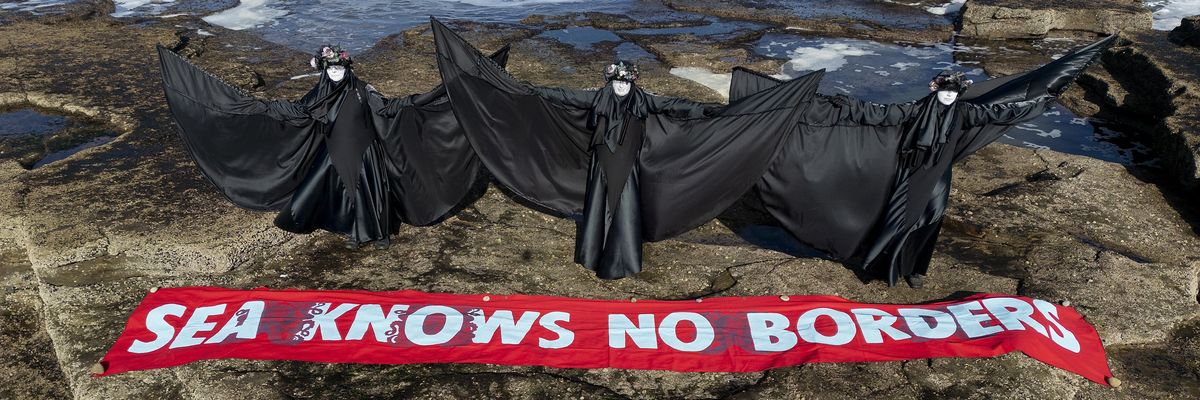
The “oil slicks” performance artist group demonstrates the impacts of a potential oil spill on Scotland’s Moray Firth as part of a North Sea-wide day of action on March 16, 2024.  (Photo: XR Forres)

“Going full steam ahead with new North Sea oil and gas is a sure fire route to the worst climate scenarios,” one campaigner said.

Climate activists in six North Sea countries came together on Saturday to carry out acts of civil disobedience in protest of their governments’ continued fossil fuel development.

Demonstrators in the United KingdomNorway, Sweden, Denmark, Germany, and the Netherlands blockaded roads, ports, and refineries; dropped banners; and held solidarity concerts as part of the North Sea Fossil Free campaign to demand that their governments align their plans for the shared body of water with the Paris agreement goal of limiting global heating to 1.5°C above preindustrial levels.

“For too long, the U.K., Norway, and other North Sea countries have avoided scrutiny for their oil drilling plans as the emissions are not included in their national inventories,” a spokesperson for Extinction Rebellion U.K. told Common Dreams. “Going full steam ahead with new North Sea oil and gas is a sure fire route to the worst climate scenarios.”

“The only serious response we can make is for citizens to unite, but we need to see many many more people doing this work.”

The day of action, which was organized by Extinction Rebellion (XR), came days after a new report from Oil Change International revealed that none of five North Sea countries—Norway, the U.K., the Netherlands, Germany, and Denmark—have plans consistent either with limiting warming to 1.5°C or with the agreement to transition away from fossil fuels reached at last year’s United Nations COP28 climate conference. If the five countries were counted as one, they would be the seventh biggest producer of oil and gas in the world.

In particular, these governments continue to issue permits to explore for and develop oil and gas fields, despite the fact that the International Energy Agency has said that no new fossil fuel development is compatible with limiting global temperature rise to 1.5°C. In one high-profile example, the U.K. approved the undeveloped Rosebank oil field in September 2023. Taken together, these permits could lead to more than 10 billion metric tons of greenhouse gas emissions.

The worst offenders were Norway and the U.K., which could be among the top 20 developers of oil and gas fields through mid-century if they do not change course.

“The five major North Sea countries are at a crossroads: One path leads toward global leadership in climate action and green industries, where they take bold action to phase out oil and gas production that creates sustainable jobs and communities. The other path leads to catastrophic climate change, economic crisis, and the loss of status as climate leaders globally, as they cling to outdated practices while the world moves forward,” Silje Ask Lundberg, North Sea campaign manager at Oil Change International, said when the report was released.

Extinction Rebellion co-founder Clare Farrell said that the North Sea governments’ policies were a betrayal of their citizens and the world following the hottest year on record.

“Temperatures have tracked 1.5°C above average recently, almost 2°C,” Farrell said. “Our global commitments, such that they are, are being flushed away with no regard for what the public really want. Where’s the consent for that here in our democracies? No government has a mandate to do that. So people deserve to know that our governments are willfully destroying everything. The people of these North Sea nations have not consented to destroying civilization, but that’s what is going to happen. Their governments are unhinged and unchecked.”

Saturday’s protests, Farrell continued, were a way for the people in these countries to make their voices heard.

“The only serious response we can make is for citizens to unite, but we need to see many many more people doing this work,” Farrell said. “Direct action like this should shake us awake; our governments will destroy democracy and society if we let them continue, that’s the course we are on, and they are redoubling their efforts despite the facts and knowing how much suffering they are already causing all over the world as climate breaks down.”

The demands of Saturday’s protests were threefold: An end to new oil and gas infrastructure in the North Sea, for governments to tell the truth about the realities of the climate crisis, and for the countries to pursue a just transition to renewable energy. In addition, many activists made additional demands specific to their nations’ policies.

The Netherlands

In the Netherlands, activists with Extinction Rebellion and Scientist Rebellion blocked all roads and railways leading to the largest oil refinery in Europe: Shell’s Pernis refinery. They targeted Shell because the oil major has received new permits to drill in the Victory Gas Field and has also restarted its drilling in the Pierce Field. What’s more, the company has refused to clean up its aging equipment in the North Sea, leaving old pipelines and drilling platforms to rust and pollute the sea with mercury, polonium, and radioactive lead. While there are 75 aging Shell oil and gas platforms in the Dutch North Sea that should be removed by 2035, current efforts are not on track to meet this deadline.

“Like the rest of the fossil industry, Shell is only interested in profits and shareholder returns,” said Bram Kroezen of XR Netherlands, adding that Shell’s appeal of a landmark court ruling ordering it to reduce emissions showed that the company “completely lacks a moral compass.”

Germany

Activists with Ende Gelände blocked off access to a floating liquefied natural gas (LNG) terminal in the port of Brunsbüttel, Germany, beginning at 9:00 am local time. The activists are calling for an end to LNG imports, as new science reveals the so-called “bridge” fuel may in fact be at least as damaging to the climate as coal due to previously unaccounted for methane leaks.

“LNG is a double climate killer,” Rita Tesch, spokesperson for Ende Gelände, said in a statement. “Because it consists of methane. Methane is even more harmful to the climate than carbon dioxide. It escapes into the atmosphere during transportation by LNG ships and at terminals such as here in Brunsbüttel, and heats it up rapidly. The carbon dioxide from burning it is on top of that. It’s clear: LNG imports are a climate crime!”

Norway

Activists with XR Norway targeted Rafnes Petroleum Refinery, with some blockading access on land while another group entered the security area by boat.

“I’m ashamed to be a Norwegian,” XR Norway spokesperson Jonas Kittelsen said in a statement. “Norway profits massively from aggressively expanding our oil and gas sector, causing mass suffering and death globally. My government portrays us as better than the rest of the world, which we are not.”

Denmark

Performance collective Becoming Species and Extinction Rebellion Denmark worked together to stage a creative protest targeting the oil company Total Energies, which is the leading oil and gas producer in the Danish North Sea and currently has plans to reopen “Tyra Feltet,” Denmark’s largest gas field. Four members of the band Octopussy Riot climbed a Total-owned container and staged a punk concert in Denmark’s Esbjerg Harbor.

“We octopuses have formed the band Octopussy Riot and have arrived here to play our song, a demand for you two-legs to stop oil and gas extraction,” performer Linh Le, said. “The sea is dying, our climate collapsing. We will not accept that the most rich and powerful destroy our home. We do not want to go extinct.”

Sweden

Members of XR Sweden blocked the road to Gothenburg’s Oil Harbor, where the group has been protesting since May of 2022. The activists called on Sweden to stop investing in the harbor and on city officials to develop a plan to dismantle the harbor and refineries.

“Twenty-two million tons of oil enter Gothenburg’s port every year, which is owned by the city,” one activist said. “There is no plan for decommissioning. This does not go together with the climate goals.”

Scotland

Finally, protesters across Scotland stood in solidarity with the other actions with performances and banner drops. In Aberdeen, activists unfurled banners outside the offices of Equinor, which owns 80% of Rosebank, and Ithaca, which owns the remaining 20%. The banners read, “North Sea Fossil Free,” “Stop Rosebank,” and “Sea knows no borders.” In Dundee, protesters targeted the Valaris 123 oil platform off the coast with banners. Shetland Stop Rosebank also brought signs to Lerwick Harbor, from where the first stage of Rosebank’s development is launching. XR Forres organized a performance of the group the “oil slicks” along the Moray Firth, to demonstrate what an oil spill would do to its unique coastal landscape.

“All countries should align their drilling plans with the Paris agreement now,” the XR U.K. spokesperson said. “We thank everyone who has taken action today in defense of a livable planet.”

Original article by OLIVIA ROSANE republished from Common Dreams under Creative Commons (CC BY-NC-ND 3.0). 

Continue Reading‘North Sea Fossil Free’: Activists in 6 Countries Protest ‘Unhinged’ Oil and Gas Development

Will abandoning left-wing voters backfire for Keir Starmer?

Spread the love

Original article by Paul Rogers republished from Open Democracy under a Creative Commons Attribution-NonCommercial 4.0 International licence

Labour leader’s reluctance to differ from Tories on policy or Gaza sets stage for progressive independent candidates

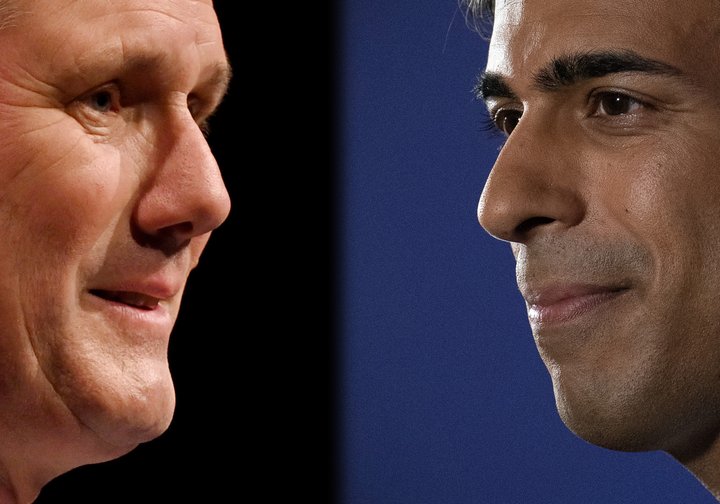
Keir Starmer has moved Labour to the right – leaving left-wing voters without a political home  | Belinda Jiao/Getty Images

Almost all of Britain’s pollsters agree: the Labour Party is heading for a massive victory in this year’s general election, while Rishi Sunak’s Tories are set for a historic defeat. But there is another, far less talked about shift underway, which could see a wave of independent left-wing MPs elected.

Most polling firms expect Labour to win a majority of more than a hundred seats. A ‘poll of polls’ by political forecasting website Electoral Calculus suggests the party is on course for a 200+ majority.

These polls could all be wrong, but little seems to shake them. There is some evidence, though, of another trend that is yet to be reflected in the polls: Keir Starmer’s unwillingness to set out any clear policy differences from the Conservatives may be backfiring.

One area likely to cause the Labour leader trouble is his position – or lack thereof – on Israel’s war on Gaza.

Several polls in recent months have indicated that around 70% of people in the UK want an immediate ceasefire, and there are weekly demonstrations in towns and cities across the country in support of Palestinians. Organisers of a march in London last week estimated that up to 400,000 people had gathered to demand an end to the violence.

These protests receive minimal coverage in the mainstream media, bar senior Conservatives labelling the peaceful crowds as ‘hate mobs’. The government maintains strong support for Israel, continuing to sell arms and share intelligence with the country, as well as allowing it to use RAF Akrotiri in Cyprus as a support base – a position Labour has largely agreed with.

This leaves a huge gap in political representation, at least from the biggest two parties, for swathes of people nationwide.

It was in this opening that former Labour MP George Galloway – who was kicked out of the party in the 2000s after objecting to the UK entering the Iraq war – was elected as an independent MP for Rochdale last month, following a campaign that centred the need for a ceasefire in Gaza.

Another gap in political representation has been created by Starmer’s remodelling of the Labour Party, which has been sanitised to ensure it poses little or no threat to the political establishment. The majority of his policies so far appear to be a continuation of the status quo, suggesting little will change if the party wins the forthcoming election.

In contrast, so bold and progressive were the policies of his predecessor, Jeremy Corbyn, that the higher echelons of the Labour Party and the wider political and media establishment were determined to get rid of him from the offset.

A leadership challenge was mounted against him in the summer of 2016, little over a year after he was elected the party’s leader. Corbyn won comfortably – a fact I found unsurprising, having seen first-hand how he could pull a crowd of more than a thousand people to a hurriedly arranged event half a mile from a city centre.

Internal party opposition to Corbyn surged following his re-election, again backed by the mainstream media. When then Tory prime minister Theresa May called an election in 2017, many anticipated she would win a landslide victory that would consign ‘Corbynism’ to the outer margins.

Instead, Corbyn and his Labour manifesto struck a chord with many voters. Labour gains resulted in a hung parliament, to the horror of the political establishment, which worked to eliminate this threat from the left over the following two years.

After Labour lost the 2019 general election, Corbyn resigned and Starmer moved the party rightwards – prompting tens of thousands of its members to desert it as a result. Their votes are now up for grabs, and left-wing independents are hoping to win them.

Take a meeting in London just last weekend, scarcely reported on except by socialist paper The Morning Star. Two hundred of Labour’s former parliamentary candidates, councillors and supporters gathered to develop an alternative to its current stance on Gaza and other issues.

A sense of the mood at the event was best summed up by Tyneside’s independent socialist mayor Jamie Driscoll, who quit Labour after the party decided not to select him to run again for the north-east mayoral election in May.

In a video message played at the meeting, Driscoll said: “In the next election, both parties will have the same manifesto and the same rich donors pulling the strings.”

similar event is planned in Blackburn next month – just one part of a much wider movement that will likely see independent left-wing candidates standing against Labour candidates in many seats in the general election.

This is already being seen in England’s upcoming local council elections, where clusters of non-party, progressive candidates are working together in many parts of the country. In Blackburn, for example, every ward will have an independent left-wing candidate standing, as will all six wards in Dewsbury, West Yorkshire. Early indications suggest similar trends in Merseyside and parts of London.

The accepted political wisdom in the UK is that once a general election is called, voters tend to revert to the usual pattern of voting. But if independent candidates were to pick up substantial numbers of votes in the local elections, even taking some council seats, it could indicate a political shift that means this wisdom will not apply this year.

This may seem unlikely but there is undeniably a political vacuum waiting to be filled – and a sense that something is afoot in British politics that is simply not being recognised.

Original article by Paul Rogers republished from Open Democracy under a Creative Commons Attribution-NonCommercial 4.0 International licence

Status Quo, again and again and again and again
Continue ReadingWill abandoning left-wing voters backfire for Keir Starmer?

Where Labour and the Tories got their money from in 2023

Spread the love

Original article by Ethan Shone republished from Open Democracy under a Creative Commons Attribution-NonCommercial 4.0 International licence.

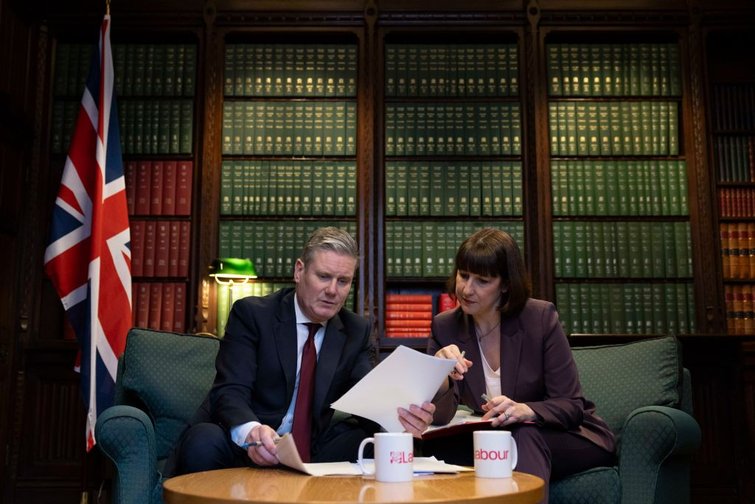
Keir Starmer and Rishi Sunak saw donations to their respective parties increase significantly last year
 | Leon Neal & Carl Court/Getty Images

Labour’s cash from private donors now dwarfs donations from unions, while the Tories got their biggest bung ever

Britain suffered a bleak economic landscape in 2023, with wages stagnant and costs rising across the board, but political donors and the parties they give to seem to have been unimpacted. All parties declared more than £93m in total compared with £52m in the previous year. And the cash looks set to keep pouring in ahead of the general election, which could take place as soon as May – although our money is on a November poll.

The Conservatives received the most donations by far, raking in £44.5m in cash, compared with Labour’s total of £21.6m, £6m for the Liberal Democrats, £610,000 for the Green Party and £255,000 for Reform – who now have their first MP in the form of ‘Red Wall Rottweiler’ Lee Anderson. The SNP registered only £76,000 cash donations in 2023, with £50,000 from the estate of a donor who passed away some years prior.

In addition to this, parties received non-cash donations – for things like premises, staff costs, sponsorship, consultancy services and more – worth £4.2m in total. Other regulated recipients like Labour Together, The New Conservatives, Labour First, and the Carlton Club Political Committee, took in £2.5m – these are campaigning organisations affiliated to political parties but legally separate from them, and often provide financial support to a particular faction within a party.

We’ve had a closer look at some of the underlying trends behind the numbers and picked out a few key points to look out for in the months ahead, based on what these donations tell us about the state of play in the two main parties.

Labour’s reliance on companies and individuals over trade unions

Much has been made of Labour’s increasingly close relationship with big business and the wealthy under Keir Starmer. Supporters of the party leadership argue that Labour has to be able to compete with the spending power of the Conservatives in the general election, and so has to look beyond the traditional funding source of the trade union movement toward people and businesses with deep pockets. Critics, however, might suggest that the interests of the trade union movement and the interests of those with the deepest pockets may not accord.

The concern among those of the latter view is that, as donations from the wealthy come to represent a larger proportion of the party’s war chest, there could be a shift in policy in that direction. Dark Arts has already reported on the access and influence enjoyed by corporate lobbying firms who employ Labour candidates to connect their clients with senior party figures. I’ve also written for openDemocracy about the millions that have poured into the party from bankers and financiers under Starmer. And our analysis of donations data for 2023 shows another potentially concerning trend for those worried about a corporate takeover of the party.

Of the £21.5m in cash received by the party in 2023, just £5.9m came from the trade union movement, compared with £14.5m from companies and individuals – a huge increase on the previous year, and indeed more than in the three previous years of Keir Starmer’s leadership combined. As trade union contributions have dipped slightly, from around £6.9m in 2020 and 2021 to £5.3m in 2022, donations from businesses and individuals have soared: they totalled £2.3m in 2020 and rose to £3m in 2021 and £7.6m in 2022 before nearly doubling last year.

Around £10m of this total comes from just four sources: Gary Lubner (£4.6m), David Sainsbury (£3.1m), Fran Perrin (£1m) and Ecotricity (£1m), the green energy firm owned by prominent eco-activist Dale Vince. This means that just two individuals gave the Labour Party more money last year than all the trade unions combined.

Lubner is the former CEO of Belron, a global firm specialising in vehicle glass repair. He has been donating to the party since meeting shadow chancellor Rachel Reeves at a dinner hosted by the big-four consultancy firm PwC in 2021. Sainsbury – of supermarket fame – has been an on-off Labour donor for decades, forging a close relationship with the party during the New Labour years when he got a seat in the Lords and served as a science minister. His daughter, Fran Perrin, was an adviser in Tony Blair’s Downing Street.

Including trade unions, there were 114 donors who gave £25,000 or more last year, while the overall average sum donated over the year was £111,499.

Tories in need of new funding sources ahead of GE

It is perhaps an indictment of the British political system that two of the largest individual donors to political parties last year were both men with the last name Sainsbury. David Sainsbury’s contribution to Labour was dwarfed by the £10m left by his cousin, Tory peer John Sainsbury, to the Conservatives in his will – the largest single donation ever received by the party.

Of the £44.5m in cash received by the Conservatives last year, more than £20m came from two sources: John Sainsbury and Frank Hester, an IT entrepreneur from Leeds who has given £5m personally and another £5m through his firm, The Phoenix Partnership. Hester’s firm has profited from public sector contracts and his ties with the party are under heightened scrutiny following the publication of an investigation by the Guardian that revealed he had said former Labour MP Diane Abbott made him “want to hate all black women” and should be shot.

A further £11.3m came from five individuals:

  • Mohamed Mansour, Egyptian-born billionaire who controls the behemoth conglomerate Mansour Group, which has interests in real estate, finance, retail and tech: £5m
  • Graham Edwards, co-founder of one of the largest private companies in the UK, Telereal Trillium, which owns thousands of properties and approximately 60 million square feet of land: £2m
  • Amit Lohia, son of billionaire petrochemical and fertiliser tycoon Sri Prakash Lohia, chair of Indorama: £2m
  • Christopher Barry Wood, founder of biotech firm Medannex: £1.3m
  • Alan Howard, hedge fund manager who co-founded Jersey-based Brevan Howard and has significant interests in crypto-currency: £1m

Even without the mega-donation from John Sainsbury, the party comfortably brought in more than Labour last year, and plans pushed through recently by the government raising the amount that political parties can spend at a general election have been widely seen as a sign the party still believes it can leverage its financial pull to good effect against Starmer’s Labour.

However, when the one-off £10m donation is discounted, the party’s fundraising efforts slowed down significantly in the latter half of last year. In the first six months of 2023 the party received £20.6m, compared with just £12m in the second half of the year. Without the £10m from Lord Sainsbury, the party would have taken in just £3m in the third quarter, a huge drop from Q2 (£9.2m) and Q1 (£11.4m).

This might suggest that, at least into the latter portion of last year, the Conservatives were not planning on holding an election in the early portion of 2024, as we would expect to see an uptick in fundraising in anticipation of that.

Overall, there were 286 donors who gave the Conservative Party £25,000 or more last year. The average Tory donor gave £90,811 over the course of the year.

If you’re concerned about the influence of money in politics and want to support our reporting in this area, sign up to our newly-launched newsletter, The Dark Arts, on Substack.

Original article by Ethan Shone republished from Open Democracy under a Creative Commons Attribution-NonCommercial 4.0 International licence.

Continue ReadingWhere Labour and the Tories got their money from in 2023

Australia Restores UNRWA Funding as Israel Kills Aid Workers, Starving Gazans

Spread the love

Original article by BRETT WILKINS republished from Common Dreams under Creative Commons (CC BY-NC-ND 3.0). 

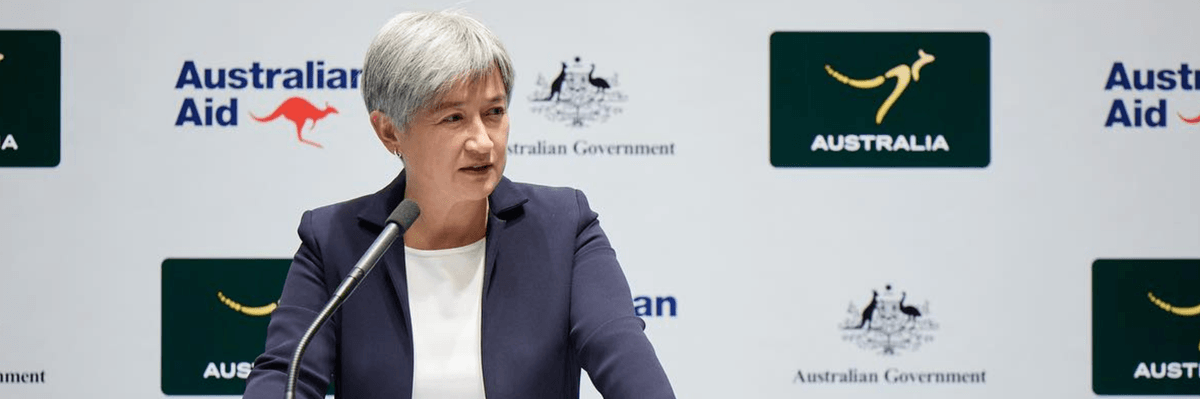
Australian Foreign Minister Penny Wong speaks in Canberra on August 8, 2023. (Photo: Penny Wong/Facebook)

“Restoring UNRWA funding is the bare minimum,” said one Australian Green senator. “The Labor government must publicly pressure Israel to allow aid into all parts of Gaza.”

Australia said Friday that it would reinstate funding for the United Nations United Relief and Works Agency for Palestine Refugees in the Near East, which has lost hundreds of millions of dollars in international financing due to unsubstantiated Israeli claims that UNRWA staff participated in the October 7 Hamas-led attacks on Israel.

“The best available current advice from agencies and the Australian government lawyers is that UNRWA is not a terrorist organization,” Australian Foreign Minister Penny Wong said in Adelaide while announcing a new funding package for the agency, which works to aid Palestinians forcibly displaced during the Nakba, or “catastrophe” through which the modern state of Israel was established in 1948, as well as their descendants.

In addition to restoring $6 million in UNRWA funding, Wong said Australia would contribute another $2 million to the United Nations Children’s Fund and would deploy a C-17 Globemaster transport plane to assist humanitarian airdrops over Gaza.

Sen. Mehreen Faruqi of New South Wales and the Australian Greens welcomed the shift, asserting that “restoring UNRWA funding is the bare minimum” Australia should do.

“The Labor government must publicly pressure Israel to allow aid into all parts of Gaza,” Faruqi stressed. “Starvation is a weapon of war, and Israel is blocking aid to reach the people of Gaza in brazen contravention of the [International Court of Justice’s] ruling” ordering Israel to prevent genocidal acts.

“I hope this is the start of the Labor government breaking away from their unquestioning and immoral support for Israel,” the senator added.

Simon Birmingham, leader of the center-right Liberal opposition in the Senate, said his party does not support the Labor government of Prime Minister Anthony Albanese “acting without and ahead of the United States in terms of decisions around this funding.”

Following Israeli claims—reportedly extracted from Palestinian prisoners in an interrogation regime rife with torture and abuse—that 12 of the more than 13,000 UNRWA workers in Gaza were involved in the October 7 attack, Australia and nine other nations including the United States cut off funding to the largest humanitarian aid organization operating in the besieged coastal enclave.

UNRWA subsequently terminated nine employees in response to the unfounded Israeli claims, without any evidence to support their firing. UNRWA Commissioner-General Philippe Lazzarini later called the move an act of “reverse due process.”

The European Union and nations including Canada and Sweden have also reinstated funding for UNRWA, which Lazzarini said “is facing a deliberate and concerted campaign to undermine its operations.” The agency has been struggling to provide shelter, aid, and other lifesaving services to Gazans facing not only Israeli bombs and bullets but also a genocidal siege and blockade that are starving Palestinians to death.

Australia’s decision came as Israeli attacks on aid convoys, food distribution centers, and desperate, starving Palestinians in Gaza continued. On Thursday, Israeli forces killed at least 20 people and wounded more than 150 others as they awaited delivery of humanitarian aid at the Kuwait Roundabout in Gaza City. The previous day, a UNRWA staffer was among five people killed and more than 20 wounded in an attack on a food distribution center in Rafah, Gaza’s southernmost city. Israeli officials claimed the slain man was a Hamas commander.

According to UNRWA, at least 165 of the agency’s staff members have been killed since October 7. Over 150 UNRWA facilities have been attacked by Israeli forces, while more than 400 Palestinians have been slain while seeking shelter under the United Nations flag.

UNRWA also says its workers have been tortured by Israeli troops trying to force them to falsely confess to participating in the October 7 attacks.

Gaza officials said earlier this week that at least 400 Palestinians seeking humanitarian aid have been killed by Israeli forces since the February 29 “Flour Massacre,” in which at least 118 people were killed and more than 760 others wounded while waiting for an aid convoy in Gaza City.

More than 112,000 Palestinians have been killed or wounded in Gaza since October 7, including people missing and presumed dead and buried beneath the rubble of the strip’s hundreds of thousands of bombed-out buildings. The majority of the dead are women and children. Around 90% of Gaza’s 2.3 million people have been forcibly displaced. Disease and starvation are rampant, and a growing number of Palestinians—mostly children but also elders and other vulnerable people—are starving to death.

After 161 days of near-constant slaughter, there is still no cease-fire in sight.

Original article by BRETT WILKINS republished from Common Dreams under Creative Commons (CC BY-NC-ND 3.0). 

Continue ReadingAustralia Restores UNRWA Funding as Israel Kills Aid Workers, Starving Gazans

Ansar Allah announces expansion of attacks on Israel-bound ships to all of Indian Ocean

Spread the love

Original article republished from peoples dispatch under a Creative Commons Attribution-ShareAlike 4.0 (CC BY-SA) license.

A leader of the Ansar Allah movement criticized the US for providing weapons to Israel’s genocidal war and held airdropping aid to Gaza as insulting to Palestinians

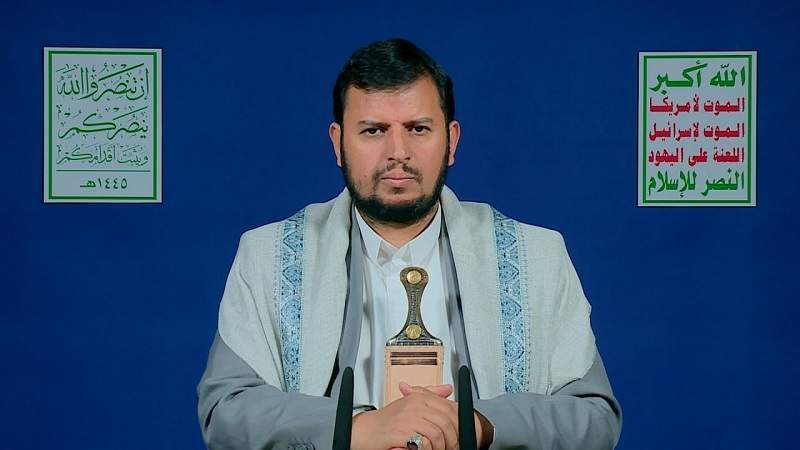
Sayyed Abdulmalik al-Houthi, leader of Yemen’s Ansar Allah, said on Thursday, March 14 that his country’s armed forces will expand their attacks against ships moving to Israel from the Red Sea region to the whole of Indian ocean.

Stating that attacks on Israeli ships in the Red Sea and Bab el-Mandeb will continue until there is a ceasefire in Gaza, al-Houthi declared that “we [now] aim to prevent ships associated with the Israeli enemy from crossing [Indian] Ocean towards South Africa and the Cape of the Good Hope” as well.

He warned that international shipping companies should take Ansar Allah’s declaration seriously and avoid any links with Israel as “any ship linked to Israel is vulnerable to Yemeni missiles.”  

Ansar Allah and the Yemeni Armed Forces have been carrying out attacks against the ships associated with Israel in the Red Sea and the Gulf of Aden since November last year, in solidarity with Palestinians in Gaza who have been facing devastating Israeli aggression since October 7 which has killed close to 32,000 of them and injured over 72,000.

Ansar Allah has been a part of the regional Axis of Resistance against imperialist interventions and colonialism along with Iraqi resistance forces and Hezbollah in Lebanon. They have targeted Israel and US installations in the region in solidarity with Palestinians.

Al-Houthi asserted that the attacks carried out by the US and the UK on Yemen will not be able to deter the country from supporting Gaza. Those attacks have “one outcome, which is the widening of the conflict and war at the regional level” he said. 

The US and the UK launched aerial strikes inside Yemen in December despite concerns that any such move will escalate the war in Gaza to the regional level. Since then, they have carried out over hundred of such attacks.

On Thursday, the US and the UK carried out a total of 11 airstrikes. According to Al-Mayadeen, Thursday’s attacks brings the total number of such airstrikes in Yemen to over 35 in just five days since the start of the month of Ramadan. Most of the airstrikes targeted the port city of Hodeidah. However, provinces such as Saada and Sanaa were also been targeted. 

US and Israel linked ships and warships targeted  

Al-Houthi claimed that at least 34 Yemenis have been killed in operations carried out in support of Gaza since November. He however asserted that Yemen will not be deterred and will continue to act in solidarity with Palestine.

He also stated that Yemeni Armed Forces have carried out at least 12 operations against ships and warships in the Red Sea, Arabian Sea, and Gulf of Aden region by launching 58 ballistic missiles, cruise missiles and drones in the past week. He added that the total number of ships and warships hit by Yemen since November has reached 73.

On Thursday, the UK Maritime Trade Operations (UKMTO) reported that it received reports of two more ships being attacked off the coast of Hodeidah with missiles. At least one of those two ships was damaged in the attack.

Al-Houthi also praised popular support for the Palestinian cause in Yemen and the large participation in the weekly million-person marches in solidarity with Palestinians. He appealed to the Yemeni people to participate in the next “million Yemeni march” organized across the country on Friday.

Al-Houthi criticized the role of most of the regional countries in the Israeli war in Gaza claiming apart from Iran, most others “did not take any serious practical stand” in support of Palestinian people. 

Al-Houthi claimed that “the Israeli occupation is carrying out a crime of the century, with American participation and contribution” from other western countries. He termed the US airdropping of aid into Gaza “an insult” to Palestinians underlining how it has bypassed the official UN channels of aid.

Original article republished from peoples dispatch under a Creative Commons Attribution-ShareAlike 4.0 (CC BY-SA) license.

Continue ReadingAnsar Allah announces expansion of attacks on Israel-bound ships to all of Indian Ocean