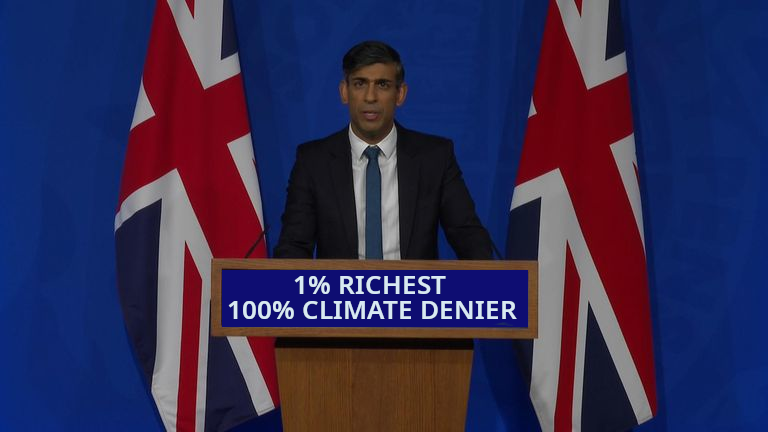
CLIMATE campaigners slammed Prime Minister Rishi Sunak for having “fingers in his ears” on environmental issues today as new data revealed record-breaking temperatures in Britain.
…
A government spokesperson said the Tories are “committed” to meeting their net zero targets, and boasted that they were “world leaders in cutting emissions.”
But Greenpeace UK policy director Doug Parr said that Mr Sunak “has his fingers in his ears” despite “climate alarm bells ringing” following back-to-back years of record temperatures.
He said: “There is massive voter support for climate action and you’d think this news would call for an emergency response from the UK government — a plan to cut temperature-rising emissions further and faster.
“But our Prime Minister’s newest plans consist of ramping up oil and gas drilling in the North Sea and delaying key policies that would slash emissions from cars and housing — or scrapping them altogether.
“Unless Sunak reverses these decisions and delivers the kind of bold policies needed to tackle the climate crisis, his likely short premiership will be marked as one of climate failure.”
Image of InBedWithBigOil by Not Here To Be Liked + Hex Prints from Just Stop Oil’s You May Find Yourself… art auction. Featuring Rishi Sunak, Fossil Fuels and Rupert Murdoch.
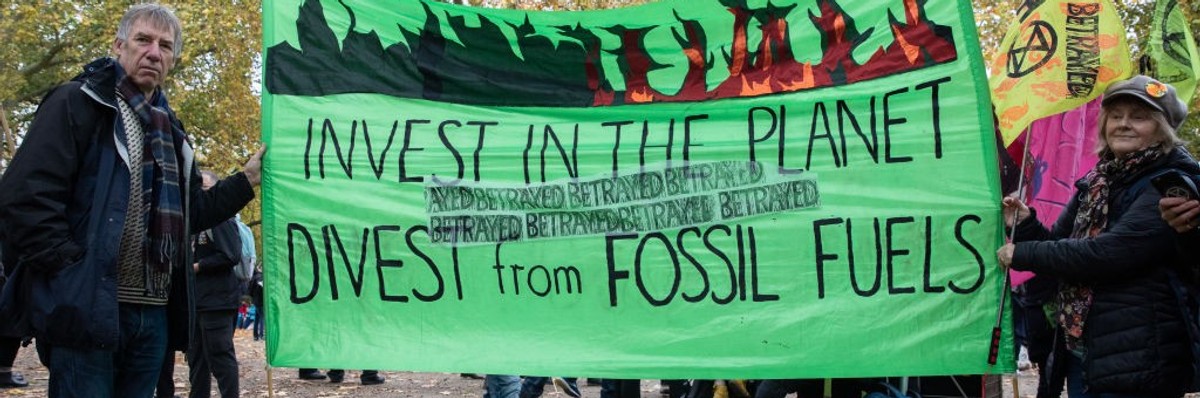
Extinction Rebellion climate activists hold a banner in Lincoln’s Inn Fields before a march on November 13, 2021 in London, United Kingdom. (Photo by Mark Kerrison/In Pictures via Getty Images)
Over 1,600 institutions, including hundreds of faith-based organizations, have now joined the fight to move money away from polluting fossil fuels and toward clean energy solutions—yours should be next.
Last month saw an historic, albeit altogether insufficient, step forward to avoid climate catastrophe.
At the annual global UN-backed climate change conference in Dubai, known as COP28, countries for the first time unanimously acknowledged the necessity of “transitioning away from fossil fuels”: coal, oil, and gas. While short of an endorsement of a full fossil fuel phaseout—what scientists tell us is needed to avert the worst impacts of the climate crisis—it is a milestone, decades in the making.
Yet even this tepid sign of progress faced pushback from fossil fuel executives and the politicians who do their bidding.
The story of COP28 is one of the power and perniciousness of the fossil fuel industry. The CEO of the United Arab Emirates’ oil company (the 12th largest in the world) served as conference chair, and industry lobbyists outnumbered delegates from nearly every country. The final text is full of industry-friendly loopholes, giving fossil fuel corporations leeway to continue to profit off dirty energy.
Trying to address the climate crisis while expanding drilling, mining, and fracking operations is like offering chemotherapy to a lung cancer patient while handing them pack after pack of Marlboro Reds.
It’s clear we are at the end of the fossil fuel era. Solar and wind energy are the cheapest forms of energy to build.
Like tobacco companies before them, fossil fuel corporations have known for years (with shocking accuracy) about the science: their products, when used as directed, would harm the health of the planet and cause widespread devastation. But the industry has time and again blocked significant action or sought to delay it through false promises. They did so again at COP28.
As the future is at stake, it falls to the rest of us to take urgent action. Indeed, civil society institutions are not waiting. Last week marked a major achievement: 1600 institutions across the world representing more than $40 trillion (with a “T”) have now pledged to move money away from fossil fuels and toward clean energy.
Finance represents a critical lever for climate action. Fossil fuel corporations rely on an open spigot of funds – project finance through underwriting and loans from major banks, plus investment capital and approval for continued fossil fuel expansion from investors, including the world’s largest firms, BlackRock and Vanguard.
When investors move their money en masse, fossil fuel corporations face reputational and brand risk that can have knock-on effects, including lower credit ratings and challenges with securing financing for projects and operations. Crucially, doing so also erodes fossil fuel corporations’ social license to expand their operations.
The 1600 institutions that have committed to move their money include groups like the National Academy of Medicine, because profiting from burning fossil fuels violates the medical ethic of “first, do no harm.” They include universities like Brandeis, rooted in Jewish history, experience, and values, whose students and administration recognize the climate crisis as an existential threat to their future.
It’s clear we are at the end of the fossil fuel era. Solar and wind energy are the cheapest forms of energy to build. The market itself is acting on this imperative. Fossil fuels as a sector have performed worse financially over the past decade than the rest of the market. Over the last 30 years, they have shrunk from a quarter of the market to around 5%. According to a recent report, six public pensions could be $21 billion richer if they had ditched investments in coal, oil, and gas a decade ago.
As the future is at stake, it falls to the rest of us to take urgent action.
Faith-based institutions, representing more than a third of the commitments, are at the forefront of this movement for change. As Pope Francis has encouraged, we “must listen to science and institute a rapid and equitable transition to end the era of fossil fuel.”
One year ago, my organization, Dayenu: A Jewish Call to Climate Action, released a report about the investment capital of major Jewish institutions. The report found that these institutions had a substantial opportunity to move more than $3 billion in capital out of fossil fuels and into clean energy, and offered a roadmap to achieve this goal. Since last year, the climate crisis has grown more urgent, and so has the power of our faith and moral voice.
Faith groups are leading. They are making prudent, long-term decisions that will protect their communities. Join us before it is too late.
Original article republished from Middle East Monitor under a Creative Commons Attribution-NonCommercial-ShareAlike 4.0 International License.
An inside view of International Court of Justice in The Hague, Netherlands on July 23, 2018 [Abdullah Asiran/Anadolu Agency/Getty Images]
The International Court of Justice (ICJ) will hold public hearings in proceedings launched by South Africa against Israel over the Gaza war on 11 and 12 January, it said on Wednesday, Reuters reports.
South Africa had asked the ICJ on Friday for an urgent order declaring that Israel was in breach of its obligations under the 1948 Genocide Convention in its crackdown against Hamas.
Israel had said it would appear before the Court to contest the accusations.
The Court usually takes one or two weeks to issue a decision on emergency measures after the hearings.
The Court’s rulings are final but it has no authority to enforce them.
DOZENS of Welsh peace activists shut down one of Britain’s largest arms factories today.
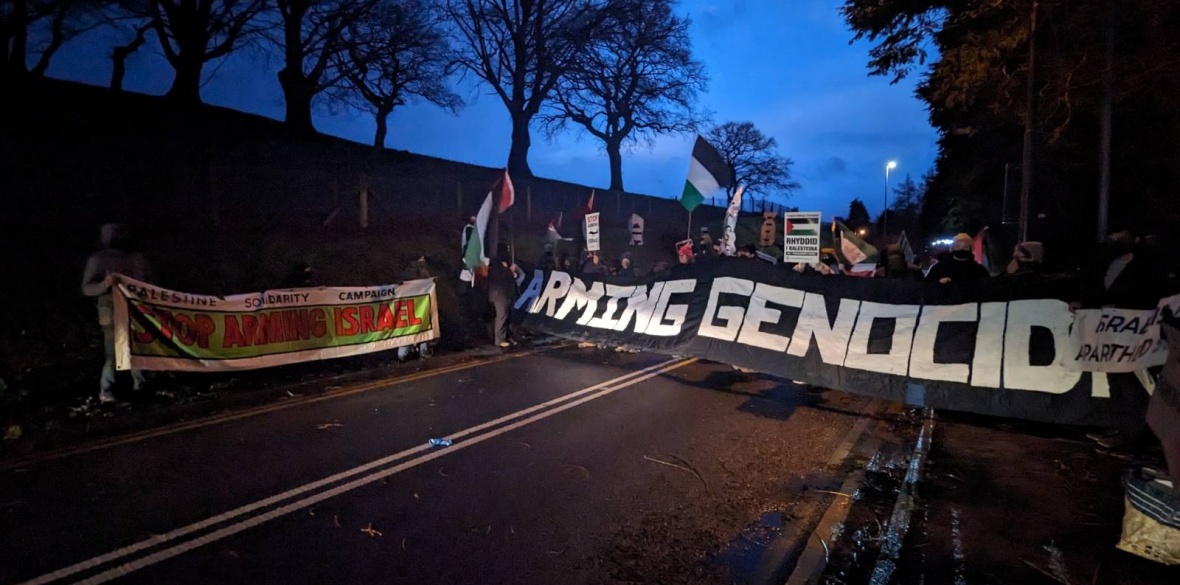
Wales Peace Coalition campaigners held banners saying “stop arming genocide” and “UK weapons kill” as they blockaded BAE Systems’s factory in Glascoed, near Pontypool.
They said they wanted to highlight the company’s “complicity in the … unfolding genocide” against Palestinians by Israel, “including the suspected white phosphorous rounds” for the state.
A spokesman for Cardiff Stop the War, which supported the action, said: “We cannot rely on our local elected MPs or our unelected prime minister to take any action.
“Britain is an active collaborator and participant in the war crimes committed against Palestinians.
“We say no to selling arms and supporting atrocious war crimes, not in our name.”
Cardiff UCU said that it stood against the “use of British weapons in war crimes,” urging the British and Welsh governments “to act so that citizens do not have to feel the need to put themselves on the line to stop our country’s involvement in such crimes.”
The UK has the worst safety net for the unemployed in north-west Europe
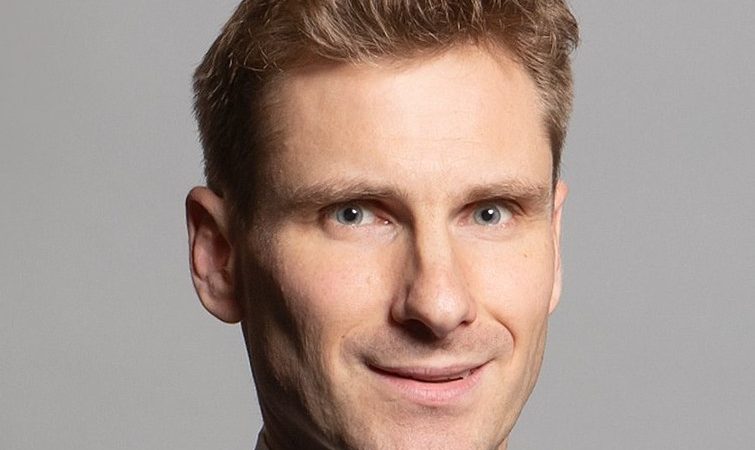
Viewers have taken issue with a statement by Tory MP Chris Philp who claimed that the UK’s benefits system is ‘very generous’, in an interview this morning.
Speaking to Sky News on the steep rise of shoplifting, the Policing Minister was asked if he had any sympathy for people stealing for food. He argued that there was “no excuse” because the UK’s benefits system is “very generous”.
Philp said: “We have a very generous benefits system, we’re spending well over £100 billion on working-age benefits, they went up by 10% in April this year they’ll go up by another 6 or 7%. National Minimum Wage has just gone up by around 10%. There is no excuse at all for any criminal activity, including shoplifting.”
However, people were not impressed at being told by a politician, who’s current net worth is around £3 million, that the benefits system is ‘very generous’. One X user responded: “Here is a challenge for Chris Philp – try living on ‘generous’ UK benefits for a month and then report back.”
Another wrote: “Clearly living in his own bubble. How disconnected from reality. The rental prices, bills have risen to unmanageable levels, the benefit system is completely inadequate.”