House GOP Revives Bill to Let Authoritarian Trump Crush Nonprofits

Spread the love

Original article by Jake Johnson republished from Common Dreams under Creative Commons (CC BY-NC-ND 3.0). 
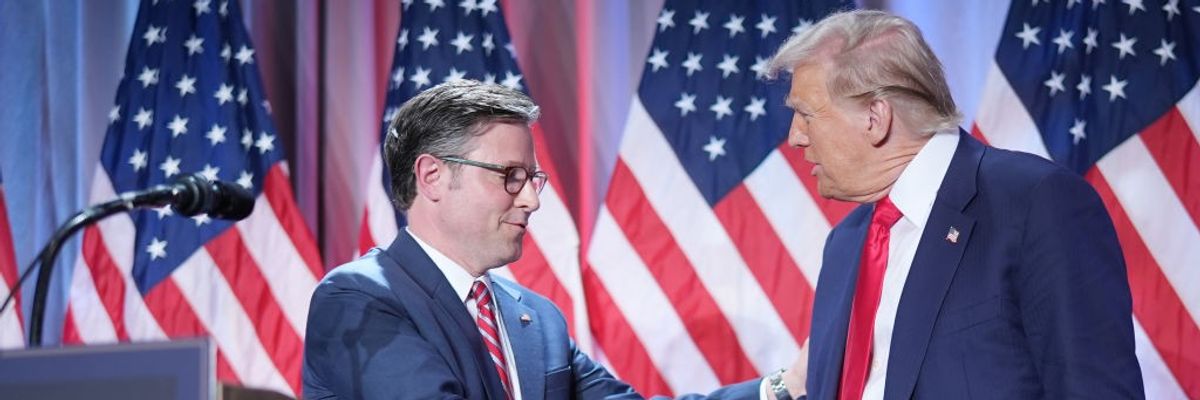
U.S. House Speaker Mike Johnson shakes hands with President-elect Donald Trump at a House Republican conference meeting on November 13, 2024 in Washington, D.C. (Photo: Andrew Harnik/Getty Images)

“We urge the House of Representatives to reject this dangerous bill and to protect our freedom of speech and our right to dissent,” said the president of Oxfam America.

House Republicans have revived and are looking to push through legislation this week that would hand President-elect Donald Trump’s incoming administration sweeping power to investigate and shut down nonprofit organizations, including news outlets and humanitarian groups.

The bill, H.R. 9495, failed to pass the House last week despite bipartisan support because the Republican leadership attempted to pass the measure using a fast-track procedure that requires a two-thirds majority vote. More than 50 Democrats, including Rep. Adam Schiff (D-Calif.) and other prominent members, backed the legislation in last week’s vote, along with 204 Republicans.

This time, the GOP is attempting to advance the bill through regular order, meaning it can pass with a simple majority. The Republican-controlled House Rules Committee is scheduled to hold a markup hearing for H.R. 9495 on Monday.

After learning of the hearing, advocacy organizations that mobilized against the bill redoubled their warnings about its dire implications for free expression and the right to dissent—particularly in the hands of a would-be authoritarian who has vowed to prosecute his political enemies.

“The bill we defeated days ago is back,” the U.S. Campaign for Palestinian Rights wrote on social media over the weekend. “Representatives are trying to ram through H.R. 9495, a repressive bill that could shut down nonprofits & student groups supporting Palestinian rights.”

https://twitter.com/USCPR_/status/1857869312976904687?ref_src=twsrc%5Etfw%7Ctwcamp%5Etweetembed%7Ctwterm%5E1857869312976904687%7Ctwgr%5Ecd48ab1ceea114a2c459ad147cfe399132e0107e%7Ctwcon%5Es1_c10&ref_url=https%3A%2F%2Fwww.commondreams.org%2Fnews%2Ftrump-nonprofits

Sorry, this content could not be embedded.
X

The legislation, if passed, would give the Treasury Department the authority to unilaterally strip nonprofits of their tax-exempt status by designating them supporters of terrorism. As of this writing, Trump has not announced his pick to lead the Treasury Department.

While the bill provides a brief period for an accused nonprofit to defend itself, the ACLU said the provision “is a mere illusion of due process,” noting that the federal government would be able to “deny organizations its reasons and evidence against them, leaving the nonprofit unable to rebut allegations.”

Abby Maxman, president and CEO of Oxfam America, warned in a statement after Republicans revived the bill that H.R. 9495 “would grant the Trump administration, and any future administration, the ability to silence and censor its critics, curb free speech, target political opponents, and punish crucial organizations that speak truth to power and help people in the United States and around the world.”

“This bill would increase the powers of the president at the expense of all of our freedoms, and could impact not only organizations like Oxfam, but other nonprofits, news outlets, or even universities who dare to dissent,” said Maxman. “It could put our ability to respond to some of the worst humanitarian crises at risk and prevent us from delivering lifesaving aid to some of the world’s most marginalized people.”

“This bill follows the same playbook Oxfam has seen other governments around the world use to crush dissent. Now we are seeing it here at home,” Maxman added. “We urge the House of Representatives to reject this dangerous bill and to protect our freedom of speech and our right to dissent.”

It’s not clear whether the U.S. Senate, narrowly controlled by Democrats, would bring H.R. 9495 to the floor for a vote if it passes the House this week, or whether President Joe Biden would sign it into law. But Republicans will gain full control of Congress and the White House starting in January, giving them the ability to push the legislation through at a later date.

“Their rush to reconsider this bill is solely to offer Trump more and more power, while Trump’s nominees for key national security posts this week indicate how he will be using it,” Rep. Lloyd Doggett (D-Texas), a leading opponent of the measure, toldThe Intercept on Friday.

Original article by Jake Johnson republished from Common Dreams under Creative Commons (CC BY-NC-ND 3.0). 

Continue ReadingHouse GOP Revives Bill to Let Authoritarian Trump Crush Nonprofits

Children in care ‘feeling unsafe and uncared for’

Spread the love

https://morningstaronline.co.uk/article/children-in-care-feeling-unsafe-and-uncared-for

Vulnerable kids are being placed in caravans and AirBnBs by a social care system that puts ‘profit above protection,’ Children’s Commissioner warns

Vulnerable kids are being placed in caravans and AirBnBs by a social care system that puts ‘profit above protection,’ Children’s Commissioner warns

BRITAIN’S most vulnerable children are being placed in caravans and Airbnbs by a social care system that puts “profit-making above protection.”

In a heartbreaking report, the Children’s Commissioner for England Dame Rachel de Souza slammed the “stark failure of the children’s social care system” as she told of an autistic teenager left in an Airbnb for nine months.

The girl was put there under supervision by her council following pressure to discharge her from hospital having not met the criteria to be held under the Mental Health Act.

Dame Rachel also described how a teenage girl who suffered parental domestic violence and neglect being given a supervised crisis placement in a caravan, before being housed in a children’s home 120 miles from her grandparents.

The commissioner called for “radical investment in creating new and safe places for children to live” and an end to “profiteering in children’s social care.”

https://morningstaronline.co.uk/article/children-in-care-feeling-unsafe-and-uncared-for

Continue ReadingChildren in care ‘feeling unsafe and uncared for’

Taxing Big Oil would grow UN climate loss & damage fund twentyfold, analysis finds

Spread the love

A small tax on just seven of the world’s biggest oil and gas companies could grow the UN Fund for Responding to Loss and Damage by more than 2000% and help address the costs of extreme weather events, according to new analysis published today by Greenpeace International and Stamp Out Poverty. The organisations are calling for a long term global tax on fossil fuel extraction, with year-on-year increases, combined with taxes on excess profits and other levies.

A ‘Climate Damages Tax’ would put a cost on every tonne of carbon emitted by the coal, oil and gas extracted – starting at $5 per tonne and rising each year thereafter. If it was imposed on ExxonMobil, Shell, Chevron, TotalEnergies, BP, Equinor and ENI it could raise $15 billion in the first year alone to help the world’s most climate-vulnerable countries pay for the escalating cost of damage caused by climate change. Currently, just $702 million has been pledged to the loss and damage fund, while the combined profits of those fossil fuel companies exceeds $148 billion.

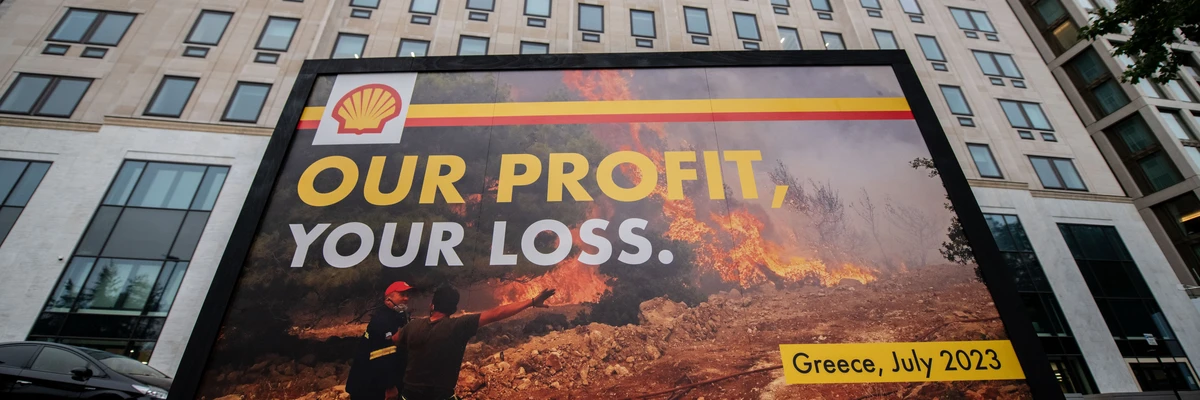
Greenpeace activists display a billboard during a protest outside Shell headquarters on July 27, 2023 in London.
Greenpeace activists display a billboard during a protest outside Shell headquarters on July 27, 2023 in London. (Photo: Handout/Chris J. Ratcliffe for Greenpeace via Getty Images)

Earlier this month, Barbados Prime Minister Mia Mottley, French President Emmanuel Macron and Kenyan President William Ruto stated their support for a Climate Damages Tax.

The briefing also highlights the financial costs of some of this year’s worst weather events that have been attributed to climate change, totalling over $64bn. These include Hurricane Beryl, Hurricane Helene, the heatwave in India in May, Typhoon Carina/Gaemi, the floods in Brazil in May, and the floods in Kenya and Tanzania in April. The costs of damage from the disasters surveyed range from US$2.9bn (Typhoon Carina) to US$ 25bn (heatwaves in India), and present just a fraction of the total cost of loss and damage globally over the last year. 

A Climate Damages Tax imposed only on wealthy OECD countries could play an essential role in helping the poorest and most vulnerable to rebuild after climate-related disasters. Increasing annually by US$5 per tonne of CO2-equivalent based on the volumes of oil and gas extracted, the tax could raise an estimated US$900 billion by 2030 to support governments and communities around the world as they face growing climate impacts.

“While oil and gas giants keep raking in grotesque levels of profit from exploiting resources, the damages resulting from the industry’s operations are disproportionately borne by people who did not cause the crisis,” said David Hillman, Director of Stamp Out Poverty. “A climate damages tax – along with other levies on fossil fuels and high-emitting sectors – will make polluters pay for the cost of climate impacts, as well as supporting workers and affected communities in the transition to clean energy, jobs, and transport.”

“Who should pay? This is fundamentally an issue of climate justice and it is time to shift the financial burden for the climate crisis from its victims to the polluters behind it,” said Abdoulaye Diallo, Co-Head of Greenpeace International’s Stop Drilling Start Paying campaign. “Our analysis lays bare the scale of the challenge posed by climate loss and damage and the urgent need for innovative solutions to raise the funds to meet it. We reject Big Oil’s assault on people and democracy and call on governments worldwide to adopt the Climate Damages Tax and other mechanisms to extract revenue from the oil and gas industry.” 

The Loss and Damage Fund was announced at COP27 in Egypt to help developing countries pay for impacts of natural disasters caused by climate change. Recently renamed the Fund for Responding to Loss and Damage (FRLD), it currently has US$702 million in pledged funds. According to Greenpeace International and Stamp Out Poverty’s calculations, a Climate Damages Tax levied on seven major international oil and gas companies would add in the first year alone US$15.02 billion, corresponding to over 21 times what is currently pledged to the fund. 

Paying the price: The economic impacts of seven extreme weather events in 2024 make the case for why climate polluters should pay”.

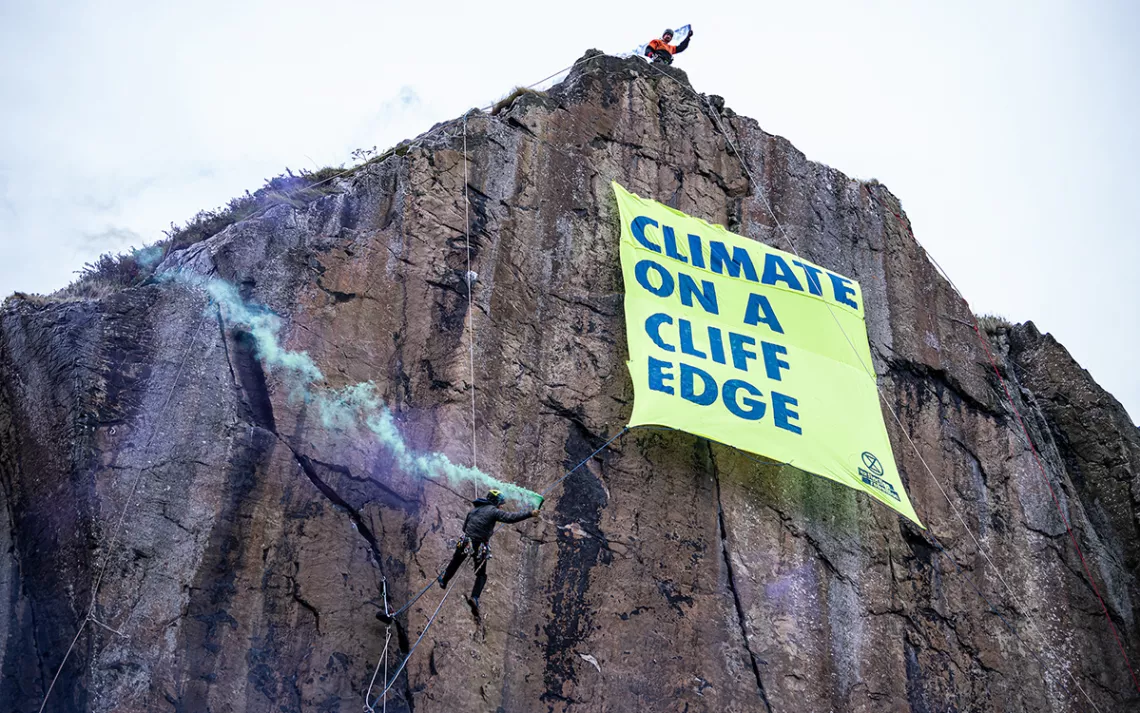
Experienced climbers scale a rock face near the historic Dumbarton castle in Glasgow, releasing a banner that reads “Climate on a Cliff Edge.” One activist, dressed as a globe, symbolically looms near the edge, while another plays the bagpipes on the shores below. | Photo courtesy of Extinction Rebellion and Mark Richards

Continue ReadingTaxing Big Oil would grow UN climate loss & damage fund twentyfold, analysis finds

Keir Starmer says the UK can decarbonise without disruption – that’s neither true nor helpful

Spread the love
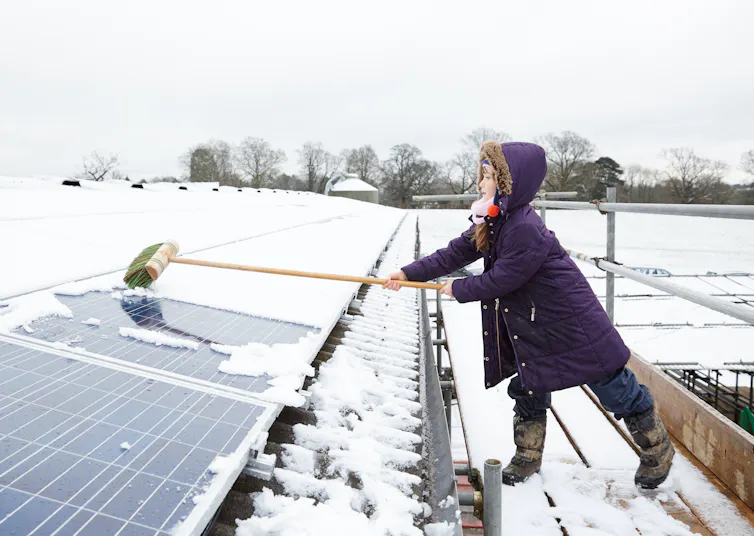
A young girl removes snow from a solar panel at a power plant in Balcombe, southern England. Oliver Rudkin, CC BY

Sam Hampton, University of Oxford and Lorraine Whitmarsh, University of Bath

Keir Starmer’s pledge to cut the UK’s emissions by 81% by 2035 is undoubtedly ambitious. However, his assertion at the Cop29 climate conference that it can be achieved without “telling people how to live their lives” is probably not true – at least, not according to what scientists who study this problem have found.

We are two such researchers. Our work concerns the lifestyle and behaviour changes needed to mitigate climate change and we argue that Starmer’s claim is not only unrealistic, it’s also potentially harmful to the prospects of effective climate action.

Many politicians, including Starmer, subscribe to the belief that technological advancements alone – more efficient wind turbines or electric vehicle batteries – will solve the climate crisis. This kind of “techno-optimism” is rife in government policy statements and strategies, but it is misplaced.

The latest scientific assessments, and our own research, show that systemic changes to society and the global economy are necessary to keep global warming at safe levels. While some progress has been made in shifting the supply of energy from fossil fuels to renewables (in the UK, renewables now account for 40% of electricity generation, though only 25% of total energy), far less attention has been paid to tackling demand – how we use energy and resources – which directly relates to people’s lifestyles and values.

Radically different lifestyles

Telling people “how to live their lives”, or more accurately, encouraging and enabling significant lifestyle changes, is essential for meeting climate targets. Most measures for reaching carbon targets in the UK will require changes to public behaviour. It’s the government’s job to make it easier, cheaper and advantageous for people to make those changes.

The necessary scale of this change is startling. To stay within the emissions budget consistent with limiting global warming to 1.5°C, the average UK carbon footprint must shrink from the equivalent of 8.5 to 2.5 tonnes of CO₂ by 2030.

This cannot be achieved through incremental change. It requires radically different lifestyles which involve flying less, eating more plant-based foods, wasting less and replacing boilers and combustion engines with heat pumps and electric vehicles.

Not everyone needs to change their lifestyle to the same extent. Those with the largest carbon footprints – typically the wealthiest people – need to make the most significant changes. As well as having a moral responsibility to act, wealthy people also have a greater capability to change and have more potential to influence wider change as organisational leaders and investors.

A line graph.
Emissions inequality exists within and between countries. International Energy Agency/Samuel Hampton

Change for the better

Not all climate action is sacrifice. Pro-environmental behaviour and lifestyle change can improve your wellbeing.

There is overwhelming evidence that climate action has health benefits, whether it is eating more plant-based food and less meat, or enjoying cleaner air as you walk or cycle instead of driving.

People with greener lifestyles also tend to be happier. Our international analysis found people who took more environmental action reported higher wellbeing. It can also help manage anxiety about the climate. In this sense going green is more likely to improve your quality of life rather than diminish it.

Importantly, research from numerous countries shows that there is public appetite for radical change. This includes not just a desire for governments and businesses to do more to address climate change, but also a willingness to make personal sacrifices. In a survey of 130,000 people randomly selected across across 125 countries, 69% said they would be willing to contribute 1% of their personal income to climate action.

Achieving the necessary changes to our lives and wider society will require more than public information campaigns (“telling people how to live their lives”, as Starmer calls it). These are what we call downstream approaches: they urge people to make different decisions but have been shown to have little effect in changing behaviour in the long term.

Instead, we need upstream approaches which change the array of options available to everyone. This could involve using regulations, taxes and subsidies to make low-carbon lifestyles easier, cheaper and more attractive to adopt. Most of these measures already enjoy public support.

While Starmer’s emissions target is commendable, his reluctance to discuss lifestyle changes is at odds with the scientific consensus. Tackling climate change effectively requires a shift to a more equal society, where happiness is prioritised over consumption. It necessitates radical behavioural changes, particularly from the wealthiest, and policies that enable these changes.


Imagine weekly climate newsletter

Don’t have time to read about climate change as much as you’d like?
Get our award-winning weekly roundup in your inbox instead. Every Wednesday, The Conversation’s environment editor writes Imagine, a short email that goes a little deeper into just one climate issue. Join the 40,000+ readers who’ve subscribed so far.


Sam Hampton, Researcher, Environmental Geography, University of Oxford and Lorraine Whitmarsh, Professor of Environmental Psychology, University of Bath

This article is republished from The Conversation under a Creative Commons license. Read the original article.

Continue ReadingKeir Starmer says the UK can decarbonise without disruption – that’s neither true nor helpful

Israel blows up historic shrine in southern Lebanon

Spread the love

Original article republished from Memo under a Creative Commons Attribution-NonCommercial-ShareAlike 4.0 International License.

Shrine of Shimon in Chamaa, Lebaon [Ibrahimamirnaeem/Wikipedia]

Israeli occupation forces destroyed a historic religious shrine during their incursion into the village of Chamaa in southern Lebanon on Friday night, Lebanese media have reported. Lebanese sources revealed that the occupation forces deliberately rigged explosive charges on what is known as the Shrine of Shimon in Chamaa and completely destroyed it.

The state-run National News Agency reported that the occupation forces withdrew from the hill where the shrine was located due to significant resistance from Hezbollah. A UN peacekeeping site nearby was hit by artillery fire as a result of the bombardments, according to the report.

The UN peacekeeping forces said on Friday that a live 155mm artillery shell struck their headquarters in the western sector but did not explode. UNIFIL reported that Italian peacekeeping forces stationed there dealt with the shell safely, adding that no peacekeeping personnel were harmed in the strike.

Since the start of its ground incursion into southern Lebanon, the occupation forces have blown up and demolished entire villages, employing a scorched earth policy to prevent Hezbollah from operating in areas near the border with the settler-colonial state.

READ: Israeli warplanes target vicinity of 2 churches, hospital in southern Beirut

Original article republished from Memo under a Creative Commons Attribution-NonCommercial-ShareAlike 4.0 International License.

Continue ReadingIsrael blows up historic shrine in southern Lebanon