What the budget got wrong about the NHS and prevention

Spread the love

Lindsay Jaacks, University of Edinburgh

A healthy NHS and strong economy depend on healthy people, not just strong public finances. Chancellor Rachel Reeves’ budget was a missed opportunity for the government to get serious about public health by protecting citizens from the leading risk factor for death in the UK: unhealthy food.

If a multinational corporation was dumping a chemical into our water that was costing the NHS £19 billion a year (the cost of obesity), that company would be asked to pay the bills. This is the “polluter pays” principle.

The same principle should apply to food. Instead, multinational food companies are profiting from sales of unhealthy food. For example, PepsiCo, which includes brands such as Pepsi MAX, Walkers and Doritos, generated more than £70 billion net revenue in 2023, globally.

Reeves’ budget states that the soft drinks industry levy will rise in line with inflation. From April 1 2025, the lower rate of the levy will increase from 18 pence per litre to 19.4 pence per litre. And the higher rate will increase from 24 pence per litre to 25.9 per litre. (The lower rate applies to added-sugar drinks with a total sugar content of 5 to 7.9 grams per 100 millilitres, and the higher rate applies to drinks with 8 grams or more per 100 millilitres.)

Levies like this result in an increase in the price of food and drink if companies pass the levy on to citizens; which is exactly what they typically do.

Evidence suggests that the levy has been effective at reducing consumption of sugar in the UK, but it could do much more.

According to the World Health Organization, as of July 2022, 108 countries have sugary drinks taxes, many of them substantially higher than the rate in the UK. For example, in the United Arab Emirates (UAE), there is a 50% excise tax on carbonated drinks and 100% tax on energy drinks.

By comparison, in the UK, the changes to the soft drinks levy in the new budget are estimated to increase the price of a 330ml can of a “higher band” soft drink by just three pence by 2029 to 2030.

Many countries have gone beyond sugary drinks to tax other foods, such as those high in fat, salt or sugar. Again, in the example of the UAE, a 50% excise tax is applied to any product with added sugar or other sweeteners. Indeed, 18 countries have taxes on high fat, salt and sugar foods.

Mexico was among the first countries to adopt such a policy, applying an 8% tax on discretionary foods such as confectionary, chocolate, sugary breakfast cereals, crisps and other salty snacks. Following implementation, there was a significant reduction in sales of these unhealthy foods.
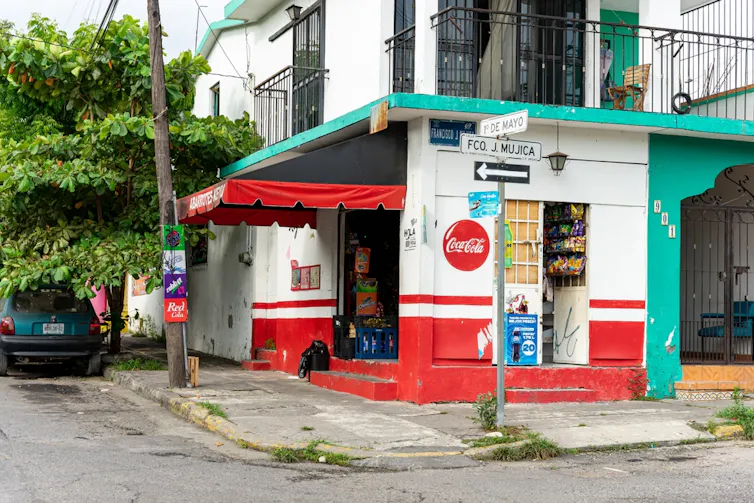
Corner shop in Mexico, featuring a Coca-Cola advert.
Mexico was the first country to introduce a tax on sugary drinks. JRomero04/Shutterstock

Make the polluter pay

The new budget in the UK could have gone much further in terms of raising funds and rebuilding the NHS by expanding the soft drinks levy to a levy on high fat, salt and sugar foods.

The government’s ten-year plan for the NHS is due to be published in spring 2025. Many have advocated for the plan to focus on prevention. But the idea that the NHS should be responsible for prevention perpetuates the idea that individuals are responsible for unhealthy diets and obesity. It moves the blame from companies that process, promote and profit from high fat, salt and sugar foods to individuals and the NHS. Instead, why not demand that the polluters pay?

A healthy population underlies economic growth. If the government wants a healthy NHS and a strong economy, make multinational corporations, not citizens, pay for the harms of their unhealthy products that are marketed to us and our children every day.

Lindsay Jaacks, Personal Chair of Global Health and Nutrition, University of Edinburgh

This article is republished from The Conversation under a Creative Commons license. Read the original article.
Continue ReadingWhat the budget got wrong about the NHS and prevention

Getting my congratulations in very early

Spread the love

I wish to extend my congratulations to President-elect Kamala Harris on her victory in the presidential election.

I urge her to address the issues of Israel and climate as soon as she is able to. Israel needs to be severely restrained and radical climate policies on a huge scale based on proven technologies are needed as an example to follow.

Congratulations President Harris.

6 Nov 2024 12.45 Oh dear, called that wrong. The Americans have gone and elected a moron again.

Continue ReadingGetting my congratulations in very early

Guy Fawkes’ punishment was one of the most severe in English history – here’s what happens when a body is hung, drawn and quartered

Spread the love
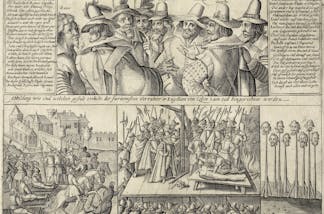
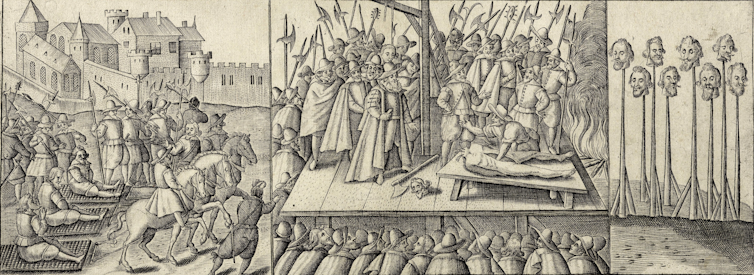
Fawkes and his co-conspirators were sentenced to hanging, drawing and quartering. Crispijn van de Passe the Elder/ Wikimedia Commons

Michelle Spear, University of Bristol

After their infamous plot to destroy parliament was foiled, Guy Fawkes and his co-conspirators received one of the most severe judicial sentences in English history: hanging, drawing and quartering. According to the Treason Act 1351, this punishment involved:

That you be drawn on a hurdle to the place of execution, where you shall be hanged by the neck and being alive cut down, your privy members shall be cut off and your bowels taken out and burned before you, your head severed from your body and your body divided into four quarters to be disposed of at the King’s pleasure.

This process aimed not only to inflict excruciating pain on the condemned, but to serve as a deterrent – demonstrating the fate of those who betrayed the Crown. While Fawkes reportedly jumped from the gallows – which meant he avoided the full extent of his punishment – his co-conspirators apparently weren’t so lucky.

By dissecting each stage of this medieval punishment from an anatomical perspective, we can understand the profound agony each of them endured.

Torture for confession

Before his public execution on January 31 1606, Fawkes was tortured to force a confession about his involvement in the “gunpowder plot”.

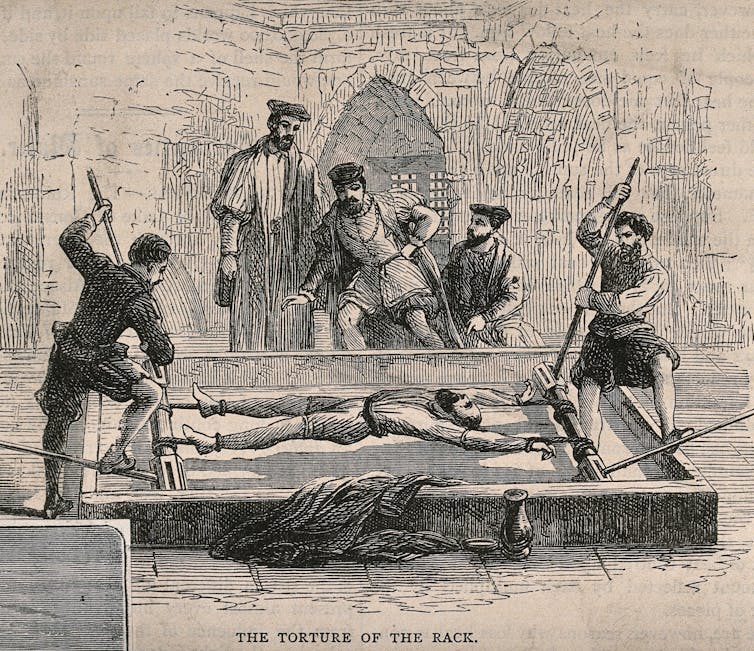
The Tower of London records confirm that King James I personally authorised “the gentler tortures first”. Accounts reveal that Fawkes was stretched on the rack – a device designed to slowly pull the limbs in opposite directions. This stretching inflicted severe trauma on the shoulders, elbows and hips, as well as the spine.

The forces exerted by the rack probably exceeded those required for joint or hip dislocation under normal conditions.

Substantive differences between Fawkes’ signatures on confessions between November 8 and shortly before his execution may indicate the amount of nerve and soft tissue damage sustained. It also illustrates how remarkable his final leap from the gallows was.

An engraving depicting a person being tortured on the rack.
The rack slowly pulled a prisoner’s limbs in opposite directions. Wellcome Collection/ Wikimedia Commons, CC BY-SA

Stage 1: hanging (partial strangulation)

After surviving the torture of the rack, Fawkes and his gang faced the next stage of their punishment: hanging. But this form of hanging only partially strangled the condemned – preserving their consciousness and prolonging their suffering.

Partial strangulation exerts extreme pressure on several critical neck structures. The hyoid bone, a small u-shaped structure above the larynx, is prone to bruising or fracture under compression.

Simultaneously, pressure on the carotid arteries restricts blood flow to the brain, while compression of the jugular veins causes pooling of blood in the head – probably resulting in visible haemorrhages in the eyes and face.

Because the larynx and trachea (both essential for airflow) are partially obstructed, this makes breathing laboured. Strain on the cervical spine and surrounding muscles in the neck can lead to tearing, muscle spasms or dislocation of the vertebra – causing severe pain.

Fawkes brought his agony to a premature end by leaping from the gallows. Accounts from the time tell us:

His body being weak with the torture and sickness, he was scarce able to go up the ladder – yet with much ado, by the help of the hangman, went high enough to break his neck by the fall.

This probably caused him to suffer a bilateral fracture of his second cervical vertebra, assisted by his own bodyweight – an injury known as the “hangman’s fracture”.

Stage 2: Drawing (disembowelment)

After enduring partial hanging, the victim would then be “drawn” – a process which involved disembowelling them while still alive. This act mainly targeted the organs of the abdominal cavity – including the intestines, liver and kidney, as well as major blood vessels such as the abdominal aorta.

The physiological response to disembowelment would have been immediate and severe. The abdominal cavity possesses a high concentration of pain receptors – particularly around the membranous lining of the abdomen. When punctured, these pain receptors would have sent intense pain signals to the brain, overwhelming the body’s capacity for pain management. Shock would soon follow due to the rapid drop in blood pressure caused by massive amounts of blood loss.

Stage 3: quartering (dismemberment)

Quartering was also supposed to be performed while the victim was still alive. Though no accounts exist detailing at what phase victims typically lost consciousness during execution, it’s highly unlikely many survived the shock of being drawn.

So, at this stage, publicity superseded punishment given the victim’s likely earlier demise. Limbs that were removed from criminals were preserved by boiling them with spices. These were then toured around the country to act as a deterrent for others.

Though accounts suggest Fawkes’s body parts were sent to “the four corners of the United Kingdom”, there is no specific record of what was sent where. However, his head was displayed in London.

Traitor’s punishment

The punishment of hanging, drawing and quartering was designed to be as anatomically devastating as it was psychologically terrifying. Each stage of the process exploited the vulnerabilities of the human body to create maximum pain and suffering, while also serving as a grim reminder of the consequences of treason.

This punishment also gives us an insight into how medieval justice systems used the body as a canvas for social and political messaging. Fawkes’s fate, though unimaginable today, exemplifies the extremes to which the state could, and would, go to maintain control, power and authority over its subjects.

The sentence of hanging, drawing and quartering was officially removed from English law as part of the Forfeiture Act of 1870.

Michelle Spear, Professor of Anatomy, University of Bristol

This article is republished from The Conversation under a Creative Commons license. Read the original article.
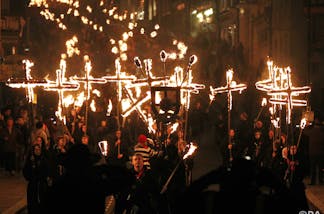
Guy Fawkes night: celebrating the most famous act of counter-terrorism in history

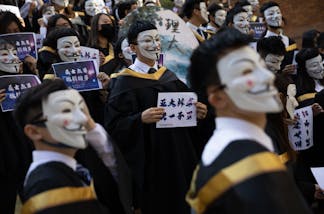
The Joker to Guy Fawkes: why protesters around the world are wearing the same masks

Guy Fawkes night’s oddest traditions are due to a 1606 law

The Gunpowder Plot: torture and persecution in fact and fiction

Continue ReadingGuy Fawkes’ punishment was one of the most severe in English history – here’s what happens when a body is hung, drawn and quartered

Hidden behind this budget is a terrible bombshell: billions in cuts for disabled people

Spread the love
Keir Starmer confirms that he's proud to be a red Tory continuing austerity and targeting poor and disabled scum.
Keir Starmer confirms that he’s proud to be a red Tory continuing austerity and targeting poor and disabled scum.

https://www.theguardian.com/commentisfree/2024/nov/05/tax-and-spend-budget-disabled-people-austerity

The DWP confirms that draconian ‘savings’ are coming down the track. Are we a nation that will repair hospitals, but not help a nurse with long Covid?

In the days after the budget, the headlines were dominated by talk of Rachel Reeves’s “tax and spend” bonanza. The message was clear: austerity is officially over. When there was concern about squeezed incomes, it was solely for workers. As the Mail front page put it: “Reeves’ £40bn tax bombshell for Britain’s strivers”. Almost a week later, there has still barely been a word about the policy set to hit the group long scapegoated as Britain’s skivers: the billions of pounds’ worth of benefit cuts for disabled people.

Making up just a couple of lines in a 77-minute speech, you’d have been forgiven for dozing past Reeves’ blink-and-you’d-miss-it bombshell. With a record number of Britons off work with long-term illness, the government will need to “reduce the benefits bill”, she said, before noting ministers had “inherited” the Conservatives’ plans to reform the work capability assessment (WCA). That plan, let’s not forget, was to take up to £4,900 a year each from 450,000 people who are too sick or disabled to work – a move that the Resolution Foundation says would “degrade living standards” for families already on some of the lowest incomes in the country.

Much like when George Osborne aimed to cut the disability benefits bill by a fifth, “welfare reform” based on arbitrary cost-cutting says the quiet part out loud: benefits won’t be awarded based on who needs them – just on what they cost. It is social security by spreadsheet, severing the social contract that promises the state will be there in times of sickness and disability, and adding a footnote that says, “but only if we can afford it”. That last week’s budget revealed huge investment for infrastructure at the same time as disability benefit cuts exposes how even the affordability argument is largely fabricated. There is money to fix hospital buildings but not to feed a nurse bedbound with long Covid.

The financial impact of such “reform” on those relying on benefits is well established but the psychological toll should not be underestimated. Since gaining power, Labour has drip-fed the rightwing press sound bites and op-eds on potential benefit cuts, leaving news outlets to speculate wildly for clicks. The budget’s half-announcement has only added to the confusion and fear, issuing vague dog whistles of “fraud” and high “benefit bills” while forcing millions of people to wait months to find out if they will lose the money they need to live.

https://www.theguardian.com/commentisfree/2024/nov/05/tax-and-spend-budget-disabled-people-austerity

Continue ReadingHidden behind this budget is a terrible bombshell: billions in cuts for disabled people

Who Should Pay for Climate Damage? Majority of the World Agrees: Big Oil

Spread the love

Original article by Brett Wilkins republished from Common Dreams under Creative Commons (CC BY-NC-ND 3.0).

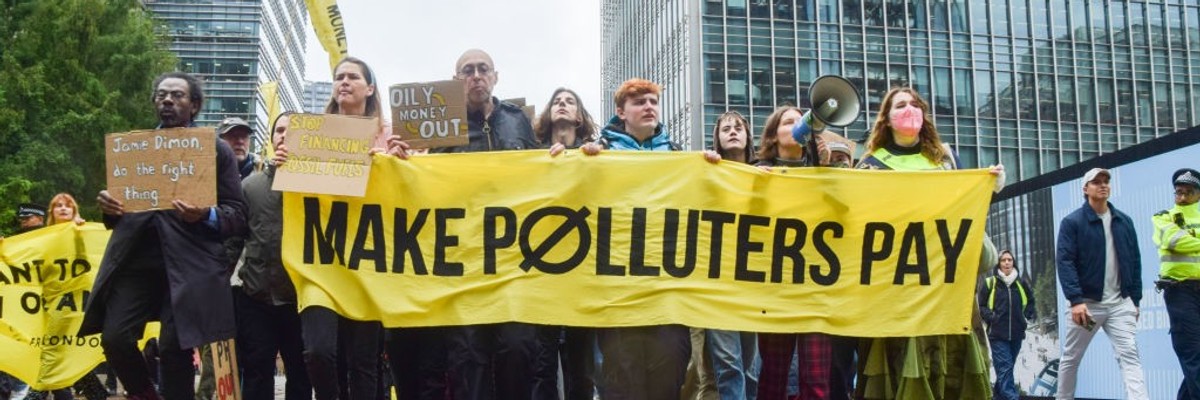
Climate campaigners march in London on October 19, 2023 to demand that fossil fuel corporations pay for their climate damage. (Photo: Vuk Valcic/SOPA Images/LightRocket via Getty Images)

“As governments debate how to finance climate action, they can be confident that making polluters pay is not only fair, but also far more popular and effective than placing the burden on ordinary citizens.”

A multinational survey commissioned by Greenpeace International and published Monday revealed that a majority of respondents favor making fossil fuel companies pay for being the main cause of the climate emergency.

Greenpeace International’s Stop Drilling, Start Paying campaign commissioned the strategic insight agency Opinium Research to survey 8,000 adults in eight countries—Australia, Argentina, France, Morocco, Philippines, South Africa, the United Kingdom, and the United States—ahead of this month’s United Nations Climate Change Conference, also known as COP29, in Baku, Azerbaijan.

“Asked about who should bear the most responsibility for climate change impacts, the most popular option across all eight countries in the survey was making oil and gas companies pay, with high-emitting countries and global elites ranked second and third,” Greenpeace International said in a summary of the survey, adding that “60% of all surveyed countries see a link between profits of the oil and gas industry and rising energy prices.”

https://twitter.com/greenpeacepress/status/1853356717926481993?ref_src=twsrc%5Etfw%7Ctwcamp%5Etweetembed%7Ctwterm%5E1853356717926481993%7Ctwgr%5E761d0bdb552a2b4dbb41e146b433941b655cef2d%7Ctwcon%5Es1_c10&ref_url=https%3A%2F%2Fwww.commondreams.org%2Fnews%2Fmake-polluters-pay-climate

Sorry, this content could not be embedded.

X

The survey also found that two-thirds or more of respondents are angry about Big Oil CEOs getting huge bonuses even as their products exacerbate the planetary emergency; fossil fuel expansion; industry disinformation; and the “historic and ongoing role of oil and gas companies in conflict, war, and human rights violations.”

Eight in 10 respondents said they were worried about climate change. However, more than twice as many people surveyed in the Global South said the climate emergency has personally affected them than respondents in the Global North.

According to Greenpeace International:

Imposing a fair climate damages tax on extraction of fossil fuels by OECD countries—proposed by the charity Stamp Out Poverty and supported by 100 NGOs, including Greenpeace International—is one example of a tax on big polluters. This could generate $900 billion by 2030… This would be key for annual climate-related loss and damage costs, estimated to be between $290-$580 billion by 2030 in low-income countries, as well as for reducing the emission of heat-trapping greenhouse gases and adapting to the impacts of the climate crisis in all countries.

“This research shows how taxing the wealthy polluters-in-chief—companies like Exxon, Chevron, Shell, Total, Equinor, and Eni—has become a mainstream solution among people, cutting across borders and income levels,” said Stop Drilling, Start Paying co-chair Abdoulaye Diallo. “As governments debate how to finance climate action, they can be confident that making polluters pay is not only fair, but also far more popular and effective than placing the burden on ordinary citizens for a crisis for which they bear little or no responsibility.”

The Opinium survey was published on the same day that Amnesty International called on the richer countries most responsible for the climate emergency to “fully pay for the catastrophic loss of homes and damage to livelihoods” in Africa.

https://twitter.com/AmnestySARO/status/1853339282225692914?ref_src=twsrc%5Etfw%7Ctwcamp%5Etweetembed%7Ctwterm%5E1853339282225692914%7Ctwgr%5E761d0bdb552a2b4dbb41e146b433941b655cef2d%7Ctwcon%5Es1_c10&ref_url=https%3A%2F%2Fwww.commondreams.org%2Fnews%2Fmake-polluters-pay-climate

Sorry, this content could not be embedded.

X

“African people have contributed the least to climate change, yet from Somalia to Senegal, Chad to Madagascar, we are suffering a terrible toll of this global emergency which has driven millions of people from their homes,” said Samira Daoud, Amnesty’s regional director for West and Central Africa. “It’s time for the countries who caused all this devastation to pay up so African people can adapt to the climate change catastrophe.”

Original article by Brett Wilkins republished from Common Dreams under Creative Commons (CC BY-NC-ND 3.0).

Continue ReadingWho Should Pay for Climate Damage? Majority of the World Agrees: Big Oil