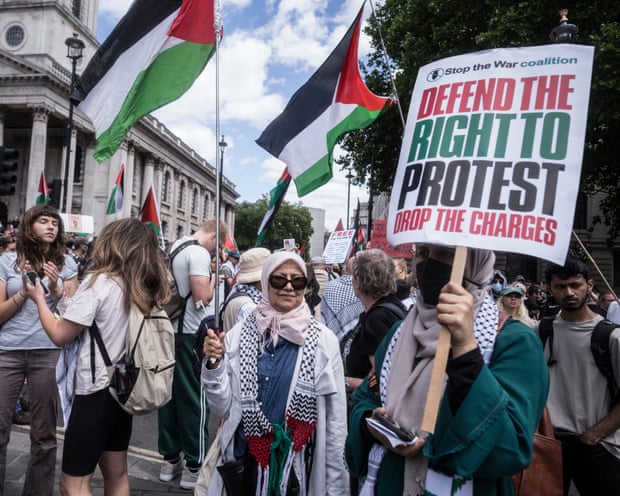
Pro-Palestine demonstrators in London earlier this week after the ban was announced. Photograph: Sean Smith/The Guardian
Anonymous source describes ‘tense atmosphere’ after Yvette Cooper announced plans to proscribe protest group
Home Office staff are concerned about the “absurd” decision to ban Palestine Action under UK anti-terrorism laws, a senior civil servant has said.
On Monday the home secretary, Yvette Cooper, announced plans to ban the group, which would make membership of it, or inviting support for it, a criminal offence under the Terrorism Act, carrying a maximum sentence of 14 years in prison.
It would be the first time a direct action protest group has been classified as a terrorist organisation, joining the likes of Islamic State, al-Qaida and National Action. The move has been condemned as draconian by many other protest groups, civil society organisations and politicians of different stripes.
A senior Home Office official, who requested anonymity as they are not allowed to speak to the press, said concerns about proscribing Palestine Action extended into the home secretary’s own department.
“My colleagues and I were shocked by the announcement,” they said. “All week, the office has been a very tense atmosphere, charged with concern about treating a non-violent protest group the same as actual terrorist organisations like Isis, and the dangerous precedent this sets.
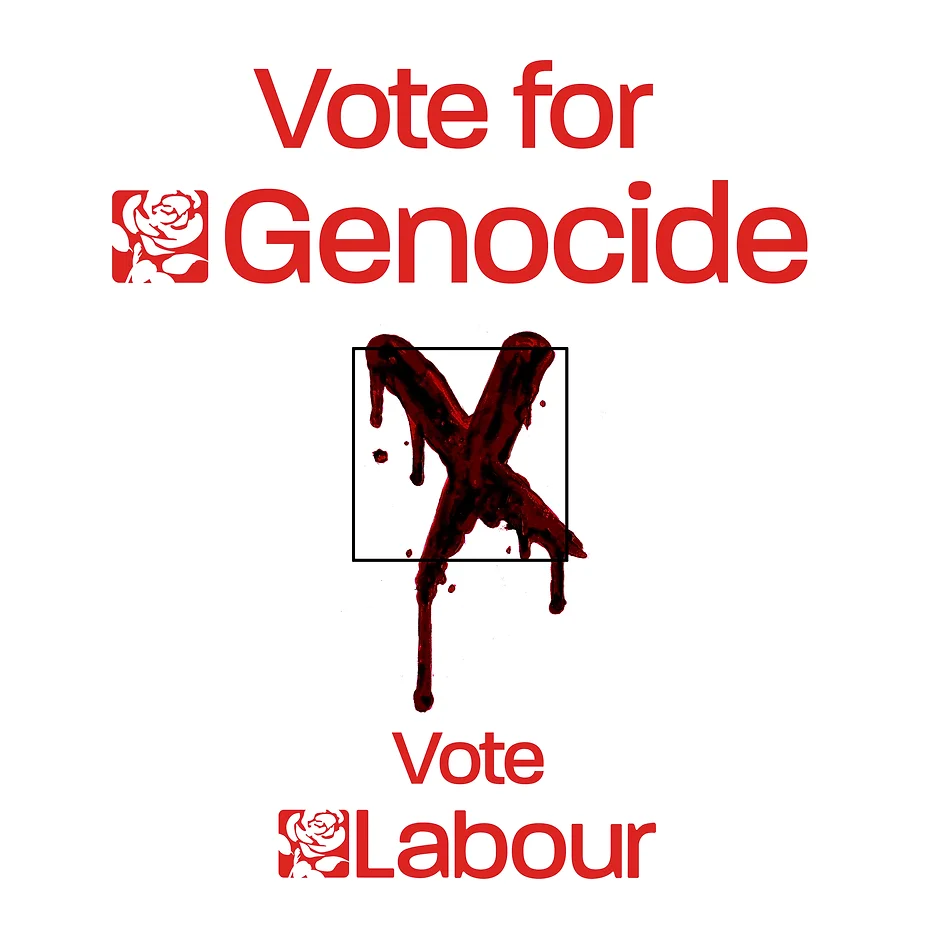
Vote Labour for Genocide.Keir “I support Zionism without Qualification” Starmer supporting genocide.UK Labour Party government ministers Keir Starmer, Angela Rayner and Rachel Reeves explain that they are partners complicit in Israel’s Gaza genocide. The UK has provided Israel with arms, military and air force support. They explain that they don’t do gas chambers but do do forced marches, starvation, destroy hospitals, mass-murders of journalists and healthcare workers.
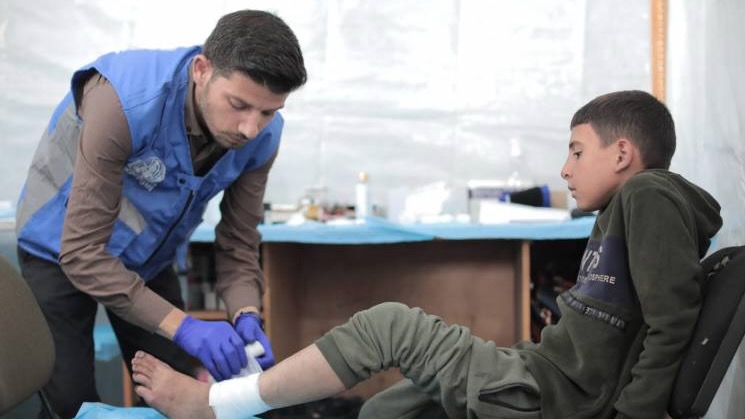
Medication shortages leave burn victims without full care in Gaza. Photo: UNRWA
The health crisis in Gaza worsens as Israeli attacks persist, supplies dwindle, and most lack access to food and water.
Less than half of all health facilities in the Gaza Strip remain partially operational and capable of providing basic primary care and surgery, the Al Mezan Center for Human Rights warned in a press release. Israeli attacks have rendered nearly all hospitals in northern Gaza non-functional, destroying dialysis units, oncology departments, and rehabilitation centers. The threat of total shutdown is now advancing into the southern governorates: the European Hospital has already been forced to close due to the attacks, and the Nasser Medical Center could be next in line.
This major institution has been operating far beyond capacity for weeks and is under imminent threat of closure, according to both international and non-governmental organizations. “Its closure would deprive thousands of access to critical healthcare and effectively amounts to a death sentence for the wounded and sick in the southern district,” Al Mezan reported.
According to the Jewish Voice for Peace (JVP) Health Advisory Council, most patients at Nasser Medical Center are victims of direct sniper shots to the head or chest, illustrating the deliberate targeting of Palestinians by Israeli forces.
Medics forced to repurpose used supplies
The crisis at Nasser, as with other medical facilities, is worsened by widespread shortages of essential supplies. Over 50% of medications for chronic conditions are unavailable, 64% of cancer and hematology drugs are missing, and the shortage of orthopedic equipment has reached nearly 90%, according to health organizations. Both the JVP Health Advisory Council and United Nations agencies have highlighted that the lack of basic items such as gauze, medicines, and surgical equipment is forcing medical staff into extreme triage decisions. “Medical teams have been forced to reuse equipment – sterilizing and repurposing implants from recovered patients – due to the acute shortage of these items,” Al Mezan stated.
Fuel shortages are of particular concern, as they endanger the functioning of critical medical devices such as ventilators in neonatal intensive care units (NICUs). “Newborns in NICUs are often too small to breathe on their own – they need ventilators and oxygen to survive,” staff from Doctors Without Borders (MSF) pointed out. “The charade of only allowing medical and fuel supplies at the very last minute before a looming disaster is nothing but a band-aid on a gushing wound.”
Hunger rates grow further
At the same time, hunger is sweeping through Gaza. Following Israel’s months-long blockade of aid and the weaponization of humanitarian deliveries, most of the population is experiencing rising degrees of malnutrition. This is impacting public health in multiple ways, including reducing the pool of eligible blood donors, even as blood banks face dire shortages.
“We are missing everything: medical consumables like gauze, medications, and food for our patients,” said MSF nursing manager Katja Storck. “This also includes therapeutic food for people with malnutrition, especially children.”
By June 15, nearly 19,000 children under five had received treatment for malnutrition, though this likely underrepresents the full extent of the crisis. As the JVP Health Advisory Council noted, these cases emerged “within a population where wasting was non-existent 20 months ago.” Malnutrition is not only increasing susceptibility to infectious disease, but is also causing serious long-term effects such as stunted growth and mental health problems. Prenatal health is also affected: one in five newborns is now being born preterm or underweight.
While many adults are trying to shield children from hunger by reducing their own intake, most coping strategies are ineffective under the conditions imposed by the occupation. “Most families reported surviving on one meager meal a day – thin broths, lentils or rice with salt, macaroni, cans of beans or peas, and boiled legumes,” UN sources reported. “One third said they go entire days without eating or rely on a single piece of bread and duqqa.”
Beyond hunger caused by Israel’s blockade, Palestinians in Gaza are also facing an escalating water crisis. With much of the water infrastructure destroyed and fuel to power desalination plants missing, access to safe drinking water has plummeted. In Deir al-Balah, 97% of residents reported being unable to obtain adequate water. “This is Gaza’s most critical moment since this war on children began – a woeful bar to sink below,” UNICEF spokesperson James Elder stated on June 20. “A virtual blockade is in place; humanitarian aid is being sidelined; the daily killing of girls and boys in Gaza does not register; and now a deliberate fuel crisis is severing Palestinians’ most essential element for survival: water.
Zionist Keir Starmer is quoted “I support Zionism without qualification.” He’s asked whether that means that he supports Zionism under all circumstances, whatever Zionists do.Keir “I support Zionism without Qualification” Starmer supporting genocide.Vote Labour for Genocide.
Channel 4 said the film has been fact-checked to ensure it meets the broadcaster’s editorial standards and the Ofcom broadcasting code. Photograph: Tom Nicholson/Reuters
BBC last week announced it had dropped the film over concerns it may create a ‘perception of partiality’
Channel 4 will air a documentary about the plight of medics in Gaza after the BBC last week announced that it would not show the film after concerns it may create “a perception of partiality that would not meet the high standards that the public rightly expect”.
The BBC had commissioned Gaza: Doctors Under Attack more than a year ago from an independent production company called Basement Films but had delayed airing it until an ongoing review into a different programme on the region was completed.
The one-off documentary, which includes witness accounts from frontline Palestinian health workers in Gaza and documents attacks on hospitals and clinics, will now air on Channel 4 on 2 July at 10pm.
…
Louisa Compton, Channel 4’s head of news and current affairs and specialist factual and sport, said in a statement: “This is a meticulously reported and important film examining evidence which supports allegations of grave breaches of international law by Israeli forces that deserves to be widely seen and exemplifies Channel 4’s commitment to brave and fearless journalism.”
In an op-ed, Compton further explained: “We are showing this programme because we believe that, following thorough factchecking and verification, we are presenting a duly impartial view of a subject that both divides opinion and frequently provokes dispute about what constitutes a fact.
Vote Labour for Genocide.Keir “I support Zionism without Qualification” Starmer supporting genocide.UK Labour Party government ministers Keir Starmer, Angela Rayner and Rachel Reeves explain that they are partners complicit in Israel’s Gaza genocide. The UK has provided Israel with arms, military and air force support. They explain that they don’t do gas chambers but do do forced marches, starvation, destroy hospitals, mass-murders of journalists and healthcare workers.
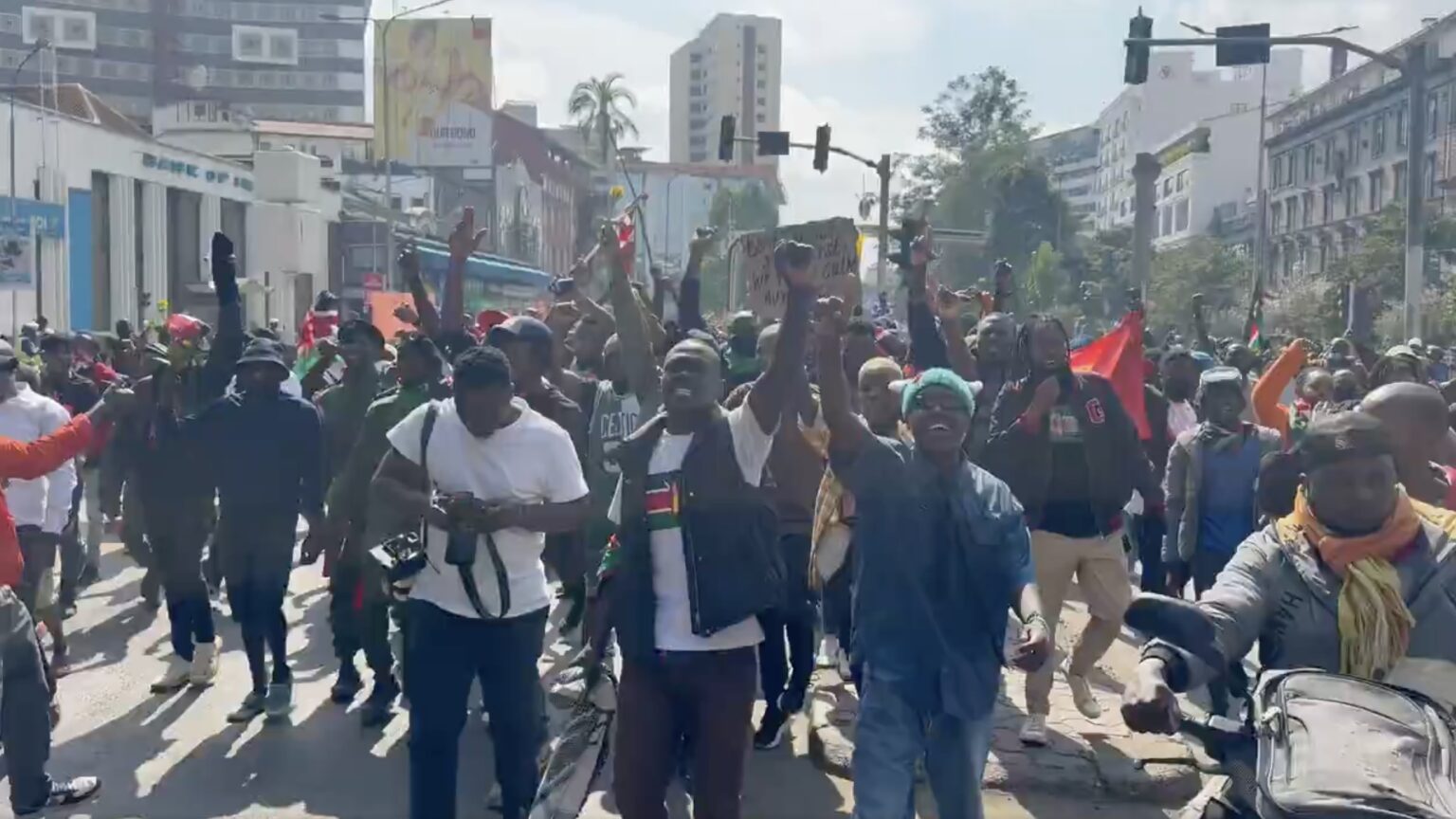
Revolutionary Youth League of Kenya on the streets of Nairobi on June 25. Photo: Screenshot
What was meant to be a solemn commemoration of the first anniversary of the historic anti-Finance Bill protests in Kenya turned chaotic on Tuesday as police clashed with demonstrators across several cities. Police used tear gas and water cannons against largely peaceful protesters, who had gathered to honor those killed during last year’s unrest and to demand justice over recent cases of police brutality and enforced disappearances.
At least 16 people were confirmed dead, with hundreds injured, after law enforcement agencies used excessive force to suppress the gatherings.
“The protests now symbolize indictments of the system itself – a system defined by authoritarianism, police violence, austerity, foreign domination, and the privatization of every public good. The state responded as expected – not with dialogue, but with bullets,” Rodgers, a grassroots organizer with the Nairobi chapter of the Social Justice Movement, told Peoples Dispatch.
The 2024 Finance Bill protests
Last year’s demonstrations, which began in response to the controversial Finance Bill 2024, led to a brutal crackdown that left over 60 young people dead, hundreds injured, and many arrested. The bill, championed by the government of President William Ruto, was widely criticized for introducing punitive taxes on essential goods and services amidst a cost-of-living crisis.
This year’s protests were organized to honor those who lost their lives during the 2024 demonstrations. However, they also served as a platform to raise alarm over recent developments, including the killing of a popular blogger in police custody and a worrying surge in abductions of activists and dissenters.
In what many have called a blatant attempt to stifle freedom of the press, the Communications Authority of Kenya (CA) ordered a suspension of live TV coverage of the protests. Several local stations, including Citizen TV, NTV, KTN were either switched off or restricted, preventing real-time reporting of the police response and protest.
Many people also condemned the presence of infiltrators and hired goons among the protestors. These individuals were allegedly used to discredit the demonstrations by engaging in looting and property destruction tactics used as part of a wider strategy to delegitimize grassroots mobilization and participation in protests.
Despite the violent disruptions, the anniversary protests saw thousands of Kenyans across the country take to the streets. Demonstrators carried placards bearing the names of those killed in 2024 and chanted slogans demanding accountability, justice, and police reform.
Voices from the protests
In dialogue with Peoples Dispatch, Rodgers, a grassroots organizer with the Nairobi chapter of the Social Justice Movement, reflected on the deeper meaning behind the protests:
“The June 25 protest went beyond just being a memorial. It was a continuity of a political statement from the people that they will not fear to remain defiant in the face of systemic oppression. Exactly one year since mass uprisings shook the country in opposition to the punitive Finance Bill 2024 and broader economic injustice, the people came back to the streets with even more clarity and unity.”
We just arrived where comrade Alex Maasai was murdered by Ruto thugs and the Kenya Police, in the morning we visited Central police where Albert Ojwang’ was murdered my Lagat and his criminal gangs #OccupyUntilVictorypic.twitter.com/87b6SI5UiR
Rodgers emphasized that what distinguished this year’s protests was not only their scale – reaching 27 of Kenya’s 47 counties – but the emergence of a clearly articulated political program from below.
Citing reports confirming that between 8 and 16 people were killed and over 400 injured, Rodgers also condemned the regime’s attempt to suppress the truth by shutting down live broadcasts, which he said “exposed repression on free speech and its fear of truth, transparency, and the voice of the people.”
“The people are now conscious that the crisis in Kenya is political as much as it is systemic. It is a crisis of legitimacy, where the ruling class governs through force and deception, abandoning constitutional obligations like Article 43 on economic and social rights.”
He described the protest movement as part of a broader class struggle – pitting a parasitic elite backed by global capital against a rising mass of organized working poor and peasants demanding land, food, dignity, freedom, and power.
“Yesterday was important because it proved this movement is not spontaneous. It is becoming strategic, conscious, and unafraid.”
Unmet demands and growing anger
In the days leading up to the anniversary, momentum had been building both online and offline. Young people, civil society groups, university students, and artists held vigils, digital campaigns, and forums across the country. Yet many of the core grievances that sparked the protests in 2024 remain unresolved:
Runaway corruption
A bloated government
Growing public debt
Youth unemployment
The erosion of democratic space
As the country grapples with the fallout of this week’s events, people are calling for an independent investigation into the killings, injuries, and abductions. They are also demanding the immediate reinstatement of press freedoms and the prosecution of those responsible for unlawful police actions.
The anniversary protests have made it clear: Kenya’s youth are not willing to be silent, and the demand for social justice is far from over.
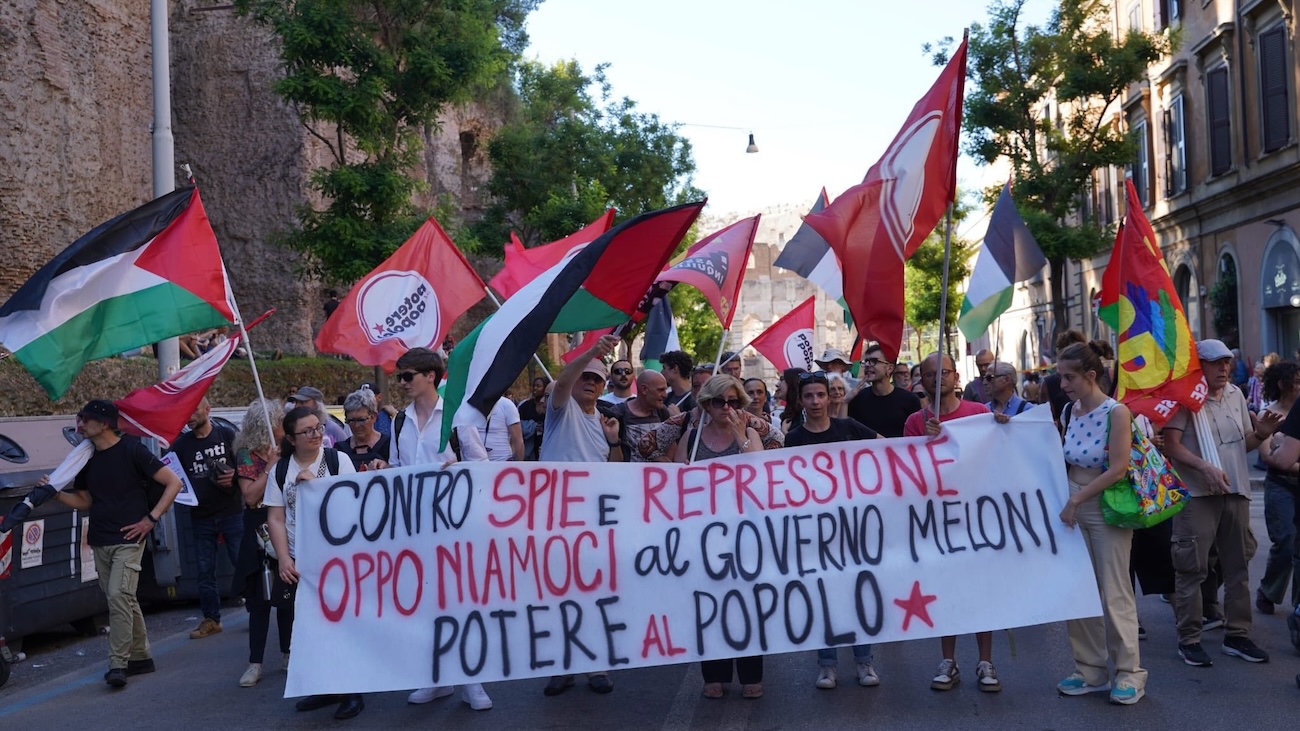
Potere al Popolo activists with banner reading: “Against spies and repression. Let’s stand up to the Meloni government”. Photo: Potere al Popolo
Following the exposure of an undercover operation in its Naples chapter, Potere al Popolo has reported additional cases of police spying in other Italian cities.
After discovering that a young police officer had infiltrated Potere al Popolo (Power to the People) in Naples at the end of May, the party, together with media outlet Fanpage, uncovered four similar cases in Milan, Bologna, and Rome. The officers approached the organization primarily through one of its youth collectives, Cambiare Rotta (Changing Course), between October and November 2024, shortly after graduating from the same police course and just before being assigned to the Central Police Directorate for Crime Prevention, an agency dedicated to investigating terrorism.
During this period, the officers actively participated in demonstrations against the cost of living crisis, in solidarity with Palestine, and in anti-militarization actions. They often presented themselves as out-of-town students with few connections at local universities. Their involvement went deep: some supported election campaigns for official student bodies. At the same time, other activists noticed inconsistencies – none of the identified officers engaged in activities beyond political work, for example, an unusual pattern in youth organizing.
While the infiltration operations in Naples, Milan, and Bologna lasted about eight months, the effort in Rome was short-lived. Activists there quickly grew suspicious of the officer’s background story and the way he tried to approach the organization.
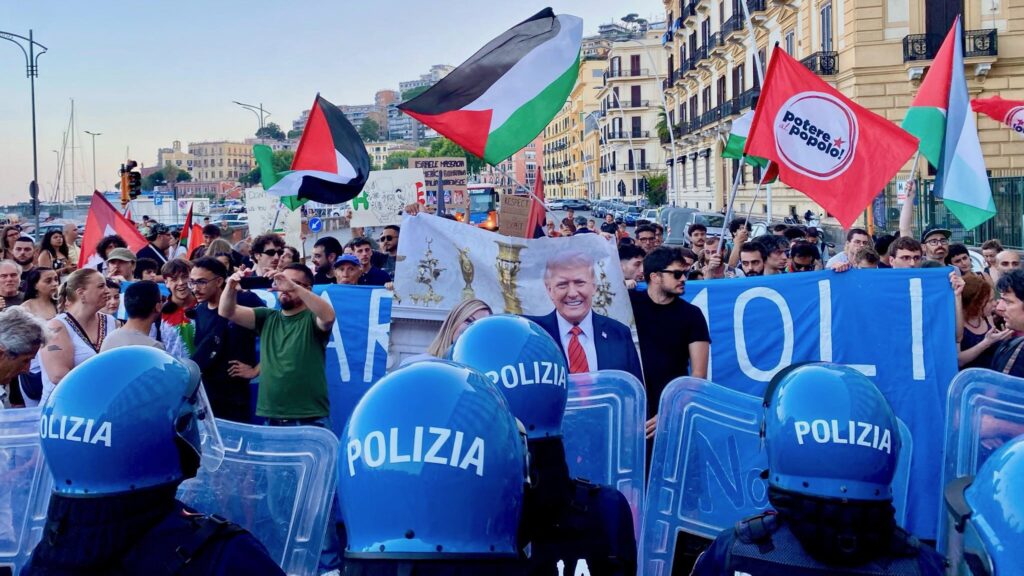
Protestors take the streets to demonstrate against rearmament and NATO. Photo: Potere al Popolo
By late June, all those identified had ceased contact with Potere al Popolo, but one officer was present at a demonstration in Bologna when news of the Naples infiltration broke publicly last month. “The moment there was a public denunciation in that demonstration in Bologna, about the Naples episode, this person disappeared from one day to the next,” said Giuliano Granato of Potere al Popolo. “We haven’t heard from him since.”
A threat to democratic rights and structures
Back in May, the party had denounced the Naples case as a disturbing sign of the government’s authoritarian drift, undermining the democratic character of Italian society and constitutional values. That warning has since prompted several parliamentary parties to demand explanations from Prime Minister Giorgia Meloni’s government – none of which have been provided. With these new revelations, alongside confirmed instances of journalists being spied on, concerns are mounting over the administration’s trajectory.
“It shows us the path of repression this government is taking through, and I quote Giorgia Meloni’s own words, ‘regime methods’,” said Anita Palermo of Potere al Popolo Rome. “We appeal to social and democratic forces, associations, and citizens to mobilize so that political activity in this country can take place in a democratic way, without fear of police infiltration.”
During a press conference on June 27, Granato added that the infiltration and surveillance of political parties, humanitarian organizations working with migrants, and journalists were indicative of the government’s own fear. The fact that they are prepared to launch such operations shows that the government is terrified of dissent, he said.
“But dissent is the salt of democracy,” Granato added, insisting that the experience of Potere al Popolo has far broader relevance. “If the state can plant an undercover officer inside a political party, it can do the same to a union or a newsroom.”
Trade unions and social collectives have condemned the police operations as a clear attack on political and civil rights. Many interpret it as part of the Meloni government’s increasingly repressive stance toward political opposition. This comes at a moment when Potere al Popolo, alongside grassroots unions, is leading a national campaign against war, NATO, and the European Union’s rearmament agenda.
According to the Unione Sindacale di Base (USB), the attack on Potere al Popolo and its affiliated groups is emblematic of the broader political climate. “It’s a snapshot of the cultural and political values of a class that has openly aligned itself with war and rearmament,” the union said.
“And in a climate of war, the first targets are those who oppose it clearly and unequivocally, voices that must be preemptively silenced even when they act with full transparency,” the USB warned. “The ‘war system’ and all its economic and social ramifications … allows no dissent because it demands we all silently enlist in its cause. And that cause crushes democracy, packing away our freedoms in the attic.”