I’m facing 10 years in prison for climate protest. I’d still do it again

Spread the love

Original article by Ella Ward republished from Open Democracy under a Creative Commons Attribution-NonCommercial 4.0 International licence.

Matthew Chattle/Future Publishing via Getty Images

The UK’s broken justice system is locking young activists like me away – and we’ll all suffer the consequences

My name’s Ella. I am a fairly average 22-year-old from Birmingham, central England. I have friends, a supportive family, and hopes and dreams for after graduation. I’m also facing up to ten years in prison.

On 5 August last year, I was arrested along with three others on a side street in Gatley, near Manchester, just after 4am. We had been planning to enter Manchester Airport’s airfield – provided it was safe to do so – to block the taxiway by glueing our hands to the tarmac. 

We didn’t get near the airport, but I have been held in HMP Styal, a women’s prison just outside Manchester, ever since. I was charged with conspiracy to cause a public nuisance and spent six months in prison awaiting trial. I was found guilty in February and will have served three months by the time I am sentenced at the end of this month.

So what drives a young person like me to take nonviolent action as drastic as this? You may have realised that I am a member of Just Stop Oil. At the time of my arrest, I was carrying boltcutters, glue, a hi-vis jacket, and a banner reading ‘sign the treaty’ in all caps.

Get our free Daily Email

Get one whole story, direct to your inbox every weekday.

Sign up now

It was the summer of 2024, the hottest year ever recorded. We were trying to send a message to the British government: it must sign the Fossil Fuel Non-Proliferation Treaty and make an immediate plan to transition away from oil, gas and coal to prevent further global heating, climate breakdown, and eventual societal collapse.

We wanted to go to an airport – a symbol of the carbon economy – to make clear that the UK’s ‘business as usual’ approach is sending humanity over a cliff edge into destruction, displacement, and massive loss of life. 

Our protest may have seemed drastic, but as I tried to explain to the judge and the jury, it was proportionate to the scale of the crisis we are facing. We all stand to lose everything. 

Until my arrest, I was a final-year environmental science student at the University of Leeds. As I told the court, the science is clear: burning and extracting fossil fuels is heating the planet and leading to mass crop failure, with food insecurity and starvation for large parts of the world and drastic price hikes on staples for the rest of us. Crop failure on this scale will kill millions and displace many more. A billion people could be on the move within 25 years. The impacts will be felt everywhere, by everyone. 

I spoke about my university lecturers, who are prominent climate scientists and are fearful for their children’s lives. They feel they aren’t being listened to, that the government is implementing policies contrary to science. I said that the knowledge I had gained from studying gave me a responsibility to act.

Court trials like mine are remarkably technical – you must submit a legal defence if you want the judge to allow jurors to consider your motivation, or the context of your actions. I did not have a lawyer and, like my co-defendants, put forward a defence of ‘self-defence’ and ‘necessity’.  

I argued that I acted not only to protect the lives of the millions already living on the frontline of climate breakdown, but in defence of myself and young people globally. I told the court how I am afraid for my own future, the future of my brother, my friends, my cousins, and all young people everywhere. 

The judge dismissed this, saying the climate crisis does not pose an ‘immediate threat to life’. He told jurors to ignore the context around our actions and focus only on whether we had planned to commit a ‘crime’, saying that anything they’d heard about climate change during the hearing was irrelevant as it was a political or philosophical belief.

But the climate crisis is not a belief, it is science, and science doesn’t care about legal defences, judges’ rulings or prison sentences. It will continue to worsen and take more lives until governments work together to stop burning fossil fuels.

Related story

Anti protest legislation

How the UK’s ‘free speech’ government banned protest

19 May 2025 | Sian Norris

Conservative ministers loudly championed free speech – right up until they outlawed it. Now, we’re all at risk

Over the past six months in prison, this truth has become clearer and clearer. Climate breakdown is no longer something I read about in textbooks, study in lectures, or write about in exams. I’m seeing it through the bars of my cell window. 

On New Year’s Day, a state of emergency was declared as Greater Manchester was hit by heavy rains. Over a thousand people were evacuated from flooded homes – HMP Styal’s prison officers among them – their possessions ruined, and huge disruption caused. 

The rising waters cut off the roads leading to the prison, causing a staffing crisis that compromised our safety, with no one allowed to leave their wings or houses. The prison’s library and workplaces were flooded, ruining books and leaving some prisoners with no work or activities even after the regime returned to normal. 

Such extreme weather is being seen everywhere. On the penultimate day of my hearing, 14 people were killed in floods in the US state of Kentucky, including a seven-year-old girl and her mother, who were washed away in their car. I used my closing speech to tell jurors about this, about how upset it made me. How many people will die before we open our eyes? 

The judge ruled it irrelevant.

Having been barred from considering almost everything we’d said, the jury had little choice but to find us guilty. I am grateful to all twelve of them, though, for listening to what we had to say for three weeks and making the only decision they could within the constraints given.

Despite the guilty verdict, being in prison and my impending sentencing, I am at peace. I should have had my whole life ahead of me, and my future now hangs in the balance, but I know that I acted in line with my conscience and moral convictions and, above all, nonviolently: without violence and actively against violence. 

Being on trial at a crown court in my early twenties was the scariest thing I’ve ever done. But what choice did I have? At university, I studied the truth, and now I have to act on it.

Original article by Ella Ward republished from Open Democracy under a Creative Commons Attribution-NonCommercial 4.0 International licence.

Orcas discuss Donald Trump and the killer apes' concept of democracy. Front Orca warns that Trump is crashing his country's economy and that everything he does he does for the fantastically wealthy.
Orcas discuss Donald Trump and the killer apes’ concept of democracy. Front Orca warns that Trump is crashing his country’s economy and that everything he does he does for the fantastically wealthy.
Neo-Fascist Climate Science Denier Donald Trump says Burn, Baby, Burn.
Elon Musk urges you to be a Fascist like him, says that you can ignore facts and reality then.
Continue ReadingI’m facing 10 years in prison for climate protest. I’d still do it again

Overshooting 1.5°C: even temporary warming above globally agreed temperature limit could have permanent consequences

Spread the love
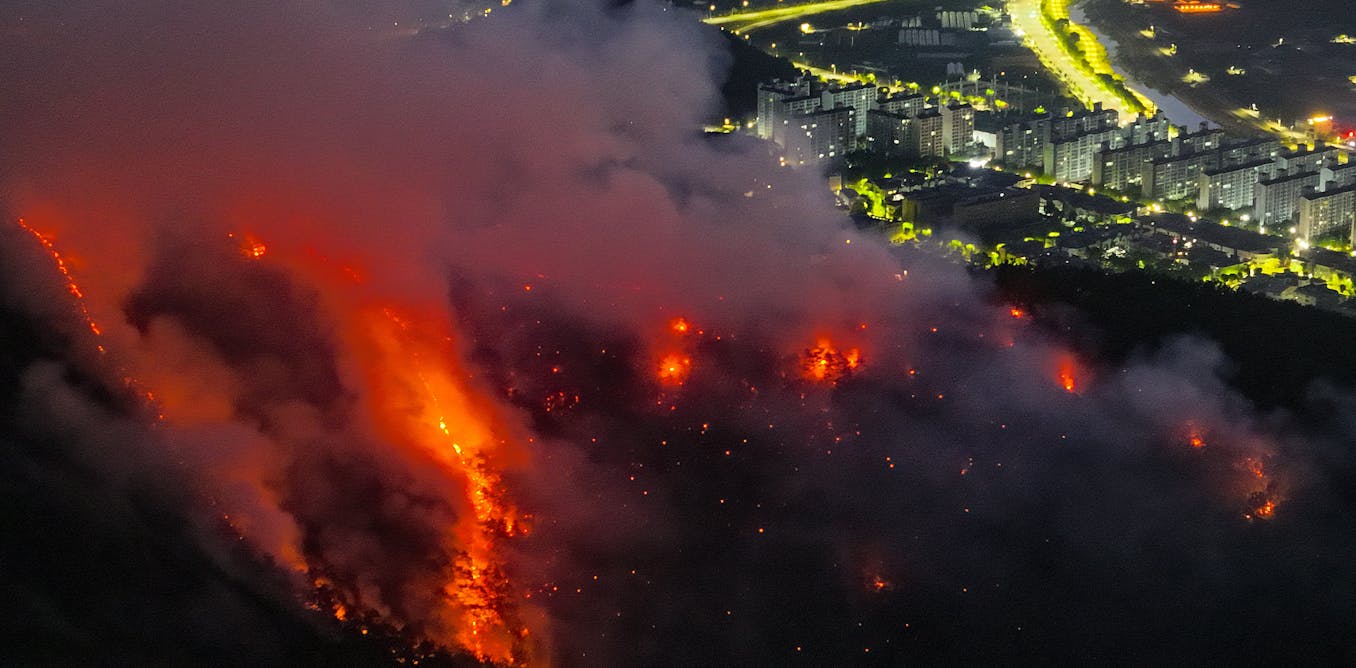
A wildfire raging near a residential area of Daegu, South Korea in April 2025. EPA-EFE/Yonhap

Paul Dodds, UCL

Earth’s surface temperature has been 1.5°C hotter than the pre-industrial average for 21 of the last 22 months.

The 2015 Paris agreement committed countries to keeping the global temperature increase “well below 2°C”, which is widely interpreted as an average of 1.5°C over a 30-year period. The Paris agreement has not yet failed, but recent high temperatures show how close the Earth is to crossing this critical threshold.

Climate scientists have, using computer simulations, modelled pathways for halting climate change at internationally agreed limits. However, in recent years, many of the pathways that have been published involve exceeding 1.5°C for a few decades and removing enough greenhouse gas from the atmosphere to return Earth’s average temperature below the threshold again. Scientists call this “a temporary overshoot”.

If human activities were to raise the global average temperature 1.6°C above the pre-industrial average, for example, then CO₂ removal, using methods ranging from habitat restoration to mechanically capturing CO₂ from the air, would be required to return warming to below 1.5°C by 2100.


Get your news from actual experts, straight to your inbox. Sign up to our daily newsletter to receive all The Conversation UK’s latest coverage of news and research, from politics and business to the arts and sciences.


Do we really understand the consequences of “temporarily” overshooting 1.5°C? And would it even be possible to lower temperatures again?

Faith that a temporary overshoot will be safe and practicable has justified a deliberate strategy of delaying emission cuts in the short term, some scientists warn. The dangers posed by remaining above the 1.5°C limit for a period of time have received little attention by researchers like me, who study climate change.

To learn more, the UK government commissioned me and a team of 36 other scientists to examine the possible impacts.

How nature will be affected

We examined a “delayed action” scenario, in which greenhouse gas emissions remain similar for the next 15 years due to continued fossil fuel burning but then fall rapidly over a period of 20 years.

We projected that this would cause the rise in Earth’s temperature to peak at 1.9°C in 2060, before falling to 1.5°C in 2100 as greenhouse gases are removed from the atmosphere. We compared this scenario with a baseline scenario in which the global temperature does not exceed 1.5°C of warming this century.

Our Earth system model suggested that Arctic temperatures would be up to 4°C higher in 2060 compared to the baseline scenario. Arctic Sea ice loss would be much higher. Even after the global average temperature was returned to 1.5°C above pre-industrial levels, in 2100, the Arctic would remain around 1.5°C warmer compared to the baseline scenario. This suggests there are long-term and potentially irreversible consequences for the climate in overshooting 1.5°C.

Comparative maps of global temperature increases in the middle of the century caused by overshooting 1.5°C, when compared to a pathway in which the global temperature does not exceed 1.5°C.
Temperature increases caused by overshooting 1.5°C are primarily felt in the Arctic and on land. Selena Zhang, Maria Russo, Luke Abraham and Alex Archibald.

As global warming approaches 2°C, warm-water corals, Arctic permafrost, Barents Sea ice and mountain glaciers could reach tipping points at which substantial and irreversible changes occur. Some scientists have concluded that the west Antarctic ice sheet may have already started melting irreversibly.

Our modelling showed that the risk of catastrophic wildfires is substantially higher during a temporary overshoot that culminates in 1.9°C of warming, particularly in regions already vulnerable to wildfires. Fires in California in early 2025 are an example of what is possible when the global temperature is higher.

Our analysis showed that the risk of species going extinct at 2°C of warming is double that at 1.5°C. Insects are most at risk because they are less able to move between regions in response to the changing climate than larger mammals and birds.

The impacts on society

Only armed conflict is considered by experts to have a greater impact on society than extreme weather. Forecasting how extreme weather will be affected by climate change is challenging. Scientists expect more intense storms, floods and droughts, but not necessarily in places that already regularly suffer these extremes.

In some places, moderate floods may reduce in size while larger, more extreme events occur more often and cause more damage. We are confident that the sea level would rise faster in a temporary overshoot scenario, and further increase the risk of flooding. We also expect more extreme floods and droughts, and for them to cause more damage to water and sanitation systems.

Floods and droughts will affect food production too. We found that impact studies have probably underestimated the crop damage that increases in extreme weather and water scarcity in key production areas during a temporary overshoot would cause.

We know that heatwaves become more frequent and intense as temperatures increase. More scarce food and water would increase the health risks of heat exposure beyond 1.5°C. It is particularly difficult to estimate the overall impact of overshooting this temperature limit when several impacts reinforce each other in this way.

In fact, most alarming of all is how uncertain much of our knowledge is.

For example, we have little confidence in estimates of how climate change will affect the economy. Some academics use models to predict how crops and other economic assets will be affected by climate change; others infer what will happen by projecting real-word economic losses to date into future warming scenarios. For 3°C of warming, estimates of the annual impact on GDP using models range from -5% to +3% each year, but up to -55% using the latter approach.

We have not managed to reconcile the differences between these methods. The highest estimates account for changes in extreme weather due to climate change, which are particularly difficult to determine.

We carried out an economic analysis using estimates of climate damage from both models and observed climate-related losses. We found that temporarily overshooting 1.5°C would reduce global GDP compared with not overshooting it, even if economic damages were lower than we expect. The economic consequences for the global economy could be profound.

So, what can we say for certain? First, that temporarily overshooting 1.5°C would be more costly to society and to the natural world than not overshooting it. Second, our projections are relatively conservative. It is likely that impacts would be worse, and possibly much worse, than we estimate.

Fundamentally, every increment of global temperature rise will worsen impacts on us and the rest of the natural world. We should aim to minimise global warming as much as possible, rather than focus on a particular target.


Don’t have time to read about climate change as much as you’d like?
Get a weekly roundup in your inbox instead. Every Wednesday, The Conversation’s environment editor writes Imagine, a short email that goes a little deeper into just one climate issue. Join the 45,000+ readers who’ve subscribed so far.


Paul Dodds, Professor of Energy Systems, UCL

This article is republished from The Conversation under a Creative Commons license. Read the original article.

Orcas comment on killer apes destroying the planet by continuing to burn fossil fuels.
Neo-Fascist Climate Science Denier Donald Trump says Burn, Baby, Burn.
Elon Musk urges you to be a Fascist like him, says that you can ignore facts and reality then.
Continue ReadingOvershooting 1.5°C: even temporary warming above globally agreed temperature limit could have permanent consequences

UN Warns 14,000 Babies in Gaza Could Die in 48 Hours Without True Lift of Israeli Blockade

Spread the love

Original article by Julia Conley republished form Common Dreams under Creative Commons (CC BY-NC-ND 3.0). 

18-month-old Mayar El Arca is being treated at Nasser Hospital in Khan Younis, Gaza on May 17, 2025. (Photo: Doaa Albaz/Anadolu via Getty Images)

“The limited entry of aid into Gaza cannot be mistaken for meaningful progress,” said one humanitarian expert.

The United Nations estimated that the Netanyahu government’s continued starvation of more than 2 million Palestinians could kill up to 14,000 infants in the next two days without a serious influx of aid.

News outlets have reported since Monday that Prime Minister Benjamin Netanyahu allowed five aid trucks carrying baby food and other nutritional aid into the besieged enclave—but humanitarian experts and workers have decried the arrival of the aid as “a trickle among a sea of need.”

Tom Fletcher, under-secretary-general for humanitarian affairs for the United Nations, said the tiny amount of aid was a “drop in the ocean” in a bombarded enclave where food security experts announced earlier this month that nearly a quarter of a million people are facing “extreme deprivation of food” and the entire population has “very high” levels of acute malnutrition and excess mortality.

While many medical workers have been killed in Israeli bombings, Fletcher told the BBC‘s Radio 4 “Today” program that teams have assessed that 14,000 infants are likely to die within 48 hours if food aid can’t reach them. The small amount of trucks allowed in through the Karem Abu Salem crossing Monday—a fraction of the 600 per day that provided food, medications, water, and other aid to Palestinians during the recent cease-fire—have yet to actually reach civilians.

On Tuesday, 100 more U.N. trucks were given clearance to enter Gaza. Fletcher said humanitarian workers fear potential looting of aid trucks due to the chaotic, desperate situation faced by Palestinians.

The current blockade began March 2, and international humanitarian groups operating in Gaza have exhausted their reserves of food aid over the past 79 days.

“For over 70 days Israel has been starving the people of Gaza, depriving them of food, water, medicine, and essential supplies while escalating its cruel and indiscriminate bombing campaign,” said Wassem Mushtaha, Gaza response lead for Oxfam. “Two million people are on the brink of famine, and they are not just starving, but also traumatized, sick, and displaced from their homes.”

“The limited entry of aid into Gaza cannot be mistaken for meaningful progress, especially alongside the expansion of Israel’s brutal bombing campaign across the Gaza Strip,” said Mushtaha. “It is not a turning point, but at best a narrow concession that seems to reflect mounting international pressure.”

The continued blockade on effectively all humanitarian aid prompted the United Kingdom, Canada, and France to issue a joint statement Monday saying that “the level of human suffering in Gaza is intolerable” and threatening “targeted sanctions.”

On Tuesday, U.K. Foreign Secretary David Lammy told Parliament that the government had suspended trade negotiations over Netanyahu’s blockade and plan to expand military operations across Gaza.

French Foreign Minister Jean-Noël Barrot said Tuesday that the country also supports a review of the European Union’s trade relationship with Gaza.

“The blind violence and the blockade of humanitarian aid by the Israeli government have turned the enclave into a death trap, not to say a cemetery,” Barrot said. “This must stop… It is an absolute violation of all the rules of international law.”

The European leaders’ comments were a departure from many Western governments’ insistence since 2023 that Israel is operating in self-defense and that it is targeting Hamas in retaliation for the group’s attack on October 7, 2023. Humanitarian groupsrights experts, and progressive lawmakers have called on Western governments to end their support for Israel, which faces a genocide case at the International Court of Justice.

Bushra Khalidi, Oxfam’s policy lead in the occupied Palestinian territory and Gaza, said Tuesday that “what is urgently needed is for all crossings to be opened to allow a full and proper humanitarian response that allows real access, with safe corridors and respect for international humanitarian law.”

“A token convoy does not equal progress, only sustained, accountable access through every crossing will end the impunity that keeps aid from flowing,” said Khalidi. “We must also see an end to the relentless bombing and attacks on Palestinian people, with an urgent and permanent cease-fire, alongside justice and accountability for all.”

Original article by Julia Conley republished form Common Dreams under Creative Commons (CC BY-NC-ND 3.0). 

UK Labour Party government ministers Keir Starmer, Angela Rayner and Rachel Reeves explain that they are partners complicit in Israel's Gaza genocide. The UK has provided Israel with arms, military and air force support. They explain that they don't do gas chambers but do do forced marches, starvation, destroy hospitals, mass-murders of journalists and healthcare workers.
UK Labour Party government ministers Keir Starmer, Angela Rayner and Rachel Reeves explain that they are partners complicit in Israel’s Gaza genocide. The UK has provided Israel with arms, military and air force support. They explain that they don’t do gas chambers but do do forced marches, starvation, destroy hospitals, mass-murders of journalists and healthcare workers.
Experiencing issues with this image not appearing. I suspect because it's so critical of Zionist Keir Starmer's support of and complicity in Israel's genocides.
Genocide denier and Current UK Prime Minister Keir Starmer is quoted that he supports Zionism without qualification. He also confirms that UK air force support has been essential in Israel’s mass-murdering genocide. Includes URLs https://www.declassifieduk.org/keir-starmers-100-spy-flights-over-gaza-in-support-of-israel/ and https://youtu.be/O74hZCKKdpA
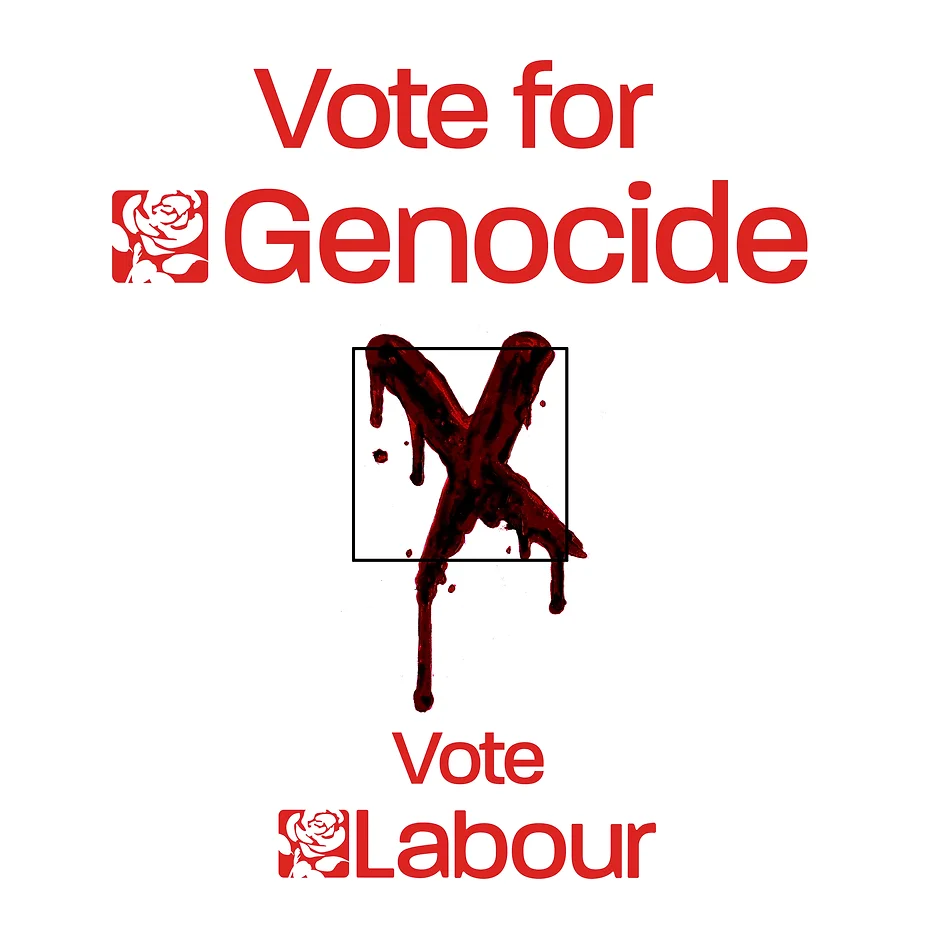
Vote For Genocide Vote Labour.
Continue ReadingUN Warns 14,000 Babies in Gaza Could Die in 48 Hours Without True Lift of Israeli Blockade

Spread the love

UK Labour Party government ministers Keir Starmer, Angela Rayner and Rachel Reeves explain that they are partners complicit in Israel's Gaza genocide. The UK has provided Israel with arms, military and air force support. They explain that they don't do gas chambers but do do forced marches, starvation, destroy hospitals, mass-murders of journalists and healthcare workers.
UK Labour Party government ministers Keir Starmer, Angela Rayner and Rachel Reeves explain that they are partners complicit in Israel’s Gaza genocide. The UK has provided Israel with arms, military and air force support. They explain that they don’t do gas chambers but do do forced marches, starvation, destroy hospitals, mass-murders of journalists and healthcare workers.
Experiencing issues with this image not appearing. I suspect because it's so critical of Zionist Keir Starmer's support of and complicity in Israel's genocides.
Genocide denier and Current UK Prime Minister Keir Starmer is quoted that he supports Zionism without qualification. He also confirms that UK air force support has been essential in Israel’s mass-murdering genocide. Includes URLs https://www.declassifieduk.org/keir-starmers-100-spy-flights-over-gaza-in-support-of-israel/ and https://youtu.be/O74hZCKKdpA
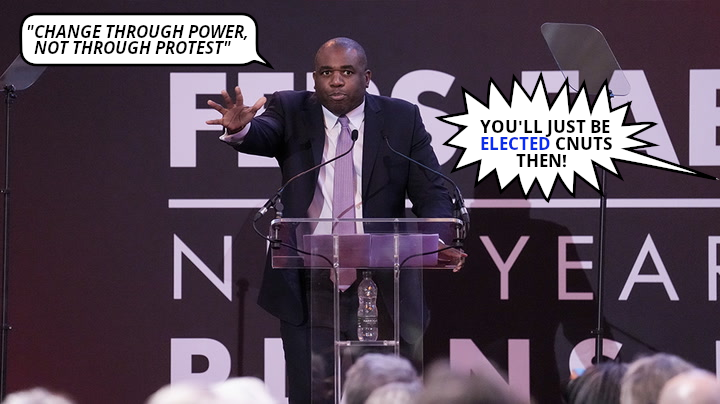
UK Labour Party Shadow Foreign Secretary repeatedly heckled at a speech to the Fabian Society over his and the Labour Party's support for and complicity in Israel's genocide of Gaza.
UK Labour Party Shadow Foreign Secretary repeatedly heckled at a speech to the Fabian Society over his and the Labour Party’s support for and complicity in Israel’s genocide of Gaza.
Continue Reading

Israeli MP hits out at own country for ‘killing babies as a hobby’

Spread the love
Yair Golan IDF Spokesperson's Unit / CC BY-SA 3.0
Yair Golan IDF Spokesperson’s Unit / CC BY-SA 3.0

https://www.independent.co.uk/news/world/middle-east/israel-gaza-yair-golan-netanyahu-b2754280.html

The leader of Israel’s opposition party says the government’s approach to the war against Hamas risks the country becoming an “outcast among nations”.

The comments from Yair Golan, a retired general and the leader of the Democrats, are rare criticism from within Israel of its conduct in Gaza.

“A sane country doesn’t engage in fighting against civilians, doesn’t kill babies as a hobby and doesn’t set for itself the goals of expelling a population,” Mr Golan told Reshet Bet radio.

Mr Netanyahu swiftly hit back against Mr Golan’s remarks, calling them “wild incitement” against Israeli soldiers.

The prime minister accused Mr Golan of echoing “disgraceful antisemitic blood libels” against the country.

https://www.independent.co.uk/news/world/middle-east/israel-gaza-yair-golan-netanyahu-b2754280.html

I avoid quoting articles from the Independent. Small sections only have been quoted with full attribution according to fair use provisions of copyright laws.

Continue ReadingIsraeli MP hits out at own country for ‘killing babies as a hobby’