AS FRUSTRATION grows over failure to tackle pollution, new research revealed yesterday that over a quarter of adults in England have considered withholding water bill payments.
A new report from Surfers Against Sewage (SAS) has accused the water industry of falling short of the Environment Agency’s target to reduce pollution incidents by 40 per cent.
Instead, they recorded a 30 per cent increase to 2,487 incidents, the highest in a decade.
Polling 2,000 adults, SAS found that 27 per cent of people in England have considered not paying their bill due to the actions of their water supplier.
Water bills surged by 47 per cent this month and are expected to keep rising, with customers projected to pay £160 more in 2030 compared with 2024.
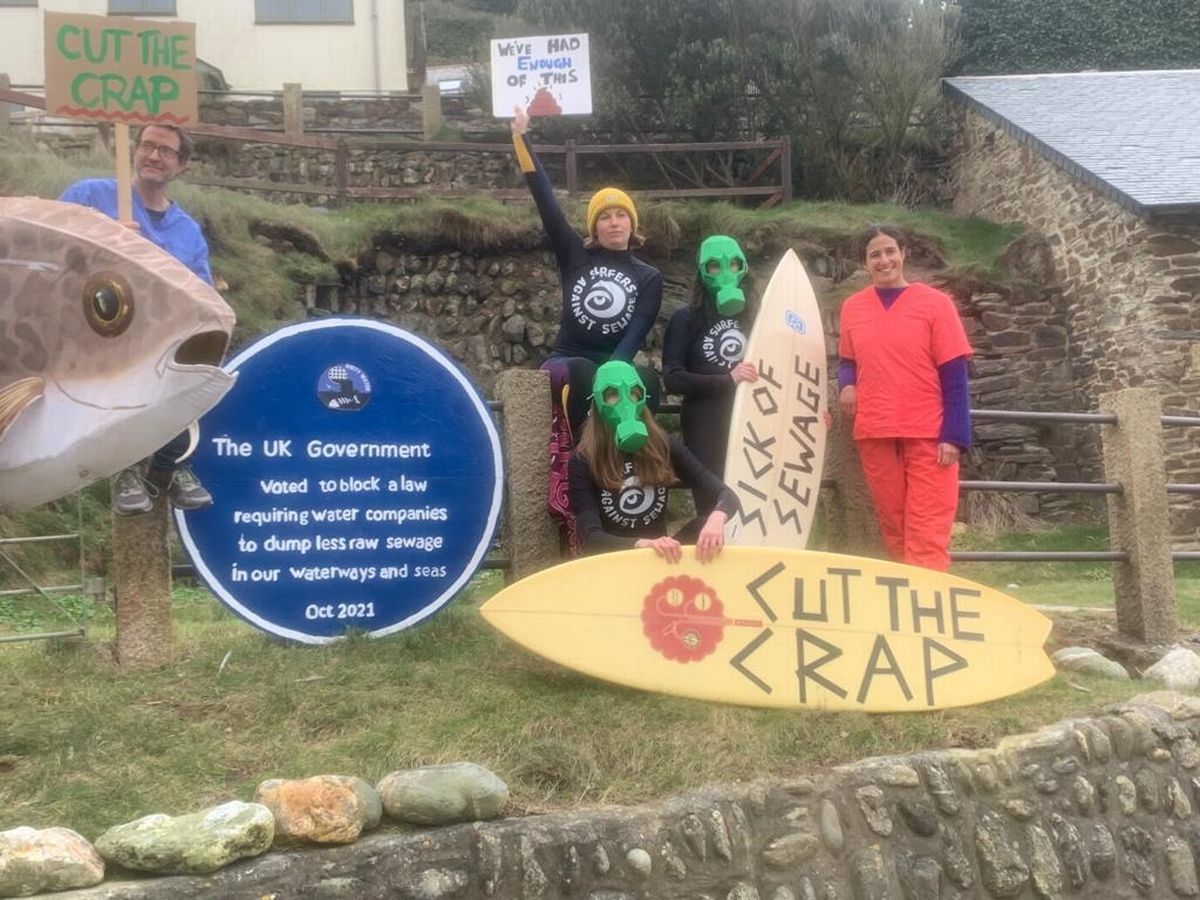
April 2023 Surfers Against Sewage and Extinction Rebellion protests in St Agnes, Perranporth, Truro and Charlestown which unveiled spoof Blue Plaques to the MPs and Conservative Government who allowed raw sewage to be dumped in the sea (Image: Surfers Against Sewage)
After pushback from disability justice and privacy groups, Labour scrapped the Tories’ dystopian data protection and digital information (DPDI) bill, only to replace it with their own version – the data (use and access) bill. Far from being an improvement on what the Tories had planned, this new bill will massively expand the scope of automated decision-making. What’s more, Labour has also resurrected one of the most controversial parts of the DPDI in the form of the public authorities (fraud, error and recovery) bill, which will force banks to spy on all their customers in the interest of tackling welfare fraud.
Prime minister Keir Starmer has said he wants to “mainline AI” into the veins of government. Starmer’s AI fervour is encouraged by the Tony Blair Institute, which advocated for turning the DWP into an “AI exemplar” department in a July 2024 report. Labour is opening the floodgates to not just a digitised welfare system that treats all claimants as suspects simply because they need support – but a public sector where AI tools are being used to dictate our lives in ways that we aren’t necessarily aware of.
Biased and ineffective.
In documents released under the Freedom of Information Act at the end of last year, the DWP admitted to finding bias in an AI tool used to detect fraud in universal credit (UC) claims.
The machine learning tool – which focuses on claims for cash advances to cover the five-week waiting period while a UC application is processed – had been assessed for fairness by the DWP several times since at least July 2023, the documents revealed. Each analysis found that the algorithm and intervention process are more likely to incorrectly flag claimants with certain protected characteristics, to an extent researchers considered “statistically significant”. Essentially, the AI incorrectly assumed that some people were more likely to commit fraud based on factors including their age, nationality and whether or not they were married.
What’s more, the DWP’s own reports admit that the metrics it uses to assess fairness are incomplete. It fails to test for bias towards many marginalised and discriminated against cohorts – or for bias regarding intersectional vulnerabilities.
…
It’s become clear that the Labour government is betting the house on AI as a magic formula for bolstering growth. In January, it published a 50-point AI opportunities action plan – essentially a notice of intent to procure services for AI development, allowing the government to “rapidly test, build or buy tools”.
Disability campaigners have warned that benefits claimants are merely guinea pigs in the government’s public sector AI plan – without their consent or even their awareness. The DWP has been using machine learning tools since at least 2020, but there is a serious lack of transparency around the identity of all AI tools used, their efficacy and what – if any – safeguards have been put in place to prevent bias or mitigate the impact of real-world harm.
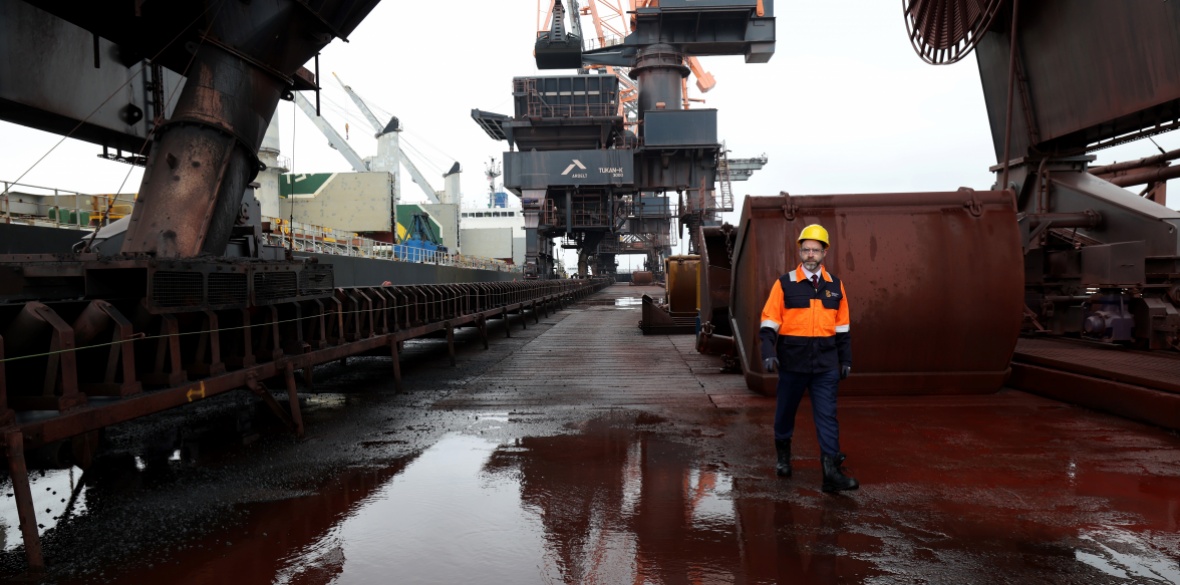
Business Secretary Jonathan Reynolds arrives as coking coal is unloaded at Immingham Port, northern England, as he visits the site in Lincolnshire to view raw materials destined for British Steel at Scunthorpe, being off-loaded, April 15, 2025
THE CRISIS at Scunthorpe steelworks, rightly if belatedly being addressed in the immediate term by state intervention, is the consequence of privatising critical national infrastructure so decisions on its future rest on the profit-and-loss calculations of private companies.
Right-wing media and parliamentarians, who are pro-privatisation and pro-war, want to avoid this conclusion. So we are seeing a propaganda campaign to blame it on other causes, each of which advances the right’s agenda.
One is that it is the result of pursuing “net zero” policies aimed at reducing greenhouse gas emissions. In fact, a planned and publicly directed green transition is essential to Britain’s industrial future: it is leaving it to the market which places jobs and industry at risk.
Turning our backs on the climate crisis cannot be an option as extreme weather events and crop failures grow more serious with each passing year. Labour should face pressure not to drop its already much reduced climate commitments, but to invest in measures that directly help people — restoring its original ambitious plans to insulate 19 million homes in a decade, cutting emissions and lowering household energy bills, for example — to stop the climate-denialist right claiming green policies lower living standards.
The other is to turn Jingye’s record at British Steel into a “security risk” because the company is Chinese, scaremongering over other Chinese investments in Britain and calling for trade decoupling in line with the new cold war being pushed from Washington.
Here, socialists must take a clear position that distinguishes our opposition to any company not accountable to the British people controlling assets of strategic importance from a China-bashing narrative that raises international tensions and risks advancing the US-led war drive.
That doesn’t mean defending the behaviour of a firm like Jingye, which seemed designed to force the closure of the Scunthorpe blast furnaces and whose negotiations with government involved demanding huge sums of money while offering little in return.
But it does mean identifying the parallels between its conduct and, say, that of the Indian conglomerate Tata, which has also taken hundreds of millions in public money while refusing to save the blast furnaces at Port Talbot, a move set to cost thousands of jobs. The common factor is not the country of origin, but the lack of democratic accountability of companies not owned by the British public.
Original article by Middle East Monitor is licensed under a Creative Commons Attribution-NonCommercial-ShareAlike 4.0 International License.
A Watford programme seller next to Vicarage Road cemetery [Photo by AMA/Corbis via Getty Images]
The UK Police, on Tuesday, launched an investigation into what is being treated as an Islamophobic hate crime after 85 graves, many belonging to babies and young children, were desecrated in the Muslim section of Carpenders Park Lawn Cemetery in Watford.
Hertfordshire Police said the criminal damage, discovered by a grieving family during a visit to the site, has caused profound shock and distress across the local Muslim community, Anadolu Agency reports.
Extra patrols are being conducted in the area, and police are appealing to witnesses or anyone with information to come forward.
Inspector Will Rogers-Overy confirmed that senior officers are working with community leaders to support affected families.
“In the coming days, we will engage further with the Muslim community, who will have been particularly impacted by this horrendous crime,” he said.
Wadi Funeralcare, which serves many Muslim families in the region, described the desecration as “heartbreaking” and said some of the graves were subjected to “unspeakable acts of disrespect”.
Carpenders Park Lawn Cemetery, while located in Watford, is owned and operated by Brent Council.
Council leader, Muhammed Butt, condemned the incident as a potential act of Islamophobic hatred.
“It looks as though Muslim graves have been targeted in what appears to be an Islamophobic hate crime,” Butt said.
“Our thoughts are with the families of those whose graves were desecrated. We will reinstate the damaged name plaques and restore the cemetery to a place of peace and remembrance as soon as the police investigation is complete.”
Abbas Merali, a Conservative Councillor from Three Rivers District Council, called the vandalism “a barbaric act” and said it has caused “immense anguish to grieving families and profound hurt across our community”.