
Original article by Ethan Shone republished from Open Democracy under a Creative Commons Attribution-NonCommercial 4.0 International licence.
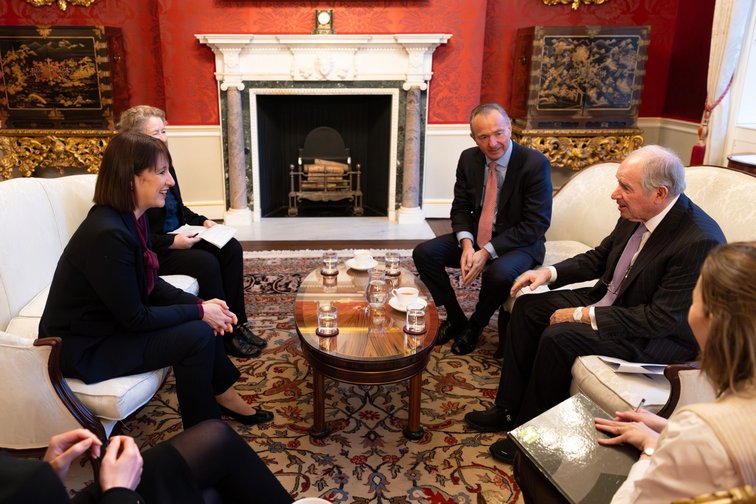
Rachel Reeves changed the government’s position on non-doms weeks after one of the world’s most powerful financiers asked her personally not to increase the tax burden on the super rich.
Documents released to openDemocracy under the Freedom of Information Act reveal Stephen Schwarzman, the CEO of leading asset manager Blackstone, raised “concerns” with Reeves about her plans to reform the tax treatment of non-domiciled individuals at a meeting in Downing Street in December.
The chancellor had previously used the autumn Budget in late October to re-commit to Labour’s manifesto promise to abolish the non-dom tax regime, which allows wealthy individuals who live in the UK to be domiciled elsewhere for tax purposes.
But around a month after meeting with Schwarzman, Reeves watered down this commitment.
Speaking at World Economic Forum in Davos in January, she announced that she had been “listening to the concerns of the non-dom community” and would soften the government’s plans.
The government blocked a request from openDemocracy for details of the discussion between Reeves and Schwarzman, as well as other meetings between senior ministers and major financial institutions, including BlackRock and JP Morgan, but has released a heavily redacted follow-up letter.
openDemocracy approached both the Treasury and Blackstone for comment, but neither had responded at the time of publication.
Schwarzman and a senior lobbyist from Blackstone met with the chancellor and her top advisers on 5 December, as part of a series of meetings between the government and the finance sector.
The Treasury told openDemocracy that the meeting’s purpose was “to gather perspectives on the UK as an investment destination and how to strengthen the UK’s position as a world leading investment management hub”.
While the government has so far rejected openDemocracy’s Freedom of Information requests about what was discussed at the meeting, it did release a heavily redacted follow-up letter that Reeves sent to Schwarzman a week later.
Despite the redactions, the letter shows that the tax treatment of high-net worth individuals was a major topic of discussion between the pair.
“Dear Stephen,” the chancellor wrote, “It was my pleasure to meet with you last week. Thank you for your time and the ideas you shared on how I and the government may seek to achieve our ambitions for growth across the UK.”
A section titled “the tax regime for non-domiciled individuals” reveals that Schwarzman “mentioned concerns” about non-dom tax treatment and inheritance tax.
“You noted the significant contribution that non-domiciled individuals make to the UK and mentioned concerns around non-domiciled individuals leaving in response to the reforms announced at the Budget,” Reeves wrote.
“I want to reassure you that I do value the contribution that non-domiciled individuals make to the economy and want to encourage them to spend and invest more of their money in the UK.”
Reeves also used the letter to highlight that some non-doms will be able to “take advantage of a three-year Temporary Repatriation Facility”, a scheme created by the Conservative government that enables former non-doms to bring foreign income and gains into the UK at a discounted tax rate for the first three years.
Reeves also sought to assuage Schwarzman’s apparent concerns about the UK’s inheritance tax (IHT).
“New arrivals to the UK will benefit from 100% UK tax relief on their [foreign income and gains],” she wrote, “provided they have been non-UK tax resident for the previous 10 years.”
The majority of Reeves’ letter to Schwarzman was redacted, raising questions about what else the giant asset manager lobbied for during the meeting.
A Labour MP, who spoke to openDemocracy on condition of anonymity, said: “The chancellor needs to come clean about why she reversed the policy on non-doms. She was lobbied by Blackstone then the policy was quickly dropped.
“She had no similar response to pensioners or Waspi women when she decided not to fulfill their needs. Who’s side is she on?”
The government has also refused to release any records from a number of other meetings with leading financial institutions in response to a series of Freedom of Information requests by openDemocracy.
The previous Conservative government announced plans to phase out the non-dom system, which allows wealthy people who live in the UK but are domiciled elsewhere for tax purposes to only pay tax on money they earn in the UK, rather than on all their earnings.
Unveiling the plans in last year’s Spring budget, Tory chancellor Jeremy Hunt said there would be a two-year transition period in which existing non-doms would pay a reduced rate on their overseas income.
The following month, Labour went one step further, with Reeves promising that if elected the party would raise £2.6bn by closing “loopholes” in the plans to abolish non-dom exemptions.
The new chancellor repeated this pledge at the Autumn budget in late October. She said the non-dom tax regime would be replaced with “a new residence-based scheme with internationally competitive arrangements” and the transition period upped from two to three years.
Weeks after the Blackstone meeting, Reeves attended the gathering of the World Economic Forum in Davos, where she sought to reassure the international business community that the UK is an attractive place to invest.
She announced that the government would alter the policy, in effect allowing current non-doms to pay the reduced rate of tax on more of their earnings throughout the already-extended transition period.
“We have been listening to the concerns that have been raised by the non-dom community,” she said.
Many organisations and individuals have lobbied the government about the policy, including a group formed specifically to oppose the plans, the Foreign Investors for Britain, which has reportedly been in regular contact with No 10’s business adviser, Varun Chandra.
But an intervention from Schwarzman would carry considerable weight.
Schwarzman’s firm, Blackstone, is the largest asset manager in the world, controlling more than $1trn in assets globally. As CEO, Schwarzman’s personal remuneration package for last year was worth over $1bn, and a Forbes estimate in November 2024 put his net worth at around $53bn.
Schwarzman is a Republican donor who worked with the first Trump administration and backed the president’s re-election campaign in 2020. He said he would not support Trump at the 2024 election, calling on the party to “turn to a new generation of leaders”, but later U-turned on this to endorse the now-president.
Blackstone is believed to be the largest commercial landlord in history, holding huge swathes of residential real estate. In 2019, the UN’s special rapporteur on housing said in an open letter that the firm was “having deleterious effects on the right to housing” and accused it of “using its significant resources and political leverage to undermine domestic laws and policies that would in fact improve access to adequate housing consistent with international human rights law.” The firm disputed the contents of the special rapporteurs’ letter.
Original article by Ethan Shone republished from Open Democracy under a Creative Commons Attribution-NonCommercial 4.0 International licence.


Original article by Julia Conley republished from Common Dreams under Creative Commons (CC BY-NC-ND 3.0).
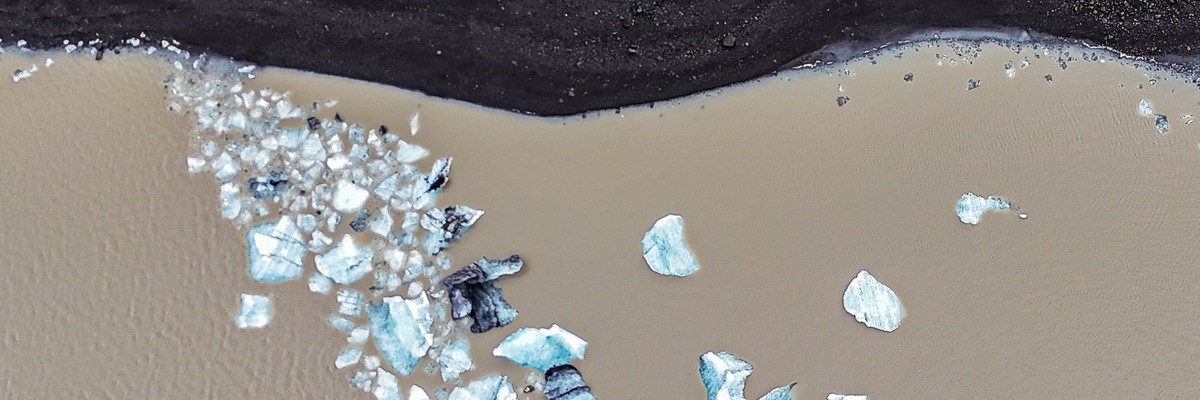
European Union officials said the Copernicus Climate Change Service had issued its latest “stark reminder of why climate action is urgent” when the bloc’s program announced that it observed less sea ice covering the Earth’s oceans last month than at any other point in recorded history.
In the Arctic, sea ice reached its lowest monthly extent on record, at 8% below average, in early February, and it remained below the previous record for the rest of the month.
The oceans were missing an area of ice roughly the size of the United Kingdom last month, according to Copernicus (C3S), and the finding was not an anomaly in recent sea ice observations.
February marked the third consecutive month in which record low sea ice levels for the corresponding month were observed in the Arctic.
C3S reported that in the Antarctic, sea ice levels have rapidly declined in 2025 after appearing to recover to near-record levels in December 2024.
Last month, sea ice near the South Pole reached its fourth-lowest monthly extent, at 26% below average.
C3S said the daily sea ice extent in the Antarctic may have also reached its annual minimum toward the end of the month, which will be confirmed later in March; if confirmed, it would be the second-lowest annual minimum in the satellite record.
“February 2025 continues the streak of record or near-record temperatures observed throughout the last two years,” said Samanatha Burgess, strategic lead for climate at the European Center for Medium-Range Weather Forecasts. “One of the consequences of a warmer world is melting sea ice, and the record or near-record low sea ice cover at both poles has pushed global sea ice cover to an all-time minimum.”
The melting sea ice was recorded as global average temperatures rose 1.59°C (2.8°F) above the pre-industrial average last month, making it the third-warmest February on record.
In Europe, the temperatures that most exceeded averages were recorded last month in parts of Scandinavia, Iceland, and the Alps. Outside of Europe, “temperatures were most above average over large parts of the Arctic.”
The low extent of sea ice will lead to “more solar heat absorbed by the darker oceans,” and “faster warming,” said Simon Oldridge, a climate campaigner.
The loss of sea ice can also lead to the collapse of ocean currents that are crucial for marine life to thrive.
C3S reported on the record-low sea ice levels as campaigners in the U.S. and around the world condemned recent anti-climate actions taken by U.S. President Donald Trump and the Republican Party, including the country’s exit from the Paris climate agreement, the GOP’s passing of a bill to end a federal program aimed at reducing planet-heating methane emissions, and Trump’s push to fast-track fossil fuel projects—as scientists warn that new extractive projects have no place on a pathway to limiting planetary heating and avoiding its worst impacts.
“The environment does not care about politics,” said public health expert Ali Khan. “Keep spewing greenhouse gases and face the consequences.”
Original article by Julia Conley republished from Common Dreams under Creative Commons (CC BY-NC-ND 3.0).

People in London have been breathing significantly cleaner air since the expansion of the ultra low emission zone (Ulez), a study has found.
Levels of deadly pollutants that are linked to a wide range of health problems – from cancer to impaired lung development, heart attacks to premature births – have dropped, with some of the biggest improvements coming in the capital’s most deprived areas.
Sadiq Khan had faced severe opposition to the 2023 expansion of Ulez to outer London boroughs. But on Friday as the report was published, the mayor of London said the scheme had driven down pollution, taken old polluting cars off the roads and brought cleaner air to millions more people.
He said: “When I was first elected, evidence showed it would take 193 years to bring London’s air pollution within legal limits if the current efforts continued. However, due to our transformative policies we are now close to achieving it this year.”
Several outer London councils mounted unsuccessful legal challenges to the Ulez rollout, and Keir Starmer blamed it for Labour’s defeat in the Ruislip and Uxbridge byelection and called for Khan to “reflect” on his plans.
…