Former President of the United States Joe Biden addressing to the nation in the Rose Garden at the White House in Washington DC, United States on November 7, 2024 [Celal Güneş – Anadolu Agency]
The International Criminal Court (ICC) should investigate former US officials President Joe Biden, Secretary of State Antony Blinken and Secretary of Defence Lloyd Austin for their accessorial roles in aiding and abetting, as well as intentionally contributing to, Israeli war crimes and crimes against humanity in Gaza, US civil society organisation Democracy for the Arab World Now (DAWN) has said.
The NGO submitted a 172-page communication to the ICC Prosecutor Karim Khan on 19 January, 2025. Prepared with the support of ICC-registered lawyers and other war crimes experts, the submission details a pattern of deliberate and purposeful decisions by these officials to provide military, political, and public support to facilitate Israeli crimes in Gaza; this support included at least $17.9 billion of weapons transfers, intelligence sharing, targeting assistance, diplomatic protection and official endorsement of Israeli crimes, despite knowledge of how such support had and would substantially enable grave abuses.
“There are solid grounds to investigate Joe Biden, Antony Blinken and Lloyd Austin for complicity in Israel’s crimes,” said Reed Brody, DAWN board member and veteran war crimes lawyer. “The bombs dropped on Palestinian hospitals, schools and homes are American bombs, the campaign of murder and persecution has been carried out with American support. US officials have been aware of exactly what Israel is doing, and yet their support never stopped.”
DAWN’s communication lays out the legal and factual basis for investigating Biden, Blinken, and Austin for violating Articles 25(3)(c) and (d) of the Rome Statute, both aiding and abetting and intentionally contributing to crimes committed by Israeli officials in Gaza. These crimes include those identified in the arrest warrants against Israeli Prime Minister Benjamin Netanyahu and his former Defence Minister Yoav Gallant, including the war crimes of starvation and intentionally directing attacks against the civilian population, and crimes against humanity, including murder, inhumane acts, and persecution, under the Rome Statute. It also includes their role in the war crime of intentionally directing attacks against civilian objects under Article 8(2)(b)(ii) and the crime of genocide under Article 6.
“Not only did Biden, Blinken and Austin ignore and justify the overwhelming evidence of Israel’s grotesque and deliberate crimes, overruling their own staff recommendations to halt weapons transfers to Israel, they doubled down by providing Israel with unconditional military and political support to ensure it could carry out its atrocities,” said Sarah Leah Whitson, Executive Director of DAWN. “They provided Israel with not only essential military support but equally essential political support by vetoing multiple ceasefire resolutions at the UN Security Council to ensure Israel could continue its crimes.”
This work by Middle East Monitor is licensed under a Creative Commons Attribution-NonCommercial-ShareAlike 4.0 International License.
A view of Ofer Prison located between Ramallah and Jerusalem as preparations for the release of Palestinian prisoners continue, on January 30, 2025. [Issam Rimawi – Anadolu Agency]
The Palestinian Prisoner Society (PPS) renewed its demand that international human rights organisations take effective decisions to hold Israeli occupation officials accountable for committing crimes against Palestinian prisoners who are subject to systematic torture in Israeli prisons, the Palestinian Information Centre reported.
The PPS said in a statement today that Israeli practices of repression against prisoners have escalated significantly recently in Ofer Prison, as an extension of the policy of repression and raids, which reached its peak during the genocidal war on Gaza.
The PPS revealed testimonies from prisoners which were obtained by their lawyers, specifically regarding the attack on prisoners on the evening of 16 February when the Israeli Metzada prison forces stormed several sections in Ofer Prison, using police dogs and stun grenades to intimidate detainees. They assaulted the prisoners, injuring dozens of them.
The PPS indicated that the Israeli prison administration uses the cold weather to torture the prisoners, by refusing to allow the entry of adequate clothes and appropriate covers.
prisoner D.P. said: “The repression that is carried out in prisoners’ rooms has lately escalated. The last attack took place last Saturday, when jailers assaulted prisoners, beating them and wreaking havoc on the contents of their rooms.” He added that such attacks happen every two to three days.
In another testimony, prisoner G.M., who suffers from an injury, said the Metzada unit assaulted him and broke his walker, which he uses to get to the medical clinic.
A number of injured detainees told their lawyers that they were suffering from constant pain due to the lack of treatment, in light of the policy of medical neglect and the severe cold.
This work by Middle East Monitor is licensed under a Creative Commons Attribution-NonCommercial-ShareAlike 4.0 International License.
Genocide denier and Current UK Prime Minister Keir Starmer is quoted that he supports Zionism without qualification. He also confirms that UK air force support has been essential in Israel’s mass-murdering genocide. Includes URLs https://www.declassifieduk.org/keir-starmers-100-spy-flights-over-gaza-in-support-of-israel/ and https://youtu.be/O74hZCKKdpAUK Foreign Minister David Lammy confirms that UK government and military are active participants in Israel’s genocides and that the F-35 parts that they suspended from supplying to Israel are instead simply diverted via the United States. He says see https://youtu.be/QILgUHrdWRE
Austerity is an unusual economic concept. While it is one of the economic terms that attracts the most interest from the public, it remains controversial in policy debates. Advocates argue that reducing government deficits through spending cuts and tax increases restores confidence and stabilises economies. Critics, however, warn that these policies just deepen downturns.
My recent research, using data from 16 countries over several decades, provides new evidence supporting the second view. That is, austerity has significant and persistent negative effects on employment and the size of an economy (measured by GDP), with the damage lasting more than 15 years.
A common defence of austerity is that while it may slow growth in the short term, it ultimately strengthens economies by reducing debt and making room for private-sector expansion. But my findings challenge this assumption.
I analysed episodes of austerity, defined as large fiscal contractions (reduced state spending or large tax increases) across a variety of advanced economies. What I found was the negative impact on GDP remains substantial even after a decade and a half. On average, GDP is more than 5.5% lower 15 years after a large austerity shock than would have been expected if there had been no austerity, based on statistical estimates.
Beyond GDP, austerity has a lasting impact on labour markets (the number of jobs on offer and people available to do them). My research shows that large fiscal contractions lead to a significant drop in the total number of hours worked, which is a key indicator of labour market health.
This is a crucial finding, as policymakers often assume that labour markets will adjust quickly after an economic shock. Instead, results suggest employment levels (which is best measured by the total number of hours worked by everyone in the labour force) remain depressed for more than a decade after major austerity measures.
One reason for this is the connection between investment and employment. When governments cut spending, firms delay investments. This, in turn, lowers productivity growth and reduces job creation.
If businesses anticipate that the economy will remain weak for a long time, they adjust their hiring and investment strategies. This can reinforce a cycle of stagnation. My results suggest that, on average, an austerity shock generates a reduction of 4% in the total worked hours and 6% in the capital stock (the value of physical assets like buildings and machines used to produce goods and services) after 15 years.
The effects of an austerity shock on countries’ GDP:
UK: A case study
Perhaps one of the most striking real-world examples of the long-term effects of austerity is the UK. Following the 2008 global financial crisis, the UK government implemented sweeping austerity measures starting in 2010. These policies were framed as necessary to reduce the budget deficit and restore investor confidence. Spending cuts affected key areas, including welfare, healthcare, education and local government services like social housing, roads and leisure facilities. https://www.youtube.com/embed/Z1g1zGV6vRQ?wmode=transparent&start=0 The 2010 coalition government brought in more than £80 billion of cuts to public spending.
But here’s a conundrum. The UK’s fiscal deficit (the difference between what it spent and what it raised in taxes) after the implementation of these policies was greater than before the austerity cuts. The deficit in 2023/2024 was 5.7% of GDP, while in 2007/2008, it was 2.9%.
What is evident is that these measures are associated with stagnant wages, weakened public services and sluggish GDP growth. Productivity growth has remained weak, and long-term economic damage is evident in underfunded infrastructure and an increasingly fragile NHS.
More than a decade later, real earnings have barely recovered to pre-crisis levels. The past 15 years have been the worst for income growth in generations, with working-age incomes growing by only 6% in real terms from 2007 to 2019, compared to higher growth rates in countries including the US, Germany and Ireland.
My findings contribute to a growing body of research challenging the longstanding view that shocks like austerity have only short-run effects. Traditionally, models assume that economies return to their long-run growth paths after temporary disruptions. But recent evidence, including my research, suggests that demand shocks can have persistent effects on supply by reducing investment and participation in the labour force.
In the wake of the COVID pandemic, many governments responded with generous financial support, temporarily reversing the austerity-driven policies of the previous decade. The strong recovery in some economies suggests that government spending can play a crucial role in sustaining long-run growth. On the other hand, a return to austerity measures could once again lead to prolonged stagnation.
What should policymakers take away from this? First, the assumption that austerity is a path to long-term prosperity needs to be re-evaluated. While reducing excessive public debt might be important, the economic costs of large and rapid cuts to spending can far outweigh the benefits.
Second, policymakers should recognise that timing matters. Gradual adjustments to spending, when really necessary, should be accompanied by measures to support investment and employment in order to reduce the likelihood of causing long-term harm.
Finally, economic policy should prioritise long-term growth over short-term deficit reduction. Governments facing tough spending choices should explore alternative approaches – things like progressive taxation and targeted public investment. And when cuts are needed, they should avoid implementing them during periods of economic recession.
Austerity is often framed as a necessary sacrifice for future prosperity. As governments consider fiscal strategies in an era of rising debt and economic uncertainty, they should take heed of austerity’s long-run costs. The evidence suggests that a more balanced approach – one that prioritises investment and economic stability – may be the wiser path forward.
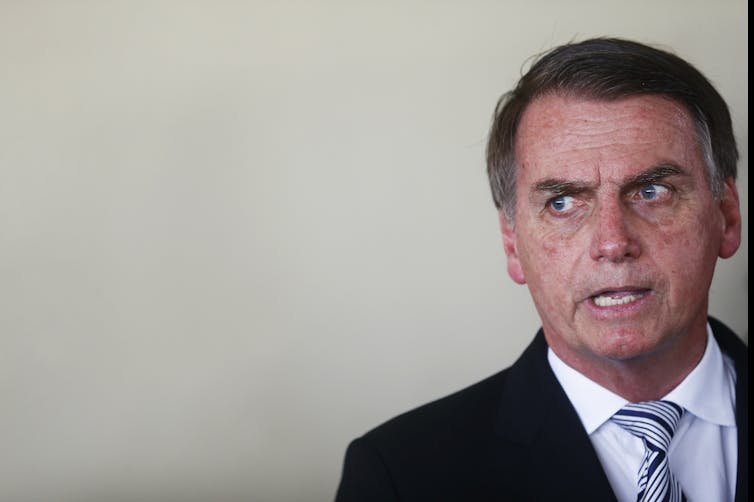
Brazil’s top prosecutor has filed federal charges against Jair Bolsonaro, alleging that the former president attempted a coup in 2023. Focus Pix / Shutterstock
The Brazilian attorney-general has charged the country’s former president, Jair Bolsonaro, with participating in a plot to cling to power through a coup d’etat in 2023 milo. If Bolsonaro is convicted, he could spend between 38 and 43 years in prison.
Bolsonaro, who governed Brazil between 2019 and 2022 but lost his attempt at re-election to current president Luiz Inácio “Lula” da Silva, is one of 34 people to be formally charged for offences related to the alleged coup. These include high-ranking serving and retired members of the military, as well as former ministers and politicians.
The charges levelled against them are involvement in an attempted coup d’etat, violent abolition of the democratic rule of law, and criminal organisation.
According to the attorney-general’s 272-page indictment, Bolsonaro became increasingly inclined to pursue anti-democratic measures in the months before the election. He allegedly considered taking steps to retain power even before the first round of voting.
Then, after his defeat by an extremely narrow margin, the indictment claims that Bolsonaro and his alleged accomplices decided to implement the plan before Lula took office in January 2023.
An investigation by Brazil’s federal police in November found that the insurrection in the country’s capital Brasília on January 8 2023, where rioters invaded the presidential palace, congress and supreme court, was part of this plan. The same investigation suggested the plan also included a plot to assassinate Lula and his vice-president Geraldo Alckmin, as well as supreme court judge Alexandre de Moraes.
Bolsonaro denies any wrongdoing and – at least in public – is bullish about his fate. Speaking to journalists hours before the charges were filed, he said: “I have no concerns about the accusations, zero.”
The case will now be considered by the Supreme Court, whose judges will decide whether to initiate criminal proceedings against Bolsonaro and the other defendants. This is expected to happen over the coming weeks. If the judges accept the charges and proceedings are established, the defendants will be called to answer them.
This is the first time in Brazilian history that high-ranking members of the armed forces have been indicted and charged with crimes associated with a coup d’etat. According to the indictment, the intention was for the armed forces to be called upon to act as a “moderating power”, with the aim of overturning the election result.
Army generals Augusto Heleno, Walter Braga Netto and Paulo Sérgio Nogueira de Oliveira are among those who have been charged. These men served as ministers in the Bolsonaro government, with Braga Netto also running as the vice-president on Bolsonaro’s ticket in 2022.
Another high-ranking member of the armed forces charged by the attorney-general is Almir Garnier Santos, the commander of the Brazilian navy. These four men were allegedly part of the inner nuclei that planned and prepared the attempted coup.
Several other servicemen, including generals, colonels and other officers, were charged with crimes related to the planning and execution of the initial phases of the coup. The sentences for all of these men could amount to up to 30 years in prison.
Like Bolsonaro, Braga Netto denies any guilt. In a statement released on February 18, his lawyers called the charges a “fantasy”. Lawyers for Garnier Santos and Heleno have chosen not to comment until having fully reviewed the charges.
Unlike those in the military, some of the political figures charged by the attorney general had criminal antecedents. One of the politicians named in the indictment is Filipe Martins, Bolsonaro’s former international affairs adviser and a “disciple” of the deceased far-right polemicist, Olavo de Carvalho. Martins’ lawyers released a statement on February 18 calling the accusations “unfounded”.
In December 2024, Martins was convicted of making a gesture alluding to white supremacy during a virtual session of the senate. He initially received a sentence of two years and four months in prison for inciting racial prejudice, which was replaced by 850 hours of community service.
Far-right commentator Paulo Figueiredo Filho, the grandson of Brazil’s last military dictator, João Figueiredo, was also charged. He appeared on a podcast on February 19 to criticise the charge. Figueiredo lives in the US, where he was arrested in 2019 because of problems with his immigration status.
Lessons from and to Brazil
Brazil has already offered some lessons to other countries facing similar authoritarian challenges. Its response to the insurrection in Brasília was swift and robust. Within days, hundreds of rioters had been arrested and the state governor of the federal district was suspended for his sluggish response.
Then, in 2023, Bolsonaro was banned from running for office for eight years over false claims that the electronic ballots used in the previous year’s election were vulnerable to hacking and fraud. Those involved with the attempted military coup have also been investigated and some subsequently arrested.
But the coup plot case can also serve as a lesson to the country. Brazil has a history both of successful and unsuccessful military coups. The last successful military coup led to a dictatorship that lasted from 1964 until 1985.
Brazil also has a history of amnesties, whereby crimes committed during these coups and authoritarian regimes have been pardoned. There have been 48 amnesties in Brazil since 1889, with the most recent one, in 1979, allowing the dictatorship to self-amnesty its crimes.
For over 45 years, it has hindered criminal accountability for the perpetrators of the crimes of the dictatorship. This included the murder of politician Rubens Paiva, whose disappearance was the focus of the 2024 Oscar-nominated film, I’m Still Here.
Bolsonaro and other individuals charged, as well as their supporters and aligned politicians, have been demanding a “humanitarian amnesty” for those who allegedly participated in the coup plot.
Given Bolsonaro’s history, this seems paradoxical. Throughout his decades-long public career, Bolsonaro has consistently celebrated the crimes of the military dictatorship and supported violations of human rights. At the same time, he has also opposed individuals and organisations that advocate for victims of the dictatorship.
If Bolsonaro and his alleged accomplices are found guilty, it could be an unparalleled lesson for Brazil. Punishing anyone convicted would be an opportunity to step away from the country’s tradition of impunity and move towards addressing systemic injustices.
Israeli tanks gather outside of the occupied West Bank near Jenin, Sunday, Feb. 23, 2025
ISRAEL’S defence minister said today troops would remain “for the coming year” in parts of the occupied West Bank.
This follows complaints by Hamas over the decision by Tel Aviv to halt the release of detainees promised under the ceasefire deal.
The Israelis have deepened their crackdown on the Palestinian territory since launching their military offensive on the northern West Bank on January 21 — two days after the ceasefire that paused the war in Gaza took hold. They then expanded it to include other nearby areas.
Israel says it is determined to stamp out resistance in the territory, but Palestinians view such raids as part of an effort to cement Israeli control over the territory, where three million Palestinians live under military rule.
The deadly raids have devastated urban areas and displaced tens of thousands.