Rachel Reeves has had a difficult start to her ministerial career.
As well as Labour’s new chancellor taking on the challenges of the UK economy, she has faced tricky questions about her past.
They began with scrutiny of her online CV late last year.
On the professional networking site LinkedIn, the Chancellor of the Exchequer claimed to have worked as an economist at Halifax Bank of Scotland (HBOS) immediately before becoming an MP.
One of those who challenged it was a retired former colleague, Kev Gillett.
In a public post on LinkedIn, which he asked followers to share, he wrote: “Back in 2009 Rt Hon Rachel Reeves worked 3 levels below me. Just facts. She was a Complaints Support Manager at LBG/HBOS. Not an Economist. #factcheck.”
In fact it emerged that she had worked in a managerial role within the bank’s complaint handling department and her LinkedIn profile was updated to remove the claim.
Gillett also made another claim about Reeves’s time at the bank from 2006 to 2009, writing that she: “Nearly got sacked due to an expenses scandal where the 3 senior managers were all signing off each others expenses.”
dizzy: I’ve quoted the start of a fairly long article from the BBC by Billy Kenber, Politics investigations correspondent and Phil Kemp, Politics producer. It is the report into their investigation of UK Chancellor Rachel Reeves’ errors in her reported career history and an expenses fraud investigation at her former employer Halifax Bank of Scotland.
Lucy Letby was convicted in two trials in 2023 and 2024 of murdering seven babies and attempting to murder six others in her care at the Countess of Chester hospital in north-west England between 2015 and 2016.
She is currently serving 15 whole life sentences for the murders. But the case has been called into question as a result of growing concerns about the expert evidence presented at her trial. Will she get a retrial? Here’s what happens next.
In the context of usually cautious expert opinion, the press conference held on February 4 2025 was extraordinary. An international panel of medical experts investigating the medical evidence against Lucy Letby concluded that there were alternative explanations for each of the deaths. They said they found no evidence of deliberate harm, and believe Letby did not murder any babies.
The panel’s chair, Dr Shoo Lee, is a retired neonatal care expert. His 1989 paper on air embolisms was heavily relied on by the prosecution in the Letby trial and appeals. However, Lee has previously said that his research was misinterpreted at trial. At the press conference he said, “we did not find any murders. In all cases, death or injury were due to natural causes or just bad medical care.”
Want more politics coverage from academic experts? Every week, we bring you informed analysis of developments in government and fact check the claims being made.
The panel’s findings put the case in uncharted territory, given Letby’s very recent convictions and the continuing public inquiry into the case.
The public inquiry – the Thirlwall Inquiry into events at the Countess of Chester hospital – will operate based on the assumption, following her convictions, that Letby is guilty. Letby’s barrister has called for the inquiry to be halted pending the Criminal Cases Review Commission (CCRC) review of her case.
Despite the findings of the expert panel, Letby’s release or even a retrial is by no means imminent, let alone guaranteed. Letby has already had two applications for leave to appeal refused. The grounds of appeal were related to what her defence argued were errors in judicial decision making during the trial, rather than the medical evidence. Nonetheless, this means that the CCRC is the only route left open to Letby to challenge her convictions.
Letby’s defence team confirmed that a preliminary application has been made to the CCRC, with a full submission to follow. The CCRC investigates potential miscarriages of justice in England, Wales and Northern Ireland.
The commission is expected to treat Letby’s case as a priority given the public interest. But it is still likely to take at least a year to review the considerable evidence before a referral back to the Court of Appeal could even be considered.
What evidence will be considered?
The CCRC aims to complete cases within 12 months of receiving the application. But the organisation has recently come under criticism over how it handled the case of Andrew Malkinson, who was wrongly jailed for 17 years for a crime he did not commit.
When the CCRC considers the full application, they have the power to refer the case back to the Court of Appeal. In order to do so, the commission requires new evidence or other relevant factors which would support a fresh appeal.
The findings of the medical panel will be part of the defence submission. The CCRC will decide, with other factors, whether they constitute fresh grounds for an appeal. It is particularly compelling that the prosecution case relied on Dr Lee’s research, and yet it is in part his expertise that has become a crucial element of the defence.
To send the case back for appeal, the CCRC would also need to conclude that there was a “real possibility” of the conviction being overturned.
It is important to remember that the case against Letby included statistical and circumstantial evidence as well as medical opinion. However, what are alleged to be numerous fallacies in the statistical evidence have been highlighted. And circumstantial evidence is just that – circumstantial. Letby was convicted on the medical evidence.
Dr Shoo Lee led a panel of medical experts who say new medical evidence calls Lucy Letby’s conviction into question. Alastair Grant/Associated Press/Alamy
The evidence given as part of the Thirlwall Inquiry will be within the remit of the CCRC too. Although the inquiry has not yet formally concluded, all oral testimony has taken place. As would be expected given the inquiry’s terms of reference, much of the evidence heard has been less favourable to Letby.
The CCRC also has the power under the Criminal Appeals Act 1995 to instruct its own expert witnesses and interview previous and potential new witnesses.
If the CCRC ultimately decides to refer the case to the Court of Appeal, it will be treated like any other appeal. It could result either in the conviction being quashed and Letby going free, or a retrial.
A retrial would follow if the appeal judges believed that a retrial met the criteria set out in the Criminal Appeal Act 1968 and was in the interests of justice. The likelihood of this outcome depends on the strength of the medical evidence presented to the CCRC and the Court of Appeal.
As the Thirlwall Inquiry and the CCRC application are separate processes, is it technically not essential that the inquiry concludes before the CCRC makes a decision. Closing submissions to the inquiry are scheduled for March 2025, with the report expected later in the year. This should fit within the expected timeframe of the CCRC taking at least a year to consider the application.
A further complicating factor is Lee’s assertion that the Countess of Chester hospital provided such bad care that it would have been “shut down” in his home country of Canada. This will no doubt lead to legal claims against the NHS trust, particularly if Letby is exonerated and culpability for avoidable deaths is sought elsewhere.
Some, including Lee, have gone so far as to suggest the new evidence is so compelling that Letby should be released on house arrest pending the CCRC review. This would be highly unusual, and for the time being, Letby remains imprisoned as one of the worst child serial killers in modern British history.
MI5 director general Ken McCallum delivers a speech at Counter Terrorism Operations Centre in west London, October 8, 2024
A VIOLENT machete-armed misogynist and neonazi state agent was protected by MI5, which lied to three courts on his behalf, according to a BBC report today.
The Security Service told judges that it would not confirm or deny the identity of its agents, although it admitted to a BBC reporter that the man, identified only as Agent X, was in fact working for it.
MI5 has now been forced to apologise to the three courts that heard cases relating to X’s treatment of his then partner.
Spy chiefs also lied at a court hearing in a bid to block reporting of Agent X’s crimes.
They said they could not confirm his status, even though a BBC reporter had a recording of a senior MI5 official claiming legal authority to tell her that X was the service’s agent.
It has now issued an “unreserved apology” to the BBC and all three courts, describing what happened as a “serious error.”
CNN (1/31/25) framed Elon Musk’s extra-constitutional power grab as part of “the war over federal spending.”
When President Donald Trump announced an unprecedented freeze on federal grants and loans last week, some of the most prominent US news outlets proved themselves largely uninterested in whether it was legal. Meanwhile, a few braver journalists called out the move as the constitutional crisis that it was (FAIR.org, 1/29/25).
When Democratic attorneys general rushed to challenge the move in court, with positive results, Trump rescinded the order. But the crisis is hardly over.
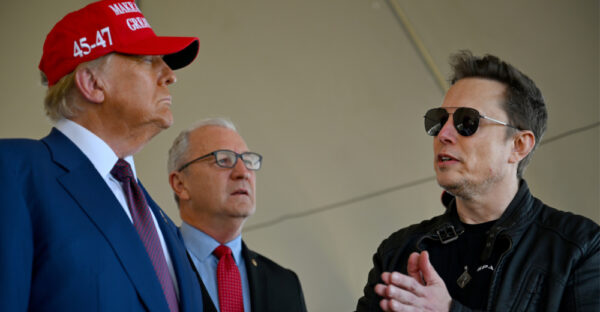
On the contrary: Elon Musk, the unelected centibillionaire who threw Nazi salutes at the inauguration, has wrested control of the Treasury Department’s payment system, after forcing out its most senior career civil servant, David Lebryk. As CNN (1/31/25) reported, the Treasury takeover happened after Trump’s team had repeatedly asked about the department’s ability to stop payments, to which Lebryk had insisted, “We don’t do that.”
These payments include everything from Social Security checks to tax refunds, federal employee salaries to contractor payments. It’s over $5 trillion a year, a fifth of the US economy. The database Musk and his tech bro allies in the non–congressionally approved “Department of Government Efficiency” (DOGE) have access to also contains enormous amounts of sensitive personal information for most Americans, including Social Security numbers. And Musk and a 25-year-old former X employee have access to the code that controls the payment systems, allowing them to make irreversible changes to it, according to Wired (2/4/25).
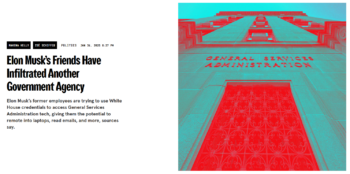
At the same time, Musk has infiltrated the General Services Administration and the Office of Personnel Management—two other rather obscure and nonpolitical but hugely consequential agencies that manage federal offices, technology and employees (Wired, 1/28/25, 1/31/25).
‘An idea that crosses party lines’
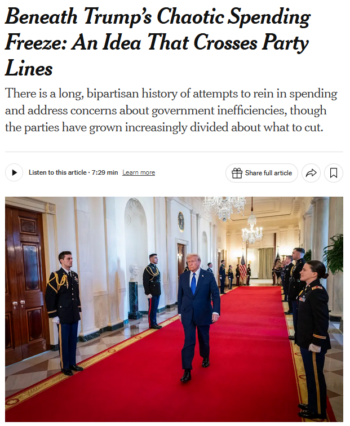
The New York Times (1/31/25) put its seal of approval on Trump’s illegal attempt to freeze federal spending, calling the idea behind it “bipartisan.”
Instead of appropriately pushing the increasing lawlessness and opacity to the forefront of their reporting, the New York Times and Washington Post largely buried these stories, downplaying their earth-shattering break from democratic norms.
As Musk took over the Treasury system, the Times (1/31/25) did point out:
Control of the system could give Mr. Musk’s allies the ability to unilaterally cut off money intended for federal workers, bondholders and companies, and open a new front in the Trump administration’s efforts to halt federal payments.
And yet somehow this story struck editors as page 13 material.
Meanwhile, a piece (1/31/25) by the Times‘ Michael Shear published online the same day was deemed front-page material, causing even seasoned media critics to spit out their morning beverage at its breathtaking ability to bothsides the situation: “Beneath Trump’s Chaotic Spending Freeze: An Idea That Crosses Party Lines.”
Shear wrote that Trump is simply “continuing a mostly failed effort by a long series of presidents and Congress” to “somehow reverse the seemingly inexorable growth of the federal government, an issue that resonates with some Democrats as well as most Republicans.” He thus clearly communicated that he is not up for the task of reporting on this administration.
The Times published Musk’s Treasury takeover on page 18, under the rather nonchalant headline: “Elon Musk’s Team Now Has Access to Treasury’s Payments System.” The subhead read:
Treasury Secretary Scott Bessent gave Mr. Musk’s representatives at the so-called Department of Government Efficiency a powerful tool to monitor and potentially limit government spending.
And hey, don’t worry, the article suggests:
Mr. Musk’s initiative is intended to be part of a broader review of the payments system to allow improper payments to be scrutinized, and is not an effort to arbitrarily block individual payments, the people familiar with the matter said.
At the Post, readers got language like, “The clash reflects an intensifying battle between Musk and the federal bureaucracy” (1/31/25), and “it is extremely unusual for anyone connected to political appointees to access” the payment systems (2/1/25). (In fact, it appears to be unprecedented—Independent, 2/3/25.)
‘Reminiscent of Stalin’
Wired (1/31/25): Musk’s team is “attempting to use White House security credentials to gain unusual access to GSA tech, deploying a suite of new AI software, and recreating the office in X’s image.”
There is another way to do journalism. It’s called connecting dots, asking questions, not accepting anonymous claims of benevolent intent—and helping people understand the gravity of the situation when unprecedented end-runs around democracy are happening before our very eyes. And it’s heartening to see quite a few news outlets engaging in it.
For instance, Wired has been doing a tenacious job following Musk’s assault on the government, connecting the dots between his actions and explaining the dangers to the country. It broke the news (1/28/25) that Musk workers from his various companies had taken over management positions at the Office of Personnel Management—well before Trump’s nominee to take over the OPM has even had a confirmation hearing. Its subhead noted: “One expert found the takeover reminiscent of Stalin.”
Wired explained that the installation of AI experts at OPM suggests a forthcoming effort to use AI on the reams of data it has access to in order to target federal employees for removal.
Regarding the GSA infiltration, Wired reported (1/31/25):
The access could give Musk’s proxies the ability to remote into laptops, listen in on meetings, read emails, among many other things, a former Biden official told Wired on Friday.
“Granting DOGE staff, many of whom aren’t government employees, unfettered access to internal government systems and sensitive data poses a huge security risk to the federal government and to the American public,” the Biden official said. “Not only will DOGE be able to review procurement-sensitive information about major government contracts, it’ll also be able to actively surveil government employees.”
Wired again put that danger (“the potential [for Musk minions] to remote into laptops, read emails, and more”) into its subhead—unlike the Times‘ muted headlines.
‘Incredibly dangerous’
Rolling Stone (2/3/25) pointed out that “the danger of operational access to the payments system is precisely that there are very little safeguards for its improper use or manipulation.”
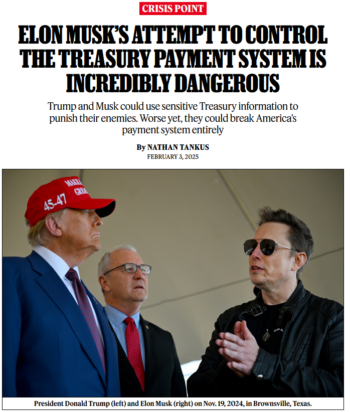
Others are also raising alarms in their headlines, as at Rolling Stone (2/3/25): “Elon Musk’s Attempt to Control the Treasury Payment System Is Incredibly Dangerous.” The subhead explained: “Trump and Musk could use sensitive Treasury information to punish their enemies. Worse yet, they could break America’s payment system entirely.”
The piece, by Nathan Tankus, pointed out that there are glaring reasons to disbelieve administration claims about this being about “improper payments,” such as:
At 3:14 a.m. Sunday, Musk pledged to shut down supposedly “illegal payments” to Global Refuge, a faith-based organization that exists to provide “safety and support to refugees, asylum seekers and immigrants from across the world.”
Tankus also points out what the Post and Times won’t, which is that the seizure of the payment system means Trump and Musk
can just impound agency payments themselves. They could also possibly stop paying federal employees they have forced on paid administrative leave, coercing them to resign.
Even in bigger media, some critical voices could be heard. CNN‘s Zachary Wolf (2/1/25) asked some appropriate journalistic questions: “Has [Musk] taken an oath, like the federal workers he apparently has plans to fire, to uphold the Constitution?…. What are Musk’s conflicts of interests?”
Accessories to the coup
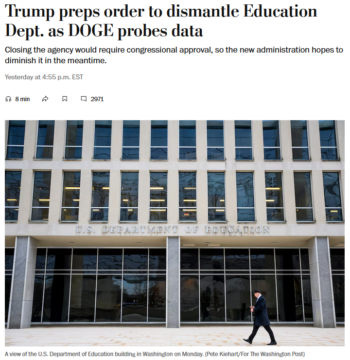
The Washington Post (2/4/25) assures readers that “the Education Department was created by Congress, and only Congress can eliminate it.”
The WashingtonPost put news about Musk’s takeovers on the front page today (2/4/25), as it reported on Trump preparing an executive order to dismantle the Department of Education, which Musk has apparently also infiltrated. But it still managed to sound rather sanguine about the threat: “The expected executive order would not shut down the agency, as there is widespread agreement in both parties that doing so would require congressional action.” Despite reporting daily on actions Trump and Musk have taken that have usurped congressional authority, the paper still seems to believe—and want readers to believe—against all evidence that our Constitution’s constraints on executive power continue to hold.
And the New York Times finally published an article (2/3/25) taking a deeper look “Inside Musk’s Aggressive Incursion Into the Federal Government,” as the headline stated. Still, it seemed to find it difficult to use language in its early framing paragraphs any stronger than to say that Musk’s actions “have challenged congressional authority and potentially breached civil service protections,” as it explains in the third paragraph. These moves are “creating major upheaval,” the fifth paragraph allowed, and the sixth said it “represented an extraordinary flexing of power by a private individual.”
The piece was not published in the print newspaper the next day; FAIR has yet to see it rise to the top of the paper’s homepage.
As Musk and Trump continue to behave like kings, it’s incumbent upon news media to not just report on their actions, but put them in the proper context for the public to understand the threat level they represent; otherwise, we can’t respond appropriately.
That kind of reporting takes real bravery in the kind of moment we are in: Musk has already (falsely) called it a crime to reveal the names of those working for him at the agencies DOGE is targeting, which Wired and others have done. The Trump-installed interim US attorney for DC has obsequiously promised Musk to go after those who identify his underlings—and to prosecute “anyone who impedes your work or threatens your people” (New Republic, 2/3/25).
While that might sound laughable, media outlets have already paid Trump handsome settlements to settle lawsuits that should have been seen as similarly laughable (FAIR.org, 12/16/24; PBS, 1/29/25; New York Times, 1/30/25). When prominent news outlets won’t summon the courage to vigorously oppose this descent into autocracy, they are accessories to the coup. We must demand better from them, and support the outlets and journalists doing the critical work we as citizens require to defend our democracy.
ACTION: Tell the New York Times and Washington Post to treat Musk’s actions like the existential threat to democracy that they are.
Please remember that respectful communication is the most effective. Feel free to leave a copy of your message in the comments thread here.
Correction (2/5/25): An earlier version of this article misstated the title of the official who threatened to prosecute those who revealed the names of DOGE employees. He is the interim US attorney for the District of Columbia.
FAIR’s work is sustained by our generous contributors, who allow us to remain independent. Donate today to be a part of this important mission.
Elon Musk urges you to be a Fascist like him, says that you can ignore facts and reality then.Climate Science Denier Donald Trump says Burn, Baby, Burn.