Dangerous heat for Tour de France riders only a ‘question of time’

Spread the love

Original article by Giuliana Viglione republished from Carbon Brief under a CC license.
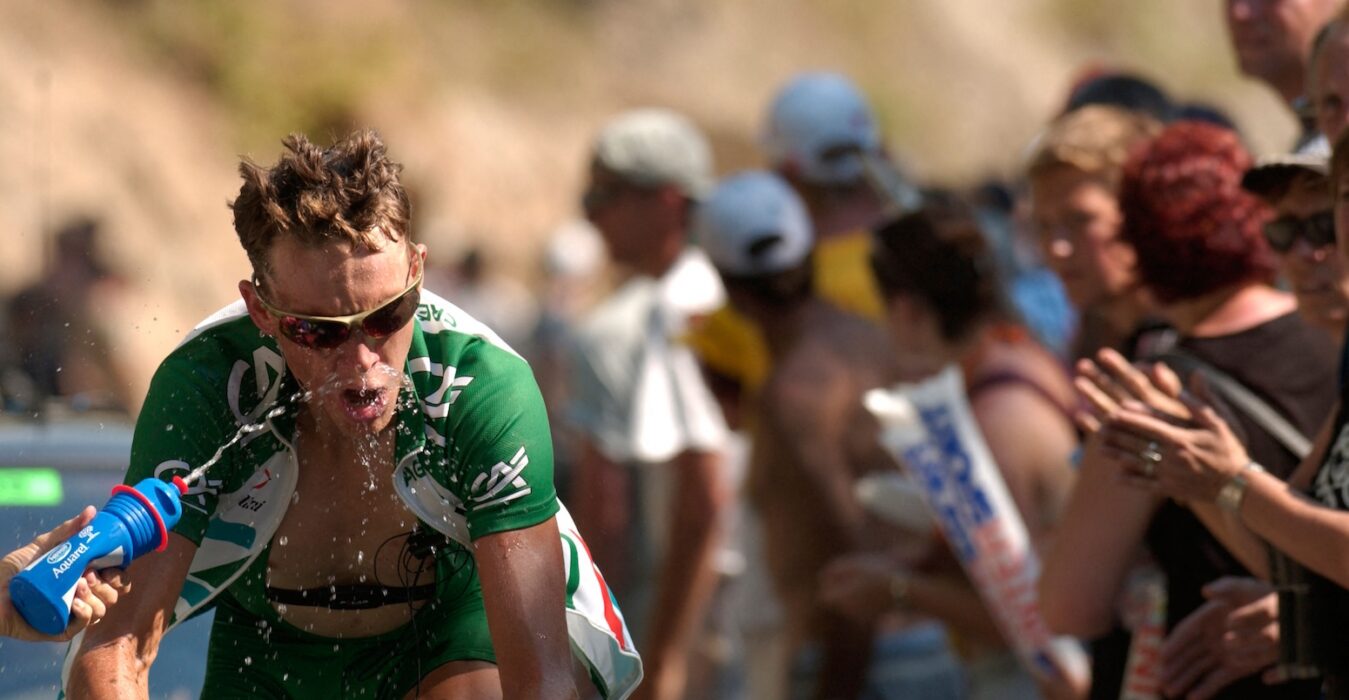
Dangerous heat for Tour de France riders only a ‘question of time’. Tour de France cyclist. Credit: Geoff Waugh / Alamy Stock Photo

Rising temperatures across France since the mid-1970s are putting Tour de France competitors at “high risk”, according to new research.

The study, published in Scientific Reports, uses 50 years of climate data to calculate the potential heat stress that athletes have been exposed to across a dozen different locations during the world-famous cycling race. 

The researchers find that both the severity and frequency of high-heat-stress events have increased across France over recent decades. 

But, despite record-setting heatwaves in France, the heat-stress threshold for safe competition has rarely been breached in any particular city on the day the Tour passed through. 

(This threshold was set out by cycling’s international governing body in 2024.)

However, the researchers add it is “only a question of time” until this occurs as average temperatures in France continue to rise.

The lead author of the study tells Carbon Brief that, while the race organisers have been fortunate to avoid major heat stress on race days so far, it will be “harder and harder to be lucky” as extreme heat becomes more common.

‘Iconic’

The Tour de France is one of the world’s most storied cycling races and the oldest of Europe’s three major multi-week cycling competitions, or Grand Tours

Riders cover around 3,500 kilometres (km) of distance and gain up to nearly 55km of altitude over 21 stages, with only two or three rest days throughout the gruelling race.

The researchers selected the Tour de France because it is the “iconic bike race. It is the bike race of bike races,” says Dr Ivana Cvijanovic, a climate scientist at the French National Research Institute for Sustainable Development, who led the new work.

Heat has become a growing problem for the competition in recent years.

In 2022, Alexis Vuillermoz, a French competitor, collapsed at the finish line of the Tour’s ninth stage, leaving in an ambulance and subsequently pulling out of the race entirely. 

Two years later, British cyclist Sir Mark Cavendish vomited on his bike during the first stage of the race after struggling with the 36C heat.

The Tour also makes a good case study because it is almost entirely held during the month of July and, while the route itself changes, there are many cities and stages that are repeated from year to year, Cvijanovic adds.

‘Have to be lucky’

The study focuses on the 50-year span between 1974 and 2023.

The researchers select six locations across the country that have commonly hosted the Tour, from the mountain pass of Col du Tourmalet, in the French Pyrenees, to the city of Paris – where the race finishes, along the Champs-Élysées.

These sites represent a broad range of climatic zones: Alpe d’ Huez, Bourdeaux, Col du Tourmalet, Nîmes, Paris and Toulouse.

For each location, they use meteorological reanalysis data from ERA5 and radiant temperature data from ERA5-HEAT to calculate the “wet-bulb globe temperature” (WBGT) for multiple times of day across the month of July each year.

WBGT is a heat-stress index that takes into account temperature, humidity, wind speed and direct sunlight.

Although there is “no exact scientific consensus” on the best heat-stress index to use, WBGT is “one of the rare indicators that has been originally developed based on the actual human response to heat”, Cvijanovic explains.

It is also the one that the International Cycling Union (UCI) – the world governing body for sport cycling – uses to assess risk. A WBGT of 28C or higher is classified as “high risk” by the group.

WBGT is the “gold standard” for assessing heat stress, says Dr Jessica Murfree, director of the ACCESS Research Laboratory and assistant professor at the University of North Carolina at Chapel Hill.

Murfree, who was not involved in the new study, adds that the researchers are “doing the right things by conducting their science in alignment with the business practices that are already happening”.

The researchers find that across the 50-year time period, WBGT has been increasing across the entire country – albeit, at different rates. In the north-west of the country, WBGT has increased at an average rate of 0.1C per decade, while in the southern and eastern parts of the country, it has increased by more than 0.5C per decade.

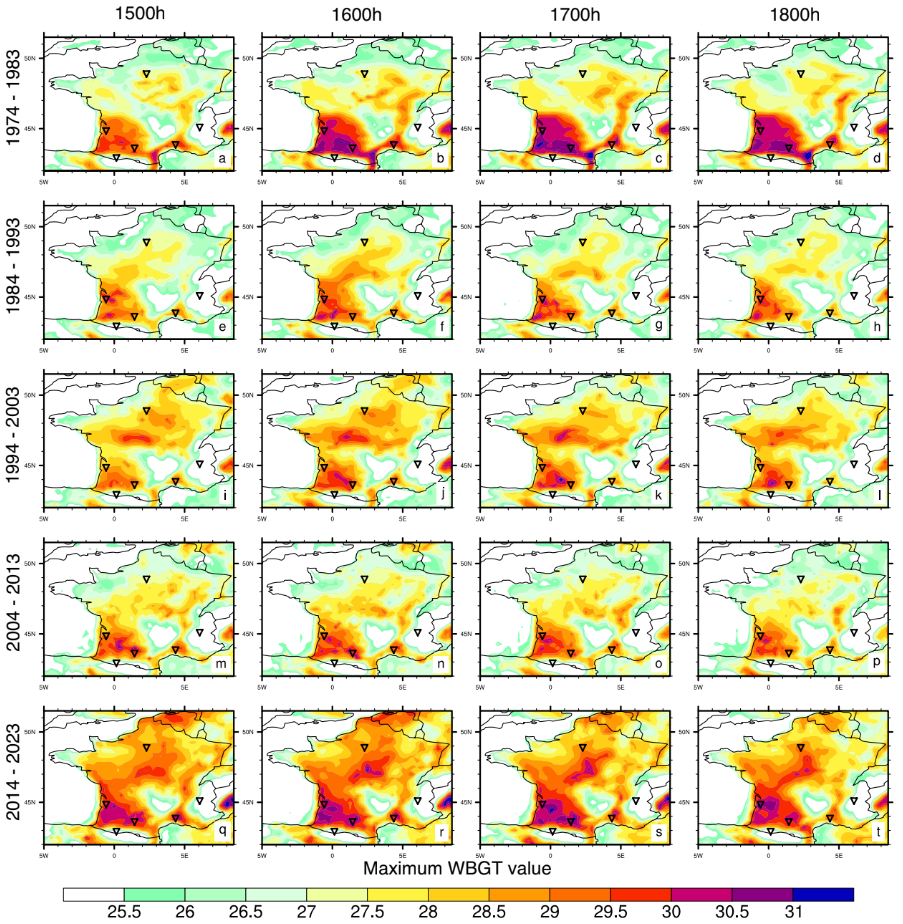
The maps below show the maximum July WBGT for each decade of the analysis (rows) and for hourly increments of the late afternoon (columns). Lower temperatures are shown in lighter greens and yellows, while higher temperatures are shown in darker reds and purples.

Six Tour de France locations analysed in the study are shown as triangles on the maps (clockwise from top): Paris, Alpe d’ Huez, Nîmes, Toulouse, Col du Tourmalet and Bordeaux. 

The maps show that the maximum WBGT temperature in the afternoon has surpassed 28C over almost the entire country in the last decade. The notable exceptions to this are the mountainous regions of the Alps and the Pyrenees.
Maximum WBGT across France for the month of July from 1974-2023. Rows show the values for each decade and columns show the hourly values for 3:00pm, 4:00pm, 5:00pm and 6:00pm. Lower temperatures are shown in lighter greens and yellows, while higher temperatures are shown in darker reds and purples. Triangles indicate the six Tour de France locations analysed in the study.
Maximum WBGT across France for the month of July from 1974-2023. Rows show the values for each decade and columns show the hourly values for 3:00pm, 4:00pm, 5:00pm and 6:00pm. Lower temperatures are shown in lighter greens and yellows, while higher temperatures are shown in darker reds and purples. Triangles indicate the six Tour de France locations analysed in the study. Source: Cvijanovic et al. (2026)

The researchers also find that most of the country has crossed the 28C WBGT threshold – which they describe as “dangerous heat levels” – on at least one July day over the past decade. However, by looking at the WBGT on the day the Tour passed through any of these six locations, they find that the threshold has rarely been breached during the race itself.

For example, the research notes that, since 1974, Paris has seen a WBGT of 28C five times at 3pm in July – but that these events have “so far” not coincided with the cycling race.

The study states that it is “fortunate” that the Tour has so far avoided the worst of the heat-stress. 

Cvijanovic says the organisers and competitors have been “lucky” to date. She adds: 

“It has worked really well for them so far. But as the frequency of these [extreme heat] events is increasing, it will be harder and harder to be lucky.”

Dr Madeleine Orr, an assistant professor of sport ecology at the University of Toronto who was not involved in the study, tells Carbon Brief that the paper was “really well done”, noting that its “methods are good [and its] approach was sound”. She adds:

“[The Tour has] had athletes complain about [the heat]. They’ve had athletes collapse – and still those aren’t the worst conditions. I think that that says a lot about what we consider safe. They’ve still been lucky to not see what unsafe looks like, despite [the heat] having already had impacts.”

Heat safety protocols

In 2024, the UCI set out its first-ever high temperature protocol – a set of guidelines for race organisers to assess athletes’ risk of heat stress.

The assessment places the potential risk into one of five categories based on the WBGT, ranging from very low to high risk. 

The protocol then sets out suggested actions to take in the event of extreme heat, ranging from having athletes complete their warm-ups using ice vests and cold towels to increasing the number of support vehicles providing water and ice.

If the WBGT climbs above the 28C mark, the protocol suggests that organisers modify the start time of the stage, adapt the course to remove particularly hazardous sections – or even cancel the race entirely.

However, Orr notes that many other parts of the race, such as spectator comfort and equipment functioning, may have lower temperatures thresholds that are not accounted for in the protocol, but should also be considered.

Murfree points out that the study’s findings – and the heat protocol itself – are “really focused on adaptation, rather than mitigation”. While this is “to be expected”, she tells Carbon Brief:

“Moving to earlier start times or adjusting the route specifically to avoid these locations that score higher in heat stress doesn’t stop the heat stress. These aren’t climate preventative measures. That, I think, would be a much more difficult conversation to have in the research because of the Tour de France’s intimate relationship with fossil-fuel companies.”

Original article by Giuliana Viglione republished from Carbon Brief under a CC license.

Neo-Fascist Climate Science Denier Donald Trump says Burn, Baby, Burn.
Nigel Farage urges you to ignore facts and reality and be a climate science denier like him and his Deputy Richard Tice. He says that Reform UK has received £Millions and £Millions from the fossil fuel industry to promote climate denial and destroy the planet.
Donald Trump urges you to be a Climate Science denier like him. He says that he makes millions and millions for destroying the planet, Burn, Baby, Burn and Flood, Baby, Flood.
Continue ReadingDangerous heat for Tour de France riders only a ‘question of time’

British government urged to act as Israel confirmed to have used F-35 throughout the Gaza genocide

Spread the love

https://morningstaronline.co.uk/article/british-government-urged-act-israel-confirmed-have-used-f-35-throughout-gaza-genocide

 A Lockheed Martin F35B Lightning II demonstrates it’s STOVL (Short Take off Vertical Landing) function during the Royal International Air Tattoo at RAF Fairford, July 2016

ANTI-ARMS campaigners have urged the government to “correct the record” and end arms sales to Israel after the country’s use of F-35 jets — worth billions to supplier Lockheed Martin — throughout the Gaza genocide was confirmed.

Tel Aviv’s ambassador to the United States, Yechiel Leiter, said that Israeli pilots’ flight hours on the F-35 were “greater than that of all the pilots of the other foreign countries that were partners in developing the aircraft.”

He added: “When I visited there a few weeks ago, [Lockheed Martin’s] CEO told me that Israel’s information and developments ‘are worth many billions to my company’.”

The comments completely contradict the British government’s insistence that Israel is a “minor customer” of the global F-35 programme, the Campaign Against Arms Trade (Caat) pointed out.

Britain makes 15 per cent of the warplane. Israel has 48 F-35s, with 27 more on order.

Article continues at https://morningstaronline.co.uk/article/british-government-urged-act-israel-confirmed-have-used-f-35-throughout-gaza-genocide

Genocide denying UK Foreign Secretary David Lammy says that UK is suspending 30 of 350 arms licences to Israel. He also confirms the UK government's support for Israel's Gaza genocide and the UK government and military's active participation in genocide.
Genocide denying UK Foreign Secretary David Lammy says that UK is suspending 30 of 350 arms licences to Israel. He also confirms the UK government’s support for Israel’s Gaza genocide and the UK government and military’s active participation in genocide.
Keir Starmer objects to criticism of the IDF. He asks how could anyone object to them starving people to death, forced marches like the Nazis did, bombing Gaza's hospitals and universities, mass-murdering journalists, healthworkers and starving people queuing for food, killing and raping prisoners and murdering children. He calls for people to stop obstructing his genocide for Israel.
Keir Starmer objects to criticism of the IDF. He asks how could anyone object to them starving people to death, forced marches like the Nazis did, bombing Gaza’s hospitals and universities, mass-murdering journalists, healthworkers and starving people queuing for food, killing and raping prisoners and murdering children. He calls for people to stop obstructing his genocide for Israel.
Orcas discuss Genocide-supporting and complicit Zionists. Donald Trump, Keith Starmer, David Lammy, Rachel Reeves, Angela Rayner and Wes Streeting are acknowledged as evil genocide-complicit and supporting cnuts.
Continue ReadingBritish government urged to act as Israel confirmed to have used F-35 throughout the Gaza genocide

MPs hear evidence during debate on NHS privatisation in Parliament

Spread the love

https://morningstaronline.co.uk/article/mps-hear-evidence-during-debate-nhs-privatisation-parliament

 A general view of staff on a NHS hospital ward

MPs have demanded that Health Secretary Wes Streeting “listen to experts” who warned against implementing his “disastrous” plans to further privatise the NHS.

At a debate chaired by Labour MP Richard Burgon in Westminster on Tuesday, MPs heard new expert evidence exposing that levels of privatisation within the health service were far higher than previously thought.

Mr Burgon said: “We need to push back against this Mandelsonian wing of the Labour party. I want Wes to hear what is being shared in this room.

“Privatisation is disastrous for patients and for workers. It’s not the way forward.”

The meeting with the NHS working group coincided with the publication of a report co-authored by campaigners Keep Our NHS Public and the 99% Organisation.

It found the level of private involvement in the NHS to be about 30 per cent, rather than the more widely known figure of 7 per cent.

MPs including Rachel Maskell, Andy McDonald, Neil Duncan-Jordan heard testimonies on the “disastrous” state of privatisation in the NHS from health experts, NHS staff and economists.

Report co-author Mark E Thomas said: “The figure which is most referred to in this debate was 7 per cent of privatisation. But really we need to be thinking 30 per cent.”

He added: “In some specialties, more than 50 per cent of treatments are already paid for privately, such as ophthalmology for example. It’s the same for dentistry.”

Original article at https://morningstaronline.co.uk/article/mps-hear-evidence-during-debate-nhs-privatisation-parliament

Keir Starmer confirms that he's proud to be a red Tory continuing austerity and targeting poor and disabled scum.
Keir Starmer confirms that he’s proud to be a red Tory continuing austerity and targeting poor and disabled scum.
Nigel Farage attacks the NHS
Image of George Osborne asking where is the money to be made in the NHS

Continue ReadingMPs hear evidence during debate on NHS privatisation in Parliament

NHS maternity units often cover up harmful errors in childbirth, report finds

Spread the love

https://www.theguardian.com/society/2026/feb/26/nhs-england-maternity-cover-up-childbirth-report

Recent rises in older motherhood and obese women having babies have contributed to maternity care becoming more complicated. Photograph: Jeff Gilbert/Alamy

Damning inquiry into services in England reveals falsification of medical records after ‘negligent’ care

Hospitals that cause harm and injury to women and babies during childbirth often resort to a “cover-up” of their mistakes, falsify medical records and deny bereaved parents answers, a damning report has found.

“Negligent” care has devastating emotional and psychological consequences for families, disputes between maternity staff have a “disastrous” impact on mothers, and ethnic minority and poorer women have worse outcomes because of racism and discrimination, Lady Amos said.

Recent rises in older motherhood and obese women having babies have also contributed to maternity care becoming more complicated, the ex-Labour cabinet minister added in a report the government commissioned amid mounting alarm about NHS childbirth services in England.

“The system is not working for women, babies and families, or for staff,” Amos concluded after spending months talking to hundreds of families and maternity staff.

“We have seen maternity and neonatal services trying to respond in difficult circumstances and dealing with competing pressures but too often failing to deliver the safe care that women, families and babies expect and deserve, at times with devastating consequences.”

NHS trusts continue to provide poor care because they are doing too little to improve its quality and safety as a result of not learning lessons from previous maternity scandals, she added.

Lady Amos, who chaired the investigation.
Lady Amos, who chaired the investigation. Her final report is due in the next few months.

“It is a source of continuing distress to families, and great frustration to staff, that the areas identified in previous reviews and investigations as requiring action do not seem to have been addressed or have only been partially addressed. This cycle must stop,” she said.

Article continues at https://www.theguardian.com/society/2026/feb/26/nhs-england-maternity-cover-up-childbirth-report

Continue ReadingNHS maternity units often cover up harmful errors in childbirth, report finds

‘Magic beneath the surface’: pioneering geothermal plant launched in Cornwall

Spread the love

https://www.theguardian.com/environment/2026/feb/26/cornwall-new-geothermal-project-launches

Equipment at Geothermal Engineering Ltd, the UK’s first geothermal power and lithium production plant. Photograph: Jonny Weeks/The Guardian

A new mini power station and lithium extraction facility near Redruth are set to bolster green energy and create jobs

From Thursday, the Geothermal Engineering Ltd (GEL) plant near Redruth will feed electricity created by tapping into hot granite rocks to the National Grid and extract lithium from the mineral-rich water used in the process.

The switch-on, the first of its kind in Britain, has been welcomed by the government, which sees projects like this as a way of bolstering energy, and by people from Cornwall, who take pride in their mining heritage and hope for an economic boost in a deprived part of the West Country.

Ryan Law, chief executive of GEL, said he was overjoyed at the launch, which has been almost 20 years in the making. “To finally reach this point is exciting – and a bit of a relief,” he said.

GEL says the plant will generate enough renewable electricity to power 10,000 homes, with the plan to open more, bigger sites in Cornwall.

Within a decade it says it will be producing enough lithium carbonate, a key material used in the production of rechargeable batteries, to supply about 250,000 electric vehicles a year.

Law said it had been difficult at times in the past to make the argument to politicians and investors that it was sensible to drill more than three miles into the reservoirs of very hot water (about 190C) found in faults in the granite in this part of Cornwall.

“With any first technology, you’ve got to convince everyone,” he said.

“But it’s like someone has built this enormous nuclear power station underground. We are just tapping into the heat that’s generated.”

Though getting to this point has been a slog, Law said the actual process of generating heat and extracting lithium was relatively simple.

https://www.theguardian.com/environment/2026/feb/26/cornwall-new-geothermal-project-launches

Continue Reading‘Magic beneath the surface’: pioneering geothermal plant launched in Cornwall