US blockade of Strait of Hormuz ratchets up tensions with China ahead of Trump visit to Beijing

Spread the love

Tom Harper, University of East London

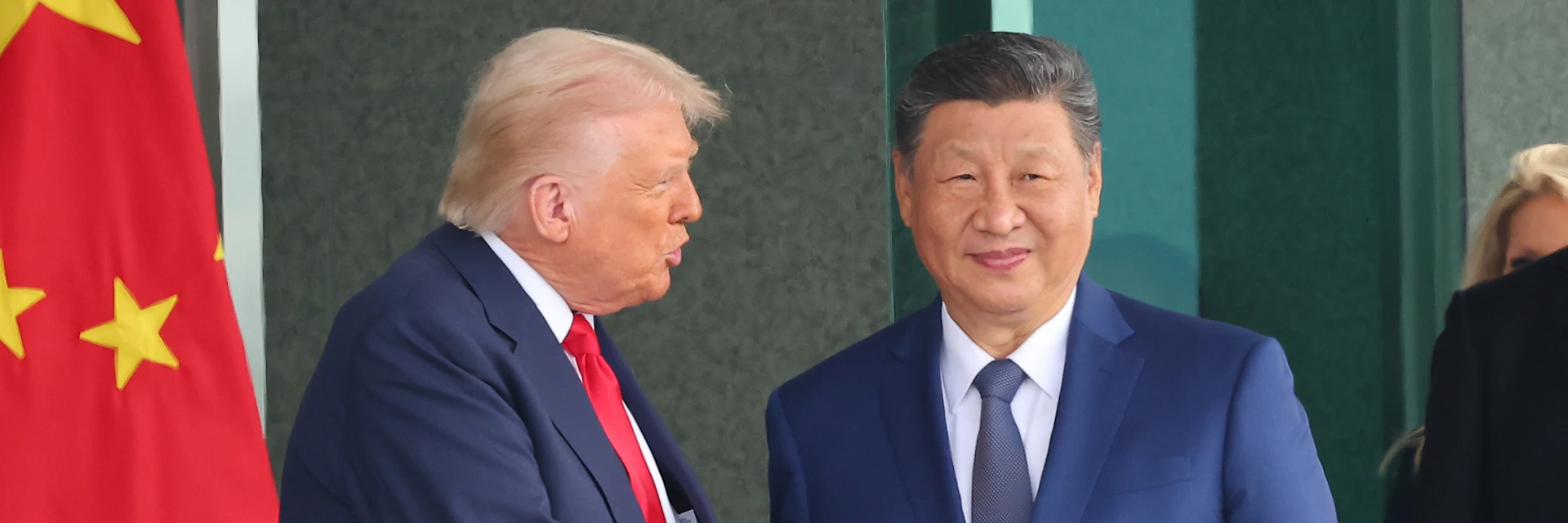
The US president is set to visit Beijing in mid-May. EPA/Yonhap

The Trump administration’s decision to carry out a naval blockade of the Strait of Hormuz has raised tensions in the Persian Gulf to new and more perilous levels. The move was announced by the US president, Donald Trump, after negotiations over a ceasefire with Iran broke down on April 11, partly due to Iran wanting to retain control of the vital Strait of Hormuz, through which one-fifth of the world’s oil transits.

The blockade is designed to neutralise Iran’s efforts to close the strait to shipping it deems unfriendly to Tehran and implement a toll system for other vessels transiting the strait.

The US blockade can be seen as the latest attempt by the Trump administration to project strength. But it also throws down a challenge to Beijing. China has been the main purchaser of Iranian oil in recent years and is one of the few nations whose shipping can enter the strait unchallenged.

It appeared very likely that this status would be tested on April 14 when the Rich Starry, a Chinese owned and operated tanker under US sanction for transporting Iranian oil, transited the strait unchallenged by the US warships in the region.

But it has since been reported that the vessel turned back in the Gulf of Oman and headed back to the Strait of Hormuz. The US now claims that six vessels that attempted to transit the strait were turned around.

The Rich Starry’s willingness to avert a potential Sino-American clash, suggests that Beijing is still unwilling to challenge Washington’s red lines, particularly so close to a state visit by the US president next month, a trip postponed from March 31 as a result of the conflict in Iran. China has called the US blockade a “dangerous and irresponsible act”.

But what appears to be a deliberate decision not to challenge the blockade may be interpreted as another instance of Chinese weakness, which will probably embolden Washington to take more active measures against China’s tanker fleets.

However, the US seizure of any Chinese shipping could certainly provoke a more dangerous outcome, with the prospect of increased tensions or even conflict with Beijing. Should the US seize a Chinese vessel, Beijing could see this as an act of war on Washington’s part, if it chooses to interpret such an incident as an American effort to strangle the Chinese economy.

While an armed clash between the US and China in the Persian Gulf is unlikely, it is possible that Beijing may deploy its fleet stationed in Djibouti to the region. China’s base in Djibouti is home to its 48th escort group which has previously performed anti-piracy operations in the region as well as escort duties for Chinese-owned ships in the region. This which raises the question over whether Washington would be willing to fire on Chinese warships to enforce its blockade.

China’s challenge to the US

China’s response to an American blockade may be more indirect in nature. One form this could take is the provision of Chinese weapons systems to Iran.

China’s Beidou satellite navigation system has already played a significant role in guiding Iran’s existing stockpile of missiles against American and Israeli targets. Further Chinese military assistance, especially in the form of missiles and drones, can help Beijing retaliate indirectly through Iran.

The New York Times recently reported intelligence sources alleging that China may have shipped shoulder-launched missiles to Iran – but this was strenuously denied by Beijing.

On the other hand, a potential Chinese retaliation may not even take place in the Middle East. Instead, it is possible that Beijing may target American assets and interests in the Asia Pacific.

This comes at a time where several American allies in the region have become increasingly vulnerable, with some missiles system being deployed to the Middle East from South Korea. Coupled with fuel shortages as a result of the closure of the Strait of Hormuz, the region is potentially even more exposed to China’s moves should Beijing choose to act.

Full Map of the Strait of Hormuz
The US is reportedly turning vessels around in the Golf Oman, where they emerge from the Strait of Hormuz. Wikimedia Commons

While Beijing prefers a more stable Middle East and global economy, having been one of the key beneficiaries of globalisation, there are several opportunities for China’s wider goals. One of the biggest is the status of the Renminbi. It has become prominent in the oil trade in the Persian Gulf, with Iran primarily dealing with transactions in the currency. This is in line with the emergence of the petroyuan in the 21 century to challenge the dominance of the petrodollar.

Alongside China’s position as a supplier of aviation fuel in the Asia Pacific, the conflict has entrenched and strengthened China’s role in the global economy.

In addition, the potential shortage of petroleum can open the door for wide-scale adoption of electric vehicles (EVs), with Chinese firms such as BYD being potential beneficiaries of a future EV boom. This echoes the popularity of Japanese cars during the Opec crisis of the 1970s, due to their comparatively high fuel efficiency in contrast to American and European models.

As a result, a prolonged Middle East oil crisis may see firms such as BYD become household names, furthering the influence of “Brand China”.

Alongside these, the crisis may further China’s push to present itself as a more stable partner in contrast to Washington’s more chaotic approach. This has gained traction due to the perceived unpredictability of the Trump administration over the past 15 months.

China already has a comparatively favourable global image when compared to the US. A wider conflict with Iran will probably take this further. As a result, the path of the Rich Starry may chart the course of the Sino-American competition and the world that this competition will shape.

Tom Harper, Lecturer in International Relations, University of East London

This article is republished from The Conversation under a Creative Commons license. Read the original article.

Climate science denier Donald Trump confirms that he knows nothing about democracy and that more liquid gold is being secured according to his policy of global privateering.
Orcas discuss how Trump was re-elected and him being an obviously insane, xenophobic Fascist.

Continue ReadingUS blockade of Strait of Hormuz ratchets up tensions with China ahead of Trump visit to Beijing

Why the US and Israel’s alliance endures – even when it strains

Spread the love

Bamo Nouri, City St George’s, University of London and Inderjeet Parmar, City St George’s, University of London

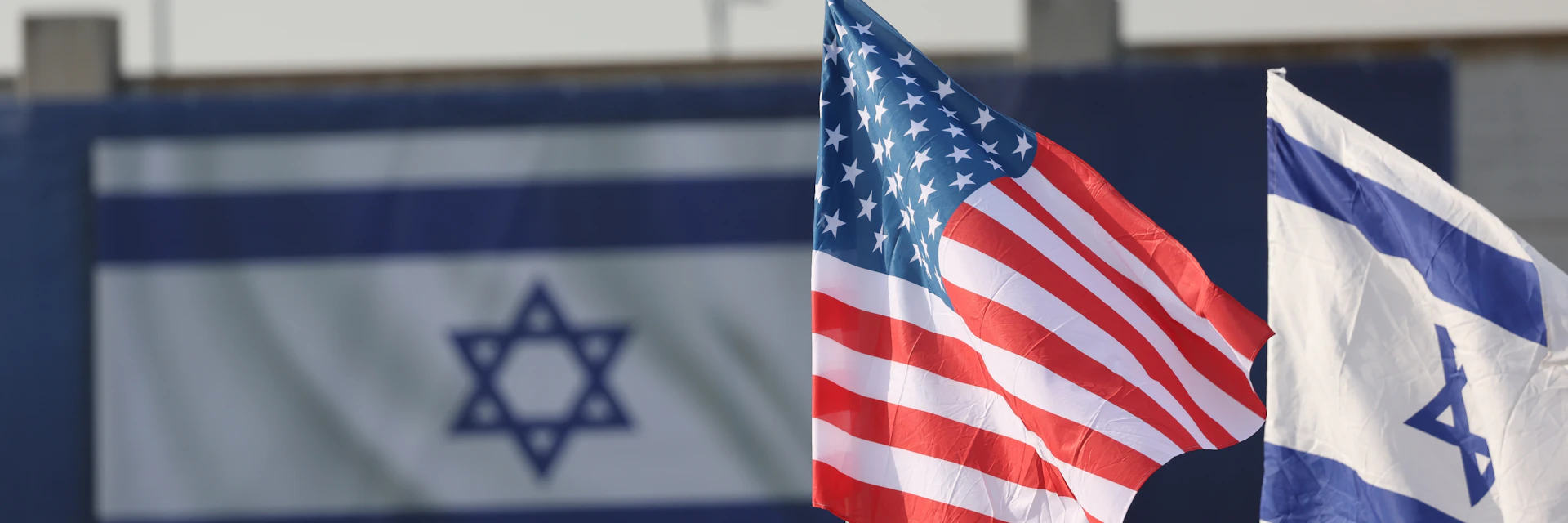
Israeli and US flags hang at Ben Gurion Airport ahead of the arrival of the US president, Donald Trump, to Israel in October 2025. Abir Sultan / EPA

Israel and the US have maintained a close alliance for decades. Their recent joint air campaign in Iran has once again underscored the depth of this partnership. Yet while the strength of their relationship is widely acknowledged, the reasons behind it remain contested.

At the centre of this debate lies the question of whether US support for Israel is driven primarily by domestic political forces, particularly lobbying organisations such as the American Israel Public Affairs Committee (Aipac), or whether it reflects broader strategic imperatives within US foreign policy.

Aipac’s historical influence is well documented. It emerged in the 1950s from the American Zionist Committee for Public Affairs and developed into a powerful lobbying organisation. By the 1970s it had become instrumental in securing substantial US military and economic aid, as well as favourable legislative outcomes, for Israel.

US aid to Israel now includes approximately US$3.3 billion (£2.4 billion) annually in military financing and an additional US$500 million for missile defence. Aipac, which has embedded itself across Democratic and Republican political networks, has played a central role in maintaining this flow of support.

But the claim that Aipac drives US policy, which former US counterterrorism official Joe Kent suggested in March when resigning from the Trump administration in opposition to the Iran war, misreads how power operates in Washington.

As scholars of American power, we argue that the US-Israeli alliance has been driven primarily by Israel’s demonstrated value as a strategic asset for the US, rather than solely by the influence of lobbying. Aipac has become effective because it aligns with this existing strategic consensus, not because it created it.

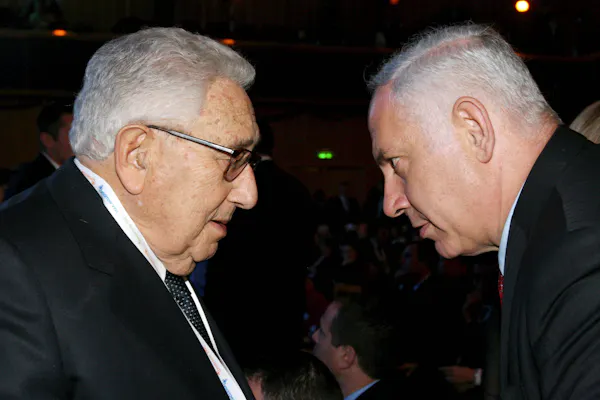
The former US national security advisor and secretary of state, Henry Kissinger, meets with Benjamin Netanyahu in Jerusalem in 2008. Anna Kaplan / EPA

Strategic US asset

This strategic consensus can be traced to the cold war. Israel’s decisive victory in the 1967 six-day war over a coalition of Arab states supported by and aligned with the Soviet Union revealed its utility as a regional proxy capable of advancing US interests in the Middle East.

From that point onward, US policymakers framed Israel as a pillar of their Middle East strategy – part of a broader effort to contain the influence of rival powers, project US power overseas and stabilise a region that is central to global energy supplies.

This framing became institutionalised in US policy in the late 1960s. Washington sharply increased arms transfers, supplying Israel with advanced aircraft such as F-4 Phantoms under President Lyndon B. Johnson. Intelligence-sharing arrangements were also expanded between the two countries.

The US perception of Israel as a strategic regional asset grew further in 1970. That year, the US requested that Israel prepare to intervene in Jordan on behalf of the government in its conflict with the Palestine Liberation Organization. Israel responded by moving troops to the border, with the presence of Israeli planes overhead often credited as having deterred invasion by Syrian forces.

Then, during the 1973 Yom Kippur war (again fought between Israel and Soviet-aligned Arab states), the US launched a large-scale airlift of military supplies into Israel. The operation signalled that Israel’s security was now directly tied to American strategy.

From the late 1970s, Israel was incorporated into a wider US-led regional security architecture alongside countries such as Egypt and Jordan. This followed the 1978 Camp David accords and 1979 Egypt-Israel peace treaty, which brought Egypt into a US-backed regional order. The US subsequently expanded joint military exercises, positioned military equipment in Israel and deepened defence coordination across these states.

Further evidence underscores the primacy of strategy in the US-Israeli relationship. President Ronald Reagan’s 1981 decision to sell surveillance aircraft to Saudi Arabia, for example, proceeded despite intense opposition from pro-Israel lobby groups. When core US strategic interests have been at stake, US policy has overridden lobbying pressure.

Formal agreements have reinforced the depth of the US-Israeli alliance. A 2016 memorandum of understanding committed US$38 billion in military aid over a decade. The US is also Israel’s largest trading partner, with bilateral trade approaching US$50 billion annually.

Cooperation extends across scientific, technological and industrial sectors, while both states are deeply integrated within international organisations. This dense web of ties cannot be reduced to lobbying influence alone.

People walk past damaged buildings in Corniche el-Mazraa, one of the areas of Beirut that were hit during a wave of Israeli airstrikes on April 8. Wael Hamzeh / EPA

Israel has played a significant role in destabilising the Middle East in recent years through its actions in Gaza, Lebanon and Iran. It has also effectively undermined the current ceasefire between the US and Iran by continuing to bomb Hezbollah targets in Lebanon.

In light of these developments, does the core premise of the US-Israeli alliance – that Israel helps underpin regional stability in line with US interests – still hold? Or are the foundations of US support for Israel beginning to strain under the pressures of a more volatile Middle East?

We argue that, instead of undermining the alliance, Israel’s continued attacks on Lebanon expose the underlying structure of the US-Israeli relationship. Israel said Lebanon was not included in the ceasefire, a stance that was reinforced by US officials including President Donald Trump and Vice-President J.D. Vance.

They backed Israel’s right to act against Hezbollah, with Trump calling the conflict in Lebanon a “separate skirmish”. This alignment suggests not divergence, but coordination within an asymmetric relationship in which the US provides the overarching strategic framework and Israel executes within it.

Rather than adding strain to the alliance, these developments illustrate its durability. Even where Israeli actions risk escalation or complicate diplomacy, US support remains intact – rooted in a broader convergence of interests centred on maintaining regional dominance.

Bamo Nouri, Honorary Research Fellow, Department of International Politics, City St George’s, University of London and Inderjeet Parmar, Professor in International Politics, City St George’s, University of London

This article is republished from The Conversation under a Creative Commons license. Read the original article.
Keir Starmer explains that UK is actively supporting Israel's genocidal expansion and repeats his previous quotation that he supports Zionism "without qualification". Keir Starmer said “I said it loud and clear – and meant it – that I support Zionism without qualification.” here: https://www.jewishnews.co.uk/keir-starmer-interview-i-will-work-to-eradicate-antisemitism-from-day-one/
Keir Starmer explains that UK is actively supporting Israel’s genocidal expansion and repeats his previous quotation that he supports Zionism “without qualification”. Keir Starmer said “I said it loud and clear – and meant it – that I support Zionism without qualification.” here: https://www.jewishnews.co.uk/keir-starmer-interview-i-will-work-to-eradicate-antisemitism-from-day-one/
Climate science denier Donald Trump confirms that he knows nothing about democracy and that more liquid gold is being secured according to his policy of global privateering.
Donald Trump sings and dances, says that it's fun to kill everyone ...
Donald Trump sings and dances, says that it’s fun to kill everyone …
Continue ReadingWhy the US and Israel’s alliance endures – even when it strains

France Launches Government Linux Desktop Plan as Windows Exit Begins

Spread the love

https://linuxiac.com/france-launches-government-linux-desktop-plan-as-windows-exit-begins/

France is transitioning government desktops to Linux, with each ministry required to formalize its implementation plan by autumn 2026.

France has incorporated Linux desktops into its national digital-sovereignty strategy. DINUM, France’s Interministerial Digital Directorate, announced a transition from Windows to Linux workstations.

According to an official government press release, this change is part of a broader initiative to reduce reliance on non-European digital technologies (source, in French).

And as you can see, this is a big deal. It is not a leak, rumor, or unofficial plan. It is a formal declaration from one of Europe’s largest governments, explicitly designating Linux as the replacement for Windows workstations as part of a broader interministerial strategy.

https://linuxiac.com/france-launches-government-linux-desktop-plan-as-windows-exit-begins/

dizzy: Onaquietday.org is brought to you on Linux. dizzy uses Debian Linux on laptops that are over a decade old, your Android phone is Linux, the boxes that connect to broadband are overwhelmingly Linux, Onaquietday’s hosting and most machines on the internet are running Linux.

Continue ReadingFrance Launches Government Linux Desktop Plan as Windows Exit Begins