Green Party MP for Brighton Pavilion Siân Berry. Image by Kelly Hill, Wikimedia CC BY-SA 4.0.
Reacting to Government Ministers’ denial of any knowledge of Peter Mandelson’s failed vetting, Green Party MP Siân Berry said:
“The Prime Minister’s denials simply do not ring true, and the outrageous moral failings of this entire appointment mean he must resign.
“Keir Starmer told us he would be the Prime Minister who restored trust in politics, not the one to leave ministerial ethics in tatters. It grows ever clearer that he has misled Parliament on the question of vetting, and possibly also the King, whose sign-off is required for ambassadorial appointments.
“It is also very clear in Yvette Cooper’s letter to the foreign affairs select committee that she knew the vetting had failed. No more buck passing and scapegoating. If the Prime Minister has any integrity at all, he must go.”
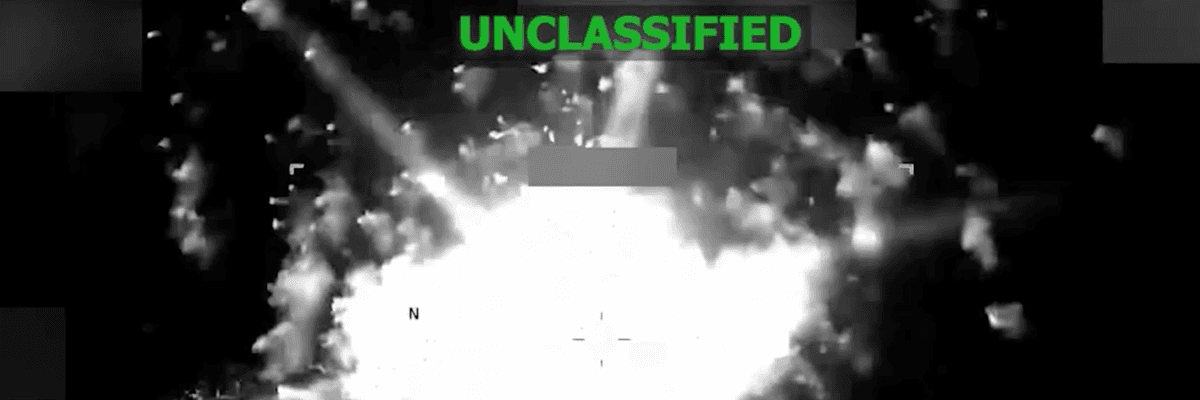
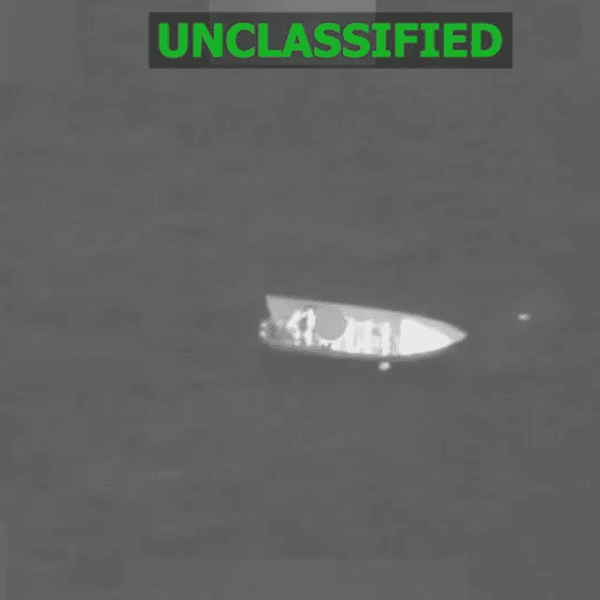
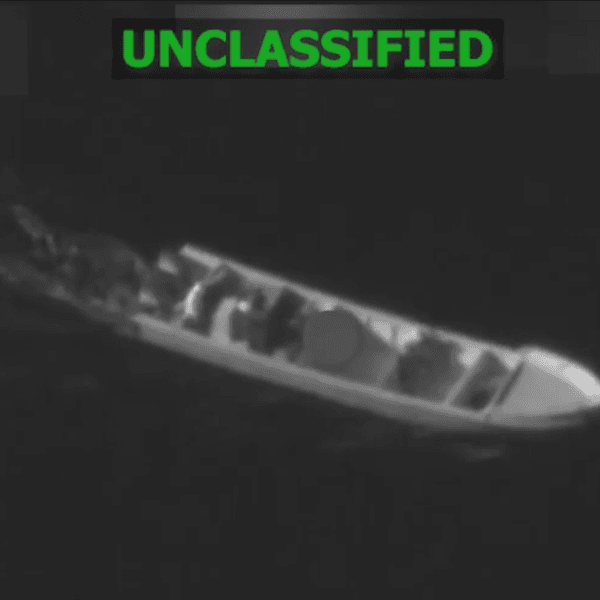
This screen grab of unclassified US military footage shows the moment that an airstrike destroyed a boat allegedly carrying drugs in the Caribbean Sea on April 19, 2026.(Photo by US Southern Command/screen grab)
One group lamented that “Congress has failed to step up and claim its power to end these violent strikes.”
The Trump administration’s accelerated bombing campaign targeting boats allegedly smuggling illicit drugs in the Caribbean Sea and Pacific Ocean claimed three more lives Sunday, bringing the total number of people killed in the illegal strikes to at least 181.
“On April 19… Joint Task Force Southern Spear conducted a lethal kinetic strike on a vessel operated by designated terrorist organizations,” US Southern Command (SOUTHCOM) said in a statement.
“Intelligence confirmed the vessel was transiting along known narco-trafficking routes in the Caribbean and was engaged in narco-trafficking operations,” the Florida-based command said, without providing evidence. “Three male narco-terrorists were killed during this action. No US military forces were harmed.”
— Amnesty International USA (@amnestyusa) April 20, 2026
While the American public’s attention has been focused on the US-Israeli war on Iran, the Trump administration has ramped up its boat-bombing campaign, striking at least 14 vessels so far this month compared with 12 in all of March.
There have been more than 50 such strikes since President Donald Trump launched the campaign early last September. Relatives of people killed in some of the boat strikes, as well as officials in Venezuela and Colombia, say that at least some of the victims were fishers who were not part of the illicit drug trade.
One expert said that even in cases of vessels that were involved in drug trafficking, the bombings were illegal and “the equivalent of straight-up massacring 16-year-old drug dealers on US street corners.”
A day after the US military attacked civilian boats in international waters for more than the 50th time, US Defense Secretary Pete Hegseth on Monday excoriated Iran’s government for attacking civilian boats in international waters.
Isn't he illegally blowing up boats in international waters??
In addition to bombing boats—and seven countries since returning to office—Trump launched an invasion of Venezuela to abduct its president, Nicolás Maduro, and his wife, who are jailed in the US awaiting trial on questionable narco-trafficking charges.
Responding to Sunday’s strike, the Project on Government Oversight said on social media that the Trump administration “is still blowing up boats in Latin American waters” and lamented that “Congress has failed to step up and claim its power to end these violent strikes.”
US lawmakers led by Rep. Gregory Meeks (D-NY) in the House of Representatives and Sens. Tim Kaine (D-Va.) and Adam Schiff (D-Calif.) in the Senate tried and failed to pass war powers resolutions in the Republican-controlled Congress aimed at curbing Trump’s boat strike spree.
Climate science denier Donald Trump confirms that he knows nothing about democracy and that more liquid gold is being secured according to his policy of global privateering.
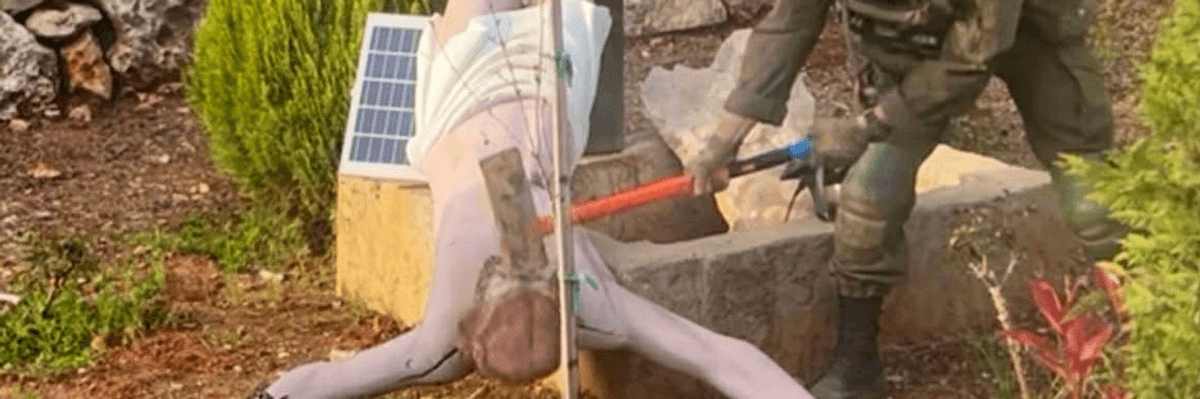
An Israel Defense Forces soldier is seen smashing the head of a statue of Jesus Christ in southern Lebanon in April 2026. (Photo via @ytirawi/X)
“Israeli soldiers have been posting images of their war crimes and cultural desecration for two and a half years straight without interruption,” said one journalist.
But so far, Israeli Prime Minister Benjamin Netanyahu has spoken out against just one attack on civilian infrastructure—saying on Monday that he condemned “in the strongest terms” an image that went viral over the weekend of an IDF soldier taking a sledgehammer to the head of a statue of Jesus Christ in southern Lebanon.
“Of all the shocking war crimes [Palestinian journalist] Younis Tirawi has exposed, it’s the sledgehammer to a Jesus statue… that finally gets Netanyahu to comment,” said Drop Site News co-founder Ryan Grim, referring to the reporter who posted the image on social media.
Lebanon |
An Israeli soldier smashing the head of a Jesus Christ statue during operations in southern Lebanon. pic.twitter.com/Sj1m16tj9q
Tirawi reported that the statue belonged to the Christian town of Debel, which the Catholic Near East Welfare Association said last week is home to 1,700 people who have been “in total isolation” in recent weeks as the Israeli occupation has forced the Lebanese Army to withdraw from the area. CNEWA said an archbishop in the village has tried to get an aid convoy to Debel, where residents earlier this month had no safe drinking water and enough food to last “no more than two days,” but the IDF’s shelling in the area has forced air trucks to turn back.
“If [Netanyahu] finds this one offensive,” said Grim of the photo of the IDF soldier, “I suggest he not scroll the last few years of posts from Younis Tirawi.”
Tirawi reported extensively on the IDF’s destruction of civilian infrastructure in Gaza. He posted a video on social media on April 11 of the IDF demolishing a United Nations school in the southern part of the exclave, and one on April 10 that showed a double-tap strike that killed 33-year-old Palestinian Man Yousef Mansour in al-Mawasi.
Netanyahu said in an interview with Newsmax last week that Israel “is the only country in the Middle East and one of the few countries in the world who stands up for Christians.”
In a statement Monday, the IDF said that it is “operating to dismantle the terrorist infrastructure established by Hezbollah in southern Lebanon, and has no intention of harming civilian infrastructure, including religious buildings or religious symbols.”
Harsher words for this soldier that knocked down a statue than any soldier who has killed a toddler. https://t.co/OmI1njF6c3
But the destruction of the Jesus statue in Debel came after a double-tap strike that killed Father Pierre al-Rahi, a Manonite Catholic priest, in another southern Lebanese town last month. Historic Christian churches have also been destroyed by IDF attacks in Gaza.
“The smashing of Christ’s statue in Lebanon is latest example of the impunity with which Israeli soldiers have attacked and desecrated religious sites in occupied Palestinian territories,” said TRT World.
War correspondent Steve Sweeney, who is based in Beirut, shared footage of a church the IDF destroyed in southern Lebanon in October 2024, in an attack that killed at least eight people.
As I$rael claims that destruction of Christian icons is “inconsistent” with its values, here is my footage of a church it destroyed in Derdghaya in southern Lebanon in October 2024, killing at least 8 people. pic.twitter.com/60c4JyteTr
Sweeney also noted that a month after that attack, Israeli soldiers “desecrated the St. Mema Church in the Christian village of Deir Mimas, southern Lebanon.”
The IDF “said the conduct was contrary to its values” at the time, said Sweeney.
Despite officials’ expressions of shock on Monday, “Israeli soldiers have been posting images of their war crimes and cultural desecration for two and a half years straight without interruption,” said Grim.
UN experts have warned as Israel has carried out its attacks in Lebanon since early March that “deliberately attacking civilians or civilian objects amounts to a war crime.”
While the destruction of the Jesus statue drew condemnation Monday from Netanyahu, the IDF, and US Ambassador to Israel Mike Huckabee—who called for “swift, severe, and public consequences”—it was far from the only attack waged by Israel in Lebanon over the weekend.
Despite a ceasefire that was announced Friday and a statement from President Donald Trump that further IDF attacks were “PROHIBITED,” Israel continued demolishing infrastructure and shelling areas in southern Lebanon over the weekend, and three people were injured in an Israeli drone strike near the Litani River on Monday.
“I am not a politician; I speak of the Gospel.” Pope Leo XIV’s recent remarks, made during his apostolic journey to Africa, immediately suggest that his clash with Donald Trump operates on a different level to the US president’s usual political spats.
This is not the classic kind of confrontation that Trump has often had with foreign heads of state and government in the past, such as in recent months with the UK prime minister, Keir Starmer, whose refusal to fully back the US and Israel in their war against Iran attracted Trump’s ire. Rather, it is a clash rooted in fundamentally different moral and political visions: between a president who treats power in transactional terms and a pope who frames war, migration and human dignity as matters of moral principle.
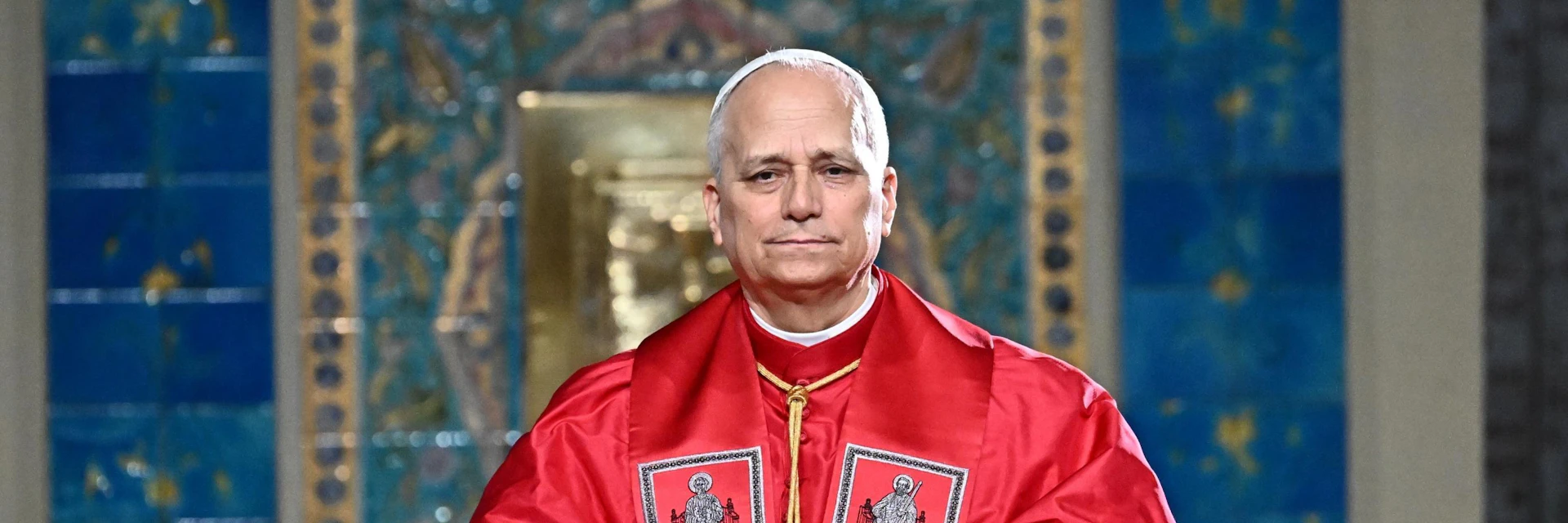
When Cardinal Robert Prevost was named as Pope Leo in May 2025, Trump and his administration initially appeared to welcome the new pontiff warmly. In fact, in a post to his Truth Social platform the US president appeared to take credit for his election as pope, writing that Prevost “was only put there by the Church because he was an American, and they thought that would be the best way to deal with President Donald J. Trump”.
But the war in the Middle East launched by the US and Israel has made the differences between their positions clearer – further heightening tensions between them. On Palm Sunday, the week before Easter, it became clear that Leo had decided to take a firm line against the war in Iran, saying that Jesus “does not listen to the prayers of those who wage war, but rejects them, saying: ‘Even though you make many prayers, I will not listen: your hands are full of blood’”.
His Easter message was equally clear: “Let those who have weapons lay them down! Let those who have the power to unleash wars choose peace! Not a peace imposed by force, but through dialogue! Not with the desire to dominate others, but to encounter them.”
Day’s later the pope denounced the US president’s apparent threat to destroy the whole of the Iranian civilisation as “truly unacceptable” in comments which roundly criticised the war and called for a “return to dialogue, negotiations”.
Trump responded in harsh terms, describing the pope in a Truth Social post as “weak on crime” and “terrible for foreign policy”. He went on to say that he did not want a pope “who thinks it is OK for Iran to have nuclear weapons”, adding that “Leo should use common sense, stop doing the bidding of the radical left, and focus on being a great pope rather than a politician”.
Returning to Washington from Florida, Trump also told reporters: “I don’t think he’s doing a good job. I’m not a fan of Pope Leo.” The pope replied on Monday by saying that he was not afraid of the Trump administration and would continue to speak out against war.
Trump did not stop there. He went so far as to publish an image portraying himself as Jesus Christ, a move that appeared to go too far even for many of his conservative supporters. The reaction was strong enough to force him to delete the post and backtrack.
This could hurt the US president
Trump has clashed with the Vatican before, but this confrontation unfolds in a very different setting. Pope Francis, the first Argentine pope and the first pontiff from the global south, was often openly critical of Trump, particularly on migration. In 2016, he famously suggested that a leader who thinks only of building walls rather than bridges is “not Christian”, crystallising the tension between them.
Pope Leo XiV calls for an end to war, March 29 2026.
The key difference was that Francis was also a divisive figure within sections of the American Catholic Church. He was frequently targeted by conservative Catholic commentators and church networks in the US, and in 2019 he remarked that “it’s an honour that the Americans attack me”.
Leo, by contrast, is the first US pope – and that changes the political equation. His voice is likely to carry different authority among Catholic voters, who are an important part of Trump’s electoral base.
In the last presidential election, 55% of Catholic voters supported Trump, including 62% of white Catholics. Senior Catholics also occupy prominent positions in his administration, including Vance and Trump’s secretary of state Marco Rubio.
That is why Leo’s criticism may prove more politically consequential. It does not come from an external moral voice alone, as was often the case with Francis, but from an American pontiff speaking into a church and an electorate that Trump cannot afford to ignore.
Early reactions suggest that many Catholic voices in the US have rallied behind Leo, making this not only a diplomatic clash, but a potentially significant domestic one too. (This could also really hurt J.D. Vance. As the likely contender to succeed Trump on the Repulican ticket, he is deeply invested in his Catholic faith and is about to publish a book devoted to his conversion.)
From an international perspective, the break with the pope has also had visible repercussions. Giorgia Meloni, the Italian prime minister, long regarded as Trump’s closest ally in Europe, went publicly in defence of Pope Leo, the bishop of Rome, drawing criticism from Trump himself, who defined the Italian prime minister’s behaviour as “unacceptable”.
To conclude, this is not a political confrontation like the many others the world has become used to with this US president. The stakes are higher at home and on the world stage. At home, it risks alienating many Catholic voters whose support will matter not only in the midterm elections but also in the next presidential race. Internationally, it may complicate Trump’s relationship with European conservative parties, many of which have long sought close association with the Vatican.
The pope, as the leader of a vast global community, cannot be treated as though he were just another political opponent.