The war of austerity is bogus

Spread the love

It needed to be said and well done to Michael Meacher MP for saying it: the war of austerity is bogus, fake, manufactured. The solution is simple says Meacher: the filthy rich are getting filthier rich, tax them. Of course – if you’re filthy rich, you will not ever even notice being slightly less filthy rich.

Meacher’s article is well presented and appears very well researched. Meacher consistently shows competence and capablity and is willing to address the big, important issues – often even against his own party’s policies. We need far more politicians like Meacher.


How to kickstart the UK economy – at zero cost to 99% of us

By imposing a capital gains tax charge at 28% on the seriously rich 0.003% we could create 1.5m jobs over the next two years

Michael Meacher

According to the annual Sunday Times Rich List, the richest 1,000 persons now sit atop of £414bn, a sum more than three times the size of the entire UK budget deficit. The richest 1% of the population, about 300,000 persons with an income of more than £3,000 a week, are estimated to possess wealth of about £1tn. The richest 10% control wealth of about £4tn. To put these figures in perspective, Britain’s total GDP is £1.45tn.

Consider first that minuscule group in the stratosphere at the top, Britain’s thousand richest. In 1997 they held assets of £99bn, but they took full advantage of New Labour’s being “intensely relaxed about people becoming filthy rich” to nearly quadruple this to £336bn by 2010. That process of gargantuan enrichment now means that in order to get access to this exclusive club, one needs personally to command assets of at least £450m to get into the top 200, £750m to get into the richest 100, and no less than £1.4bn to break into the top 50.

It’s not only that the very rich have colossal wealth, they also overwhelmingly monopolise it. The richest 1% of the population own a quarter of total UK wealth, and the richest half control no less than 94% of total wealth. Ownership of land is even more skewed: 69% of it is owned by 0.3% of the population.

What, then, should be done? In the short term, the most feasible approach is to impose a capital gains tax charge at the current rate of 28% on the topmost layers of wealth, the £155bn gains amassed by the 0.003% over the last three years. That would yield £43bn, more than enough to generate the public investment to create 1.5 million jobs over the next two years. This could then steadily be extended to the remainder of the top 1%, which would provide the funds to widen and deepen the early recovery.

A wealth tax and land value tax, the details of which would have to be carefully drafted, should then follow in the medium term, and would achieve several purposes. They would resuscitate a public sector ravaged by the Tory ideological assault, curtail the grossest excesses of inequality that have disfigured the last three decades, and lay the foundations for an industrial and technological revival without which British living standards cannot be sustained. And all this without burdening the remaining 99% of the population.
Michael Meacher’s blog

Continue ReadingThe war of austerity is bogus

Joanna Blythman: GM crop trials are needless and reckless

Spread the love


Joanna Blythman: GM crop trials are needless and reckless

This Sunday, exasperated farmers and citizens will travel to a field near Harpenden to uproot a crop of genetically modified wheat. They have been denounced in purple prose by pro-GM commentators, as science haters, “Nazi book burners” and vandals. But what else can concerned citizens do when the company conducting the GM wheat trial, Rothamsted Research, presses on recklessly with an open field experiment that has the potential to contaminate neighbouring farmers’ crops and trigger unpredictable impacts on other species?

Recent Swiss research shows that some GM wheat varieties can cross-pollinate with crops more than 2.75km away, and that in the field, they cross-pollinate six times more than conventional varieties. Yet in contamination incidents involving long-grain rice in the US and flax in Canada, GM companies refused to accept liability.

In Europe, despite the US biotech industry’s attempts to ram GM down our gullets, applications for open-field trials of the Harpenden type have been steadily falling since 2009. Why? Consumers consistently reject genetically modified food. This is why Carrefour, the world’s second largest supermarket chain, now labels its own-brand meat and dairy as GM animal feed-free, (“Nourri sans OGM”), to give its customers the field-to-fork guarantee they so clearly desire.

Joanna Blythman is the author of ‘What to Eat: Food that’s good for your health, pocket and plate’ (Fourth Estate)


27/11/13 Having received a takedown notice from the Independent newspaper for a different posting, I have reviewed this article which links to an article at the Independent’s website in order to attempt to ensure conformance with copyright laws.

I consider this posting to comply with copyright laws since
a. Only a small portion of the original article has been quoted satisfying the fair use criteria, and / or
b. This posting satisfies the requirements of a derivative work.

Please be assured that this blog is a non-commercial blog (weblog) which does not feature advertising and has not ever produced any income.

dizzy


Continue ReadingJoanna Blythman: GM crop trials are needless and reckless

NHS news review

Spread the love

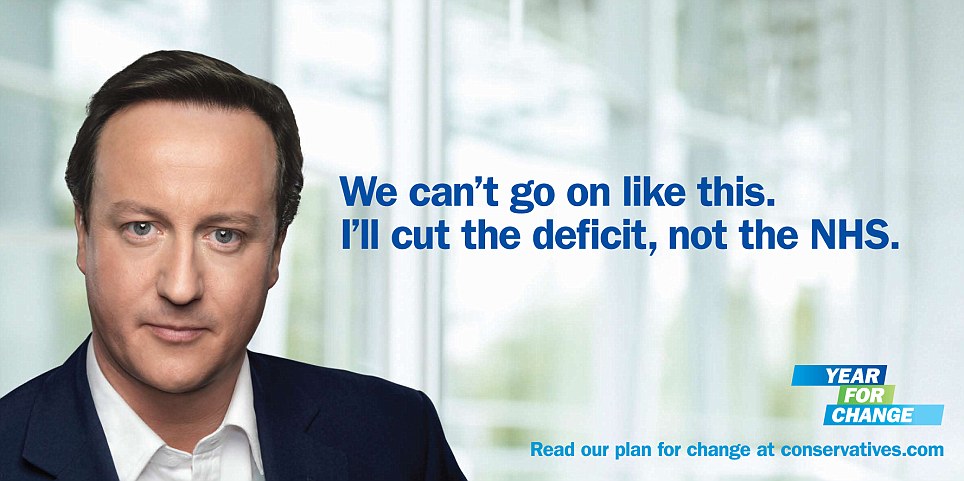
Conservative election poster 2010

A recent news article about the UK’s Conservative and Liberal-Democrat(Conservative) coalition government – the ConDem’s – brutal attack on the National Health Service.


Nurses heckle ‘liar’ Lansley over staffing level claims

NURSES heckled and laughed at Health Secretary Andrew Lansley today after he claimed clinical staffing levels in the NHS had increased.

Mr Lansley was speaking in the wake of a Royal College of Nursing (RCN) study that warned more than 60,000 frontline jobs in the NHS, including those of nurses, were at risk because of spending cuts, with almost half already gone.

He was laughed at by members of the audience at the RCN annual conference in Harrogate after saying nurses should tell superiors if staffing levels were not safe.

And some in the crowd shouted “liar” after the Health Secretary claimed clinical staffing levels had increased on his watch.

Continue ReadingNHS news review

NHS news review

Spread the love

Conservative election poster 2010

A few recent news articles about the UK’s Conservative and Liberal-Democrat(Conservative) coalition government – the ConDem’s – brutal attack on the National Health Service.


The Con-Dem government yesterday announced that the cabinet had vetoed publication of the transitional risk-register about dangers to the NHS from the Health and Social Care / Destroy the NHS Bill.

Andrew Lansley claimed to be “… a firm believer in greater transparency …” but not in this instance. A more realistic assessment is that Lansley and the Con-Dem government has evaded publication of the risk-register at every opportunity and that they are desperate that it should not be published since it illustrates that they have been reckless and consitently lied about their intentions for the NHS. “No more top-down reorganisation”, “I’ll cut the defecit, not the NHS”, “I love the NHS”, “… it is not privatisation”. All bollocks.

An earlier draft risk-register has been leaked. It clearly shows that the government has been reckless with the NHS and strongly suggests that the intention all along was to destroy it.


NHS reform risk warnings leaked

Identifying 43 separate areas of potential risk, the draft register rates each on a scale of one to five, where a rating of one means little likelihood and very low impact and five means almost certain to occur and very high impact. The likelihood and impact figures are combined to give an overall risk rating, with a maximum score of 25.

Among 13 areas given a risk rating of 16 – with likelihood and impact each assessed at four out of five – were: Parliamentary amendments creating “unforeseen consequences for the system”; costs being driven up by GP consortia using private sector organisations and staff; implementation beginning before adequate planning has been done; loss of financial control; “unhelpful conflict” between the NHS commissioning board and regulator Monitor; GP consortia going bust or having to cut services for financial reasons; GP leaders being drawn into managerial processes which end up driving clinical behaviour.

Staff concerns and union action over the reforms could lead to “deterioration in relations, lower productivity in the Department of Health/NHS and delays in programme”, the document said. And there was a warning that strategic health authorities and primary care trusts might lose “good people” who then have to be re-employed to run the new system.


Continue ReadingNHS news review