Trump returns: nine things to expect for the climate
Spread the love

Below the Sky/Shutterstock

Jack Marley, The Conversation

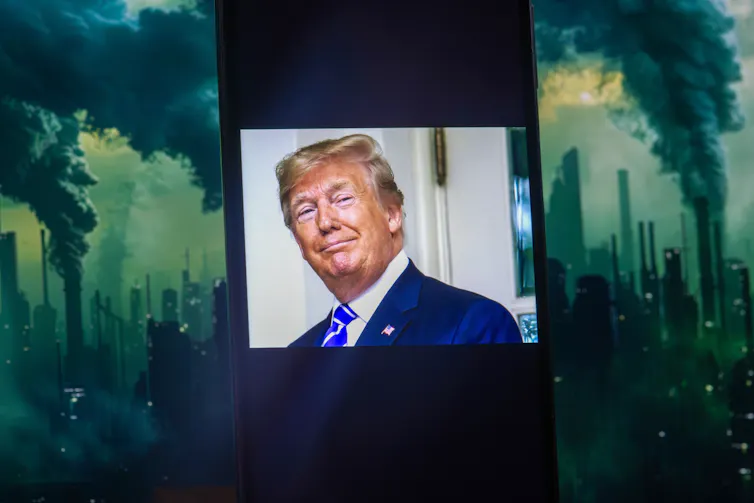
Climate scientists are probably among those most aggrieved by Donald Trump’s return as US president.

Trump has scoffed at the increasingly dire warnings of these scientists and declared his enthusiasm for digging up and burning the coal, oil and gas that is overheating Earth. His empowerment of the far right dims prospects for collective solutions to collective problems, but what is he likely to change about US climate policy?


This roundup of The Conversation’s climate coverage comes from our award-winning weekly climate action newsletter. Every Wednesday, The Conversation’s environment editor writes Imagine, a short email that goes a little deeper into just one climate issue. Join the 40,000+ readers who’ve subscribed.


Trump has not published a climate agenda. To discern his impact on domestic and international policy, we have to sift through statements, appointments to political positions and the record of his first term.

Here, our academics glean grim portents for the years ahead – and some continuities with supposedly pro-climate presidents of the past.

1. It’s still ‘drill, baby, drill’

Trump’s three-word campaign slogan, “drill, baby, drill”, is intended to sum up his plans for the US oil and gas industry. It’s also an apt summary of existing US energy policy.

Since 2008, when Democrat Barack Obama was elected, oil production has soared from a 50-year low of 6.8 billion barrels a day to 19.4 billion in 2023.

A dry landscape littered with oil derricks.
Not starved of investment: an oil field in California. Alizada Studios/Shutterstock

“The United States is already producing more crude oil than any country ever,” says Gautam Jain, an energy and finance expert at Columbia University.

“Oil and gas companies are buying back stocks and paying dividends to shareholders at a record pace, which they wouldn’t do if they saw better investment opportunities.”

2. We won’t always have Paris (or even Rio)

Trump withdrew the US from the 2015 Paris agreement on the first day of his second term (it took him six months to do it last time).

Jain frets that he may go further and exit international negotiations entirely, by rescinding his country’s membership of the UN Framework Convention on Climate Change, which was adopted in Rio de Janeiro in 1992.

Rejoining would be “nearly impossible”, Jain says, as a future president would need the consent of two-thirds of the Senate.

The US risks dropping the mantle of climate leadership on China, he adds. A recent analysis by Oxford economists Matthew Carl Ives and Natalie Sum Yue Chung suggests that that ship may have sailed years ago.

“China already processes most of the clean energy supply materials and has an advanced manufacturing base that is more capable of scaling up production to meet the rising demand,” they say.

3. The bucks stop here?

A US retreat from international climate diplomacy would afflict people who are particularly vulnerable to the mounting crisis in Earth’s atmosphere. Jain highlights how Trump’s predecessor Joe Biden donated several billions of dollars more towards renewable energy and adaptation in the developing world, compared with Trump in his first term.

However, a 2023 study that estimated each country’s “fair share” of this climate finance pot according to income, population size and historical emissions, issued this withering assessment while Biden was president:

“Based on these metrics, we found that the US is overwhelmingly responsible for the climate finance shortfall,” says environmental economist Sarah Colenbrander (University of Oxford).

“The world’s largest economy should be providing US$43.5 billion of climate finance a year. In 2021, it gave just US$9.3 billion – a meagre 21% of its fair share.”

4. Biden’s green tax credits may endure…

Trump could keep some Biden-era investments in clean energy (tax breaks for investors in renewables, for example) as the benefits are accruing in Republican states, Jain says.

He may still cut tax credits for people buying electric vehicles, though. This would slow the transition from combustion-engine transport by making it harder for people to afford an EV. (Biden’s 100% tariff on Chinese-made EVs hasn’t help either).

5. … but his methane tax probably won’t

Jain predicts that the greatest damage inflicted by Trump will be to the regulation of fossil fuels and emissions. In his crosshairs is a federal charge for the release of methane from oil and gas wells and pipelines.

Biden identified cutting methane emissions as a potential brake on the accelerating pace of global heating. That’s because methane is a greenhouse gas that lingers in our atmosphere for decades instead of centuries like CO₂ and is far more potent in trapping heat during that time.

Reducing methane emissions could reduce climate change quickly – a climate action lifeline we will be sorry to see thrown away.

6. The nuclear option

Trump seems to have a soft spot for one low-carbon energy source: nuclear power. Perhaps because civil nuclear maintains the skills and supply chains needed for its military applications?

7. Up is down, left is right

Democrats may regret making “trust the science” their dividing line against Trump.

Eric Nast, an environmental governance expert at the University of Guelph, tracked how the first Trump administration altered language on US government websites.

He expects Trump to disguise his regulation bonfire as “strengthening transparency” (blocking air pollution standards that rely on private health data) and championing “citizen science” (dismissing academics from advisory boards for private citizens rich in time and money, who might benefit from scrapping rules and limiting scrutiny).

8. Fighting fire with money

Tesla’s Elon Musk, Amazon’s Jeff Bezos and Meta’s Mark Zuckerberg attended Trump’s second inauguration. Their presence – plus a pointed farewell speech by Biden – has provoked murmurs of “oligarchy”: rule by people whose immense wealth and influence has utterly captured ostensibly democratic societies.

At the still-raging LA fires, an oligarch-friendly response to climate change has presented itself: firefighters-for-hire.

“As public firefighters struggle to cope, affluent residents and businesses have turned to private firefighting services to protect their properties,” says Doug Specht, a University of Westminster geographer.

9. Arctic relations

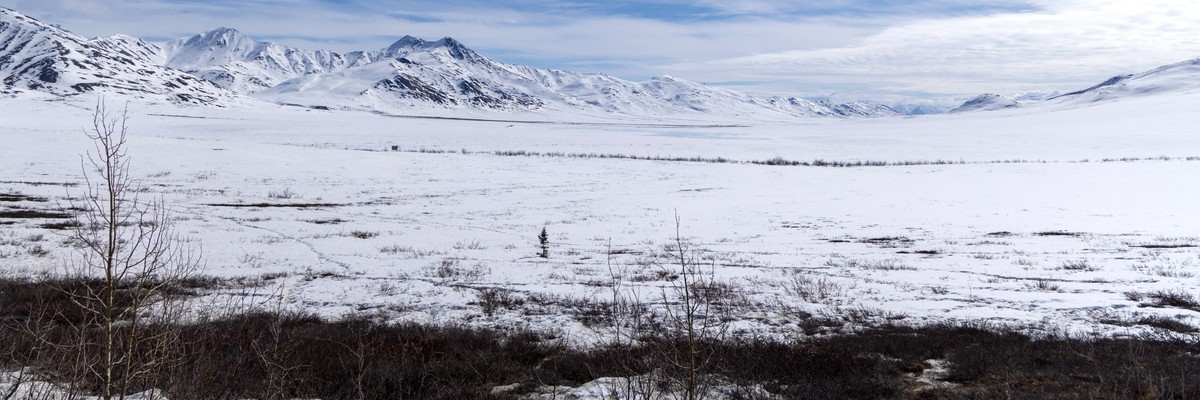
What explains Trump’s sudden interest in the Arctic? Oil, gas and critical minerals newly liberated by thawing ice in a region warming four times faster than the global average says engineer Tricia Stadnyk at the University of Calgary.

“The second Trump administration is aware of both the new opportunities and risks as global temperatures shatter new records and thresholds, and an ice-free Arctic becomes a possibility,” she says.

Jack Marley, Environment + Energy Editor, The Conversation

This article is republished from The Conversation under a Creative Commons license. Read the original article.

Orcas comment on killer apes destroying the planet by continuing to burn fossil fuels.
Continue ReadingTrump returns: nine things to expect for the climate

A Third of the Arctic’s Landmass is Now a Source of Carbon: Study

Spread the love

Original article by Eloise Goldsmith republished from Common Dreams under Creative Commons (CC BY-NC-ND 3.0).

The study was published as President Donald Trump was blasted for an executive order that one critic said shows he wants to turn the Alaskan Arctic into the “the world’s largest gas station.”

For thousands of years, the land areas of the Arctic have served as a “carbon sink,” storing potential carbon emissions in the permafrost. But according to a study published in the journal Nature Climate Change Tuesday, more than 34% of the Arctic is now a source of carbon to the atmosphere, as permafrost melts and the Arctic becomes greener.

“When emissions from fire were added, the percentage grew to 40%,” according to the Woodwell Climate Research Center, which led the international team that conducted the research.

The study, which was first reported on by The Guardian, was released the day after President Donald Trump issued multiple presidential actions influencing the United States’ ability to confront the climate crisis, which is primarily caused by fossil fuel emissions, including one directly impacting resource extraction in Alaska, a section of which is within the Arctic Circle.

Sue Natali, one of the researchers who worked on the study published in Nature Climate Change, told NPR in December (in reference to similar research) that the Arctic’s warming “is not an issue of what party you support.”

“This is something that impacts everyone,” she said.

As the permafrost—ground that remains frozen for two or more years—holds less carbon, it releases CO2 into the atmosphere that could “considerably exacerbate climate change,” according to the study.

“There is a load of carbon in the Arctic soils. It’s close to half of the Earth’s soil carbon pool. That’s much more than there is in the atmosphere. There’s a huge potential reservoir that should ideally stay in the ground,” said Anna Virkkala, the lead author of the study, in an interview with The Guardian.

The dire warning was released on the heels of Trump’s executive order titled “Unleashing the Alaska’s Extraordinary Resource Potential” that calls for expedited “permitting and leasing of energy and natural resource projects in Alaska,” as well as for the prioritization of “development of Alaska’s liquefied natural gas (LNG) potential, including the sale and transportation of Alaskan LNG to other regions of the United States and allied nations within the Pacific region.”

The order also rolls back a number of Biden-era restrictions on drilling and extraction in Alaska, which included protecting areas within the Arctic National Wildlife Refuge from oil and gas leasing.

“Alaska is warming four times faster than the rest of the planet, a trend that is wreaking havoc on communities, ecosystems, fish, wildlife, and ways of life that depend on healthy lands and waters,” said Carole Holley, managing attorney for the Alaska Office of the environmental group Earthjustice, in a statement Monday.

“Earthjustice and its clients will not stand idly by while Trump once again forces a harmful industry-driven agenda on our state for political gain and the benefit of a wealthy few,” she added.

Trump wants to turn the Alaskan Arctic into the “the world’s largest gas station,” said Athan Manuel, director of Sierra Club’s Lands Protection Program, in a statement Monday. “Make no mistake, Trump’s rushed and sloppy actions today are an existential threat to these lands and waters, and the communities and wildlife that depend on them.”

Original article by Eloise Goldsmith republished from Common Dreams under Creative Commons (CC BY-NC-ND 3.0).

Orcas comment on killer apes destroying the planet by continuing to burn fossil fuels.
Continue ReadingA Third of the Arctic’s Landmass is Now a Source of Carbon: Study

Trump Readies ‘Day One Climate Destruction Package’ After Raking in Big Oil Cash

Spread the love

Original article by Jake Johnson republished from Common Dreams under Creative Commons (CC BY-NC-ND 3.0). 

Then-U.S. President Donald Trump listened to California Gov. Gavin Newsom at Sacramento McClellan Airport in McClellan Park, California on September 14, 2020. (Photo: Brendan Smialowski/AFP via Getty Images)

“The fossil fuel industry invested $75 million to secure Trump’s victory, and now they’re expecting a return,” said the executive director of Oil Change International.

The fossil fuel industry pumped tens of millions of dollars into President-elect Donald Trump’s successful bid for a second White House term—and it could begin seeing a return on its investment on his very first day in office.

Trump pledged on the campaign trail to be a “dictator” on day one in the service of accelerating U.S. fossil fuel production, which is already at record levels as nations around the world—including the United States—face the devastating consequences of planet-warming emissions.

Soon after his inauguration on Monday, Trump is expected to begin signing executive orders—some of them likely crafted by fossil fuel industry lobbyists—revoking climate-protection rules implemented by his predecessor and paving the way for new liquefied natural gas export permits, among other gifts to the industry.

Citing “several fossil fuel industry lobbying groups helping shape Trump’s energy agenda,” Business Insiderreported Thursday that Trump “could direct federal agencies to approve new terminals to export liquefied natural gas (LNG) and start unwinding restrictions on oil and gas leasing on federal lands and waters.”

The president of the American Petroleum Institute, the oil and gas industry’s powerful lobbying group, said earlier this week that his organization is “excited” about the prospect of Trump lifting the LNG pause.

study published Friday warns that a flurry of LNG terminal approvals would “deliver a windfall for U.S. fracking companies and exporters of liquefied methane” while “extending an export explosion that’s pushing up prices for American consumers while harming the climate and vulnerable communities.”

“Trump is handing these companies a blank check to expand their operations at precisely the moment we need to end fossil fuel extraction.”

Trump, whose Cabinet is set to be packed with fossil fuel industry allies, has also said he would immediately move to roll back President Joe Biden’s ban on offshore oil and gas drilling across more than 625 million acres of U.S. coastal territory—even though the law Biden used does not give presidents the power to undo previous offshore drilling bans.

In a statement on Friday, Oil Change International (OCI) listed a number of other actions Trump could take on day one, including withdrawal from the Paris climate accord, an emergency declaration to boost fossil fuel production, an expansion of drilling on public lands, and an attempt to revive the Keystone XL pipeline.

OCI dubbed the agenda “Trump’s day one climate destruction package.”

“The fossil fuel industry invested $75 million to secure Trump’s victory, and now they’re expecting a return,” said Elizabeth Bast, OCI’s executive director. “By appointing fossil fuel CEOs to key Cabinet positions and planning to dismantle critical environmental protections, Trump is handing these companies a blank check to expand their operations at precisely the moment we need to end fossil fuel extraction.”

“As Trump returns to office, we’re witnessing the deadly price tag of fossil fuel industry control over our democracy,” Bast said. “From the still-burning wildfires in Los Angeles to the destruction left by Hurricane Helene in Asheville, to the unprecedented droughts and floods devastating Southern Africa, the climate crisis is accelerating. These deadly disasters are driven by fossil fuel executives who put their profits ahead of our future.”

E&E News reported Friday that Trump “could sign somewhere between 50 and 100 executive orders” on the first day of his second term. One of the first targets, according to the outlet, will be Biden’s early executive order directing federal agencies to take part in a “government-wide approach to the climate crisis.”

Trump is also expected to take aim at renewable energy initiatives, including wind projects and an electric vehicle tax credit implemented under the Inflation Reduction Act.

In response to Trump’s planned actions, climate activists said the movement for a livable future must mobilize around the world and fight back in every way possible.

“One man and one election may temporarily cloud the horizon, but they cannot halt the relentless momentum of climate action,” Dean Bhekumuzi Bhebhe, senior just transitions and campaigns adviser at Powershift Africa, said Friday. “If anything, such moments are an invitation for historically polluting nations to step forward, not with the rhetoric of obstruction, but with the deeds of redemption. The world is watching, and we’ve seen enough bluster, now it’s time for genuine action. The stakes are no longer abstract, lives are being lost every day.”

Original article by Jake Johnson republished from Common Dreams under Creative Commons (CC BY-NC-ND 3.0). 

Continue ReadingTrump Readies ‘Day One Climate Destruction Package’ After Raking in Big Oil Cash

The politics of Reform UK—despair wrapped in racism

Spread the love
Nigel Farage explains the politics of Reform UK: Racism, Fake anti-establishmentism, Deregulation, Corporatism, Climate Change Denial, Mysogyny and Transphobia.

https://socialistworker.co.uk/anti-racism/the-politics-of-reform-uk-despair-wrapped-in-racism/

Racism is central to Reform UK, but the party is also entangled with anti‑establishment fakery, climate change denial, transphobia, ­misogyny and ­pro‑­corporate policies.

The anti-establishment fakery was on display last November, when Farage posted on social media, “Big business and big government work together. There is nothing about Sir Keir Starmer that represents change.”Adding to this already vile ­concoction of politics is misogyny and ­transphobia. This was on display at Reform UK’s recent regional conference in Leicester, where Tice opened his speech with a transphobic joke about pronouns. The result is an over-arching package of the politics of division. This is hardly a surprise from a party whose senior members say they look to Marine Le Pen’s fascist National Rally (RN) and the far right Alternative for Germany (AfD) as inspiration.

Farage likes to paint Reform UK as the insurgent force in British politics. He claims that Reform UK is “very much on the side of the little guy or woman”. Its MPs often denounce the two-party system and ­multinational corporations in favour of “real entrepreneurship”. This language is an attempt to mobilise the historic base of the far right, which has typically built among small ­producers and independent professionals.

But Reform UK is as establishment as it gets. Four out of the five Reform UK MPs—Nigel Farage, Richard Tice, Rupert Lowe and Lee Anderson—are millionaires.

Its policies are a mish-mash of ­pro-corporate proposals. Tax cuts for business, austerity measures totalling £50 billion a year, a massive programme of deregulation, tax relief for private healthcare, abolishing inheritance tax for property under £2 million and      scrapping net zero climate targets.

It’s clear the party stands for putting more money in the pockets of the bosses and the rich.

And it uses climate denial to drive further division. Deputy leader Richard Tice is one of the worst for this. At one point he stated “there is no climate crisis” and claimed “CO2 isn’t a poison. It’s plant food”.

Adding to this already vile ­concoction of politics is misogyny and ­transphobia. This was on display at Reform UK’s recent regional conference in Leicester, where Tice opened his speech with a transphobic joke about pronouns. The result is an over-arching package of the politics of division. This is hardly a surprise from a party whose senior members say they look to Marine Le Pen’s fascist National Rally (RN) and the far right Alternative for Germany (AfD) as inspiration.

https://socialistworker.co.uk/anti-racism/the-politics-of-reform-uk-despair-wrapped-in-racism/

Continue ReadingThe politics of Reform UK—despair wrapped in racism

From a Trump presidency to ‘game-changing’ lawsuits: Seven big climate and nature moments coming in 2025

Spread the love

[I’m only able to quote a small part of this copyrighted article, read it here.]

https://www.bbc.com/future/article/20250107-the-key-climate-and-nature-moments-to-look-out-for-in-2025

Donald Trump has voiced plans to withdraw the US from the Paris Agreement, and possibly from the entire UNFCCC, after assuming the US presidency this year (Credit: Getty Images)

Yearlong: Extreme weather continues

As these global opportunities to make a difference on climate roll around, there is another certainty running through the calendar year: climate-driven extreme weather. 

In 2024, billions of people around the world experienced heatwaves and extreme weather, including deadly floods in Spainhurricanes in the US and severe drought in the Amazon. In fact, 2024 was the hottest year on record, with global temperatures breaching the critical 1.5C threshold for a full year for the first time. 

As long as we continue to burn fossil fuels, headlines in 2025 and beyond will continue to be dominated by large death tolls, suffering and destruction due to ever more extreme weather events – Friederike Otto

What’s harder to know is exactly when disasters will hit. But 2025 is also expected to be a scorcher: it will be one of the three hottest years on record globally, according to an outlook from the UK’s Met Office, falling just behind 2024 and 2023. Warm temperatures are forecast in 2025 despite the Pacific Ocean moving into a La Niña phase, in which sea surface temperatures are lower than usual and conditions overall are cooler. 

“Years such as 2025, which aren’t dominated by the warming influence of El Niño, should be cooler,” Adam Scaife, head of long-range prediction at the Met Office, stated in the outlook. 

Still, the Met Office expects average global temperature in 2025 to be 1.29C to 1.53C above pre-industrial temperatures. 

The world experienced an additional 41 days of dangerous heat due to climate change last year, according to a report by the World Weather Attribution group at Imperial College London, and the non-profit Climate Central.

Friederike Otto, who leads World Weather Attribution group, says the La Niña predictions mean 2025 “might be cooler than 2024” but argues “this is really irrelevant” if natural climate variability is masking the overall warming trend. 

https://www.bbc.com/future/article/20250107-the-key-climate-and-nature-moments-to-look-out-for-in-2025

Continue ReadingFrom a Trump presidency to ‘game-changing’ lawsuits: Seven big climate and nature moments coming in 2025