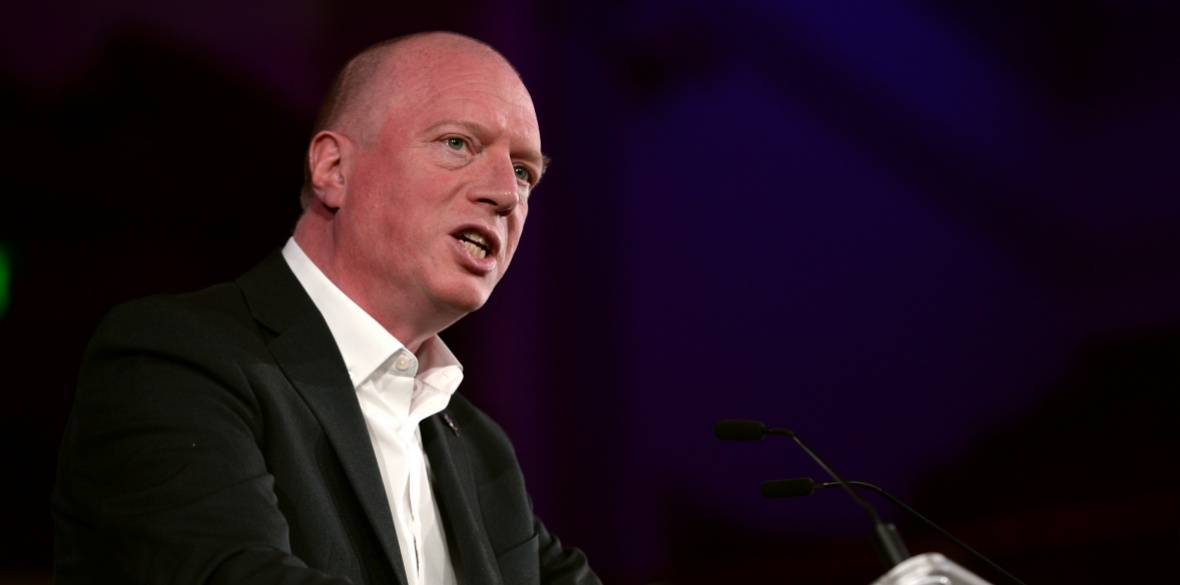
FBU general secretary Matt Wrack, who says the union has ‘a duty to make our voices heard on matters of fire safety’
A FRESH legal challenge against the government’s stalled plan to house asylum-seekers on the “deathtrap” Bibby Stockholm barge has been launched by firefighters, their union revealed today.
The Fire Brigades Union (FBU) outlined its concerns over safety aboard the barge in a pre-action protocol letter sent by lawyers to Home Secretary Suella Braverman on Friday.
It had previously written to Ms Braverman asking for a meeting to discuss its concerns that the boat was a “potential deathtrap,” but the request was turned down earlier this month.
A response to the legal challenge is required by 4pm on Thursday.
FBU general secretary Matt Wrack explained that the union had “a duty to make our voices heard on matters of fire safety, especially when politicians let our members and the wider public down.”
He said: “We have been sounding the alarm about the Bibby Stockholm for weeks.
“It is disgraceful that the Home Secretary is not even willing to meet us to discuss these concerns.
Parliamentary committees need to investigate water company accounting, especially as they are continuing with the practices that brought down Carillion.
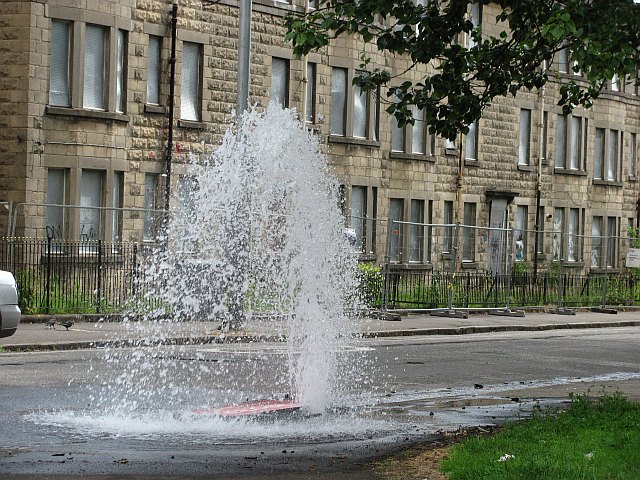
Image of a burst water main.
Prem Sikka is an Emeritus Professor of Accounting at the University of Essex and the University of Sheffield, a Labour member of the House of Lords, and Contributing Editor at Left Foot Forward.
Ever since its privatisation in 1989, the water and sewage industry in England and Wales has set new standards in ripping people off.
Profits are made by not plugging water leaks and by dumping tons of sewage in rivers and seas. More than one trillion litres of water is lost to leaks from crumbling pipes each year. In 2022, raw sewage was dumped into rivers and seas 824 times a day, nearly 301,000 times a year over 1.75m hours. Despite higher demand, no new reservoirs have been built since privatisation. With captive customers and no competition, companies have hiked charges by 40% in real terms. The biggest winners are shareholders. More than 90% of the nine water companies are owned by overseas investors.
Since privatisation, companies have paid £72bn in dividends and another £15bn is expected by the 2030. These are largely funded by over £60bn of debt. To soothe public anxieties, Ministers claim that since 1989 water companies have invested £190bn. Such claims need to be treated with caution as the companies have a history of murky accounting practices.
Thames Water is England’s’ biggest water company. Since 2010, it has been sanctioned 92 times by the regulators and paid fines of £163m. Since privatisation, it has paid £7.2bn in dividends and has debts of around £14bn.
Taking cue from the water company, in June 2023 a Minister told parliament that “Thames Water itself has not paid any dividends for the last six year”. Of course, water companies are not operating as not-for-profit organisations and are masters of financial engineering and obfuscation.
Page 43 of the company’s 2022-23 financial report describes £45m payment (£37m for 2022) to its immediate parent company Thames Water Utilities Holdings Limited as “dividend” which then forwards it to Thames Water Utilities Limited and is still described as “dividend”. The same page then claims that it is not really a dividend because its purpose is to “solely to service debt obligations and group related costs of other companies within the wider Kemble Water Group”. Page 22 of the 2022 accounts of Thames Water Utilities Holdings Limited shows “Dividend Income” of £37.1m. Anything described as a “dividend” in the accounts is a dividend and in the last two years alone this amounts to £82m (£45m + £37m). Since privatisation, vast amounts are likely to have travelled via this route to the company’s ultimate controllers but are not included in the £7.2m of dividends.
Yorkshire Water is also engaged in sleight of hands. Since 2010, it has paid £1.2bn in dividends and claims to have stopped paying dividends from 2017-18. However, page 137 of its 2022-23 financial report states that the company paid £62.3m “dividends” to its parent company. Its 2021-22 accounts (page 99) state that “the Board of Yorkshire Water has approved the payment of £52.6m in dividends.”
… [article continues discussing Water companies’ financial obfuscation.]
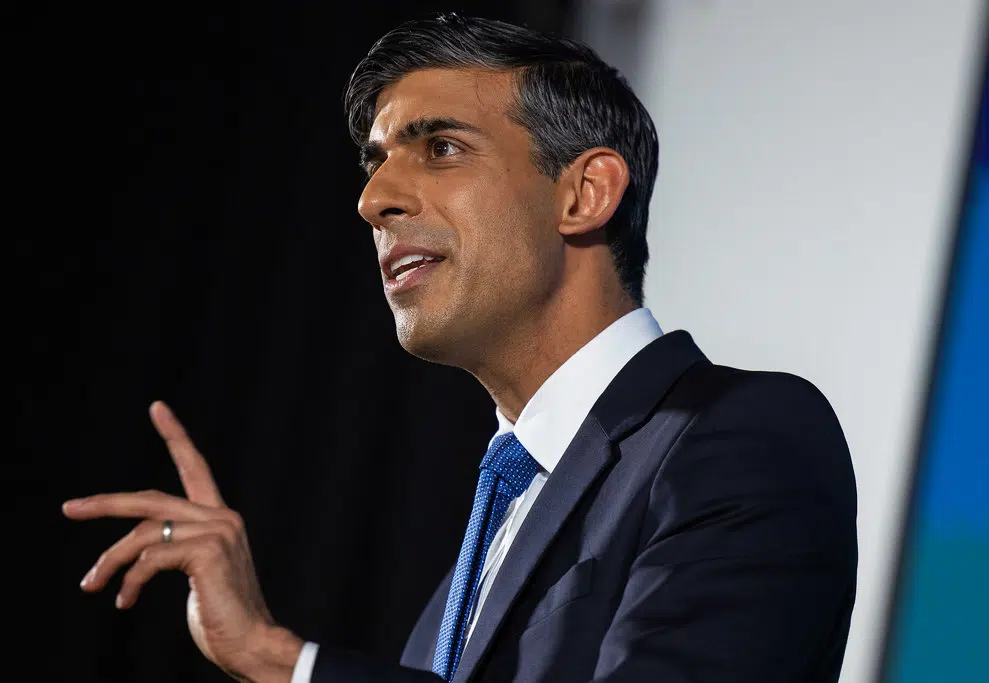
The Prime Minister ‘inadvertently’ broke the MP’s code of conduct due to ‘confusion’
The Prime Minister has been brutally ridiculed after the parliament’s standards commissioner declared he had ‘inadvertently’ broken the MPs’ code of conduct, for failing to declare his wife’s shares in a childcare company set to benefit from government policy.
Concerns over shares Akshata Murty held in the childcare company Koru Kids were raised back in April, when the company was listed as one of six childminder agencies in the Tory’s pilot childminder incentive.
Sunak supposedly got ‘confused’ over government rules so failed to declare his interests which led to the conclusion by the parliamentary commissioner for standards, Daniel Greenberg, that he had ‘inadvertently’ broken the rules.
His ‘confusion’ was around the difference between registering and declaring his interests, with the inquiry stating that no further action will be taken.
However, his ‘inadvertent’ rule breaking to the financial benefit of his family has raised many eyebrows. With public figures pointing to a wider theme of Tory MPs excusing themselves from misconduct.
The claim that the PM’s failure to declare his wife’s investment in a childcare company subsidised by his Government was ‘inadvertent’ is open to question
…
Such ‘confusion’ about what interests the Prime Minister needs to declare appears to be a regular occurrence for the Prime Minister, however.
Here’s all the other times Rishi Sunak has appeared ‘confused’ about which conflicts of interests he should and shouldn’t publicly declare.
MILLIONS of cash-strapped households are facing higher gas and electricity bills this winter despite a lower energy price cap, the labour movement warned yesterday.
Amid declining wholesale prices, regulator Ofgem announced a new average annual energy cost across Britain of £1,923 from October 1 — down from £2,074.
Typical prepayment meter customers will see their bills falls to £1,949 a year.
But experts warned a decision by Tory ministers to cut government energy support alongside an increase in compulsory standing charges would hike costs for some, while many would see little or no change.
WHITEHALL cleaners, security guards and support staff are to strike for five days after being offered a below-inflation pay rise.
They are angry to have been offered just a 3.5 per cent rise by outsourced contractor ISS when inflation is running at 6.8 per cent, the Public and Commercial Services (PCS) union said.
Nearly 100 PCS members at the Department for Energy Security & Net Zero, Department for Business & Trade and Department for Science, Innovation & Technology are set to take action from September 4 to 8.
PCS general secretary Mark Serwotka said: “It’s obscene that ISS can afford to pay board members £988,000 — a rise of 8.9 per cent from last year — yet claim they can’t afford to pay cleaners a fair rise.