The British government’s current policies are about as far from being consistent with Britain’s net zero plan as it is possible to be, argues RICHARD HEBBERT
…
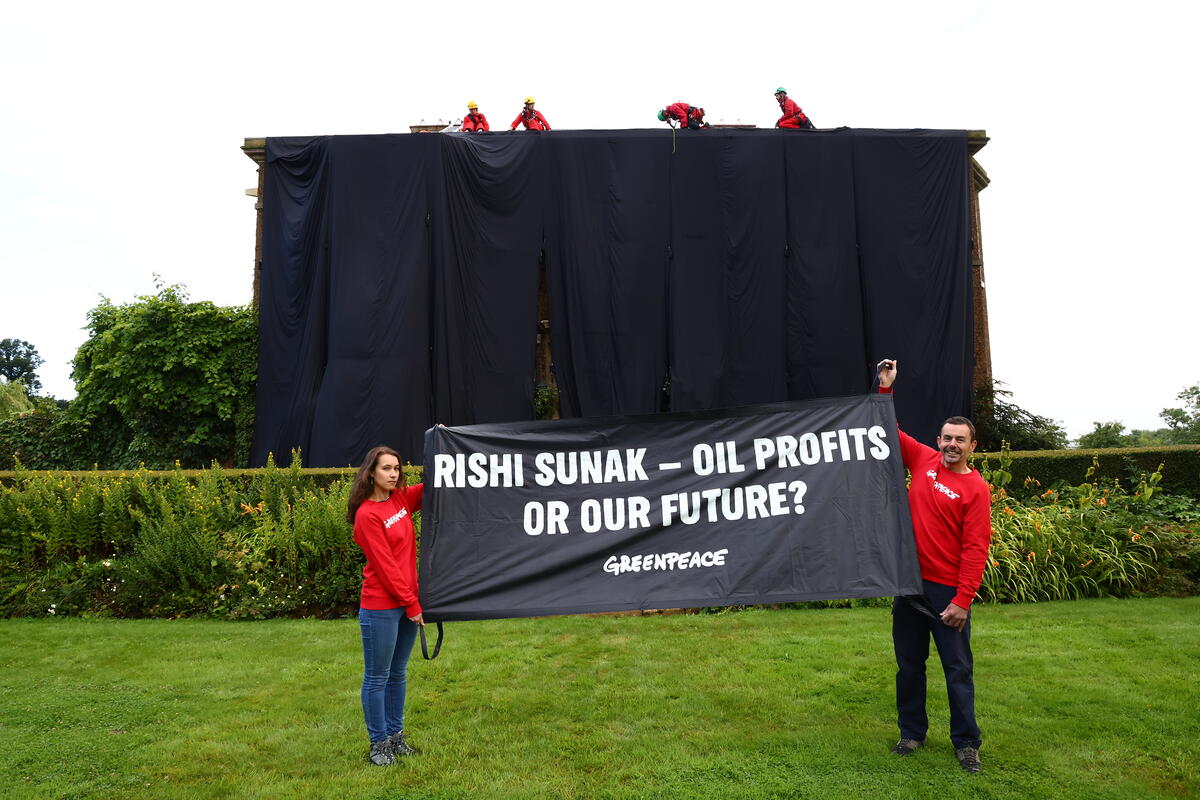
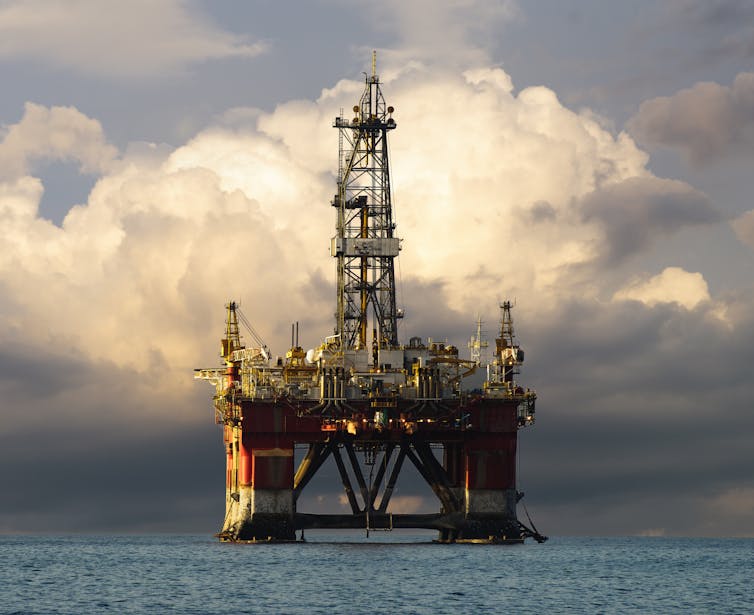
Last week Sunak announced that his government is granting over 100 new licences for oil and gas exploration in the North Sea, claiming in a peculiarly Orwellian statement that to do so is “consistent with the UK’s net zero plan.”
It isn’t. How could it possibly be?
Nor should we forget that the Tory government has approved the opening of a new coalmine in Cumbria and effectively banned on-shore windfarms — one of the quickest, cheapest and cleanest forms of renewable energy.
The British government cannot be ignorant of the manifest signs that the Earth’s climate is racing towards catastrophe, even quicker than has been previously forecast and yet it wilfully looks the other way.
The global average ocean surface temperature is expected to rise even further in the coming months as El Niño strengthens.
Climate scientists on Friday said the rapidly rising temperature of the planet’s oceans is cause for major concern, particularly as policymakers in the top fossil fuel emissions-producing countries show no sign of ending planet-heating oil and gas extraction.
The European Union’s climate agency, Copernicus Climate Change Service, reported this week that the average daily global ocean surface temperature across the planet reached 20.96°C (69.7°F), breaking the record of 20.95°C that was previously set in 2016.
The record set in 2016 was reported during an El Niño event, a naturally occurring phenomenon which causes warm water to rise to the surface off the western coast of South America. The weather pattern was at its strongest when the high ocean temperature was recorded that year.
El Niño is forming this year as well, but has not yet reached its strongest point—suggesting new records for ocean heat will be set in the coming months and potentially wreak havoc in the world’s marine ecosystems.
Samantha Burgess, deputy director of Copernicus, told the BBC that March is typically when the oceans are at their hottest.
“The fact that we’ve seen the record now makes me nervous about how much warmer the ocean may get between now and next March,” she told the outlet.
The warming oceans are part of a feedback loop that’s developed as fossil fuel emissions have increasingly trapped heat in the atmosphere.
Rising levels of carbon dioxide in the atmosphere are warming the oceans, leaving them less able to absorb the emissions and contributing to intensifying weather patterns.
“Warmer sea surface temperatures lead to a warmer atmosphere and more evaporation, and both of these lead to more moisture in the atmosphere which can also lead to more intense rainfall events,” Burgess told “Today” on BBC Radio 4. “And warmer sea surface temperatures may also lead to more energy being available for hurricanes.”
The warming ocean could have cascading effects on the world’s ecosystems and economies, reducing fish stocks as marine species migrate to find cooler waters.
“We are seeing changes already in terms of species distributions, prevalence of harmful algae blooms popping up maybe where we would not necessarily expect them, and the species shifting from warmer southern locations up into the colder regions as well which is quite worrying,” Helen Findlay, a biological oceanographer at the Plymouth Marine Laboratory in the United Kingdom, toldThe Evening Standard.
“We are also seeing more species coming up from the south, things like European anchovy or recently examples of Mediterranean octopus coming up into our waters and that is having a knock-on impact for the fish that we catch, and consequences of economics,” she added.
Certain parts of the world’s oceans provoked particular alarm among scientists in recent days, with water off the coast of Florida hitting 38.44°C—over 101°F—last week.
The National Oceanic and Atmospheric Administration told the BBC that ocean temperatures in that area typically hover between 23°C and 31°C at this time of year.
Since scientists first began measuring ocean temperatures using satellites and research buoys about four decades ago, the global average sea surface temperature has gone up by roughly 0.6°C.
On social media, climate scientists urged news outlets to explicitly connect the rising ocean temperatures to fossil fuel companies and the policymakers who are enabling them to continue fueling the climate emergency—such as British Prime Minister Rishi Sunak, who announced more than 100 new oil and gas licenses in the North Sea this week.
Ocean heat record smashed, with grim implications. This with warming of just 1.2° when scientists warn we are heading towards 3°. And in the week that the UK announces a bonanza for oil and gas. Will BBC Join the dots? @BBCJustinR https://t.co/V8rlv6IYx4
The New York Times this week reported “terrifying Earth breakdown but barely [mentioned] the cause is the fossil fuel industry,” said National Aeronautics and Space Administration climate scientist Peter Kalmus.
“The more we burn fossil fuels, the more excess heat will be taken out by the oceans, which means the longer it will take to stabilize them and get them back to where they were,” Burgess told the BBC.
The UK will extract as much oil and gas from the North Sea as possible, Prime Minister Rishi Sunak said on Monday as he announced more than 100 new drilling licenses. Only a few days earlier, United Nations chief António Guterres declared that record heat and extreme weather signalled a new era of “global boiling” had arrived.
How many new oil and gas fields can the climate sustain? None says David Waltham, a professor of geophysics at Royal Holloway University of London who has spent 36 years training young geologists to work in the fossil fuel industry.
“We cannot safely set fire to all the fuel we’ve already found, so why look for more?” he asks.
This roundup of The Conversation’s coverage of how more oil and gas drilling will affect climate change comes from our weekly climate action newsletter. Every Wednesday, The Conversation’s environment editor writes Imagine, a short email that goes a little deeper into just one climate issue. Join the 20,000+ readers who’ve subscribed.
This assessment is shared by the International Energy Agency (IEA), the UN and the Climate Change Committee (CCC) – the government’s own advisers on climate policy. Instead of expanding how much fossil fuel they extract, experts say countries must urgently reduce and even close down fossil fuel production.
An analysis of the world’s reserves in 2021 revealed how stark this decline must be to prevent catastrophic warming. Daniel Welsby, James Price and Steve Pye, the UCL energy researchers behind the research, said 60% of known oil and gas must remain underground in 2050 to prevent global temperatures exceeding 1.5°C above the pre-industrial average – the point at which damage to the climate is expected to rapidly become irreversible.
“Almost all of the world’s coal – 90% – will need to be spared from factory and power plant furnaces. Our analysis also showed that global oil and gas production must peak immediately and fall by 3% each year until mid-century,” they say.
The prime minister argued that pumping oil and gas in UK waters is at least greener than importing it from dirtier producers abroad. After all, the UK did create a climate compatibility checkpoint in 2021: six tests to assess how new fossil fuel projects might contribute to the emissions driving climate change.
“Only three tests remain,” say Tavis Potts and Daria Shapovalova, energy and development experts at the University of Aberdeen, “and each seems designed to wave through new rounds of oil and gas exploration and production.”
Fortunately, Sunak also promised to share £20 billion (US$25.4 billion) in public funding for carbon capture and storage technology with the Acorn project near Peterhead in Aberdeenshire, north-east Scotland. Historical research by Marc Hudson, a visiting fellow in science policy at the University of Sussex, shows how the future potential of this technology has been used to justify prolonging coal power and building gas power plants several times over the last two decades.
And evidence gathered by Nils Markusson indicates that hyping the promise of carbon capture and storage to offset rising emissions can actually delay necessary cuts to greenhouse gases. Markusson is a lecturer in environmental politics at Lancaster University.
What about energy security? Oil and gas from the North Sea is sold on the international market, so the UK’s licensing bonanza is unlikely to ease household energy bills. And the UK isn’t obliged to keep using oil and gas until 2050 as Sunak suggests. The CCC’s plan shows how the UK could meet all of its energy needs with low-carbon sources by mid-century.
The real cost of carbon
Is Sunak at least right in arguing that drilling for more fuel and doing it closer to home will make the UK safer in an era of growing political instability? Not according to Adi Imsirovic, a fellow in energy economics at the University of Surrey.
“The history of the oil and gas industry is a history of wars and geopolitical tensions,” he says. “Transitioning to cleaner fuels can only increase our energy security.”
Research by Imsirovic and others gives some idea of the consequences of the oil and gas industry’s zeal to pump more fossil fuel.
Economists estimate the cost to society of emitting an additional tonne of CO₂ between US$171 and US$310 (£133 to £241), he says.
“If we go with, say, US$240 per tonne, the social cost of continued carbon equivalent emissions comes out at almost US$8.5 trillion every year.”
But the effects of climate change aren’t so neat and self-contained. One problem caused by rising temperatures leads to others which ultimately accelerate the rate of warming, such as melting permafrost releasing heat-trapping methane gas. A study which attempted to include these feedback loops in calculations of economic damage put the social cost of releasing another tonne of CO₂ into the atmosphere at more than US$5,000.
“That implies annual costs of more like US$170 trillion a year, which makes the US$4 trillion investment into clean energy that the IEA thinks necessary to meet the Paris climate goals look like a drop in the ocean,” he says.
Would a new production boom in the North Sea at least benefit the UK’s public services through a flood of tax receipts? Because of loopholes in the government’s windfall tax on the North Sea industry, that’s not likely either says İrem Güçeri,
associate professor of economics and public policy at the University of Oxford.
“There is a lot of research to show how to design a strong windfall tax that will bring in solid revenues for a government and its citizens,” Güçeri says.
The UK government doesn’t appear to have heeded it though, as it allows firms to reap a huge tax relief by investing profits into new extraction sites. “This is a massive subsidy,” she says.
“This is how some oil majors have avoided paying very much tax on their UK profits in recent quarters, despite massive gains.”
Don’t have as much time to read all the news about climate change you’d like to?
Climate scientists have been sounding the alarm for decades that this type of event will become more frequent as the world continues to warm. The major culprit behind this is the burning of fossil fuels. So it’s extremely concerning that the UK government has announced its intention to grant hundreds of licences for new North Sea oil and gas extraction.
Although burning fossil fuels to generate power and heat has enabled society to develop and flourish, we are now experiencing the unintended side effects. The carbon dioxide that has been added to the atmosphere is leading to a rise in global temperatures, causing heatwaves to become hotter and downpours more intense. The resulting large-scale disruption and suffering is becoming ever more visible.
This warming will continue, with worsening climatic consequences, until we reduce global carbon dioxide emissions to “net zero”. After that, we will still have to live and suffer in a warmer climate for generations. The collective choices we make now will matter in the future.
The small-scale, but high-profile, disruptions caused by Just Stop Oil protesters in the UK are extremely frustrating for many. But their single demand – for no licenses for new UK coal, oil and gas projects – is consistent with the science underpinning the international agreements that the UK has signed.
Temperatures are rising
Since the 1860s, the scientific community has understood that adding more carbon dioxide to the atmosphere would warm the climate. And as long ago as 1938, the burning of fossil fuels was linked to the observed rise in both carbon dioxide levels and global temperatures. Fast forward to now and global temperatures are warmer, and increasing faster, than at any point in human civilisation.
In response to the overwhelming scientific evidence, the UK and 193 other nations came together in 2015 to ratify the Paris agreement on climate change. One of the agreed goals is to limit global warming to well below 2℃, and even aim for 1.5℃, compared to the pre-industrial era.
However, the latest synthesis report from the Intergovernmental Panel on Climate Change, which all governments explicitly endorsed, paints a stark reality. If we burn all of the fossil fuels that we currently have access to, then global warming will exceed 1.5℃ and may reach 2℃.
To avoid breaching the limits set out by the Paris agreement, some of the coal, oil and gas that we can already extract must remain unburnt. New fossil fuel extraction projects will make it even harder to stop further global warming.
Build up renewable infrastructure
There are other options. The UK government’s official advisers, the Climate Change Committee, have put forward a vision for UK power generation consistent with a net zero future. They say that the UK could provide all of its energy needs by 2050 through a combination of renewables, bioenergy, nuclear, hydrogen, storage and demand management, with some carbon capture and storage for fossil gas-based generation in the meantime.
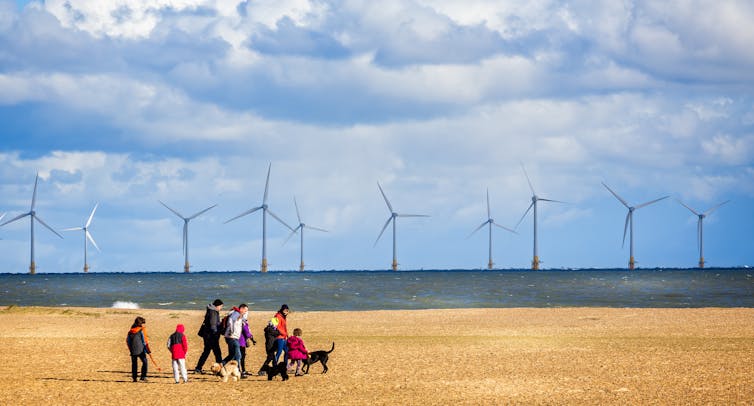
The UK can achieve energy security without causing additional global warming. Nigel Jarvis/Shutterstock
If the UK followed the example of China and rapidly increased its investments in renewable energy, then it could achieve energy security without causing additional global warming. China emits the most carbon dioxide of any country in the world. But it is installing more renewable energy generation than the rest of the world combined.
Rapidly reducing our reliance on fossil fuels, and not issuing new licenses to extract oil and gas, is the most effective way of minimising future climate-related disruptions. The sooner those with the power to shape our future recognise this, the better.
Don’t have time to read about climate change as much as you’d like?
PRIME MINISTER Rishi Sunak jetted into Scotland today [Monday] to announce a cash bonanza for the oil majors, just days after the United Nations announced that “the era of global boiling has arrived.”
Companies such as Shell and BP, which coined £3 billion each in just the last three months, continue to enjoy the Prime Minister’s generosity.
Having already doled out billions of pounds worth of windfall tax breaks to fossil fuel majors in the North Sea, Mr Sunak has said he will back the granting of over 100 new oil and gas licences and provide up to £20bn in state handouts to carbon capture and storage.
Despite the proposed fields not likely to come on stream for over a decade, Mr Sunak and ministers such as Energy Secretary Grant Shapps claim that the supply would ensure energy security and aid in “safeguarding bills for British families.”
Mr Sunak argued his policy to prolong production of oil and gas by decades “is entirely consistent with our plans to get to net zero” — a target due to be met in just seven years.
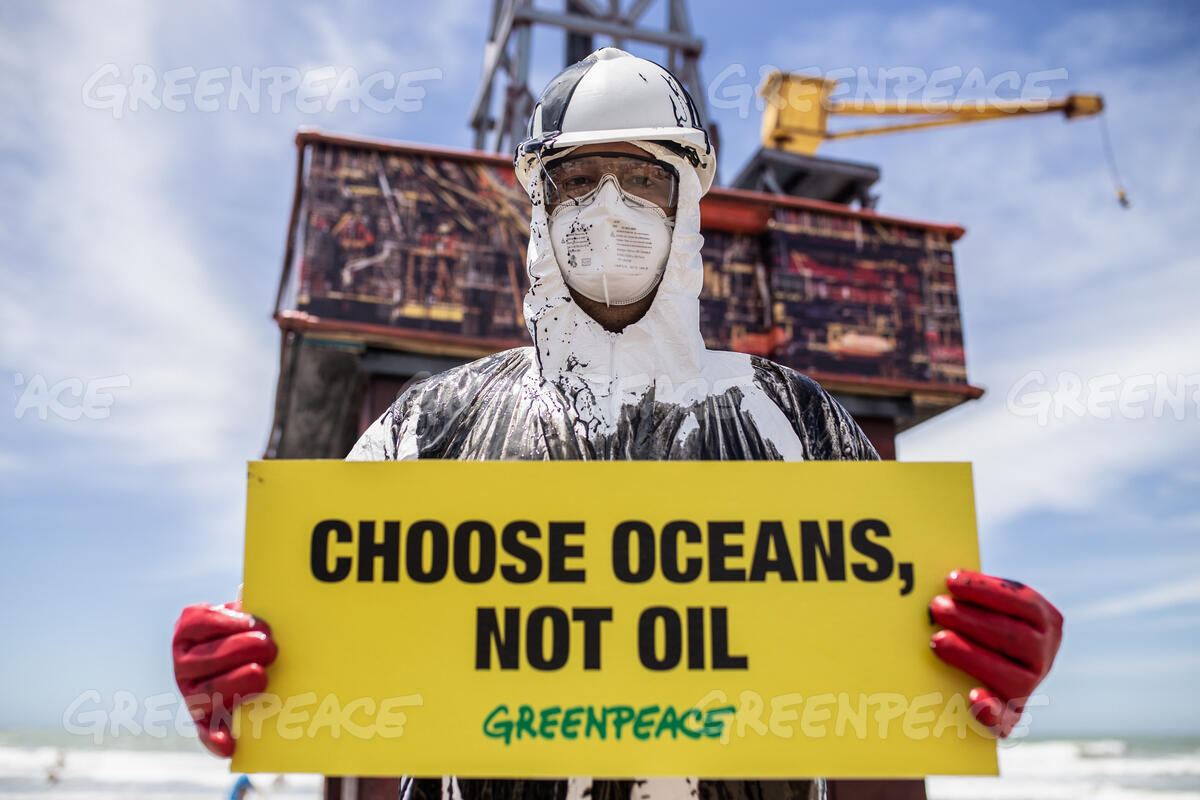
The Prime Minister’s remarks united climate activists, anti-poverty campaigners, trade unionists and opposition politicians in their condemnation of a policy they argue ditches international commitments on climate change, fails to deliver a fair transition for workers, and will not help those struggling to pay heating bills this winter.
In a statement, climate activists Just Stop Oil branded the 100 new licences expected to be granted this autumn as “100 new crimes against humanity,” adding: “Rishi Sunak and his fossil fuel backers are taking us all for fools.