Len McCluskey talks on stage during a live debate, at the Labour Live event at White Hart Lane Recreation Ground, north London, June 16, 2019
LABOUR could lose trade union support to a new party of the left, former union leader Len McCluskey has warned.
Mr McCluskey, general secretary of Unite the union from 2011 to 2021, told GB News that the new party called for by independent MPs Zarah Sultana and Jeremy Corbyn could prove attractive to disillusioned trade unionists.
“If this new party demonstrates it’s credible, then trade unions will consider their affiliations,” he said.
“If the new party proves credible, then I will join it, I will campaign for it and I will urge individuals and trade unions to give their support.
Israeli army vehicles moves in the Gaza Strip as seen from southern Israel on July 6, 2025
RAMZY BAROUD highlights a new report by special rapporteur Francesca Albanese that unflinchingly names and shames the companies that have enabled Israel’s bloody massacre in Gaza
FRANCESCA ALBANESE, the United Nations special rapporteur on the situation of human rights in occupied Palestine, stands as a testament to the notion of speaking truth to power. This “power” is not solely embodied by Israel or even the United States, but by an international community whose collective relevance has tragically failed to stem the ongoing genocide in Gaza.
Her latest report, From Economy of Occupation to Economy of Genocide, submitted to the UN Human Rights Council on July 3, marks a seismic intervention. It unflinchingly names and implicates companies that have not only allowed Israel to sustain its war and genocide against Palestinians, but also confronts those who have remained silent in the face of this unfolding horror.
Albanese’s “economy of genocide” is far more than an academic exercise or a mere moral statement in a world whose collective conscience is being brutally tested in Gaza. The report is significant for multiple, interlocking reasons. Crucially, it offers practical pathways to accountability that transcend mere diplomatic and legal rhetoric. It also presents a novel approach to international law, positioning it not as a delicate political balancing act, but as a potent tool to confront complicity in war crimes and expose the profound failures of existing international mechanisms in Gaza.
Keir Starmer objects to criticism of the IDF. He asks how could anyone obect to them starving people to death, forced marches like the Nazis did, bombing Gaza’s hospitals and universities,mass-murdering journalists, healthworkers and starving people queuing for food, killing and raping prisoners and murdering children. He calls for people to stop obstructing his genocide for Israel.
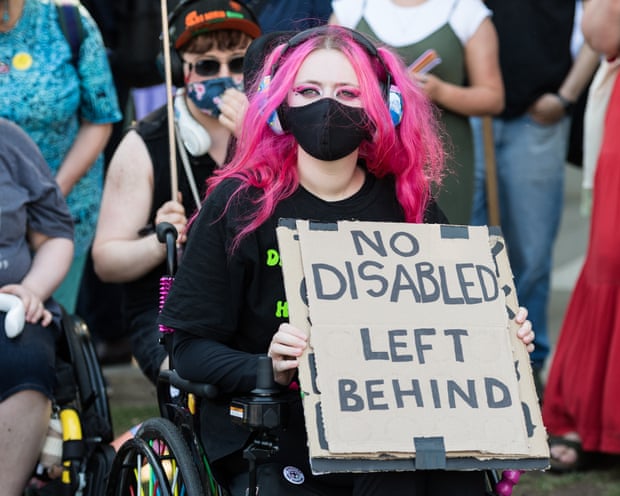
A protest in London last month against changes to benefits. The government says the severe conditions criteria will provide ‘peace of mind’. Photograph: Wiktor Szymanowicz/Future Publishing/Getty Images
Exclusive: Charities say planned universal credit changes fail to account for progressive or fluctuating conditions
“Huge swathes” of severely disabled people will be hit by the planned universal credit cuts, contrary to government claims that they will be protected, charities say.
Organisations including Scope, Z2K and the MS Society say the legislation, which is due to be voted on again by MPs on Wednesday, fails to account for disabilities if they are progressive or fluctuating.
The clause in the bill said to shield the most severely disabled and ill people from reassessment and the new lower benefit rate – known as the severe conditions criteria (SCC) – will only do so if a claimant meets a number of strict requirements, including that a health condition must be constant.
It means people with severe illnesses that vary with symptoms day to day, such as Parkinson’s, bipolar and multiple sclerosis, could be put on to the reduced universal credit rate despite being too ill to seek employment.
“Contrary to government claims, we have real fears that many disabled people with lifelong conditions that severely impact their daily lives will not in fact be protected from the cuts,” said Ayla Ozmen, the director of policy and campaigns at the anti-poverty charity Z2K.
“The protections have a very narrow definition – as drafted, they will only apply where someone is seriously affected by their condition at all times. Based on our experience, this will likely exclude huge swathes of disabled people, including those who have fluctuating conditions but who everyone would agree have high support needs. We’re calling on the government to drop these damaging cuts and go back to the drawing board.”
Keir Starmer says that the Labour Party under his leadership all feel a small part of Scunthorpe.Keir Starmer confirms that he’s proud to be a red Tory continuing austerity and targeting poor and disabled scum.
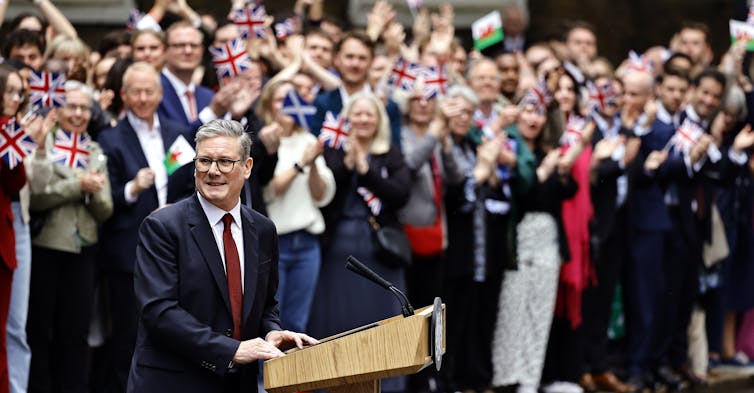
Exhausted from a long campaign but buoyed by an extraordinary victory, Keir Starmer stood on the steps of Downing Street just over one year ago to deliver his victory speech. “Your government,” the new prime minister said, “should treat every single person in this country with respect.”
This message of respect resonated strongly in the year leading up to the campaign, coming as close as anything to providing a central argument to Labour’s case for government. And, according to polling and focus groups that my team at UCL Policy Lab designed along with polling company More in Common, it seemed to work.
As our research at the time showed, voters felt that “respecting ordinary people” was the most important attribute that any politician could have, more important than having ideas for the future, managing effectively or having real experience. And they thought Starmer was the leader who displayed that respect most.
A year later, the picture looks quite different. In new polling, we asked a representative sample of over 7,000 people to evaluate the government one year on. On respect, the judgement has not been good.
Want more politics coverage from academic experts? Every week, we bring you informed analysis of developments in government and fact check the claims being made.
During the general election campaign, 41% of the electorate said that they believed that Starmer “respected people like them”. One year on, that stands at only 24%. At the same time, the number who say that he does not respect them has risen from 32% to 63%. Starmer is now outstripped on that question by Nigel Farage – 33% say the Reform UK leader respects people like them.
Losing support
This view has had crucial political consequences. Of those who voted for Labour in the general election, only 60% of our respondents say they would vote for the party in an election held tomorrow.
And that is not because some other political party is suddenly swooping in for their supporters. Labour’s voters are defecting in a host of different directions: 11% say they would vote Reform; 8% would vote Liberal Democrat; 4% would vote Green and 4% would vote Conservative. A further one in ten say they simply don’t know how they would vote.
Labour’s losses have been most dramatic among their first-time voters. Of those who voted for Labour in 2024 but not in any other general election since 2010, barely a third still support the party, while a fifth would vote for Reform UK.
These political failures, our report contends, are directly related to the declining sense of respect. The top reason voters gave for turning away from Labour are the broken promises and U-turns made by Labour in government, followed by the party’s failure to reduce the cost of living and changes to the winter fuel payment.
The idea of “respect” being key to the public’s sense of whether a government is on their side or not has been growing for many years now, both in academia and in politics itself. Since at least the 2007/8 financial crisis there has been a sense that large swathes of the public feel neglected, overlooked and even disdained by those who govern them.
When people talk about wanting to see “change” in Britain, this is often what they mean. It was a theme I touched on recently in two books, Out of the Ordinary and, with my co-author Tom Baldwin, England.
Just over a year ago, a happier Starmer delivers his victory speech. Shutterstock
But respect is not just an abstract idea. People appear to judge whether they are respected by those who govern them or not primarily on the basis of whether the government stands up for them against powerful vested interests.
Our earlier research demonstrated that there is a widespread sense among the British public that certain groups have had it too easy for too long. This is either because they have been able to intimidate the government, or because government ministers and advisers have themselves been recruited from among these groups.
In our new report, therefore, we see that the new government’s most popular act was their willingness to raise the minimum wage by £1,400 in April, against the objections of some in business who suggested that such a move was too burdensome on them.
Changes to the winter fuel allowance and proposed changes to the disability benefits system, on the other hand, registered poorly. They suggest that the interests of ordinary and vulnerable people count for too little in decision-making.
These judgements currently shape the mood of the country and probably top the list of issues that the government now needs to address. There is still time for the government to rebuild its appeal, of course. Indeed, our respondents who said they would vote for Labour said they would do so because the party needs more time to fix the problems they inherited.
But as it seeks to do so, voters will want to know who this government stands for. Whose interests does it put first? What kind of people does it respect?
Much of the electorate thought they knew the answer to these questions one year ago. Now they’re not so sure.
Marc Stears, Director of UCL Policy Lab and Professor of Political Science, UCL
Keir Starmer says that the Labour Party under his leadership all feel a small part of Scunthorpe.Keir Starmer objects to criticism of the IDF. He asks how could anyone obect to them starving people to death, forced marches like the Nazis did, bombing Gaza’s hospitals and universities,mass-murdering journalists, healthworkers and starving people queuing for food, killing and raping prisoners and murdering children. He calls for people to stop obstructing his genocide for Israel.Keir Starmer chases Nigel Farage’s racist bigot vote.
Children’s commissioner says any Labour strategy to tackle deprivation must scrap the two-child benefit cap
Children in England are living in “almost Dickensian levels of poverty” where deprivation has become normalised, the children’s commissioner has said, as she insisted the two-child benefit limit must be scrapped.
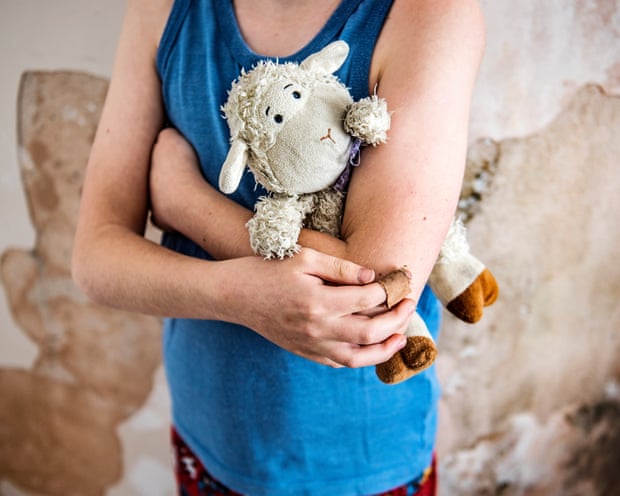
Young people said they had experienced not having enough water to shower, rats biting through their walls, and mouldy bedrooms, among a number of examples in a report on the “crisis of hardship” gripping the country.
Dame Rachel de Souza said she had noticed a significant shift in how young people talked about their lives since she became children’s commissioner four years ago, and that “issues that were traditionally seen as ‘adult’ concerns are now keenly felt by children”.
“Children shared harrowing accounts of hardship, with some in almost Dickensian levels of poverty,” she said. “They don’t talk about ‘poverty’ as an abstract concept but about not having the things that most people would consider basic: a safe home that isn’t mouldy or full or rats, with a bed big enough to stretch out in, ‘luxury’ food like bacon, a place to do homework, heating, privacy in the bathroom and being able to wash, having their friends over, and not having to travel hours to school.”
…
She said that, in “one of the richest societies in the world”, people in power “should be ashamed that children are growing up knowing their futures are being determined by their financial circumstances”.

 Len McCluskey talks on stage during a live debate, at the Labour Live event at White Hart Lane Recreation Ground, north London, June 16, 2019