John Major lands in Israel near the occupied Golan Heights in 1995 (Photo: Alamy)
[Declassified UK] Exclusive: UK foreign secretary boasted about “mounting a world wide lobbying exercise” against landmark motion.
Britain launched a “world wide lobbying exercise” to overturn a landmark United Nations (UN) resolution which recognised Zionism as racism, declassified files reveal.
The information is in a private exchange between John Major’s foreign secretary Douglas Hurd and pro-Israel lobbyist Sir Trevor Chinn in 1992.
Weeks earlier, the UN General Assembly had voted to revoke Resolution 3379 which designated Zionism as a form of “racism and racial discrimination”.
That motion, passed in 1975, condemned “apartheid and racial discrimination in all its forms” as well as the “unholy alliance” between apartheid South Africa and Zionism.
It was backed by the Soviet Union, former colonies, non-aligned states, and the Arab world, with 72 countries voting in favour and 35 including Britain against (with 32 abstentions).
In private correspondence with Chinn, dated 8 January 1992, Hurd lambasted the resolution, declaring how it “besmirched the name of the United Nations”.
The foreign secretary added: “We had no hesitation in co-sponsoring the repealing resolution and in mounting a world wide lobbying exercise”.
The Green Party passed a landmark motion defining Zionism as a form of racism at their national conference in Brighton. | Gary Roberts/SOPA Images/LightRocket/Getty Images
The Green Party’s ‘Zionism is Racism’ motion proves that uncompromising left-wing pressure is successfully shifting Labour’s stance on Gaza.
Taking aim at those campaigning against the genocide in Gaza, the new foreign secretary, Ed Miliband, declared at the Labour Party Conference: “You were right”. This acknowledgement followed a promise to “reset” the government’s stance on Israel, including taking bolder action on illegal settlements in the West Bank.
Many of us know this is not nearly enough – for instance, there has been no halting or slowing of arms exports to Israel – but it is, at least, a welcome change in rhetoric from that of the unflinchingly genocidal Starmer government. And it has only happened because there is now a substantial threat to Labour from the left: the Greens.
The extent to which this threat has spread fear amongst the media and political establishment can be seen in the backlash against the Green Party’s ‘Zionism is Racism’ motion. No matter that the motion was voted in by rank-and-file party members through a democratic process – something that could never currently happen in the other major parties – it has been used by the right against Zack Polanski during the Holborn and St Pancras by-election.
The Greens did not win the by-election, but they did well against an entrenched Labour Party machine in Camden. Indeed, they built on the work done by my independent campaign in 2024 to further eat away at the Labour majority. The cooperation between the Camden People’s Alliance and the Greens has confirmed that Holborn and St Pancras is no longer a safe Labour seat. We have proved that the tireless campaigning of local people, independents, small parties and groups working ecumenically can have a considerable electoral impact.
Of course, the motion has created strategic difficulties for the Green Party, and an ideological distance has been created between a number of Green elected representatives, especially the MPs. This is the difficulty of a growing party, and one finding its place in the political landscape.
The Greens have engaged in an identity shift since Polanski was elected leader last year. Many ask whether the Greens should be a party focused exclusively on electoral gain, or primarily be a political megaphone? This is too simplistic an analysis.
The Green Party’s position on Palestine has reflected a wider debate in the country, which questions the validity of the Starmer government’s attitude to the genocide. The Greens are helping to push the new Labour government’s position further: the government’s rhetoric has changed, but the substance of the policy has not (yet). It is not an easy debate to have, but the debate around the motion has had an impact in shifting public opinion. The shift on the genocide mirrors debates around rent controls, wealth taxes and public ownership.
What is clear is that as the public is repeatedly let down by the major political parties, politics continues to fluctuate. The political establishment knows this, but does not have a convincing answer to it. And so, they tried to use the ‘Zionism is Racism’ motion to smear Polanski as he stood in the key by-election in Holborn and St Pancras.
The reality is that, as the only Jewish candidate, Polanski had already identified himself as anti-Zionist in a recent hustings held by the Board of Deputies of British Jews. This also resulted in a backlash, one which no doubt impacted who voted for him. In addition, there are some on the left who simply will not support the Greens, regardless of Polanski’s stance on the motion.
All these factors make it difficult to predict how the current trajectory of the Green Party will express itself electorally, and what position it will occupy in the political landscape going forward. Of course, the focus on electoral gains has made many green parties across Europe part of the political establishment. Equally, concentrating on being only a “megaphone” does not go far enough to change the character of state power. I would like to see the emergence of a class politics which takes a national form – something that the Labour Party has historically claimed to do, but failed. Whether or not the Greens can succeed in fulfilling this aim is for time to tell.
We must not forget that Zionism as a political project has been used to justify over a century of Palestinian dispossession and continues to underpin Israel’s genocide in Gaza today. What many people conveniently ignore (particularly the mainstream media and political establishment) is that anti-Zionism is as much, perhaps even more, a Jewish creation than Zionism. To label anti-Zionism as antisemitic is absurd, and intended to shut down meaningful debate about Israel’s indefensible conduct.
Whilst the Green Party establishes its position in British politics beyond a so-called minority party, it is worth remembering that political parties can have influence both within and outside of electoral politics. In fact, it is essential to do both. Capitulating to the current status quo on what is deemed politically “acceptable” is not going to bring about the systemic change that is needed. A parliamentary democracy should respond to voters, not speak to itself and suppress debate.
Whatever your thoughts on the ‘Zionism is Racism’ motion, we have to accept that democracy can be uncomfortable, and these discomforts are a necessary part of progress and of the democratic process itself.
Andrew Feinstein was the Independent Candidate for Holborn and St Pancras constituency in the 2024 General Election. He is Executive Director of Shadow World Investigations and has a new book out, ‘Making a Killing: How the West Profits from Slaughter in Gaza and Yemen’. He is a member of Camden People’s Alliance.
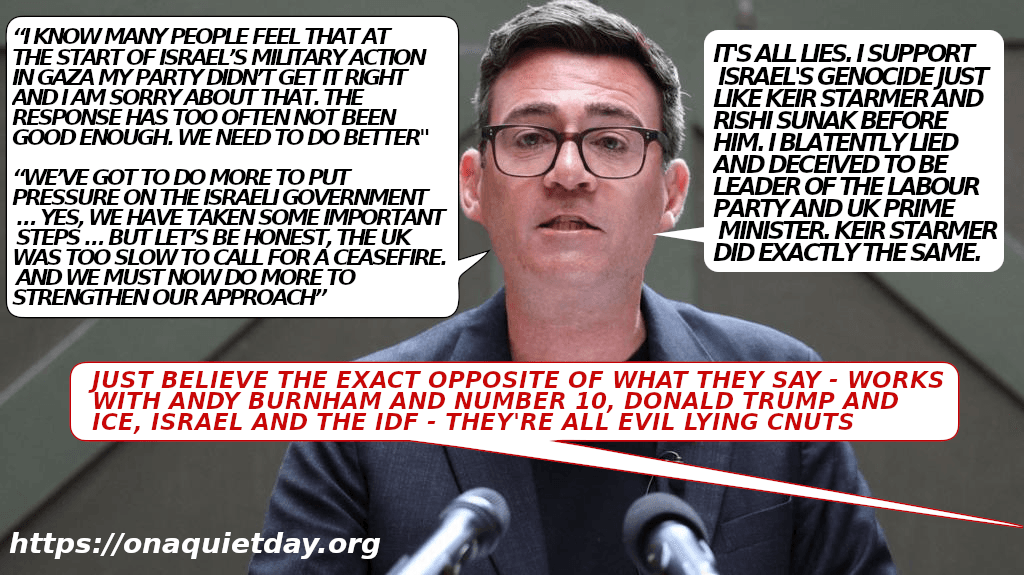
Keir Starmer objects to criticism of the IDF. He asks how could anyone object to them starving people to death, forced marches like the Nazis did, bombing Gaza’s hospitals and universities, mass-murdering journalists, healthworkers and starving people queuing for food, killing and raping prisoners and murdering children. He calls for people to stop obstructing his genocide for Israel. New Labour UK Prime Minister Andy Burnham continues Labour party policy of active support and complicity in Israel’s genocide.UK Prime Minister Andy Burnham admits to blatently lying and engaging in deception to become leader of the UK Labour Party and Prime Minister.Ed Miliband says that he and the Labour Party are full of shit criminalising people holding signs as terrorists despite anything he says.
Labour Party candidate Sagal Abdi-Wali takes a selfie with supporters | Toby Shepheard / AFP via Getty Images
Labour is celebrating the by-election result, but it must not misread a tight win for a total victory
Yesterday’s Holborn and St. Pancras by-election was the latest in this year’s trilogy of high-stakes by-elections. In June was Makerfield, when Andy Burnham successfully ran for Parliament to displace Keir Starmer as prime minister. But the vote that secured the path to his premiership came four months prior, in Gorton and Denton, when Labour’s National Executive Committee blocked Burnham from running. The Greens were victorious, pushing Labour into a distant third place. Had Reform, which came second, won that seat, the Starmer electoral strategy would have limped on: able to continue to tell itself that the path to 2029 victory lay in flipping mythical Labour-Reform swing voters. The NEC would not have reversed its decision to allow Burnham to run in June, and the Parliamentary Labour Party would have remained paralysed, seemingly incapable of acting to remove Starmer. Prime minister Burnham – and Labour’s leftward lurch – is a direct consequence of Zack Polanski, and the shock he delivered to Labour’s left.
If the Green wave crested at Gorton and Denton in February, the Holborn and St. Pancras by-election was framed as the rocks into which it risked crashing. At a surface level, critics have been vindicated by a Green loss, Polanski achieving 33% of the vote to Abdi-Wali’s 45. In one sense the Greens are a victim of their own staggering success: swelling to a peak of 22% in the polls early in the year, and pushing Labour and the Tories into third and fourth respectively. Burnham’s resulting rhetorical commitment to a break from neoliberalism goes beyond what even Jeremy Corbyn ever said as Labour leader. The effects unleashed within the volatile electorate (of which around 30-40% reliably vote for precisely what Burnham is promising) were predictable, hitting the Greens hard in the immediate term. It is commonly assumed, however, that Burnham’s honeymoon will not last forever as the gap between rhetoric and reality widens over time. One wonders how the result might have panned out a year from now. Or indeed, in just a couple of weeks, after a budget trailed to contain some of the proverbial “difficult decisions” which forever plague our ruling class.
Holborn and St Pancras, a seat that has been held by Labour since its creation in the early 1980s, was not an obvious target seat for the Greens. Had a by-election taken place in some of the capital’s other constituencies, such as Hackney or Lewisham, Polanski could have started recruiting parliamentary staff from the moment it was called, but he was never likely to win in Holborn. Nevertheless, in the face of the Burnham bounce and the damp squib of the Greens’ Manchester mayoral election earlier this summer, Polanski was compelled to recapture the initiative and throw his hat in the ring.
As a result, this by-election was the latest in a series elevated to the highest reaches of national politics. This one, however, has been subjected to a misreading. The prevailing narrative surrounding the poll was the question of whether the Greens would meet electoral oblivion. Could this be the end of Polanski?
In the mouths of opponents, the question took the form of wish fulfilment; politicians and pundits who spent the last year on studio sofas pining for the days that the Greens were friendlier, more serious, less angry, actually cared about the environment, or whatever else. The barely veiled subtext to all of these complaints was that they preferred the Greens when they languished at about 5% in the polls. For Polanski to be discussed as even having a political career to “end” is a new problem for a prominent Green, and a good problem to have, attendant upon the greater power and platform he has earned the party. At previous elections, the party’s leadership figures would often dutifully achieve a commendable fourth or third place, and carry on in the full expectation of running again next time in hope of improving their result; the future of their so-called political career was never called into question. Nor was it for Nigel Farage, who tried, and failed, to run for Parliament many times.
The future of Polanski and the Greens were not, however, the real stakes of this election. Instead, it was the future of the country. Given that Polanski was a necessary precondition of prime minister Burnham and his political programme, the ability of Labour (and the political class in general) to tell itself that the Green pressure from its left has been alleviated gives political space for Labour to revert to type: triangulation, capitulation and feeding the far right.
A Green victory would have benefitted the 30-40% of the country who want a proper break from Thatcherism: full nationalisations, wealth taxes and redistribution, rent controls and price caps. Burnham’s ambition is now compromised without an ascendant Green Party pushing him further, while the political centre of gravity has swung towards the most right-wing composition of the Parliamentary Labour Party in our lifetime. We now find ourselves in something like the alternative timeline in which Reform won in Gorton and Denton. Evidence of this will shortly present itself. The decision to approve new oil and gas drilling, for example, was reportedly delayed until after the by-election. If the government now gives it the green light, we will be given a decisive indication of its complacency regarding the electoral threat from its Green left.
Such complacency would be misplaced in the long run. In reality, the Greens remain in strong electoral contention. Yes, the party will have dared to dream about running Labour much closer. But to come within a few thousand votes of winning one of the safest Labour seats in the country, when Burnham is at his peak and the Greens arguably at their lowest ebb, is not the decisive vanquishing of Polanski of which his gleeful gravediggers are boasting. In 2024, the Greens won just 10% of the vote in this seat. Today, Polanski achieved a Green swing of 22% to triple the party’s vote share. In dozens of constituencies, a swing of that size would have resulted in a Green MP.
On the other side of the coin, Labour’s majority in the seat has been reduced by more than 6,000 votes, at the height of Burnham’s bounce. Labour will overlook that and be rightly pleased with this result. But it would be a mistake for the party to conclude that the threat from its left has been eliminated. If Labour reverts to isolating and ignoring the Greens, it will only strengthen Polanski’s position by the next general election.
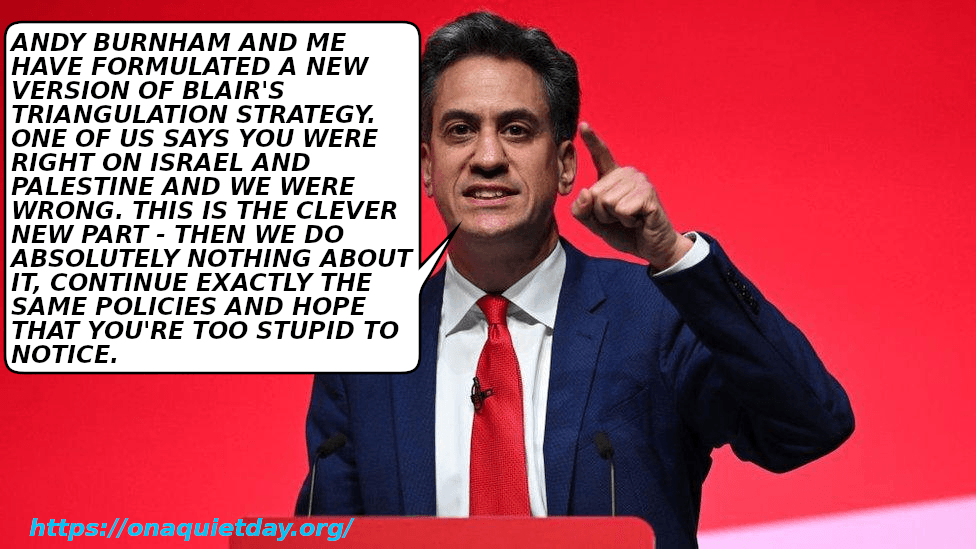
UK Prime Minister Andy Burnham admits to blatently lying and engaging in deception to become leader of the UK Labour Party and Prime Minister.Ed Miliband claims that he and Andy Burnham have reformulated Blair’s triangulation strategy. Their new formulation entails acknowledging that they were wrong on Israel and Palestine but entails doing absolutely nothing about it and continuing exactly the same policies hoping that you’re too stupid to notice.
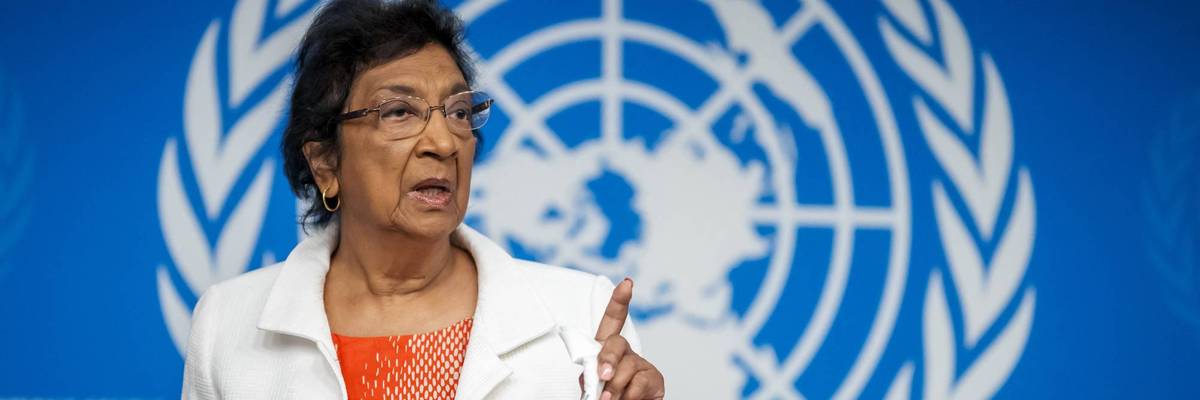
South African judge Navanethem “Navi” Pillay, chair of the Independent International Commission of Inquiry on the Occupied Palestinian Territory, including East Jerusalem, and Israel, gestures after a press conference in Geneva on September 16, 2025. The Inquiry Commission on September 16, 2025 accused Israel of committing “genocide” in Gaza in a bid to “destroy the Palestinians” there, and blamed Israel’s prime minister and other top officials for incitement.(Photo by Fabrice Coffrini / AFP via Getty Images)
“Thank you so much,” said the international jurist in a moment of jest. “If you clap a little bit more, I may share this prize with Trump.”
The international reputation of the Nobel Peace Prize, which has suffered in progressive and human rights circles over recent years, may be on the path to improvement after Friday’s announcement that this year’s award has been given to Navi Pillay, a person of “exceptional courage” who has been at the forefront of accountability efforts for apartheid, prosecuting war crimes, and upholding international law for decades.
In its statement, The Norwegian Nobel Committee said Pillay—who during her career served as a judge on the High Court in South Africa, her native country, and later the International Criminal Tribunal for Rwanda and the International Criminal Court (ICC)—“has been instrumental in ensuring that war crimes, crimes against humanity and genocide are prosecuted.”
Pillay also served for six years as the United Nations High Commissioner for Human Rights, from 2008 to 2014, and more recently chaired the UN Independent International Commission of Inquiry on the Occupied Palestinian Territory, which generated a 2025 report concluding that the Israeli government had committed genocide in Gaza.
"The last thing I did is the report on Gaza naming what is happening there as genocide. One of the main reactions to that report [was] paying tribute to me for my courage.. why would you need courage to speak the truth?"
“The last thing I did is the report on Gaza naming what is happening there as genocide,” Pillay said Friday. “One of the main reactions to that report is paying tribute to me for my ‘courage.’ And you can imagine our surprise—why would you need courage to speak the truth?”
“Is it true?” asked Pillay when first notified of the award, fittingly while at the Nuremburg Court where Nazi’s were tried for their atrocities of last century.
In a moment of levity, surrounded by colleagues applauding her achievement, Pillay said, “Thank you so much. If you clap a little bit more, I may share this prize with [US President Donald] Trump.”
Trump, accused of war crimes himself, has notoriously said he deserves the Nobel Peace Prize despite his record of violating international laws, kidnapping or assassinating foreign heads of state, initiating wars of aggression, and carrying out a lawless campaign of lethal attacks in the Pacific Ocean and Caribbean which human rights experts have denounced as “murder spree.”
Volker Türk, the current UN high commissioner for human rights, said the award going to Pillay represents “a proud moment for the global human rights movement,” and that to call it “well-deserved” would be “a understatement.”
“At a time when human rights are under attack on so many fronts, including from those who wield enormous power, this award is particularly poignant,” Türk continued. “It is an award to all those who, around the world, dedicate their lives to the defense of human rights—at great risk to their security.”
Agnes Callamard, secretary general of Amnesty International, called Pillay’s selection an “amazing moment” for human rights.
“We are at the Nuremberg Court; I cannot think of a stronger symbol for her Nobel prize,” said Callamard. “We are all so thrilled!”
“At a time of existential challenges—including more wars and conflicts than the world has seen in a long time—international law is no longer just a supplement to peace and security. It is an absolute necessity,” the Nobel Committee said in its announcement.
YouTube: Sorry, this content could not be embedded.
Warning that “the system of international law is under tremendous pressure, and its institutions are under attack,” the committee said “a shift towards power politics at the expense of legal frameworks and global respect for law and justice” threatens peace and stability worldwide, a veiled but clear reference to the antagonism the US government under Trump has shown to the ICC, the United Nations, and other legal institutions and frameworks.
“Whenever might overtakes right, it undermines stability, trust and peaceful co-existence,” the statement said. And continued:
History has shown that a world operating without the rule of law is unjust, unwise and inhumane. The judges – those who guard the thin red line between order and chaos—are therefore highly deserving of our praise. But today, as these same judges are sanctioned, and their institutions are attacked, we need people of courage, vision and determination—qualities that Navi Pillay demonstrates in her work on the bench.
Pillay, it concluded, “is one of the great defenders of international legal principles in our time. Her distinguished career reminds us of the need to support, fortify and expand the global rule of law. Navi Pillay’s commitment to justice and human dignity is a source of hope and inspiration to all who seek to bring about a more peaceful world.”
As Türk put it in his remarks, recognition of Pillay’s work and legacy by the Nobel committee is “a reaffirmation that human rights, the rule of law and justice and accountability are fundamental to everything—to peace, security and prosperity.”
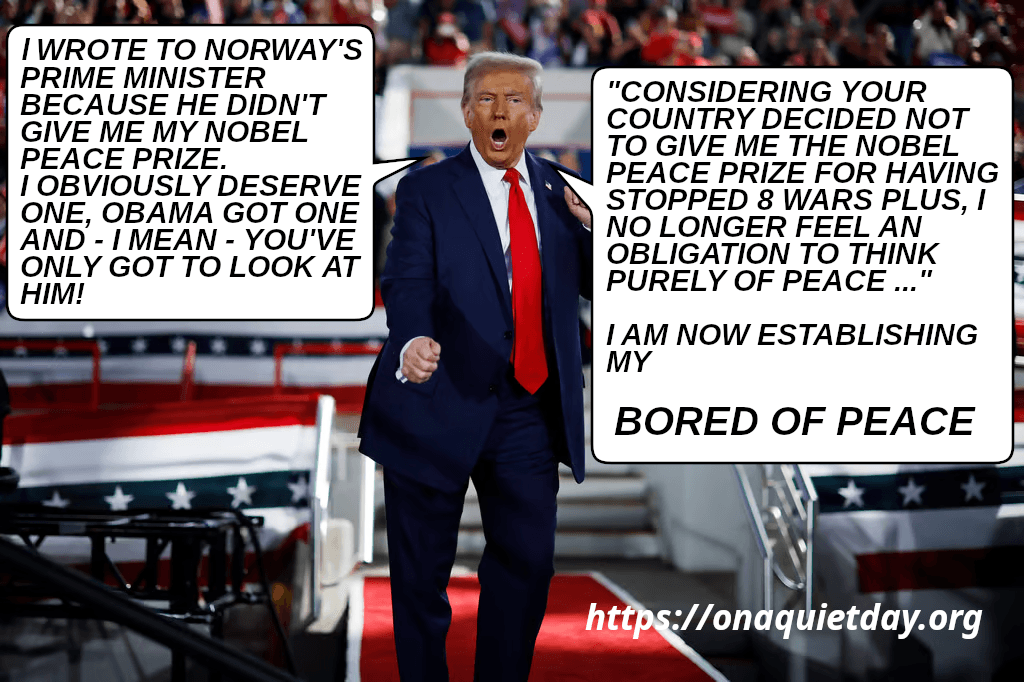
Climate science denier Donald Trump confirms that he knows nothing about democracy and that more liquid gold is being secured according to his policy of global privateering.Orcas discuss Donald Trump and the killer apes’ concept of democracy. Front Orca warns that Trump is crashing his country’s economy and that everything he does he does for the fantastically wealthy.Donald Trump says that he obviously deserves a Peace prize because Obama got one and explains why he established his Bored of Peace
Palestine Solidarity Campaign officer Lewis Backon: ‘Unelected Lord Watson describes it as ‘mob rule.’ It’s democracy.’
FORMER deputy leader of the Labour Party Lord Tom Watson sparked fresh outrage today as he dismissed critics of his new boss US spy tech Palantir’s controversial government contracts as “mob rule.”
Co-founded by Trump-supporting billionaire Peter Thiel, the firm provides AI-powered software to the Israeli military and the White House’s Ice immigration crackdown and recently appointed Lord Watson as its senior vice-president.
Labour MPs, medical unions and NHS campaigners have been urging PM Andy Burnham to ditch Palantir from government contracts, including a £330 million software deal with the health service.
Lord Watson told the BBC: “One of the things I’d say to my former colleagues is: do you want to let the rule of law lead procurement practice, or do you want mob rule to lead procurement practices? Because you get yourself in a lot of trouble if you go down on the latter one.”
He added he would work with a Reform UK government on immigration crackdowns if the situation arose.
Genocide denier and Current UK Prime Minister Keir Starmer is quoted that he supports Zionism without qualification. He also confirms that UK air force support has been essential in Israel’s mass-murdering genocide. Includes URLs https://www.declassifieduk.org/keir-starmers-100-spy-flights-over-gaza-in-support-of-israel/ and https://youtu.be/O74hZCKKdpAUK Prime Minister Andy Burnham admits to blatently lying and engaging in deception to become leader of the UK Labour Party and Prime Minister.Ed Miliband says that he and the Labour Party are full of shit criminalising people holding signs as terrorists despite anything he says.
dizzy: It’s far more appropriate to accuse Tom Watson of being part of mob rule, of mobsters subverting democracy to enrich themselves. Watson in taking Palantir’s filthy lucre is joining Donald Trump’s gang. Trump has a history of failed casinos, a traditional route for mobster money-laundering. Like Watson, Trump subverts democracy whoring himself to the highest bidders – often fossil fuel industries – not caring anything for human rights or destroying the climate and environment. Watson is similarly happy to take the money from the immoral filthy rich and powerful.
We shouldn’t tolerate this shit of politicians subverting democracy any longer. Palestine Action supporters accused and sentenced as terrorists? FO, we should instead be jailing Tony Blair and Alastair Campbell as the war criminals they undoubtedly are, holding this Fascist Labour government to account for complicity and actively supporting Israel’s Gaza genocide. These politician cnuts are the real terrorists, criminals and mobsters.








 Palestine Solidarity Campaign officer Lewis Backon: ‘Unelected Lord Watson describes it as ‘mob rule.’ It’s democracy.’