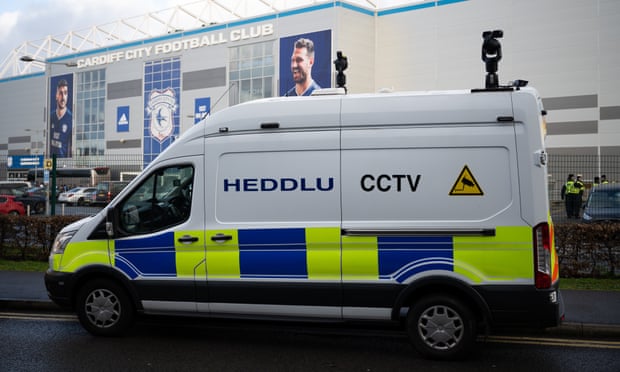
Live facial recognition is already used by the Metropolitan police and South Wales police. Photograph: Matthew Horwood/Getty Images
PM accused of ignoring civil rights and aping autocracies as he proposes new powers after far-right unrest
Civil liberties campaigners have said that a proposal made by Keir Starmer on Thursday to expand the use of live facial recognition technology would amount to the effective introduction of a national ID card system based on people’s faces.
“Expanding live facial recognition means millions of innocent Britons being subjected to automated ID checks,” said Carlo. “These are the surveillance tactics of China and Russia and Starmer seems ignorant of the civil liberties implications.”
…
Promising to create a national police capability to tackle the rioting, the new prime minister said forces needed to work better together, sharing intelligence and engaging in a “wider deployment of facial recognition technology”.
Details were scant but immediately after, Starmer suggested that trouble-makers could be subject to “criminal behaviour orders to restrict their movements before they can even board a train” – implying a wider use of live facial recognition at transport hubs such as railway stations.
Daragh Murray, a senior lecturer at Queen Mary University of London, said: “There is a clear danger that in responding to a tragedy and public unrest we expand and entrench police surveillance without appropriate scrutiny. Given that the police have responded to disorder and riots for decades, why is facial recognition needed now?”
A host of parliamentarians were previously employed by agencies with fossil fuel clients.
At least 24 newly elected MPs used to work for public relations, consultancy and lobbying firms that have a history of representing oil and gas companies, DeSmog can reveal.
A DeSmog analysis of the MPs entering Parliament after the 2024 general election found that two dozen had a background working for oil and gas giants, coal power station conglomerates, as well as other highly polluting clients.
The findings have sparked concerns that fossil fuel interests in Parliament may influence policy-making.
“I entered politics after working as an engineer in the renewables industry exactly because I could see we had the technology to make the transition to clean and green energy, but we were lacking the political will to make it happen,” said Green Party co-leader and Bristol Central MP Carla Denyer.
“Part of what stops this transition from occurring is the embedded influence of the fossil fuels industry in politics.”
Labour’s new Ossett and Denby Dale MP Jade Botterill started working at lobbying firm Portland after her parliamentary candidacy was announced in September 2023. Portland’s clients include oil major BP, French energy firm EDF, Heathrow Airport, and Chinese state-owned oil company CNOOC. Another Labour MP – Laura Kyrke-Smith – worked for Portland several years ago. She told DeSmog that she didn’t represent any oil firms while working for the company.
Portland told DeSmog that they “do not comment on client relationships”.
At least three new Labour MPs – Oliver Ryan, Mary Creagh, and Steve Race – previously worked for Lexington Communications, a lobbying firm that works for oil giant Phillips 66, the International Airlines Group (IAG), and Eren Holding, a firm that runs coal-fired power stations in Turkey.
New Conservative MP for Bromsgrove Bradley Thomas spent at least five years working for Phillips 66, latterly as a strategy lead, before becoming an independent consultant to the sector.
Almost a third of Labour’s new MPs have a background working in communications and lobbying, according to the Sunday Times, a similar share to the Conservatives. Due to the UK’s limited transparency rules around lobbying, it’s often impossible to know whether these individuals worked on behalf of oil and gas clients.
However, we do know that several other major lobbying and consultancy firms with fossil fuel links – in addition to Lexington and Portland – used to employ a number of new MPs. These include:
Teneo (clients include BHP, Centrica, and EnQuest)
Four Communications emphasised that its work for the Oman Oil Company ended in 2019, though the firm also has offices in the petrostates United Arab Emirates, and Saudi Arabia.
In June 2024, United Nations Secretary-General António Guterres said that PR agencies had “aided and abetted” the fossil fuel industry, “acting as enablers to planetary destruction”. He called on these agencies to stop taking on new fossil fuel clients, and to set out plans to drop their existing ones.
“Fossil fuels are not only poisoning our planet – they’re toxic for your brand,” he said.
All the MPs named in this article were approached for comment.
Gas Lobbyists and Energy Consultants
Several new MPs have also worked for much smaller groups with links to the energy industry. This includes Labour’s new Cannock Chase MP Josh Newbury, who between 2019 and 2022 worked as senior parliamentary officer for the Energy and Utilities Alliance (EUA) – a trade group for the gas industry and fossil fuel boiler manufacturers.
DeSmog revealed in 2023 that the EUA, which is led by former Labour MP Mike Foster, was behind a barrage of negative press attacking heat pumps as a home heating source. Foster has repeatedly labelled pro-heat pump campaigners as a “green cult”.
New Liberal Democrat MP for St Neots and Mid Cambridgeshire Ian Sollom worked as the principal of StrategicFit, an energy sector strategic consultancy that has worked for the oil major ExxonMobil, and the Chinese state oil firm CNOOC.
Sollom told DeSmog that “as a scientist entering Parliament, I am committed to the phasing out of fossil fuels, and my previous career primarily focused on improving decision making and collaboration between energy companies, regulators and other stakeholders”.
Liberal Democrat MP for Cheltenham Max Wilkinson used to work for Camargue, which lobbied politicians in Westminster on behalf of the oil company Esso while he was employed by the firm.
A spokesperson for the Liberal Democrats stressed that Wilkinson did not work for any oil and gas clients.
Fossil fuel companies have extensive existing ties to Westminster politics. DeSmog revealed that, from the 2019 general election to the start of the 2024 election campaign, the Conservative Party received £8.4 million from oil and gas interests, climate science deniers, and polluting industries.
Meanwhile, a number of leading right-wing think tanks have received direct funding from the fossil fuel industry. Onward, which hosted the most government meetings of any think tank in 2023, receives funding from Shell and BP.
All the agencies named in this article were approached for comment.
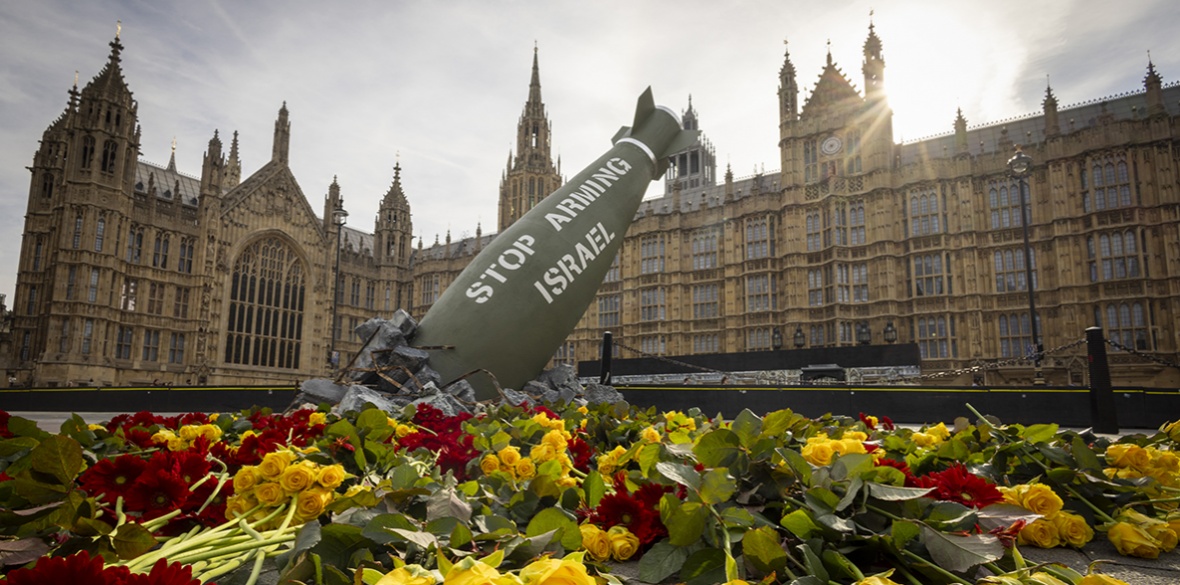
Oxfam placed a replica Mark 84 2,000-pound bomb, used by the Israeli military in Gaza to devastating effect, opposite Parliament, July 30, 2024Photo: Andy Aitchison / Oxfam
Oxfam warns that 7,000 people are estimated to be killed or injured in Gaza by Israeli military during Parliament recess
AS BRITAIN remains complicit in Israel’s war crimes by refusing an arms embargo, a replica of a 2,000-pound bomb was placed outside of Parliament today, serving as a stark reminder of the innocent lives that will be claimed while the government breaks up for summer.
The 16-foot replica was placed by Oxfam after it released a new analysis estimating that around 7,000 people in Gaza will be killed or injured over the next 33 days.
A carpet of flowers around the bomb symbolised those who are likely to be killed by the Israeli military, as well as the Israeli hostages still in captivity.
Using UN cumulative impact reports, Oxfam estimated that Israel will likely murder more than 1,800 people — a third of them children — if its military offensive continues at its current level.
The analysis comes as Britain refuses to commit to an arms embargo, despite warnings that exports are likely being used to commit war crimes.
This includes components for F-35 Israeli fighter jets, which carry out devastating strikes.
According to Action on Armed Violence, air-strikes were responsible for more than 45 per cent of recent fatalities.
Oxfam GB chief executive Halima Begum said: “By selling F-35 components to Israel, the UK government is effectively facilitating many of the Israeli air strikes and the decimation of Gaza.
“The government is fully aware of the risk that arms exported from the UK are likely being used to commit war crimes in Gaza.
“It is critical that the UK government immediately suspend both existing and new licences for all arms sales, whether direct to Israel or via third parties.”
Britain is legally obliged to halt arms exports if there is a clear risk they might be used to commit or facilitate a serious violation of international humanitarian law.
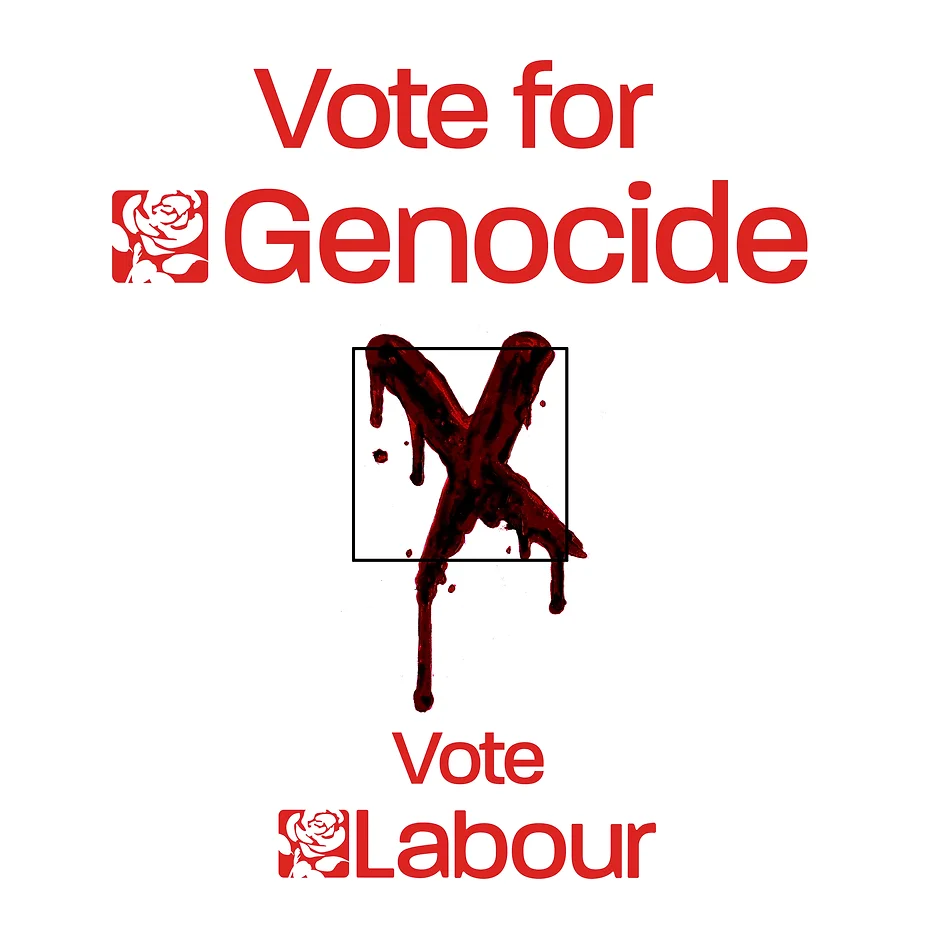
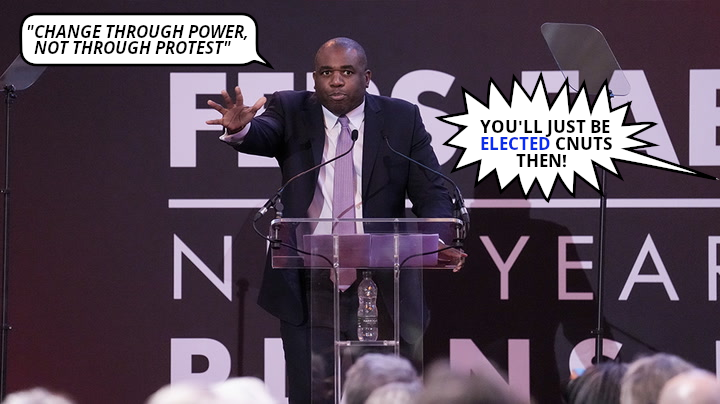
Zionist Keir Starmer is quoted “I support Zionism without qualification.” He’s asked whether that means that he supports Zionism under all circumstances, whatever Zionists do.Vote For Genocide Vote Labour.UK Labour Party Shadow Foreign Secretary repeatedly heckled at a speech to the Fabian Society over his and the Labour Party’s support for and complicity in Israel’s genocide of Gaza.
AFTER months in which Labour argued that such is the dire state of the economy that Tory spending limits must be maintained, the Chancellor of the Exchequer now says that further cuts in public expenditure are needed.
…
The question raised by any talk about varying the structure of taxation is where taxes fall. The richest 10 per cent of families hold 43 per cent of all wealth. The bottom 50 per cent — and be sure that this includes the greater proportion of people who see themselves as working class — possess less than 10 per cent of wealth.
…
When the overwhelming majority of voters, including Tory voters, see public ownership of rail, mail, water and energy as desirable this is not simply a yearning for the more efficient delivery of these services and utilities than private ownership is able to provide. More, it is an expression of a clear understanding that revenues from these myriad transactions should not be privately appropriated but applied to the common good.
The present Labour administration has, with rare exceptions, ruled out the recovery into public ownership of privatised sectors and, less performatively than Gordon Brown in his day but no less systematically, has assured the corporate world that not only are the foundations of private ownership safe but that Labour, even more than its Tory predecessors, holds appeasing the bond markets a central part of its economic strategy. Hence the cuts announced today.
Reeves’s dilemma is highlighted by the necessity to find £1 billion to fund the juniors doctors’ pay increase; something similar for the teachers and a backlog of other public-sector pay claims.
Under this system spending is always about priorities. But there is money about. She is already committed by Starmer’s diktat to find £57.1bn in defence spending in 2024-25 which is a 4.5 per cent increase in real terms. No cuts there!
A bigger source of revenue would result from taxing wealth at the same level as income by raising the capital gains and dividend tax rates to the level at which workers pay on their wages.
An even bigger windfall would result from a socialist economy in which all rents, interest and profits arising from human economic activity were held in common rather than being privately acquired.
Just Stop Oil are being branded “fanatics” for disruptive actions whose like hardly raised an eyebrow a decade ago
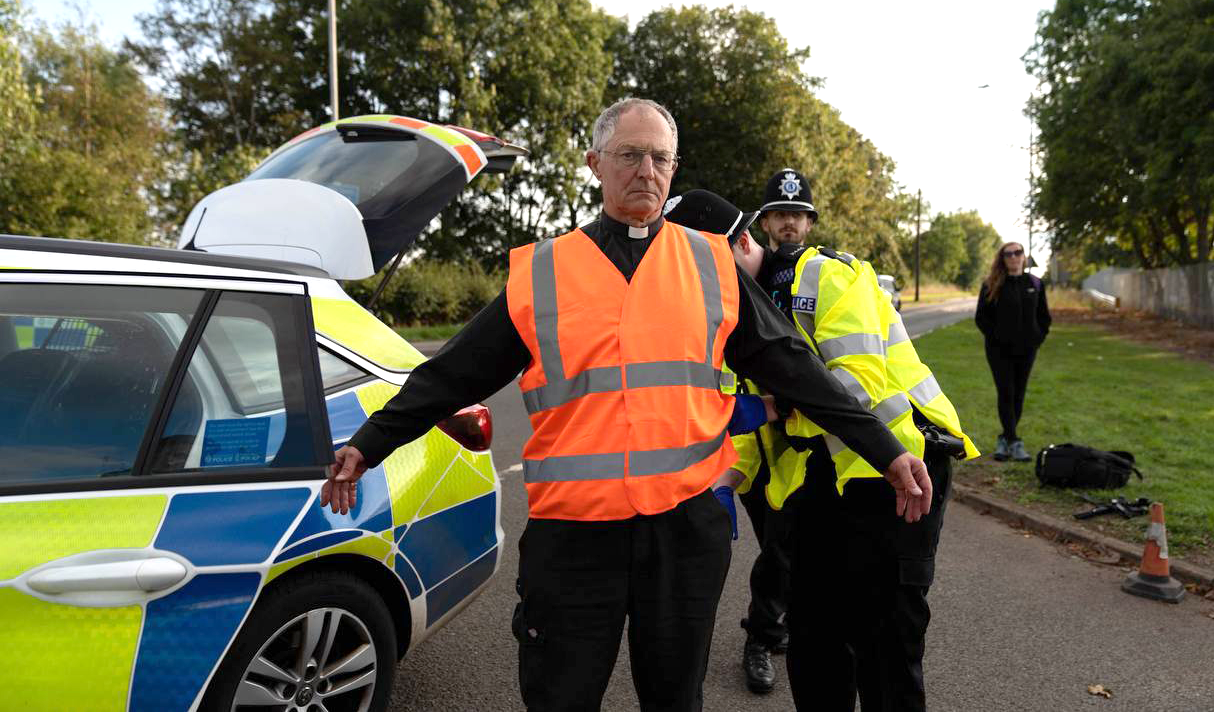
I wasn’t terribly surprised to see, in the weekend Morning Star, a letter suggesting that while the sentencingof theJust Stop Oil Five was overly harsh, they deserved punishment for their conspiracy to disrupt traffic on the M25.
The Star is, to be fair, generally quite supportive of JSO’s right to protest, while having some knee-jerk types in its readership, particularly in the crusty old tankie set. But such complaints get at the heart of an issue JSO has had for some time — they’re often really annoying even for their nominal allies.
Many of them are quite posh and can sound patronising or smug. Their targets are disruptive but less often to the wealthy and more to a cross-class cohort of art lovers, or pagans, or sports enthusiasts, or holiday makers. And motorists, of course. Roger Hallam, as their most famous face, often acts like a self-aggrandising edgelordwhose projects have a habit of getting people in trouble without much of a plan for long-term support.
It sometimes makes JSO hard to love, and it gives grouches in politics and the media an excuse to label them attention seekers, or cultists, or extremists.
But here’s the thing: for all their PR controversies, JSO aren’t actually extreme at all, and not only in comparison to, say, cops throwing their weight around on a Friday night, or any major event that gridlocks a city centre. Comparing them to similar campaigns from the 1990s or even the early 2000s, JSO are tamer than Lassie. The anti-roads movement,Animal Liberation Front, Earth First!,Reclaim The Streets, even Greenpeace — have all mounted considerably more disruptive campaigns within living memory. You can find reports on some of them in old issues of Freedom and Schnews.
In fact, a quick look through the latter’s archive for mentions of the M25 very quickly turns up this articlefrom 2012, with the Tories already in power, which notes the following action:
On Monday 16th July a Greenpeace co-ordinated swoop saw seventy-seven petrol stations within the M25 shut down, and another thirteen in Edinburgh - hitting Shell on the forecourt and in their pockets. Activists disassembled the emergency fuel shut off switches and chained the pumps together, stopping business for the day.
Twelve years ago, shutting down nearly the entire refuelling system around London and Edinburgh wasn’t considered big enough to fluster the Graun, which reported the whole thing as just another news story for the day. Shell were careful to say they respected the protesters’ views, and the police didn’t even bother to comment! My goodness what a difference a few years makes. Can you imagine the level of dribbling outrage the press would indulge in now?
This impressive gap in the treatment of disruptive protests on the same road is symptomatic of an issue touched on in a recent Freedom discussion, which has been worsening for a long time and accelerated, strangely, alongside the culture wars. While the left was accused of going woke and indulging in cancel culture, the right was becoming so pathetically unable to handle confrontation that it changed the laws to jail people for being annoying. Part of Suella Braverman’s anti-protest law(since struck down) literally gave police the power to break up protests for being “too noisy”.
And now we’re at the point where Hallam and co. are being jailed for 4-5 years each for conspiracy to disrupt the flow of traffic. But what’s worse is they’ve managed to somehow convince the public this is all a response to sudden rising environmental “fanaticism” entailing behaviour we’ve never seen before. A straight-up bald faced lie to a population who, if they are adults, should be able to personally remember examples of this not being the case which has nevertheless sunk in as truth. What a stunning propaganda victory! If the left had done it, you can bet your life the word “Orwellian” would be burning holes in printing presses across the nation.
Which brings us back to our letter writer in the Star. The left (and of course the anarchists) need to remember our history, and why it is that solidarity applies even to people we don’t get on with ideologically (or personally). We need to be much, much better at getting our heads out of our arses and fighting back against the demonisation of disruptive protest. It’s not a matter of whether we approve of JSO or Roger the Public Nuisance, or whether think their work is counterproductive in terms of public opinion.
Because not too long ago what they’ve been doing wouldn’t have been a jailable offence, or even a front page one. Not too long ago, columnists opining about disruptive protest being “anti-democratic” would have been quite rightly ridiculed for their lack of commitment to human rights. JSO’s re-designation as extremists courting much-deserved jail time is our re-designation.
Kier Starmer needs to be pressured on this from all sides. He has, after all, taken away the left’s voice in Parliament. Now he needs to hear it in the streets.