MP wins backing of local Labour Party in Islington North ahead of the next general election
Jeremy Corbyn MP, former leader of the Labour Party
JEREMY Corbyn has told the local Labour Party in Islington North that he wants to “carry on” with his job as the area’s MP.
With the party blocking him from standing again, members of the constituency Labour Party almost unanimously passed a motion calling for them to have the democratic right to select their own candidate for the next general election.
Ninety-eight per cent voted in favour of the motion, with 60 voting in support and one member abstaining. No one spoke against the motion.
Mr Corbyn himself attended the meeting, which he is allowed to despite having the party’s parliamentary whip removed by leader Sir Keir Starmer. The party’s National Executive Committee in March approved its own motion, brought by Mr Starmer, barring Mr Corbyn from standing for Labour again.
Mr Corbyn, however, thanked members for their support and told them: “I love my job and I want to carry on doing it.”
The local election results show no political vision is emerging to capture hearts and minds – Labour is simply waiting for the other parties to become even less appealing, writes ANDREW MURRAY
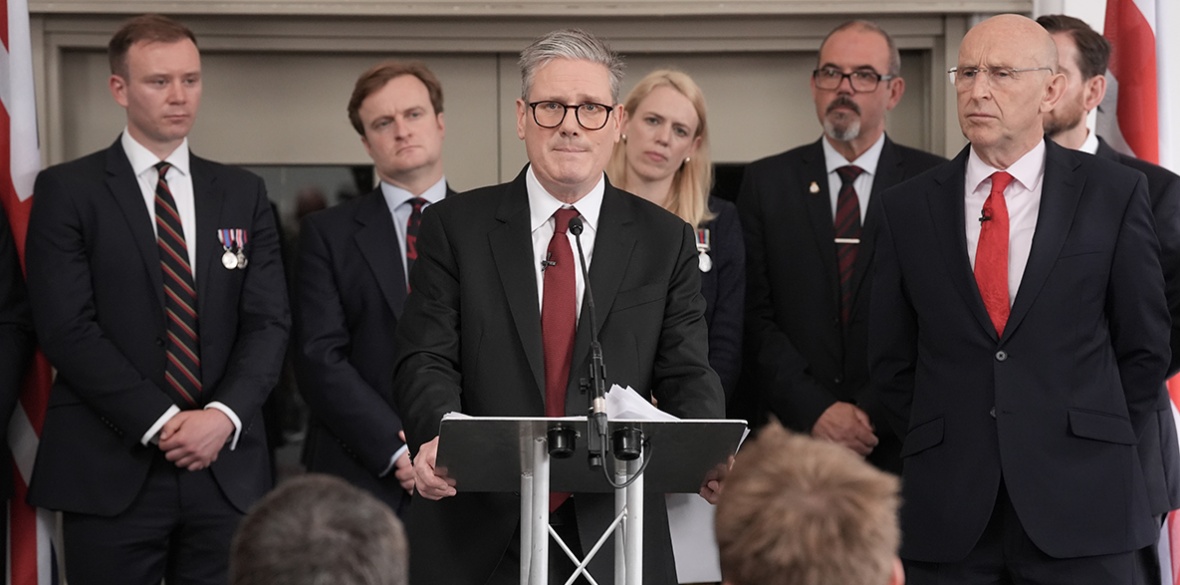
Image of Keir Starmer sucking up to the rich and powerful at the World Economic Forum, Davos
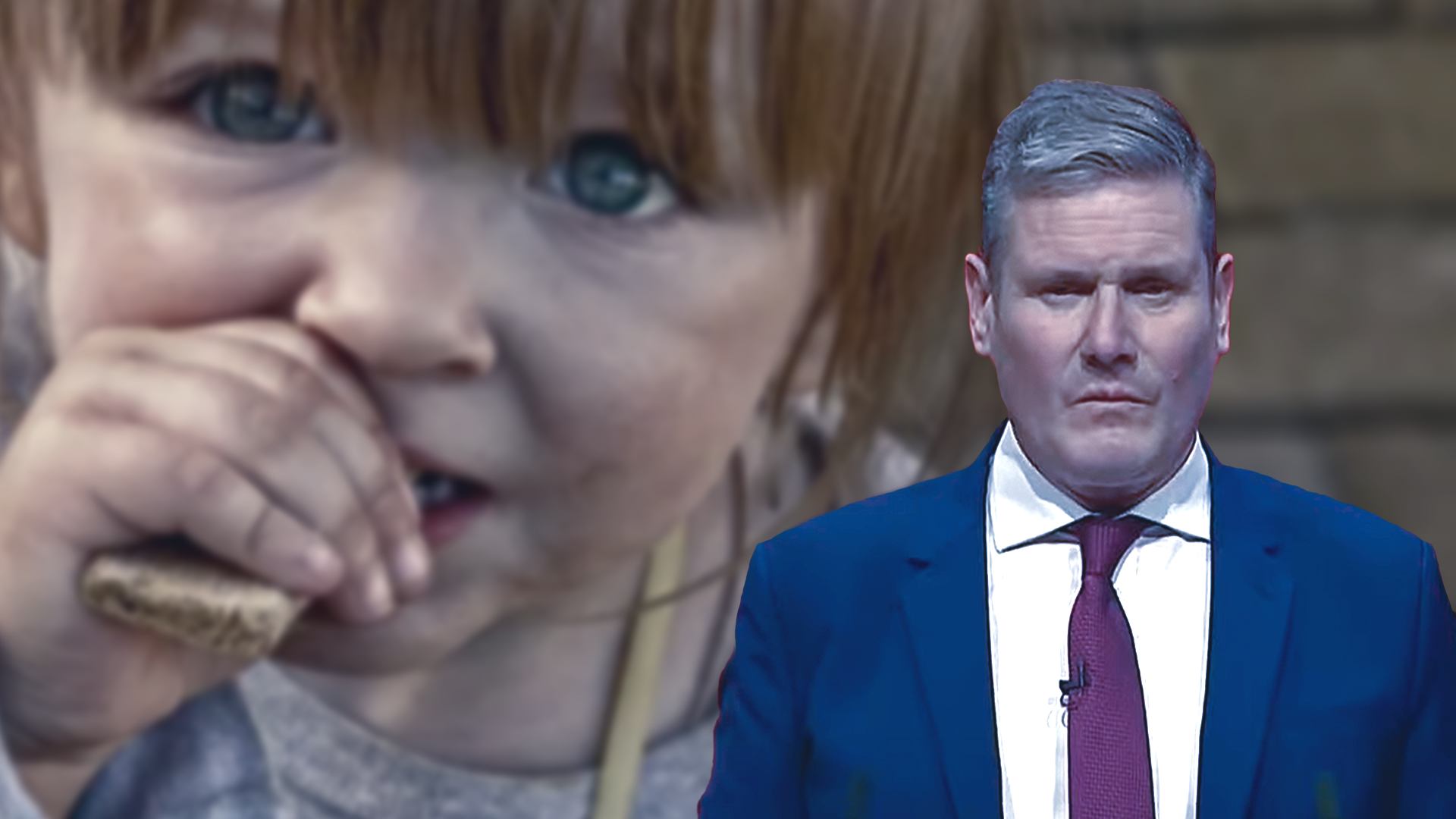
WEAK and boring. Correct — it’s Keir Starmer we’re discussing.
Thus the choices of a representative cross-section of voters asked by a polling company to sum up the Labour leader in a word.
Untrustworthy leaps out of the word cloud too.
It can all be rendered in a number as well. The one that counts is 35. That is the percentage of the electorate intending to vote Labour at the next general election, according to extrapolations from the local election results.
It is an astonishing figure. It is just 7 per cent ahead of the Tories, dramatically less than the score recorded in various opinion polls over the last year, which gave Labour leads of up to 30 per cent.
It is also, note carefully, just 3 per cent up on Labour’s score in the 2019 election, and 5 per cent less than a Jeremy Corbyn-led Labour secured in 2017.
On these projections, there will be no Labour landslide at the next election, and perhaps not even an overall majority in the House of Commons.
All this after 13 years of austerity, authoritarianism, a cruelly bungled pandemic, Boris Johnson and Liz Truss, and the dystopian prospect of “national conservatism” a la Braverman next on the menu.
The Trades Union Congress (TUC) has organised an emergency protest on Monday 22nd May for 6.00pm outside Parliament Square, as it fights to protect the right to strike which is under attack from the Tory government.
Mick Lynch from the RMT, Matt Wrack from the FBU and Kevin Courtney will be speaking at the rally, with Unison, USDAW and the PCS union all showing their support.
The government’s strikes bill, which will empower employers to sue unions and sack staff in crucial sectors if minimum service levels aren’t maintained, has been slammed as an attack on the fundamental right to strike and as a draconian piece of legislation. The Bill essentially means that when workers lawfully vote to strike in health, education, fire, transport, border security and nuclear decommissioning, they could be forced to attend work – and sacked if they don’t comply.
The TUC said in a press statement: “We can’t afford to lose the right to strike. But multi-millionaire Tory politicians are attacking our right to strike for better pay and fair treatment at work.
Former Chancellor Kwasi Kwarteng has once more refused to apologise for his disastrous mini-budget which caused financial turmoil and which eventually led to him being sacked and Liz Truss being forced out of office.
Kwarteng, whose mini-budget resulted in chaos on the financial markets, the pound hitting an all-time low against the dollar and mortgage rates soaring, said he was ‘not in the business of forgiveness’.
“I’m not going to apologise,” he told Channel 4 News.
Former Tory MP and now Reform UK party member Ann Widdecombe has been widely condemned for her ‘out of touch’ and appalling comments on families struggling to make ends meet during the cost of living crisis.
Widdecombe was asked on BBC 2’s Politics Live programme about the cost of living crisis and what advice she would give to viewers who could not even afford the basics.
Jo Coburn asked the former Tory MP: “What do you say to those viewers who literally can’t afford to pay even for some of the basics – if they’ve gone up the way that cheese sandwich has, with all its ingredients?”
“Well, then you don’t do the cheese sandwich,” Widdecombe replied.
Her comments were immediately condemned by fellow panellist Rachel Cunliffe who said: “We’re talking about absolute basics and staples. We’re talking about own-brand pasta, we’re talking about bread, we’re talking about families who can’t afford to feed their children.
‘The First Past the Post system hands more power to the establishment than MPs or people.’
The Mayor of Greater Manchester, Andy Burnham, has set out the reasons for why the Labour Party should back a change to the voting system in favour of proportional representation (PR), despite party leader Keir Starmer saying that voting reform will not be a priority should Labour win power.
Although the Labour Party conference last year overwhelmingly backed a motion calling on the party to embrace a proportional electoral system, the leadership has made clear that it would not do as the motion says.
Since then, at the Progressive Britain conference last week, Starmer made clear that voting reform would not be among the priorities should Labour win power.
Burnham however has urged the party to adopt PR, saying that the current first-past-the-post voting system hands more power to the establishment than MPs or people and changing the system to proportional representation would mean “every vote would matter”.
Carla Denyer claims Greens are the strongest party on democratic reform
Carla Denyer, Cost of Living Crisis, Bristol, 2 April 2022
The Green Party has slammed the Tories for dragging democracy in the UK in a dangerous direction.
Speaking at an event last night, co-leader of the Green Party of England and Wales, Carla Denyer, laid out how the Tory’s have assaulted our democracy – and how the Greens would solve it.
Denyer discussed how to restore public faith in politics and argued that the Greens were the strongest party on democratic reform.
…
The Greens have said they would apply proportional representation for all elections to all levels of government, along with bringing the voting age down to 16.
They would introduce devolution, mirroring systems in Europe by giving more power to local and regional government and Scottish, Welsh and Northern Irish Parliament. They would also introduce an elected upper house to replace hereditary power in the House of Lord and set up a Citizen’s Convention.
Introducing a fairer system of state funding for political parties, which would hope to eliminate the dependence of large private donations and strengthen transparency on political lobbying and donations. One in four people believe that party donors have the most influence on government decisions, according to Unlock Democracy.
Denyer also accused the media of preventing democratic conversations through its bias towards certain political parties.
Kier Starmer will be urged to reconsider Labour’s policy on renationalising the energy sector this week by Labour’s biggest financial backer Unite the union.
Billions could be cut from average household bills if the sector was brought back into public ownership, the union has argued, putting an end to the current system which has led to “rampant profiteering” by energy companies.
Sharon Graham, Unite’s general secretary, is to urge Keir Starmer to reconsider Labour policy on nationalising the energy sector since the party leader U-turned on previous plans to nationalise the energy, mail and water industries.
The Labour party has promised to renationalise the rail system and to create a new, publicly-owned clean energy company to push for green energy.
But average energy bills could have been cut by £1,800 last year if the sector was fully nationalised, saving bill payers £45 billion, which is the amount companies made in profit from the UK domestic energy system in 2022, the latest report by Unite has revealed.
SIR Keir Starmer was accused of “reheated Blairism” today after he vowed Labour’s planned reforms would be like Clause IV “on steroids.”
…
A Momentum spokesperson said: “Labour members and trade unions want what the public wants: transformative policies to fix the Tories’ broken Britain, from public ownership of public services to wealth taxes.
“By pursuing a path of reheated Blairism, the Labour leadership wouldn’t just be undermining party democracy.
“It would repeat past mistakes, leaving intact a deeply unequal and unpopular economic system. It’s time for change.”
I find it difficult to understand the strategy behind Starmer’s speech which on a superficial level is bound to annoy so many. He’s not popular anyway, why make it worse?
While a general election isn’t expected for some time is his team relying on mainstream media getting behind him? Will that work?