Renationalising water could fix sewage crisis – but no major party will do it
Spread the love
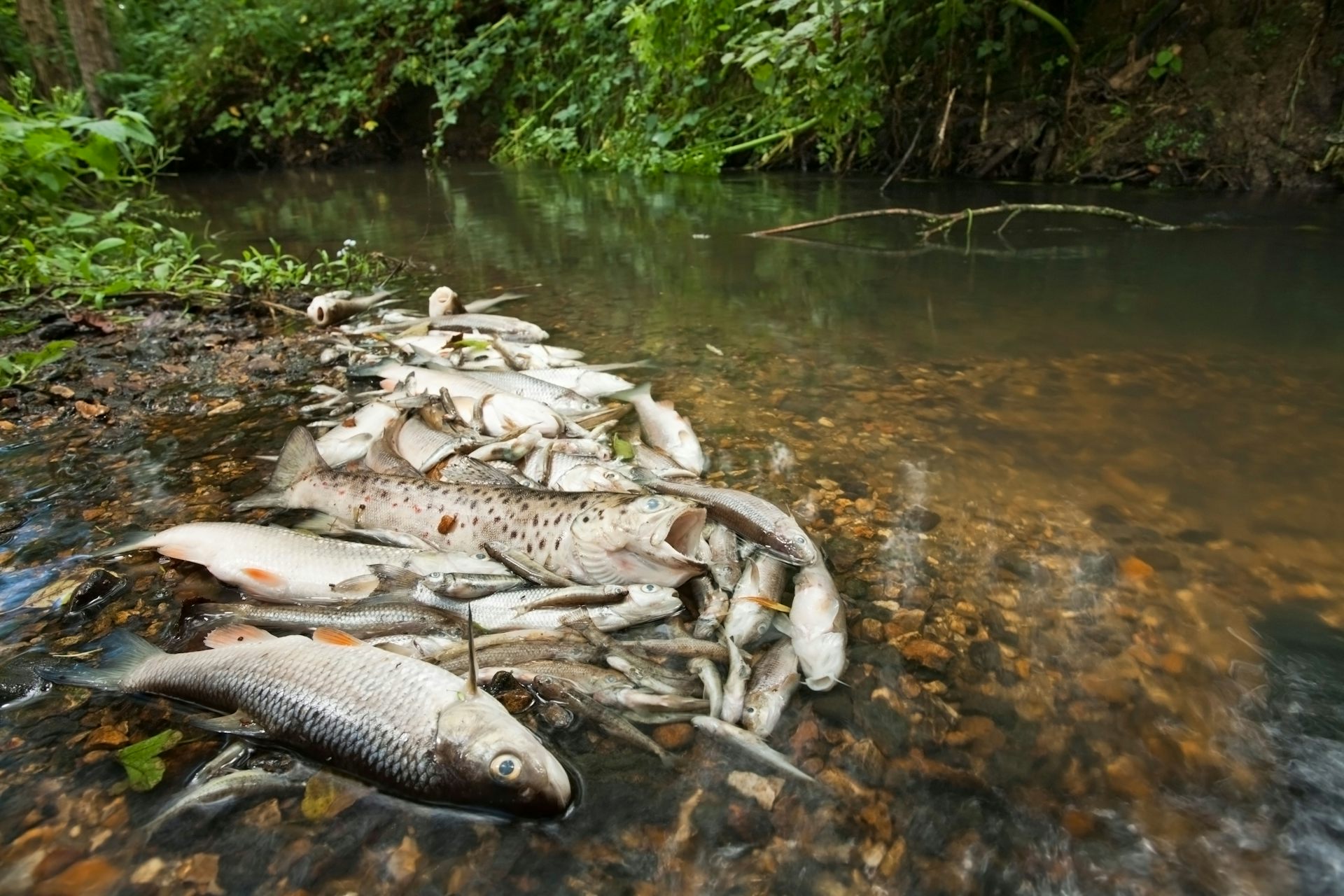
Dead fish on the Silchester Brook in Hampshire, England following the release of sewage by a water treatment works. Rob Read/Alamy Stock Photo

Kevin Grecksch, University of Oxford

Privatised water companies discharged raw sewage into rivers and the sea around England and Wales for 3.6 million hours in 2023 – double the previous year’s total. For a sense of how bad the problem is today, check this map of the south-east of the UK which shows how much sewage water companies are dumping right now and for how long.

As a water researcher, I am happy to see water quality high on the political agenda but aggrieved that it is because of the sewage scandal that has engulfed the UK, and especially England and Wales, in the past couple of years.

Companies have discharged more raw sewage than they are legally allowed to and the Environment Agency, as responsible regulator in England, has been unable to monitor and control offenders as its environmental protection budget was halved between 2010 and 2020. Water firms have neglected to invest in new and enlarged wastewater treatment works for decades and so the ageing system is struggling to meet demand.

An angry public demands cleaner water and changes to how water companies are regulated and run. All major political parties have at least something to say about it in their pitch to voters ahead of July 4 general election.

No clear blue water between Tories and Labour

The Conservative party doesn’t mention the word “sewage” in its manifesto. The party instead highlights what it sees as the government’s achievements in reducing leaks from water pipes, preventing supply interruptions and raising the proportion of designated bathing water sites classified as “good” or “excellent” from 76% in 2010 to 90% in 2023.

These “achievements” are misleading, however. Most of the 451 designated bathing water sites are around the coast, not rivers. Bathing sites only occupy a small stretch of a river (of which many are rated poorly) and most sewage dumpings take place elsewhere along the river, which is not accounted for in the statistics the Tories present.

The party would ban executive bonuses if companies commit a serious criminal breach (dumping sewage, for example) and use fines to invest in river restoration. The Tories evidently expect pollution to keep increasing. Forget working on the cause of the problem and preventing “serious criminal breaches” from happening in the first place.

A river with a murky surface.
Surface pollution on the Leeds and Liverpool canal. AlanMorris/Shutterstock

The Labour party has said it will force water companies to “clean up our rivers” by putting them under “special measures” but does not explain what this means. Like the Conservatives, Labour wants to impose fines on water companies, block the bonuses of executives and improve independent monitoring. Again, Labour offers no further detail on what that would entail.

This is in stark contrast to election campaigns fought under Jeremy Corbyn, when Labour argued for renationalising the water industry.

Both Labour and the Tories propose fines which have proven to be no deterrent. The Environment Agency fined Southern Water – the company that provides water and wastewater services to more than four million people across Hampshire, Sussex and Kent – a record £90 million in 2021, yet illegal sewage discharges by water companies have only increased since then.

Ultimately, fines are a capitulation before the real problem of preventing illegal sewage discharges.

Lib Dems a bit bolder

Banning water companies from dumping raw sewage into rivers and giving them a duty to protect the environment is the goal of the Liberal Democrats.

The Lib Dems want to transform water companies into public benefit companies (but there’s no explanation of how these would differ from their present privatised form) and would ban bonuses for water company executives until rivers are clean (but there’s no definition of “clean”).

Ofwat, the economic regulator for the water industry, would be replaced with a new regulator with powers to prevent sewage dumping. The party also wants a sewage tax on water company profits to enforce existing regulations more effectively, set legally binding targets on the reduction of sewage dumping, create wetlands to stymie flooding and strengthen local authorities monitoring water quality – it’s unclear how this would meld with a “tough new regulator”, though.

Greens are pro-nationalisation

The Green party wants to bring water services back into public ownership along with Britain’s big five energy companies.

The Greens are the only ones putting numbers to the problem. The party estimates renationalisation would cost £5 billion and investment into water and sewage infrastructure a further £12 billion.

The experiment of privatisation has failed, they argue, and water should be treated as a public good.

Reform’s 50% offer

Reform UK does not mention the sewage scandal directly, but its manifesto proposes bringing 50% of each utility back into public hands. According to the party, this would save £5 billion across all utilities over five years.

Welsh water for Wales

Plaid Cymru wants more public control of Welsh resources, including water.

Lots of water stored in Welsh reservoirs goes to England, especially Birmingham and Liverpool. Plaid Cymru would align legislative competence over water with the geographical boundaries of Wales. In other words, Wales wants to fully take care of its water and improve its quality.

Drought in 2022 made the case for more reservoirs. EPA-EFE/Tolga Akmen

What about Scotland and Northern Ireland?

The SNP does not mention freshwater in its manifesto. Sewage dumping appears to be less common in Scotland, where the water industry is publicly owned. However, reports suggest official estimates are too low.

Northern Ireland’s Sinn Féin does not discuss water in its manifesto. The DUP acknowledges pollution in the UK’s largest inland lake, Lough Neagh, and asks for a concerted effort to preserve its water quality.

Watered down

The smaller parties have my sympathies for bringing forward bolder plans for water management in the UK. Unfortunately, both the Conservatives and Labour are very uninspiring in their hesitance to prevent pollution.

If better regulation, monitoring and enforcement is the most a new UK government will do then this will require a bigger budget for the Environment Agency, at least. Measuring the volume and composition of sewage outflows, not just the duration of pollution events, would also provide more accurate information.

Ofwat, the economic regulator for the water industry, needs reform too. The UK water industry is slow to innovate and misses opportunities to do so. As I have written before, the UK water industry is a small sector with a revolving door that leads former regulators to join the regulated, and vice versa. This creates obvious conflicts of interest and stymies change.

The experience of England and Wales implies that privatised water utilities are a bad idea. Margaret Thatcher believed this model would find admirers globally, but since the late 1980s, no other country has followed suit. In fact, the opposite has tended to happen: after a failed privatisation, Paris returned its water supply services to public hands.

Privatisation has excluded the public from discussing water management in the past 35 years. It is time to reconnect people with the very resource we all need to survive. Capping a CEO’s bonus does not go far enough.


Imagine weekly climate newsletter

Don’t have time to read about climate change as much as you’d like?
Get a weekly roundup in your inbox instead. Every Wednesday, The Conversation’s environment editor writes Imagine, a short email that goes a little deeper into just one climate issue. Join the 30,000+ readers who’ve subscribed so far.


Kevin Grecksch, Departmental Lecturer and Course Director MSc in Water Science, Policy and Management, University of Oxford

This article is republished from The Conversation under a Creative Commons license. Read the original article.
Continue ReadingRenationalising water could fix sewage crisis – but no major party will do it

Greens pledge £22bn to rebuild crumbling NHS buildings

Spread the love

The Green Party is today calling for an additional £22bn capital investment to bring crumbling NHS hospitals, primary care buildings and outdated equipment up to modern standards. This comes as the King’s Fund warns that without action, we will inevitably continue to have a ‘deteriorating NHS estate increasingly unfit for purpose’

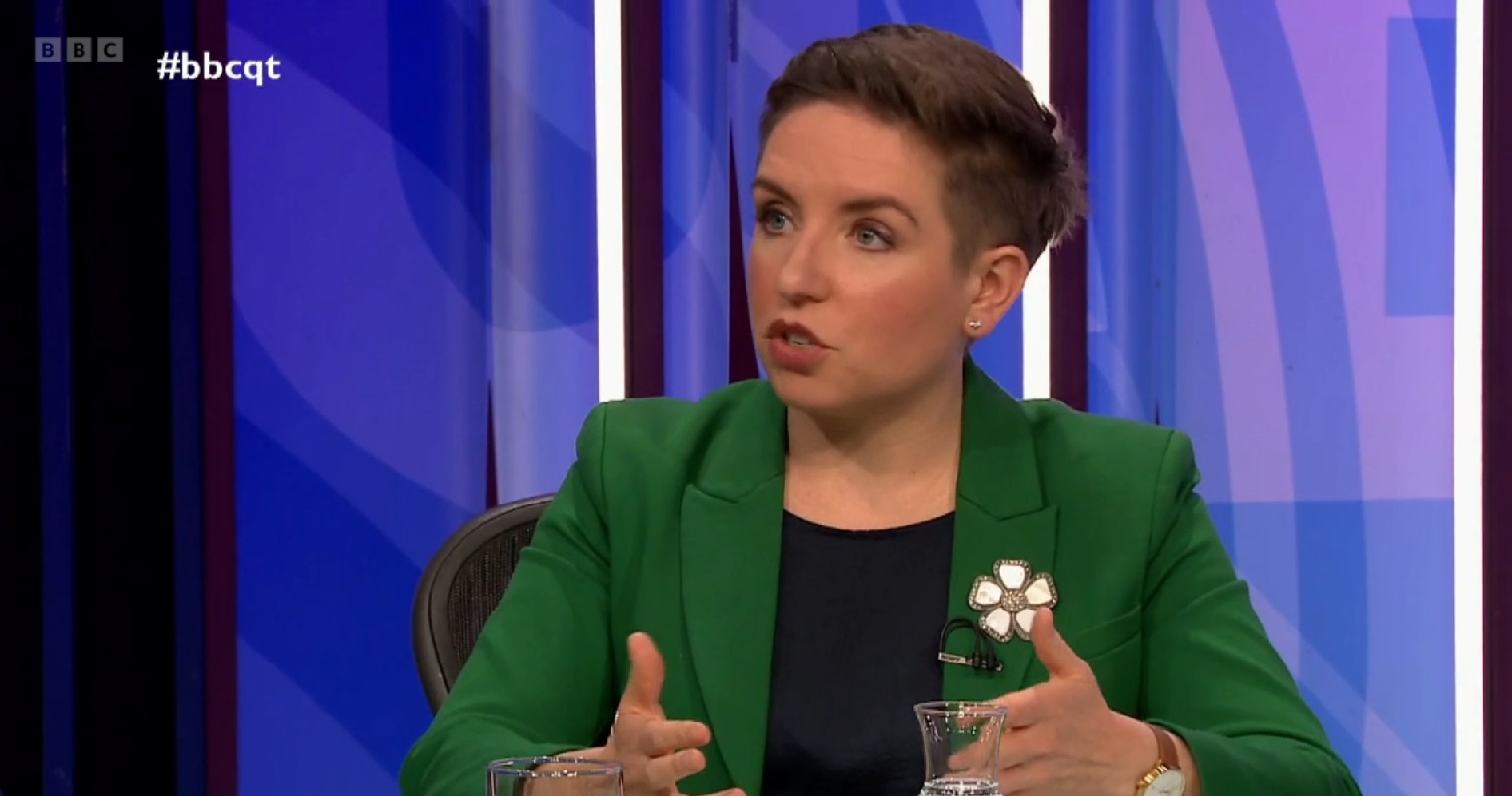
Image of the Green Party's Carla Denyer on BBC Question Time.
Image of the Green Party’s Carla Denyer on BBC Question Time.

Green Party co-leader, Carla Denyer, said: “No other political party is being honest enough with voters – the very fabric of our NHS is crumbling and must be repaired and rebuilt. 

“The NHS is stretched to breaking point and so we are offering a package to train and retain staff and cut waiting lists, but we also need to recognise that we are asking over-worked staff to cope with outdated equipment and poor buildings.” 

Rachel Birch, an intensive care nurse with 12 years’ experience in the NHS, added, “I’ve seen leaking ceilings in our intensive care unit, staff having to work out of portacabins, and wards in desperate need of improvements and modernisation.  

“The buildings that we use treating patients are old and inadequate for use.  

“Our department cares for critically ill patients needing maximum support that deserve the best facilities and treatment.”  

Green MPs elected on Thursday would press for:  

  • £22bn in capital investment over the next five years to bring our crumbling hospitals and old equipment up to standard 
  • Including, a one off £2bn capital investment in primary care buildings, £1.1bn annually assigned to clear the maintenance backlog and £3bn a year to be spent on hospitals.   
  • This £22bn capital investment fund will sit alongside a £30bn revenue expenditure that will see people accessing an NHS dentist, working towards GP appointments on the day of need for those in high need and significant uplift in pay for frontline staff.  

Denyer added: “We know the importance of the NHS.  

“The Conservatives promised 40 new hospitals and failed to deliver.  

“Labour promises to hold the door open to the private sector

“It is only the Greens who are offering a cast-iron guarantee to push back against the creeping privatisation of the NHS and rebuild it, so it is fit for the future.    

Continue ReadingGreens pledge £22bn to rebuild crumbling NHS buildings

Manifesto Scorecard: Environmental groups slam Tories’ green plans

Spread the love
Image of InBedWithBigOil by Not Here To Be Liked + Hex Prints from Just Stop Oil's You May Find Yourself... art auction. Featuring Rishi Sunak, Fossil Fuels and Rupert Murdoch.
Image of InBedWithBigOil by Not Here To Be Liked + Hex Prints from Just Stop Oil’s You May Find Yourself… art auction. Featuring Rishi Sunak, Fossil Fuels and Rupert Murdoch.

https://www.businessgreen.com/news/4326141/manifesto-scorecard-environmental-slam-tories-green-plans

… UK political parties’ plans for climate and the environment have been jointly assessed by Greenpeace and Friends of the Earth in a new election scorecard published today, which ranks Labour far ahead of the Conservatives across all key green policy categories.

Published just 10 days before voters head to the polls on July 4th, the scorecard assesses the LabourConservativeLiberal Democrat and Green Party manifestos released in the past fortnight against 40 policy recommendations set out by the two environmental campaign groups.

Overall, the Green Party topped the league table with a near-perfect 39 score out of a possible 40 recommended policies, ahead of the Liberal Democrats in second place with 31.5.

Labour, meanwhile, scored 20.5 against the 40 green policy recommendations, over four times higher than the Conservatives’ which scored only five points.

https://www.businessgreen.com/news/4326141/manifesto-scorecard-environmental-slam-tories-green-plans

Rishi Sunak on stopping Rosebank says that any chancellor can stop his huge 91% subsidy to build Rosebank, that Keir Starmer is as bad as him for sucking up to Murdoch and other plutocrats and that we (the plebs) need to get organised to elect MPs that will stop Rosebank.

Continue ReadingManifesto Scorecard: Environmental groups slam Tories’ green plans

The Green party’s plans aren’t perfect but they offer a much-needed attempt at climate leadership

Spread the love

The Green party’s plans aren’t perfect but they offer a much-needed attempt at climate leadership

Richard Sulley, University of Sheffield

The Green party’s target is to take four seats at the upcoming UK election. Recognising it has no chance of forming a government, its manifesto is written from the perspective of a future pressure group within Westminster.

In doing so, the party highlights some key ideas and steps that could help the UK achieve meaningful climate action. This provides a refreshing attempt to outline an alternative way forward, at a time when climate leadership is severely lacking from other parties.

The Greens’ manifesto has climate action woven through it and the wording often emphasises the link between climate and socioeconomic issues, as the impacts of a changing climate could push more people into poverty and disrupt global food supply chains. It states: “The solutions to the climate crisis are the same as those needed to end the cost of living and inequity crises, making the future not just more liveable but fairer for us all too.”

The Greens argue that a rebalancing of the economy is required to achieve such a just transition. While the party stops short of calling for degrowth (producing fewer unnecessary goods and services in favour of more socially beneficial economic activity), the focus on a carbon tax and push for investment in public services and renewables could deliver a similar impact.

The party also wants to change how success is measured in the economy, calling for “new indicators that take account of the wellbeing of people and planet, and track our progress towards building a greener and fairer future”. This is the first time an established party has explicitly reframed what the measures of a successful nation should be.

The manifesto embraces an agreed basic standard of living and a set of planetary boundaries that our activities shouldn’t push us beyond, based on the theory of “doughnut economics”. By comparison, the existing model focuses almost solely on economic growth as the key measure of success.

Steps to decarbonise

One of the key issues the Greens want to address is the fact the UK’s housing stock is some of the worst in Europe. A vast programme of insulation and decarbonisation measures is needed across all tenures, and the Greens earmark £50 billion over the length of the parliament for retrofitting buildings. One issue here is that they don’t specify how the current supply chain could be scaled up to achieve this.

The manifesto does recognise that to reduce the UK’s carbon impact, buildings can’t just be demolished and rebuilt. Circularity is needed with zero extraction of new materials in the construction of new homes and buildings.

The Greens propose to tackle this with planning applications to include whole-life carbon and energy calculations. Plus, all materials from demolished buildings will need to be considered for reuse, and increased rates for the disposal of builders’ waste would ensure that this is financially viable.

Significant investment is also needed to upgrade the UK’s energy networks to enable decarbonisation, with another proposed £50 billion assigned to electricity generation, transmission and storage. The manifesto also highlights the potential for greater community involvement in – and direct benefit from – new solar and wind farms, which research suggests can speed up the provision of decentralised energy generation.

Where the Greens diverge most widely from the current energy decarbonisation orthodoxy is on nuclear. Their proposal to cancel funding for research on new technology, namely small modular reactors, appears reactionary at a time where its potential is still being explored.

nuclear power station with huge white clouds of smoke, blue sky
The Green Party would not fund research into small modular nuclear reactors. stocker1970/Shutterstock

In transport, the Greens recognise that simply rolling out the sale of electric vehicles is not enough. They want to expand public transport and active travel (walking and cycling) through a £13 billion investment to deliver public transport as a service rather than for profit.

But this would depend on giving local authorities in England the powers that London has to act as bus operators. Combined Authorities in Greater Manchester, South and West Yorkshire are currently transitioning to a franchised system, but a full “London-style” network is some way off.

The Greens are also the only party to take the bold action of proposing a frequent flyer levy, although they do not detail how it will work. Typically, proposed plans for such levies increase on a sliding scale as the number of flights increases, therefore targeting the 15% of people who make 70% of the trips.

There are also proposals to remove the aviation fuels exemption from fuel duty and introduce a domestic flight ban on journeys that can be done by rail in less than three hours, making this manifesto is an exemplar of action targeted at reducing high consumption in the form of frequent flights.

How would they deliver it?

With all this investment, there’s inevitably a question about how the Greens would pay for their plans. Figures in the manifesto suggest significant government borrowing is needed for such radical changes.

On environmental measures alone, an average annual capital and revenue spend of £40 billion would be required, including £7 billion to be invested in climate adaptation. The entire manifesto requires a budget deficit of £65 billion a year for the next five years, gambled against the as yet unknown costs of inaction.

There are some other ideas on funding. A carbon tax would make polluters pay while providing money to invest in the green transition. And taxing multi-millionaires and billionaires could help fund public services, including renationalised utilities such as water companies.

There is also a question of how practical the plans are. Nothing within the Green party manifesto relies on tech that has yet to be invented or impossible interventions. This is not the stuff of techno-optimism. But there are no cities, regions or devolved nations in the UK that have yet adopted the root and branch transformation this manifesto would require.

However, surveys show most people in the UK want decisions on the overwhelming evidence for climate change and the nature crisis, in order to create a more resilient society. The Green manifesto, then, is an imperfect but sorely needed attempt at climate leadership that reflects the urgency of significant rather than iterative change. That should be welcomed in an election where you could otherwise be forgiven for thinking that a response to the climate emergency was an optional extra.

Richard Sulley, Senior Research Fellow, Sustainability Policy, University of Sheffield

This article is republished from The Conversation under a Creative Commons license. Read the original article.

Continue ReadingThe Green party’s plans aren’t perfect but they offer a much-needed attempt at climate leadership

Scrap to the two-child benefit cap urge Greens

Spread the love
Green Party Co-leader Adrian Ramsay. Wikipedia CC.

The IFS (The Institute for Fiscal Studies) have today warned that 250,000 children will be hit by the two-child benefit cap next year, rising to an extra half a million by 2029. Green Party Co-Leader, Adrian Ramsay, responded saying, 

“Greens have unequivocally pledged to scrap the two-child benefit cap in our fully costed manifesto.

“Today I am urging the Labour Party to show real strength and conviction and join us in making this pledge.

“This one decision could lift 250,000 children out of poverty.

“The power to do this will be in Labour’s hands.

“But I want to be very clear.

“If they fail to do this, elected Green MPs will not let this rest.

“We will push them every day of the next parliament demanding that they do what is right.

“That is what a Green vote will enable – voices in parliament to keep Labour honest on these important issues.”

Continue ReadingScrap to the two-child benefit cap urge Greens