Don’t look there: how politicians divert our attention from climate protesters’ claims
Spread the love
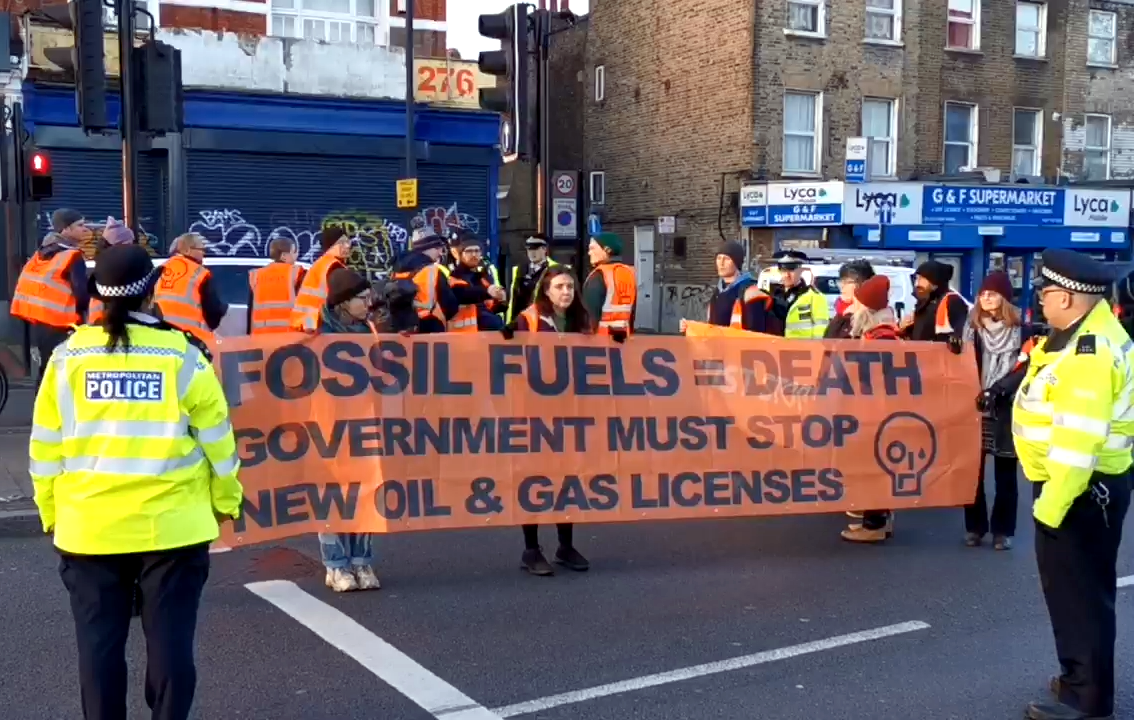
Just Stop Oil protesting in London 6 December 2022.

Daniel Garcia-Jaramillo, Sheffield Hallam University

The right to protest is a distinctive feature of democratic, liberal societies. Yet the way in which many leading British politicians are currently talking about Just Stop Oil might make you think otherwise. Far from engaging with the issues at stake in these protests, politicians appear to be encouraging the wider public to ignore them or even oppose them.

Having seen their initial protests largely ignored, Just Stop Oil members have been making more disruptive (but non-violent) protests lately. They’ve been present at high-profile sports events like Wimbledon and the World Snooker Championships.

Policing minister Chris Philp dismissed the temporary delays caused to such events as “completely unacceptable”“. He argued that “the vast majority of the public are appalled by this very, very small, very selfish minority” and called on those not protesting to intervene.

With the UK government announcing new licences for oil and gas drilling in the North Sea, it’s clear that collective action that allows people to demonstrate their disagreement in peaceful ways is needed. In apparent contradiction to warnings about the climate crisis, Prime Minister Rishi Sunak’s commitment to the green agenda is wavering.

Meanwhile, Keir Starmer, the leader of the Labour party, has cancelled a plan to fund the transition from fossil fuels to green industries from the first day of government, should he win power. His response to criticism on this change was to turn on protesters.

He said: “The likes of Just Stop Oil want us to simply turn off the taps in the North Sea, creating the same chaos for working people that they do on our roads. It’s contemptible.”
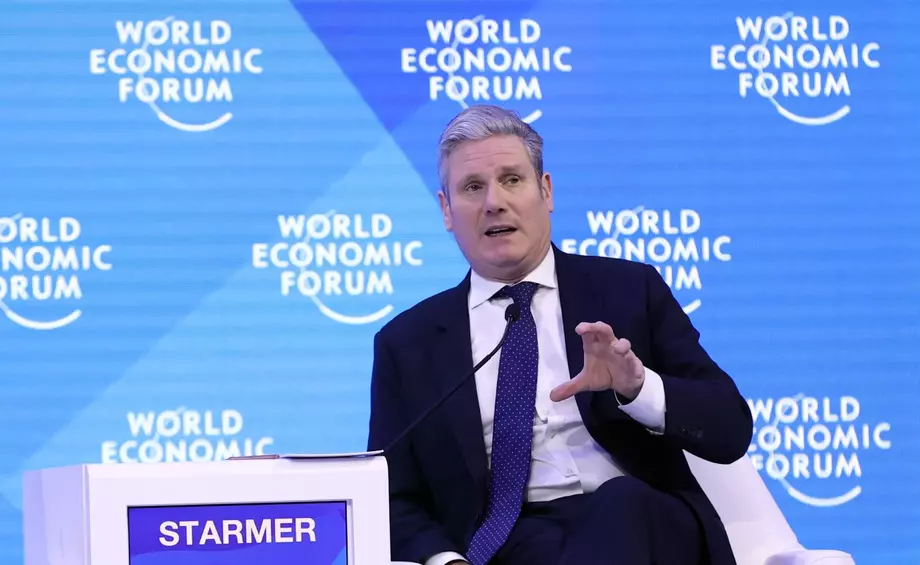
Keir Starmer sucking up to the rich and powerful at World Economic Forum, Davos.
Keir Starmer has deployed some divisive language about climate protestors of late.

Diverting the conversation

Referring to people defending the environment as a “minority” that acts against other citizens polarises society and marginalises protesters’ claims. It depicts people’s demands as somehow niche rather than amounting to a highly pressing threat to the majority.

One of the features of language is that when we talk, we only focus on one or, at most, a few aspects of a particular object or event. A lot will inevitably remain unsaid.

Still, when what remains unsaid is one of the most obvious elements of any given topic, what is missing becomes as informative as what was said. In this case, the focus on tactics instead of the substance of the protest betrays an unwillingness to engage with the climate crisis.

The government has put forward the home secretary Suella Braverman rather than the environment secretary to respond to the Just Stop Oil protests (itself a signal that they are seen as a public order issue more than anything else).

Braverman has referred to people protesting for environmental reasons as causing “havoc and misery”. Environment secretary Thérèse Coffey, meanwhile, doesn’t appear to have made any public statements regarding the matter.

To say that people are protesting and not mentioning the reason for the protest leaves the story incomplete. That’s something that rarely happens when UK politicians talk about protests in other countries.

Last year, Sunak referred to women protesting in Iran as displaying “the most humbling and breathtaking courage” in sending “a very clear message that the Iranian people aren’t satisfied with the path that the government has taken”. Here the focus of the conversation is placed on protesters’ claims.

But when talking about protests held in the UK, the debate looms over the disruption caused, as if the core message were secondary or even dispensable. It is only when the core message is ignored that politicians can refer to those acting in defence of human and nonhuman lives as “selfish”.

In the absence of meaningful political engagement, conversations about Just Stop Oil protests in the UK have strayed mainly into tactics and disruption at expense of their core message. However, politicians in democratic nations have a responsibility towards the electorate to engage properly with what citizens demand, not just with the way they make their claims heard.The Conversation

Daniel Garcia-Jaramillo, PhD researcher, Centre for Behavioural Science and Applied Psychology, Sheffield Hallam University

This article is republished from The Conversation under a Creative Commons license. Read the original article.

Continue ReadingDon’t look there: how politicians divert our attention from climate protesters’ claims

Europe cracks down on ‘direct action’ climate protests

Spread the love

Insight: Europe cracks down after rise in ‘direct action’ climate protests

  • Summary
  • France, German states use wiretaps, GPS to track activists
  • Bavaria tries to stop protests with preventative detention
  • Berlin police spend more than 400,000 hours on climate cases
  • France outlaws one group, German states consider ban

BERLIN, Aug 10 (Reuters) – Simon Lachner had plans to glue himself to a German city thoroughfare in June to call public attention to climate change. Instead, he ended up in police custody before he’d even left his home.

Lachner, 28, is one of thousands of activists caught up in a European crackdown on a wave of direct action protests that gathered pace last year demanding urgent government action against climate change.

Roadblocks on major motorways in Britain have caused traffic chaos, protests at oil installations in Germany have disrupted supplies, and in France, thousands of activists and police clashed over water usage, leaving dozens injured.

Determined to prevent such protests from strengthening further, states in Germany and national authorities in France are invoking legal powers often used against organised crime and extremist groups to wiretap and track activists, Reuters found, based on conversations with four prosecutors, police in both countries and more than a dozen protesters.

In Berlin alone, police have spent hundreds of thousands of hours working on more than 4,500 incidents registered against the “The Last Generation” and “Extinction Rebellion” groups, according to previously unreported data from police.

State authorities in Germany are widely using preventative detention to stop people from protesting, including holding at least one person for as long as 30 days without charge, which is permissible under Bavarian law, the prosecutors consulted by Reuters said.

Lawmakers passed new surveillance and detention laws in France in July and in Britain in May, with Britain making it illegal to lock, or glue, yourself to property.

Insight: Europe cracks down after rise in ‘direct action’ climate protests

Continue ReadingEurope cracks down on ‘direct action’ climate protests

Shadowy think tanks are a risk to the UK’s democratic integrity

Spread the love

https://leftfootforward.org/2023/07/shadowy-think-tanks-are-a-risk-to-the-uks-democratic-integrity/

Tom Brake is the Director of Unlock Democracy which campaigns for real democracy in the UK, protected by a written constitution.

The connection between Truss and the IEA goes back a long way: according to Tim Montgomerie, the founder of Conservative Home, the IEA had “incubated” Truss – and her key ally, former chancellor Kwasi Kwarteng – when they were junior MPs. With their assumption of high office, Britain was to become a “laboratory” for the IEA’s ideas, he said.

Although Truss’ relationship with the IEA is remarkable for its extreme proximity, politicians being close to particular institutions is nothing new. Politicians often find themselves drawn to particular interests and ideas, and so will gravitate toward institutions that reinforce or augment their thinking.

There is no requirement, either, for think tanks to be transparent about the sources of their funding. In fact, for some, it is impossible to find out who their big donors are. A comparative assessment of the transparency ratings of various think tanks can be viewed here: Unlock Democracy has the highest rating of openness; the IEA, meanwhile, has the lowest rating.

Without being able to follow the money, we cannot hope to understand the interests (commercial or national) that may underpin donations to think tanks, or determine whether those giving money are based in the UK. While it is expected that any foreign funds are most likely to come from rich donors or corporations rather than foreign governments, these donors may still have very close links with a foreign government and seek to shape UK policy in line with the interests of those Governments. Without the data, we just don’t know.

If a think tank advocates for a more relaxed attitude to climate change, the public, the media and Ministers are likely to scrutinise their proposals more carefully if they can see that an oil company is one of its major donors. The same can be said for a think tank that opposes measures to cut smoking when a tobacco manufacturer contributes a significant sum to its budget. Without full transparency of funding – something which the Government has already committed to ensure for the tobacco industry but has not yet delivered – this scrutiny cannot be guaranteed.

https://leftfootforward.org/2023/07/shadowy-think-tanks-are-a-risk-to-the-uks-democratic-integrity/

Continue ReadingShadowy think tanks are a risk to the UK’s democratic integrity

Climate Activists Demand Justice for ‘Unjustly’ Arrested Ugandan Anti-EACOP Protesters

Spread the love

Original article by Brett Wilkins republished from Common Dreams under Creative Commons (CC BY-NC-ND 3.0).

“The arrests of these activists are a clear attempt to silence dissent and suppress opposition to the EACOP,” said one organizer.

Climate campaigners around the world on Wednesday urged Ugandan authorities to drop charges against four climate activists arrested and jailed overnight after peacefully protesting a highly controversial oil pipeline under construction in the region.

Bob Barigye, Mutesi Zarika, Naruwada Shamim, and Nalusiba Phionah were violently arrested Tuesday in the capital Kampala for protesting the environmental and social impacts of the East African Crude Oil Pipeline (EACOP). The activists—who were later released on bond—were charged with inciting violence.

However, the #StopEACOP coalition—which said the protesters were “unjustly” arrested and jailed—argued that photos and videos from the demonstration show that it was peaceful.

“The arrests of these activists are a clear attempt to silence dissent and suppress opposition to the EACOP,” the coalition’s campaign coordinator, Zaki Mamdoo, said in a statement. “We call upon the international community and civil society organizations to join us in condemning these arrests and demanding justice for those detained.”

Samuel Okulony, director of the Environment Governance Institute, said that “it is not a crime to voice opposition to the controversial EACOP project or to advocate for the government and project proponents to explore alternative, sustainable solutions.”

“Peaceful protest and dialogue are fundamental pillars of a democratic society, and these rights must be protected and upheld,” Okulony added.

Charity Migwi, the African regional campaigner for U.S.-based 350.org, condemned the arrests “in the strongest terms possible.”

“These activists were exercising their democratic right to peacefully protest against a project that they believe will have devastating consequences for the environment and the people of Uganda and beyond,” she said, urging the Ugandan government to “drop all charges against them.”

This isn’t the first time anti-EACOP activists have been arrested for peacefully protesting the pipeline. Last October, nine student leaders were arrested by police and subsequently charged with inciting violence for holding a Kampala demonstration in support of a European Parliament resolution condemning the project’s human rights and environmental violations. Four more anti-EACOP activists were arrested last December.

Barigye, a 34-year-old biology teacher and climate activist, was arrested in January for anti-EACOP organizing despite having police permission to protest. Barigye toldAfrican Arguments earlier this year that he was held for four days, during which time he was “psychologically tortured” by police.

“They threatened my life and family,” he said. “They dragged me into a filthy cell, made me starve… I could not sleep as they would interrogate me at any time of the night.”

“We are looked at us the enemies of the state,” Barigye said of the anti-EACOP activists. “The police now prefer psychological torture because physical torture will create bad publicity around the oil pipeline project, which could push away investors and insurers… The government doesn’t want to be in the international spotlight for the wrong reasons.”

If completed, the $3.5 billion, nearly 900-mile EACOP would transport up to 230,000 barrels of crude oil per day from fields in the Lake Albert region of western Uganda to the Tanzanian port city of Tanga on the Indian Ocean.

Earlier this week, Human Rights Watch published a report detailing how EACOP has devastated the lives and livelihoods of tens of thousands of people in its path while exacerbating the climate emergency.

Original article by Brett Wilkins republished from Common Dreams under Creative Commons (CC BY-NC-ND 3.0).

Continue ReadingClimate Activists Demand Justice for ‘Unjustly’ Arrested Ugandan Anti-EACOP Protesters

Morning Star: The anti-boycott Bill helps shield an ever-more extremist Israel from democratic pressure

Spread the love

https://morningstaronline.co.uk/article/e/anti-boycott-bill-helps-shield-ever-more-extremist-israel-democratic-pressure

The anti-boycott Bill targets the Boycott, Divestment and Sanctions (BDS) movement in solidarity with Palestine. It is openly a bid to enforce British foreign policy on all public bodies: Communities Secretary Michael Gove claims councils, universities or other institutions which seek to make ethical decisions on how to spend or invest funds are guilty of “pursuing their own foreign policy agenda.”

In banning public bodies from taking stances on international questions at odds with that of central government, the law is part of the creeping enforced conformity chilling democratic debate in Britain, reflected in Tory anti-protest legislation, Labour’s relentless search for heretics to expel and the online censorship of alternative and foreign media in the name of combating “disinformation.”

The cross-party consensus on stripping us of our democratic rights is evident here too. Though Labour proposed a “reasoned amendment,” setting out objections to the Bill without actually amending it, it instructed its MPs to abstain when that fell rather than oppose the legislation.

In an interview with Jewish News, shadow communities secretary Lisa Nandy stressed the party’s support for a ban on BDS, saying Labour’s only concerns were that the Bill might also stop councils boycotting other countries, namely China: suggesting Labour would police enforced alignment with British foreign policy even more closely than the Tories. Her concerns are misplaced, anyway: the Bill breaks new ground by explicitly referencing Israel, giving it a unique impunity from activist pressure under British law, as well as by specifying that it should also cover the occupied West Bank and Golan Heights, endorsing Israel’s illegal colonisation projects in practice while continuing to oppose them formally.

https://morningstaronline.co.uk/article/e/anti-boycott-bill-helps-shield-ever-more-extremist-israel-democratic-pressure

Continue ReadingMorning Star: The anti-boycott Bill helps shield an ever-more extremist Israel from democratic pressure