Why the US and Israel’s alliance endures – even when it strains
Bamo Nouri, City St George’s, University of London and Inderjeet Parmar, City St George’s, University of London
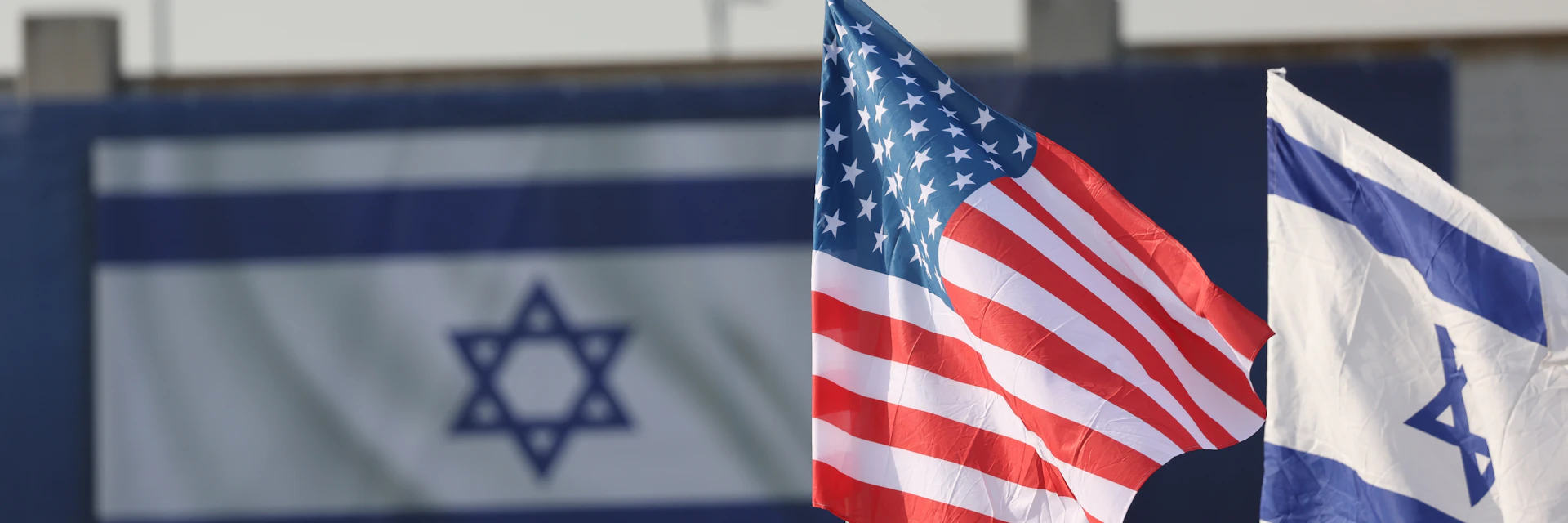
Israel and the US have maintained a close alliance for decades. Their recent joint air campaign in Iran has once again underscored the depth of this partnership. Yet while the strength of their relationship is widely acknowledged, the reasons behind it remain contested.
At the centre of this debate lies the question of whether US support for Israel is driven primarily by domestic political forces, particularly lobbying organisations such as the American Israel Public Affairs Committee (Aipac), or whether it reflects broader strategic imperatives within US foreign policy.
Aipac’s historical influence is well documented. It emerged in the 1950s from the American Zionist Committee for Public Affairs and developed into a powerful lobbying organisation. By the 1970s it had become instrumental in securing substantial US military and economic aid, as well as favourable legislative outcomes, for Israel.
US aid to Israel now includes approximately US$3.3 billion (£2.4 billion) annually in military financing and an additional US$500 million for missile defence. Aipac, which has embedded itself across Democratic and Republican political networks, has played a central role in maintaining this flow of support.
But the claim that Aipac drives US policy, which former US counterterrorism official Joe Kent suggested in March when resigning from the Trump administration in opposition to the Iran war, misreads how power operates in Washington.
As scholars of American power, we argue that the US-Israeli alliance has been driven primarily by Israel’s demonstrated value as a strategic asset for the US, rather than solely by the influence of lobbying. Aipac has become effective because it aligns with this existing strategic consensus, not because it created it.
Strategic US asset
This strategic consensus can be traced to the cold war. Israel’s decisive victory in the 1967 six-day war over a coalition of Arab states supported by and aligned with the Soviet Union revealed its utility as a regional proxy capable of advancing US interests in the Middle East.
From that point onward, US policymakers framed Israel as a pillar of their Middle East strategy – part of a broader effort to contain the influence of rival powers, project US power overseas and stabilise a region that is central to global energy supplies.
This framing became institutionalised in US policy in the late 1960s. Washington sharply increased arms transfers, supplying Israel with advanced aircraft such as F-4 Phantoms under President Lyndon B. Johnson. Intelligence-sharing arrangements were also expanded between the two countries.
The US perception of Israel as a strategic regional asset grew further in 1970. That year, the US requested that Israel prepare to intervene in Jordan on behalf of the government in its conflict with the Palestine Liberation Organization. Israel responded by moving troops to the border, with the presence of Israeli planes overhead often credited as having deterred invasion by Syrian forces.
Then, during the 1973 Yom Kippur war (again fought between Israel and Soviet-aligned Arab states), the US launched a large-scale airlift of military supplies into Israel. The operation signalled that Israel’s security was now directly tied to American strategy.
From the late 1970s, Israel was incorporated into a wider US-led regional security architecture alongside countries such as Egypt and Jordan. This followed the 1978 Camp David accords and 1979 Egypt-Israel peace treaty, which brought Egypt into a US-backed regional order. The US subsequently expanded joint military exercises, positioned military equipment in Israel and deepened defence coordination across these states.
Further evidence underscores the primacy of strategy in the US-Israeli relationship. President Ronald Reagan’s 1981 decision to sell surveillance aircraft to Saudi Arabia, for example, proceeded despite intense opposition from pro-Israel lobby groups. When core US strategic interests have been at stake, US policy has overridden lobbying pressure.
Formal agreements have reinforced the depth of the US-Israeli alliance. A 2016 memorandum of understanding committed US$38 billion in military aid over a decade. The US is also Israel’s largest trading partner, with bilateral trade approaching US$50 billion annually.
Cooperation extends across scientific, technological and industrial sectors, while both states are deeply integrated within international organisations. This dense web of ties cannot be reduced to lobbying influence alone.

Israel has played a significant role in destabilising the Middle East in recent years through its actions in Gaza, Lebanon and Iran. It has also effectively undermined the current ceasefire between the US and Iran by continuing to bomb Hezbollah targets in Lebanon.
In light of these developments, does the core premise of the US-Israeli alliance – that Israel helps underpin regional stability in line with US interests – still hold? Or are the foundations of US support for Israel beginning to strain under the pressures of a more volatile Middle East?
We argue that, instead of undermining the alliance, Israel’s continued attacks on Lebanon expose the underlying structure of the US-Israeli relationship. Israel said Lebanon was not included in the ceasefire, a stance that was reinforced by US officials including President Donald Trump and Vice-President J.D. Vance.
They backed Israel’s right to act against Hezbollah, with Trump calling the conflict in Lebanon a “separate skirmish”. This alignment suggests not divergence, but coordination within an asymmetric relationship in which the US provides the overarching strategic framework and Israel executes within it.
Rather than adding strain to the alliance, these developments illustrate its durability. Even where Israeli actions risk escalation or complicate diplomacy, US support remains intact – rooted in a broader convergence of interests centred on maintaining regional dominance.
Bamo Nouri, Honorary Research Fellow, Department of International Politics, City St George’s, University of London and Inderjeet Parmar, Professor in International Politics, City St George’s, University of London
This article is republished from The Conversation under a Creative Commons license. Read the original article.